
Alpine Sunflower (Tetraneuris grandiflora)
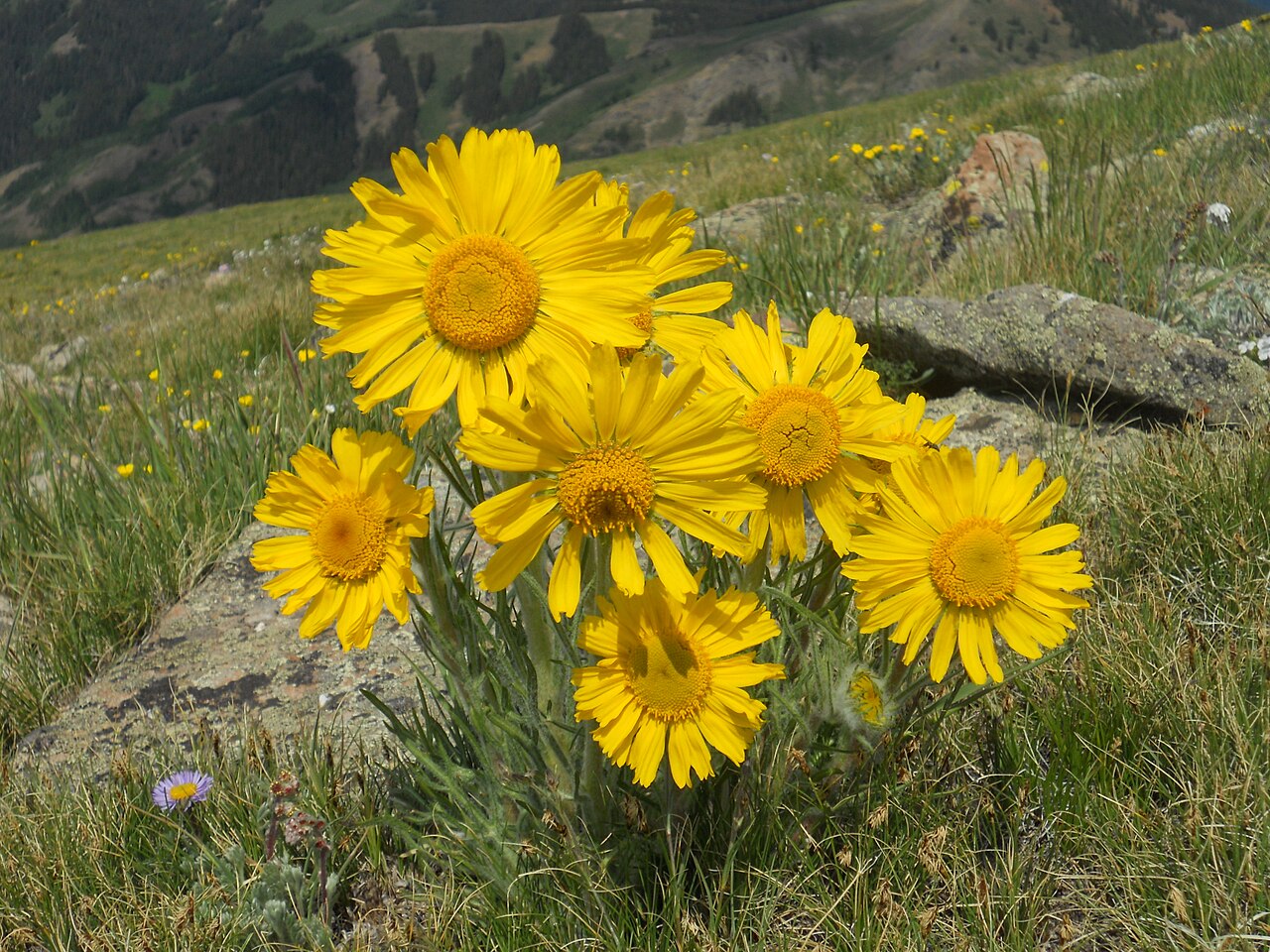
Tetraneuris grandiflora, known as Alpine Sunflower, old-man-of-the-mountain or graylocks four-nerve daisy (the USDA name), is a small but spectacular perennial of the aster family (Asteraceae) that grows on alpine tundra in the Rocky Mountains. It has also been called Hymenoxys grandiflora and Rydbergia grandiflora, and many field guides and iNaturalist still use Hymenoxys. It is found from southwestern Montana and adjacent Idaho south through Wyoming to western Colorado and northeastern Utah.
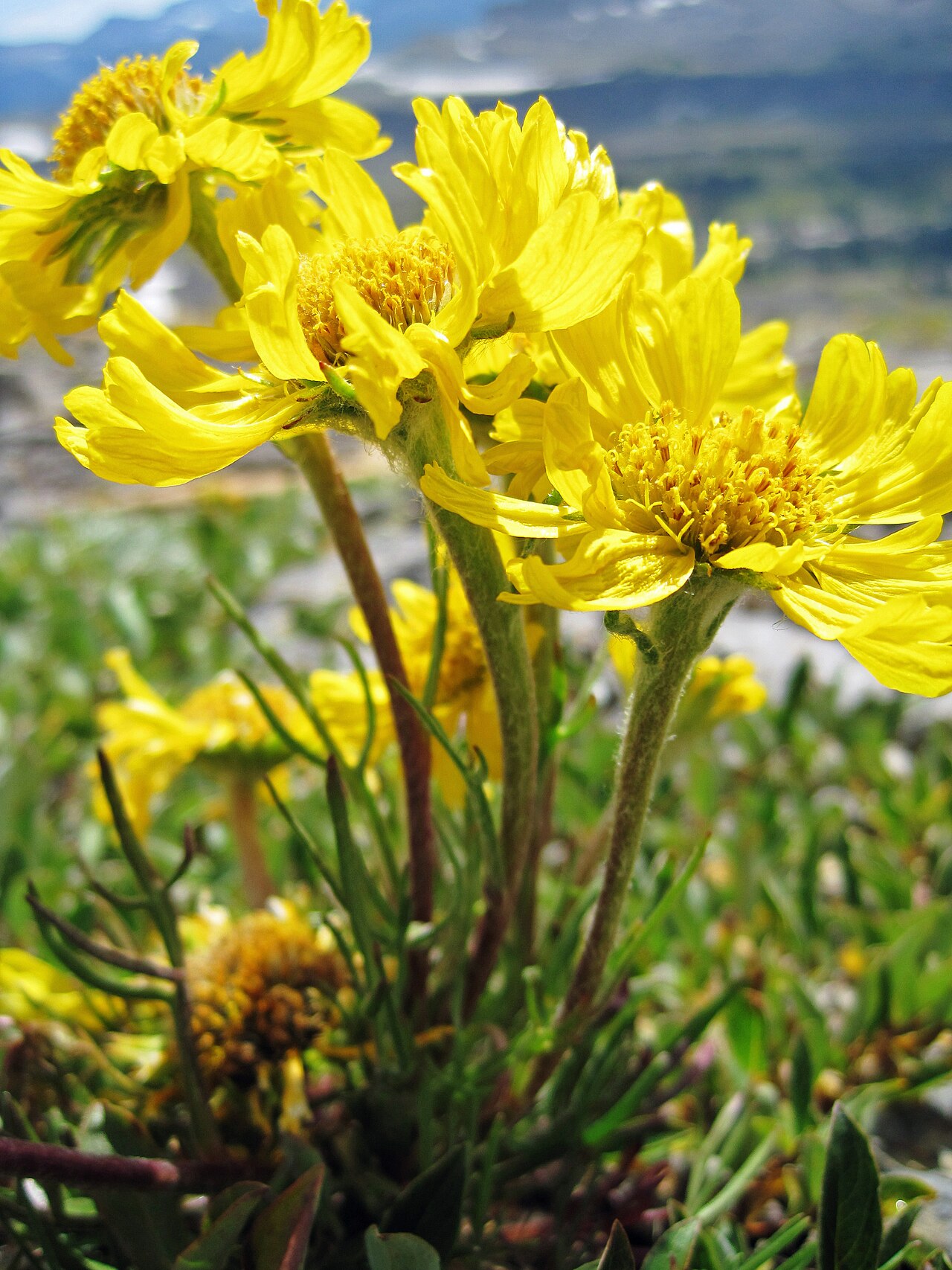
Plants are only 2 to 12 inches tall, but each stem carries a golden-yellow flower head 2 to 4 inches across, the largest flower heads of any plant on the Rocky Mountain tundra. The leaves and stems are covered with long, soft, white hairs, the “gray locks” and “old man” of its common names, which protect the plant from cold, wind and strong ultraviolet light at high elevation. The heads often face east, toward the rising sun.
Alpine sunflower is one of the signature wildflowers of high places such as Trail Ridge Road in Rocky Mountain National Park. To be honest about growing it: it is a true alpine, adapted to short, cool summers, deep winter snow and gritty, rocky soil, and it is very difficult to keep alive at low elevations or in hot summers. It is best enjoyed in the wild, or grown by experienced alpine gardeners in cool climates. Never dig plants from the wild, which rarely survive transplanting.
Identification
Look for a low, woolly, silvery plant on alpine tundra with surprisingly large, golden-yellow daisies on short, stout stems, in mid-summer.
Growth Habit
Alpine sunflower is a perennial with a deep, thick taproot and a woody root crown that can produce one or several rosettes. Flowering stems are 2 to 12 inches tall, stout, and densely woolly. Individual plants often grow for several years as leaf rosettes before flowering, and many are reported to die after flowering, leaving seedlings to carry on.
Leaves
The leaves are mostly in a basal tuft, 1 1/2 to 4 inches long, and divided into a few narrow, linear lobes (sometimes undivided). They are densely covered with long, soft, white, silky to woolly hairs, giving the plant a silvery-gray look. Smaller leaves grow along the lower part of the stem.
Flowers
From June to August, each stem carries a single large flower head, 2 to 4 inches across. The head has about 15 to 35 golden-yellow ray florets, each ending in three small teeth, around a broad, domed, yellow disc of many tiny florets. The bracts below the head are woolly. Flower heads commonly face east, toward the morning sun.
Seeds
The seeds are small, hairy achenes topped with a few narrow, pointed scales (pappus). They ripen in late summer and are scattered by wind and gravity across the tundra.
Look-alikes
Other four-nerve daisies, such as four-nerve daisy (T. scaposa), grow at lower elevations and have much smaller heads and narrow, undivided leaves. Old-man-of-the-mountain could also be confused with arnicas, which have opposite leaves, or orange sneezeweed, a much taller plant of mountain meadows with drooping orange rays.
Quick Facts
| Scientific Name | Tetraneuris grandiflora |
| Family | Asteraceae (aster family) |
| Plant Type | Alpine perennial wildflower |
| Mature Height | 2–12 in |
| Mature Spread | 4–10 in |
| Growth Rate | Slow |
| Sun Exposure | Full sun |
| Water Needs | Medium in summer; sharply drained |
| Soil Type | Gritty, rocky or gravelly alpine soil |
| Soil pH | Slightly acidic to neutral (about 5.5–7.5) |
| Bloom Time | June–August |
| Flower Color | Golden yellow |
| Fall Color | None; silvery foliage |
| Fruit | Small hairy achenes with pointed scales |
| Deer Resistant | Unknown; rarely within deer range |
| USDA Hardiness Zones | 2–6 (needs cool summers) |
Native Range
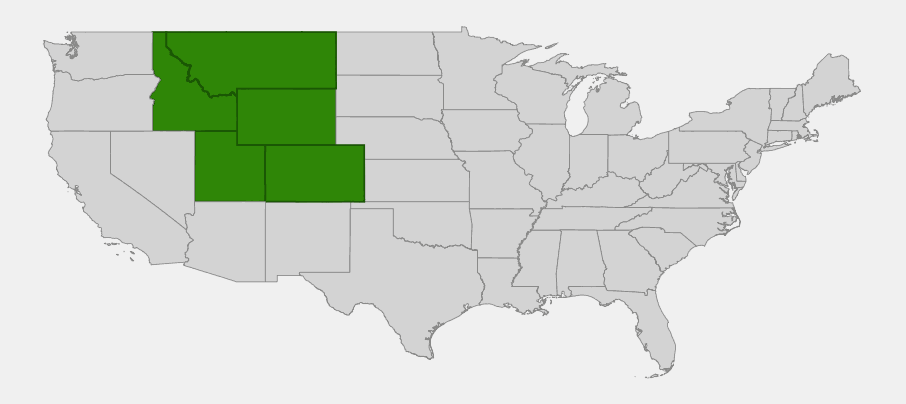
Alpine sunflower is native to the Rocky Mountains of the western United States. USDA PLANTS lists it in Colorado, Idaho, Montana, Utah and Wyoming. Its range runs from southwestern Montana and adjacent eastern Idaho south through the mountains of Wyoming to western Colorado and northeastern Utah, where it grows in the Uinta Mountains.
It is most abundant in Colorado, where it is a familiar sight on the tundra of Rocky Mountain National Park, the Front Range, the Elk Mountains, the San Juan Mountains and other high ranges. In Idaho it grows only in the high mountains near the Wyoming and Montana borders, which places it within the Intermountain region.
It grows on alpine tundra, fellfields, dry meadows, rocky ridges and talus slopes, mostly from about 10,000 to 13,500 feet, and occasionally down into high subalpine meadows. It prefers open, windswept, well-drained sites where snow melts relatively early.
📋 Regional plant lists featuring Alpine Sunflower: Idaho, Eastern Oregon & Eastern Washington · Montana & Wyoming · Utah & Western Colorado
Growing & Care Guide
Alpine sunflower is a plant for the dedicated alpine gardener. It needs what the tundra provides: cool summer nights, strong sun, excellent drainage, steady moisture in the growing season and a dry, cold winter dormancy, ideally under snow. Outside high-elevation or cool northern gardens, it rarely lasts long.
Light
Full sun. At lower elevations, light afternoon shade can help it cope with summer heat.
Soil & Water
Plant it in a lean, very gritty scree mix of coarse sand, gravel and a little loam, in a raised bed, crevice garden or trough. Keep it evenly moist while in growth but never waterlogged; good drainage around the crown is essential, especially in winter.
Planting Tips
Use only nursery-grown plants or seed-grown seedlings, and plant them young, since the deep taproot resents disturbance. Place it with other small alpines such as moss campion, alpine phlox and cushion plants, where it will not be shaded or crowded.
Pruning & Maintenance
No pruning is needed. Remove dead leaves in spring. Mulch the crown with gravel rather than organic mulch. Because individual plants may be short-lived or die after flowering, let a few seed heads ripen to produce replacements.
Propagation
Grow from seed, sown in fall outdoors or after 60 to 90 days of cold, moist stratification. Seedlings grow slowly and may take several years to flower.
Landscape Uses
- Alpine and crevice gardens: for experienced growers in cool climates
- Troughs: a showy accent in a gritty alpine trough
- Wildflower viewing: a signature bloom of Rocky Mountain tundra
- High-elevation landscapes: native plantings above about 9,000 ft
- Nature study: a classic example of alpine plant adaptations
Wildlife & Ecological Value
On the alpine tundra, where the growing season may last only six to eight weeks, alpine sunflower is one of the most important and conspicuous sources of nectar and pollen.
For Pollinators
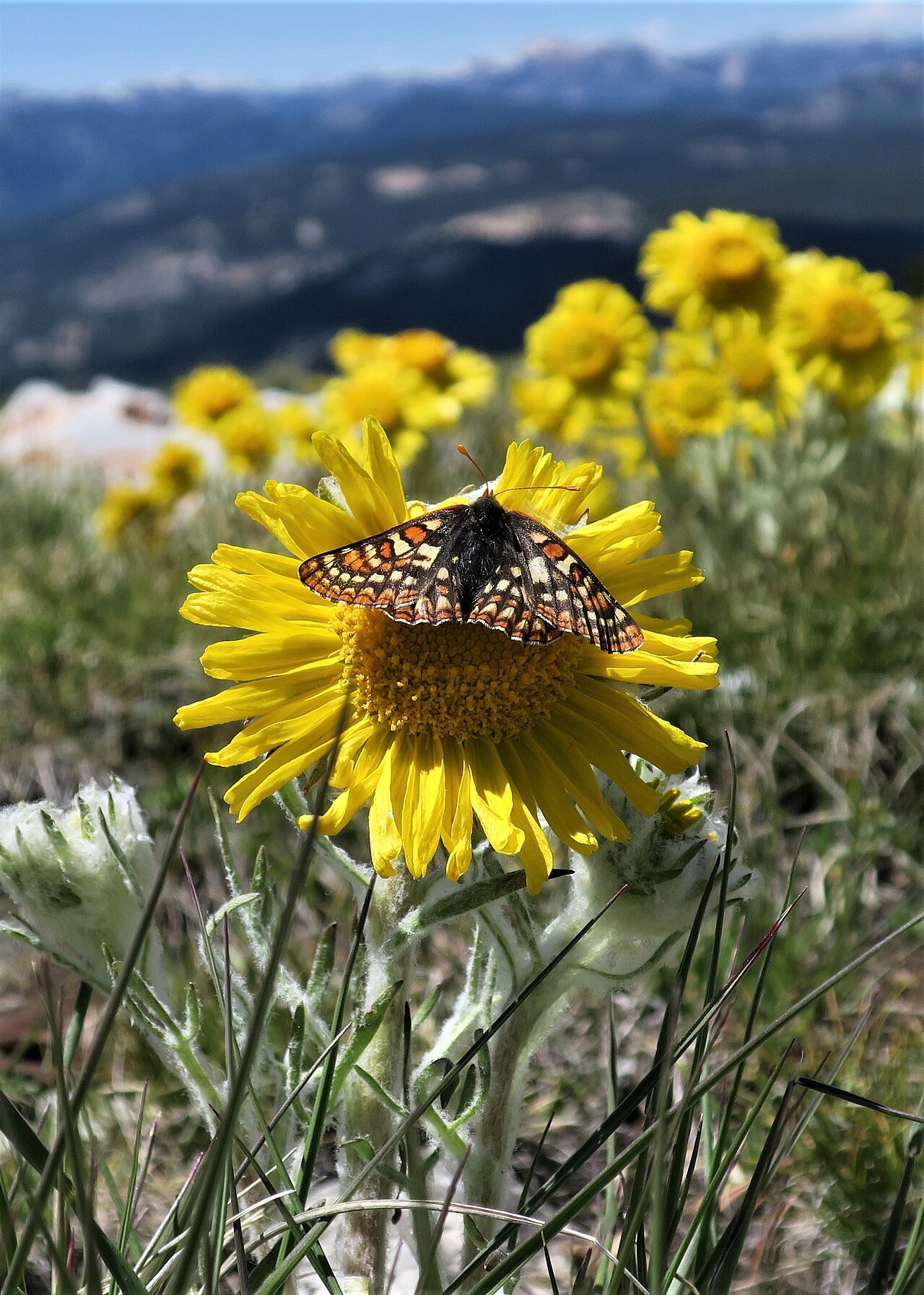
Its large, open heads are visited by flies, which are major pollinators in the alpine zone, as well as bumble bees, solitary bees, beetles and butterflies such as checkerspots, fritillaries and alpine butterflies. Insects often bask in the warm, sun-facing heads.
For Birds
White-tailed ptarmigan and rosy-finches feed on tundra plants and insects in the areas where it grows, and birds may take its seeds in late summer.
For Mammals
Pikas, marmots and elk graze tundra plants and may eat it, but its woolly foliage is not a favored food.
Ecosystem Role
As a taprooted perennial in thin, rocky soils, it helps stabilize tundra soils and fellfields. Its east-facing flower heads warm up quickly in the morning sun, which may make them more attractive to cold-blooded insects early in the day.
Cultural & Historical Uses
The genus name Tetraneuris means “four nerves,” referring to the four veins on the ray florets of many species. The species name grandiflora means “large-flowered.” The plant was once placed in its own genus, Rydbergia, named for the Swedish-American botanist Per Axel Rydberg, a pioneer of Rocky Mountain botany.
The common name “old-man-of-the-mountain” refers to the long, white hairs that cover the plant like a gray beard, and “alpine sunflower” to its large, sunflower-like heads. It is one of the best-known wildflowers along Trail Ridge Road in Rocky Mountain National Park, where it often carpets the tundra with yellow in July.
Alpine sunflower is a classic example of how alpine plants adapt to harsh conditions: dense hairs that reduce water loss and protect from UV light, a deep taproot that anchors the plant and stores food, a low stature that keeps it out of the wind, and the ability to wait several years before flowering.
Frequently Asked Questions
Why is it called old-man-of-the-mountain?
The leaves and stems are covered with long, white hairs that look like a gray beard.
Can I grow alpine sunflower in my garden?
Only with difficulty outside high-elevation or cool northern gardens. It needs gritty, perfectly drained soil, cool summers and steady moisture. Use nursery-grown plants and never dig them from the wild.
Do alpine sunflowers face east?
Yes. The flower heads usually face east, toward the rising sun, which warms them early in the day.
Where can I see alpine sunflower?
On alpine tundra in the Rocky Mountains of Colorado, Wyoming, Utah, Montana and Idaho, for example along Trail Ridge Road in Rocky Mountain National Park in July.
Is Tetraneuris grandiflora the same as Hymenoxys grandiflora?
Yes. Hymenoxys grandiflora and Rydbergia grandiflora are other names for the same plant.


