
Big Bend Bluebonnet (Lupinus havardii)
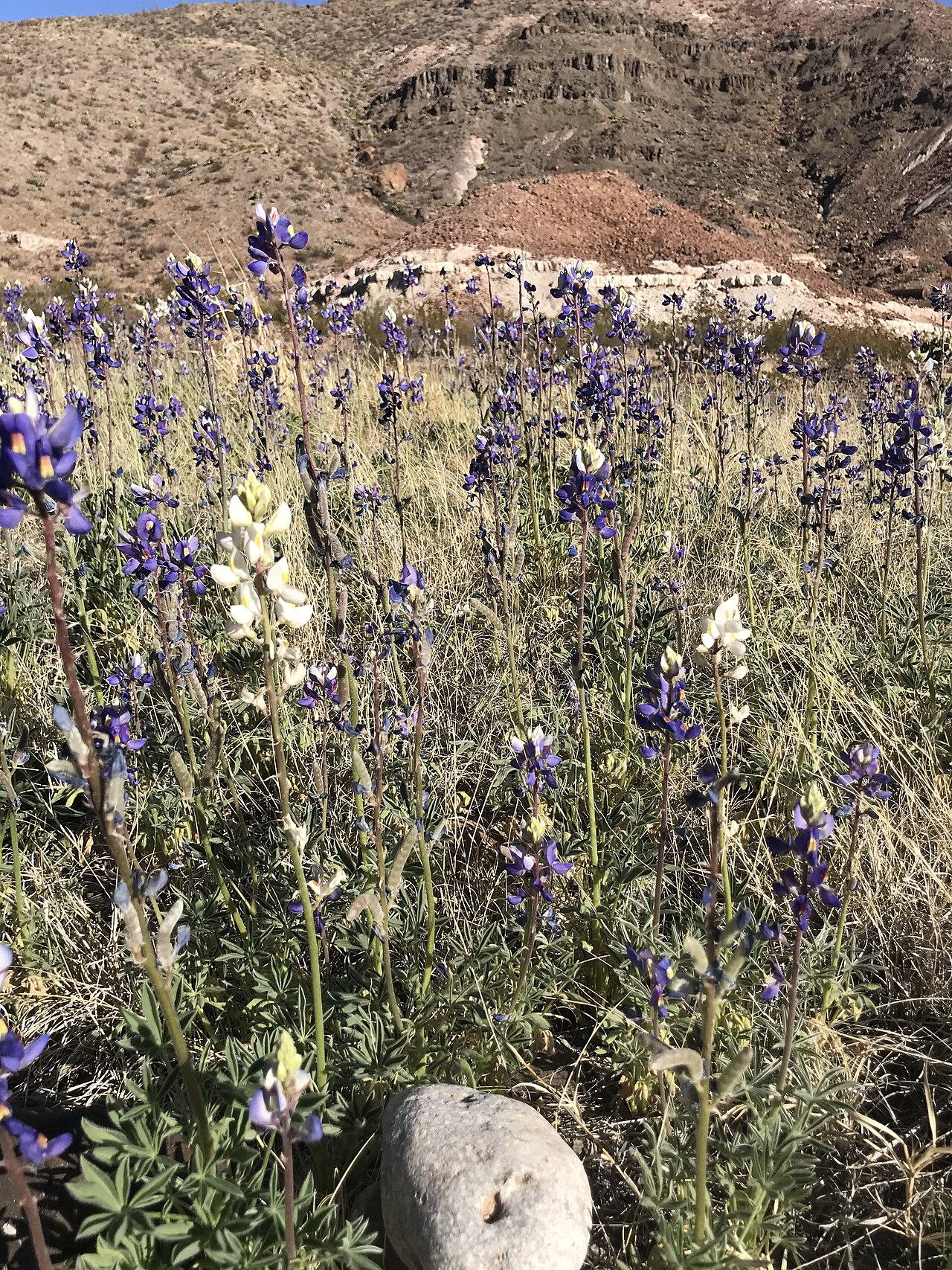
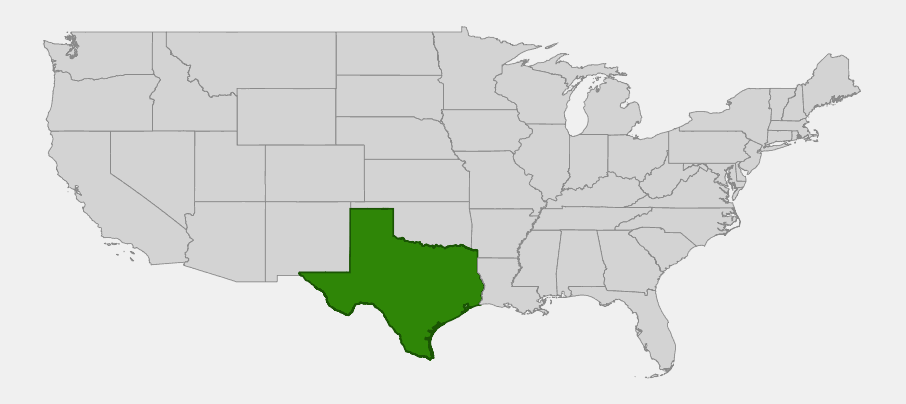
Lupinus havardii, the Big Bend Bluebonnet (also called Havard’s bluebonnet or Chisos bluebonnet), is the tallest and most dramatic of the Texas bluebonnets. In the United States it grows wild only in the Big Bend country of the Trans-Pecos in West Texas, and it continues south into northern Mexico. In late winter and early spring it sends up spikes of very deep blue flowers on stems 1 to 3 feet tall, often lining desert washes and roadsides in Big Bend National Park and Big Bend Ranch State Park.
It is a cool-season annual that sprouts after fall and winter rains, grows a rosette of silvery-green, hand-shaped leaves through the cool months and blooms from February into April. The flowers sit on the upper part of tall, upright spikes and are a darker, richer blue than the familiar Hill Country bluebonnet. In good rain years whole slopes and flats turn blue, and visitors plan spring trips to Big Bend around the bloom.
Along with the other native Texas lupines, Big Bend bluebonnet shares the title of Texas state flower. This guide covers how to identify it, where it grows, how to grow it from seed in a dry, sunny garden, and its value to native bees. Like other lupines, its seeds and foliage can be toxic if eaten, so read the safety note below.
Identification
Big Bend bluebonnet is easiest to recognize by its height, its tall spikes of very dark blue flowers and its desert habitat. In the United States, no other bluebonnet grows as tall in the Big Bend region.
Leaves & Stems
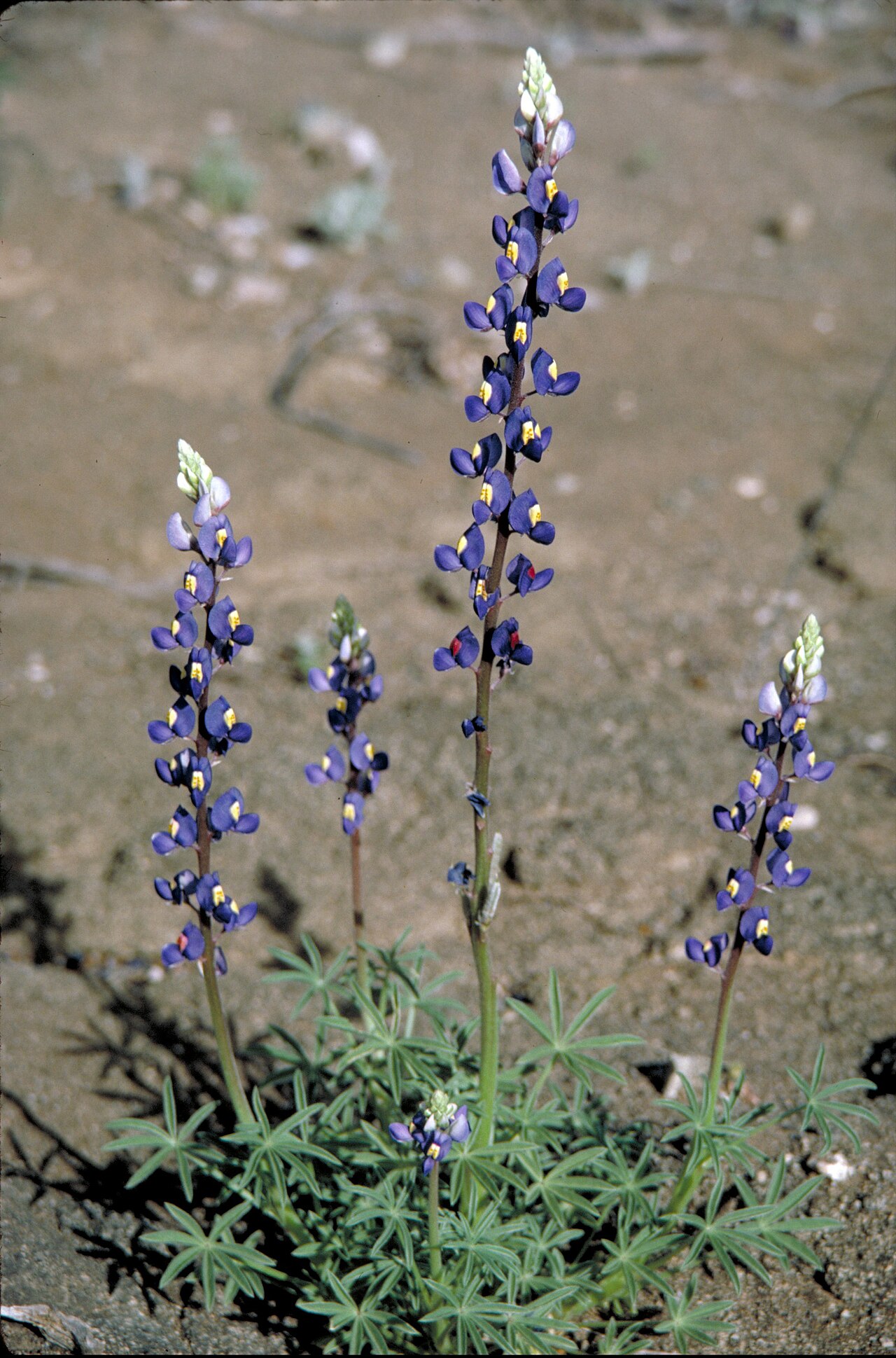
The leaves are palmately compound, like an open hand, with usually 7 (sometimes 6 to 9) narrow leaflets about 1 to 2 inches long. They are gray-green and smooth to slightly hairy on top and softly hairy underneath. The plant first forms a low rosette, then sends up one to several stout, upright flowering stems 1 to 3 feet tall.
Flowers
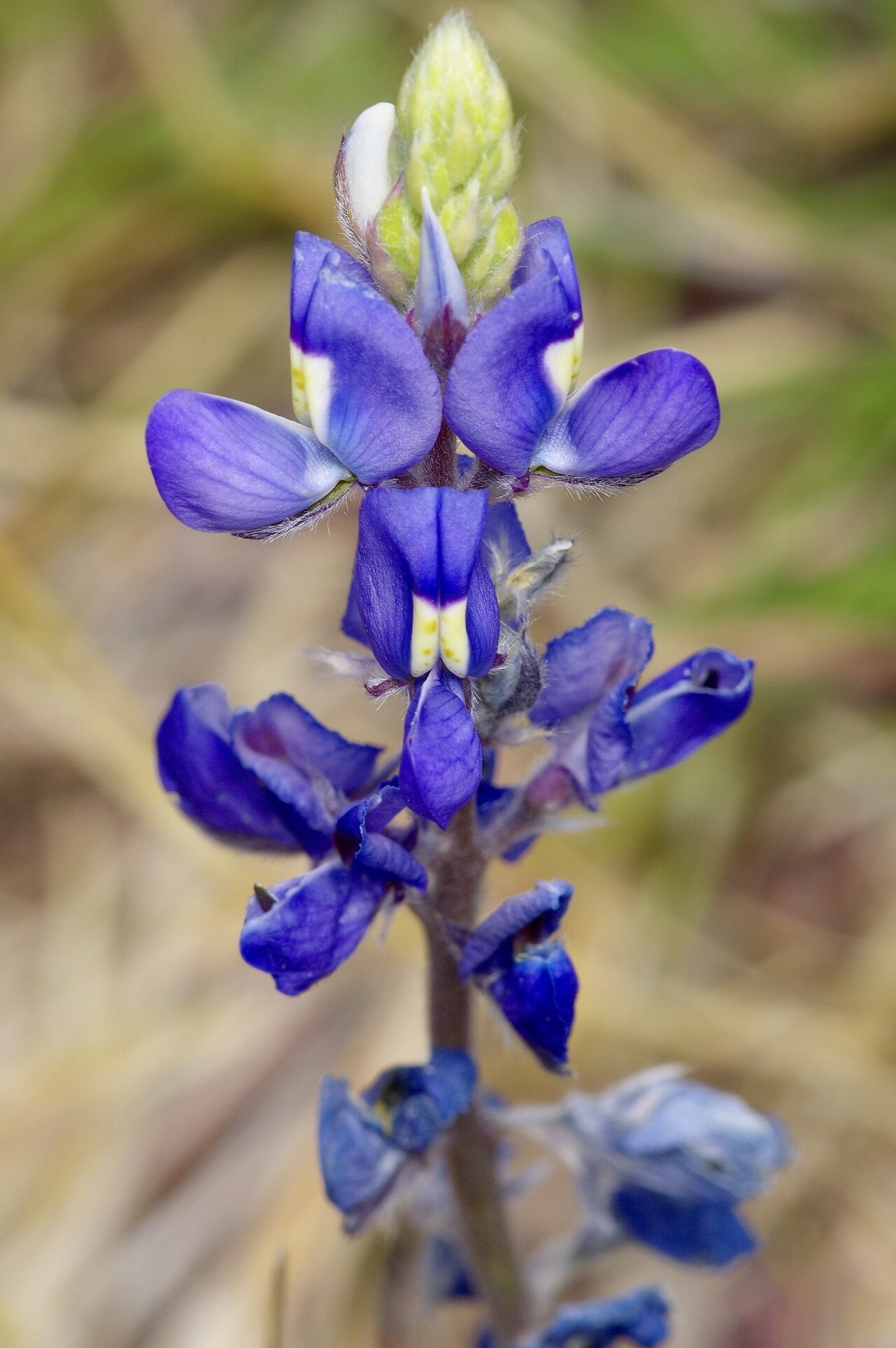
The pea-shaped flowers are crowded on the upper 4 to 8 inches or more of each stem. They are a deep royal blue to blue-violet. The upright upper petal, called the banner, has a yellow to whitish spot in the center that turns reddish purple after pollination, a signal to bees that the flower has already been visited. Rare plants have pink or white flowers. Bloom runs from February to April, depending on rains and temperature.
Fruit
The fruit is a flattened, hairy pod about 1 to 1½ inches long, typical of lupines. As it dries in late spring, it twists open and flings its hard seeds away from the parent plant. The plants die after setting seed.
Look-alikes
The familiar Texas Bluebonnet (L. texensis) of central and south Texas is much shorter, usually under 18 inches, with a white tip on the flower spike and a lighter blue color. Sandyland Bluebonnet (L. subcarnosus) grows in deep sands of south-central Texas and is also low and less showy. Big Bend bluebonnet’s height, dark color and Trans-Pecos range set it apart.
Quick Facts
| Scientific Name | Lupinus havardii S. Watson |
| Family | Fabaceae (pea family) |
| Plant Type | Cool-season (winter) annual wildflower |
| Mature Height | 1–3 ft |
| Mature Spread | 1–1.5 ft |
| Growth Rate | Fast once rains arrive |
| Sun Exposure | Full sun |
| Water Needs | Low; dry, well-drained soil |
| Soil Type | Gravelly, sandy or rocky alluvium; limestone-based soils |
| Soil pH | Neutral to alkaline (about 7.0–8.5) |
| Bloom Time | February–April |
| Flower Color | Deep blue with a yellow-white banner spot; rarely pink or white |
| Fall Color | None; plants die after setting seed |
| Fruit | Hairy pod that splits to release hard seeds |
| Deer Resistant | Moderate; foliage is bitter, but deer browse it |
| USDA Hardiness Zones | 7–9 (grown as a cool-season annual) |
Native Range
Big Bend bluebonnet is native to the Chihuahuan Desert. In the United States it grows only in the Trans-Pecos of far West Texas, mainly in the Big Bend region of Brewster and Presidio counties, including Big Bend National Park and Big Bend Ranch State Park. Its range continues south across the Rio Grande into the northern Mexican states of Chihuahua and Coahuila.
It grows on open desert flats, gravelly washes, alluvial fans and rocky slopes, and it is common along road shoulders, where runoff collects. It prefers loose, well-drained gravel and sandy soils, often derived from limestone or volcanic rock, and the lower desert elevations of the Big Bend.
Like many desert annuals, its display depends on rain. Seeds can lie dormant in the soil for several years and germinate in large numbers after good fall and winter rains, so peak years with blue roadsides alternate with dry years when few plants appear.
📋 Regional plant lists featuring Big Bend Bluebonnet: South & West Texas
Growing & Care Guide
Big Bend bluebonnet is a rewarding annual for dry, sunny gardens in the Southwest and Texas, and horticulturists in Texas have trialed it as a cut flower and selected pink and white forms. It is grown from seed sown in fall. It needs excellent drainage and dislikes rich, wet or heavy soil.
Light
Full sun all day. In shade the stems stretch and flop, and plants bloom poorly.
Soil & Water
Plant it in lean, gravelly or sandy soil that drains fast; alkaline and limestone-based soils are fine. Water seedlings occasionally during dry spells in winter, then let rains carry them. Overwatering and heavy clay cause root rot.
Planting Tips
Sow seed outdoors in September to November where the plants are to grow, since lupines have a taproot and resent transplanting. Press seeds lightly into bare soil and cover with about ¼ inch of gritty soil. Seeds have very hard coats: scarify them (nick or sand the coat, or soak them briefly in hot water) for faster, more even germination. Commercial seed is available from Texas native seed companies.
Pruning & Maintenance
Little care is needed. Cut a few spikes for arrangements if you like, but leave plenty of pods to ripen if you want the plants to reseed. Remove dead plants after the pods have opened in late spring. Pill bugs, snails and rabbits sometimes damage young seedlings.
Propagation
By seed only. Collect pods as they turn tan in late spring, before they twist open, and let them finish drying in a paper bag. Store seed dry and scarify it before sowing in fall.
Safety Note
Like other lupines, Big Bend bluebonnet contains alkaloids, especially in the seeds, that can be toxic to people, pets and livestock if eaten. Keep seeds away from children and pets, and do not eat any part of the plant.
Landscape Uses
- Desert and xeriscape gardens: spring color in gravel beds with agaves, sotol and cacti
- Wildflower plantings: sown with desert marigold, blackfoot daisy and other Chihuahuan Desert annuals
- Cut flowers: tall, long-lasting deep blue spikes
- Pollinator gardens: an early-season source of pollen and nectar for native bees
Wildlife & Ecological Value
Big Bend bluebonnet is one of the earliest large flower displays of the Chihuahuan Desert year, appearing when few other plants are in bloom.
For Pollinators
Bumble bees and other native bees are the main visitors. They land on the lower petals and push them down to reach the pollen. The banner spot changes color after pollination, which guides bees to flowers that still have rewards. The Xerces Society notes it as having special value to native bees and bumble bees.
For Birds
Seed-eating birds such as quail and sparrows pick up seeds that fall to the ground, and the plants offer cover for small birds in open desert.
For Mammals
Deer and rabbits browse the foliage, though it is somewhat bitter. Rodents gather and cache the hard seeds.
Ecosystem Role
Like other legumes, it hosts nitrogen-fixing bacteria in root nodules, which adds nitrogen to poor desert soils. Its long-lived seed bank helps it survive years of drought and bloom in large numbers when rains return.
Cultural & Historical Uses
Sereno Watson described Lupinus havardii in 1883 from specimens collected in West Texas by Valery Havard, a U.S. Army surgeon and botanist who explored the Trans-Pecos in the early 1880s. Its common names honor both him and the Big Bend country where it grows.
Texas adopted the bluebonnet as its state flower in 1901, naming Lupinus subcarnosus. In 1971 the legislature broadened the designation to include Lupinus texensis and any other bluebonnet species found in Texas, so Big Bend bluebonnet shares the honor.
Today it is a signature of spring in Big Bend National Park, where good bloom years bring visitors to see roadsides and washes turned dark blue against the desert mountains.
Frequently Asked Questions
How tall does Big Bend bluebonnet grow?
Usually 1 to 3 feet tall, which makes it the tallest of the Texas bluebonnets. The flowers cover the upper 4 to 8 inches or more of each stem.
When does Big Bend bluebonnet bloom?
From February to April, peaking in March in most years. In wet winters the display is much larger than in dry years.
Where can I see Big Bend bluebonnets in the wild?
In the Big Bend region of West Texas, especially along roads and washes in Big Bend National Park and Big Bend Ranch State Park. Please enjoy them in place and do not dig plants or pick them in the parks.
How do I grow Big Bend bluebonnet from seed?
Scarify the hard seeds and sow them in fall directly in full sun in gravelly, well-drained soil. Water occasionally during dry spells in winter, and avoid rich soil or frequent watering.
Is Big Bend bluebonnet poisonous?
Yes, like other lupines it contains alkaloids, especially in the seeds, that can be toxic to people, pets and livestock if eaten. Keep seeds and pods away from children and pets.

Looking for a nursery that carries Big Bend Bluebonnet?
Browse our native plant nursery directory: Texas

