
Sandyland Bluebonnet (Lupinus subcarnosus)
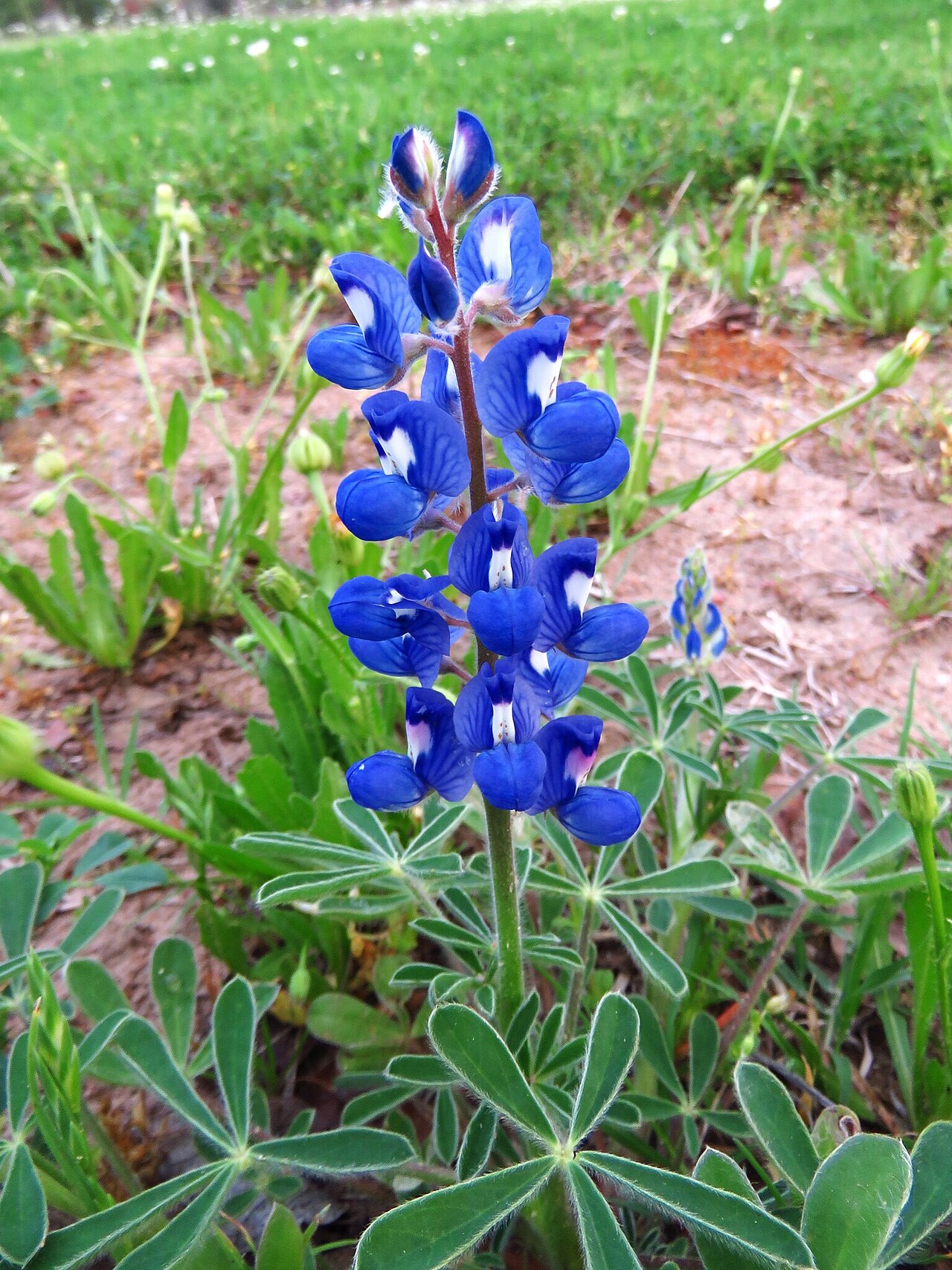
Lupinus subcarnosus, known as Sandyland Bluebonnet (also sandy land bluebonnet, and simply Texas bluebonnet in USDA PLANTS), is a native winter annual lupine of the deep sandy soils of south-central and southern Texas. In March and April it sends up short, loose spikes of vivid blue, pea-like flowers marked with a white spot, over low rosettes of fan-shaped, palmately divided leaves.
It was the original state flower of Texas. In 1901 the Texas Legislature named Lupinus subcarnosus the state flower, and in 1971 it extended the title to the showier Texas Bluebonnet (L. texensis) and any other bluebonnet species found in the state. Sandyland bluebonnet is smaller and less showy than L. texensis, with blunt, rounded leaflets, and it is a specialist of deep sands rather than the limestone soils of the Hill Country.
Like all lupines, it is a member of the pea family (Fabaceae) that fixes nitrogen with the help of root bacteria, and its flowers are an important early-spring resource for bumble bees and other native bees. Safety note: lupine seeds and, to a lesser degree, the foliage contain toxic alkaloids. Do not eat any part of the plant, and keep children and livestock from eating the seeds or pods.
Identification
Sandyland bluebonnet is easy to confuse with the Texas bluebonnet, and the two often get lumped together as “bluebonnets.” The best clues are the shape of the leaflets, the size of the plant and flower spike, and the soil it is growing in.
Leaves
The leaves are palmately compound, usually with 5 (sometimes 4 to 7) leaflets spreading like the fingers of a hand from the top of a long leafstalk. The leaflets are broadest near the tip and blunt or rounded at the end, often with a tiny point, and are smooth or nearly smooth on the upper surface and silky-hairy beneath. They are slightly thick and fleshy, which is what subcarnosus (“somewhat fleshy”) refers to.
Flowers
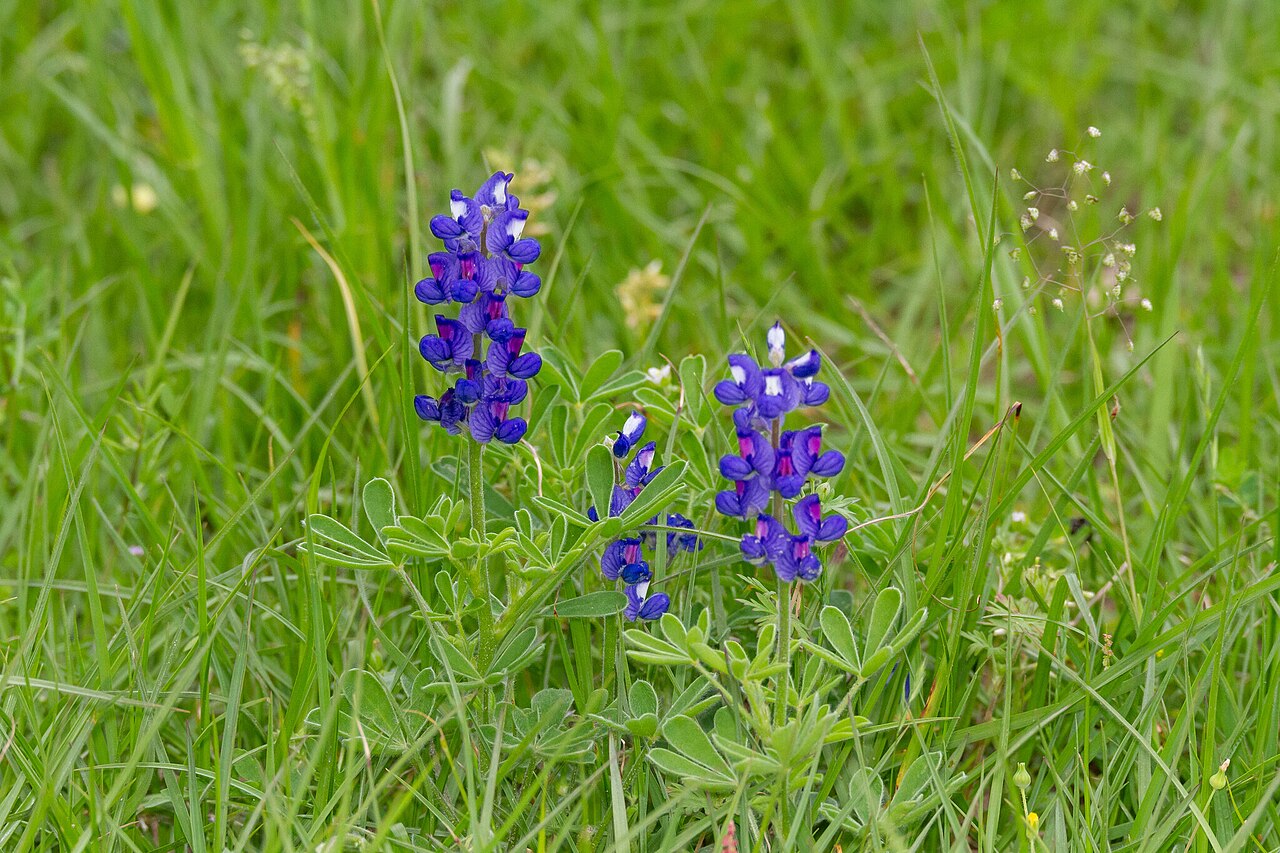
Plants are usually 6 to 16 inches tall, branching from the base, with loose terminal spikes (racemes) of deep blue pea flowers in March and April. Each flower is about ½ inch long, with an upright banner petal that has a white center spot; the spot turns pinkish-purple after the flower is pollinated, signalling to bees that the nectar and pollen are gone. The tip of the spike is not conspicuously white and silky the way it is in Texas bluebonnet.
Fruit
The fruit is a flattened, hairy pod about 1½ inches long holding several hard, speckled seeds. As the pods dry in late spring they twist open and fling the seeds a short distance. The seeds have hard coats and can stay dormant in the soil for several years, which is why bluebonnet displays vary so much from year to year.
How It Differs from Texas Bluebonnet
Texas Bluebonnet (L. texensis) is larger and more upright, with pointed leaflets and a dense flower spike whose tip is covered in white, silky unopened buds, giving it a “white-tipped” look. It grows mainly on the calcareous, often rocky soils of Central and North Texas and is the bluebonnet of roadside seedings. Sandyland bluebonnet has blunt, rounded leaflets, a shorter and looser spike without a white tip, and it grows almost only in deep, loose sand. Where both occur, check the leaflet tips first.
Safety: Toxic Seeds
Plants in the genus Lupinus, especially the seeds and pods, contain quinolizidine alkaloids that can be toxic to people and animals if eaten. Symptoms can include nausea, vomiting, dizziness and, with large amounts, more serious nervous system effects. Children are most at risk because of their curiosity, and livestock, especially sheep, can be poisoned by eating large amounts of lupine seed. Admire bluebonnets, but never eat them, and wash your hands after collecting seed.
Quick Facts
| Scientific Name | Lupinus subcarnosus Hook. |
| Family | Fabaceae (pea family) |
| Plant Type | Winter annual wildflower |
| Mature Height | 6–16 in |
| Mature Spread | 6–12 in |
| Growth Rate | Fast (germinates in fall, blooms in spring) |
| Sun Exposure | Full sun |
| Water Needs | Low; dry, well-drained sand |
| Soil Type | Deep, loose sandy soils |
| Soil pH | Slightly acidic to neutral (about 5.5–7.0) |
| Bloom Time | March–April |
| Flower Color | Deep blue with a white spot turning purplish |
| Fall Color | None (overwinters as a green rosette) |
| Fruit | Flattened hairy pod with hard seeds (toxic) |
| Deer Resistant | Yes; foliage is bitter and toxic |
| USDA Hardiness Zones | Grown as a winter annual in zones 7–10 |
Native Range
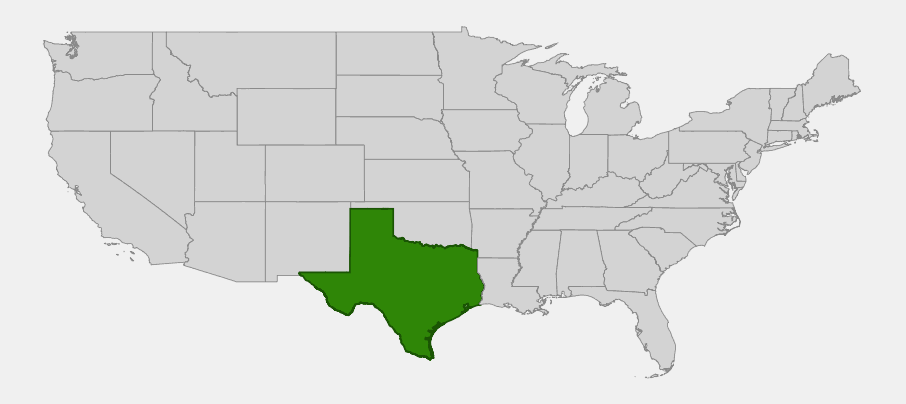
Sandyland bluebonnet is essentially a Texas plant. The Lady Bird Johnson Wildflower Center describes its native range as south-central Texas, scattered south to northern Hidalgo County, and Kew’s Plants of the World Online also lists northeastern Mexico. It is most abundant on the sandy soils of the Post Oak Savannah and the Carrizo sands, from the Bryan–College Station area and Leon County southwest through Bastrop, Gonzales and Wilson counties into the South Texas Plains, with scattered populations east into the sandy uplands of East Texas.
USDA PLANTS also shows records for Louisiana and Florida. Texas sources treat the species as a plant of Texas sands, and those outlying records are best regarded as introductions, for example from wildflower seed mixes, so this page maps Texas only.
Its habitat is deep, loose, well-drained sand: sandy fields and pastures, openings in post oak woodland, sandy roadsides and old fields. It does poorly on the heavy clays and alkaline limestone soils where Texas bluebonnet thrives. Like other winter annuals, it germinates with fall rains, grows as a rosette through the winter and flowers in early spring before the summer heat.
📋 Regional plant lists featuring Sandyland Bluebonnet: South & West Texas · Arkansas, Louisiana, Eastern Oklahoma & Eastern Texas
Growing & Care Guide
Sandyland bluebonnet is the bluebonnet to grow if you garden on deep sand in Texas. Seed is sold by some Texas native seed companies. Treat it like any bluebonnet: sow seed in fall, give it full sun and excellent drainage, and let it reseed.
Light
Full sun is essential. In shade, plants stretch, flower poorly and are prone to rot.
Soil & Water
It needs loose, deep, well-drained sand, and it will not thrive in heavy clay or poorly drained soil. Fall and winter rains are usually all it needs. Avoid overwatering, which causes root rot, and do not fertilize: like all lupines it makes its own nitrogen with root bacteria.
Planting Tips
Sow seed in September to early November, raking it lightly into bare sandy soil so it is in contact with the ground but no more than about ⅛ inch deep. Rosettes appear within a few weeks and grow slowly through winter. Transplants are rarely successful because of the long taproot, so seed is the way to grow it.
Pruning & Maintenance
After flowering, leave the plants in place until the pods turn brown and split, usually in May, so they can reseed. Then pull or mow the dead plants. Keep the area weeded in winter so grasses do not smother the rosettes.
Propagation
Grow from seed only. The hard seed coat delays germination; scarify by nicking the seed or rubbing it lightly with sandpaper, or soak it in hot water overnight, to get more seeds up the first year. Untreated seed will still sprout over several seasons. Collect seed from your own plants when the pods turn tan, and store it dry.
Landscape Uses
- Sandy-soil wildflower meadows: early-spring blue color where Texas bluebonnet struggles
- Post oak and savanna restorations: a characteristic wildflower of Texas sandlands
- Pollinator gardens: early nectar and pollen for bumble bees and other native bees
- Roadsides and open lots: a reseeding annual for sunny, sandy ground
- Texas heritage plantings: the original 1901 Texas state flower
Wildlife & Ecological Value
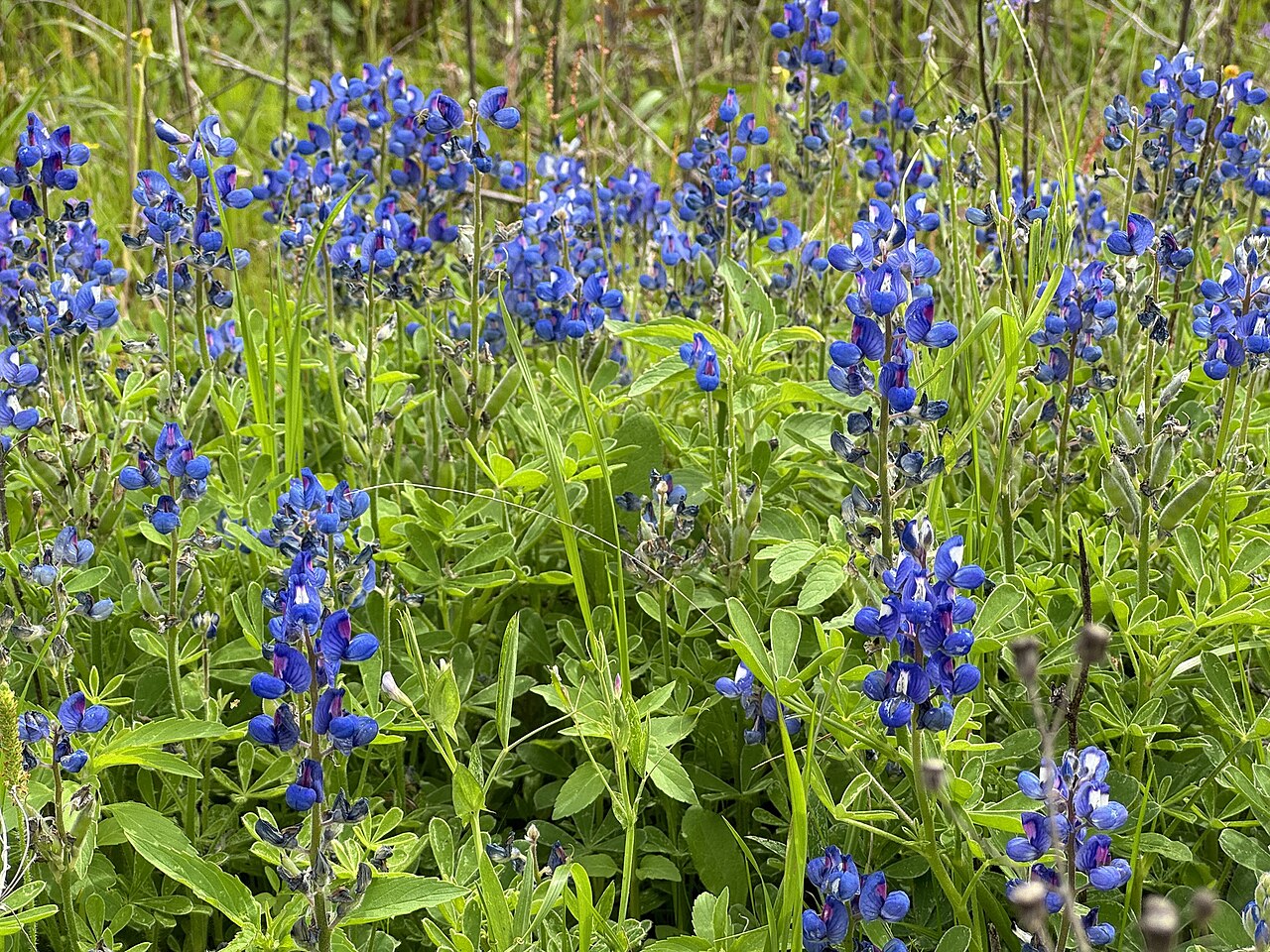
Sandyland bluebonnet is one of the first bee flowers of spring on Texas sandlands, and as a legume it also enriches poor sandy soils.
For Pollinators
The flowers are pollinated mainly by bees strong enough to open the keel petals, especially bumble bees and other medium to large native bees; honey bees also visit. The Xerces Society notes lupines as being of special value to native bees and bumble bees. The banner spot changes from white to purplish after pollination, steering bees toward flowers that still have rewards.
For Birds
Some ground-feeding birds, such as quail and doves, eat lupine seeds, and the plants provide low cover in early spring.
For Mammals
Deer and rabbits mostly avoid the bitter foliage, and the seeds are toxic to livestock in quantity. Small rodents may cache some seed.
Ecosystem Role
Through its partnership with nitrogen-fixing Bradyrhizobium bacteria in root nodules, sandyland bluebonnet adds nitrogen to nutrient-poor sands. Its long-lived seed bank lets populations ride out drought years and reappear in masses after good fall rains.
Cultural & Historical Uses
The species was described in 1836 by the British botanist William Jackson Hooker from seed collected in Texas by the Scottish naturalist Thomas Drummond, one of the first botanists to collect widely in Texas.
On March 7, 1901, the Texas Legislature adopted Lupinus subcarnosus as the state flower. Many Texans thought the larger, more common L. texensis was the better choice, and the debate continued for decades until 1971, when the Legislature added L. texensis “and any other variety of bluebonnet not heretofore recorded.” Today all native Texas bluebonnets share the title, but sandyland bluebonnet was the first.
The name “bluebonnet” comes from the resemblance of the flower to a woman’s sunbonnet. Bluebonnet season is a major event in Texas, and while most of the famous roadside displays are L. texensis, the deep blue spring fields of the Post Oak Savannah and South Texas sands are often sandyland bluebonnet.
Frequently Asked Questions
Is sandyland bluebonnet the Texas state flower?
Yes. Lupinus subcarnosus was named the state flower of Texas in 1901. In 1971 the title was extended to Texas Bluebonnet (L. texensis) and all other native Texas bluebonnets, so they now share it.
How can I tell sandyland bluebonnet from Texas bluebonnet?
Look at the leaflets: sandyland bluebonnet has blunt, rounded leaflet tips, while Texas bluebonnet has pointed ones. Texas bluebonnet also has a taller, denser spike with a white, silky tip of unopened buds. Sandyland bluebonnet grows in deep sand; Texas bluebonnet prefers limestone and clay soils.
Are bluebonnets poisonous?
Yes, the seeds and pods are the main concern. Lupines contain alkaloids that can make people and animals sick if eaten. Do not eat any part of the plant, and keep children and livestock away from the seeds.
When should I plant sandyland bluebonnet seed?
Sow in fall, from September to early November, on bare, sandy soil in full sun. Scarifying the hard seed coat speeds germination. The seedlings overwinter as rosettes and bloom in March and April.
Is it illegal to pick bluebonnets in Texas?
There is no specific state law against picking bluebonnets, but picking on private land without permission is trespassing, and picking or digging in state parks and some highway areas is not allowed. Leaving the flowers lets them set seed for next year.

Looking for a nursery that carries Sandyland Bluebonnet?
Browse our native plant nursery directory: Texas

