
Northern Blueberry (Vaccinium boreale)
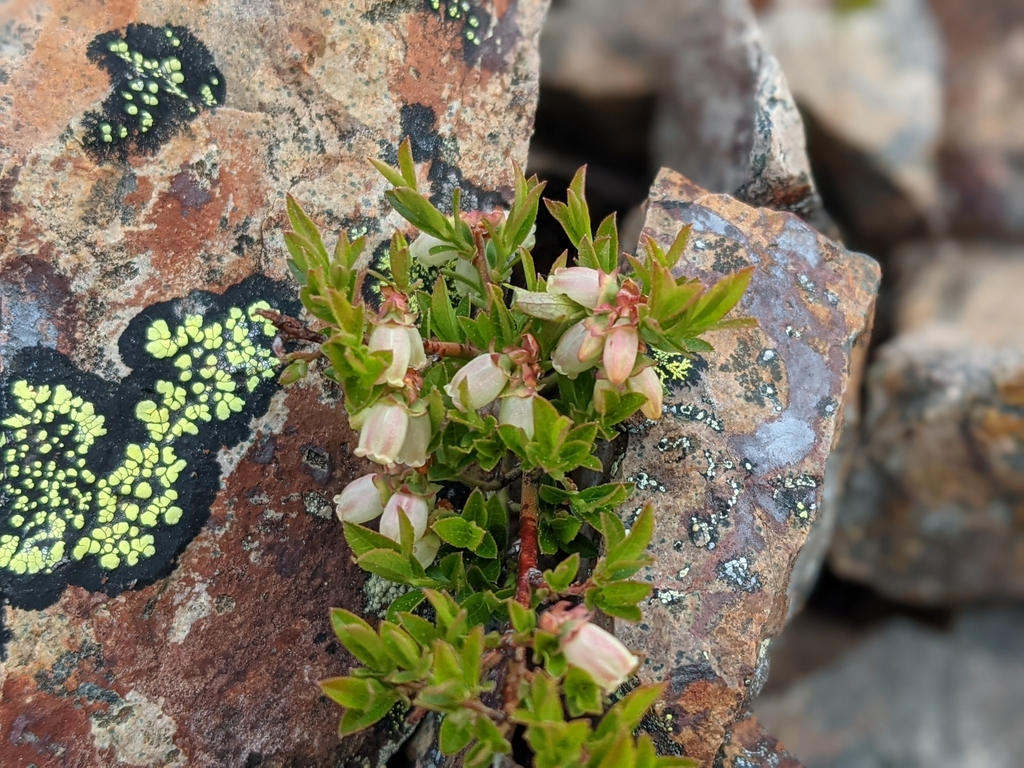
Vaccinium boreale, the Northern Blueberry, is the smallest of the lowbush blueberries of the Northeast. It is a tiny, deciduous shrub, usually only 2 to 4 inches tall, that grows in dense colonies on alpine summits, exposed ledges, bogs and windswept barrens. In early summer it bears small white bell-shaped flowers, and in late summer it produces sweet blue berries that are big for the size of the plant. In Newfoundland, where the plant is common, wild blueberries are sometimes called “hurts” or “sweet hurts.”
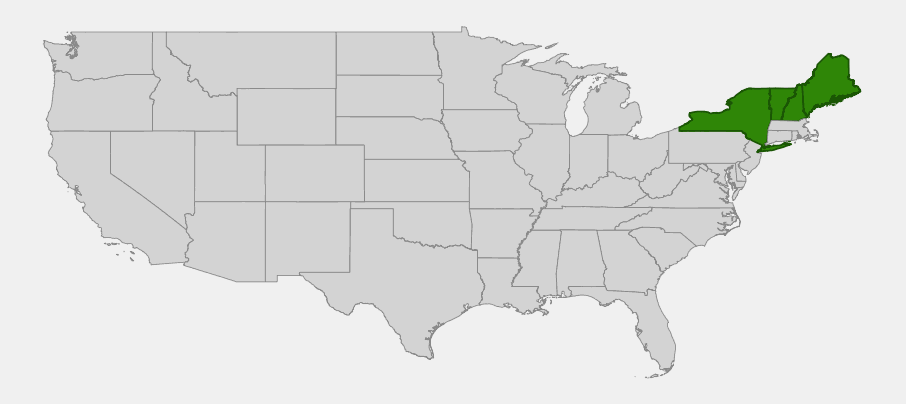
In the United States northern blueberry is found only in the far Northeast: on the high peaks and exposed ledges of Maine, New Hampshire, Vermont and northern New York. It is much more widespread in eastern Canada, from Quebec and the Maritime provinces to Newfoundland and Labrador, where it covers coastal and subarctic barrens. It was described as a separate species only in 1961; before that it was lumped with the common lowbush blueberry.
This guide explains how to tell northern blueberry from its close relatives, where it grows, how it supports wildlife and what gardeners in very cold climates should know before trying to grow it.
Identification
Northern blueberry looks like a miniature Lowbush Blueberry. Its very small size, narrow toothed leaves that are hairless on both sides and its cold, exposed habitat are the best clues.
Growth Habit
Northern blueberry is a dwarf, deciduous shrub, usually 1 to 4 inches tall, that spreads by underground stems into dense, low colonies. The young twigs are green, angled and have narrow lines of hairs. On exposed summits it can look like a low mat hugging the rocks.
Leaves
The leaves are alternate, narrowly elliptic and small, roughly ⅓ to ¾ inch long and less than ¼ inch wide. They are hairless, bright green and have fine teeth along the edges. They turn red in fall before dropping.
Flowers
In late spring and early summer (about May to June, later at high elevations), short clusters of small bell-shaped flowers, each about ⅛ inch long, open at the branch tips. They are white, sometimes tinged with pink or green.
Berries
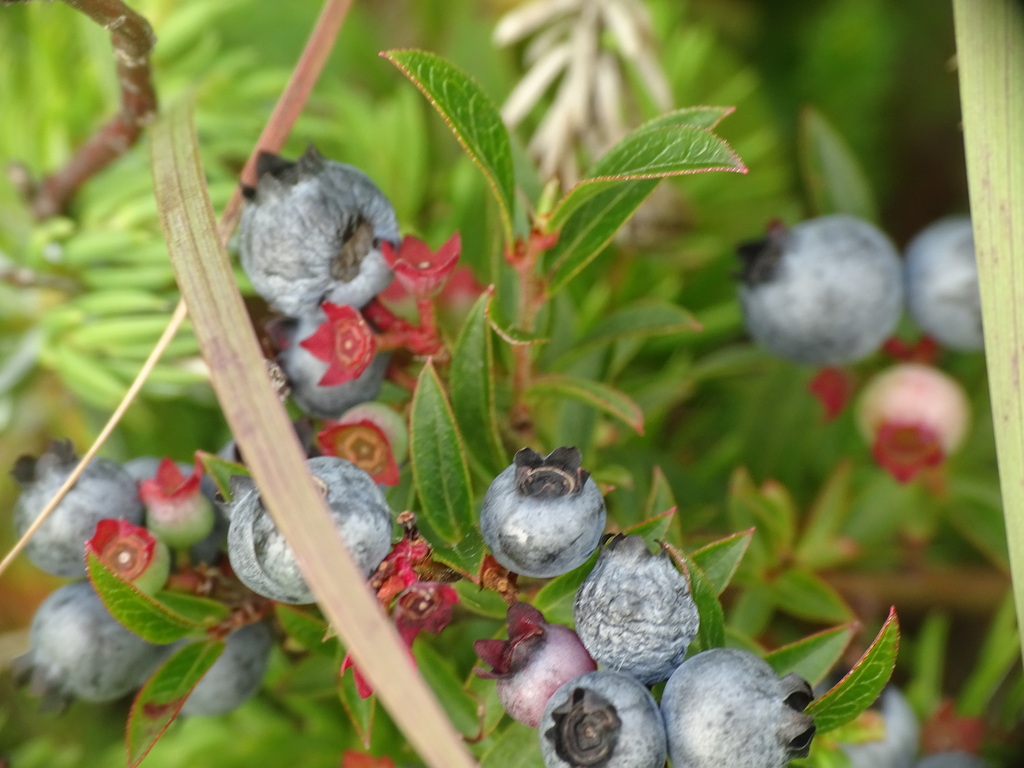
The berries are round, blue with a pale waxy bloom, and up to about ¼ inch across. They ripen from late July to September and are sweet and flavorful.
Look-alikes
Lowbush Blueberry is usually taller (6 to 24 inches) and has larger leaves; it grows in the same region and the two can be hard to tell apart where they meet. Velvetleaf Blueberry has untoothed leaves and twigs that are densely velvety-hairy. Dwarf Bilberry bears single flowers and berries in the leaf axils, not in clusters, and Bog Bilberry has thicker, untoothed, bluish-green leaves.
Quick Facts
| Scientific Name | Vaccinium boreale I.V. Hall & Aalders |
| Family | Ericaceae (heath family) |
| Plant Type | Dwarf, deciduous, colony-forming shrub |
| Mature Height | 1–4 in |
| Mature Spread | 1–3 ft; spreads slowly by rhizomes into colonies |
| Growth Rate | Slow |
| Sun Exposure | Full sun |
| Water Needs | Medium; moist but well-drained, tolerates short dry spells |
| Soil Type | Thin, rocky, gravelly, sandy or peaty soils |
| Soil pH | Strongly acidic, about 4.0–5.5 |
| Bloom Time | May–June |
| Flower Color | White, sometimes pink- or green-tinged |
| Fall Color | Red |
| Fruit | Sweet blue berries with a pale bloom (edible) |
| Deer Resistant | No; browsed by deer and moose |
| USDA Hardiness Zones | 2–5 |
Native Range
In the United States, USDA PLANTS lists northern blueberry as native only in Maine, New Hampshire, Vermont and New York. Here it is a plant of cold, exposed places: the alpine and subalpine zones of the northern New England mountains, on high ridges and cliff ledges, and in a few places in northern New York. Because these habitats are small and scattered, it is uncommon in all four states.
The center of its range is in eastern Canada. It grows in Quebec, New Brunswick, Nova Scotia and especially Newfoundland and Labrador, where it is common on coastal headlands, subarctic barrens and heathlands. At these northern latitudes it grows close to sea level.
Typical habitats include alpine and subalpine heath, mountain summits and plateaus, rocky ridges and cliff ledges, bogs and open barrens. It needs full sun, very acidic soil and cool summers. It often grows among lichens, crowberry, mountain cranberry and other low heath-family shrubs.
📋 Regional plant lists featuring Northern Blueberry: New Hampshire, Maine & Vermont · New York, Pennsylvania & Northern New Jersey · Delaware, Southern New Jersey & Long Island
Growing & Care Guide
Northern blueberry is a specialist of cold, exposed, acidic habitats, and it is rarely sold by nurseries. It can be grown only in cold northern gardens (roughly zones 2 to 5) with cool summers. For most gardeners in the Northeast, Lowbush Blueberry is a much easier native blueberry with a similar look.
Light
Give it full sun. In the wild it grows on open summits and barrens with no tree cover, and shade reduces flowering and fruiting.
Soil & Water
It needs strongly acidic, lean soil: gravelly, sandy or peaty mixes with plenty of drainage. Keep the soil evenly moist during establishment, but avoid waterlogged or rich garden soil. Do not add lime or general-purpose fertilizer.
Planting Tips
Use it in a cool rock garden, trough or crevice garden, or among other low heaths and lichens. Plant nursery-propagated stock only and never dig it from alpine areas, where the plants and the fragile soils they hold are easily damaged. In New England many alpine summits are protected and plant collecting is not allowed.
Pruning & Maintenance
No pruning is needed. Keep taller plants and weeds from shading it out, and mulch with pine needles or coarse grit to keep the roots cool. It struggles in hot, humid summers.
Propagation
It can be grown from seed taken from ripe berries and given about three months of cold, moist stratification. It can also be increased by dividing rooted sections of a colony in early spring or by softwood cuttings. Growth is slow.
Landscape Uses
- Alpine and rock gardens: a tiny native shrub for troughs and crevice gardens in cold climates
- Edible landscaping: sweet, wild-flavored berries in late summer
- Wildlife plantings: fruit for birds and mammals and early nectar for bumblebees
- Habitat restoration: helps cover bare, acidic ground on barrens and disturbed summit areas
- Nature study: an indicator of alpine and subarctic heath communities
Wildlife & Ecological Value
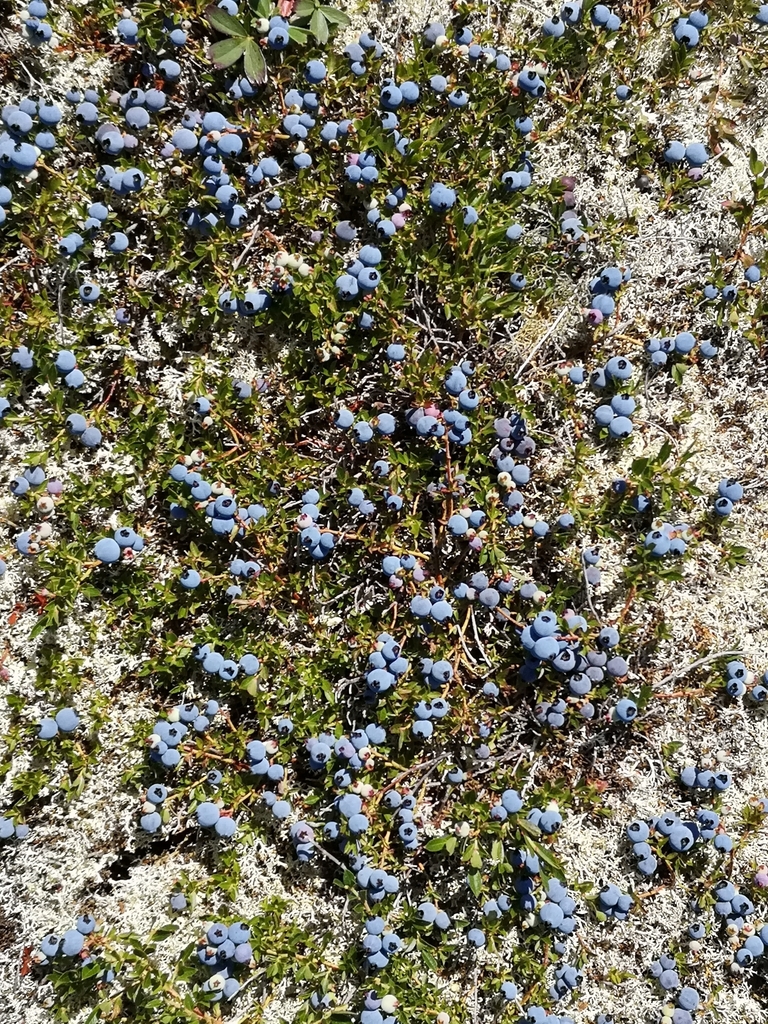
Even on bare, windswept summits, northern blueberry feeds a surprising number of animals.
For Pollinators
Queen bumblebees, which fly in cold weather, are the main pollinators. They use buzz pollination to shake the pollen out of the bell-shaped flowers. Other native bees also visit, and Vaccinium species are larval host plants for butterflies such as the brown elfin.
For Birds
Spruce grouse, ptarmigan in Canada, thrushes, sparrows and other birds eat the berries. Grouse also eat the buds and leaves.
For Mammals
Black bears, foxes, red squirrels, chipmunks and small rodents eat the berries. Deer, moose and caribou browse the twigs.
Ecosystem Role
Northern blueberry is part of the low heath that holds thin soil on exposed rock. Its roots partner with ericoid mycorrhizal fungi, which help it take up nutrients in very poor, acidic soils. Its rhizomes allow it to survive fire and recover after disturbance.
Cultural & Historical Uses
Canadian botanists Ivan V. Hall and Lewis E. Aalders described Vaccinium boreale in 1961 in the American Journal of Botany. The species name boreale means “northern.” It is a diploid species (2n = 24), while the common lowbush blueberry is a tetraploid with twice as many chromosomes, which helps explain why the two stay distinct where they grow together.
Wild blueberries, including northern blueberry, have long been picked by Indigenous peoples and later settlers in Newfoundland and Labrador. They are eaten fresh, dried, baked or made into jam. The Newfoundland name “hurts” comes from “whortleberry,” an English name for bilberries.
Because it is so small, northern blueberry has never been grown as a commercial crop. In New England it is mostly known to hikers, who find it on the rocky summits above treeline.
Frequently Asked Questions
Are northern blueberries edible?
Yes. The berries are sweet and can be eaten fresh or used like other blueberries. Make sure of your identification before eating any wild fruit, and do not pick on protected alpine summits where collecting is prohibited.
How is northern blueberry different from lowbush blueberry?
Northern blueberry is much smaller, usually only 1 to 4 inches tall, with narrow, hairless, finely toothed leaves less than an inch long. Lowbush Blueberry is usually 6 to 24 inches tall with larger leaves and grows in a much wider range of habitats.
Where does northern blueberry grow in the United States?
Only in Maine, New Hampshire, Vermont and New York, mostly on alpine and subalpine summits, exposed rocky ledges and bogs. It is far more common in eastern Canada, especially Newfoundland and Labrador.
Can I grow northern blueberry in my garden?
Only in cold-climate gardens with cool summers and very acidic, well-drained soil, and plants are rarely available. In most gardens, lowbush blueberry or Velvetleaf Blueberry is a better choice.
What other wild blueberries grow with it?
On northern summits and barrens it often grows with Bog Bilberry, Lingonberry, lowbush blueberry and Black Crowberry.

Looking for a nursery that carries Northern Blueberry?
Browse our native plant nursery directory: Maine · New Hampshire & New York · Vermont

