
Dwarf Bilberry (Vaccinium cespitosum)
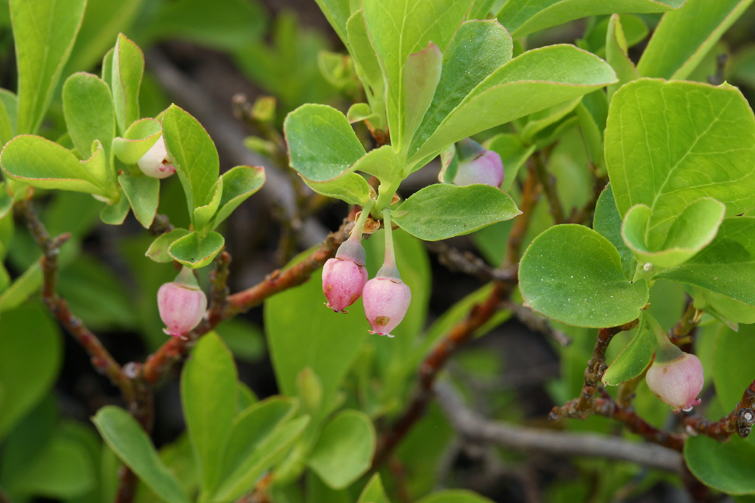
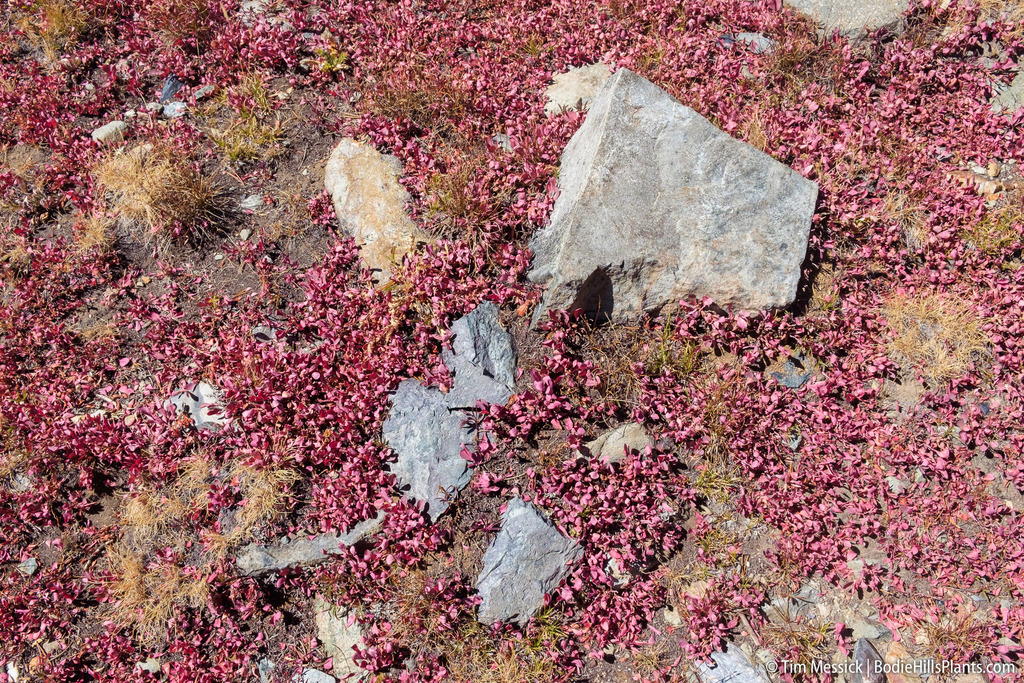
Vaccinium cespitosum, the Dwarf Bilberry, also called dwarf blueberry or dwarf huckleberry, is a low, mat-forming wild blueberry of northern and mountain habitats. It rarely grows more than a foot tall and spreads by underground stems into patches of small, shiny, bright green leaves. In early summer it bears tiny pink, urn-shaped flowers, followed by sweet, blue berries with a pale bloom. In fall the leaves turn brilliant red, and whole slopes of subalpine meadow can glow crimson.
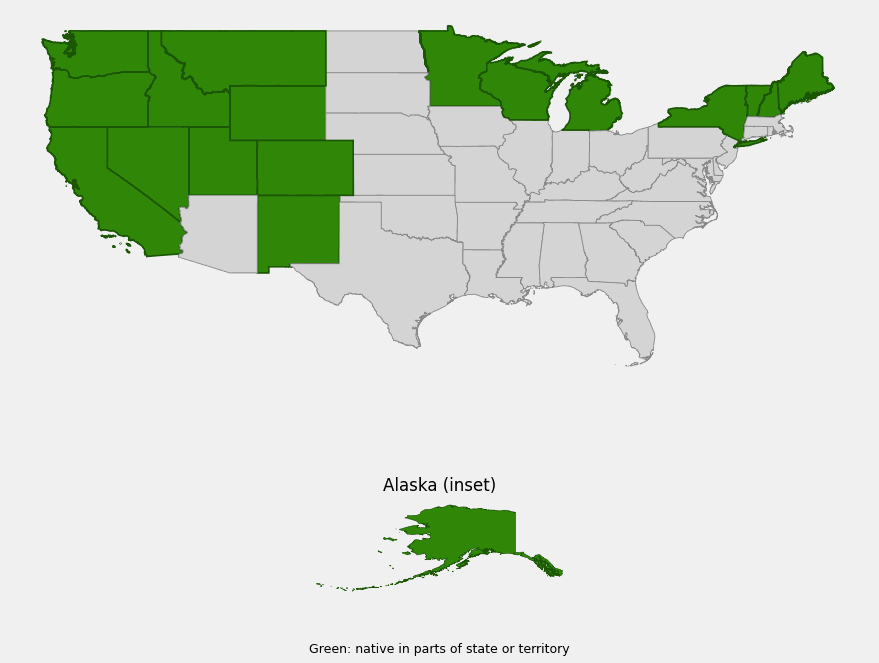
Dwarf bilberry has one of the widest ranges of any North American blueberry. It grows across almost all of Canada and Alaska, south through the Cascades and Sierra Nevada to California, through the Rocky Mountains to Colorado and New Mexico, and in the Great Lakes region and northern New England and New York. It grows in very different places: subalpine meadows, open conifer forests, rocky ledges, Arctic tundra and the sandy jack pine and red pine barrens of the upper Midwest.
For gardeners in cold climates, dwarf bilberry is a charming native groundcover for rock gardens, acidic woodland edges and naturalistic plantings. Its berries are edible and good for wildlife. This guide covers how to identify it, where it grows and how to grow it.
Identification
Several low wild blueberries share the same habitats. Dwarf bilberry can be identified by its small size, its leaves (green and shiny on both sides, toothed toward the tip) and its single, hanging flowers and berries.
Growth Habit
Dwarf bilberry is a low, deciduous shrub, usually 2 to 12 inches tall, occasionally taller in shade. It spreads by rhizomes and forms loose mats or dense carpets. The twigs are slender, round in cross-section, yellowish-green to reddish and often finely hairy. This separates it from Grouse Whortleberry, which has sharply angled, broom-like green twigs.
Leaves
The leaves are alternate, about ½ to 1¼ inches long and widest above the middle (obovate to oblanceolate). They are bright green and shiny on both surfaces, thin and smooth, and finely toothed, mainly toward the tip. They turn bright red to orange-red in fall before dropping.
Flowers
From May to July, depending on elevation and latitude, small urn- or bell-shaped flowers about ¼ inch long hang singly from the leaf axils on new shoots. They are pink to white with five tiny, turned-back lobes.
Berries
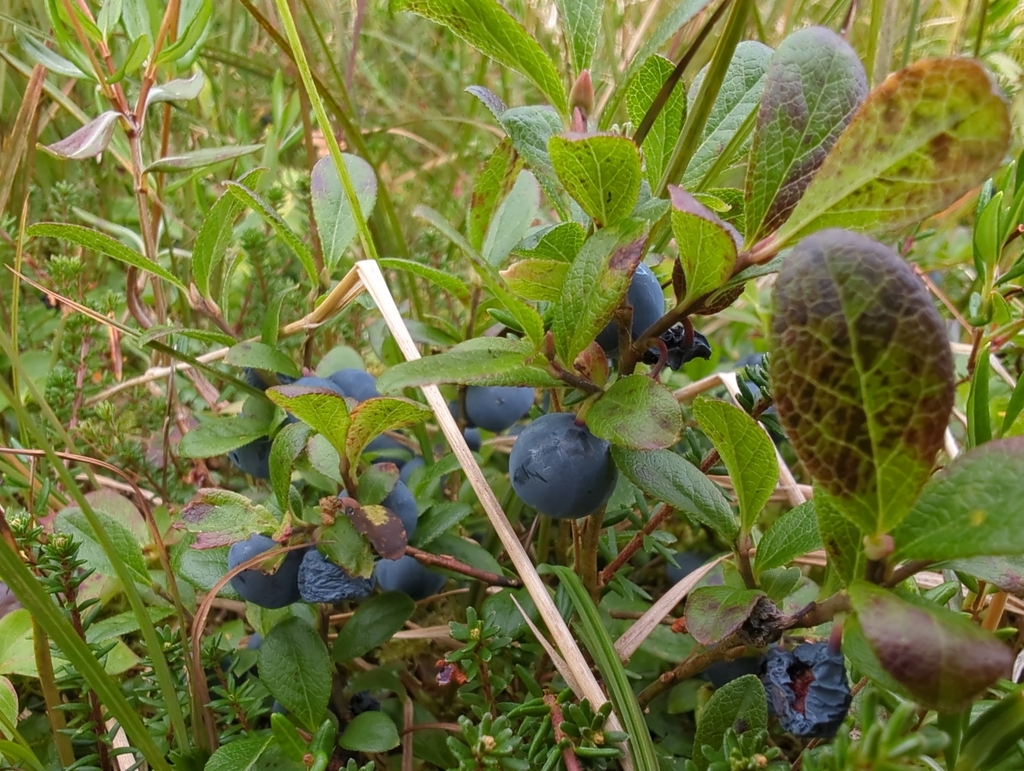
The berries are round, about ¼ inch across, blue with a whitish bloom, and sweet. They ripen from July to September. Unlike some huckleberries, they usually hang singly rather than in clusters.
Look-alikes
Lowbush Blueberry has flowers and berries in clusters and leaves that are often slightly hairy or paler beneath. Bog Bilberry has thicker, untoothed, bluish-green leaves with a strong net of veins underneath. Lingonberry is evergreen, with leathery, dark leaves and red berries.
Quick Facts
| Scientific Name | Vaccinium cespitosum Michx. (also spelled caespitosum) |
| Family | Ericaceae (heath family) |
| Plant Type | Low, deciduous, rhizomatous shrub |
| Mature Height | 2–12 in (occasionally to 20 in) |
| Mature Spread | 1–3 ft; spreads slowly by rhizomes |
| Growth Rate | Slow |
| Sun Exposure | Full sun to part shade |
| Water Needs | Medium; moist but well-drained |
| Soil Type | Acidic, sandy, gravelly, rocky or peaty soils |
| Soil pH | Acidic, about 4.5–6.0 |
| Bloom Time | May–July |
| Flower Color | Pink to white |
| Fall Color | Bright red to orange-red |
| Fruit | Sweet blue berries with a pale bloom (edible) |
| Deer Resistant | No; browsed by deer, elk and other wildlife |
| USDA Hardiness Zones | 2–7 |
Native Range
Dwarf bilberry is native to nearly every Canadian province and territory and to Alaska. In the western United States, USDA PLANTS lists it in Washington, Oregon, California, Idaho, Nevada, Montana, Wyoming, Utah, Colorado and New Mexico. Here it grows mainly in the mountains, from the Olympics and Cascades to the Sierra Nevada and through the Rocky Mountains south to northern New Mexico, from about 3,000 feet to above treeline at roughly 12,000 feet.
In the East it is scattered across the northern Great Lakes states of Minnesota, Wisconsin and Michigan, and in northern New York, Vermont, New Hampshire and Maine. There it grows in sandy jack pine and red pine barrens, on rocky lakeshores and ledges, and on a few alpine summits. Eastern populations are generally local and uncommon, and it is considered rare in parts of the Northeast.
Typical habitats include subalpine and alpine meadows, open lodgepole pine and spruce-fir forests, forest openings and burns, rocky slopes, Arctic and alpine tundra, gravelly river terraces and sandy barrens. It grows best in acidic, nutrient-poor, well-drained soils, and it often increases after light fires, which open the canopy while its rhizomes survive underground.
📋 Regional plant lists featuring Dwarf Bilberry: Alaska · Western Oregon & Western Washington · Idaho, Eastern Oregon & Eastern Washington · California & Nevada · Montana & Wyoming · Utah & Western Colorado · Michigan, Wisconsin & Eastern Minnesota · New York, Pennsylvania & Northern New Jersey · Delaware, Southern New Jersey & Long Island · New Hampshire, Maine & Vermont
Growing & Care Guide
Dwarf bilberry is a good choice for cold-climate gardeners with acidic soil. It is slow and small, and it is happiest in a rock garden, a sunny woodland edge or a naturalistic planting with other heath-family plants. It does poorly in hot, humid summers and in alkaline or heavy clay soils.
Light
Plant in full sun to partial shade. In the mountains it grows in sunny meadows; in lower, warmer gardens, light afternoon shade helps. More sun gives more berries and brighter fall color.
Soil & Water
It needs acidic soil, ideally pH 4.5 to 6.0, that is well-drained but does not dry out completely. Sandy, gravelly or rocky soils with some organic matter are ideal. Mulch with pine needles or shredded bark to keep the roots cool and moist. Water during dry spells in the first two years.
Planting Tips
Use nursery-grown plants, and set them 12 to 18 inches apart for a groundcover. Amend the planting area with peat-free acidic compost or leaf mold if the soil is not naturally acidic. Do not collect plants from the wild: they rarely survive transplanting, and eastern populations are uncommon.
Pruning & Maintenance
Little pruning is needed. Older, woody patches can be renewed by cutting a few stems to the ground in late winter. Avoid strong fertilizers; if needed, use a small amount of fertilizer made for acid-loving plants. Protect plants from rabbits and deer while they are young.
Propagation
It can be propagated by dividing rooted sections of rhizome in early spring, by softwood cuttings in early summer, or from seed. Clean seeds from ripe berries and give them a cold, moist period of about three months before sowing. Seedlings grow slowly.
Landscape Uses
- Rock and alpine gardens: a small, neat native shrub with pink flowers and red fall color
- Groundcover in acidic soils: a slow-spreading carpet under pines and at woodland edges
- Edible landscaping: sweet berries for people and wildlife
- Wildlife gardens: fruit for birds and mammals, and early flowers for bees
- Restoration of burns and pine barrens: resprouts after fire and helps cover open, sandy ground
Wildlife & Ecological Value
Like other wild blueberries, dwarf bilberry provides food for many animals, from bumblebees to bears.
For Pollinators
The small, bell-shaped flowers are pollinated mainly by bumblebees, which use “buzz pollination” to shake pollen from the flowers. Other native bees also visit. Vaccinium species are larval host plants for several butterflies and moths, such as the brown elfin and some hairstreaks.
For Birds
Grouse, ptarmigan, thrushes, waxwings, jays and many other birds eat the berries. Spruce and dusky grouse also eat the leaves and buds.
For Mammals
Black bears and grizzly bears, chipmunks, ground squirrels, foxes and other mammals eat the berries in late summer. Deer, elk, mountain goats and pikas browse the leaves and twigs.
Ecosystem Role
Dwarf bilberry is a common part of the low shrub layer in subalpine and boreal forests. Its rhizomes survive fires and resprout quickly, which helps stabilize soil after burns. Like other heath-family plants, it relies on root fungi (ericoid mycorrhizae) that help it take up nutrients in poor, acidic soils.
Cultural & Historical Uses
The French botanist André Michaux named Vaccinium cespitosum in 1803 from plants he collected around Hudson Bay. Cespitosum means “growing in tufts” or “turf-forming,” describing its low, matted growth. It is sometimes spelled caespitosum; USDA uses the spelling cespitosum.
Indigenous peoples across its range gathered the berries, which were eaten fresh, mashed into cakes or dried for winter, often together with other blueberries and huckleberries. In the Sierra Nevada it is sometimes called Sierra bilberry, and in parts of the West, dwarf huckleberry.
Its berries are small and the plants are scattered, so it has never become a commercial crop. Still, hikers often snack on them in late summer, and its scarlet autumn foliage is a highlight of the subalpine landscape.
Frequently Asked Questions
Are dwarf bilberry berries edible?
Yes. The blue berries are sweet and can be eaten fresh or used like blueberries. They are small and scattered, so gathering a large amount takes time. As with any wild fruit, be sure of your identification before eating.
How tall does dwarf bilberry grow?
Usually only 2 to 12 inches tall, occasionally a little taller in shade. It spreads slowly by underground stems to form mats or patches.
What is the difference between dwarf bilberry and lowbush blueberry?
Dwarf bilberry bears its flowers and berries singly in the leaf axils, and its leaves are shiny green on both sides and toothed mainly near the tip. Lowbush Blueberry bears flowers and berries in clusters.
Where does dwarf bilberry grow?
Across Canada and Alaska, in the western mountains south to California and New Mexico, and in the northern Great Lakes states and northern New England and New York. It grows in subalpine meadows, open conifer forests, tundra, rocky ledges and sandy pine barrens.
Can I grow dwarf bilberry in my garden?
Yes, in cold climates with acidic, well-drained soil. It suits rock gardens, sunny woodland edges and groundcover plantings under pines. Buy nursery-grown plants rather than digging them from the wild.

Looking for a nursery that carries Dwarf Bilberry?
Browse our native plant nursery directory: Alaska · California · Colorado · Idaho · Maine, Michigan, Minnesota & Montana · Nevada, New Hampshire, New Mexico & New York · Oregon · Utah & Vermont · Washington · Wisconsin & Wyoming

