
Hoopvine (Trichostigma octandrum)
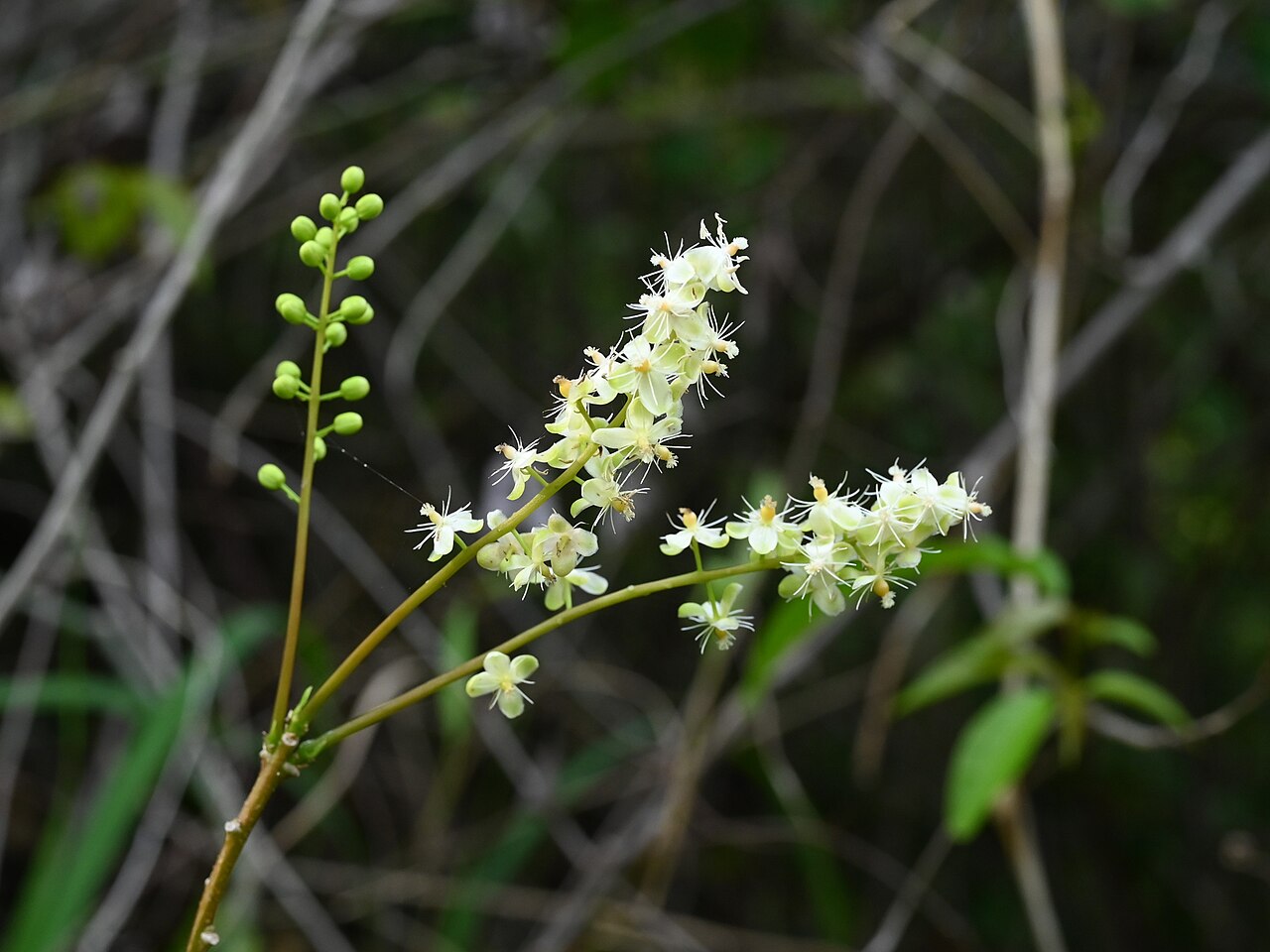
Trichostigma octandrum, the Hoopvine, is a vigorous woody vine or scrambling shrub of tropical hammocks, forest edges and thickets. It has glossy, oval, bright green leaves, slender spikes of small white flowers and drooping clusters of juicy berries that ripen from green through red to purple-black. Its long, tough, flexible stems were traditionally split and bent to make barrel hoops and baskets, which gave it the names hoopvine, basket wythe and bejuco canasta.
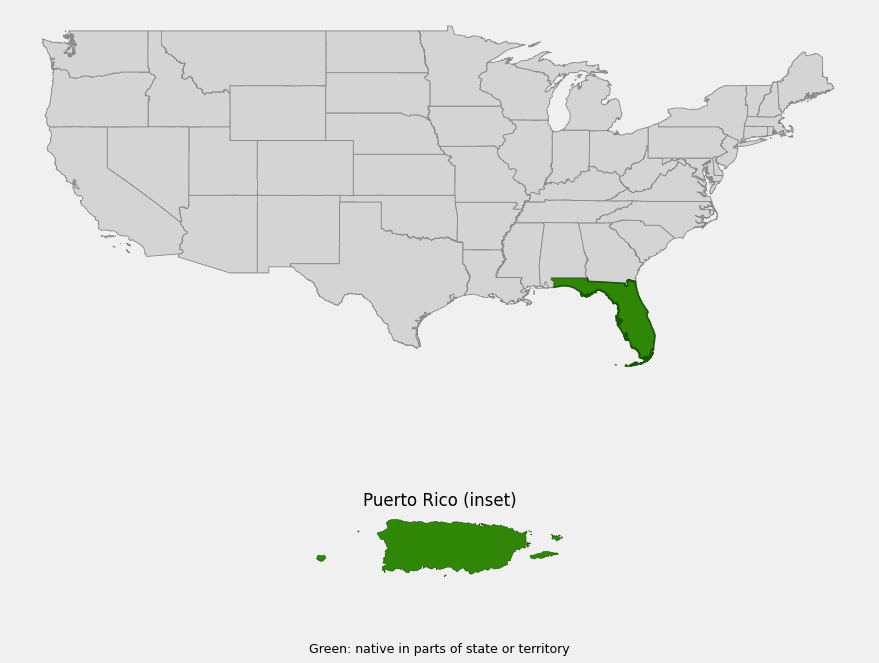
Hoopvine is a widespread plant of the American tropics, from Mexico and the West Indies through Central America to Argentina. In the United States it is native in Puerto Rico and the U.S. Virgin Islands, where it is common, and in South Florida, where it is rare. It is listed as Endangered by the State of Florida and ranked critically imperiled in the state by the Florida Natural Areas Inventory, with native records from Miami-Dade, Broward, Collier and Monroe counties.
Protected species note (Florida): because hoopvine is state-listed in Florida, do not collect plants, cuttings or seeds from wild populations there. Gardeners in South Florida and Puerto Rico can grow it from nursery-propagated plants. It belongs to the same family as Rougeplant (Rivina humilis), which it closely resembles in flower and fruit.
Identification
Hoopvine is easy to recognize when it is in flower or fruit: look for a smooth, twining or scrambling woody vine with glossy, untoothed leaves and slender racemes of white flowers or dark berries, often with flowers, green fruits and ripe fruits on the same spike.
Growth Habit & Stems
Hoopvine grows as a freestanding shrub when young and becomes a long, sprawling or climbing vine, with stems up to about 30 feet long. It has no tendrils or thorns; it climbs by leaning and twining over shrubs, trees, fences and rocks, and in open places it can form tangled mounds about 6 feet high. The stems are smooth and flexible, and older stems become woody, from about 1½ to 6 inches thick at the base.
Leaves
The leaves are alternate, simple and untoothed, oval to elliptic with a short point at the tip, roughly 2 to 6 inches long, on long leaf stalks. They are smooth, bright green and somewhat glossy.
Flowers
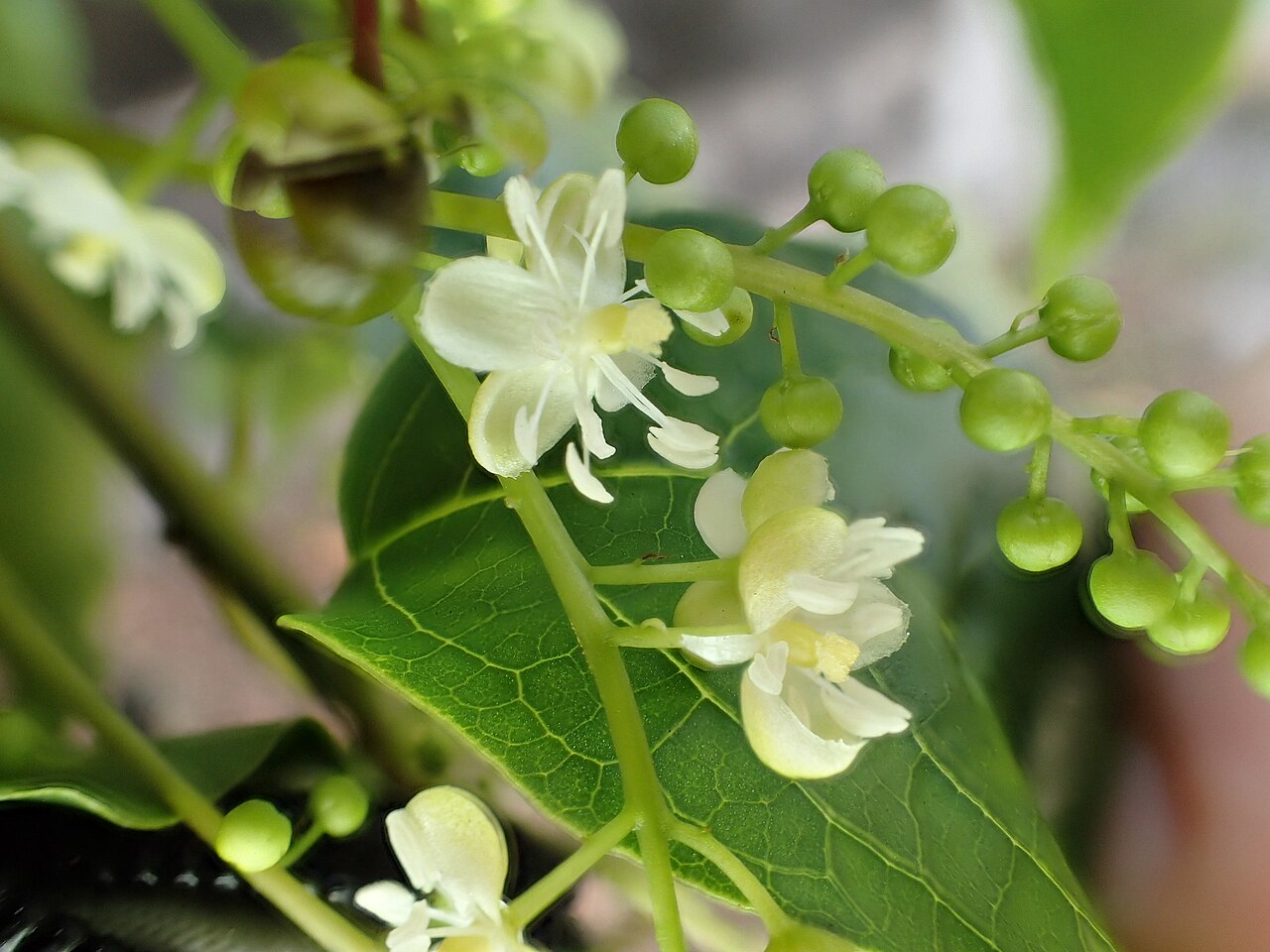
The flowers are borne in narrow, spike-like racemes about 2 to 4 inches long at the ends of short side branches. Each flower is about a third of an inch across, with four petal-like white sepals and a central cluster of stamens; octandrum means “with eight stamens.” The flowers open from the base of the raceme upward. In Florida flowering is reported mainly from March to May; in Puerto Rico and the tropics it can flower through much of the year.
Fruit
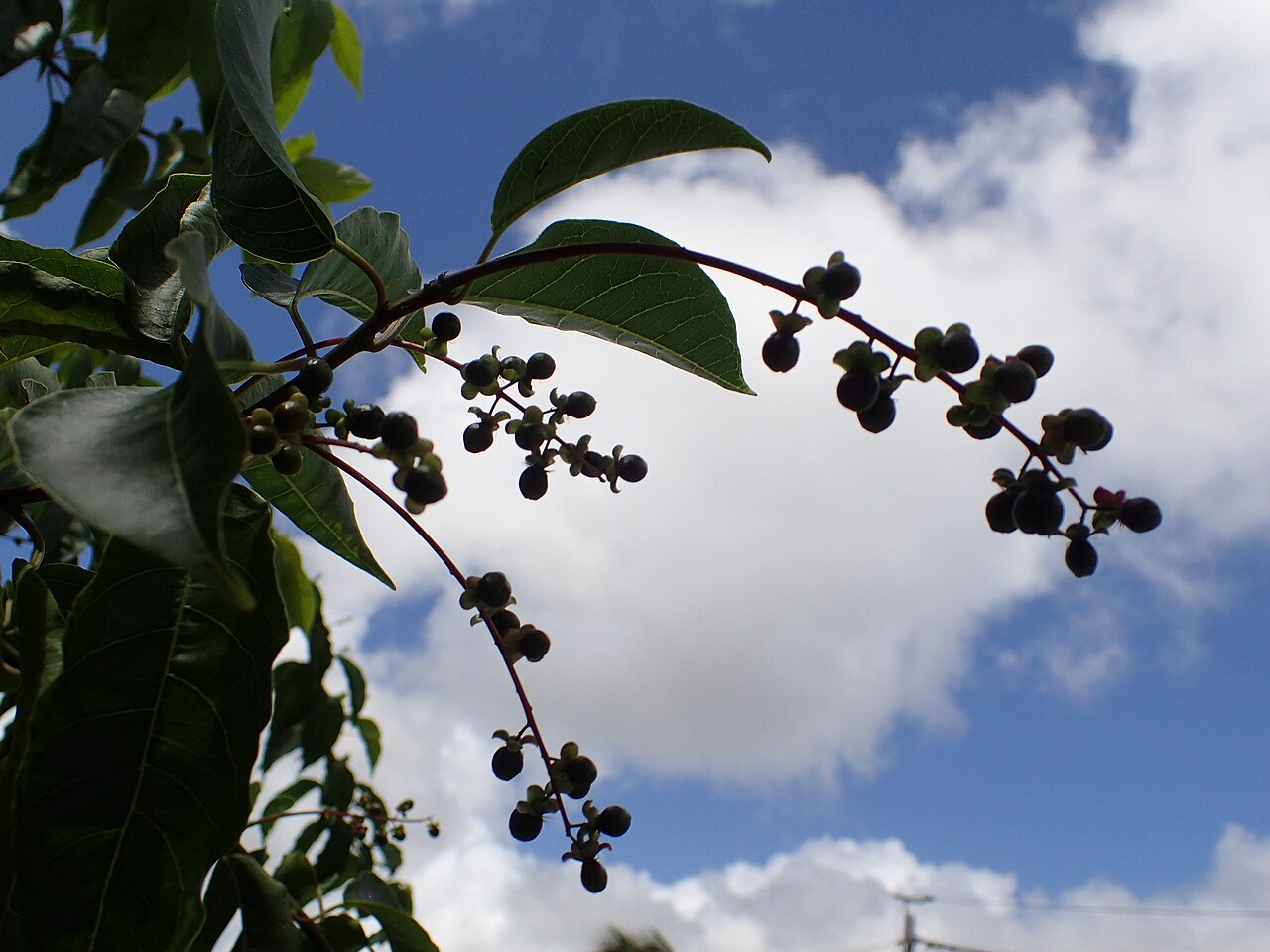
The fruits are small, round, juicy berries about a fifth of an inch across, each with one seed. They turn from green to red and finally dark purple to black, and their juice stains purple. The persistent sepals curl back beneath the fruit, often turning pinkish.
Similar Species
Rougeplant (Rivina humilis) is a small, upright perennial under about 3 feet tall, with smaller pink-tinged flowers and bright red berries. Guinea hen weed (Petiveria alliacea), another relative, is a garlic-scented herb with burr-like fruits. Hoopvine is much larger and vining, with black ripe fruit.
Quick Facts
| Scientific Name | Trichostigma octandrum (L.) H. Walter |
| Family | Petiveriaceae (formerly placed in Phytolaccaceae, the pokeweed family) |
| Plant Type | Woody vine or scrambling shrub; evergreen |
| Mature Height | Climbs to about 30 ft; 6 ft tall as a freestanding mound |
| Mature Spread | 10–30 ft |
| Growth Rate | Fast |
| Sun Exposure | Full sun to partial shade |
| Water Needs | Medium; tolerates dry periods once established |
| Soil Type | Wide range of well-drained soils, including limestone, sand and clay |
| Soil pH | About 6.0–8.0 |
| Bloom Time | March–May in Florida; much of the year in Puerto Rico |
| Flower Color | White |
| Fall Color | None (evergreen) |
| Fruit | Small, juicy berry, red ripening to purple-black |
| Deer Resistant | Moderate |
| USDA Hardiness Zones | 10–12 |
Native Range
Hoopvine is native from Mexico and the West Indies through Central America and South America as far south as Argentina. In the United States, USDA PLANTS lists it as native in Florida, Puerto Rico and the U.S. Virgin Islands. In Puerto Rico it is common in farm and urban areas as well as forests, growing on roadsides, fencerows, woodlots, brushy pastures and vacant lots, along wooded streams and in coastal forests such as the Pterocarpus swamp forests of the east coast. It grows on soils derived from limestone, volcanic and other rocks, in areas receiving roughly 35 to 100 inches of rain a year.
In Florida, hoopvine is at the northern edge of its range and is rare. The Institute for Regional Conservation records it as native in Miami-Dade, Broward, Collier and Monroe counties, in rockland and coastal hammocks and the edges of hammocks in the Everglades, and considers it possibly extirpated from the Florida Keys. It is listed as Endangered by the State of Florida. Several populations have been found since 2007, including in Everglades National Park and in Miami parks such as Simpson Park and Kendall Indian Hammocks Park, where it has become abundant enough to need some management.
Within its range it is a plant of forest edges, gaps and disturbed ground. It climbs over windfalls, shrubs and young trees in hammocks and thickets and can cover much of a host’s canopy where it gets enough light.
📋 Regional plant lists featuring Hoopvine: North & South Florida · Puerto Rico
Growing & Care Guide
Hoopvine is an easy, fast-growing native vine for frost-free gardens in South Florida and Puerto Rico, where it can cover a fence, arbor or chain-link screen and feed birds with its berries. In Florida it is a state-listed endangered plant, so buy nursery-propagated plants and never dig or take cuttings from wild populations. Its vigor is also its drawback: in a small garden or next to native hammock, it can smother shrubs and small trees, so give it a sturdy support and room to grow.
Light
Full sun to partial shade. It flowers and fruits best with several hours of sun but grows well at the shaded edge of a hammock or under tall trees.
Soil & Water
It grows in almost any well-drained soil, including the shallow limestone soils of South Florida and the clay and volcanic soils of Puerto Rico. Water regularly while it becomes established; after that it tolerates dry spells, although it looks lusher with occasional watering in the dry season.
Planting Tips
Plant at the base of a strong fence, arbor, pergola or trellis, or let it scramble over a boulder or a large, old shrub. Allow at least 10 to 15 feet of space. Because birds spread the seeds, avoid planting it next to natural areas where it could overwhelm native shrubs. It is suited only to frost-free areas, roughly zones 10 to 12; frost kills back the stems.
Pruning & Maintenance
Prune as needed to keep it in bounds, cutting long runners back to a side branch. It responds well to hard pruning and can be trained into a bower or hedge-like screen. Pull unwanted seedlings that appear where birds drop the seeds.
Propagation
Hoopvine grows readily from fresh seed cleaned of its pulp and sown in a warm, moist mix, and from stem cuttings or layering. In Florida, start from nursery-propagated plants or seed from cultivated plants, not from wild populations.
Landscape Uses
- Fences and arbors: quickly covers chain-link fences, arbors and pergolas in frost-free gardens
- Bird gardens: berries feed many fruit-eating birds
- Hammock edges: a native vine for the sunny margins of tropical hardwood plantings
- Traditional crafts: flexible stems were split and used for hoops, baskets and bent furniture
- Conservation plantings: nursery-grown plants help sustain a species that is rare in Florida
Wildlife & Ecological Value
Hoopvine’s abundant berries and dense tangles make it a useful wildlife plant in tropical forests and gardens.
For Pollinators
The small white flowers are open and easy for small insects to visit. Their pollinators have not been well studied; small bees, flies and other insects visit the flowers, and some sources suggest small flies or mosquitoes may play a role.
For Birds
Birds eat the juicy berries and disperse the seeds, which is why new plants often appear along fences and under trees where birds perch. The dense tangles also give birds shelter and nesting sites.
For Mammals
Small mammals use the dense mounds for cover. In Puerto Rico and the Caribbean, introduced mammals and livestock may browse the leaves, but it is not an important forage plant.
Ecosystem Role
Hoopvine is a pioneer of forest gaps and edges, quickly covering fallen trees and open ground after storms. In Florida, it adds diversity to rare tropical hammocks, but where it becomes very abundant it can shade out other plants, so land managers sometimes cut it back.
Cultural & Historical Uses
The name hoopvine comes from the use of its long, strong, flexible stems to make hoops for wooden barrels. In the Caribbean, the split stems and inner bark fibers have long been used for baskets, bent furniture and crafts, which gave the plant names such as black basket wythe, cooper’s wythe and, in Spanish, bejuco canasta (basket vine). In French-speaking islands it is called liane panier.
Hoopvine has also been used in traditional medicine in the Caribbean and Latin America, for example as a tea for asthma, colds and water retention, and its young leaves have been cooked and eaten after discarding the bitter water. These uses are traditional; the plant’s chemistry is not well studied, so it is not a recommended food or remedy.
The species was first described by Linnaeus as Rivina octandra, placing it with rougeplant. It was later moved to the separate genus Trichostigma, whose name refers to the hairy stigma of the flower. Botanists now place both genera in the small family Petiveriaceae, separate from the pokeweeds.
Frequently Asked Questions
Is hoopvine native to Florida?
Yes. Hoopvine is native to South Florida, where it is rare and listed as Endangered by the State of Florida. It has native records from Miami-Dade, Broward, Collier and Monroe counties. It is also native and common in Puerto Rico and the U.S. Virgin Islands.
Why is it called hoopvine?
Its long, tough, flexible stems were traditionally split and bent into hoops for barrels, as well as baskets and furniture.
Are hoopvine berries edible?
The berries are eaten by birds, and their purple juice stains. They are not a recognized human food, so do not eat them. Some traditional uses of the young leaves are recorded, but the plant’s chemistry is not well studied.
Is hoopvine invasive?
It is native in Florida and Puerto Rico, but it is a vigorous vine. In some South Florida parks it has become very abundant and needs control. In gardens, give it a sturdy support and prune it to keep it in bounds.
Can I grow hoopvine outside the tropics?
Only in frost-free areas, roughly zones 10 to 12, such as South Florida and Puerto Rico. Frost kills the stems back, and it is not suited to colder climates.

Looking for a nursery that carries Hoopvine?
Browse our native plant nursery directory: Florida

