
Thorn-crested Agave (Agave univittata)
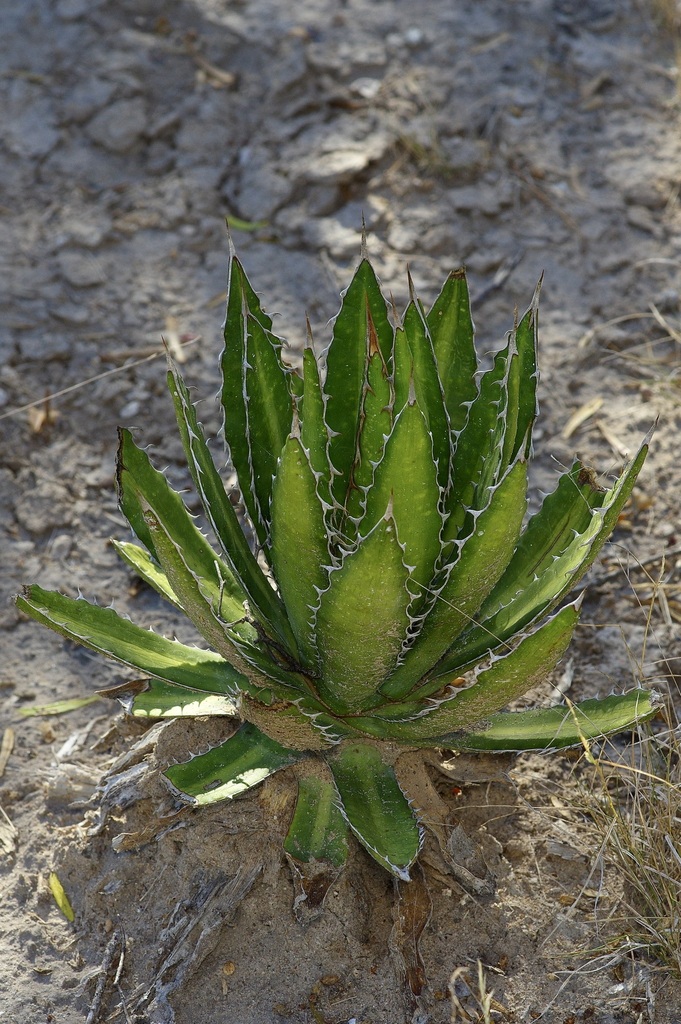
Agave univittata, the Thorn-crested Agave, is a small to medium native agave of the Rio Grande Plains of South Texas and northeastern Mexico. It forms clumps of stiff, sword-shaped green leaves with a pale stripe down the center and a continuous, horny margin armed with hooked teeth. The name univittata means “one-striped.” It is also widely sold as Agave lophantha, and USDA PLANTS lists it under the common name McKelvey’s century plant.
Like other agaves, each rosette grows for years, then sends up a tall flower spike, about 10 feet high, flowers once, and dies. The colony lives on through offsets (“pups”) around its base. It is a tough, drought-tolerant plant for xeriscapes and rock gardens in Texas and the Southwest, and its striped cultivar ‘Quadricolor’ is a popular ornamental.
Safety note: the leaf tips and margins are very sharp, and agave sap can irritate the skin and cause a rash in sensitive people. Wear gloves, long sleeves and eye protection when handling or pruning it, and plant it away from walkways and play areas.
Identification
Thorn-crested agave is closely related to Lechuguilla (Agave lechuguilla) and is sometimes confused with it. Both have narrow leaves with a continuous horny margin and a tall, spike-like flower stalk.
Growth Habit
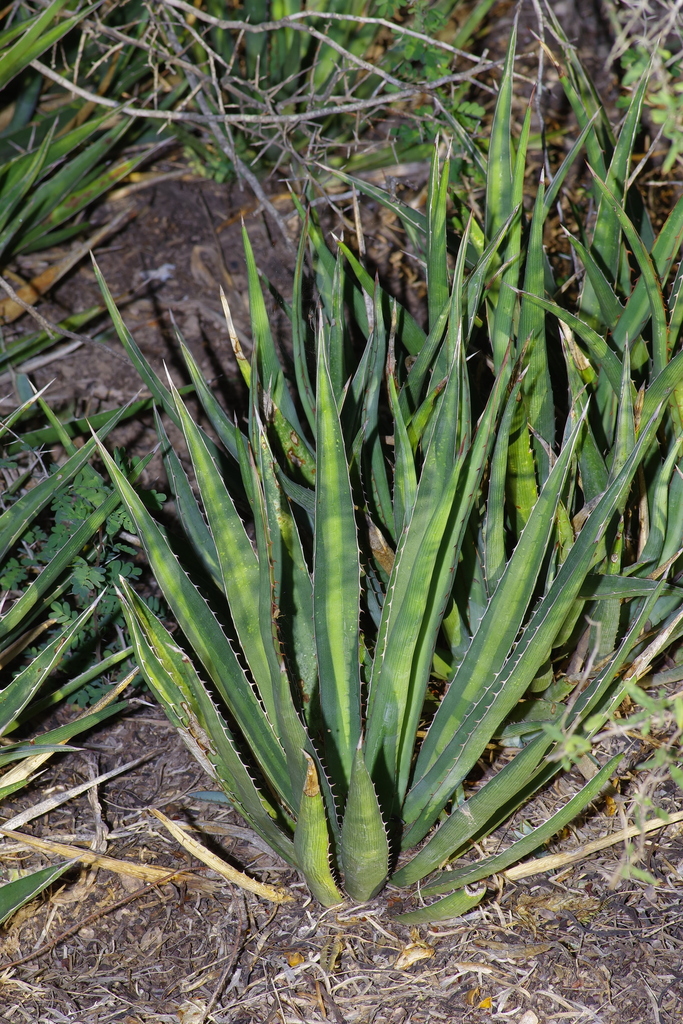
Thorn-crested agave forms open rosettes about 1 to 2 feet tall and 1.5 to 3 feet across, and it produces offsets from the base, so plants often grow in clumps or small colonies. The flower stalk rises far above the leaves.
Leaves
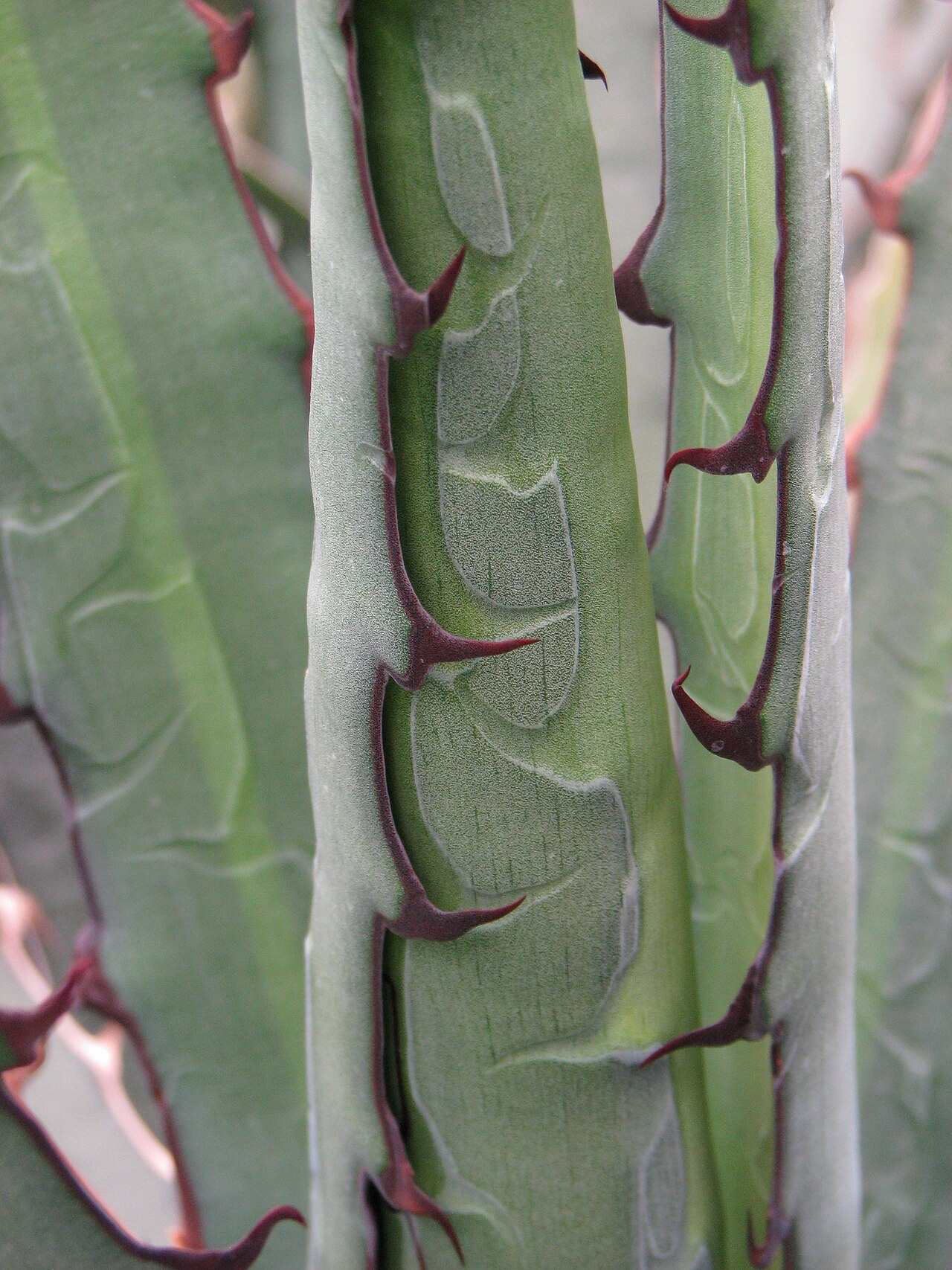
The leaves are rigid, linear to lance-shaped, about 1 to 2 feet long and 1 to 2 inches wide, green to yellowish-green, often with a paler stripe down the middle. The edges have a continuous horny border with downward-curving teeth, and each leaf ends in a sharp terminal spine.
Flowers
Mature rosettes send up a single, unbranched, spike-like flower stalk about 10 feet tall, usually in late spring or summer. The upper part of the stalk is densely covered with pairs of small greenish-yellow tubular flowers.
Fruit
The flowers are followed by small, oblong, three-parted capsules that split to release flat black seeds. The rosette that flowered dies afterward, but its offsets continue to grow.
Similar Species
Lechuguilla grows in the Chihuahuan Desert of West Texas and New Mexico. Its leaves are narrower, usually more upright and channeled, and its margins tend to peel away in strips. Thorn-crested agave generally has broader, flatter leaves and grows in the South Texas brush country. Havard Century Plant and American Century Plant are much larger agaves with broad leaves and branched flower stalks.
Quick Facts
| Scientific Name | Agave univittata Haw. (syn. Agave lophantha Schiede) |
| Family | Asparagaceae (asparagus family; agave subfamily) |
| Plant Type | Succulent perennial; monocarpic rosettes, clumping |
| Mature Height | 1–2 ft (flower stalk to about 10 ft) |
| Mature Spread | 1.5–3 ft per rosette; clumps wider |
| Growth Rate | Slow to moderate |
| Sun Exposure | Full sun to light shade |
| Water Needs | Low; very drought-tolerant |
| Soil Type | Dry, well-drained rocky, gravelly or caliche soils |
| Soil pH | About 6.5–8.5; tolerates limestone |
| Bloom Time | Late spring–summer (once per rosette) |
| Flower Color | Greenish-yellow |
| Fall Color | Evergreen |
| Fruit | Oblong capsule with flat black seeds |
| Deer Resistant | High |
| USDA Hardiness Zones | 8–11 |
Native Range
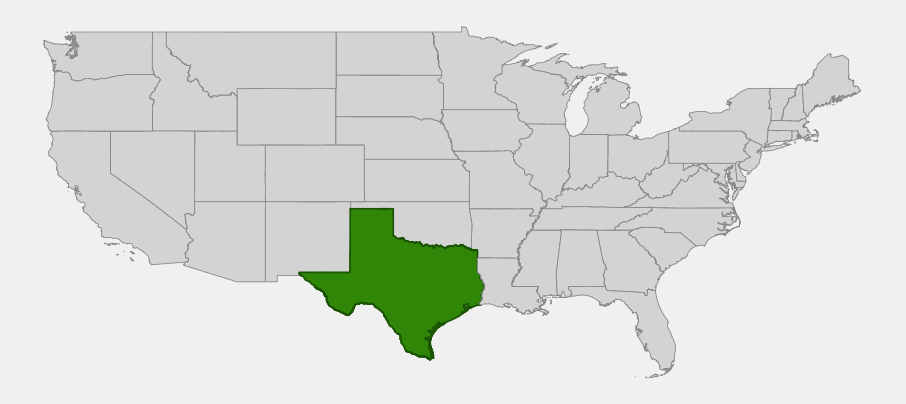
Thorn-crested agave is native to the Rio Grande Plains of South Texas and to northeastern and east-central Mexico, mainly in Coahuila, Nuevo León and Tamaulipas and south along the Sierra Madre Oriental. In Texas, wild populations are found mainly in the lower Rio Grande Valley, including Starr County, where the species reaches the northern edge of its range and is uncommon.
USDA PLANTS lists it in Texas and also Arizona. Texas is the only state where wild native populations are well documented, so the Arizona record, which likely reflects cultivated plants, is not shown on the map. It is also widely planted, and garden plants have naturalized in parts of central Texas, such as around Austin.
In the wild it grows in dry, rocky and gravelly soils in Tamaulipan thornscrub, on caliche hills, rocky slopes and bluffs, and in Mexico also in oak woodland and on cliffs. Its name has a tangled history: it was described as Agave univittata by Haworth in 1834 and later as Agave lophantha, and both names are still in use. USDA PLANTS and the Flora of North America use A. univittata, while many nurseries sell it as A. lophantha.
📋 Regional plant lists featuring Thorn-crested Agave: South & West Texas
Growing & Care Guide
Thorn-crested agave is one of the easiest agaves for Texas gardens. It needs sun, sharp drainage and very little water, and it is more cold-hardy than many Mexican agaves. Its compact size makes it suitable for smaller gardens and large containers.
Light
Plant it in full sun or light afternoon shade. In deep shade the rosettes stretch and become floppy.
Soil & Water
Give it well-drained, rocky, gravelly or sandy soil; it tolerates alkaline and caliche soils. Water young plants occasionally during their first summer. Once established, it survives on rainfall in most of Texas. Overwatering and poorly drained clay are the most common causes of rot.
Planting Tips
Plant in spring, after the danger of hard frost has passed. Set the rosette at the same depth it grew, or slightly higher, on a mound or slope for drainage. Space plants 2 to 3 feet apart, and keep them well back from paths because of the sharp leaf tips. In containers, use a fast-draining cactus mix.
Pruning & Maintenance
Remove dead lower leaves and spent rosettes after flowering, wearing heavy gloves and eye protection. Some gardeners clip the sharp terminal spines near walkways. Watch for agave snout weevils, which can kill rosettes. It tolerates short hard freezes best when its soil is dry in winter.
Propagation
The easiest method is to separate offsets (pups) from the parent plant in spring or early summer, let the cut surface dry for a few days, and plant them in dry, well-drained soil. Plants can also be grown from fresh seed, which germinates readily in warm conditions.
Landscape Uses
- Xeriscapes: a compact, very drought-tolerant accent for dry gardens
- Rock gardens and slopes: thrives in rocky, well-drained sites
- Containers: small enough for large pots on sunny patios
- Native South Texas landscapes: pairs with cenizo, guajillo and prickly pear
- Barrier plantings: sharp leaves discourage foot traffic along property edges
Wildlife & Ecological Value
Thorn-crested agave contributes nectar, seeds and shelter to the South Texas brush country.
For Pollinators
The flower spike produces abundant nectar and pollen. It is visited by bees, wasps, butterflies, moths and hummingbirds, and bats may visit at night, as they do on other agaves.
For Birds
Orioles, hummingbirds and other birds feed at the flowers, and some birds perch on or eat insects from the tall stalks.
For Mammals
The spiny rosettes give cover to lizards, small mammals and ground-nesting animals. Deer and livestock generally avoid the sharp leaves.
Ecosystem Role
As a long-lived rosette plant of dry, rocky slopes, it helps hold thin soils in place and provides a large nectar source once in its lifetime. Its colonies persist for many years through offsets.
Cultural & Historical Uses
The genus name Agave comes from the Greek agauos, meaning “noble” or “admirable.” The species name univittata means “with one stripe,” for the pale band along the center of each leaf. The alternative name lophantha means “crested flower.”
Narrow-leaved agaves of this group have long been useful to people in northeastern Mexico. Its close relative lechuguilla is the main source of ixtle, a stiff fiber still harvested for brushes and rope.
Garden forms with yellow and green striped leaves, such as ‘Quadricolor’, are sold widely as ornamental plants under the name Agave lophantha.
Frequently Asked Questions
Is Agave univittata the same as Agave lophantha?
Yes. They are names for the same species. USDA PLANTS and the Flora of North America use Agave univittata, while many nurseries and older references use Agave lophantha.
Is thorn-crested agave native to Texas?
Yes. It is native to the Rio Grande Plains of South Texas and to northeastern Mexico. Plants in central Texas are mostly garden escapes.
Does thorn-crested agave die after blooming?
Yes. Each rosette blooms once after many years, sending up a flower stalk about 10 feet tall, and then dies. Offsets around the base continue the colony.
Is thorn-crested agave dangerous?
Its sharp spines and leaf margins can cause painful wounds, and the sap can irritate the skin. Wear gloves and eye protection when handling it, and plant it away from paths and play areas.
How cold-hardy is thorn-crested agave?
It is hardier than many Mexican agaves and tolerates short freezes, especially when its soil is dry. It grows best in USDA zones 8 to 11.

Looking for a nursery that carries Thorn-crested Agave?
Browse our native plant nursery directory: Texas

