Havard Century Plant (Agave havardiana)
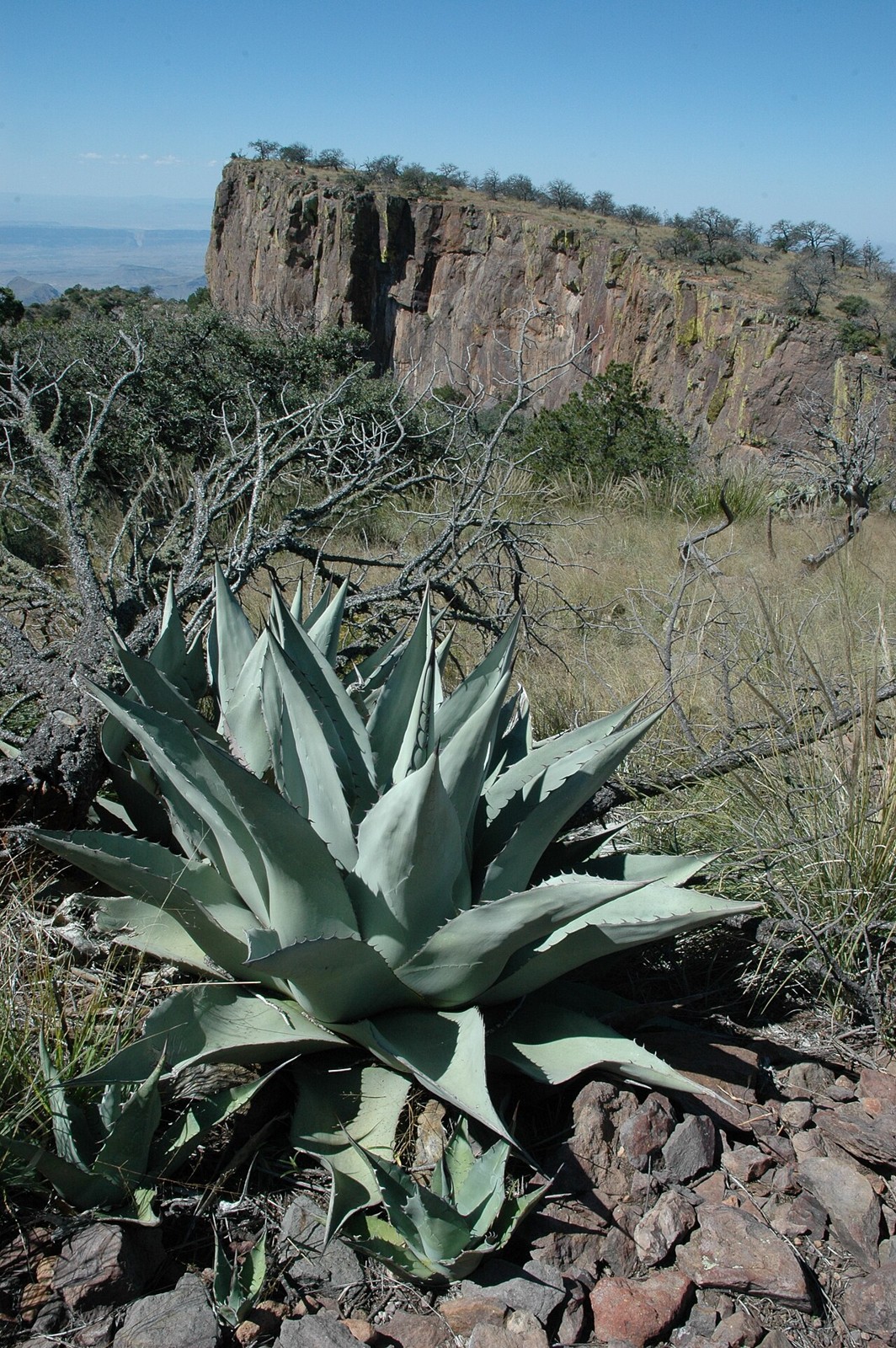
Agave havardiana, commonly called the Havard Century Plant or Havard’s Agave, is one of the largest and most cold-hardy agaves native to the United States, forming massive, powder blue-gray rosettes on the rocky mountain slopes of the Big Bend region of far west Texas. Named for Valery Havard, a U.S. Army surgeon and botanist who documented the plants of the Trans-Pecos in the late nineteenth century, this agave is a defining feature of the high Chihuahuan Desert mountain landscape, most abundant in the Chisos, Davis, and Guadalupe Mountains.
Havard Century Plant grows slowly for many years — often two to three decades — as a solitary, broad rosette of thick, spine-edged leaves before finally sending up a single, towering flower stalk and then dying, a dramatic life-history strategy called monocarpy shared by most agaves. The massive rosette, often 2 to 3 feet tall and wide, is one of the most imposing native succulents in Texas, and the eventual flowering event is a true botanical spectacle, visible from great distances across open mountain terrain.
For gardeners in the Trans-Pecos and similar high-desert climates, Havard Century Plant offers an unusually cold-tolerant, long-lived architectural specimen — a plant to be sited once and enjoyed, quite literally, for a generation.
Identification
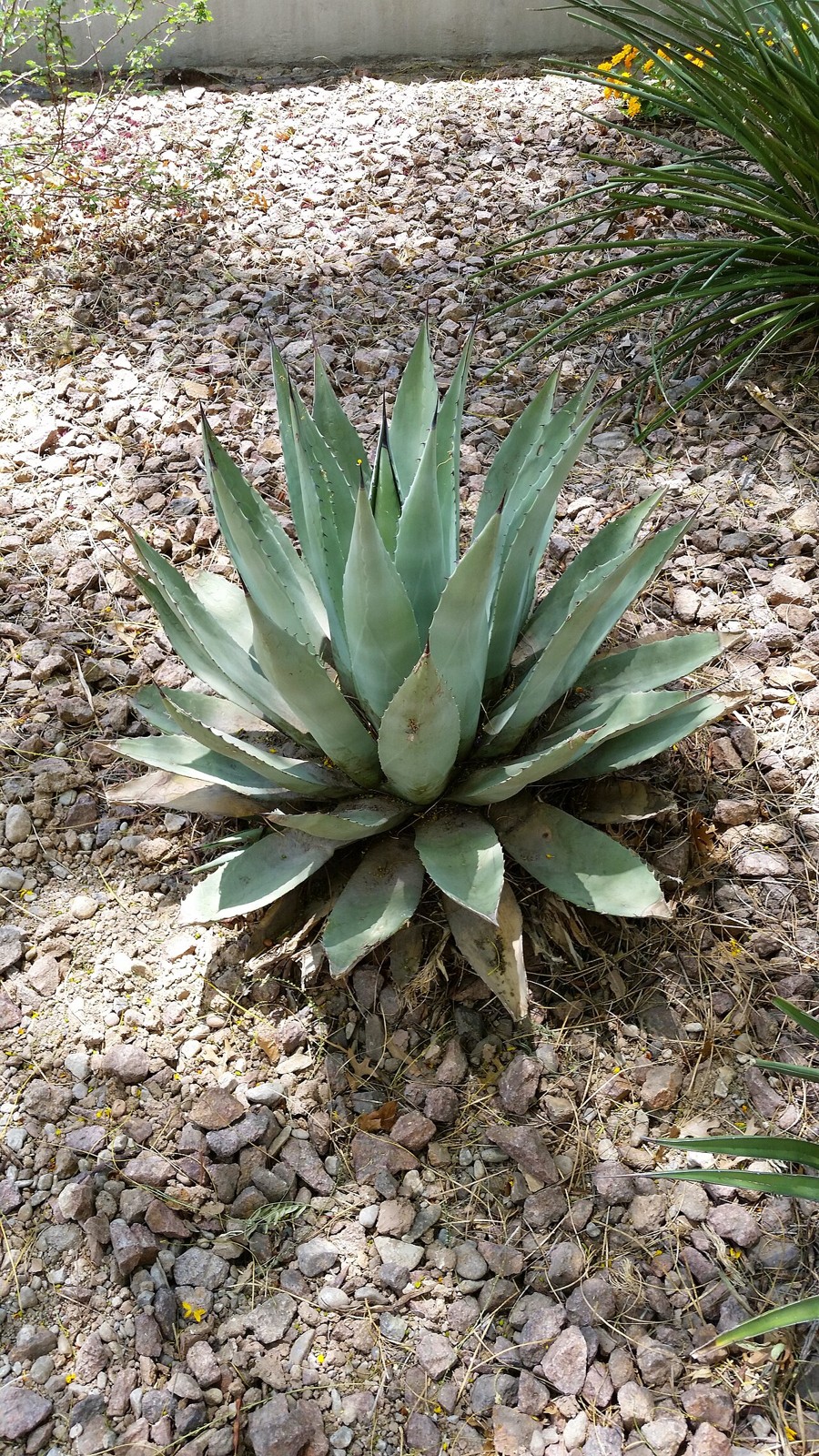
Havard Century Plant forms a solitary, broad, symmetrical rosette of thick, succulent leaves, typically 2 to 3 feet tall and 3 to 4 feet across at maturity. Unlike some agaves that offset readily to form colonies, this species usually remains a single rosette throughout its life, making individual plants distinct and easy to count across a hillside.
Leaves
The leaves are thick, rigid, and broadly lance-shaped, colored a distinctive powdery blue-gray to silvery green. Each leaf bears a stout, dark terminal spine up to 2 inches long and regularly spaced marginal teeth along the edges, both capable of causing painful puncture wounds. The leaf surface often shows the pale bud-print pattern left by the pressure of adjacent leaves during early rosette development — a feature sometimes called “leaf printing” that is common across the agave genus.
Flowers
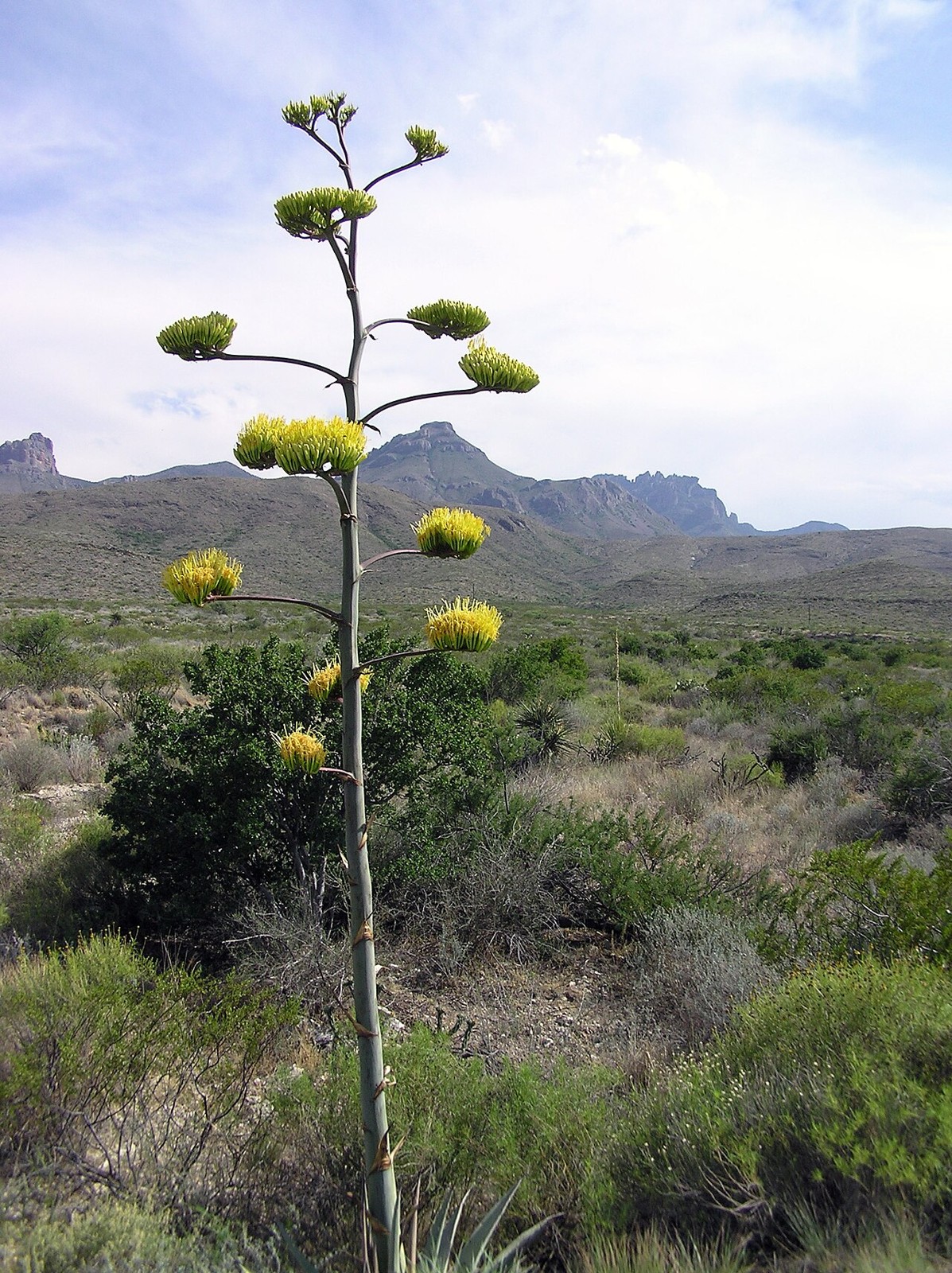
After two to three decades of vegetative growth, a mature plant sends up a single flowering stalk 10 to 20 feet tall from the center of the rosette, typically blooming between May and August. The stalk branches into a candelabra-like structure bearing dozens of dense, rounded clusters of yellow flowers, visible from a considerable distance. The flowering event draws large numbers of pollinators and is often the most conspicuous bloom of the Trans-Pecos mountain summer.
Fruit & Seeds
Following pollination, the plant produces woody, oblong seed capsules along the upper flower stalk, each containing numerous flat, black seeds. After seed maturation the entire plant — rosette, flower stalk, and all — dies, though it often leaves behind a scatter of seeds and, less commonly, a few basal offsets to continue the population.
Quick Facts
| Scientific Name | Agave havardiana |
| Family | Asparagaceae (formerly Agavaceae) |
| Plant Type | Evergreen Succulent (monocarpic rosette) |
| Mature Height | 2–3 ft (rosette); flower stalk 10–20 ft |
| Mature Spread | 3–4 ft |
| Growth Rate | Slow (flowers once after 20–30 years, then dies) |
| Sun Exposure | Full Sun |
| Water Needs | Low |
| Soil Type | Rocky, limestone or volcanic, well-drained |
| Soil pH | 7.0–8.5 (neutral to alkaline) |
| Bloom Time | May – August (once, at end of life) |
| Flower Color | Yellow |
| Fall Color | None (evergreen) |
| Fruit | Woody, oblong seed capsule |
| Deer Resistant | Yes (sharp spines deter browsing) |
| USDA Hardiness Zones | 7–10 |
Native Range
Havard Century Plant is native to the Chihuahuan Desert mountains of far west Texas, where it is common in the Chisos Mountains and Davis Mountains of the Big Bend region and reaches the Guadalupe Mountains near the New Mexico border, with its range continuing into adjacent northern Mexico. Confirmed native populations are concentrated in these Trans-Pecos mountain ranges; it is not confirmed as a native species in New Mexico itself, despite sometimes being cultivated there.
Within its range, Havard Century Plant typically grows on rocky slopes and grasslands at elevations of 4,000 to 7,000 feet, often on limestone or volcanic substrates in desert grassland and oak-juniper woodland transition zones. It is notably more cold-tolerant than many other agave species, a trait directly tied to its high-elevation mountain habitat, where winter temperatures regularly drop below freezing.
Because its confirmed native range lies entirely within Texas, Havard Century Plant is listed only on regional native-plant guidance for Texas. Gardeners in similar high-desert mountain climates elsewhere in the Southwest can grow it successfully, but should recognize that it is a Texas endemic rather than a broadly distributed regional species.
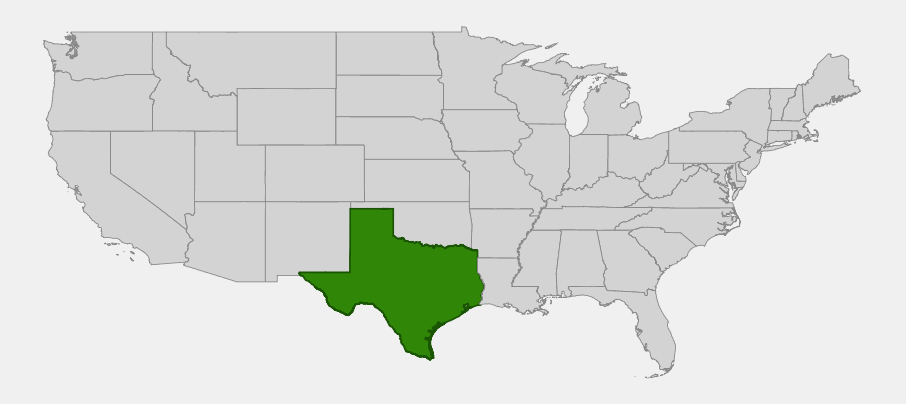
📋 Regional plant lists featuring Havard Century Plant: South and West Texas
Growing & Care Guide
Havard Century Plant is a long-term landscape investment — slow to mature, dramatic when it finally blooms, and remarkably cold-hardy for an agave.
Light
Full sun is essential for a tight, well-formed rosette. In shade, the plant becomes elongated and loses the compact symmetry that makes it such a striking specimen.
Soil & Water
Sharp drainage is non-negotiable. This species is built for thin, rocky mountain soils and will rot quickly in heavy clay or any site where water collects. Once established, it needs no supplemental irrigation in climates resembling its native high-desert mountain habitat and should be watered only sparingly during the first year.
Planting Tips
Plant from containers in spring, allowing at least 4 to 5 feet of clearance in all directions for the plant’s eventual mature spread, and keep it well away from walkways given its sharp terminal spines and marginal teeth. This species’ relative cold tolerance makes it a good candidate for higher-elevation gardens where other agaves may struggle.
Pruning & Maintenance
Maintenance is minimal for most of the plant’s life. Remove only dead or damaged lower leaves. Because the plant flowers once and then dies, gardeners should be prepared to remove the spent rosette and flower stalk after seed drop, and can collect seed or watch for basal offsets to continue the planting.
Landscape Uses
Havard Century Plant’s bold form and cold tolerance suit several roles in Trans-Pecos and high-desert landscapes:
- Specimen or focal point in rock gardens and xeriscapes
- Chihuahuan Desert mountain habitat restoration plantings
- Security barrier plantings beneath windows, thanks to its sharp spines
- High-elevation xeriscapes where cold-tolerant agaves are needed
- Rock and gravel gardens paired with sotol and native grasses
- Wildlife and pollinator gardens, especially during its dramatic bloom year
Wildlife & Ecological Value
Havard Century Plant’s rare but spectacular flowering event makes it an important, if infrequent, resource for Chihuahuan Desert wildlife.
For Pollinators
The towering flower stalk produces an enormous quantity of nectar-rich yellow flowers over several weeks, drawing large numbers of native bees, wasps, and other insects. Because individual plants bloom only once, a flowering specimen can become a significant, concentrated pollinator resource for its brief season.
For Birds
Hummingbirds, including migrating species passing through the Trans-Pecos, are drawn to the abundant nectar of the flower stalk, and the dried stalk afterward sometimes serves as a perch for other birds surveying the surrounding terrain.
For Mammals
Bats are significant nocturnal pollinators of agave flowers across the Southwest and Mexico, and the flowering stalks of Havard Century Plant likely receive similar visits in the Trans-Pecos. Javelina and other mammals occasionally feed on the base of the plant or fallen flower parts.
Ecosystem Role
As a long-lived, slow-growing rosette plant, Havard Century Plant occupies rocky mountain slopes for decades before its single reproductive event, contributing structural diversity to Chihuahuan Desert mountain grassland. Its sharp, well-defended leaves also provide incidental shelter for small animals seeking protection from predators.
Cultural & Historical Uses
Agaves have been central to the foodways and material culture of Indigenous peoples across the Chihuahuan Desert and broader Southwest for thousands of years, and Havard Century Plant, like its relatives, was likely used by groups such as the Mescalero Apache who inhabited the Trans-Pecos mountains. The sugar-rich heart of the rosette, when pit-roasted for an extended period, produces a sweet, fibrous food historically prepared from various agave species across the region.
The species is named for Valery Havard, a U.S. Army surgeon stationed in the Trans-Pecos during the late nineteenth century who conducted extensive botanical surveys of the region’s flora, contributing significantly to early scientific documentation of Big Bend plant life. The tough leaf fibers of agaves were also historically used for cordage and coarse textiles across the Southwest.
Today, Havard Century Plant is valued primarily for its ecological and horticultural significance as an iconic, long-lived symbol of the Big Bend and Trans-Pecos mountain landscape, and it remains a highlight for visitors to Big Bend National Park during its rare flowering years.
Frequently Asked Questions
Does Havard Century Plant really take 100 years to bloom?
No — the “century” in its common name is a folk exaggeration shared across the agave genus. Havard Century Plant typically blooms after 20 to 30 years of growth, not an actual century, though the exact timing depends on growing conditions.
Does the plant really die after flowering?
Yes. Like most agaves, Havard Century Plant is monocarpic, meaning the entire rosette dies after its single flowering and seed-set event. Some populations produce basal offsets before or around this time that can continue growing.
Is Havard Century Plant dangerous to have in the yard?
The terminal leaf spines and marginal teeth are sharp enough to cause serious puncture wounds, so it should be planted well away from walkways, seating areas, and places frequented by children or pets.
How cold-hardy is Havard Century Plant compared to other agaves?
It is among the more cold-tolerant agave species, reflecting its native high-elevation mountain habitat, and can handle winter temperatures that would damage or kill many lower-elevation desert agaves.
Can I eat or make mezcal from my garden Havard Century Plant?
Historical pit-roasting and fermentation of agave hearts is a specialized traditional practice, and harvesting the core kills the plant before its natural flowering; this is not a casual or recommended activity for an established landscape specimen.

Looking for a nursery that carries Havard Century Plant?
Browse our native plant nursery directory: Texas