Texas Ebony (Ebenopsis ebano)
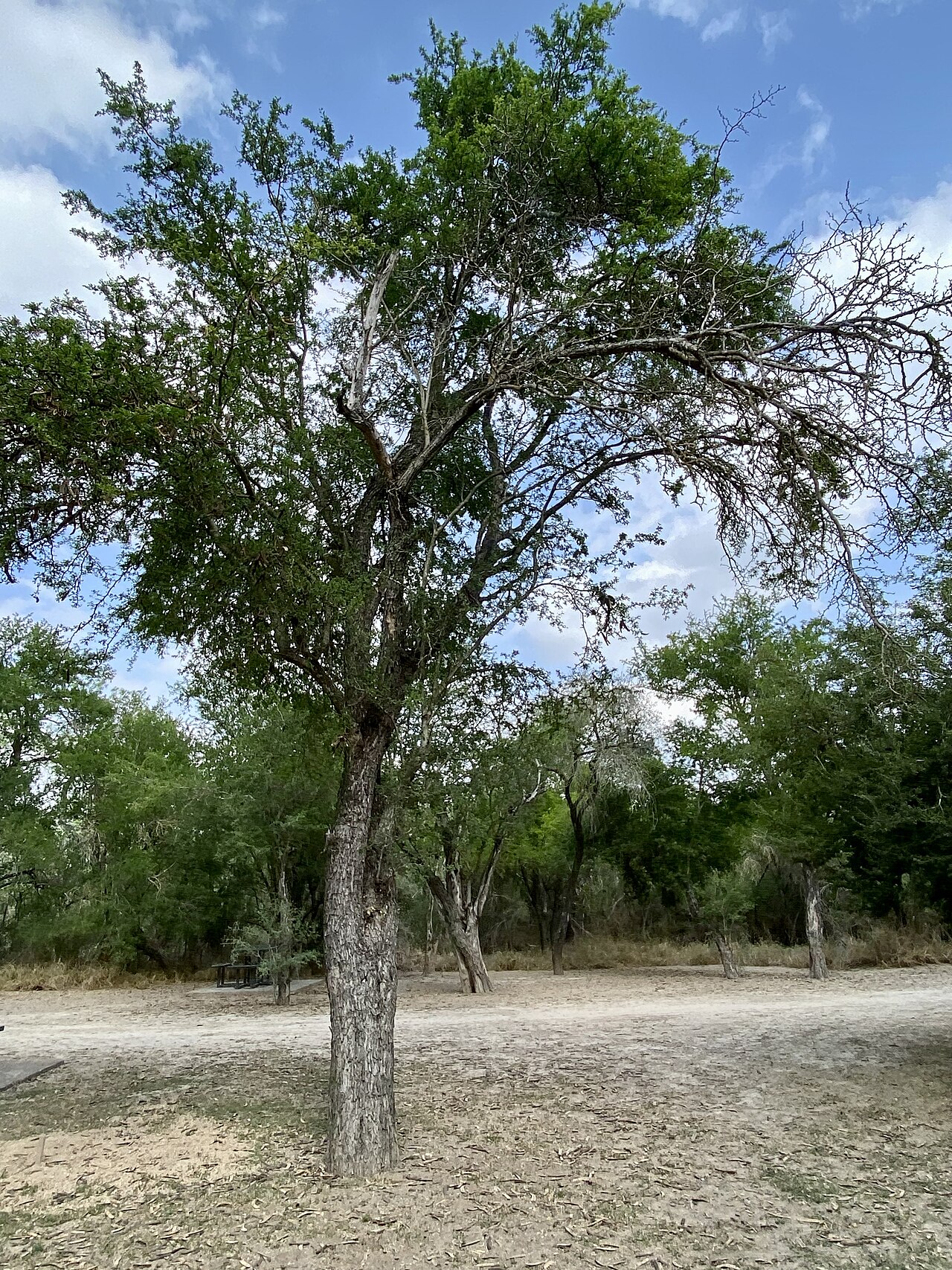
Ebenopsis ebano, commonly known as Texas Ebony (or simply ebano), is a small, tough, evergreen tree native to the coastal plain of far southern Texas. Named for its exceptionally hard, dark heartwood, this member of the pea family (Fabaceae) is a signature plant of the Rio Grande Valley’s native brush country, known locally as the Tamaulipan thornscrub. Dense, dark green foliage, fragrant creamy-white flower spikes, and thick, woody seed pods make it one of the most garden-worthy small trees in its home region, where it is widely planted for shade, screening, and xeriscaping.
In the wild, Texas Ebony grows slowly into a short-trunked tree with a broad, rounded crown of zigzagging, thorny branches. It tolerates heat, drought, and poor caliche soils that defeat most ornamental trees, and its extremely dense wood — among the heaviest of any North American tree — has long been prized for fence posts, tool handles, and furniture.
Identification
Texas Ebony is typically a small evergreen tree 20 to 30 feet tall, occasionally reaching higher with great age, with a short trunk and a dense, broadly rounded crown often as wide as the tree is tall. Branches grow in a distinctive zigzag pattern and are armed with short, paired spines at each node, giving older specimens a tangled, thicket-like look up close even as the overall canopy reads as tidy and rounded from a distance.
Bark & Wood
Bark on young branches is smooth and gray-brown, becoming furrowed and darker with age. The heartwood is dark reddish-brown to nearly black, extremely dense and hard — among the heaviest timbers in North America — which explains both the common name “ebony” and its long history of use for fence posts and tool handles that resist rot and wear for decades.
Leaves
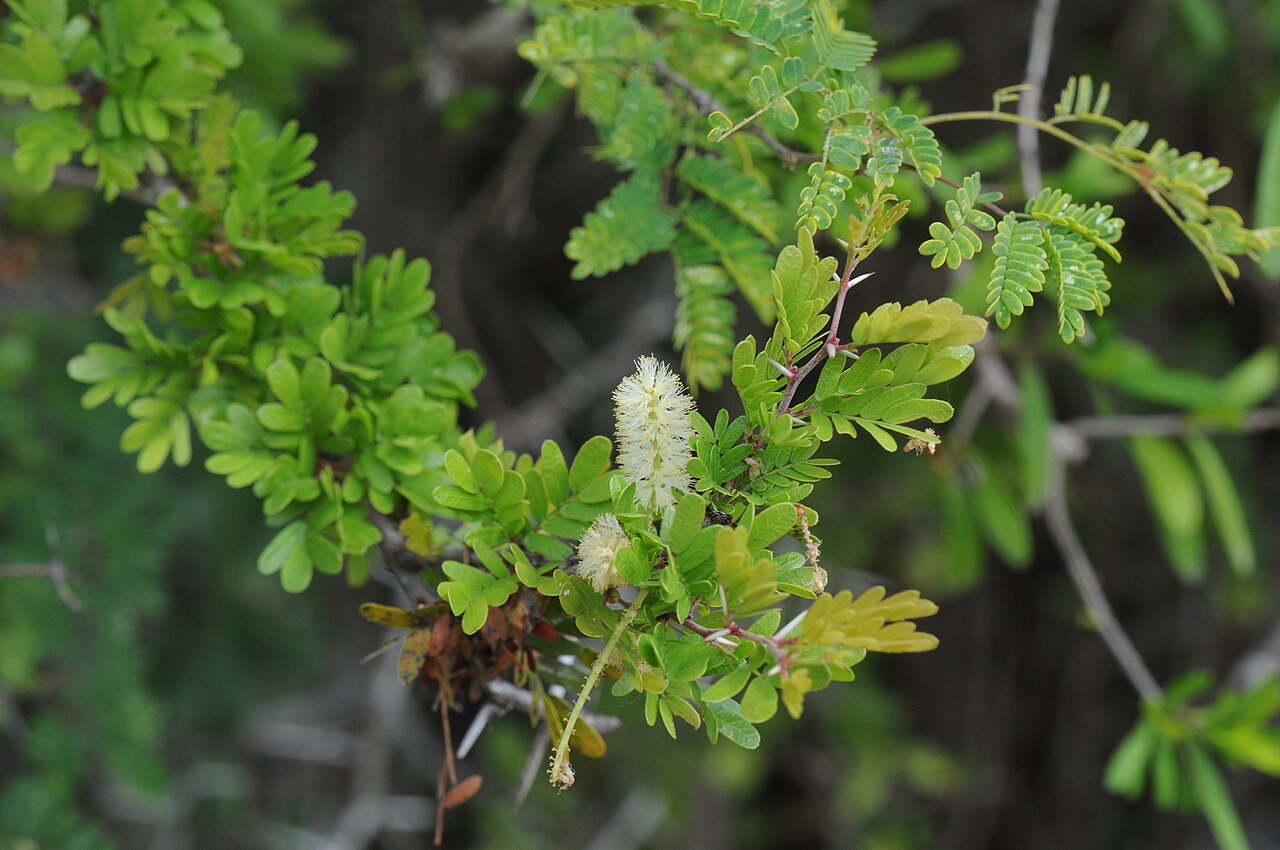
Leaves are evergreen and bipinnately compound, with each leaf divided into a few pairs of pinnae that are further divided into small, rounded, dark green leaflets only about ¼ to ½ inch long. The fine-textured, feathery foliage is held densely along the zigzag branches, giving the crown a soft, dark green appearance even though the branches beneath are armed with spines.
Flowers & Fruit
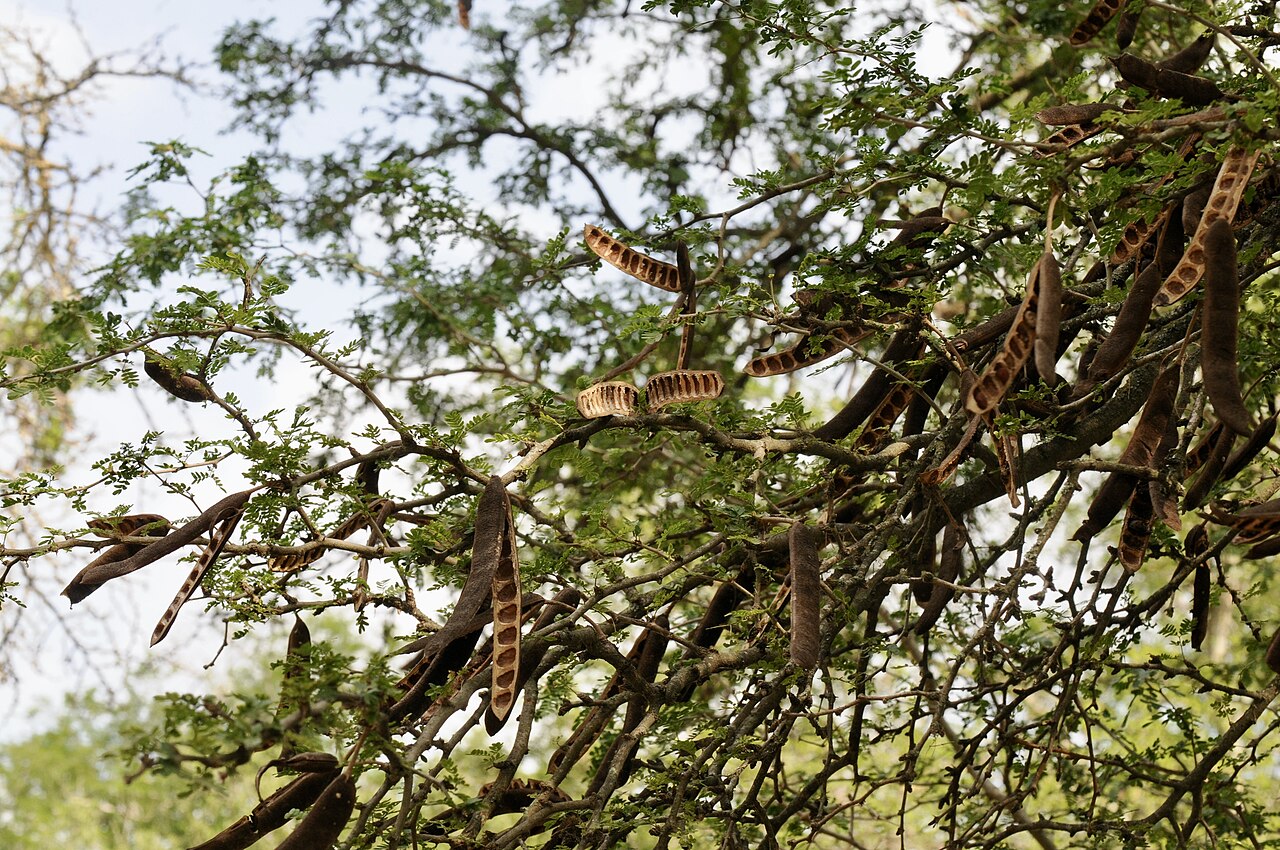
Small, fragrant, creamy-white to pale yellow flowers are packed into dense, cylindrical spikes about 1 to 2 inches long, resembling fuzzy caterpillars or bottlebrushes. Bloom occurs mainly in spring, with sporadic repeat flowering after summer rains. Flowers give way to thick, woody, curved seed pods 4 to 6 inches long that start green, mature to dark reddish-brown, and persist on the tree well after ripening. Each pod holds several hard, bean-like seeds embedded in a sweet, pulpy interior.
Quick Facts
| Scientific Name | Ebenopsis ebano (syn. Pithecellobium flexicaule, Chloroleucon ebano) |
| Family | Fabaceae (Pea/Legume) |
| Plant Type | Evergreen Tree |
| Mature Height | 20–30 ft |
| Growth Rate | Slow |
| Sun Exposure | Full Sun |
| Water Needs | Low once established |
| Soil Type | Caliche, sandy loam, well-drained |
| Soil pH | Alkaline preferred |
| Bloom Time | Spring, with sporadic rebloom after rain |
| Flower Color | Creamy white |
| Fruit | Thick, woody pods 4–6 in., reddish-brown when ripe |
| Thorns | Yes — short paired spines on zigzag branches |
| USDA Hardiness Zones | 9–11 |
Native Range
Texas Ebony is native only to the coastal plain of far southern Texas, from around Corpus Christi and Laredo south through the Rio Grande Valley, continuing into northeastern Mexico (Tamaulipas, Nuevo León, San Luis Potosí) and locally farther south into Veracruz, Campeche, and Yucatán. Within the United States it occurs only in Texas, concentrated in the counties of the Rio Grande Plains and Lower Rio Grande Valley; BONAP county-level records confirm this narrow South Texas range, with no native populations recorded in Oklahoma or any other U.S. state.
In its native Tamaulipan thornscrub habitat, Texas Ebony grows in dense brushland alongside honey mesquite, huisache, and various acacias, typically on well-drained, often caliche or clay-loam soils. It is a defining species of the South Texas brush country that once covered much of the Rio Grande Valley before agricultural clearing.
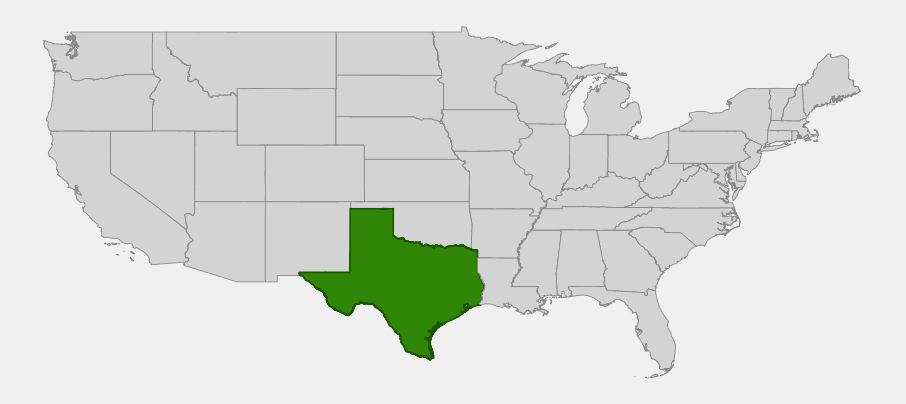
📋 Texas Ebony does not yet have a matching Plant Native regional list for its far South Texas coastal plain range.
Growing & Care Guide
Texas Ebony is an outstanding small shade tree for hot, dry climates, especially in South Texas and similar low-desert or coastal plain conditions where its toughness really shows.
Light
Plant Texas Ebony in full sun, which it needs for dense, healthy growth and good flowering. It tolerates intense summer heat and reflected sun from pavement or walls better than most small trees.
Soil & Water
This species thrives in well-drained, often alkaline soils, including caliche and sandy clay loams that are inhospitable to many ornamentals. Good drainage matters more than soil fertility. Water regularly during the first one to two growing seasons to establish a deep root system; once established, Texas Ebony is highly drought tolerant and needs little supplemental irrigation beyond natural rainfall in its native range.
Planting Tips
Plant container-grown trees in spring after the last frost, giving the root system a full growing season to establish before winter. Because of its slow growth and dense branching habit, Texas Ebony works well as a long-term investment specimen or shade tree rather than a quick-fix planting. Keep the short, paired spines in mind when siting it near walkways or play areas, and allow 15 to 20 feet of spread for a mature crown.
Pruning & Maintenance
Prune in late winter to shape young trees, remove dead wood, or raise the canopy for clearance beneath the crown. Mature trees need very little maintenance. Because the wood is extremely dense and hard, pruning larger limbs takes sharp tools and some effort, but established trees are otherwise low-care and long-lived.
Landscape Uses
Texas Ebony’s dense form, drought tolerance, and fragrant flowers make it valuable in several garden roles:
- Shade tree for small to medium residential lots in hot climates
- Xeriscaping and low-water native plant gardens
- Screening or informal hedge when planted in groups, using its thorny branching
- Wildlife and pollinator gardens — fragrant flowers draw bees; foliage is a butterfly host plant
- Bonsai — valued for its naturally gnarled branching and small leaflets
- South Texas brush restoration plantings
Wildlife & Ecological Value
Texas Ebony is a keystone species of South Texas thornscrub, supporting wildlife across multiple seasons in a landscape where cover and food can be scarce for much of the year.
For Pollinators
The fragrant flower spikes attract large numbers of native bees and honeybees, and the species is an important regional nectar source during its spring bloom, with additional flowering often triggered by summer rains.
For Butterflies & Moths
Texas Ebony serves as a larval host plant for the coyote cloudywing butterfly (Achalarus toxeus) and for the giant silkmoth Sphingicampa blanchardi, making it a valuable addition to South Texas butterfly and moth gardens.
For Birds & Mammals
The dense, thorny crown provides excellent nesting cover and predator protection for small birds, while javelina, deer, and small mammals feed on fallen pods and seeds. The tree’s year-round evergreen foliage makes it valuable shelter even in winter, when many other native brush species are bare.
A Note on the Pods
The thick seed pods contain a sweet, edible pulp that has traditionally been eaten fresh or used to flavor foods and beverages in South Texas and northeastern Mexico, and the hard seeds themselves have been roasted as a coffee substitute. In the garden, the woody pods are primarily of interest as wildlife food and an ornamental feature rather than a crop, since fruit set varies year to year and pods take effort to process. The tree’s spines also mean pods and fallen branches should be handled with care.
Frequently Asked Questions
Is Texas Ebony the same wood as true ebony?
No. “True ebony” refers to the tropical genus Diospyros (the same genus as persimmon). Texas Ebony earned its common name because its dense, dark heartwood resembles true ebony in color and hardness, but the two are not closely related.
Does Texas Ebony have thorns?
Yes. Short, paired spines occur at the nodes along its characteristic zigzag branches. They are not large or dangerous but are worth considering when siting the tree near paths or play areas.
Is Texas Ebony native to Oklahoma or other states?
No. Its native range in the United States is limited to the coastal plain and Rio Grande Valley of far southern Texas; it does not occur natively elsewhere in the U.S.
How fast does Texas Ebony grow?
It is a slow-growing tree, which is part of why established, well-formed specimens are so valued in South Texas landscaping. Patience pays off with a long-lived, low-maintenance shade tree.
Is Texas Ebony cold hardy?
It is best suited to USDA zones 9–11 and can suffer damage or dieback in hard freezes. Gardeners near the northern edge of its range should site it in a warm, sheltered spot.

Looking for a nursery that carries Texas Ebony?
Browse our native plant nursery directory: Texas