Engelmann’s Prickly Pear (Opuntia engelmannii)
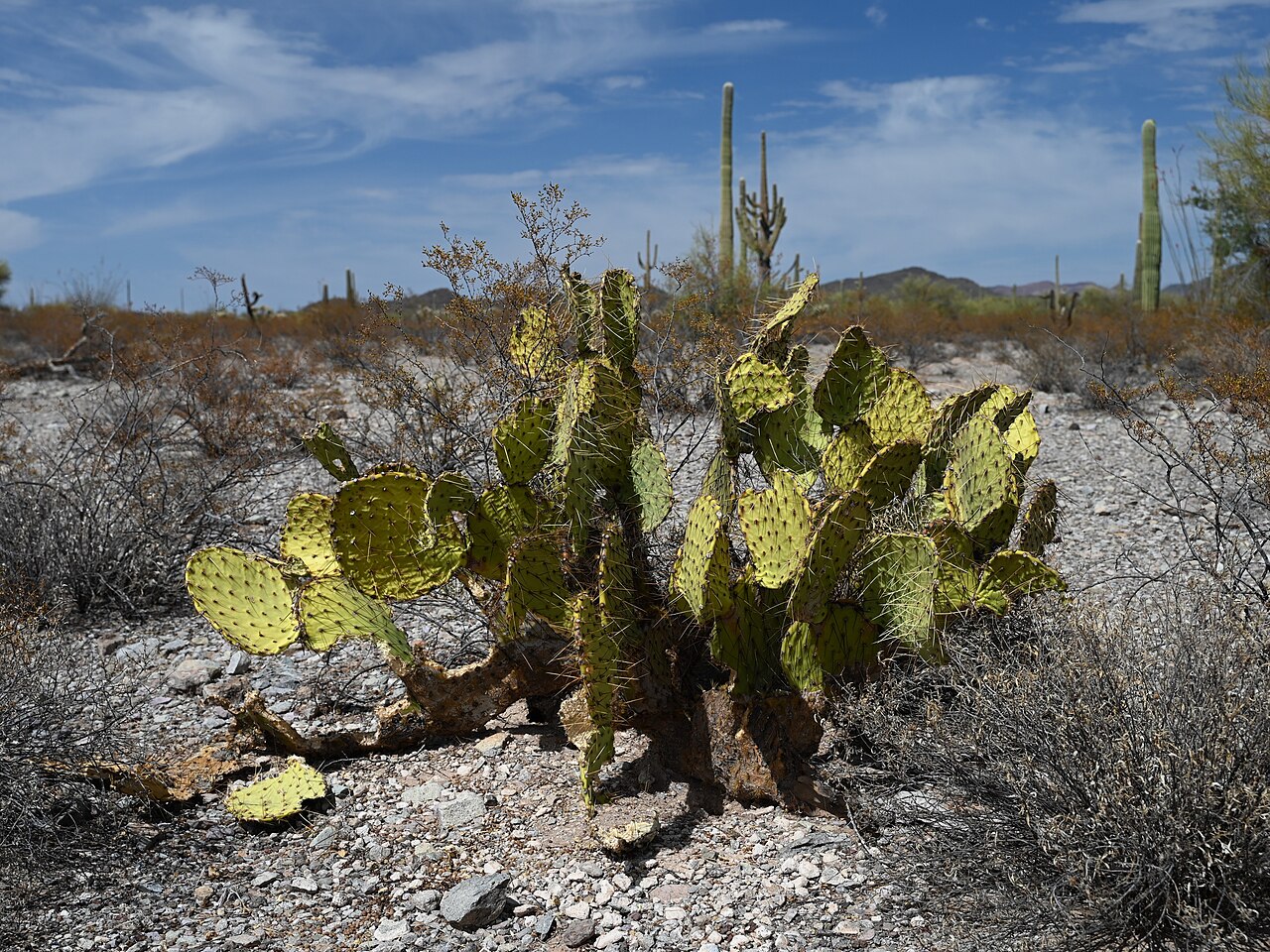
Opuntia engelmannii, commonly called Engelmann’s Prickly Pear, Cactus Apple, or Desert Prickly Pear, is the broadly distributed, sprawling pad cactus of the Sonoran, Mojave, and Chihuahuan desert region. It forms large, loosely mounded clumps of flattened, rounded pads armed with long, formidable spines, producing a profuse spring show of large yellow (sometimes orange-tinged) flowers followed by fleshy purple-red fruit relished by wildlife and people alike.
Highly variable across its wide range, Opuntia engelmannii includes several recognized varieties — including the Texas-centered var. lindheimeri, treated separately on this site because of its strong regional identity and widespread use in Texas horticulture — that differ in pad size, spine density, and cold hardiness. The species as a whole is one of the most cold-tolerant prickly pears in the Southwest, extending well into higher desert and woodland elevations where few other columnar or pad cacti survive hard freezes.
In the garden, Engelmann’s Prickly Pear is an exceptionally tough, long-lived choice for xeriscapes and wildlife gardens throughout its native range, needing almost no water or care once its roots are established in well-drained soil.
Identification
Engelmann’s Prickly Pear is identified by its sprawling clumps of large, flattened pads and heavy spine armament, though exact size and spine color vary by locality.
Pads (Stem Segments)
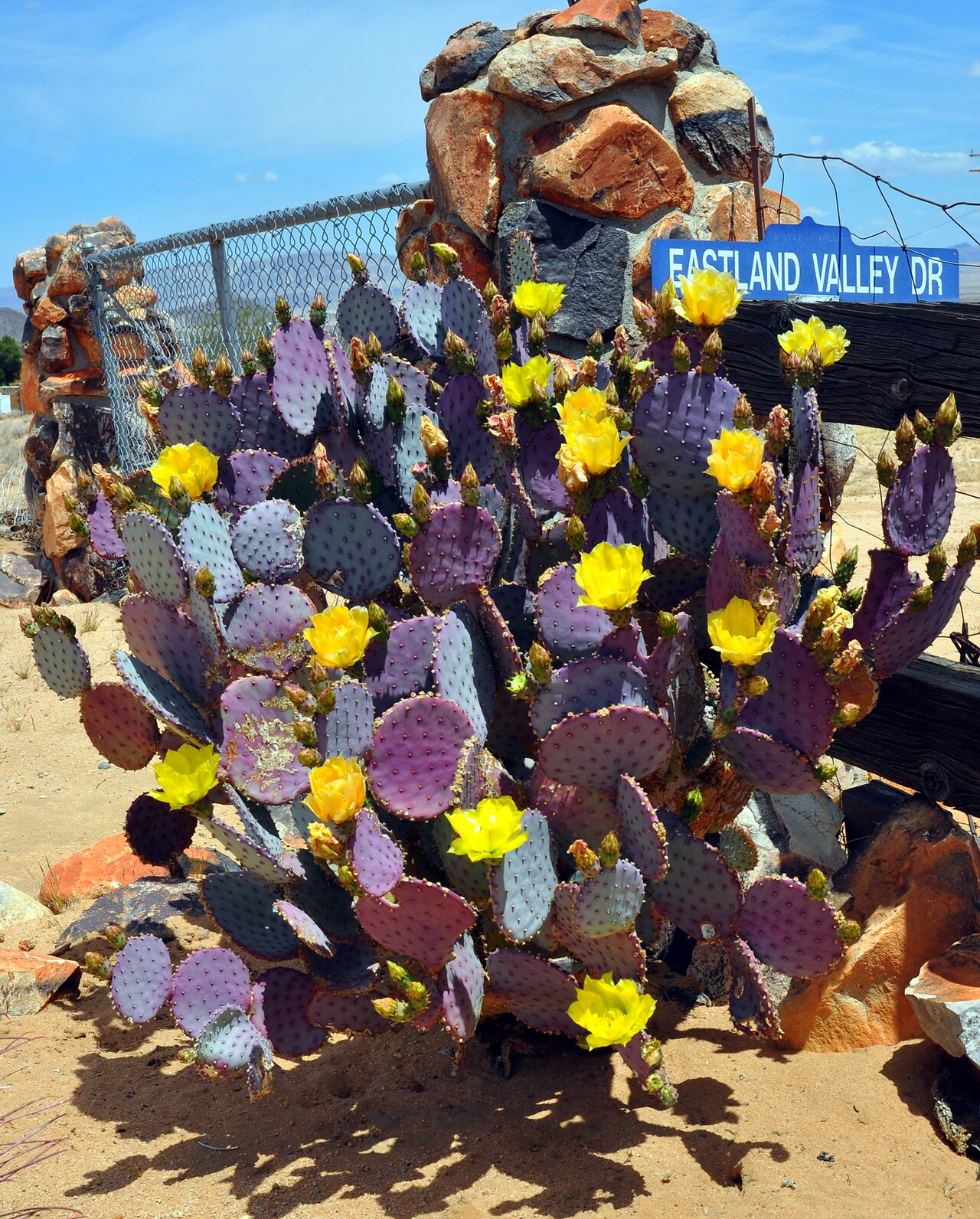
The rounded to obovate pads are typically 6 to 14 inches long and gray-green to blue-green, sometimes taking on a purplish tinge under cold or drought stress. Each areole bears one to several stout spines up to 3 inches long, usually white, yellow, or reddish-brown, along with dense tufts of fine glochids. Plants branch repeatedly to form broad, low to medium clumps 3 to 6 feet tall and often considerably wider, occasionally developing a short trunk-like base with age.
Flowers
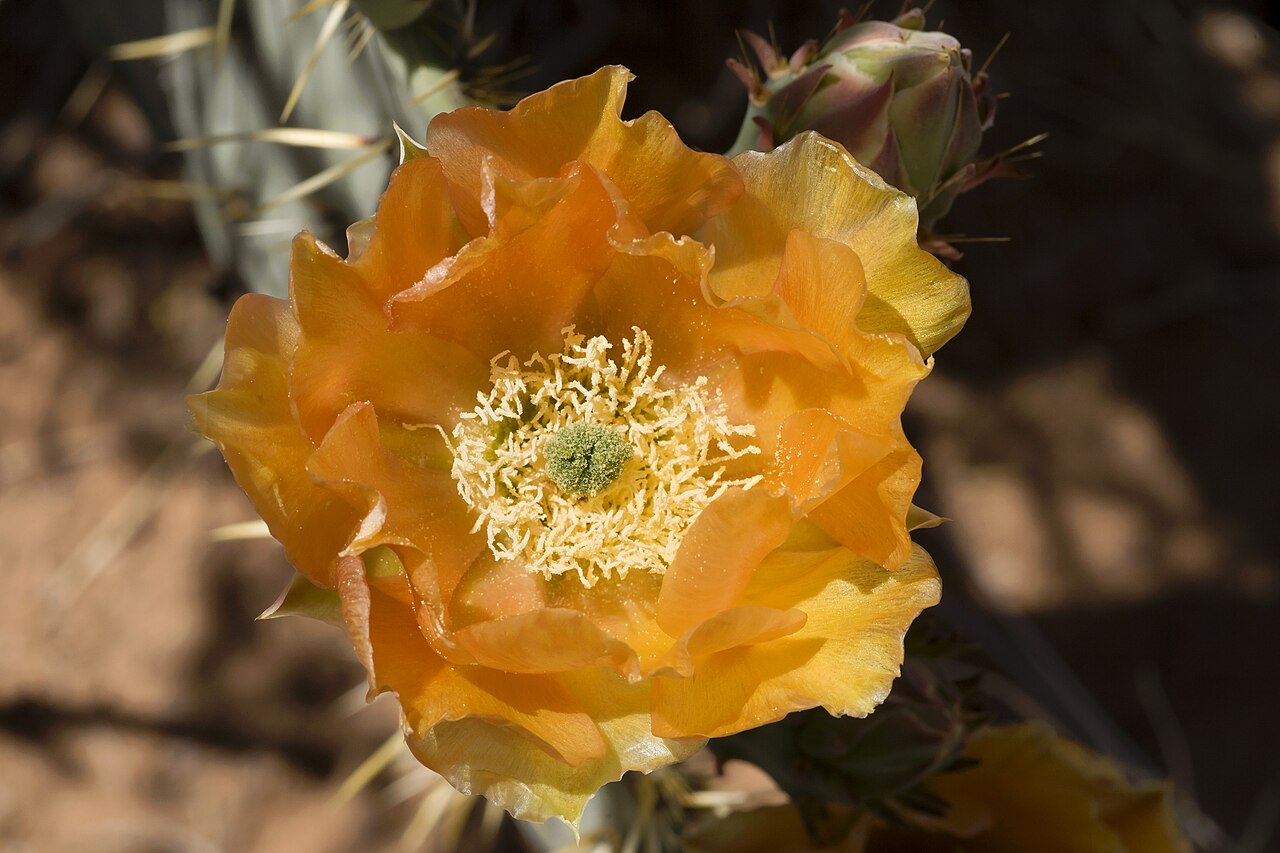
Flowers open along the upper margins of the pads in a profuse late-spring display, each 3 to 4 inches across with numerous silky, overlapping petals in clear yellow, sometimes flushed orange or with a reddish throat. Like most prickly pears, each flower lasts only a day or two, but a well-established clump produces a long succession of blooms over several weeks.
Fruit
The fruit, called a tuna, is a fleshy, egg-shaped berry 1.5 to 3 inches long that ripens from green to deep red-purple in summer and fall. The sweet, juicy pulp inside is traditionally eaten fresh or processed, and ripe fruit is heavily used by birds and mammals across the plant’s range.
Quick Facts
| Scientific Name | Opuntia engelmannii |
| Family | Cactaceae (Cactus) |
| Plant Type | Evergreen succulent shrub (pad cactus) |
| Mature Height | 3–6 ft |
| Mature Spread | 4–10 ft |
| Growth Rate | Moderate |
| Sun Exposure | Full Sun |
| Water Needs | Very Low |
| Soil Type | Rocky, gravelly, or sandy; sharply drained |
| Soil pH | 7.0–8.5 (neutral to alkaline) |
| Bloom Time | April – June |
| Flower Color | Yellow, sometimes orange-tinged |
| Fall Color | None (pads may purple under cold stress) |
| Fruit | Red-purple tuna, edible, ripens late summer |
| Deer Resistant | Yes |
| USDA Hardiness Zones | 7–11 |
Native Range
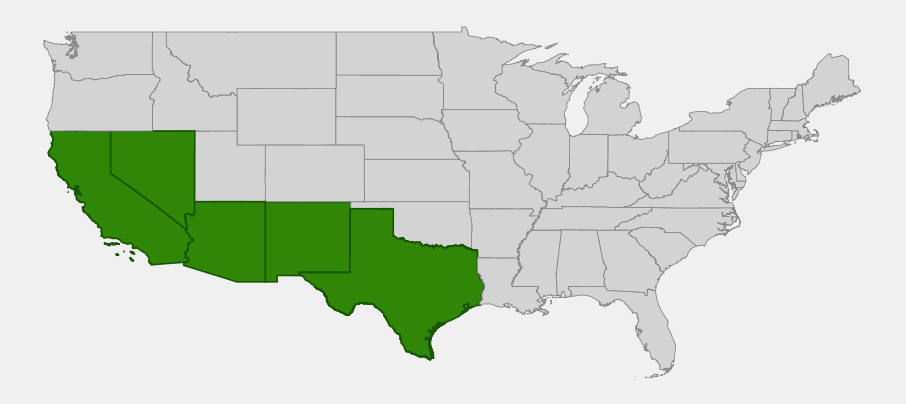
Engelmann’s Prickly Pear is native to the southwestern United States, with populations across Arizona, California, Nevada, New Mexico, and Texas, and it extends south into Sonora, Chihuahua, and other parts of northern Mexico. It is one of the most widespread prickly pears in the Southwest, occupying an elevation range from low desert basins to piñon-juniper woodland.
Habitat varies with elevation and region: in the Sonoran and Chihuahuan deserts it grows on rocky bajadas, flats, and slopes alongside saguaro, ocotillo, and creosote bush; at higher elevations it is common in desert grassland and piñon-juniper woodland. It generally favors open, sunny, well-drained sites and is notably more frost-tolerant than many other Opuntia species, allowing it to persist at higher, colder elevations than most of its relatives.
Engelmann’s Prickly Pear is also widely cultivated as a hardy ornamental and has been planted or escaped beyond its native range in parts of the southern and south-central United States. This page covers its true native range in the Southwest; plantings elsewhere should be considered introduced rather than native.
📋 Regional plant lists featuring Engelmann’s Prickly Pear: South and West Texas · Arizona & New Mexico · California & Nevada
Growing & Care Guide
Engelmann’s Prickly Pear is one of the easiest native cacti to grow across the Southwest, as long as drainage is addressed from the start.
Light
Plant in full sun for the best growth and heaviest bloom. It tolerates the full intensity of desert sun without any special care and is a reliable choice for the hottest, most exposed parts of a xeriscape.
Soil & Water
Give it rocky, gravelly, or sandy soil with excellent drainage; it is forgiving of poor, low-fertility ground but intolerant of soggy or compacted soil, which quickly leads to root and pad rot. Once established, Engelmann’s Prickly Pear needs no regular irrigation beyond natural rainfall across most of its native range, though an occasional deep soak during extended summer drought supports fuller growth and bloom.
Planting Tips
Propagate easily from rooted pad cuttings: remove a healthy pad, let the cut end callus for about a week in a dry, shaded spot, then set it a few inches deep in well-drained soil. Plant in spring through early summer to allow roots to establish before winter. Space plants 5 to 8 feet apart to accommodate the mature spread of a clump, and always handle pads with thick gloves and tongs.
Pruning & Maintenance
Remove unwanted or damaged pads at their joint with a clean, sharp tool, ideally in late winter before spring growth begins. Established plants require essentially no fertilizing or other routine maintenance. Because cold-stressed pads often develop a purplish tinge in winter, this color change is normal and not a sign of disease.
Landscape Uses
- Xeriscaping and low-water desert landscape design
- Wildlife gardens — spring flowers and late-summer fruit support many species
- Barrier plantings where dense spiny growth deters foot traffic
- Rock gardens and slope plantings on sharply drained sites
- Edible landscaping — pads and fruit are both traditionally harvested
Wildlife & Ecological Value
Engelmann’s Prickly Pear is a major wildlife resource across the desert Southwest, offering food and shelter through most of the year.
For Pollinators
The large yellow flowers attract abundant native bees, including desert specialist cactus bees, along with honeybees and beetles during the concentrated spring bloom period, making this species an important early-season nectar and pollen source in arid landscapes.
For Birds
Cactus wrens and curve-billed thrashers frequently nest within the protective spiny pads, while many birds — including Gila woodpeckers, thrashers, and quail — feed on the ripe tunas in late summer and fall.
For Mammals
Javelina, desert bighorn sheep, and other large mammals browse the pads and fruit, especially valuable during dry seasons when other forage is scarce, while pack rats, ground squirrels, and other small mammals use the dense, spiny clumps for cover and nesting material.
Ecosystem Role
As a widespread, long-lived perennial, Engelmann’s Prickly Pear stabilizes thin desert and grassland soils, provides a reliable water-rich food source through dry periods, and adds structural complexity that benefits nesting birds and small animals seeking protection from predators among its spines.
Cultural & Historical Uses
Indigenous peoples across the Sonoran and Chihuahuan desert regions have long gathered the ripe tunas of Engelmann’s Prickly Pear as a seasonal food, and the young pads (nopales), with spines removed, have a long history as a cooked vegetable in traditional and contemporary Southwestern and Mexican cuisine. Both uses continue today, with nopales and prickly pear fruit sold fresh and processed into juice, syrup, jams, and candy throughout the region.
The species was named in honor of German-American botanist George Engelmann, a prominent 19th-century cactus taxonomist who extensively documented the flora of the American Southwest. Ranchers across the region have historically relied on singed prickly pear pads as emergency livestock forage during drought, a practice still used today in parts of the Southwest and northern Mexico.
Several horticultural varieties and forms of Opuntia engelmannii are cultivated specifically for their fruit or pads, and the species remains an important component of traditional desert-adapted agriculture and foraging practices across its native range.
Frequently Asked Questions
Can you eat Engelmann’s Prickly Pear?
Yes. Both the young pads (nopales) and the ripe fruit (tunas) are traditionally eaten after all spines and glochids are carefully removed. Pads are typically grilled, boiled, or sautéed, and the fruit is eaten fresh or made into juice and preserves. Always positively identify the plant and remove every spine before handling or eating it.
How is Engelmann’s Prickly Pear different from Texas Prickly Pear?
Texas Prickly Pear (Opuntia lindheimeri) is treated by USDA PLANTS as a variety of this species, Opuntia engelmannii var. lindheimeri, native specifically to Texas. Engelmann’s Prickly Pear as covered on this page refers to the broader species, which ranges across Arizona, California, Nevada, New Mexico, and Texas and includes several regionally distinct varieties.
Is Engelmann’s Prickly Pear cold-hardy?
Yes, relative to many other prickly pears — it is one of the more frost-tolerant Opuntia species in the Southwest, which allows it to grow at higher, colder elevations than many relatives. Pads commonly take on a purplish color under cold stress, which is a normal seasonal response rather than damage.
Will Engelmann’s Prickly Pear spread too much in my yard?
It spreads by branching pads and can form large clumps over time, so plan for its mature spread (4 to 10 feet) when planting. It is not considered invasive within its native Southwestern range, but periodic pruning keeps clumps to a manageable size.
How do I safely handle Engelmann’s Prickly Pear?
Always use thick leather gloves and long tongs or folded layers of newspaper — the fine glochids detach easily and are more irritating than the large spines. For food preparation, singe or scrape off all spines and glochids thoroughly before peeling and eating.

Looking for a nursery that carries Engelmann’s Prickly Pear?
Browse our native plant nursery directory: California · Nevada & New Mexico · Texas · Arizona