Texas Prickly Pear (Opuntia lindheimeri)
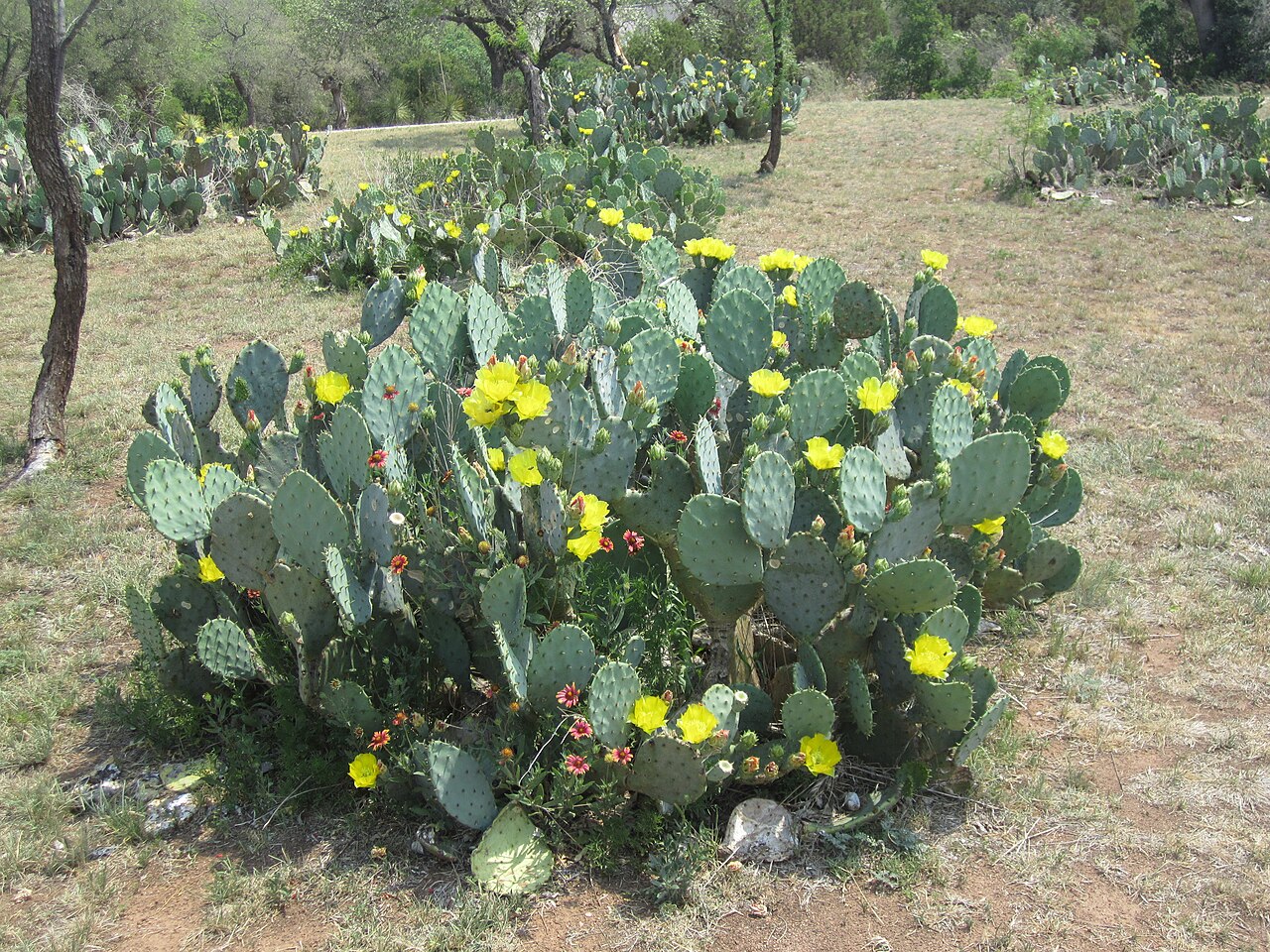
Opuntia lindheimeri, the Texas Prickly Pear, is the iconic flat-padded cactus of the Texas Hill Country, South Texas brush country, and Rio Grande Plains — so closely identified with the state that it was named the official state plant of Texas in 1995. It forms sprawling, many-branched clumps of broad, blue-green to gray-green pads studded with long, pale spines, topped in late spring with a spectacular flush of waxy yellow (occasionally orange or red-centered) flowers followed by deep magenta-red fruit called tunas.
Botanically, Opuntia lindheimeri is treated by USDA PLANTS as a variety of the wider-ranging Opuntia engelmannii (O. engelmannii var. lindheimeri), reflecting how closely related and variable these prickly pears are across the Southwest. Texas naturalists and regional floras have long recognized the Texas form as its own distinctive, frequently cited taxon because of how uniform and widespread it is across the core of the state, and that is the usage followed on this page.
Texas Prickly Pear is a tough, long-lived landscape plant for hot, dry, sunny sites with excellent drainage. It asks for almost nothing once established and rewards minimal care with months of wildlife value, from spring pollinator visits through fall fruit for birds and mammals.
Identification
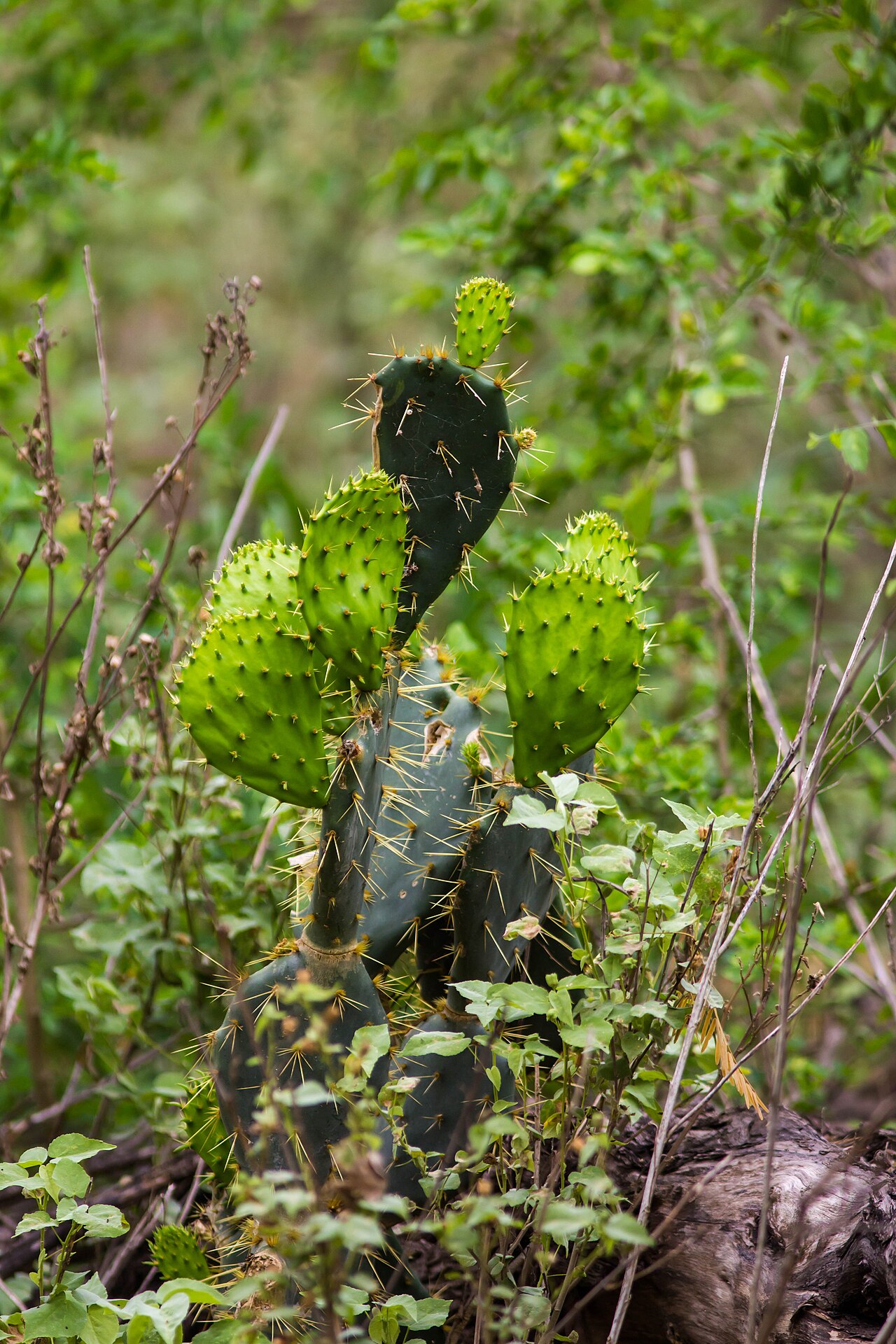
Texas Prickly Pear is unmistakable once mature: a sprawling, many-branched cactus built from flattened, paddle-shaped stem segments.
Pads (Stem Segments)
The flattened, oval to rounded pads (cladodes) are 6 to 12 inches long, blue-green to gray-green, and covered in regularly spaced areoles bearing one to six stout, cream to yellowish spines up to 2.5 inches long, along with tufts of fine, irritating glochids. Plants branch repeatedly from pad to pad, eventually forming dense clumps or thickets 3 to 7 feet tall and considerably wider, sometimes with a short, woody trunk at the base of old specimens.
Flowers
Flowers appear in profusion along the upper edges of the pads in late spring, each 2.5 to 3.5 inches across with numerous waxy, overlapping petals in clear yellow, sometimes with an orange or reddish throat. Flowers open for only a day or two but a mature plant produces a long, overlapping succession of blooms over several weeks, drawing heavy pollinator traffic.
Fruit
The fruit, called a tuna, is a fleshy, spineless (but glochid-covered) oval berry 1.5 to 2.5 inches long that ripens from green to deep red-purple in mid to late summer. Inside is sweet, juicy, deep magenta pulp packed with hard, pale seeds. Ripe tunas are a well-known wild and cultivated food across South Texas and northern Mexico.
Quick Facts
| Scientific Name | Opuntia lindheimeri (USDA: O. engelmannii var. lindheimeri) |
| Family | Cactaceae (Cactus) |
| Plant Type | Evergreen succulent shrub (pad cactus) |
| Mature Height | 3–7 ft |
| Mature Spread | 4–10 ft, often wider with age |
| Growth Rate | Moderate |
| Sun Exposure | Full Sun |
| Water Needs | Very Low |
| Soil Type | Caliche, rocky, or sandy; fast-draining |
| Soil pH | 7.0–8.5 (neutral to alkaline) |
| Bloom Time | April – June |
| Flower Color | Yellow, sometimes orange-centered |
| Fall Color | None (evergreen pads) |
| Fruit | Magenta-red tuna, edible, ripens summer |
| Deer Resistant | Yes |
| USDA Hardiness Zones | 8–11 |
Native Range
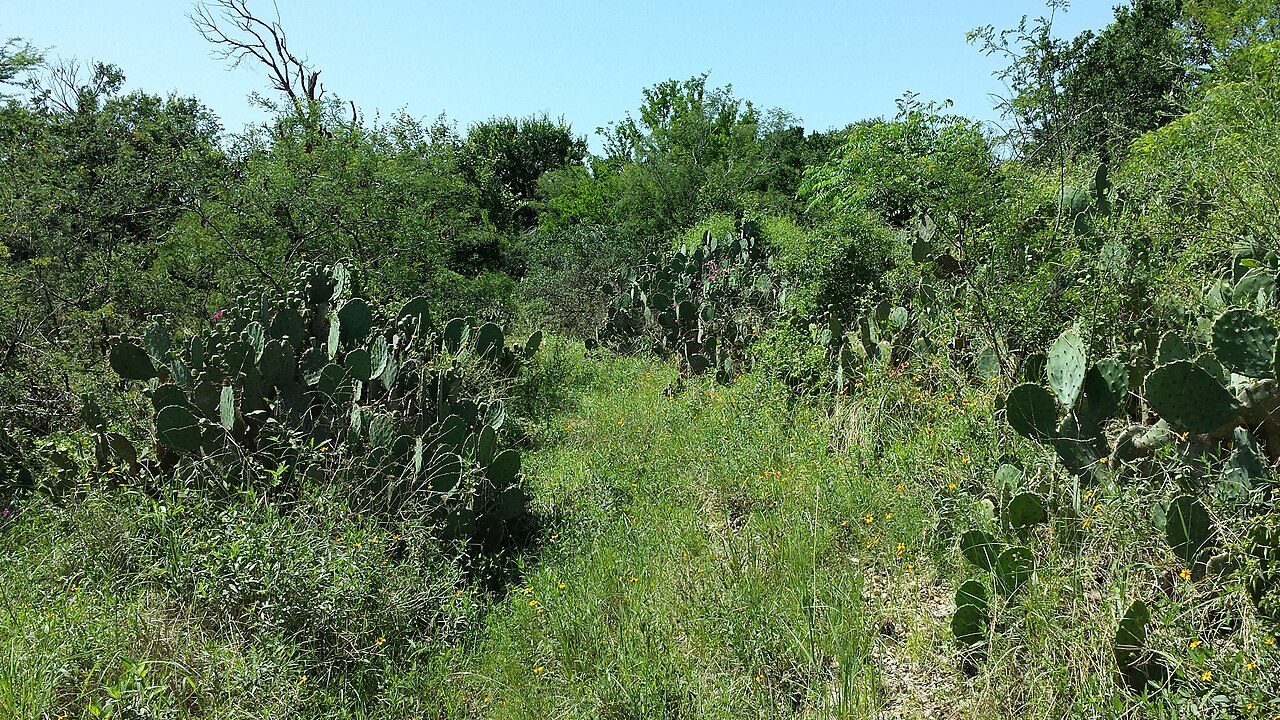
Texas Prickly Pear is native to Texas, where it is one of the most widespread and recognizable cacti across the central, southern, and western two-thirds of the state. It is especially dominant in the South Texas Brush Country and Rio Grande Plains, where dense “prickly pear flats” and thickets are a defining feature of the landscape, and it is common throughout the Edwards Plateau (Hill Country) and extends into the eastern Trans-Pecos.
Within Texas it grows across a wide range of dry habitats: limestone hillsides and caliche flats, grasslands and savannas, brushland, and disturbed rangeland, generally avoiding only the wettest, most poorly drained soils and the deep shade of closed woodland. It is a conspicuous component of South Texas rangeland, where cattle and wildlife browse it heavily, especially in drought years when it may be mechanically singed to remove spines as emergency forage.
Because Texas Prickly Pear and its close relatives in the Opuntia engelmannii complex are widely cultivated and have escaped or been planted outside Texas, you may encounter plants matching this description elsewhere in the southern United States. This page covers its true native range within Texas; plantings or escapes outside the state should be considered naturalized rather than native.
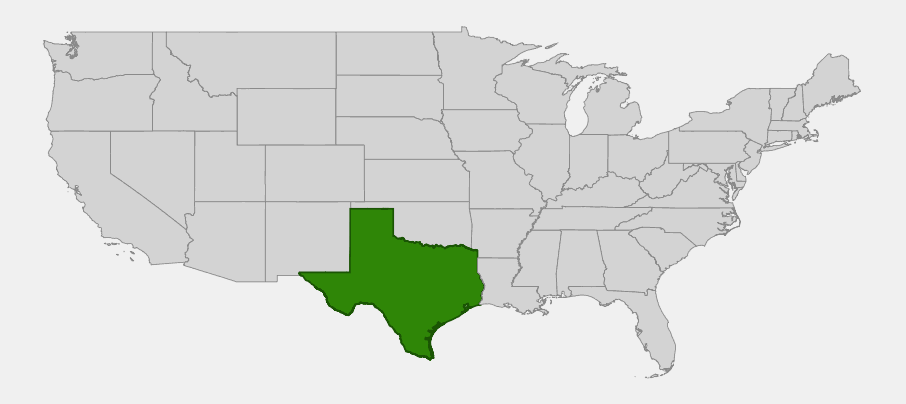
📋 Regional plant lists featuring Texas Prickly Pear: South and West Texas
Growing & Care Guide
Texas Prickly Pear thrives on neglect. The biggest mistake gardeners make with this species is treating it like a thirsty ornamental instead of the drought-built rangeland plant it is.
Light
Plant in full sun. Texas Prickly Pear tolerates the hottest, most reflective sites in the garden — against a south-facing wall or in open rock gardens — without any stress, and blooms best with maximum sun exposure.
Soil & Water
Give it lean, fast-draining soil: caliche, limestone rubble, or coarse sand all work well, and amending with extra organic matter or planting in heavy clay without drainage correction is the fastest way to lose this plant to rot. Once established, it needs no supplemental irrigation beyond natural rainfall in most of its native range and is highly drought-tolerant, storing substantial water in its pads.
Planting Tips
New plants establish easily from rooted pad cuttings: let a cut pad callus over for a week in a dry, shaded spot before setting it a few inches into well-drained soil. Plant or transplant in spring through early summer so new roots have warm soil to establish in before winter. Give plants plenty of room — 5 feet or more — since clumps spread significantly over the years. Always handle with heavy gloves and tongs; the glochids are far more troublesome than the large spines.
Pruning & Maintenance
Prune by removing whole pads at their joint to control size and shape, ideally in late winter before new spring growth. Overcrowded or damaged pads can be removed anytime. Established plants need essentially no fertilizer or other maintenance; a light application of compost in spring is optional but not necessary on most soils.
Landscape Uses
- Xeriscaping and water-wise landscaping in hot, dry sites
- Wildlife and pollinator gardens — flowers, fruit, and cover in one plant
- Barrier or security hedges, thanks to dense spiny growth
- Erosion control on dry slopes and caliche banks
- Edible landscaping — pads (nopales) and fruit (tunas) are both harvested
Wildlife & Ecological Value
Texas Prickly Pear is a keystone resource across South Texas rangeland, feeding and sheltering wildlife through most of the year.
For Pollinators
The large yellow flowers produce abundant pollen and nectar and draw heavy traffic from native bees, including specialist cactus bees, as well as honeybees and beetles during the spring bloom window.
For Birds
Cactus wrens, curve-billed thrashers, and other birds nest within the protective spiny pads, while numerous species — including mockingbirds, orioles, and quail — feed on the ripe tunas in summer and fall. Woodpeckers and other cavity nesters also use larger, older clumps.
For Mammals
White-tailed deer, javelina, and livestock all browse the pads, especially valuable during South Texas droughts when little else stays green. Numerous small mammals eat the fruit, and dense thickets provide cover and denning sites for everything from cottontails to coyotes.
Ecosystem Role
As a widespread, drought-tolerant perennial, Texas Prickly Pear stabilizes thin rangeland soils, provides water-rich forage during dry periods, and creates structurally complex thickets that increase habitat diversity in otherwise open brush country. Its spiny growth also offers key predator protection for nesting birds and small animals.
Cultural & Historical Uses
Texas Prickly Pear has a long history of use across South Texas and northern Mexico. Indigenous peoples of the region gathered the ripe tunas as a seasonal food and used the pads (nopales), after removing spines, as a cooked vegetable — traditions that continue today in Tex-Mex and Mexican cuisine, where young pads are grilled, boiled, or pickled and the fruit is eaten fresh or made into juice, syrup, and candy.
Ranchers have long relied on prickly pear as emergency cattle forage during drought, singeing off the spines with portable burners so livestock can browse the pads safely. The species was named the official state plant of Texas by the state legislature in 1995, cementing its status as a symbol of Texas rangeland alongside the bluebonnet and the longhorn.
The plant’s cochineal-hosting relatives in the genus Opuntia were historically important for producing red dye in Mexico and the Southwest, though Opuntia lindheimeri itself is better known in Texas for food and forage than for dye production.
Frequently Asked Questions
Can you eat Texas Prickly Pear?
Yes. Both the pads (nopales) and the ripe fruit (tunas) are traditionally eaten after careful removal of all spines and glochids. Young, tender pads are typically grilled or boiled, and the fruit is eaten fresh or processed into juice and syrup. Always remove every spine and glochid before handling for food.
Is Texas Prickly Pear the same as Engelmann’s prickly pear?
They are closely related. USDA PLANTS classifies Texas Prickly Pear as a variety of the broader Opuntia engelmannii (O. engelmannii var. lindheimeri), while many Texas sources treat the Texas form as its own recognizable taxon, Opuntia lindheimeri, distinct from the typical Arizona-centered Opuntia engelmannii.
How do I remove prickly pear safely?
Wear thick leather gloves and use long tongs or wrap pads in layers of newspaper to handle them — the fine glochids are the real hazard, since they detach easily and embed in skin. For food use, singe or scrape off spines and glochids, then peel before eating.
Will Texas Prickly Pear take over my yard?
It spreads steadily by branching pads and can form large clumps over years, so give it room from the start. It is not considered invasive within its native Texas range, but pads that fall and root readily mean it does expand without active management, so periodic thinning keeps it in bounds.
Does Texas Prickly Pear need winter protection?
Within its native Texas range it is fully winter-hardy and needs no protection. It is best suited to USDA zones 8 through 11; gardeners in colder zones attempting it outdoors should expect pad damage or dieback during hard freezes.

Looking for a nursery that carries Texas Prickly Pear?
Browse our native plant nursery directory: Texas