Cedar Sage (Salvia roemeriana)
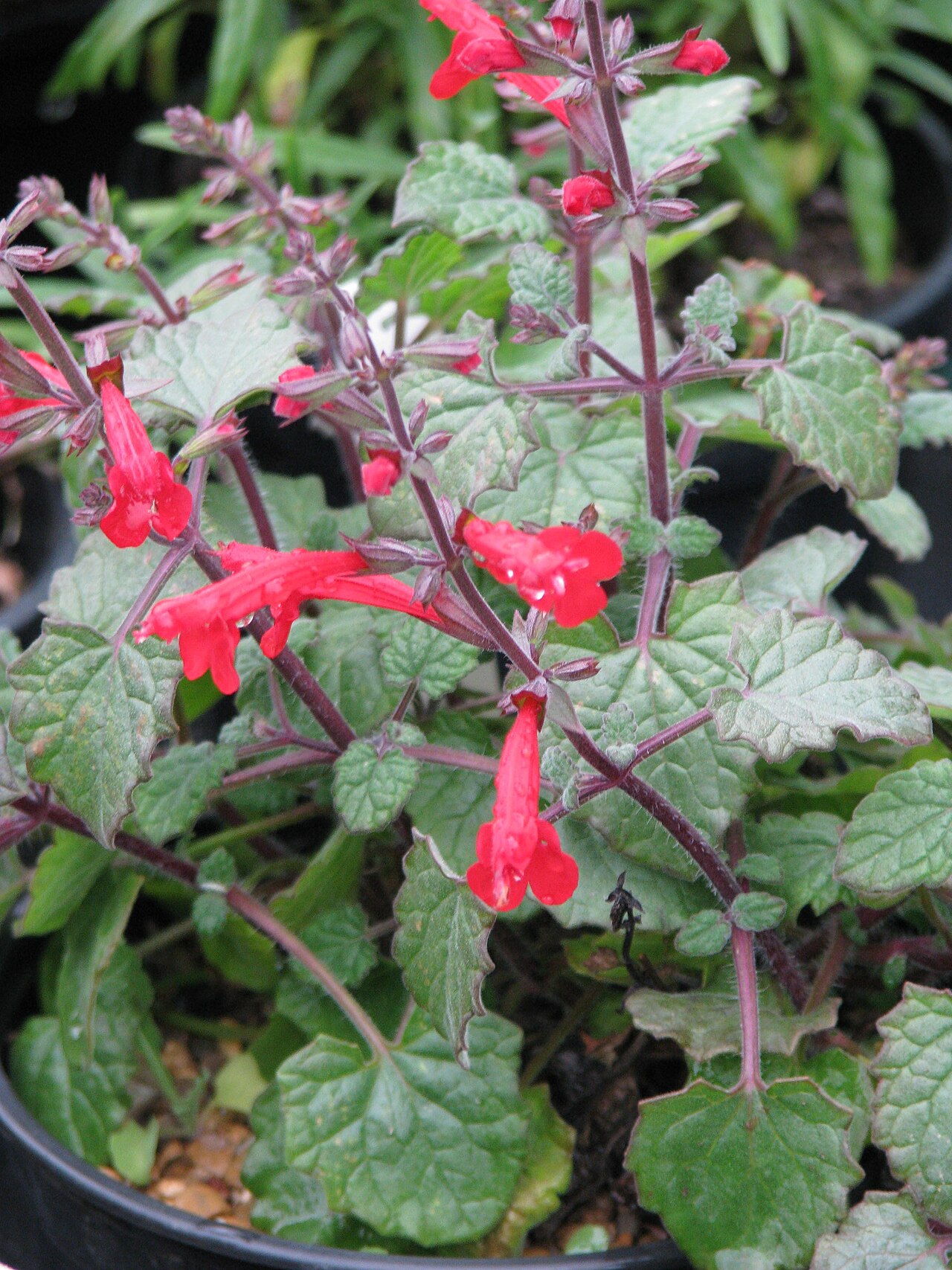
Salvia roemeriana, commonly known as cedar sage or dwarf crimson-flowered sage, is a small, shade-loving perennial wildflower native to the Edwards Plateau and adjoining limestone hill country of central and south-central Texas. A member of the Lamiaceae (mint family), it takes its common name from its close association with “cedar brakes” — the dense stands of Ashe juniper (Juniperus ashei, locally called “cedar”) that blanket much of the Hill Country — where it grows in the leaf litter beneath the trees.
Cedar sage forms a low, spreading clump 8 to 18 inches tall, with soft, hairy, rounded and scalloped leaves that stay attractive through most of the growing season. From spring through early summer, and often again after fall rains, it sends up loose spikes of brilliant scarlet-red, tubular, two-lipped flowers that are irresistible to hummingbirds. Unlike many Texas native plants that demand blazing sun, cedar sage is one of the relatively few true wildflowers adapted to dry shade, making it an especially valuable plant for gardeners working under oaks and junipers.
The species is named for Ferdinand von Roemer, a German geologist who studied the natural history of Texas in the 1840s. In the wild it is restricted to a fairly narrow native range centered on the limestone hills of central Texas, though it is cultivated well beyond that range as a reliable shade perennial.
Identification
Cedar sage is a low, clump-forming herbaceous perennial with a distinctive rosette of soft, scalloped leaves and loose, open flower spikes.
Leaves
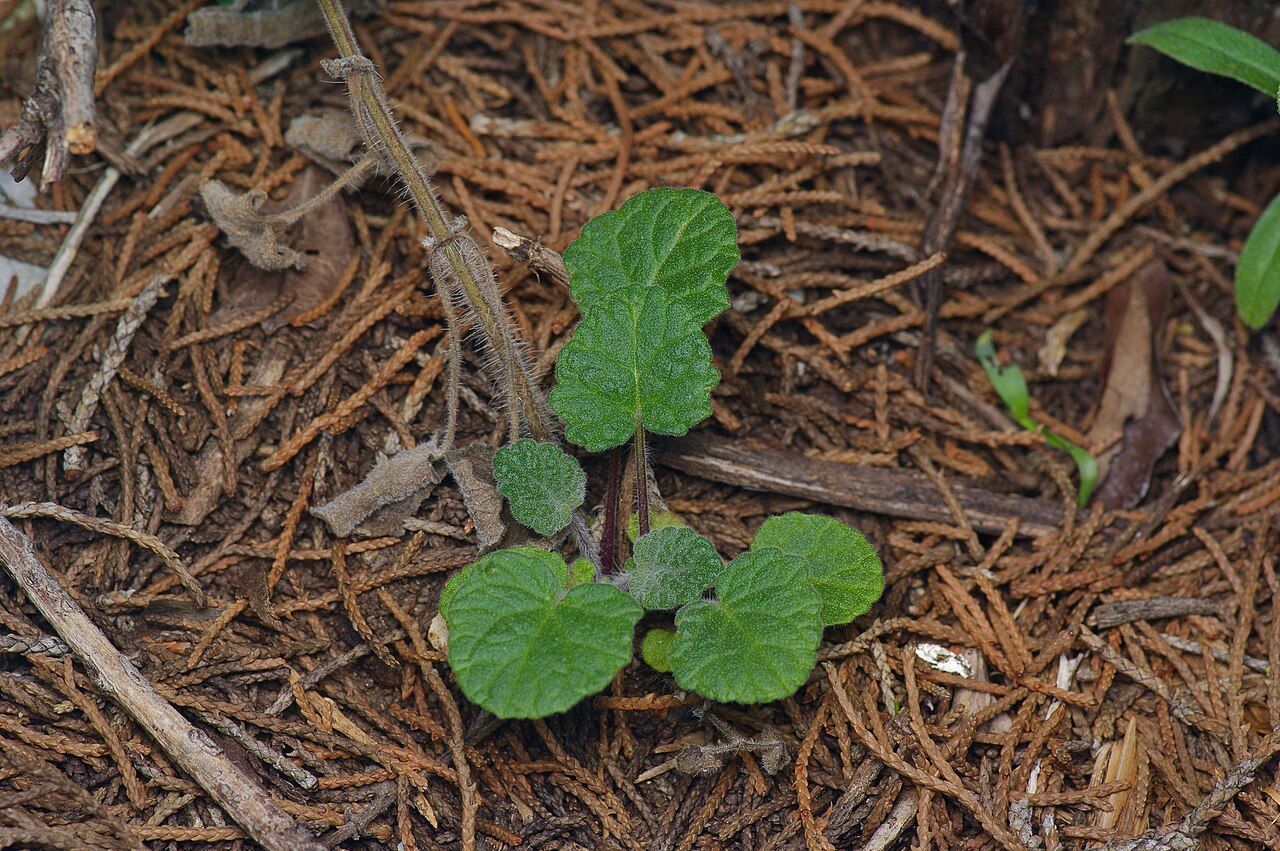
The leaves are rounded to heart-shaped with broadly scalloped (crenate) margins, 1 to 3 inches long, softly hairy on both surfaces, and borne mostly in a basal rosette with a few pairs along the lower flowering stems. The hairy, crinkled texture and bright green color make the foliage attractive on its own, even before the plant flowers, and it often persists through mild Hill Country winters.
Flowers
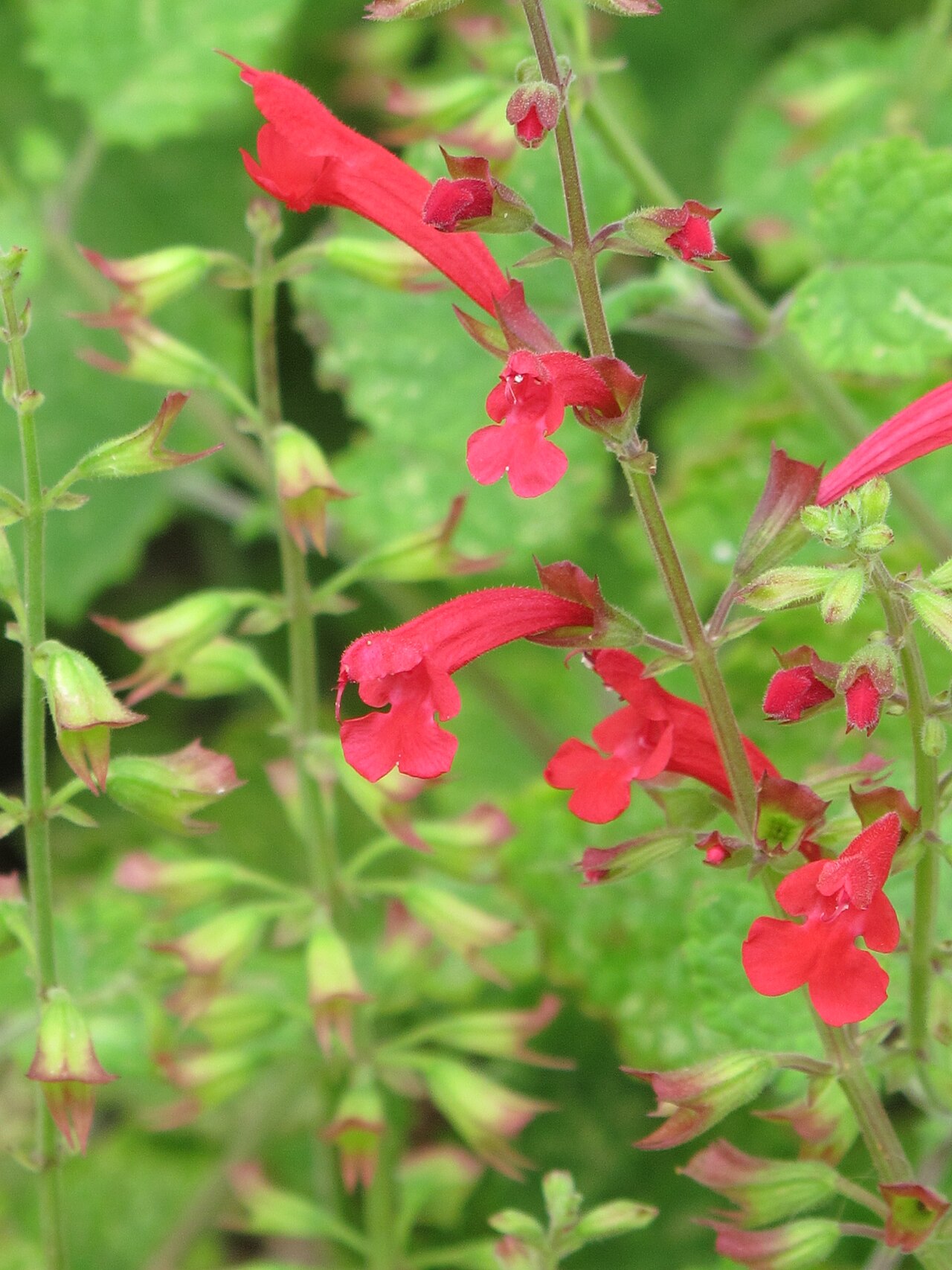
Flowering stems rise 8 to 18 inches above the foliage, bearing widely spaced whorls of tubular, two-lipped flowers typically 1 to 1¼ inches long. Flower color is usually a vivid scarlet red, though white and pink forms occur occasionally in the wild and in cultivation. The upper lip is hooded and the lower lip flares outward, a shape characteristic of hummingbird-pollinated salvias. Main bloom runs from April through June, with a lighter rebloom possible after late-summer or fall rain.
Fruit & Seeds
Like other mints, cedar sage produces its seed as four small, smooth nutlets held at the base of the spent flower calyx. The plant self-sows readily in favorable conditions, and established colonies often persist and spread modestly by seed in the loose leaf duff of a cedar brake or oak-juniper woodland.
Quick Facts
| Scientific Name | Salvia roemeriana |
| Family | Lamiaceae (Mint) |
| Plant Type | Herbaceous perennial wildflower |
| Mature Height | 8–18 in (in flower) |
| Mature Spread | 10–18 in |
| Growth Rate | Moderate |
| Sun Exposure | Part Shade to Full Shade |
| Water Needs | Low to Moderate |
| Soil Type | Rocky, limestone-derived, with leaf litter/organic duff |
| Soil pH | Neutral to alkaline |
| Bloom Time | April – June, light rebloom in fall |
| Flower Color | Scarlet red (occasionally pink or white) |
| Fall Color | Foliage often persists green into winter |
| Fruit | Four small nutlets (typical of the mint family) |
| Deer Resistant | Yes (aromatic foliage) |
| USDA Hardiness Zones | 7–9 |
Native Range
Cedar sage is native to the limestone hill country of central and south-central Texas, concentrated on the Edwards Plateau and the adjacent Balcones Escarpment, with its range extending somewhat into south Texas. Within this region it is closely tied to the dense evergreen stands of Ashe juniper, locally called “cedar brakes,” and to oak-juniper woodlands on rocky, limestone-derived soils.
It typically grows directly in the deep leaf litter and duff that accumulates beneath junipers and oaks, where the canopy provides shade and the slowly decomposing needle litter retains moisture and moderates soil temperature even through hot Texas summers. This microhabitat explains why cedar sage, unlike most sun-loving Texas wildflowers, thrives in conditions most gardeners would consider too shady and too dry for flowering perennials.
Cedar sage is sometimes cultivated outside Texas as a shade perennial, but its documented native range is restricted to the limestone hill country of central Texas; it is not native to other U.S. states, and should be treated as an introduced ornamental wherever planted outside this region.
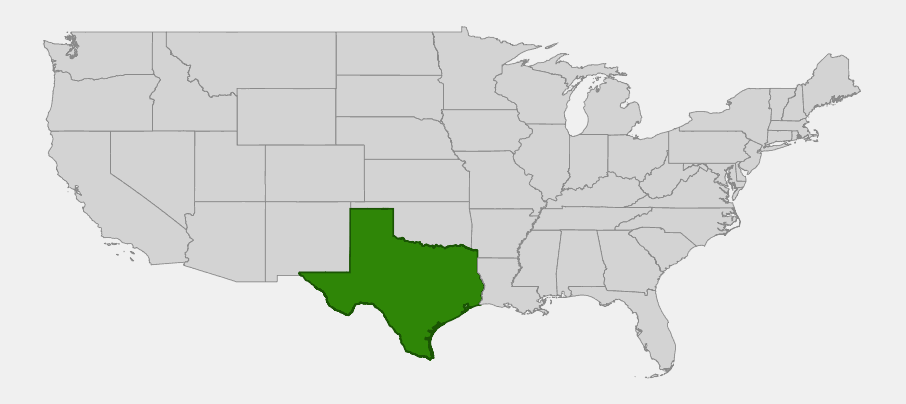
📋 Regional plant lists featuring Cedar Sage: South and West Texas
Growing & Care Guide
Cedar sage fills a genuinely useful niche: a true wildflower that flowers well in dry shade. Give it conditions similar to its native cedar brake habitat and it is low-maintenance and long-lived.
Light
Plant cedar sage in part shade to full shade — exactly the opposite of most Texas native perennials. It performs best under the dappled or filtered light of oaks or junipers and can scorch or decline in hot, reflected full sun, particularly in poor or thin soil.
Soil & Water
This species wants well-drained, limestone-derived soil enriched with the kind of leaf litter and organic duff found naturally beneath cedar brakes and oak woodlands. It is drought-tolerant once established but appreciates occasional deep watering during extended dry spells, especially for plants grown in more open, less litter-rich garden soil than their native woodland floor. Avoid soggy, poorly drained sites.
Planting Tips
Set out plants in fall or early spring, in the dappled shade beneath established trees if possible. Mulch generously with shredded leaves or bark to mimic the loose litter layer the species favors in the wild. Space plants 12 to 18 inches apart; cedar sage self-sows readily in favorable spots, so expect volunteer seedlings to fill in over time.
Pruning & Maintenance
Deadhead spent flower spikes to tidy the plant and encourage a fall rebloom, or leave some seed heads in place to allow natural reseeding. Cut back tired foliage in late winter before new spring growth emerges. Cedar sage has no significant pest or disease issues and needs little care beyond occasional grooming.
Landscape Uses
Cedar sage is one of the most useful Texas natives for shaded sites:
- Woodland and shade gardens beneath oaks, junipers, or other established trees
- Hummingbird gardens — a reliable, long-blooming nectar source in shade
- Naturalized plantings in cedar brake or oak-juniper restoration areas
- Dry shade groundcover where few other flowering perennials succeed
- Container plantings for shaded patios
- Understory companion to ferns, columbine and other Hill Country shade natives
Wildlife & Ecological Value
Cedar sage’s bright, nectar-rich flowers make it a disproportionately important wildlife plant for a species of such modest size, particularly in shaded habitats where flowering resources are limited.
For Pollinators
Hummingbirds are the primary pollinator and visit cedar sage flowers avidly throughout the bloom season; the tubular red flower shape is a classic hummingbird adaptation. Long-tongued native bees and occasionally butterflies also visit the flowers for nectar, though less frequently than hummingbirds.
For Birds
Beyond hummingbirds, the dense low foliage provides some ground-level cover for small birds foraging in the leaf litter of oak-juniper woodlands, and the ripened nutlets offer a minor seed source.
For Mammals
The aromatic, hairy foliage typical of the mint family is seldom browsed by deer, making cedar sage one of the more reliably deer-resistant flowering perennials for Texas Hill Country gardens surrounded by heavy deer pressure.
Ecosystem Role
As one of the few native wildflowers adapted to flower reliably in the deep shade and leaf litter of cedar brakes, cedar sage adds floral diversity and a late-spring nectar pulse to an understory layer that is otherwise often sparse in flowering plants, supporting pollinator activity in habitat that many showier prairie wildflowers cannot use.
Cultural & Historical Uses
Cedar sage carries the name of Ferdinand von Roemer, a German geologist and naturalist who traveled through Texas from 1845 to 1847 documenting its geology and natural history; the species was described and named in his honor shortly after his expeditions, reflecting the wave of European scientific interest in Texas flora during the Republic and early statehood period.
There is no significant documented history of the species as a food, medicine or fiber plant among Indigenous peoples of the region, likely owing to its small size and limited distribution within a narrow ecological niche. Its historical significance is primarily botanical and, more recently, horticultural.
In the latter half of the 20th century, as Texas Hill Country native plant gardening grew in popularity, cedar sage became valued specifically for solving a common landscaping problem: what to plant for color beneath established live oaks and junipers, where lawn grass struggles and most sun-loving wildflowers fail. It remains a signature recommendation of Texas native plant societies for shaded residential gardens today.
Frequently Asked Questions
Will cedar sage really grow in full shade?
Yes — unusually for a flowering perennial, cedar sage is genuinely shade-adapted and often blooms better in dappled or partial shade than in full sun, reflecting its native habitat beneath Ashe juniper and oak canopies.
Does cedar sage attract hummingbirds?
Very reliably. Its tubular red flowers are a favorite nectar source for hummingbirds throughout its spring and early-summer bloom period, and again during any fall rebloom.
Is cedar sage the same as common garden sage used in cooking?
No. Culinary sage is a different species, Salvia officinalis. Cedar sage is an ornamental, pollinator-focused native wildflower and is not used as a culinary herb.
Why do people call it “cedar” sage if it’s not related to cedar trees?
The name comes from its habitat, not its botany — it grows characteristically beneath “cedar brakes,” the local Texas term for dense stands of Ashe juniper, rather than from any relationship to true cedars.
How do I keep cedar sage coming back each year?
Mulch with leaf litter to mimic its native woodland floor, avoid soggy soil, and let some flowers go to seed; established colonies persist for years and often self-sow new plants nearby.

Looking for a nursery that carries Cedar Sage?
Browse our native plant nursery directory: Texas