
Wild Coffee (Psychotria nervosa)
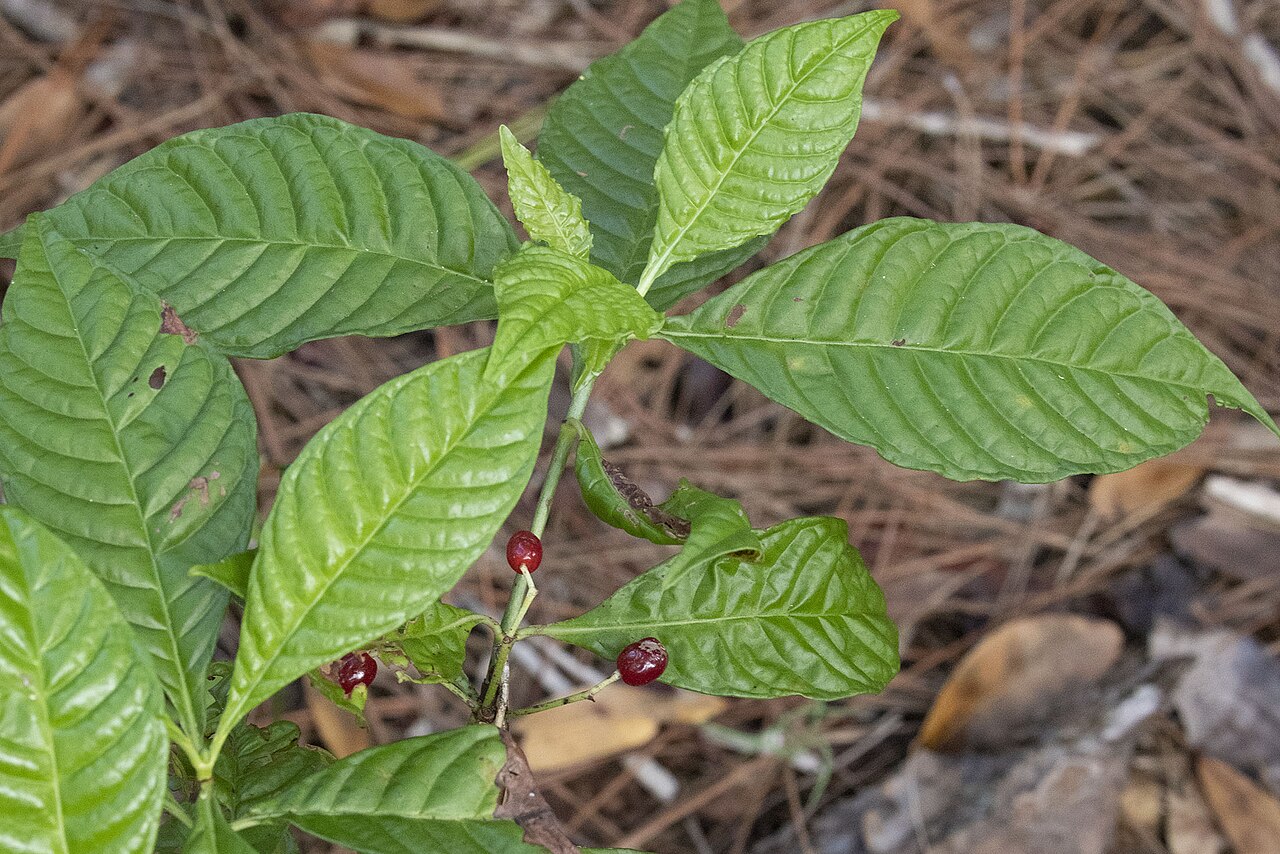
Psychotria nervosa, known as Wild Coffee or Seminole balsamo, is an evergreen shrub of Florida’s hammocks and swamp edges. Its glossy, dark green leaves have deeply sunken veins that give them a quilted look, and through the warm months it bears small clusters of white flowers followed by shiny red berries. It is one of the most popular native shrubs in Florida for shady yards.
Wild coffee belongs to the madder or coffee family (Rubiaceae), the same family as true coffee (Coffea). The common name comes from its coffee-like leaves and its red fruits, which each hold two seeds resembling small coffee beans. It is not a source of coffee and should not be used as one. USDA PLANTS lists it under the name Seminole balsamo, and the Atlas of Florida Plants calls it wild coffee. Older references sometimes use the synonym Psychotria undata.
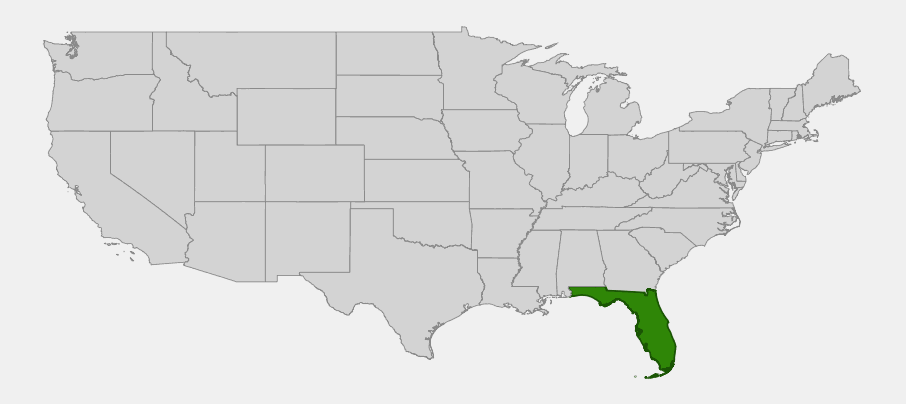
In the United States it is native only to Florida, where it grows in the central and southern peninsula and the Keys. It is also native to Puerto Rico, the U.S. Virgin Islands, the Bahamas and the wider Caribbean, and parts of Mexico and Central and South America. This guide covers identification, range, care and wildlife value.
Identification
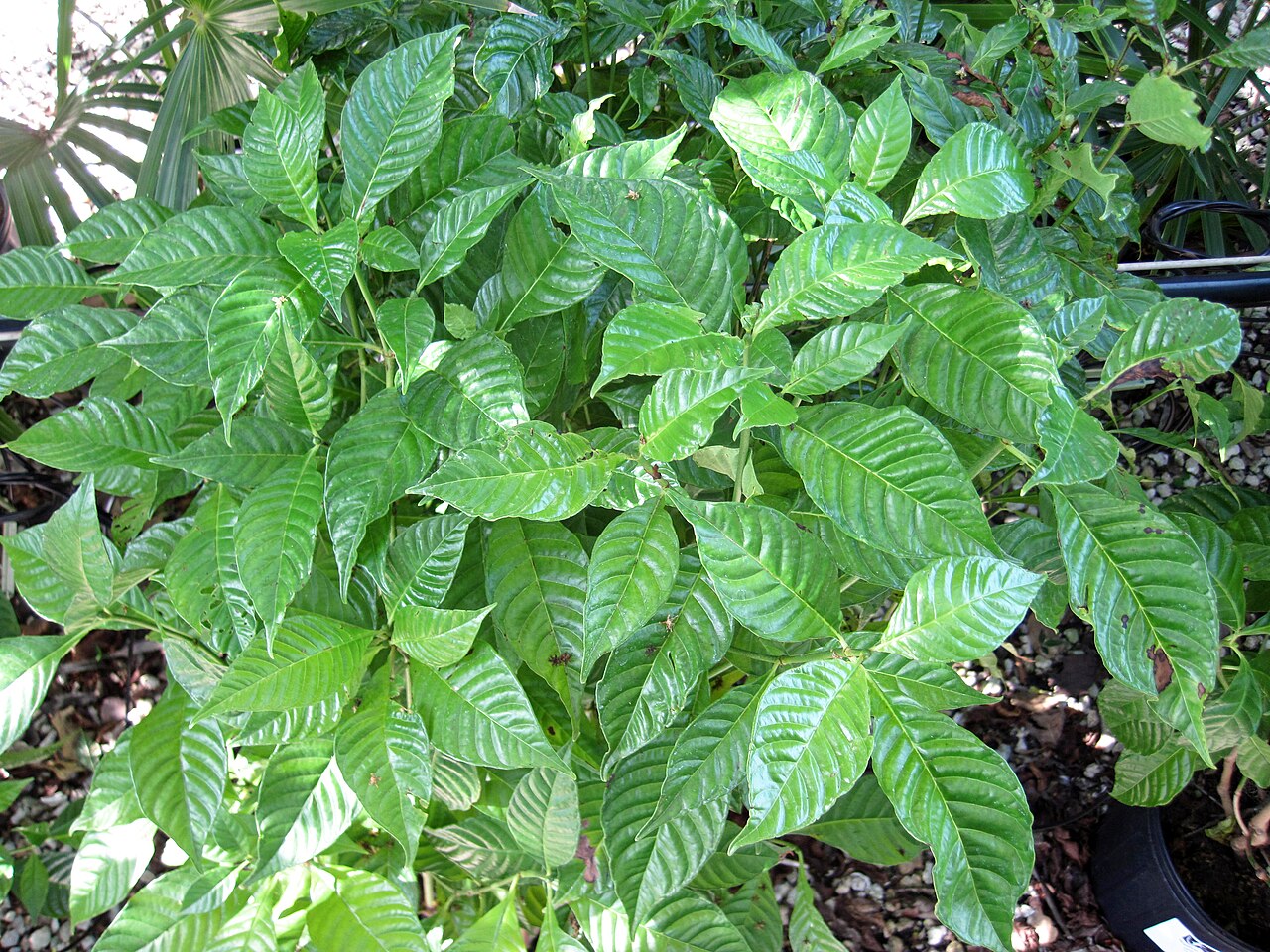
Wild coffee is easiest to recognize by its leaves: opposite, glossy, bright to dark green, and strongly puckered between deeply impressed side veins. Few other Florida shrubs have such a distinctly quilted leaf surface.
Growth Form
It is a multi-stemmed evergreen shrub, usually 4 to 10 feet tall and about as wide, occasionally taller in deep shade. Plants branch from the base and have a rounded, dense form when grown in part sun.
Leaves
The leaves are opposite, simple, elliptic to oblong, usually 3 to 6 inches long, with smooth margins and a pointed tip. The upper surface is glossy, and the 8 to 12 pairs of side veins are sunken, making the blade look corrugated. Small, papery stipules sit between the leaf stalks on the twig, a feature of the coffee family. Plants in full sun have smaller, more yellow-green leaves.
Flowers
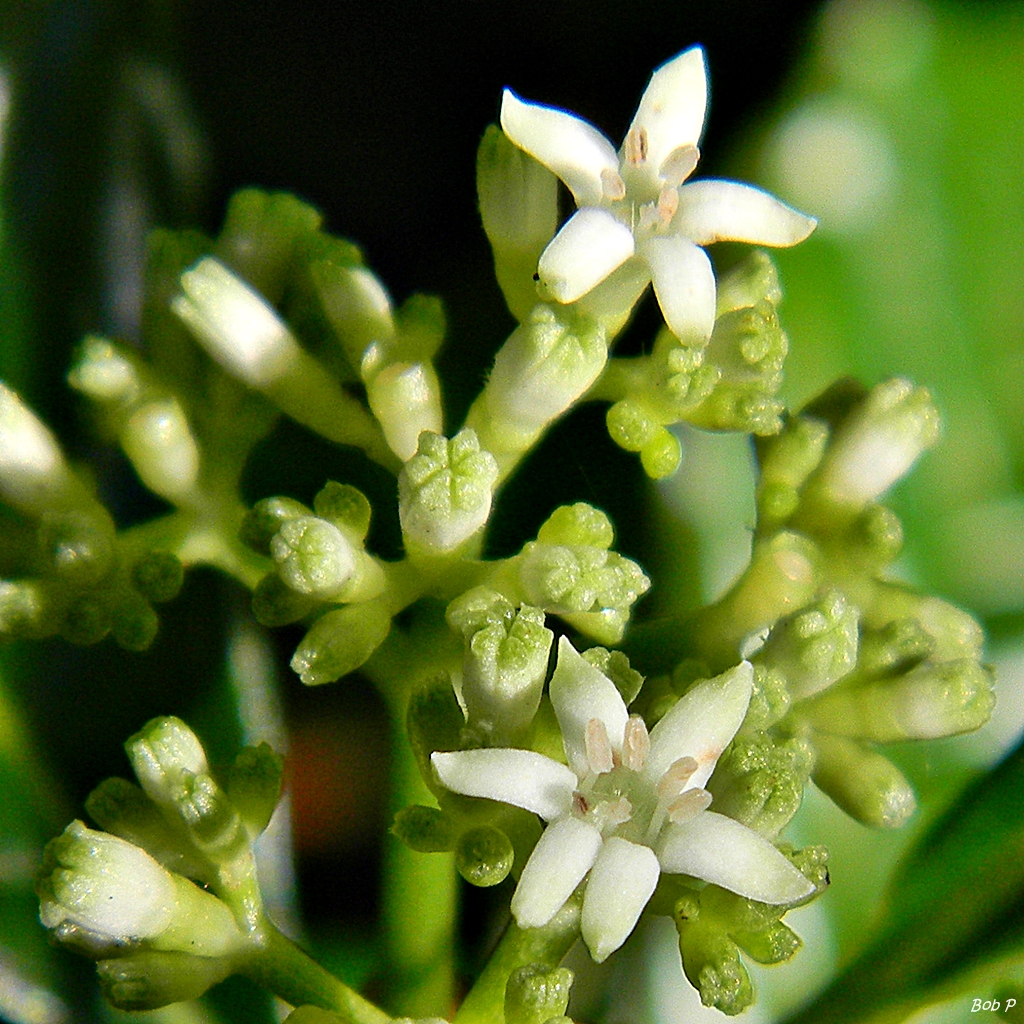
The flowers are small (about ¼ inch across), white and star-shaped, with five petals, and are held in branched clusters at the tips of the stems. They appear mainly from spring through summer, with scattered flowering at other times in south Florida.
Fruit
The fruits are glossy, oval drupes about ¼ to ⅜ inch long, ripening from green to bright red in late summer through winter. Each contains two ribbed seeds that look like miniature coffee beans.
Similar Species
Shortleaf wild coffee (P. tenuifolia, also called P. sulzneri) is a related Florida native with dull, darker blue-green, less puckered leaves and orange-red fruits; it is more tolerant of deep shade and drought. The rare Bahama wild coffee (P. ligustrifolia) of extreme south Florida has smaller, smoother leaves. Marlberry grows in the same hammocks but has alternate, smooth leaves and black fruit.
Quick Facts
| Scientific Name | Psychotria nervosa Sw. (syn. P. undata); USDA name Seminole balsamo |
| Family | Rubiaceae (madder or coffee family) |
| Plant Type | Evergreen shrub |
| Mature Height | 4–10 ft |
| Mature Spread | 3–6 ft |
| Growth Rate | Moderate |
| Sun Exposure | Part shade to full shade; tolerates sun with extra water |
| Water Needs | Moderate; fairly drought tolerant once established in shade |
| Soil Type | Sand, loam, limestone or organic hammock soils |
| Soil pH | Slightly acidic to alkaline, about 6.0–8.0 |
| Bloom Time | Spring–summer; occasional year-round in south Florida |
| Flower Color | White |
| Fall Color | None; evergreen |
| Fruit | Glossy red drupes, late summer–winter |
| Deer Resistant | Moderate; deer browse it occasionally |
| USDA Hardiness Zones | 9b–11 |
Native Range
In the continental United States, wild coffee is native only to Florida. The Atlas of Florida Plants maps it in the central and southern peninsula and the Florida Keys, reaching north along the coasts into northeast Florida. USDA PLANTS lists it as native in Florida, Puerto Rico and the U.S. Virgin Islands.
Outside U.S. territory it is native to the Bahamas, the Greater and Lesser Antilles, and from Mexico through Central America to northern South America.
It grows in the understory of tropical and temperate hardwood hammocks, shell mounds, coastal hammocks and the drier edges of cypress and mixed swamps. It is most common in shaded, humus-rich sites over sand or limestone.
📋 Regional plant lists featuring Wild Coffee: North & South Florida
Growing & Care Guide
Wild coffee is one of the easiest and most widely available native shrubs in Florida, sold by most native plant nurseries and many general garden centers. It is the go-to native shrub for shady foundation plantings, hedges and woodland gardens in central and south Florida.
Light
It does best in part shade to full shade, where the leaves stay dark green and glossy. It will grow in full sun with regular water, but the leaves tend to turn yellowish and the plant becomes more compact. Afternoon shade is especially helpful in hot, dry sites.
Soil & Water
It adapts to sandy, loamy, limestone and organic soils, and does best in moist, well-drained soil enriched with leaf litter. Water regularly for the first few months after planting; once established in shade, it is fairly drought tolerant, though it wilts during long dry spells in sun. It has low to moderate salt tolerance and should be kept away from direct salt spray.
Planting Tips
Plant at any time of year in south Florida, or in spring in central Florida. Space plants 3 to 4 feet apart for a hedge or mass planting. It is excellent beneath live oaks, in hammock-style plantings with stoppers and marlberry, and along shaded walls. It is frost-tender: temperatures in the upper 20s °F damage the leaves and stems, though established plants usually resprout from the base.
Pruning & Maintenance
It responds well to pruning and can be kept as a 3- to 4-foot informal hedge, but heavy shearing removes the flowers and fruit. Prune lightly in late winter if needed. Mulch with leaves to keep roots cool and moist. Scale insects and sooty mold occasionally appear on plants in stressed conditions; healthy plants in shade rarely have problems.
Propagation
Clean the seeds from ripe red fruits and sow them fresh in a moist potting mix; germination is slow, often taking one to several months. Semi-hardwood cuttings taken in summer also root fairly well. Plants also self-seed in the garden, where birds scatter the seeds.
Landscape Uses
- Shade gardens: glossy evergreen foliage under trees
- Hedges and foundation plantings: dense, prunable screen for shady walls
- Bird gardens: red fruits eaten by many songbirds
- Hammock restoration: understory shrub for central and south Florida
- Butterfly gardens: nectar for small butterflies and bees
Wildlife & Ecological Value
Wild coffee supports a wide range of wildlife in Florida hammocks, providing nectar in summer, fruit in fall and winter, and year-round evergreen cover.
For Pollinators
The small white flowers attract bees, wasps, flies and small butterflies. They are especially useful in shady gardens, where few other plants are blooming in summer.
For Birds
The red fruits are eaten by northern mockingbirds, gray catbirds, northern cardinals, thrushes and other songbirds, which spread the seeds. The dense, evergreen foliage provides nesting and roosting cover for small birds.
For Mammals
Raccoons and other small mammals sometimes eat the fruit. Deer browse the leaves occasionally, but plants usually recover.
Ecosystem Role
As one of the most common understory shrubs in south Florida hammocks, wild coffee forms part of the dense shrub layer that shades the forest floor, holds moisture and shelters ground-dwelling animals.
Cultural & Historical Uses
The Swedish botanist Olof Swartz described Psychotria nervosa in 1788 from plants he collected in the West Indies. The genus Psychotria is one of the largest genera of flowering plants, with well over a thousand species throughout the tropics.
The name Seminole balsamo, used by USDA, refers to the Seminole people of Florida, but the origin of the name is not well documented. Most Floridians simply know the plant as wild coffee.
Although the seeds look like coffee beans and the plant is a cousin of true coffee, wild coffee is not a substitute for coffee. Do not eat the fruit or seeds. The name has helped make the plant a favorite among Florida gardeners, and it is one of the most frequently recommended natives for replacing non-native shade shrubs.
Frequently Asked Questions
Can you make coffee from wild coffee?
No. Although it is in the coffee family and its seeds look like coffee beans, it is not a coffee plant and should not be used as a coffee substitute. Do not eat the fruit or seeds.
Does wild coffee grow in full sun?
It can, with regular water, but it looks best in part shade to full shade. In full sun the leaves often turn yellowish and the plant is more compact.
Is wild coffee cold hardy?
It is frost-tender. Temperatures in the upper 20s °F damage it, though established plants usually resprout from the base. It is best suited to central and south Florida (zones 9b–11).
What is the difference between wild coffee and shortleaf wild coffee?
Wild coffee has glossy, bright green, deeply quilted leaves and red fruits. Shortleaf wild coffee has duller, darker, flatter leaves and orange-red fruits, and tolerates deeper shade and drier soil.
Do birds eat wild coffee berries?
Yes. Mockingbirds, catbirds, cardinals and other songbirds eat the red fruits from late summer into winter and spread the seeds.

Looking for a nursery that carries Wild Coffee?
Browse our native plant nursery directory: Florida