Firebush (Hamelia patens)
Hamelia patens, commonly known as firebush or scarletbush, is a fast-growing, semi-evergreen shrub native to central and southern Florida and prized across the warm-climate South for its nonstop show of tubular orange-red blooms. A member of the coffee family (Rubiaceae), firebush flowers nearly year-round in frost-free areas, making it one of the most reliable nectar sources for hummingbirds and butterflies in Florida landscapes.
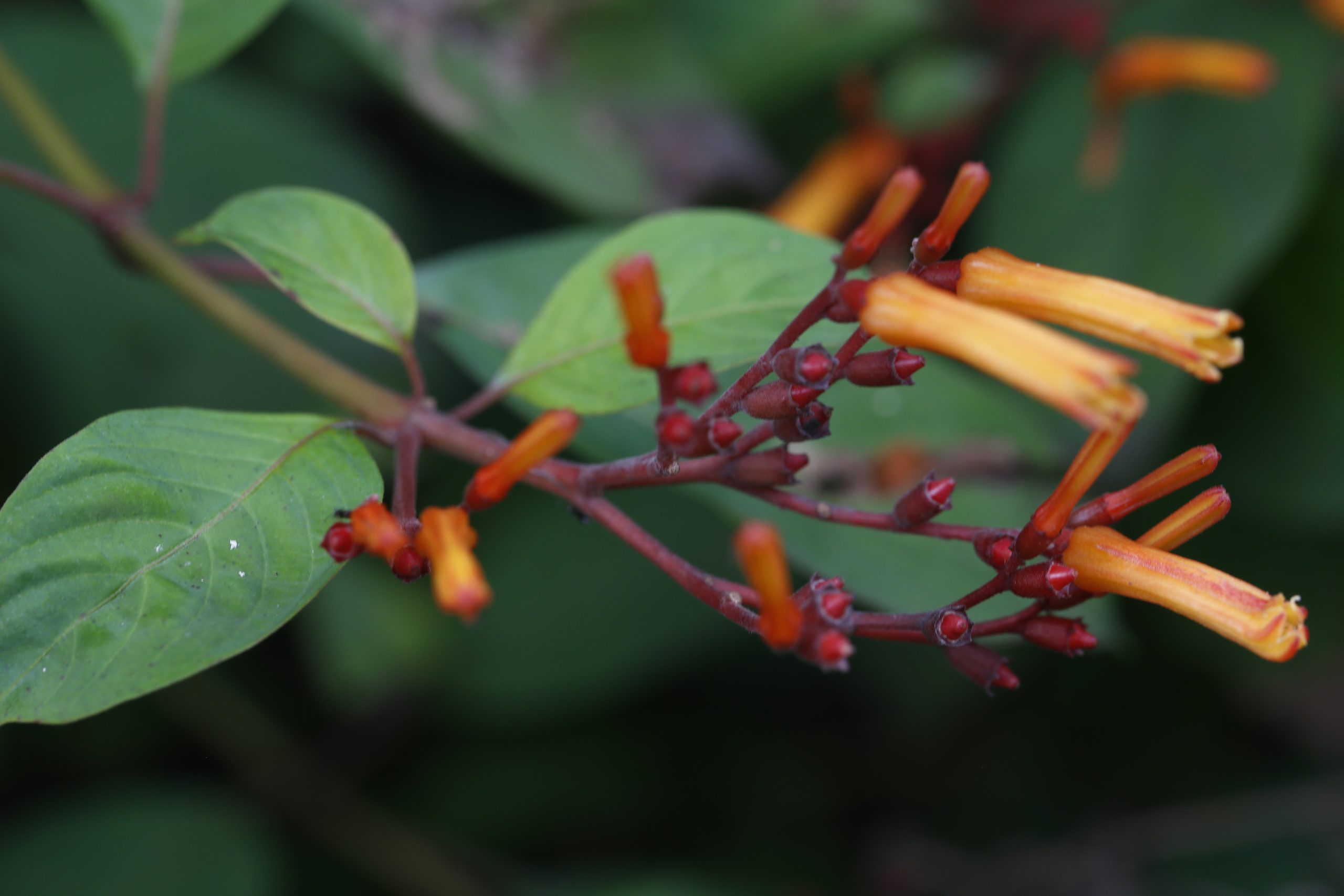
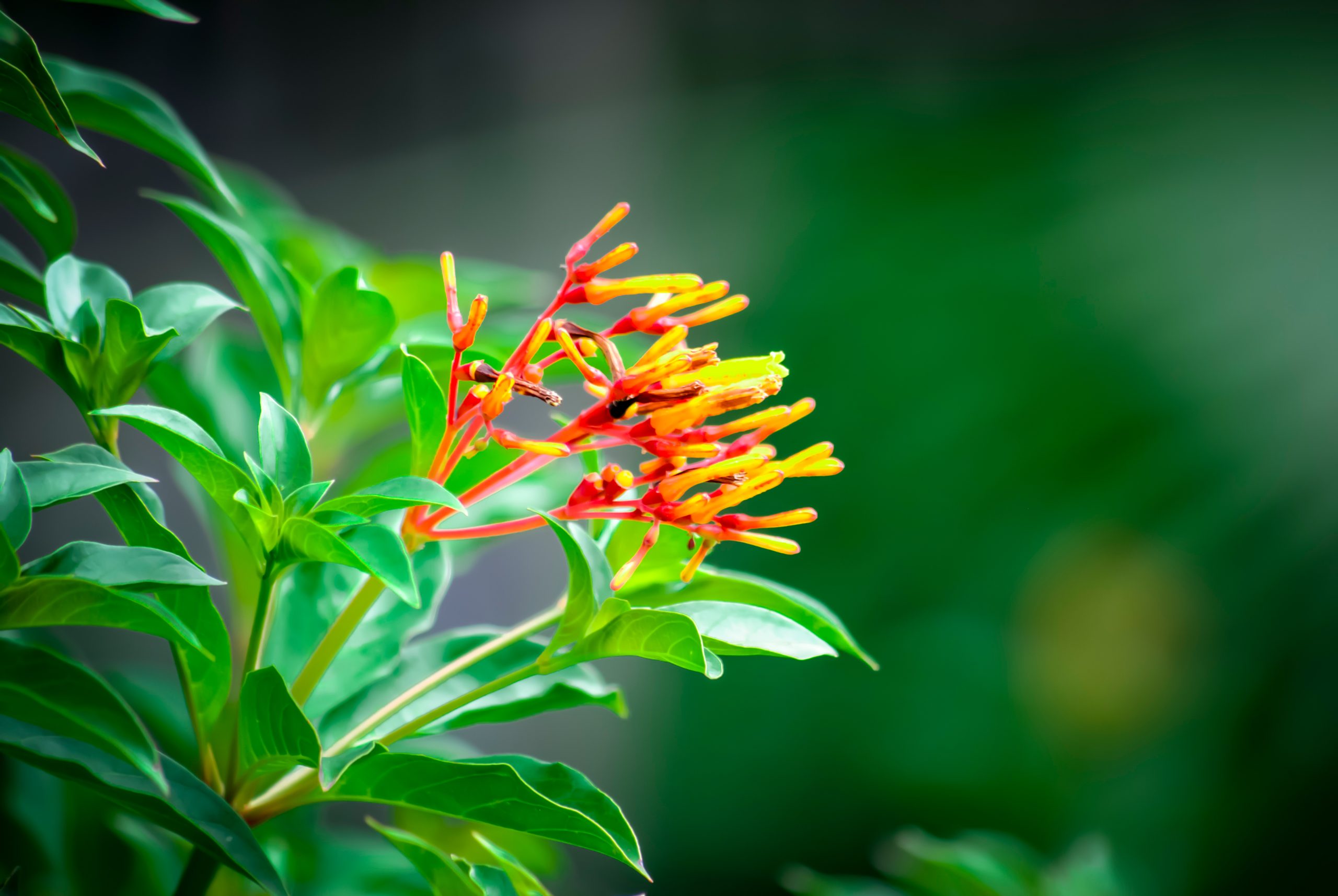
Left alone, firebush grows into a loose, arching shrub 6 to 12 feet tall with reddish stems, whorled oval leaves, and terminal clusters of narrow, trumpet-shaped flowers that open yellow-orange and deepen to red-orange with age. The flowers give way to small berries that ripen from green to red to nearly black, drawing songbirds throughout the warmer months. Its combination of continuous bloom, fast growth, and wildlife value has made it a go-to shrub for Florida butterfly gardens and hummingbird gardens alike.
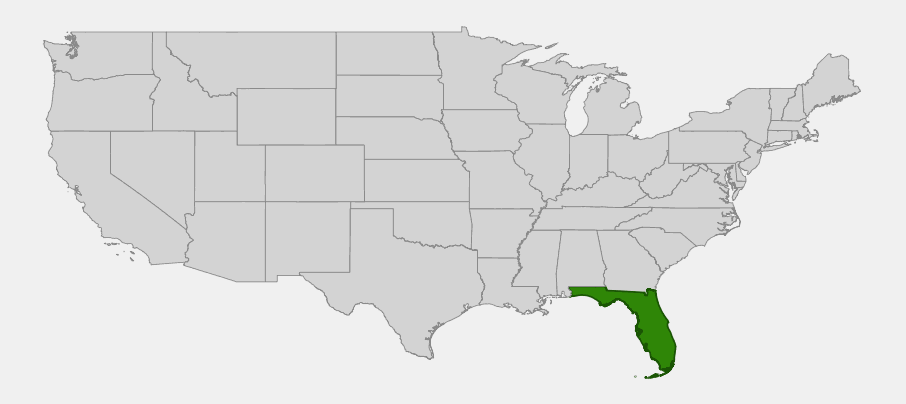
Firebush is native only to central and southern Florida in the continental United States — roughly from Marion County southward — as well as the West Indies, and Central and South America. Within that Florida range it belongs in nearly any sunny native garden; gardeners further north grow it as a container plant or warm-season annual, since it is not reliably cold-hardy outside its native zone.
Identification
Firebush is easiest to recognize in bloom, but its reddish stems and whorled leaves are useful identifying features even without flowers.
Bark & Stems
Young stems are a distinctive reddish to maroon color, turning woody and brown with age. The shrub branches freely from the base, producing an arching, multi-stemmed form rather than a single trunk. In South Florida’s frost-free areas it stays evergreen; further north it is typically killed back to the ground by freezes and resprouts vigorously from the roots in spring.
Leaves
Leaves are simple, oval to elliptical, 3 to 8 inches long, and arranged in whorls of three to five around the stem — a reliable identification clue, since few other Florida shrubs share this whorled leaf pattern. The foliage is often tinged with a reddish or bronze cast, especially on new growth and in full sun, and has a fine, soft hairiness on the underside.
Flowers
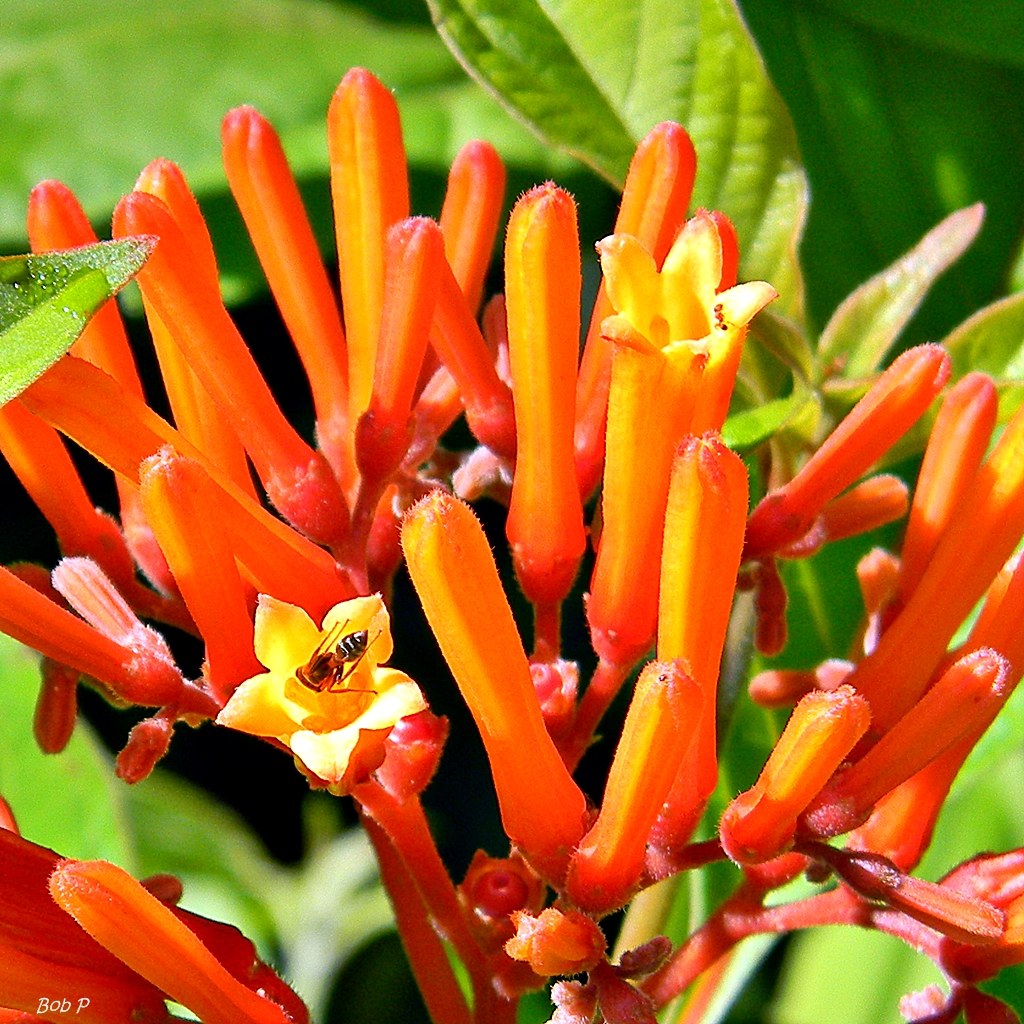
Flowers are narrow, tubular, and about 1 inch long, clustered in branched terminal cymes that stand above the foliage. Individual flowers open yellow-orange at the base and deepen to a vivid orange-red toward the tip, giving each cluster a two-toned, glowing appearance that explains the common name. Blooming is continuous from spring through fall in Florida and essentially year-round where winters stay frost-free, making firebush one of the most dependable nectar plants in the region.
Fruit & Seeds
The tubular flowers are followed by small, round berries about ¼ inch across that ripen from green to red and finally to dark purple-black. Each berry contains numerous tiny seeds. Berries are produced in the same loose clusters as the flowers, so a single branch often shows flowers, green berries, and ripe fruit all at once.
Quick Facts
| Scientific Name | Hamelia patens |
| Family | Rubiaceae (Coffee) |
| Plant Type | Semi-evergreen shrub |
| Mature Height | 6–12 ft (1.8–3.7 m) |
| Mature Spread | 5–8 ft (1.5–2.4 m) |
| Growth Rate | Fast |
| Sun Exposure | Full sun to part shade |
| Water Needs | Moderate; drought tolerant once established |
| Soil Type | Adaptable; sandy, loamy, or limestone-based |
| Soil pH | 6.0–8.0 (adaptable, including alkaline) |
| Bloom Time | Spring – fall; year-round in frost-free areas |
| Flower Color | Orange-red |
| Fall Color | None; foliage stays green or bronze-tinged |
| Fruit | Small red-to-black berries |
| Deer Resistant | Moderate |
| USDA Hardiness Zones | 9b–11 (root-hardy into zone 8b) |
Native Range
In the continental United States, firebush is native only to Florida, where it occurs naturally from roughly Marion County in the north-central peninsula southward through the Keys. It is most common in the hammocks, pinelands, and coastal thickets of central and South Florida, reflecting its tropical and subtropical origins. Beyond Florida, the species is native throughout the West Indies and much of Central and South America, where related varieties extend as far south as Paraguay and Bolivia.
Within its Florida range, firebush grows naturally along hammock edges, in open pinelands, and in disturbed or coastal scrub, often forming loose colonies where light is adequate. It is not a wetland obligate but tolerates occasional flooding and performs well in a range of well-drained Florida soils, from sandy flatwoods to limestone-based soils common in South Florida.
Firebush is not cold-hardy much beyond its native Florida range; hard freezes kill it to the ground, and prolonged freezing temperatures can kill the plant outright. Gardeners in zone 9a and colder, including much of North Florida and the rest of the Southeast, typically grow it as a root-hardy perennial that dies back each winter or as a warm-season container plant, rather than as a true year-round landscape shrub.
📋 Firebush does not currently appear on a regional native plant list on this site — our regional list library does not yet include a Florida list.
Growing & Care Guide
Firebush is one of the easiest native shrubs to grow in Florida landscapes, rewarding minimal care with months of continuous bloom and heavy pollinator traffic.
Light
Full sun produces the densest growth and heaviest flowering, though firebush tolerates part shade and will still bloom, just less profusely. In the hottest, driest sites it benefits from a little afternoon shade, especially in South Florida’s peak summer heat.
Soil & Water
Firebush adapts to a wide range of soils, from sandy flatwoods to the alkaline, limestone-derived soils common in South Florida, and tolerates both drought and occasional flooding once established. Regular watering during the first growing season speeds establishment; afterward, firebush needs supplemental water only during extended dry spells. Good drainage is preferred, though the species is more forgiving of wet feet than many other Florida natives.
Planting Tips
Plant firebush in spring or early summer so it has a full warm season to establish roots before any winter cold. Space plants 5 to 8 feet apart to allow for its naturally loose, spreading habit, and avoid low spots where cold air pools, since firebush is markedly more cold-sensitive than many Florida natives. Container-grown plants establish quickly and often bloom the same season they are planted.
Pruning & Maintenance
Firebush benefits from an annual hard pruning in late winter or early spring, cutting plants back by a third to a half to encourage dense new growth and maximize flowering. In areas where winter freezes kill the plant to the ground, simply cut back the dead wood in spring — new growth from the root crown is typically vigorous and will flower the same year. Firebush has few serious pests or diseases in its native range.
Landscape Uses
Firebush fits naturally into a wide range of Florida garden styles:
- Hummingbird and butterfly gardens, where its long bloom season is unmatched by most natives
- Mixed shrub borders for season-long color
- Informal hedges and screens in frost-free areas
- Coastal and limestone-soil plantings, given its tolerance of alkaline, sandy ground
- Container plantings for gardeners north of its hardy range
- Naturalistic hammock-edge restoration plantings within its native Florida range
Cold Hardiness
Firebush is reliably evergreen only in the warmest parts of its range (roughly zone 10 and warmer). In zone 9, expect it to die back to the ground in a hard freeze and resprout from the roots once temperatures warm, similar to many tropical-leaning Florida natives. Gardeners outside Florida’s native range who want this plant’s hummingbird appeal should plan to treat it as an annual or bring container specimens indoors for winter.
Wildlife & Ecological Value
Few Florida native shrubs rival firebush for sheer volume of pollinator and bird activity, a reputation it has earned through its nearly continuous bloom and fruiting cycle.
For Pollinators
The tubular orange-red flowers are shaped for hummingbird pollination and are a favored nectar source for ruby-throated hummingbirds throughout their time in Florida. The same blooms attract numerous butterfly species, including swallowtails and zebra longwings, as well as native bees that can access nectar at the flower’s base. Because firebush blooms almost year-round in frost-free areas, it fills nectar gaps when many other native plants are not in flower.
For Birds & Mammals
The small berries are consumed by a wide range of songbirds, including mockingbirds, catbirds, and thrashers, which help disperse the seeds. Firebush’s dense, arching growth also provides cover for small birds and other wildlife seeking shelter from predators or weather.
Ecosystem Role
As a fast-growing shrub of pineland and hammock edges, firebush helps fill the shrub layer in disturbed or sunny gaps within its native plant communities, offering nectar and fruit resources through most of the year. Its rapid regrowth after fire or cold damage makes it a resilient component of Florida’s fire-adapted and hurricane-prone ecosystems.
Cultural & Historical Uses
Throughout its range in Central and South America and the Caribbean, firebush has a long history of traditional use among Indigenous and local communities, who have applied preparations of the leaves and bark externally for skin ailments and used the plant in various folk remedies. These are historical and ethnobotanical uses, not medical guidance — firebush has not been evaluated for safety or efficacy as a treatment, and any therapeutic use should be left to qualified practitioners.
In Florida, firebush has long been recognized by native plant enthusiasts and landscapers as one of the most reliable wildlife-attracting shrubs available, and it has been a staple of the Florida-Friendly Landscaping movement promoted by University of Florida IFAS Extension for decades. Its ease of propagation from cuttings made it a popular pass-along plant among Florida gardeners well before it became widely available in nurseries.
Today firebush is also grown as an ornamental well beyond its native range, including cultivated dwarf varieties bred for compact size in home landscapes. These cultivars are popular in the nursery trade, but gardeners seeking to support local Florida ecosystems should look for straight native Hamelia patens rather than dwarf or hybrid selections, since wildlife value can differ between the wild type and bred cultivars.
Frequently Asked Questions
Is firebush native to Florida?
Yes. Firebush is native to central and southern Florida, from roughly Marion County south through the Keys, as well as to the West Indies and Central and South America. It is not native to the rest of the continental United States.
Will firebush survive winter outside of South Florida?
It depends on the severity of the cold. In zone 9, firebush typically dies back to the ground in a hard freeze but resprouts from the roots in spring. In zone 8b and colder, firebush is usually grown as an annual or container plant, since prolonged freezes can kill it outright.
Do hummingbirds really like firebush?
Yes — the tubular orange-red flowers are shaped specifically to suit hummingbird feeding, and firebush is considered one of the best native hummingbird plants for Florida gardens thanks to its nearly year-round bloom.
Can you eat firebush berries?
The berries are reportedly eaten by some people, but the taste is not considered desirable, and they are best left for the songbirds that rely on them. There is no established culinary use for the fruit, so it should not be treated as a foraging crop.
How do I keep firebush from getting leggy?
Prune firebush back by a third to a half in late winter or early spring. Regular hard pruning each year keeps the shrub dense and encourages the heaviest flowering, rather than letting it grow tall and sparse.

Looking for a nursery that carries firebush?
Browse our native plant nursery directory: Florida