Chuparosa (Justicia californica)
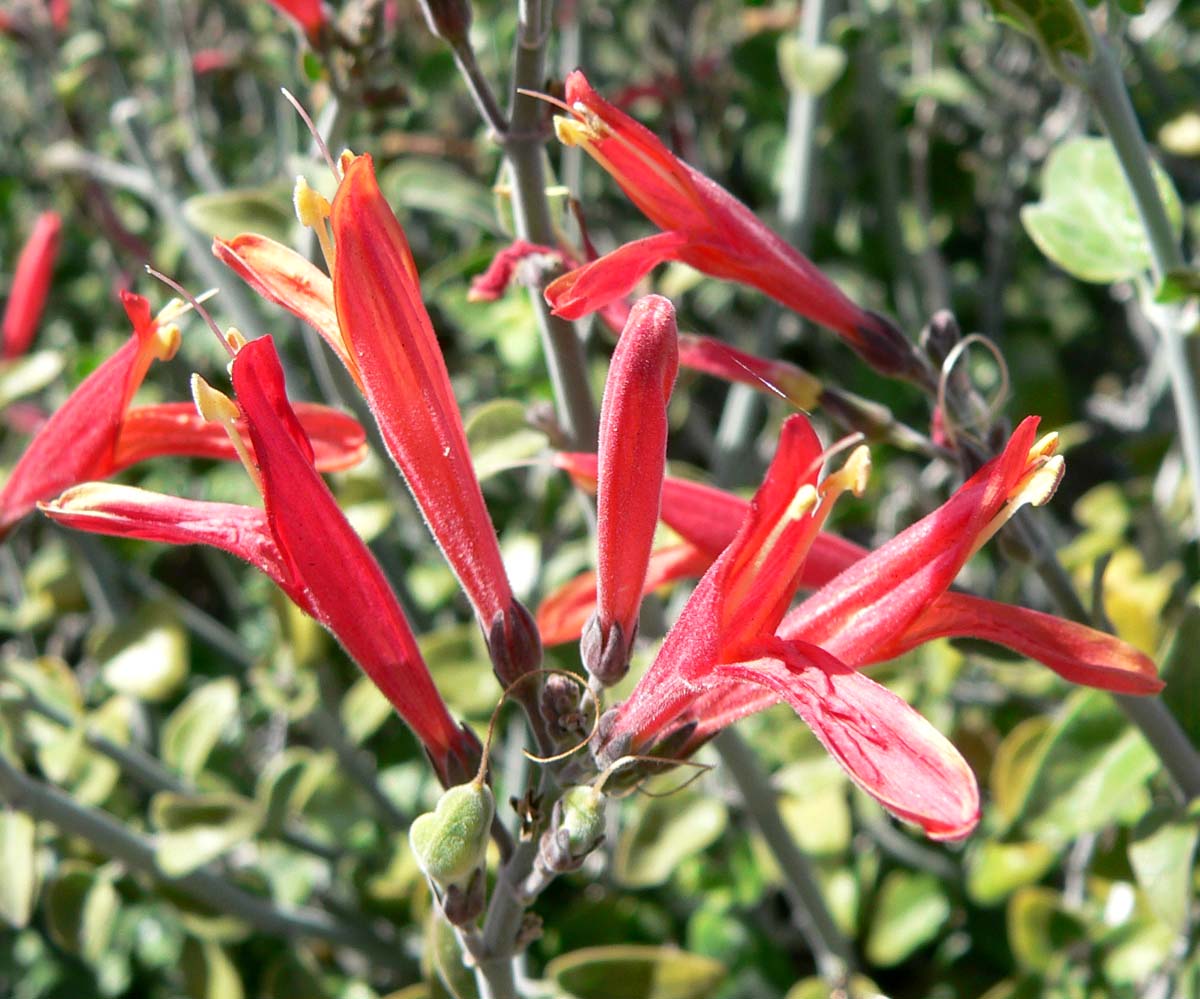
Justicia californica, known as Chuparosa (from the Spanish chuparrosa, “hummingbird”), is a wiry, silver-stemmed desert shrub that lights up the washes and rocky slopes of the Sonoran and Colorado Deserts with clusters of brilliant red, tubular flowers. Also called beloperone or hummingbird bush, it is one of the most reliable hummingbird plants native to the low desert Southwest — a shrub practically built, flower by flower, for a hummingbird’s bill.
For gardeners in the hot, dry basins of southern California and southern Arizona, chuparosa offers something rare: months of bright, nectar-rich bloom from a plant that asks for little water and virtually no care once settled in. Its loose, gray-green silhouette fits naturally into a desert garden, and its flowers draw hummingbirds, orioles, and butterflies with a reliability few other low-desert natives can match.
Identification
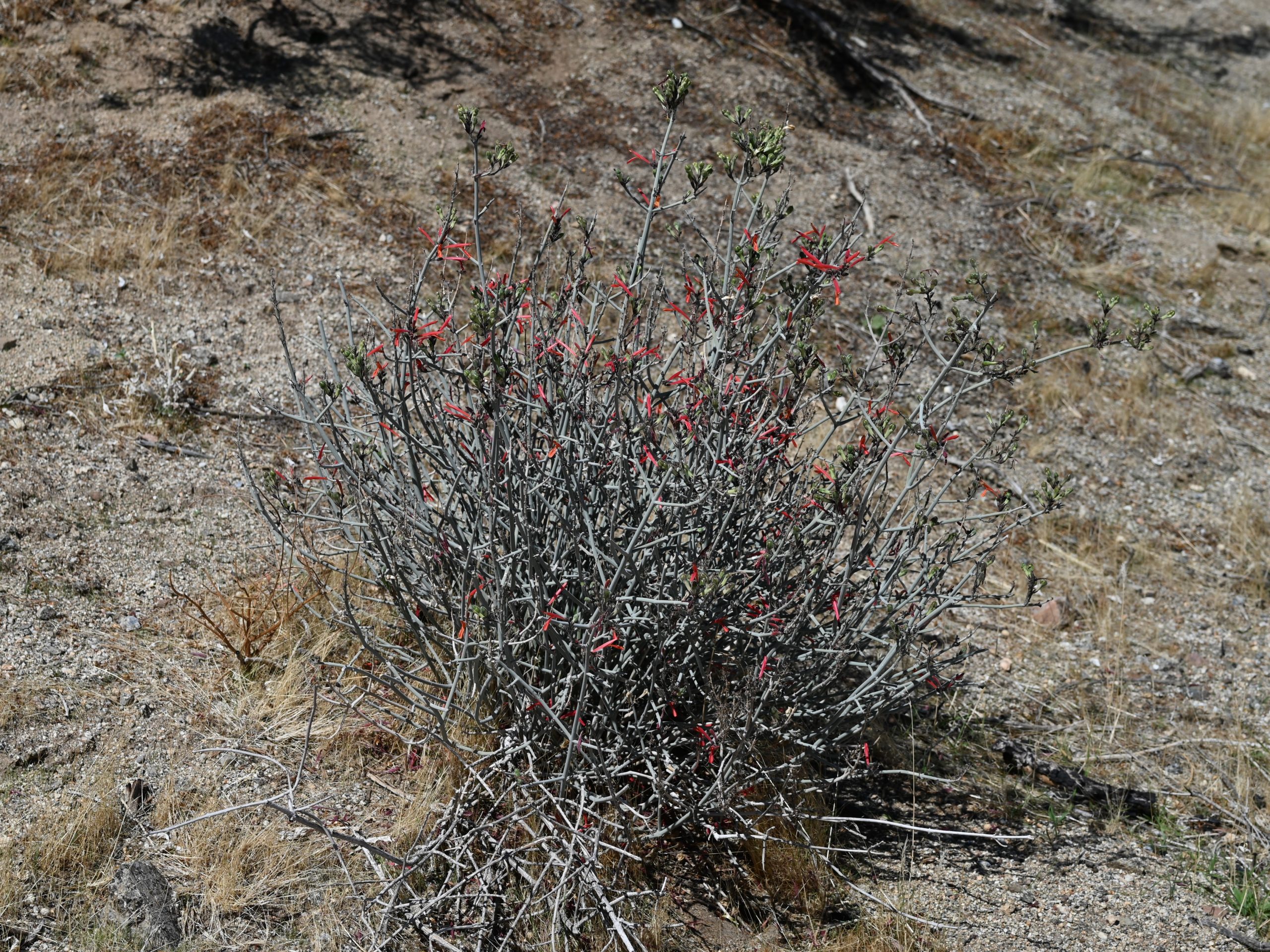
Chuparosa is a sprawling, rounded shrub to about 3 to 5 feet tall and nearly as wide, with numerous slender, gray-green to whitish stems that give the whole plant a soft, silvery cast even before it flowers. It is markedly drought-deciduous: during extended dry spells, especially in summer, it drops its leaves and photosynthesizes through its green bark, a water-saving strategy shared by several Sonoran Desert shrubs.
Stems and Leaves
Stems are slender, pale gray-green, and densely branched, often appearing nearly leafless for long stretches of the year. When present, the leaves are small, fleshy, oval, and grayish-green, about half an inch to an inch across, with a soft, slightly fuzzy texture. The sparse, pale foliage helps the plant minimize water loss in intense desert heat.
Flowers
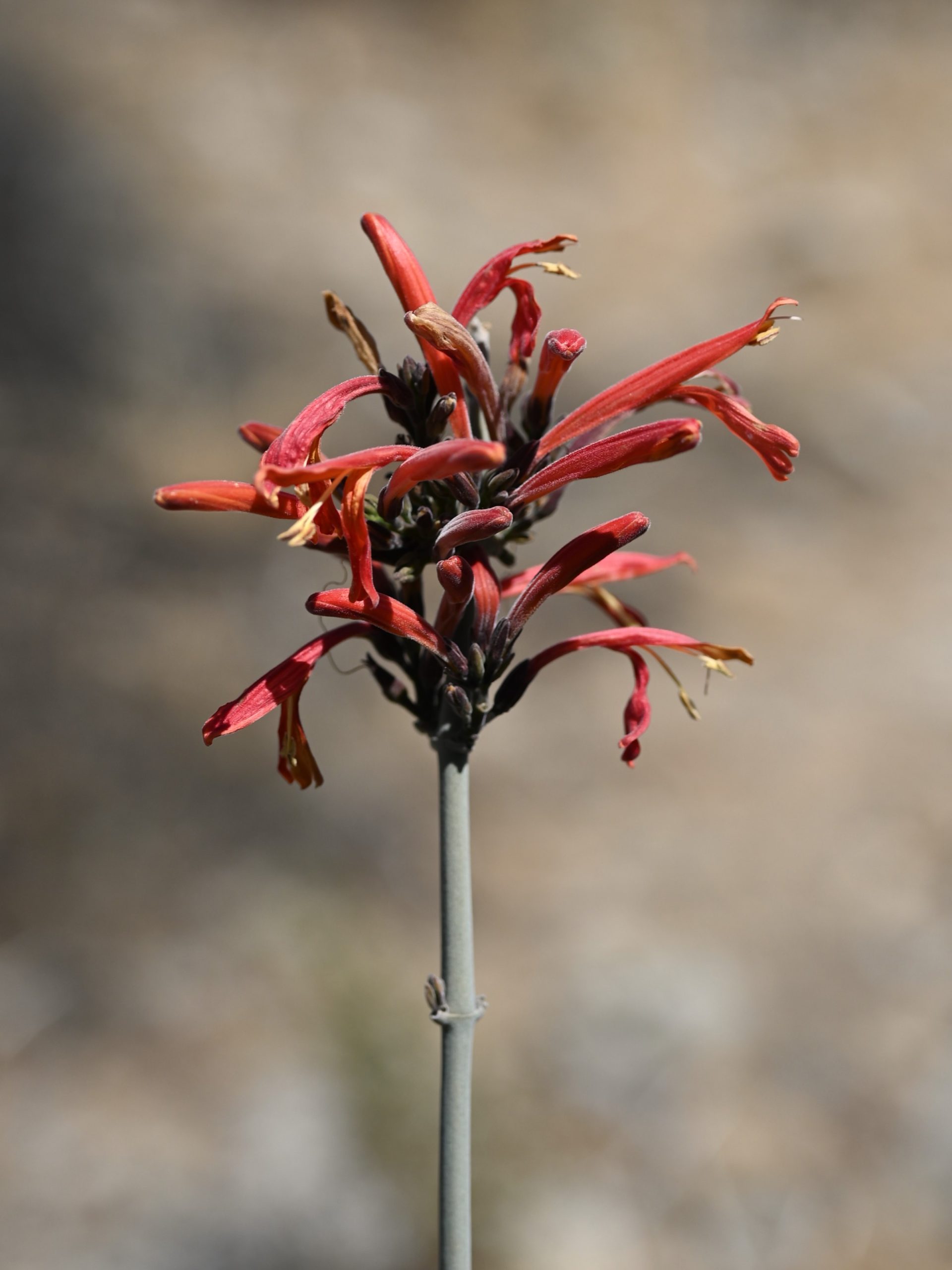
The signature feature is the flower: a narrow, tubular bloom 1 to 1.5 inches long, usually a vivid brick-to-scarlet red (occasionally yellow-orange forms occur), with a hooded, two-lipped shape — a narrow upper lip and a broader, three-lobed lower lip that curls open to expose the throat of the flower. Flowers cluster at the stem tips in loose, open groups. Chuparosa can bloom nearly any time of year in mild winters, but flowering peaks from late winter into spring, often in direct response to rainfall, making it one of the earliest nectar sources available to desert hummingbirds.
Fruit
After flowering, chuparosa produces small, inconspicuous seed capsules typical of the Acanthaceae (acanthus) family, which split open explosively at maturity to fling seeds a short distance from the parent plant.
Quick Facts
| Scientific Name | Justicia californica (syn. Beloperone californica) |
| Family | Acanthaceae (Acanthus) |
| Plant Type | Drought-Deciduous Shrub |
| Mature Height | 3–5 ft |
| Mature Spread | 3–5 ft |
| Growth Rate | Moderate |
| Sun Exposure | Full Sun |
| Water Needs | Low (once established) |
| Soil Type | Sandy or rocky; well-drained |
| Soil pH | Neutral to alkaline |
| Bloom Time | Late winter–spring, sporadic year-round after rain |
| Flower Color | Red to orange-red (rarely yellow) |
| Deer Resistant | Yes |
| USDA Hardiness Zones | 9–11 |
Native Range
Chuparosa is native to the low desert washes and rocky slopes of southeastern California and southern Arizona, within the Sonoran and Colorado Desert regions, extending south into northern Mexico. It typically grows below about 2,500 feet elevation, favoring sandy or gravelly desert washes, bajadas, and rocky hillsides where water briefly collects after rain.
Within its range, chuparosa is a familiar component of desert wash and creosote scrub communities, often found rooted directly in or along the margins of dry, sandy arroyos where its roots can reach deeper subsurface moisture unavailable to shallower-rooted neighbors.
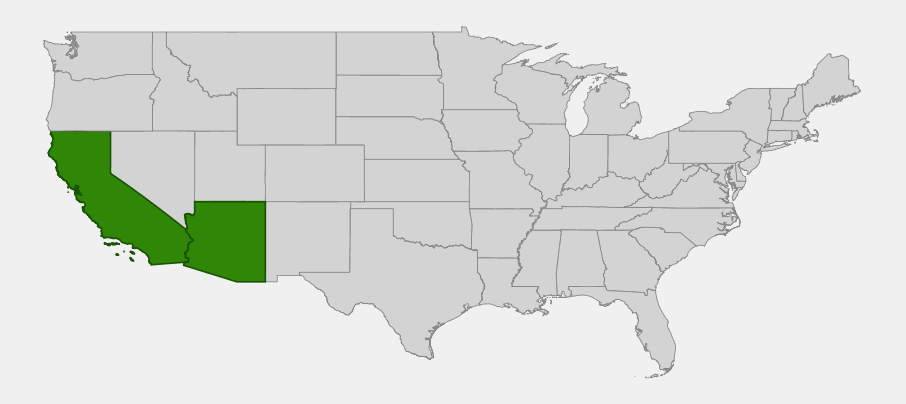
📋 Regional plant lists featuring Chuparosa: Arizona & New Mexico
Growing & Care Guide
Chuparosa is remarkably easy to grow in the low desert, where it is already perfectly suited to intense summer heat, long dry spells, and alkaline soils. It rewards minimal intervention with months of hummingbird activity that few other low-water shrubs can match.
Light
Plant chuparosa in full sun. It is a plant of open desert washes and exposed slopes and flowers most heavily with abundant direct light. It will tolerate light filtered shade but blooms more sparsely there.
Soil & Water
This shrub wants sharply drained sandy or rocky soil and is naturally tolerant of alkaline desert soils. It is highly drought tolerant once established, needing little or no supplemental water in a true low-desert garden beyond the natural rainy seasons. Young plants benefit from regular deep watering during their first year to build a strong root system; after that, occasional deep soaks during the hottest, driest stretches will keep the plant blooming longer, though it will survive extended drought by dropping its leaves and going dormant. As with most desert natives, good drainage is essential — standing water or heavy clay soils can quickly cause root rot.
Planting Tips
Plant in fall or early spring to let roots establish before the heat of summer. Space plants about 3 to 5 feet apart to allow for their mature spread. Chuparosa does particularly well planted where it can mimic its natural wash habitat — at the base of a slope, in a dry streambed planting, or anywhere runoff briefly collects after rain.
Pruning & Maintenance
Chuparosa responds well to an occasional hard pruning, which can rejuvenate older, leggy plants and encourage denser, more floriferous new growth. Many desert gardeners cut it back by a third to a half in late winter or early spring before the main bloom flush. Expect some natural leaf drop during summer heat or drought — this is a normal water-conserving response, not a sign of a dying plant.
Landscape Uses
Chuparosa’s compact size and months of nectar-rich bloom make it a versatile choice in low-desert gardens:
- Hummingbird gardens — among the most reliable red-flowered hummingbird plants for the low desert
- Xeriscape and water-wise plantings — thrives with minimal irrigation once established
- Dry wash and arroyo-style gardens that mimic its natural habitat
- Mixed desert shrub borders with creosote bush, brittlebush, and desert willow
- Pollinator gardens that also draw orioles and butterflies to the flowers
Wildlife & Ecological Value
Chuparosa’s entire form — long, narrow, nectar-laden tubes held at the branch tips — reflects a close evolutionary relationship with hummingbirds, and it is one of the most dependable nectar plants in the low desert during its main winter-to-spring bloom window.
For Hummingbirds
Hummingbirds, including Anna’s and Costa’s hummingbirds in much of its range, feed heavily on chuparosa nectar, and the flower shape is adapted specifically to their long, slender bills — every visit dusts the bird’s head or bill with pollen, keeping the plant’s pollination tightly tied to hummingbird activity. Because chuparosa can flower during the coldest months of the desert winter, it is an especially important early-season nectar source when few other plants are blooming.
For Other Pollinators
Beyond hummingbirds, the flowers attract orioles seeking nectar and are visited by various butterflies, including swallowtails, drawn to the sugar-rich blooms. Bees also work the flowers for nectar, contributing to the plant’s broader pollinator value in desert gardens.
Ecosystem Role
As a common shrub of desert washes, chuparosa helps stabilize sandy, erosion-prone soils along intermittent watercourses, and its dense branching provides low cover for small desert wildlife. Growing alongside other wash-adapted shrubs like desert willow and brittlebush, it contributes to the layered structure of desert riparian scrub that supports a disproportionate share of desert wildlife relative to the surrounding open ground.
Cultural & Historical Uses
The Spanish common name chuparosa, meaning roughly “hummingbird” or “one that sucks the flower,” reflects a long-recognized association between this shrub and hummingbirds among Spanish-speaking communities of the Southwest and Mexico. The plant has historically been noted among Indigenous peoples of the Sonoran Desert region as a recognizable, reliably flowering desert shrub, though detailed historical use varies by community. This article describes historical and common names for background only, not as medicinal or dietary guidance.
Today chuparosa is widely grown as an ornamental in low-desert landscaping throughout the Sonoran Desert region, valued specifically for its hummingbird appeal and low water needs, and it is a frequent recommendation in water-conserving and wildlife-friendly garden programs across southern Arizona and southern California.
Frequently Asked Questions
Will chuparosa attract hummingbirds to my yard?
Yes — it is one of the most reliable hummingbird plants for the low desert Southwest, with tubular red flowers shaped specifically for hummingbird pollination, often blooming when little else is in flower.
Why does my chuparosa look leafless and dead?
This is usually normal drought-deciduous behavior. Chuparosa commonly drops its leaves during hot, dry stretches and continues photosynthesizing through its green stems, then leafs out again after rain or cooler weather returns.
How much water does chuparosa need?
Very little once established. A deep soak every few weeks during the hottest, driest months will extend bloom, but established plants in true low-desert gardens can survive on natural rainfall alone.
Can chuparosa handle frost?
It is best suited to mild, nearly frost-free low-desert climates (roughly USDA zones 9–11). Hard freezes can damage or kill the above-ground growth, though well-established plants may resprout from the base in marginal areas.
Is chuparosa the same plant as beloperone?
Yes. Chuparosa was long classified as Beloperone californica before being reclassified into the genus Justicia; you may still see the older name used in some nurseries and older gardening references.

Looking for a nursery that carries Chuparosa?
Browse our native plant nursery directory: Arizona · California