
Wild Pennyroyal (Piloblephis rigida)
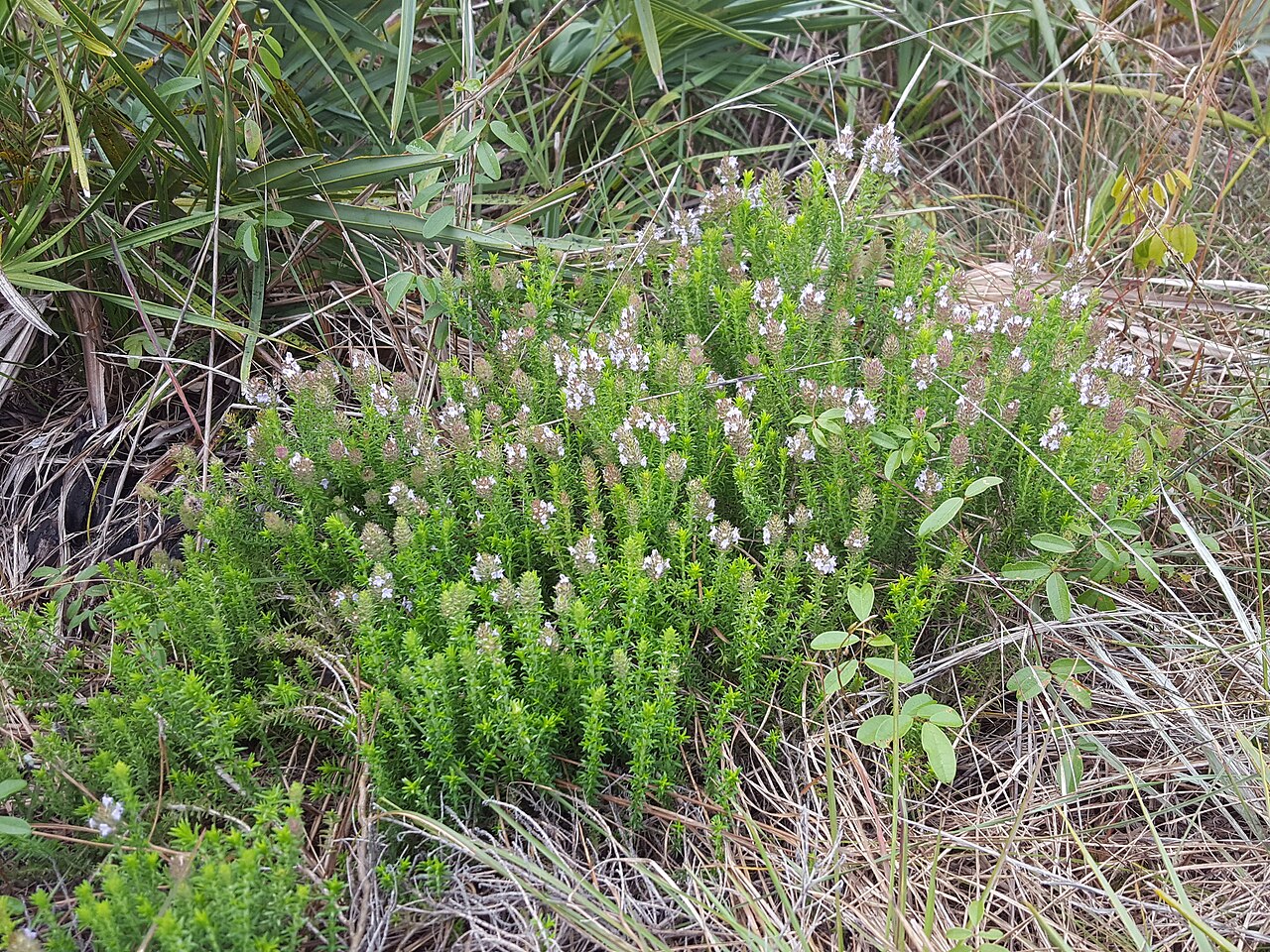
Piloblephis rigida, known as Wild Pennyroyal, Florida pennyroyal or simply pennyroyal, is a small, aromatic, evergreen subshrub of Florida’s dry pinelands, scrub and prairies. It forms a low mound, 1 to 2 feet tall, of stiff stems densely set with short, needle-like leaves, and is covered with rounded heads of pale lavender, purple-spotted flowers, most heavily in late winter and spring. The whole plant has a strong, minty fragrance. It belongs to the mint family (Lamiaceae) and is the only species in its genus.
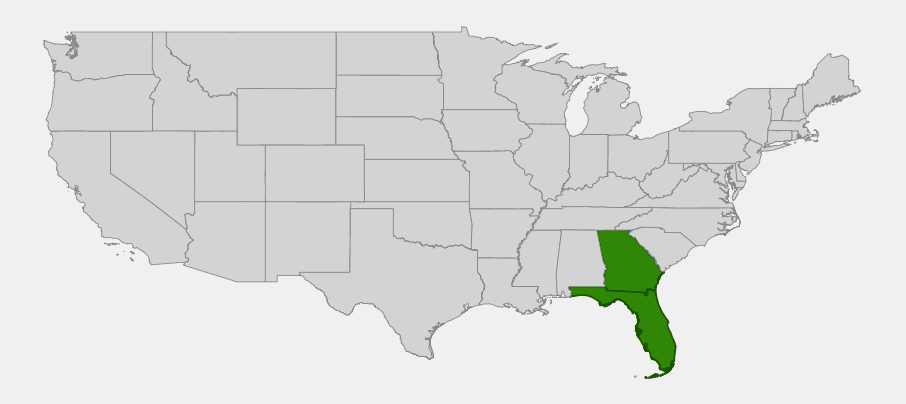
It is nearly endemic to Florida. FNPS notes a few documented occurrences in southeastern Georgia, and USDA PLANTS records it from Florida and Georgia. It is common throughout much of peninsular Florida and is not state-listed. Despite the shared name, it is not the European pennyroyal (Mentha pulegium) or the American pennyroyal (Hedeoma pulegioides), two other aromatic mints.
Wild pennyroyal is valued by Florida native plant gardeners as a fragrant groundcover for sunny, sandy sites and as an early-season nectar source for bees and butterflies. This guide covers how to recognize it, where it grows, and how to grow it.
Identification
Wild pennyroyal is easiest to spot in late winter and spring, when it is covered in lavender flower heads. At other times, look for a low, bushy plant with short, crowded, needle-like leaves that release a strong minty smell when brushed.
Growth Habit
A small, evergreen subshrub, usually 1 to 2 feet tall and about 1 foot wide, with many erect to sprawling, woody-based stems. FNPS lists it as a shrub of 1 to 2 feet. Older plants often become open in the center, and plants tend to be short-lived, dying back after a few years.
Leaves
The leaves are small, narrow and stiff, about 1/4 to 1/2 inch long, crowded along the stems in whorls or opposite pairs so that the branches look like little bottlebrushes. They are bright green, dotted with tiny oil glands, and have a strong mint or pennyroyal scent. The species name rigida refers to the stiff leaves.
Flowers
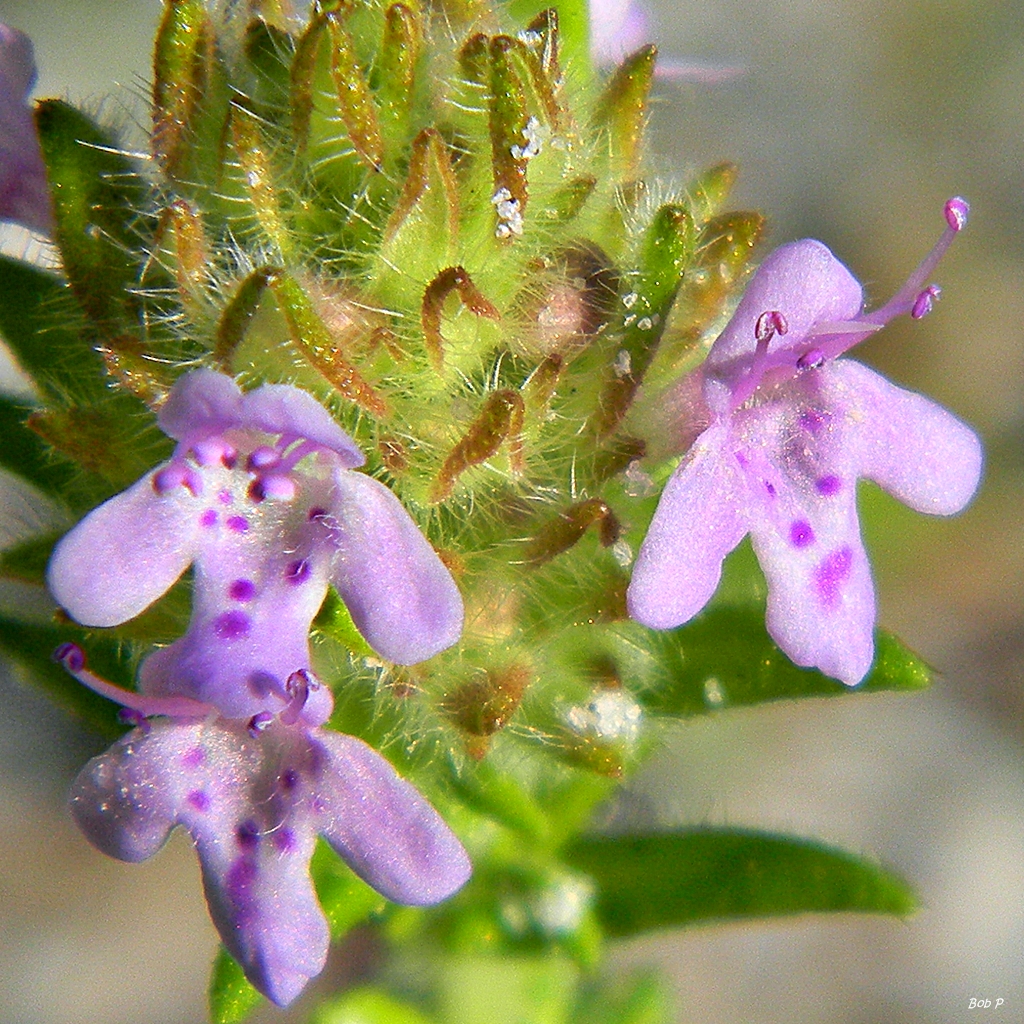
Small, two-lipped flowers about 1/4 inch long are packed into dense, rounded to oblong heads at the tips of the branches. They are pale lavender to almost white, with darker purple spots on the lower lip and protruding stamens. The calyces are covered in long hairs, giving the heads a fuzzy look. FNPS notes that it blooms all year but most abundantly in spring, and the Lady Bird Johnson Wildflower Center records flowers in most months.
Fruit & Seeds
Like other mints, each flower produces four tiny nutlets that stay inside the persistent, hairy calyx. Seed heads turn brown as they dry.
Similar Species
False Rosemary (Conradina canescens) and other scrub mints have narrow leaves and lavender flowers, but their flowers are larger and held in small clusters in the leaf axils, not in dense terminal heads. Florida Calamint has broader, toothed leaves. The flower heads of wild pennyroyal, with their long-haired calyces, are distinctive.
Quick Facts
| Scientific Name | Piloblephis rigida (accepted by USDA PLANTS and the Atlas of Florida Plants) |
| Family | Lamiaceae (mint family) |
| Plant Type | Evergreen aromatic subshrub |
| Mature Height | 1–2 ft |
| Mature Spread | About 1 ft |
| Growth Rate | Moderate |
| Sun Exposure | Full sun |
| Water Needs | Low; dry to moderately dry, well-drained sand |
| Soil Type | Well-drained sand |
| Soil pH | Acidic (about 4.5–6.5) |
| Bloom Time | Most abundant late winter–spring; scattered all year |
| Flower Color | Pale lavender with purple spots |
| Fall Color | None; evergreen |
| Fruit | Tiny nutlets inside the hairy calyx |
| Deer Resistant | Yes; strongly aromatic foliage |
| USDA Hardiness Zones | 9a–10b |
Native Range
Wild pennyroyal is a Florida specialty. USDA PLANTS and the Lady Bird Johnson Wildflower Center record it from Florida and Georgia, and FNPS describes it as nearly endemic to Florida, with only a few documented occurrences in southeastern Georgia. In Florida it is widespread through the peninsula, from the northern counties south to the Everglades region.
FNPS lists its natural habitats as scrubby flatwoods, scrub, dry flatwoods, dry prairie, sandhill and disturbed (ruderal) sites. It favors open, sunny ground on deep, well-drained, acidic sand, often between clumps of saw palmetto and wiregrass, and commonly grows along sandy trails and firebreaks.
Its habitats are fire-maintained, and frequent fire keeps the ground open enough for this small plant. It is not listed as threatened, but loss of dry pineland and scrub to development has reduced it in many areas, particularly along the coasts.
📋 Regional plant lists featuring Wild Pennyroyal: North & South Florida · Alabama, Georgia & Mississippi
Growing & Care Guide
Wild pennyroyal is a good choice for a sunny, dry, sandy native garden in Florida. FNPS lists it as available at FNPS plant sales, and it is sometimes offered by native nurseries. Expect it to be short-lived; FNPS notes that it tends to die back after a few years.
Light
Plant in full sun. In shade it becomes leggy and flowers poorly.
Soil & Water
It needs deep, very well-drained, acidic sand. FNPS rates it as tolerating conditions from not wet but not extremely dry through fairly long dry periods. Water new plants until they root in, then stop; too much water or rich, heavy soil quickly rots the roots. It does not tolerate salt spray or salt-water flooding.
Planting Tips
Set plants 12 to 18 inches apart in open sand with no soil amendments or fertilizer. Use a thin layer of pine needles or no mulch at all, as thick mulch holds moisture against the crown. It works well along sunny path edges where its fragrance is released by passers-by, and with other low scrub and sandhill wildflowers.
Pruning & Maintenance
Trim lightly after the spring bloom to keep plants compact. Since individual plants are short-lived, allow some seed to drop so new plants can replace older ones, or replant every few years.
Propagation
It can be grown from seed sown on the surface of a sandy mix, or from cuttings of new growth rooted in a very well-drained medium. Avoid overwatering cuttings.
Landscape Uses
- Dry, sandy native gardens: a fragrant, evergreen groundcover for full sun
- Pollinator gardens: early-season nectar for native bees and butterflies
- Path edges: releases a minty scent when brushed
- Scrub and sandhill restoration: a characteristic ground-layer plant of Florida’s dry uplands
- Rock and gravel gardens: tolerates hot, dry, nutrient-poor sites
Wildlife & Ecological Value
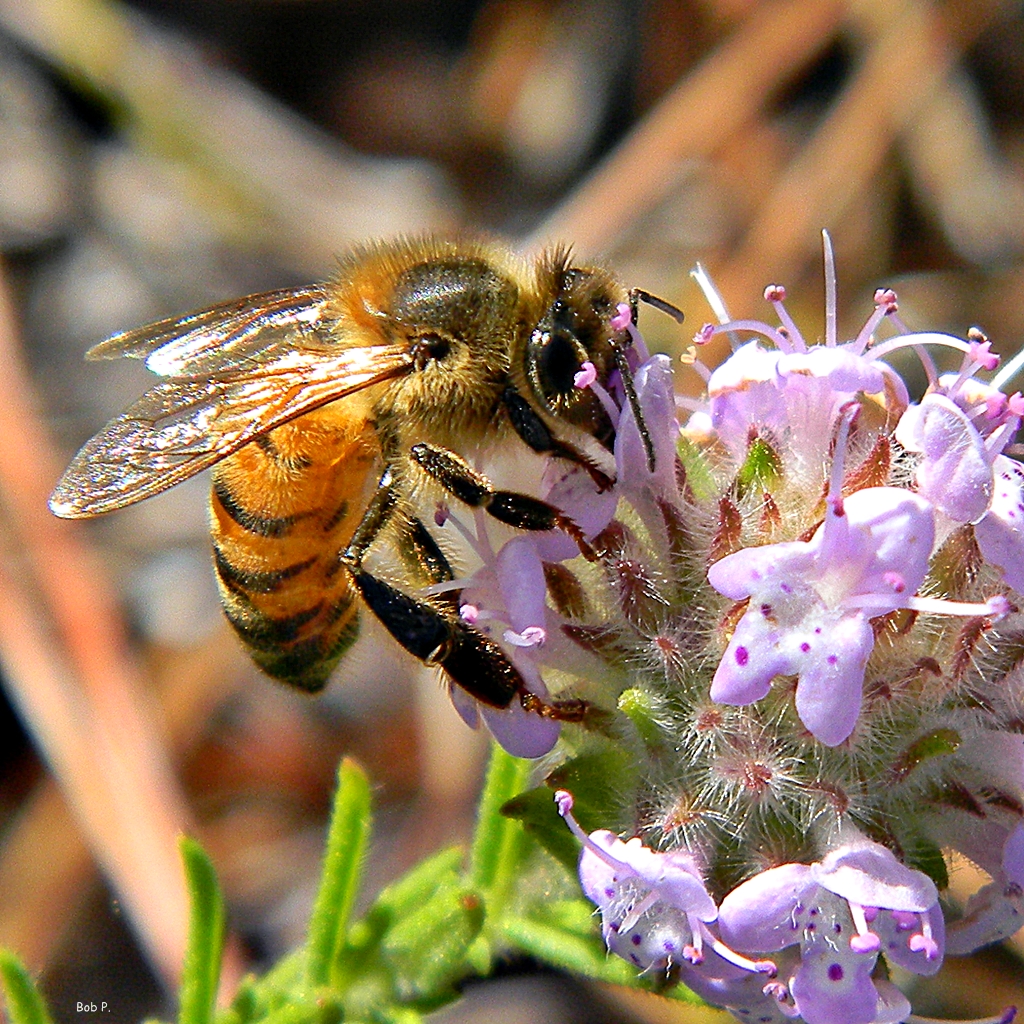
Blooming most heavily in late winter and spring when few other flowers are open, wild pennyroyal is an important early nectar source in Florida’s dry uplands.
For Pollinators
FNPS notes that it attracts butterflies and bees. A study of bees in Florida scrub by Deyrup and colleagues (2002) recorded visitors including the sweat bees Agapostemon splendens, Augochlorella aurata, Lasioglossum miniatulum and L. nymphale, and the leafcutter bee Megachile brevis. Zebra swallowtails, skippers and other butterflies also take nectar from the flowers.
For Birds
The dense, low growth gives some cover to ground-foraging birds in scrub and flatwoods, and birds eat insects attracted to the flowers.
For Mammals
The strongly aromatic foliage is rarely browsed by deer or rabbits.
Ecosystem Role
Wild pennyroyal is part of the diverse, fire-adapted ground layer of Florida scrub, sandhill and dry flatwoods, where it supports a large community of native bees. Its preference for open sand means it thrives where fire or light disturbance keeps the ground clear.
Cultural & Historical Uses
The species was first noted by the naturalist William Bartram, whose name appears in its scientific authorship, and it was later placed in its own genus, Piloblephis, by Constantine Rafinesque. The genus name is usually explained as combining Greek words for felt or hair and for eyelash, a fitting description of the long hairs on the calyx.
Wild pennyroyal has a long history of use as a tea and seasoning in Florida. Its leaves are strongly scented with pulegone, the same compound found in European pennyroyal. Because pulegone can be toxic in concentrated amounts, wild pennyroyal should not be used as a medicine, and the essential oil should never be taken internally.
Its common names compare it to the pennyroyals of Europe and North America. Older botanical works list it under the names Satureja rigida and Pycnothymus rigidus, which USDA PLANTS now treats as synonyms.
Frequently Asked Questions
Is wild pennyroyal the same as European pennyroyal?
No. Wild pennyroyal (Piloblephis rigida) is a Florida native in its own genus. European pennyroyal is Mentha pulegium, a true mint, and American pennyroyal is Hedeoma pulegioides. They share a similar minty scent.
Where does wild pennyroyal grow?
Mainly in Florida, in scrub, scrubby and dry flatwoods, dry prairie and sandhill. FNPS notes a few occurrences in southeastern Georgia.
Why did my wild pennyroyal die after a few years?
It is naturally short-lived, and FNPS notes that it tends to die back after a few years. Overwatering, rich soil and thick mulch shorten its life further. Let some seed drop to keep it going.
Is wild pennyroyal good for pollinators?
Yes. It blooms most heavily in late winter and spring and is visited by many native bees and butterflies.
Can I make tea from wild pennyroyal?
It has a history of use as a tea and flavoring, but it contains pulegone, which can be toxic in large amounts. Do not use it medicinally, and never use the essential oil internally. Anyone who is pregnant should avoid it entirely.

Looking for a nursery that carries Wild Pennyroyal?
Browse our native plant nursery directory: Florida & Georgia