Wiregrass (Aristida stricta)
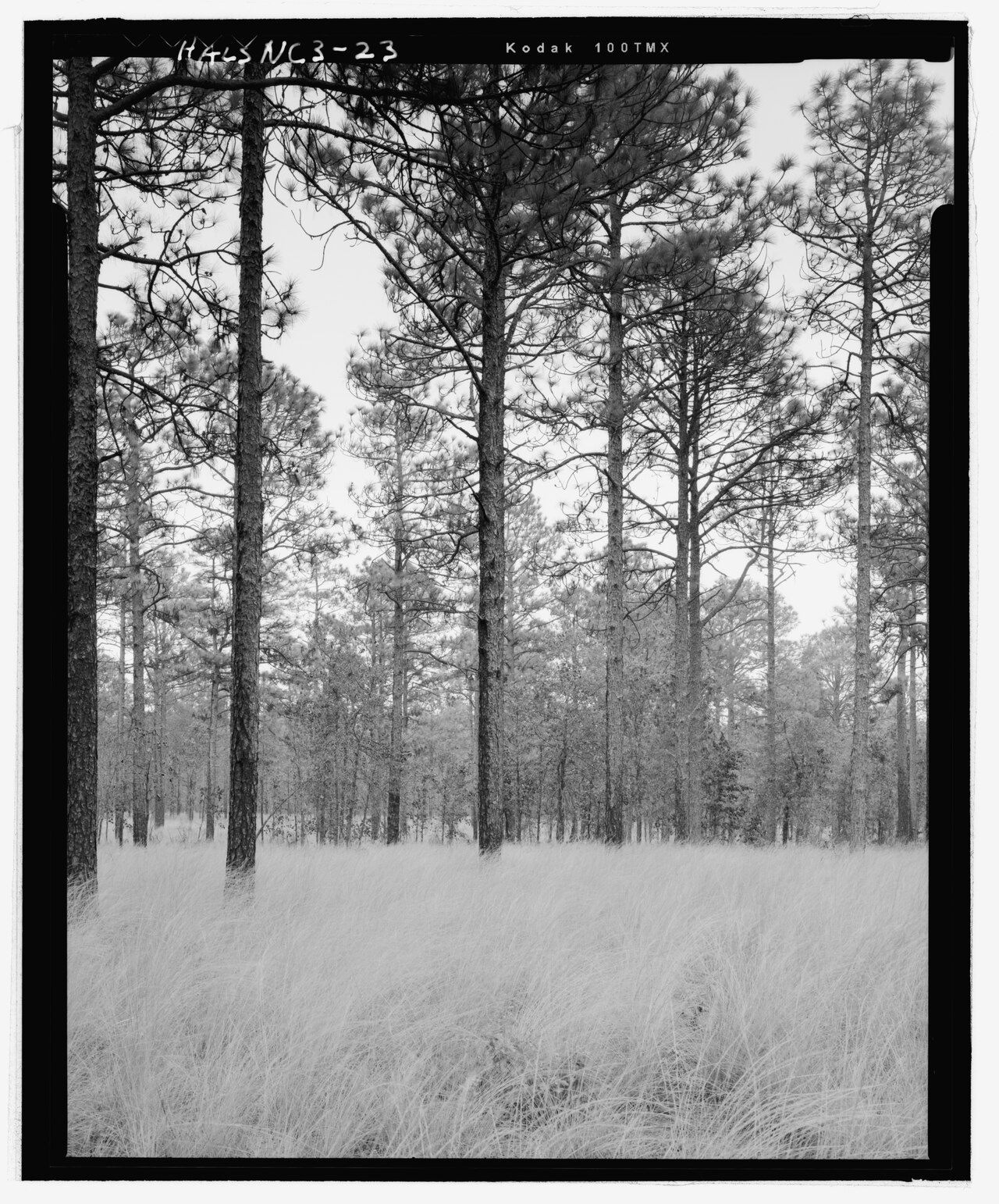
Aristida stricta, commonly called Wiregrass or Carolina Wiregrass, is a tough, wiry bunchgrass that forms the signature groundcover of longleaf pine savannas in the Carolinas. It’s the plant that gave the broader Wiregrass Region of the Southeast its name, and it’s hard to overstate how important this unassuming grass is to the ecosystems it anchors. Where it grows thick and undisturbed, wiregrass carries fire gently and quickly across the forest floor, which in turn keeps the whole longleaf pine community healthy.
Wiregrass grows as a dense, fine-textured bunchgrass, its narrow, wiry leaves arching out from a tight basal clump to form tussocks that can reach a couple of feet across at the base. It’s evergreen in mild winters, staying a dull olive-green through the cold months, and it almost never looks showy — its value is structural and ecological rather than ornamental. What makes it botanically unusual is its fire dependence: wiregrass needs a summer burn to flower and set viable seed, something few garden plants require.
This is not a plant for a typical flower bed. Wiregrass belongs in restoration plantings, longleaf pine understories, and naturalistic sandhill or flatwoods gardens where a prescribed-fire or mow regime can mimic its native disturbance pattern. For gardeners in North Carolina and South Carolina working on habitat restoration, erosion control on sandy soils, or recreating a longleaf pine groundcover, wiregrass is the backbone species to plant.
Identification
Wiregrass is a warm-season perennial bunchgrass in the Poaceae (grass) family, distinguished mainly by its wiry, tightly rolled leaves and its growth habit rather than showy flowers.
Growth Form
Plants grow as dense, rounded tussocks or clumps, with the base sometimes reaching up to 6 inches (15 cm) or more across in old, well-established plants. Each tussock sends up two to three leaves per tiller, and tillers pack tightly together to form the characteristic wiregrass “hummock.” The overall clump can stand 1 to 2 feet tall in leaf, with flowering stems rising taller when present.
Leaves
The leaf blades are narrow, wiry, and involute (rolled inward along the edges), typically growing to around 20 inches (0.5 m) long but staying thread-thin in width. Fine hairs (villous indument) line each side of the midrib and the back of the blade, giving the foliage a slightly fuzzy texture up close. The leaves are tough and fibrous, which is part of why the plant carries fire so efficiently — dry wiregrass foliage ignites and burns fast, spreading flame evenly across the ground layer.
Flowers & Seed
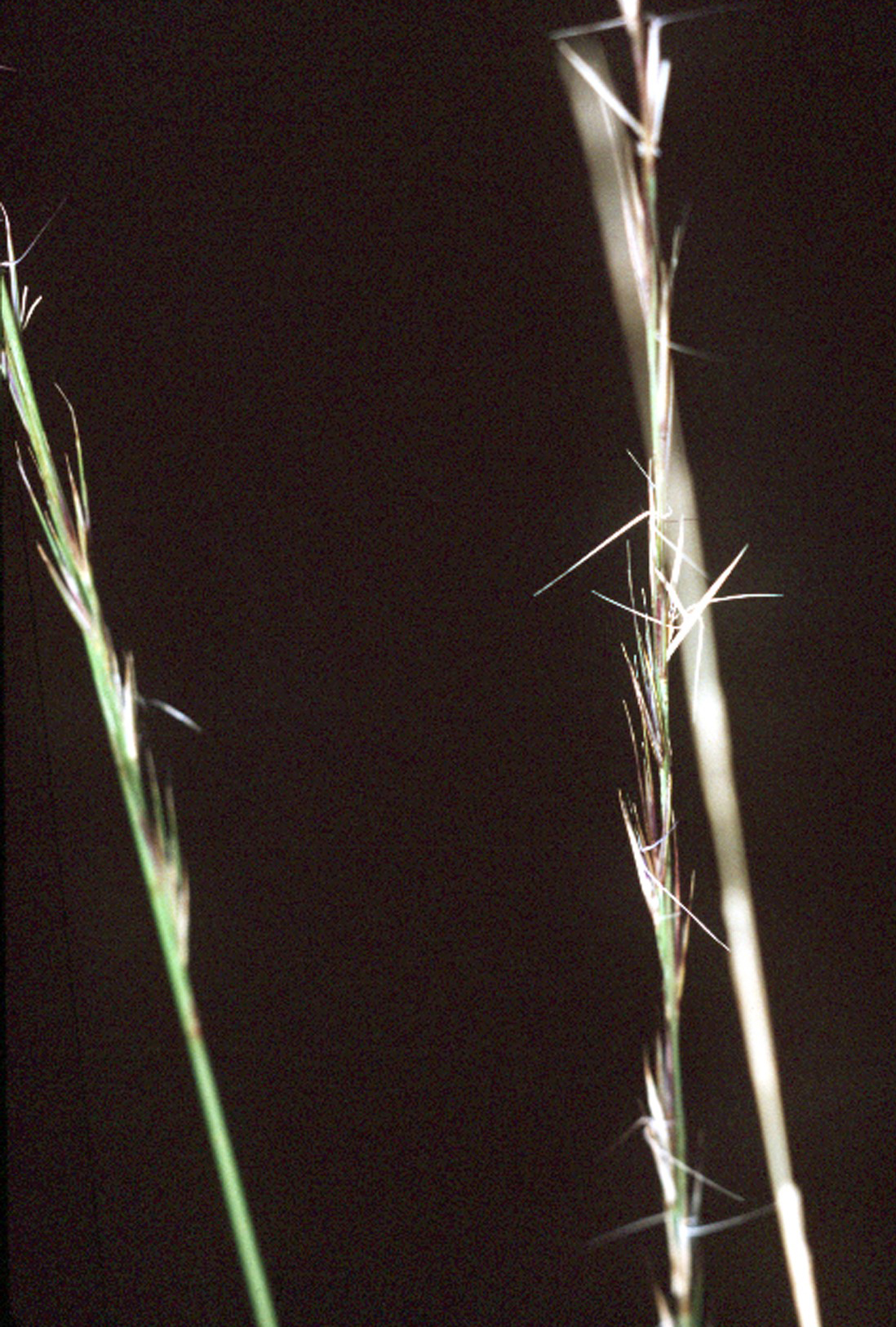
Wiregrass flowers in loose, narrow panicles held above the foliage, each spikelet bearing the three-pronged awn that gives the genus Aristida its “three-awn” common name. Seeds are slender, translucent brown, and only about 4.5 mm long. Critically, wiregrass rarely flowers or produces viable seed without a growing-season fire — a plant can go years without blooming if left unburned, which is a key reason wiregrass restoration projects rely on nursery-grown plugs rather than seed alone.
Quick Facts
| Scientific Name | Aristida stricta |
| Family | Poaceae (Grass) |
| Plant Type | Warm-Season Perennial Bunchgrass |
| Mature Height | 1–2 ft in leaf; flowering stems taller |
| Mature Spread | Clumps to about 6 in at the base |
| Growth Rate | Slow (fast regrowth after fire) |
| Sun Exposure | Full Sun |
| Water Needs | Low to Moderate |
| Soil Type | Dry to moist sandy soils |
| Soil pH | Acidic |
| Bloom Time | Late summer to fall, only after a growing-season fire |
| Flower Color | Tan to brown (inconspicuous) |
| Fall Color | Evergreen to dull olive-tan |
| Fruit | Slender grain (caryopsis), not ornamental |
| Deer Resistant | Yes |
| USDA Hardiness Zones | 7–9 |
Native Range
Wiregrass, in the strict botanical sense used here, is native to the Sandhills and Coastal Plain of North Carolina and South Carolina. It’s worth flagging that there’s a related, often-confused plant: Gulf Coast populations of wiregrass, long lumped in with Aristida stricta, were split off in 1993 as the separate species Aristida beyrichiana, which covers Georgia, Florida, Alabama, and Mississippi. Plants of the World Online currently recognizes both as distinct, so if you’re gardening in the Deep South, look specifically for Aristida beyrichiana rather than this species.
Within the Carolinas, wiregrass is concentrated in the Sandhills region — the belt of deep, well-drained sandy soils that runs roughly from south-central North Carolina into north-central South Carolina — as well as in pockets of the outer Coastal Plain. It is the dominant groundcover species under longleaf pine on these dry, sandy, fire-maintained sites, and it’s far less common, or absent, on heavier clay soils or in areas without a history of frequent fire.
Wiregrass populations have declined significantly along with the longleaf pine ecosystem itself, which has lost more than 95% of its historic extent to logging, fire suppression, and conversion to agriculture and pine plantations. Because wiregrass depends so heavily on recurring growing-season fire to flower and spread by seed, decades of fire exclusion have left many remaining stands unable to regenerate on their own, making active restoration plantings important across much of its range.
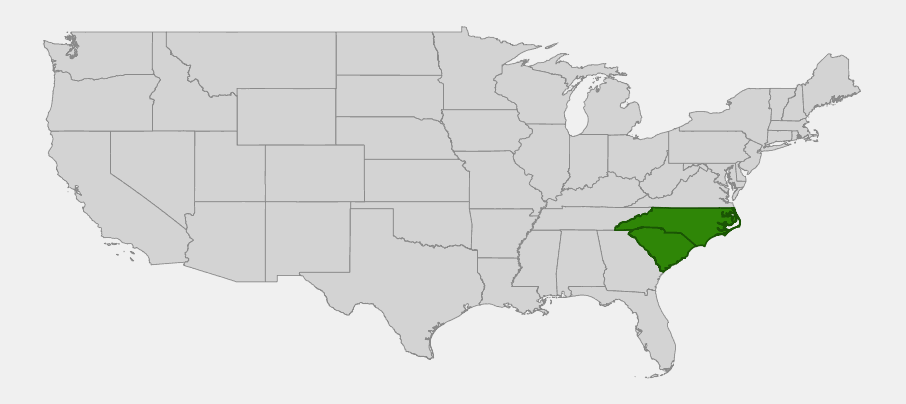
📋 Regional plant lists featuring Wiregrass: North Carolina & South Carolina
Growing & Care Guide
Wiregrass is slow to establish and unusual in its needs, but it rewards patience in the right setting — a sunny, sandy, fire-adapted landscape rather than a conventional garden bed.
Light
Wiregrass needs full sun. It is a dominant groundcover under the open, high canopy of longleaf pine, where sunlight reaches the forest floor; it does not tolerate the dense shade of closed-canopy hardwood or loblolly pine forests.
Soil & Water
This grass is built for deep, well-drained, acidic sandy soils and poor fertility — the classic Sandhills profile. It is drought-tolerant once established and should never be planted in heavy clay or poorly drained ground, where it struggles or fails outright. Avoid fertilizing; wiregrass is adapted to nutrient-poor soils and rich conditions tend to favor weedy competitors instead.
Planting Tips
Because viable seed is scarce and germination is slow and erratic, most restoration and garden plantings use nursery-grown plugs rather than seed. Plant plugs in fall or late winter, spacing them 12 to 18 inches apart if you’re aiming for a continuous groundcover. Expect slow visible growth for the first couple of years while the plant builds its root system — wiregrass invests heavily below ground before it looks established above it.
Pruning & Maintenance
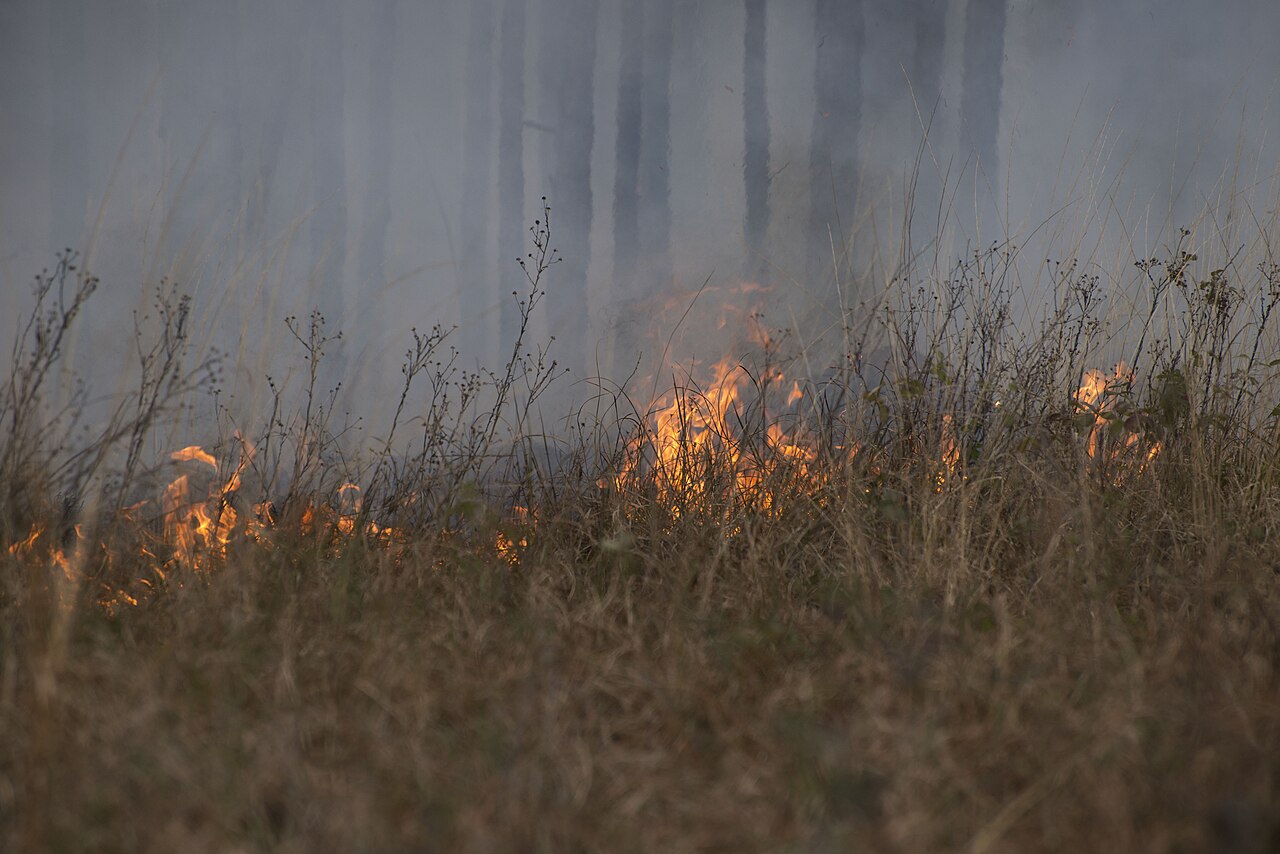
In a true restoration setting, wiregrass is maintained with prescribed burns on a 2- to 3-year growing-season rotation, which keeps the understory open, removes thatch, and triggers flowering. Where fire isn’t practical, an occasional late-winter mowing or cutting back can substitute to remove old growth, though it won’t replicate fire’s effect on flowering and seed set.
Propagation
Propagation from seed is difficult because seed viability depends on a preceding growing-season burn and seed itself is often scarce commercially. Most practical propagation is by division of established clumps or by purchasing nursery-grown plugs raised specifically for restoration work.
Landscape Uses
Wiregrass fits a narrow but important set of landscape roles:
- Longleaf pine restoration as the keystone groundcover species
- Sandhills and dry pine savanna gardens seeking an authentic native groundcover
- Erosion control on dry, sandy slopes and disturbed sand ridges
- Fire-adapted habitat gardens designed around a prescribed-burn regime
- Wildlife and pollinator habitat within a broader longleaf pine planting
Wildlife & Ecological Value
Wiregrass is a foundation species of the longleaf pine ecosystem, one of the most biodiverse plant communities in North America, and its role goes far beyond simple groundcover.
For Pollinators
As a wind-pollinated grass, wiregrass itself offers little floral resource to pollinators, but the open, sunny savanna structure it helps maintain supports an exceptionally rich community of understory wildflowers — and the native bees, butterflies, and other insects that depend on them — that could not persist under a closed canopy or dense shrub layer.
For Birds
The open, grassy understory wiregrass creates is essential habitat for ground-nesting and ground-foraging birds associated with longleaf pine savannas, including Bachman’s Sparrow and Northern Bobwhite, both of which depend on the kind of clear sightlines and seed-rich ground layer that healthy wiregrass stands provide.
For Mammals
Wiregrass tussocks provide cover for small mammals, and the open savanna structure they help maintain benefits larger wildlife too, including white-tailed deer that browse the diverse herbaceous layer growing among the grass clumps.
Ecosystem Role
Wiregrass is best understood as fire’s accomplice. Its fine, wiry, densely packed leaves cure out and ignite easily, carrying low-intensity fire evenly and quickly across the forest floor every few years. That frequent fire, in turn, keeps hardwood shrubs from shading out the pine savanna, recycles nutrients, and maintains the open structure that hundreds of other plant and animal species — many of them rare or endemic to longleaf pine habitat — depend on. Remove wiregrass and fire suppression follows almost automatically, which is why its decline has been such a serious concern for Southeastern conservation.
Cultural & Historical Uses
Wiregrass is woven into the regional identity of the Southeastern Coastal Plain. The Wiregrass Region — a historical and cultural area spanning parts of southern Georgia, southeastern Alabama, and the Florida Panhandle — takes its name directly from the dense wiregrass understory that once blanketed the longleaf pine forests there (technically the related species Aristida beyrichiana in that specific area, but historically treated as the same plant).
Long before European settlement, Indigenous peoples in the Southeast used regular fire to manage longleaf pine landscapes for hunting and travel, a practice that inadvertently maintained the open, wiregrass-dominated understory still valued by ecologists today. Later, from the colonial period through the early 20th century, the longleaf pine forests wiregrass grows beneath were heavily logged and tapped for naval stores — turpentine and resin — an industry that reshaped the regional economy and landscape across the Carolinas.
Today, wiregrass has no commercial or household use of its own; its significance is almost entirely ecological. It has, however, become something of a symbol in longleaf pine restoration circles, where conservation organizations and land managers propagate and replant it specifically to rebuild the fire cycle that once sustained these forests.
Frequently Asked Questions
Why won’t my wiregrass flower?
Wiregrass needs a growing-season (typically May or summer) fire to trigger flowering and seed production. Without fire, a healthy clump can persist and grow for years without ever blooming. This is normal — the plant is simply waiting for the disturbance it evolved with.
Can I grow wiregrass outside the Carolinas?
True Aristida stricta is native only to North Carolina and South Carolina. If you’re gardening in Georgia, Florida, Alabama, or Mississippi, look instead for Aristida beyrichiana, the closely related Gulf Coast species adapted to that region.
Does wiregrass need to be burned every year?
No. Restoration burns are typically done on a 2- to 3-year rotation during the growing season. Annual burning is unnecessary and can stress other components of the plant community; the goal is to mimic the natural fire-return interval of longleaf pine savannas.
Is wiregrass a good lawn substitute?
Not really. It is slow to establish, needs full sun and sandy, infertile soil, and its wiry texture and clumping habit don’t create a walkable turf. It’s better suited to restoration plantings and naturalistic pine savanna gardens than to areas that get foot traffic.
Is wiregrass endangered?
Wiregrass itself is considered globally secure (NatureServe G5), but it has declined sharply along with the longleaf pine ecosystem, which has lost over 95% of its historic range. Many remaining wiregrass stands are degraded due to decades of fire suppression, making restoration plantings an active conservation priority.

Looking for a nursery that carries Wiregrass?
Browse our native plant nursery directory: North & South Carolina