Coralbean (Erythrina herbacea)
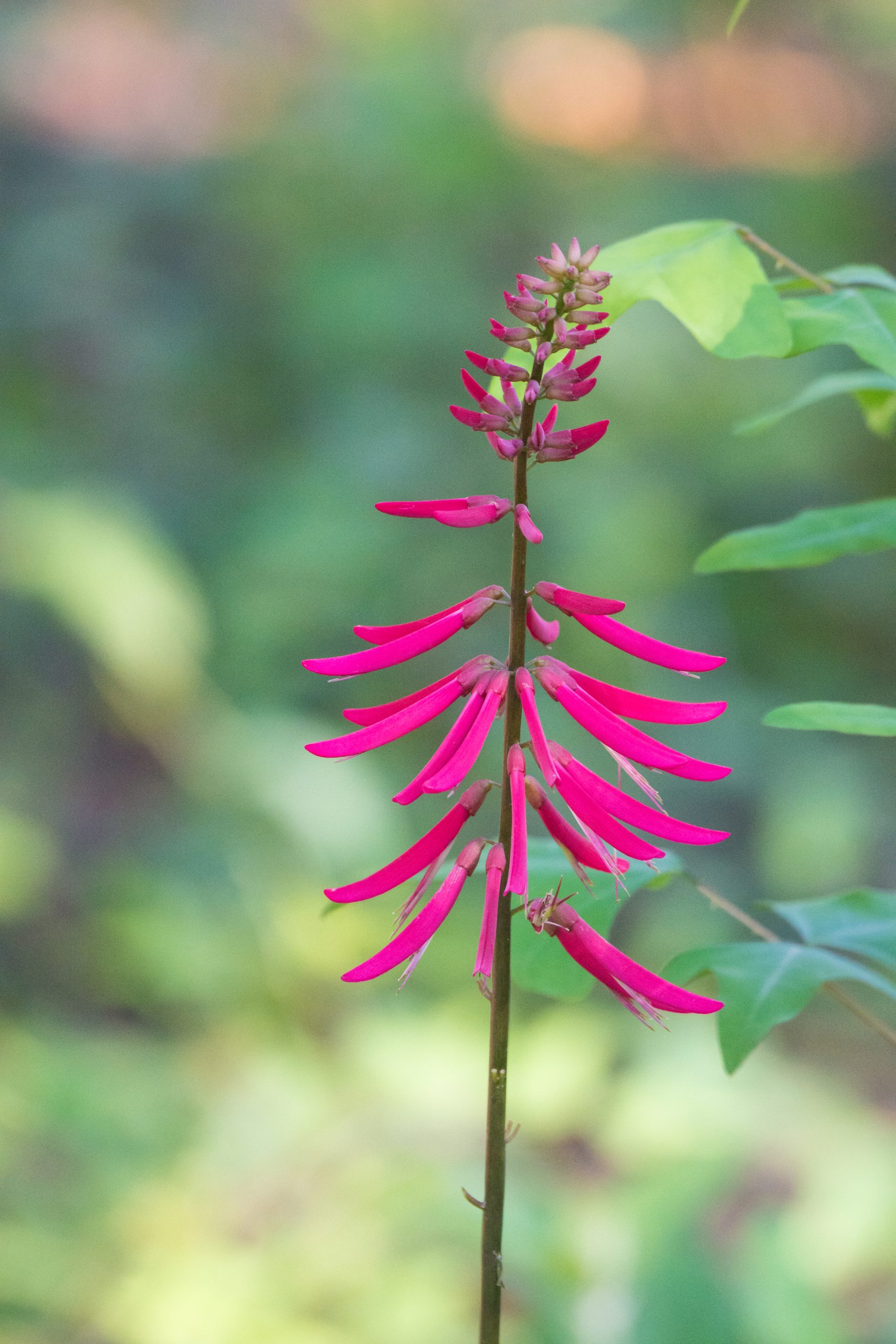
Erythrina herbacea, commonly known as Coralbean, Eastern Coralbean, Cherokee Bean, or Red Cardinal (and as “mamou” in south Louisiana Cajun country), is a thorny, sprawling shrub to small tree of the pea family (Fabaceae) native to the southeastern United States and northeastern Mexico. It is best known for its striking spring display: tall, narrow spikes of curved, tubular scarlet flowers that erupt from bare stems before the leaves emerge, followed later by distinctive black seed pods that split open to reveal glossy, poisonous scarlet-red beans.
Where winters are cold, coralbean behaves as an herbaceous perennial, dying back to the ground each winter and resprouting vigorously from a large, woody rootstock in spring — hence the species name herbacea. In the warmer parts of its range, particularly peninsular Florida, it persists as a woody shrub or even a small, gnarled tree up to 20 feet tall, its stout stems and leaf petioles armed with short, curved thorns. Either form produces the same unmistakable flowers, and either form is an outstanding, low-maintenance choice for a native wildlife garden across the Gulf South and Atlantic Coastal Plain.
Coralbean’s seasonal rhythm is distinctive and worth planning around: the scarlet flower spikes appear on leafless stems in spring, the compound three-parted leaves fill in through summer, and in fall the plant’s green pods dry to black and split, hanging on the stems through winter with their bright red-and-black beans visible — ornamental even in dormancy, and a frequently asked-about feature of the plant.
Identification
Coralbean is easiest to identify in spring, when the leafless, thorny stems send up tall spikes of narrow, curved red flowers unlike almost anything else blooming in southeastern woodlands and sandy scrub at that time of year.
Bark & Stems
Stems are stout, often somewhat angular, and armed with short, hooked, woody thorns, particularly on new growth and along the leaf petioles. In its shrub form the plant produces multiple arching or sprawling stems from a thick basal rootstock; where it grows as a small tree, a single short trunk with gray-brown bark may develop, though it rarely exceeds a modest diameter.
Leaves
Leaves are alternate and trifoliate (divided into three leaflets), each leaflet broadly arrowhead- or shield-shaped (hastate), 2 to 6 inches long, with smooth margins and a somewhat leathery texture. The leaflets emerge after the main flower flush and persist through summer, dropping again with the first hard frost in the colder portions of the range; in frost-free Florida, foliage can persist nearly year-round.
Flowers
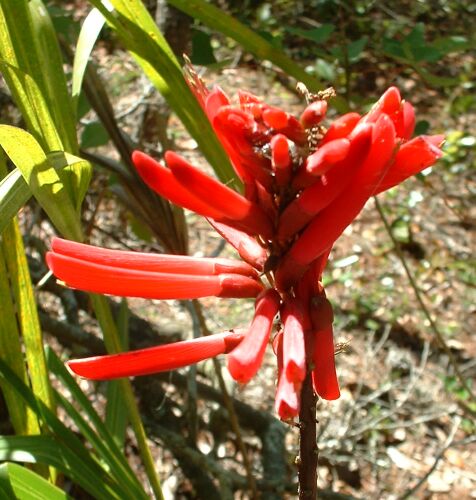
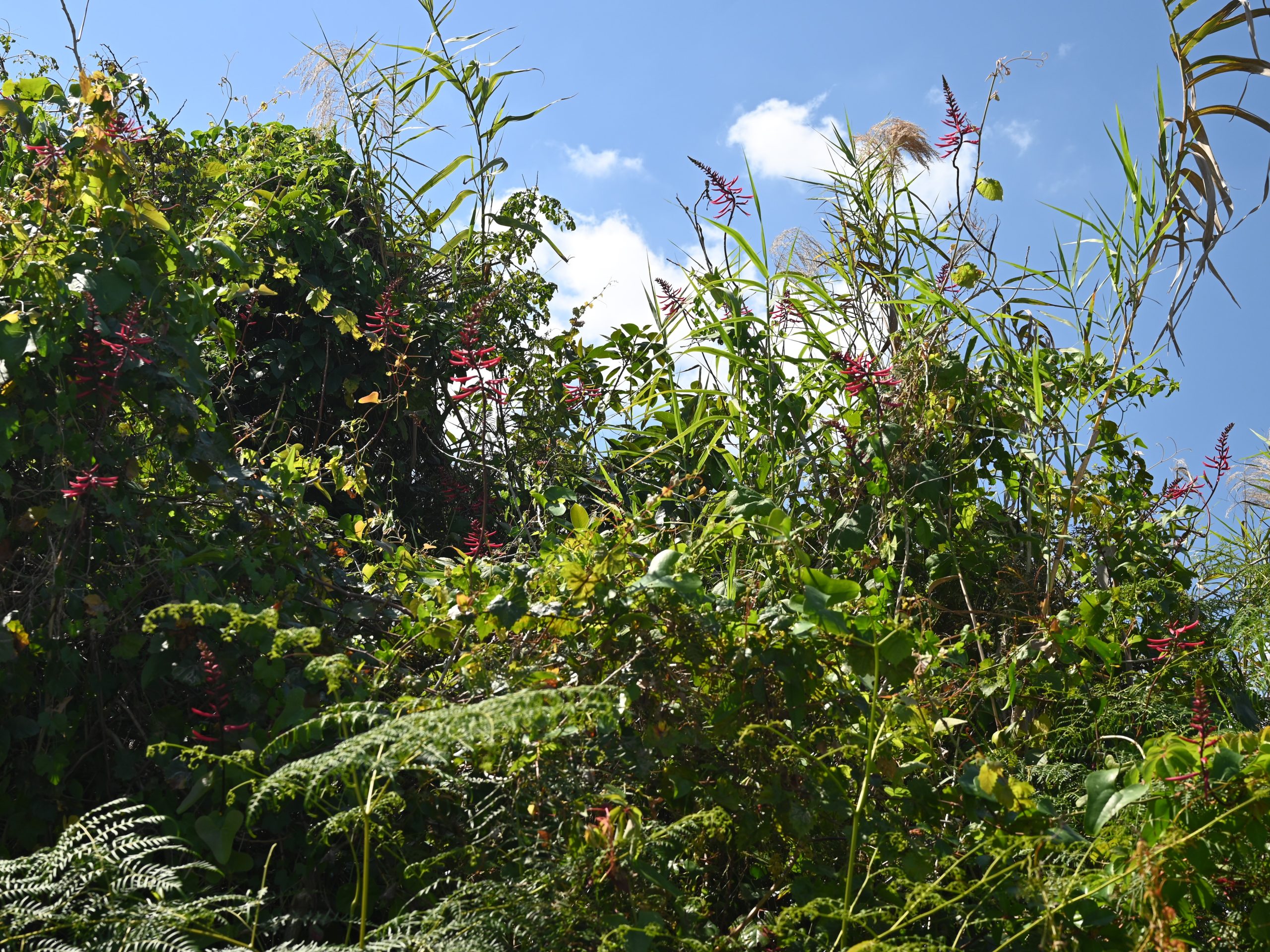
The flowers are the plant’s calling card: narrow, curved, tubular blossoms 1½ to 2 inches long, a deep waxy scarlet, packed densely along an upright spike (raceme) that can reach 1 to 2 feet tall. Flowering begins in early to mid spring, typically before or just as the leaves emerge, and can continue intermittently into summer, especially after rain or after stems are cut back. The curved tube shape is a precise match for the curved bill of hummingbirds, which are the plant’s primary pollinators.
Fruit & Seeds
After flowering, coralbean produces long, narrow, constricted black seed pods (legumes) that dry and split open in fall, revealing several hard, glossy, bright scarlet-red beans per pod. The pods often persist on the stems through winter, cracked open and dangling, making the plant conspicuous in the dormant landscape. The seeds, and to a lesser extent other plant parts, are toxic — see Cultural & Historical Uses below — and should never be eaten; they are, however, strikingly ornamental and were historically strung as beads.
Quick Facts
| Scientific Name | Erythrina herbacea |
| Family | Fabaceae (Pea/Legume) |
| Plant Type | Deciduous Shrub (herbaceous perennial in colder zones; small tree in frost-free areas) |
| Mature Height | 3–10 ft (to 20 ft as a tree in frost-free Florida) |
| Mature Spread | 4–8 ft |
| Growth Rate | Moderate to fast |
| Sun Exposure | Full Sun to Part Shade |
| Water Needs | Low to Moderate |
| Soil Type | Sandy, well-drained; tolerates poor, dry soils |
| Soil pH | 5.5–7.5 |
| Bloom Time | Early–mid spring, often before leaf-out; intermittent through summer |
| Flower Color | Scarlet red |
| Fall Color | Not notable; foliage drops green to yellow-green after frost |
| Fruit | Black pods with glossy scarlet seeds; seeds are toxic if eaten |
| Deer Resistant | Yes (thorny stems and toxic foliage/seeds largely deter browsing) |
| USDA Hardiness Zones | 7b–11 |
Native Range
Coralbean is native to the Gulf and South Atlantic Coastal Plain, found from central and southern Texas eastward across Louisiana, Mississippi, Alabama, and Georgia to Florida, with populations reaching the coastal plain of South Carolina. It also occurs in northeastern Mexico. It is most abundant and reaches its largest, most tree-like form in peninsular Florida, where mild winters allow the woody stems to persist year after year instead of dying back.
Coralbean typically grows in sandy, well-drained soils — pine flatwoods and sandhills, scrub and coastal hammocks, fencerows, roadsides, and disturbed open ground. It tolerates considerable drought and poor, infertile soil, and is often one of the more conspicuous flowering shrubs along sunny roadside edges and old-field margins throughout its range each spring.
A note on range limits: coralbean is sometimes reported or cultivated farther north along the North Carolina coast and occasionally in sheltered South Carolina gardens, but it is not reliably winter-hardy or established as a wild, reproducing population in North Carolina — treat occurrences there as planted or marginally escaped rather than native. It is likewise not native to Arkansas or most of Oklahoma, despite occasional garden plantings; its core wild range runs from south-central Texas through peninsular Florida.
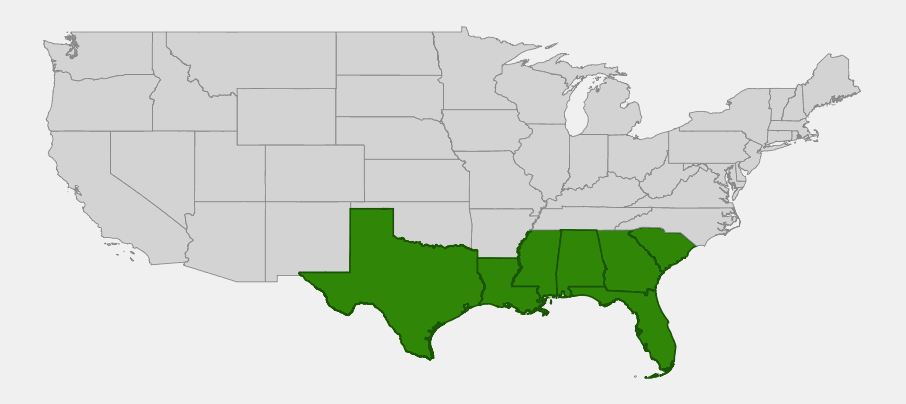
📋 Regional plant lists featuring Coralbean: Georgia, Alabama & Mississippi · Arkansas, Louisiana, Eastern Oklahoma & Eastern Texas · North Carolina & South Carolina (native to SC only; not established in NC)
Growing & Care Guide
Coralbean is about as low-maintenance as a flowering native shrub gets, provided it has sun, good drainage, and enough elbow room to accommodate its thorns. It thrives on neglect and poor soil, and its dramatic spring bloom and sculptural winter seed pods make it a rewarding four-season presence even where it dies to the ground each winter.
Light
Full sun produces the heaviest bloom and the most compact, sturdy growth. Coralbean tolerates part shade — particularly welcome in the hottest parts of its range — but flowering and overall vigor decline as shade increases. In deep shade it will survive but bloom poorly.
Soil & Water
Sandy, well-drained soil is ideal, mirroring the sandhills and scrub where it grows wild; coralbean is notably drought tolerant once established and resents soggy, poorly drained ground. Established plants need little supplemental irrigation outside of extended drought. As a legume, coralbean can fix atmospheric nitrogen via root nodules, which helps it thrive in the nutrient-poor sandy soils typical of its native habitat.
Planting Tips
Set out container plants in spring after the last frost, in a sunny spot away from foot traffic given the thorny stems. In the colder end of its hardiness range (roughly zone 7b–8), expect top growth to die back each winter and plan accordingly — treat it as a large, woody-rooted perennial rather than a permanent woody specimen. In zones 9–11, give it room to develop as a genuine shrub or small multi-stemmed tree.
Pruning & Maintenance
Where winter dieback occurs naturally, simply cut the dead stems to the ground in late winter before new growth starts; the plant resprouts vigorously from the rootstock. In frost-free areas, prune lightly after the main spring bloom to shape the plant and remove damaged or overly thorny low growth. Coralbean has few pest or disease problems and needs no regular feeding in reasonable soil.
Propagation
Seeds — nicked or soaked to break their hard coat — germinate readily, though gardeners should handle the toxic seeds with care and keep them away from children and pets during propagation. Softwood cuttings taken in summer will also root, offering a faster route to a flowering-size plant than seed.
Landscape Uses
- Hummingbird gardens — an early, high-value nectar source timed to spring migration
- Dry, sandy sites where many other flowering shrubs struggle
- Wildlife borders and fencerows, where its thorns also provide a deterrent barrier
- Coastal and sandhill restoration plantings throughout its native range
- Winter-interest plantings for the dramatic black pods and red seeds
- Naturalized, low-care beds where some winter dieback is not a concern
Wildlife & Ecological Value
Coralbean’s early, abundant, nectar-rich blooms make it one of the more ecologically important native shrubs of the southeastern spring landscape, particularly for hummingbirds arriving from their wintering grounds.
For Pollinators
Ruby-throated Hummingbirds are the primary pollinators, and coralbean’s spring bloom — often beginning before many other nectar sources are available — makes it an important early stop for hummingbirds just arriving on their breeding grounds in the Gulf South. Carpenter bees and other large-bodied bees will also visit, sometimes “robbing” nectar by biting through the base of the flower tube rather than entering it conventionally.
For Birds
Beyond hummingbirds, the dense, thorny growth form provides good nesting cover and protection from predators for small songbirds. Seed-eating birds generally avoid the toxic beans, but the structural cover the shrub provides is valuable in open sandy habitats with otherwise sparse shrub layers.
Ecosystem Role
As a nitrogen-fixing legume, coralbean helps enrich the notoriously poor, sandy soils of pine flatwoods and coastal scrub, improving conditions for neighboring plants. Its early bloom timing fills a critical nectar gap in fire-maintained pine ecosystems, and the plant itself typically resprouts readily after fire from its large rootstock — a useful trait in the fire-adapted sandhill and flatwoods communities where it is most common.
Cultural & Historical Uses
Coralbean’s bright red-and-black seeds have long been collected and strung into necklaces, bracelets, and rattles by Indigenous peoples and later settlers across its range, prized purely for their glossy, jewel-like color — a tradition echoed in the Cherokee Bean and other regional common names. Historical accounts describe Southeastern tribes using parts of the plant in traditional medicinal preparations as well, though specific practices vary by source and region.
The seeds are toxic and should never be eaten; they contain erythrina alkaloids with curare-like, neuromuscular-blocking effects, and ingestion has caused serious poisoning in children who mistook the attractive beans for candy. The leaves, bark, and roots also contain related alkaloids in lower concentrations. Despite this toxicity, the hard, durable seed coat made the beans popular and safe to handle as decorative beadwork, since the toxin poses a hazard primarily if the seed is broken open and ingested, not from external contact.
The Louisiana French name “mamou,” still used in south Louisiana today, has also lent its name to the town of Mamou, Louisiana, reflecting how deeply embedded this conspicuous spring-blooming shrub became in the cultural landscape of the Gulf Coast.
Frequently Asked Questions
Are coralbean seeds poisonous?
Yes. The glossy red-and-black seeds contain erythrina alkaloids that are toxic if eaten and can cause serious poisoning, particularly in children. They are not edible under any preparation; admire them on the plant or in dried arrangements, but keep them away from children and pets, and never ingest them.
Will coralbean survive winter where I live?
In USDA zones 9–11 it typically persists as a woody shrub or small tree year-round. In zones 7b–8, expect the top growth to freeze back to the ground each winter; the plant resprouts reliably from its thick rootstock in spring and will still flower that same season.
Why does coralbean bloom before it leafs out?
Blooming on bare stems makes the scarlet flower spikes maximally visible to hummingbirds returning in early spring, before the shrub’s own foliage — or surrounding vegetation — can obscure them. The leaves fill in afterward, once the main flush of flowering is underway.
Is coralbean the same plant as “mamou” in Cajun country?
Yes. “Mamou” is the traditional Louisiana French name for Erythrina herbacea, and it lent its name to the town of Mamou, Louisiana, in the heart of the plant’s native range.
Is coralbean native to North Carolina?
Not reliably. It occurs as far north as the South Carolina coastal plain, but populations reported in North Carolina are generally planted or marginally escaped rather than an established, reproducing native presence — treat it as a Deep South and Gulf Coast species when planning restoration plantings.

Looking for a nursery that carries Coralbean?
Browse our native plant nursery directory: Florida & Georgia · Louisiana & Mississippi · Alabama · Texas & South Carolina