Water Hickory (Carya aquatica)
Carya aquatica, commonly called Water Hickory or Bitter Pecan, is a large bottomland tree of the Southeastern and Gulf Coastal Plain, instantly recognizable once you know its habitat: the flooded clay flats, sloughs, and backwater edges where few other hickories can compete. It’s a member of the Juglandaceae (walnut family) and a close relative of pecan, with which it hybridizes naturally where their ranges overlap. Unlike its sweeter cousin, water hickory produces a thin-shelled but intensely bitter nut that is essentially inedible to people, though wildlife still make use of it.
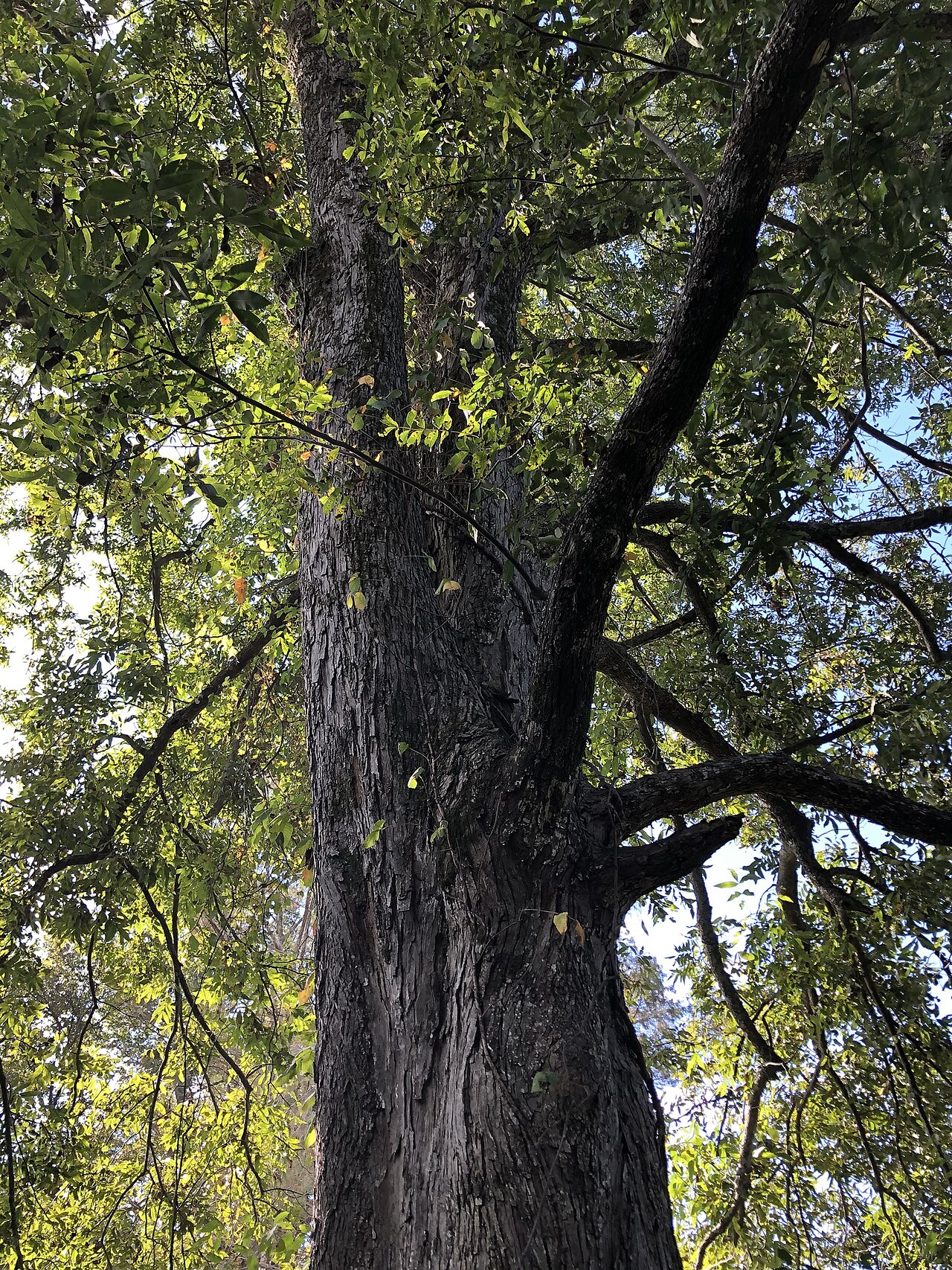
In the wild, water hickory often grows as a tall, straight-trunked tree reaching 60 to 100 feet, with a narrow crown and distinctive shaggy, loosely plated gray-brown bark. It thrives where the ground floods seasonally and the soil cracks when it dries — conditions that exclude many faster-growing competitors and let water hickory dominate certain bottomland forest types almost on its own. Because so much of the more commercially desirable timber has been selectively logged out of southern wetland forests over the past century, water hickory has, ironically, become more abundant and widespread than it would have been under natural conditions.
For anyone restoring a floodplain forest, a wet clay bottomland, or a backwater swamp edge in the Southeast, water hickory is a legitimate, locally important native tree — not a garden ornamental, but a working component of wetland forest restoration that also slows floodwaters and helps filter sediment out of the water column.
Identification
Water hickory is a large deciduous tree distinguished from other southern hickories mainly by its shaggy bark, flattened bitter nuts, and strong preference for wet, periodically flooded clay soils.
Bark & Stems
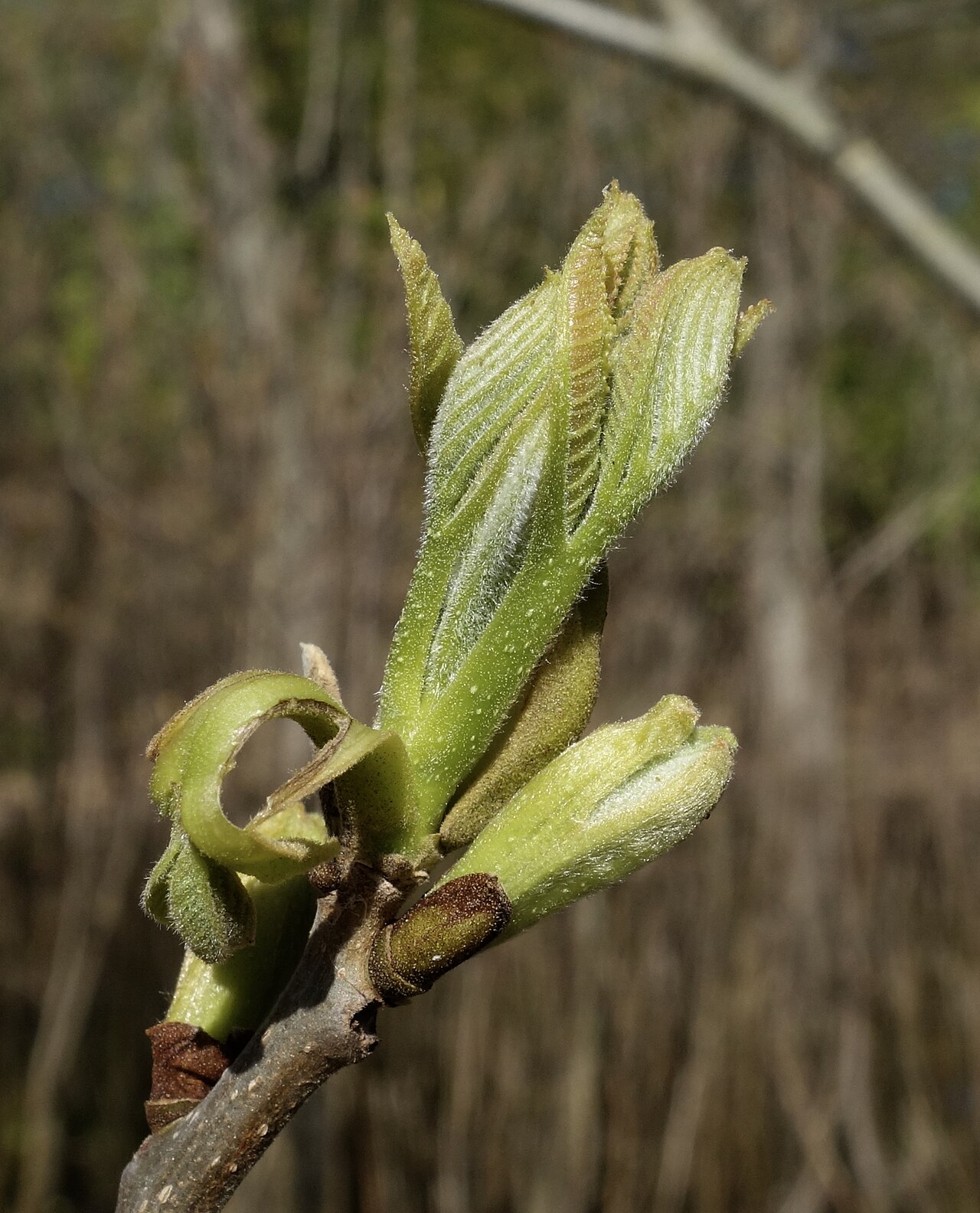
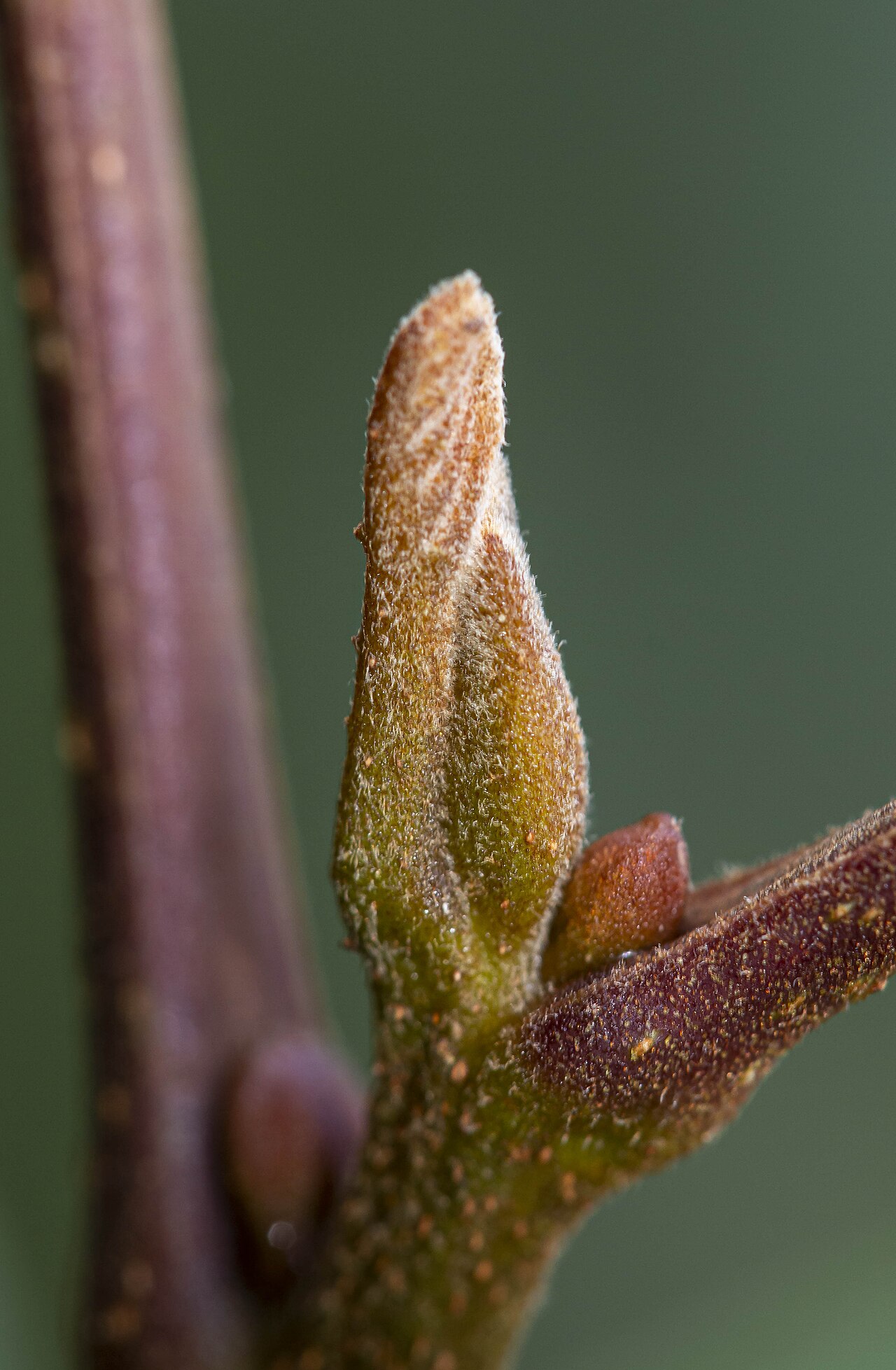
Mature trees develop rough, gray to gray-brown bark that separates into thin, long plates or scales, giving older trunks a shaggy, loosely woven look distinct from the smoother bark of young trees. Twigs are slender and reddish-brown, and the buds lack the overlapping imbricate scales seen in many other hickories — young growth is often covered in fine rusty or silvery hairs that wear off with age.
Leaves
Leaves are pinnately compound, typically 9 to 15 inches long, with 7 to 13 narrow, lance-shaped leaflets that taper to a point. Foliage is dark green above and paler beneath, turning a dull yellow in autumn. The leaflets are noticeably narrower and more numerous than those of pecan, a useful field mark where the two species grow near each other.
Flowers & Fruit
Water hickory is monoecious, with male flowers in slender drooping catkins and female flowers in short spikes, both appearing in April and May as the leaves emerge. The fruit is a thin-husked, flattened nut roughly ¾ to 1¼ inches long, husk splitting only partway at maturity. Inside, the thin-shelled nut holds a notably bitter kernel — unlike pecan or shagbark hickory, water hickory nuts are not eaten by people, though ducks, squirrels, and feral hogs use them to a limited extent. Nuts ripen and fall between October and December.
Quick Facts
| Scientific Name | Carya aquatica |
| Family | Juglandaceae (Walnut) |
| Plant Type | Deciduous Tree |
| Mature Height | 60–100 ft (occasionally over 100 ft on good sites) |
| Trunk Diameter | Up to 36 in |
| Growth Rate | Slow |
| Sun Exposure | Full Sun to Part Shade |
| Water Needs | High; tolerates seasonal flooding |
| Soil Type | Wet clay flats, sloughs, backwater bottomlands |
| Soil pH | Slightly acidic to neutral |
| Bloom Time | April – May |
| Flower Color | Greenish (catkins), inconspicuous |
| Fall Color | Dull yellow |
| Fruit | Flattened, thin-shelled, bitter nut; not edible |
| Deer Resistant | Yes (mature trees) |
| USDA Hardiness Zones | 6–9 |
Native Range
Water hickory is native to the Atlantic and Gulf Coastal Plains, from southeastern Virginia south through the Carolinas, Georgia, and peninsular Florida, west through Alabama, Mississippi, and Louisiana into eastern Texas and southeastern Oklahoma, and north up the Mississippi River Valley through Arkansas, Tennessee, Kentucky, and into southern Missouri and southern Illinois. It is essentially a lowland species of the greater Mississippi Embayment and Coastal Plain river systems, rare or absent outside these wetland corridors.
Across this range, water hickory is a characteristic tree of clay flats, sloughs, and backwater areas near rivers and streams — the kind of ground that floods during high water and cracks open during summer dry spells. It is a major component of the Overcup Oak–Water Hickory and Sugarberry–American Elm–Green Ash forest cover types, and it shows up on the margins of baldcypress and baldcypress-tupelo swamps as well. It grows alongside overcup oak, Nuttall oak, willow oak, green ash, sugarberry, persimmon, and water-elm.
Water hickory is shade-intolerant and grows best on better-drained loamy or silty sites within its wetland range, but decades of “high-grade” logging — selectively removing more valuable species and leaving water hickory behind — have made it more common on marginal, poorly drained sites than it would naturally be. It is not considered rare or threatened anywhere in its range, but it is specific to wetland bottomland habitat and will not thrive, or even survive long-term, on upland or well-drained garden soils.
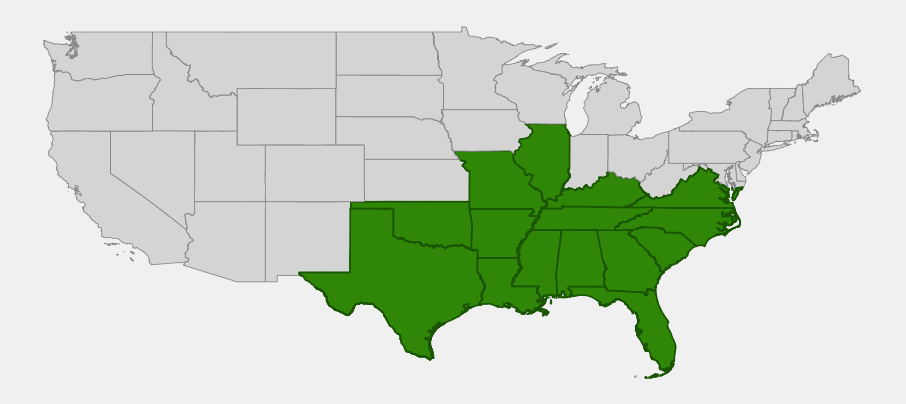
📋 Regional plant lists featuring Water Hickory: Maryland, Virginia & West Virginia · North Carolina & South Carolina · Georgia, Alabama & Mississippi · Arkansas, Louisiana, Eastern Oklahoma & Eastern Texas · Kentucky & Tennessee · Illinois, Iowa & Missouri
Growing & Care Guide
Water hickory is not a tree for the average yard — it is a specialist for wet, heavy soils and bottomland conditions, and it performs poorly anywhere that doesn’t flood or stay consistently wet.
Light
Plant in full sun to light shade. Water hickory is shade-intolerant as a species and needs good overhead light to develop a strong crown, though young trees can persist in partial shade for years while waiting for a canopy gap.
Soil & Water
This is a tree for heavy, poorly drained clay soils that flood seasonally — sloughs, backwater areas, and low floodplain ground where few other trees compete well. It tolerates standing water during the dormant season and the cracking, drying clay of summer. Avoid planting it on well-drained upland soils, where it grows poorly if it survives at all; this is one of the most site-specific native trees in the Southeast.
Planting Tips
Water hickory transplants from containers with a deep taproot that should not be disturbed or circled. Site it in a true bottomland or floodplain restoration area rather than a typical residential lot, and give it room — mature trees are tall and develop a fairly narrow but substantial crown. Growth is slow, so plan for a long-term planting rather than a quick landscape fix.
Pruning & Maintenance
Minimal pruning is needed beyond removing dead or storm-damaged limbs. Water hickory sprouts vigorously from cut stumps and severed roots, which makes it useful in restoration plantings that rely on coppicing but means it can be persistent if you ever want to remove one.
Propagation
Water hickory regenerates readily from seed on exposed, disturbed wet soil, and seedlings can survive in the understory for over a decade waiting for a canopy opening. It also sprouts vigorously from stumps and roots after cutting or storm damage, often growing several times faster than seedlings in the first year or two.
Landscape Uses
Water hickory has a narrow but valuable set of uses:
- Bottomland hardwood restoration on wet clay flats and backwater sites
- Floodplain and riparian buffer plantings along rivers and streams
- Wetland forest diversification alongside overcup oak and green ash
- Stormwater and sediment management in low, flood-prone ground
- Wildlife habitat in large-scale bottomland reforestation projects
Wildlife & Ecological Value
Water hickory plays a quiet but important supporting role in the bottomland hardwood forests that remain some of the most productive wildlife habitat in the Southeast.
For Pollinators
Like other hickories, water hickory is wind-pollinated rather than insect-pollinated, so its catkins offer little direct nectar value. Its real pollinator contribution is indirect: as part of a diverse bottomland canopy, it helps support the broader forest structure that hosts flowering understory plants used by native bees and other insects.
For Birds
Wood ducks and other waterfowl make limited use of the bitter nuts, especially in years when other mast is scarce. The structurally complex, often flooded bottomland forests where water hickory dominates provide important habitat for a range of wetland and forest bird species, including wading birds and cavity-nesting species that use mature, sometimes hollow, hickory trunks.
For Mammals
Squirrels and feral hogs eat water hickory nuts to a limited extent, despite their bitterness, particularly when preferred mast crops like acorns or pecans are in short supply. The low floodplain forests water hickory helps define also provide cover and travel corridors for a wide range of bottomland mammals.
Ecosystem Role
Water hickory is valued less for feeding wildlife directly and more for what it does structurally: its root systems and those of its bottomland associates help slow floodwaters during high-water events, allowing suspended sediment to settle out rather than washing downstream. This filtering function, repeated across thousands of acres of bottomland forest, is a meaningful part of how these ecosystems maintain water quality in southern river systems. The tree is also a frequent host for mistletoe (Phoradendron serotinum), which in turn provides winter forage for various wildlife.
Cultural & Historical Uses
Water hickory’s common name “bitter pecan” reflects its long-recognized status as the inedible, undesirable relative of true pecan — early settlers and foresters quickly learned to distinguish the two, since water hickory nuts, despite looking similar to pecans, are far too bitter to eat. Historically, the wood found use as a locally preferred firewood and for fence posts, though it was never a premier lumber species; water hickory wood is prone to a defect called “shake,” which reduces its commercial timber value compared to other hickories.
Because more valuable bottomland hardwoods were preferentially logged out of southern wetland forests through the 20th century, water hickory often became more dominant on cutover sites than it had been historically — an unintentional legacy of selective “high-grading” rather than any deliberate cultivation of the species. It has never been a significant orchard or nut crop tree, unlike its relative pecan, which was domesticated and bred extensively for nut quality.
Today, water hickory’s primary recognized value is ecological and hydrological rather than economic — its role in bottomland hardwood forests that buffer flooding and filter drainage water has become increasingly appreciated as these wetland forest types have been recognized for their broader watershed benefits.
Frequently Asked Questions
Can you eat water hickory nuts?
No. Water hickory nuts are intensely bitter and are not eaten by people, unlike the closely related pecan. Wildlife such as ducks, squirrels, and feral hogs make limited use of them, mainly when preferred food sources are scarce.
What’s the difference between water hickory and pecan?
Both are in the genus Carya and can hybridize naturally where their ranges overlap, but water hickory has more numerous, narrower leaflets, shaggier bark, and a flattened, bitter nut, while pecan has a smoother bark, fewer and broader leaflets, and a sweet, elongated nut. Water hickory is also far more restricted to wet, flooded bottomland soils.
Will water hickory grow in a normal, well-drained yard?
Not well. Water hickory is adapted specifically to wet clay flats and seasonally flooded bottomland soils. On typical well-drained upland soils it grows slowly and poorly, so it’s best reserved for floodplain restoration or consistently wet, low-lying sites.
How fast does water hickory grow?
It is a slow-growing tree, with diameter growth of roughly 2 to 8 mm per year depending on site quality. Root sprouts, however, can grow three to four times faster than seedlings in their first couple of years.
Is water hickory good for erosion control?
Indirectly, yes. While it’s not typically planted specifically for erosion control the way grasses or shrubs are, water hickory’s role in bottomland hardwood forests helps slow floodwaters and allow sediment to settle, which is an important part of how these wetland forests protect water quality and stream banks over time.

Looking for a nursery that carries Water Hickory?
Browse our native plant nursery directory: Virginia, South Carolina, Tennessee & Texas · North Carolina & Oklahoma · Georgia & Florida · Alabama & Arkansas · Mississippi, Louisiana, Kentucky & Missouri · Illinois