
Rusty Lyonia (Lyonia ferruginea)
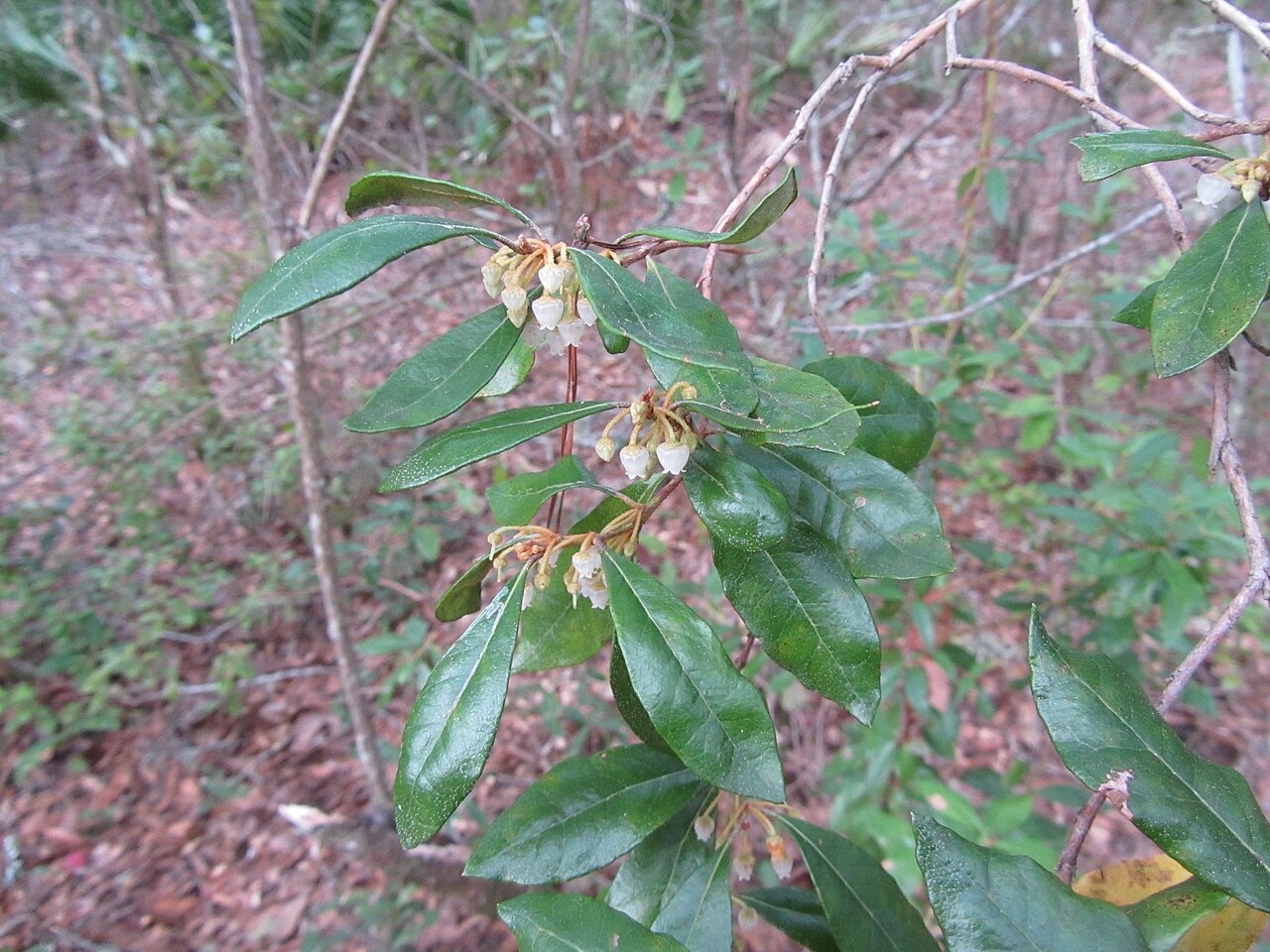
Lyonia ferruginea, known as Rusty Lyonia or rusty staggerbush, is an evergreen shrub or small tree of the sandy scrub and dry woods of the Southeast’s lower Coastal Plain. It grows from 6 to about 20 feet tall, usually with several crooked, leaning trunks and an open, irregular crown. In late winter and spring it bears clusters of small, white, urn-shaped flowers. It belongs to the heath family (Ericaceae), along with blueberries, rhododendrons and its relatives fetterbush and staggerbush.
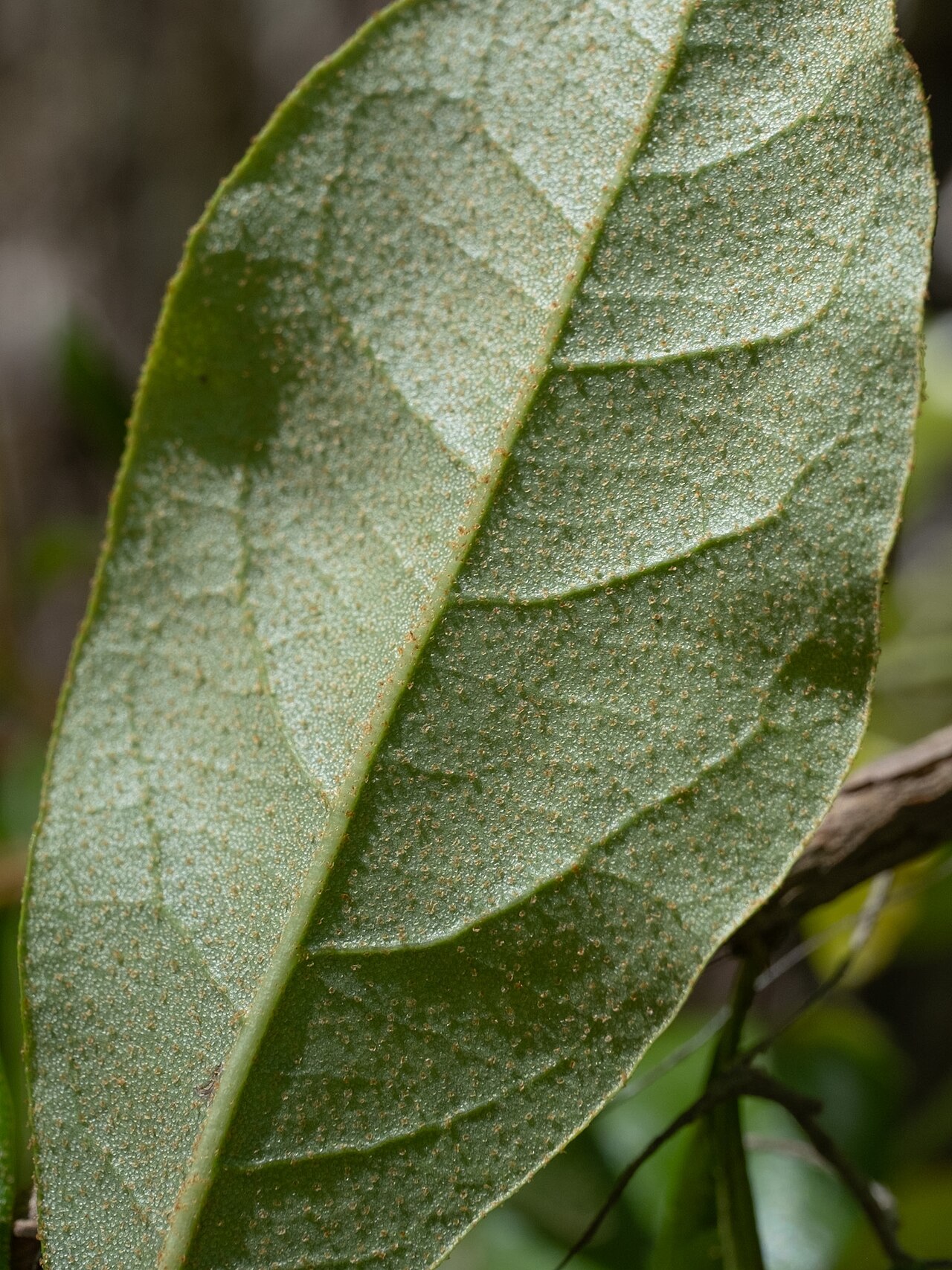
The species name ferruginea means “rust-colored,” and it describes the tiny brownish scales that cover the new twigs, flower stalks and especially the undersides of the leaves. Turn over a leaf and the rusty coating is obvious. Its crooked, twisting trunks are also distinctive and are often given as the source of the name “staggerbush.” In Florida scrub it is one of the plants that, together with scrub oaks, Florida rosemary and sand pine, forms the dense, low woodland so typical of the state’s ancient dune ridges.
Rusty lyonia is tough, drought tolerant and almost maintenance free once established, which makes it a useful but underused shrub for dry, sandy Florida and coastal Georgia yards. This guide covers how to identify it, how it differs from Florida’s other lyonias, where it grows, and how to use it in a native landscape.
Identification
Four Lyonia species grow in Florida, and three of them already have guides on this site: fetterbush (L. lucida), staggerbush (L. mariana) and maleberry (L. ligustrina). Rusty lyonia is the only one that regularly becomes a small tree, and the only one with leaves heavily coated beneath with rusty scales.
Form & Bark
Rusty lyonia is usually a large, multi-stemmed shrub 6 to 15 feet tall. In protected hammocks and old scrub it can become a small tree to about 20 feet, rarely more. The trunks are typically crooked, leaning or twisted, with reddish-brown to gray bark that becomes furrowed and shreddy with age. Young twigs are densely rusty-scaly.
Leaves
The evergreen leaves are alternate, leathery, elliptic to oblong and about 1 to 3½ inches long. The upper surface is dark green and somewhat rough, and the lower surface is paler and covered with tiny, round, rust-colored scales. The leaf margins are often rolled under, especially on plants in dry scrub. New leaves in spring are a soft, rusty bronze, and old leaves may turn orange or red before they drop.
Flowers
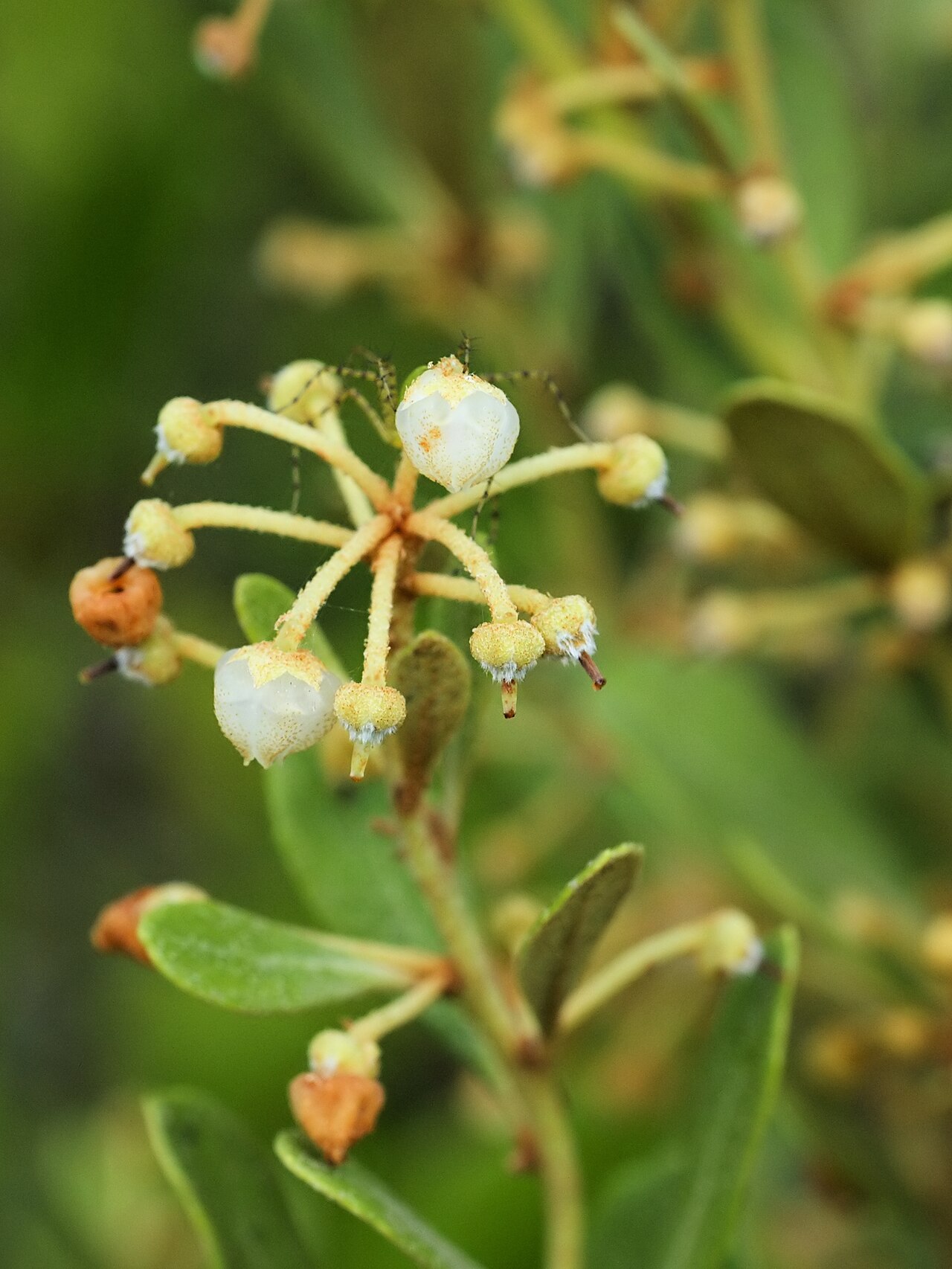
Small, white, urn-shaped flowers, each about ¼ inch long, hang in tight clusters from the leaf axils of the previous year’s growth. Each flower has five tiny lobes at the mouth, and the flower stalks and sepals are rusty-scaly. Bloom time is mainly February to May, beginning in late winter in central and south Florida. The flowers are faintly fragrant, and a plant in full bloom has a frosted look.
Fruit & Seeds
The fruit is a small, dry, five-parted capsule, about ⅛ to ¼ inch long, that ripens in summer and fall. It splits along five seams to release many tiny seeds. Old capsules often stay on the branches through winter, which can help with identification when the plant is not in flower.
Similar Species
Fetterbush (L. lucida) has glossy, smooth leaves with a distinct vein running just inside the margin, and pink to rose flowers. Staggerbush (L. mariana) is deciduous or half-evergreen with larger white bell flowers on leafless stems in spring. Coastal plain staggerbush (L. fruticosa) is the most similar. It is a smaller shrub, usually under 10 feet, with flatter leaves and flowers in short clusters at the ends of the new shoots. Some botanists treat the two as forms of one species.
Quick Facts
| Scientific Name | Lyonia ferruginea (Walter) Nutt. (syn. Xolisma ferruginea) |
| Family | Ericaceae (heath family) |
| Plant Type | Evergreen shrub or small tree |
| Mature Height | 6–15 ft (occasionally to about 20 ft) |
| Mature Spread | 5–12 ft |
| Growth Rate | Slow to moderate |
| Sun Exposure | Full sun to part shade |
| Water Needs | Low once established; highly drought tolerant |
| Soil Type | Deep, well-drained acidic sand |
| Soil pH | About 4.5–6.0 (acidic) |
| Bloom Time | February–May |
| Flower Color | White |
| Fall Color | Evergreen; older leaves may turn orange to red before dropping |
| Fruit | Small, dry, five-parted capsule |
| Deer Resistant | Yes; rarely browsed |
| USDA Hardiness Zones | 8–10 |
Native Range
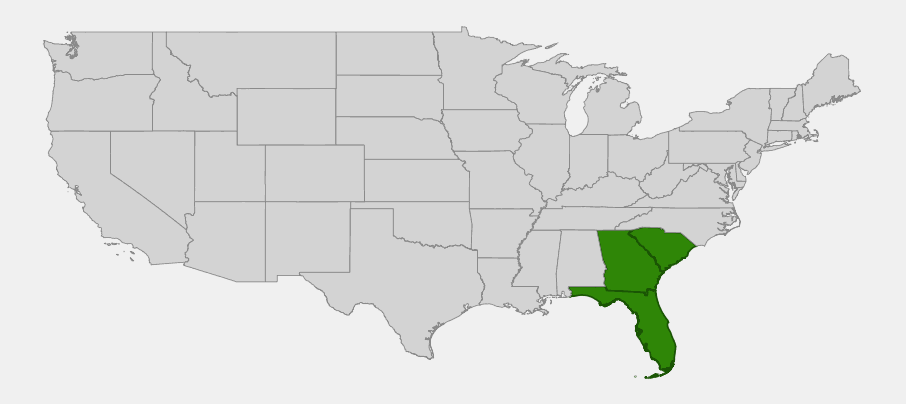
Rusty lyonia is a shrub of the southeastern Coastal Plain. USDA PLANTS and the Lady Bird Johnson Wildflower Center record it from Florida, Georgia and South Carolina. It is found throughout most of Florida, from the western Panhandle to the southern peninsula, and northward it extends only into southeastern Georgia and the far southern tip of South Carolina.
Its home is deep, dry, acidic sand. It is a characteristic plant of Florida scrub and scrubby flatwoods, where it grows among sand live oak, myrtle oak, Chapman oak, Florida rosemary and sand pine. It also grows in sandhills, dry hammocks and coastal dunes and maritime forests, usually from near sea level to about 300 feet in elevation.
Rusty lyonia is common and widespread within its small range and is not considered rare. Like other scrub shrubs, it is adapted to infrequent, intense fires. When fire burns the top, it resprouts vigorously from its roots and the base of the trunks, which is why old stands often have clusters of crooked, multiple stems.
📋 Regional plant lists featuring Rusty Lyonia: North & South Florida · Alabama, Georgia & Mississippi · North & South Carolina
Growing & Care Guide
Rusty lyonia is not a fast or showy shrub, but it is one of the best choices for hot, dry, sandy sites where most ornamental shrubs struggle. Once established it needs no irrigation, fertilizer or spraying. Its main requirements are excellent drainage and acidic soil. Florida native nurseries sometimes offer it in containers; buy nursery-grown plants rather than digging them, since large wild shrubs have deep roots and rarely survive transplanting.
Light
Full sun gives the densest growth and the most flowers. It also tolerates part shade under pines or scattered oaks, where it grows more open and tree-like.
Soil & Water
Plant in deep, well-drained, acidic sand. It does poorly in heavy clay, alkaline fill or soggy ground. Water regularly during the first growing season, then let rainfall take over. In typical Florida and coastal Georgia conditions, established plants do not need supplemental water. Do not fertilize. Heath-family plants are adapted to poor soils and can be damaged by high nutrient levels.
Planting Tips
Plant from containers in the cooler months. Choose small plants, which establish faster than large ones. Set the root ball at or slightly above grade, and backfill with the native sand rather than amended soil. A thin layer of pine straw or oak leaves helps keep the roots cool. Space plants 5 to 8 feet apart for a loose hedge or screen, or mix them with scrub oaks, saw palmetto and Florida rosemary for a natural scrub planting.
Pruning & Maintenance
Little pruning is needed. Remove dead wood and any stems that cross awkwardly. You can thin lower branches to show off the crooked trunks as a small specimen tree, or cut back old, leggy shrubs in late winter, since it resprouts readily. Avoid shearing into a tight hedge, which removes the next season’s flower buds. It has few pest problems.
Propagation
Grow from seed sown on the surface of a moist, acidic peat-and-sand mix, or from semi-hardwood cuttings taken in summer and rooted under mist. Both methods are slow, so most gardeners buy container plants. Do not dig wild shrubs.
Landscape Uses
- Scrub and xeriscape gardens: a structural evergreen for deep, dry sand where few shrubs thrive
- Informal screens and hedges: evergreen cover along property lines in sandy coastal and inland sites
- Small specimen tree: older plants with crooked, leaning trunks have a sculptural, bonsai-like character
- Wildlife plantings: cover and nesting sites for scrub birds, early-season flowers for bees
- Restoration: scrub and scrubby flatwoods restoration within its native range
Wildlife & Ecological Value
Rusty lyonia is a structural plant in Florida scrub, one of the rarest and most distinctive ecosystems in the Southeast.
For Pollinators
The urn-shaped flowers are visited by bees, which reach the nectar through the narrow mouth. Bumblebees and other native bees work the flowers in late winter and early spring, when few other shrubs in the scrub are blooming.
For Birds
Dense, evergreen clumps of rusty lyonia give cover and nesting sites to scrub and woodland birds, including Florida scrub-jays, towhees and mockingbirds. The tiny seeds have little food value, but insects that live on the foliage are food for warblers and other insect-eating birds.
For Mammals
Deer rarely browse it. Like many heath-family plants, its foliage contains compounds that make it unpalatable and potentially toxic to livestock and pets if eaten. Its thickets provide cover for small mammals such as Florida mice and cotton rats in scrub habitat.
Ecosystem Role
Rusty lyonia helps form the shrub layer of Florida scrub, which depends on periodic fire. After a burn it resprouts from the base and roots and quickly rebuilds the dense cover that scrub animals need. Its leaf litter and shade also shape the open sand patches between shrubs, where many endemic scrub herbs grow.
Cultural & Historical Uses
The genus Lyonia honors John Lyon, a Scottish plant collector and nurseryman who explored the southeastern United States around 1800 and sent many American plants to British gardens. Thomas Walter, a planter-botanist in South Carolina, first described rusty lyonia in his Flora Caroliniana of 1788, and Thomas Nuttall later moved it to Lyonia. It has also been classified in Xolisma, a name still seen in older references.
The common name staggerbush is shared by several lyonias. It is usually explained by the crooked, staggering trunks, as the Lady Bird Johnson Wildflower Center notes for this species, and also by reports that livestock eating related species stagger from the plants’ toxins. Either way, the name fits a shrub with such twisted growth.
Rusty lyonia has a long history in scrub conservation as one of the signature shrubs of Florida’s Lake Wales Ridge and coastal scrubs. Today it is increasingly grown by native plant nurseries for xeriscapes and scrub-style gardens, part of a growing interest in using plants from Florida’s distinctive dry uplands instead of thirsty exotic shrubs.
Frequently Asked Questions
Why is it called rusty lyonia?
The new twigs, flower stalks and especially the undersides of the leaves are covered with tiny rust-colored scales. The species name ferruginea means rust-colored.
Is rusty lyonia the same as fetterbush?
No. Fetterbush (Lyonia lucida) is a related shrub of wetter flatwoods and bay swamps with glossy leaves and pink flowers. Rusty lyonia grows in dry scrub and sandhills, has rusty-scaly leaf undersides and white flowers, and often becomes a small tree.
Is rusty lyonia drought tolerant?
Yes. Once established in deep sand, it needs no irrigation in Florida, coastal Georgia or southern South Carolina. It does poorly in heavy, wet or alkaline soils.
Is rusty lyonia toxic?
Like several other heath-family shrubs, its foliage is considered potentially toxic to livestock and pets if eaten in quantity. It is not a problem in gardens, but do not use it as fodder.
How tall does rusty lyonia get?
Usually 6 to 15 feet, with several crooked trunks. In sheltered sites it can become a small tree about 20 feet tall. Growth is slow to moderate.

Looking for a nursery that carries Rusty Lyonia?
Browse our native plant nursery directory: Florida & Georgia · South Carolina