Chapman Oak (Quercus chapmanii)
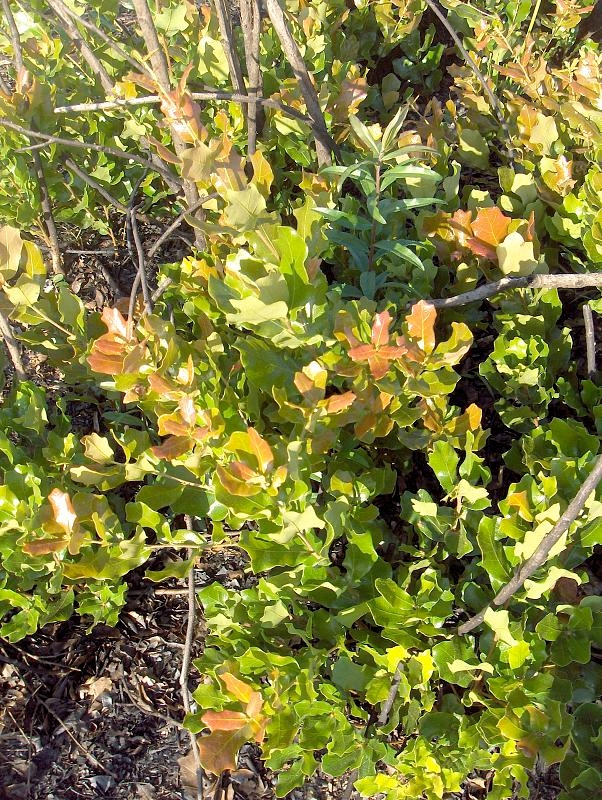
Quercus chapmanii, the Chapman Oak, is a small, scrubby, evergreen oak of the Florida peninsula’s driest, sandiest habitats. Named for 19th-century Florida botanist Alvan Wentworth Chapman, it belongs to the white oak group and is one of the defining shrubs of Florida scrub and sandhill communities — the same fire-shaped, white-sand ecosystems that are home to the Florida scrub-jay, gopher tortoise and a long list of plants found nowhere else on Earth.
Chapman oak rarely reaches true tree size. In most scrub it forms dense, low, often leaning thickets 6 to 15 feet tall, with multiple crooked stems and small, leathery, holly-textured leaves that persist through most of the year. Occasionally, on more stable sites away from frequent fire, it develops into a small single-trunked tree to around 25 or 30 feet.
This is not a tree for a typical lawn — it is a specialist built for deep, infertile, excessively drained white or yellow sand, and it is an important host and food plant within one of Florida’s most threatened natural habitats. For native plant gardeners working with sandy, dry sites in Florida, coastal Georgia or coastal South Carolina, it is a tough, low-maintenance, wildlife-valuable small tree or large screening shrub.
Identification
Chapman oak typically grows as a many-stemmed, leaning or sprawling shrub to small tree, 6 to 25 feet tall, often forming dense thickets by root sprouting after fire. Where it does form a single trunk, growth is slow and the form stays compact and rounded.
Bark
Bark on older stems is gray to grayish-brown, developing shallow furrows and small scaly plates with age; on young stems it is smoother and can show a reddish or orange cast.
Leaves
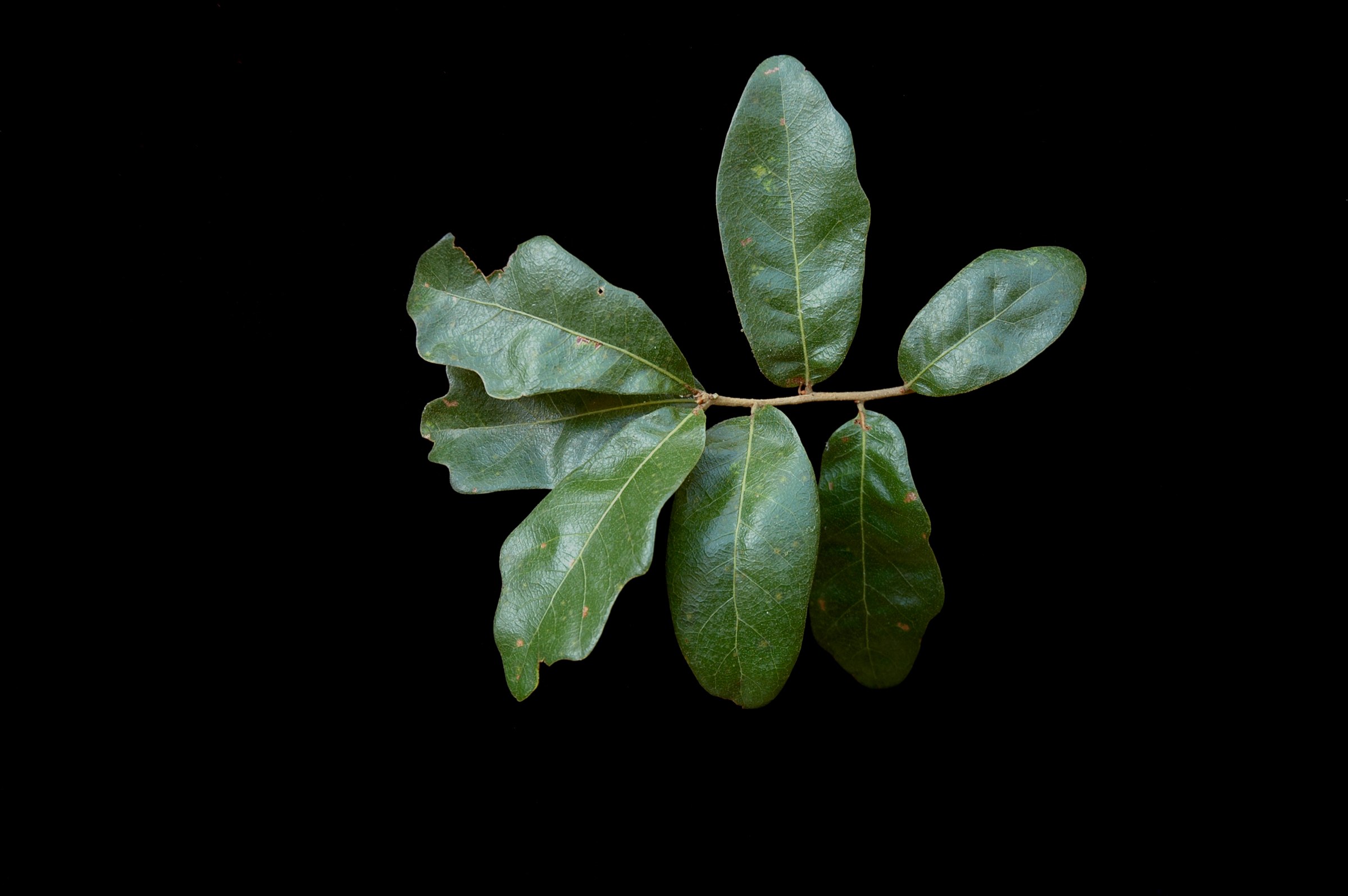
Leaves are small, 1 to 3 inches long, oblong to obovate, with a leathery texture and margins that are entire or shallowly wavy-lobed — never the deep, bristle-tipped lobes of the red oaks. They are shiny dark green above and pale, finely hairy underneath, a trait shared with several of Florida’s other scrub oaks that helps the leaf conserve moisture. Leaf shape is noticeably variable even on the same branch, from nearly oval to broadly lobed near the tip. The species is technically deciduous to semi-evergreen: old leaves drop in late winter or early spring, just before or as the new flush of growth appears, so the plant reads as evergreen most of the year.
Flowers & Acorns
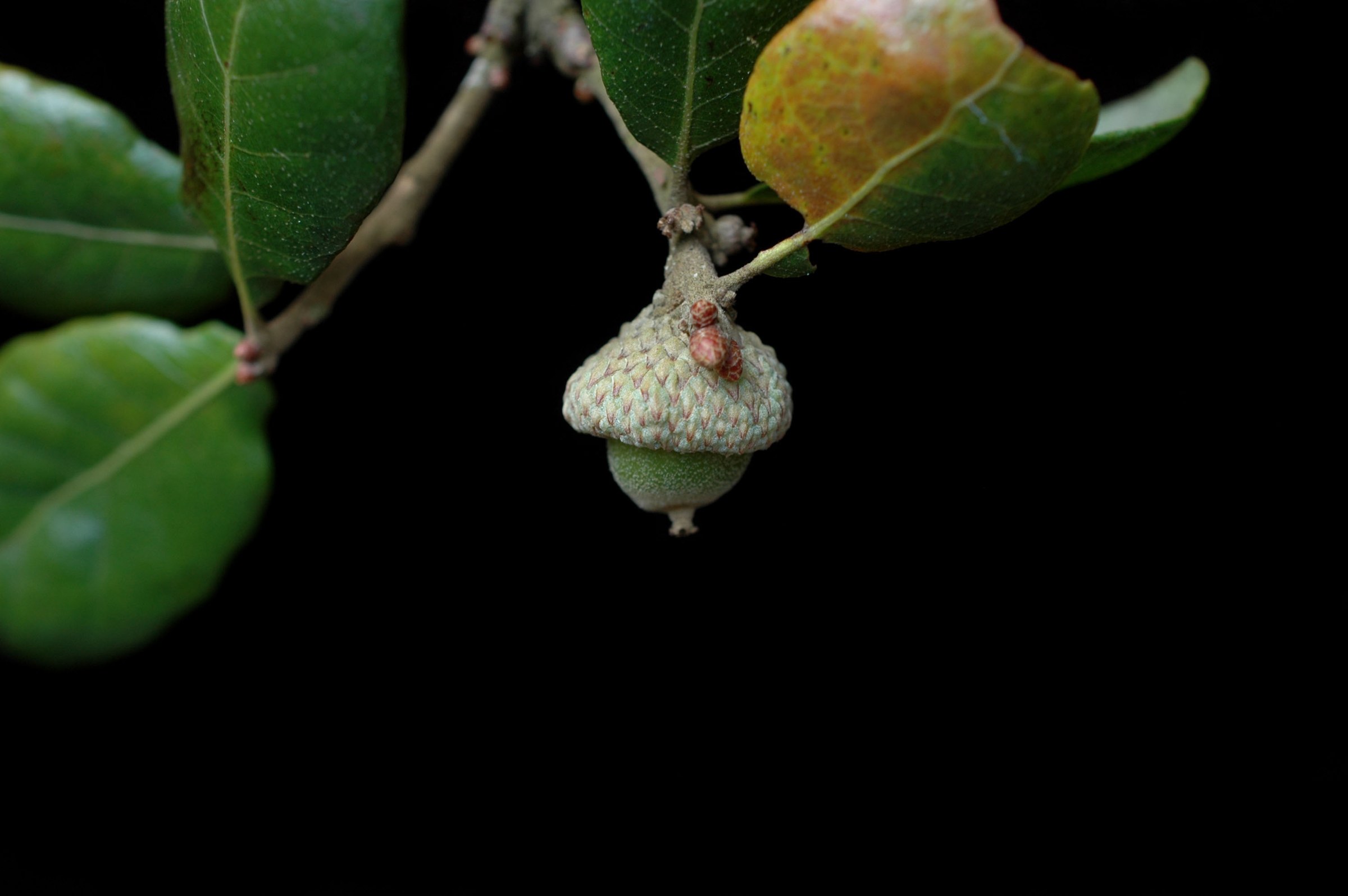
Like other white oaks, Chapman oak is wind-pollinated, with slender yellow-green male catkins appearing with the new spring leaves and tiny female flowers in the leaf axils. Acorns mature in a single growing season, as is typical of the white oak group. They are small, about ½ to ¾ inch long, oval, with a shallow, warty, grayish cup covering roughly a third of the nut. Acorn crops can be heavy in good years and are an important late-summer and fall food source in the scrub.
Quick Facts
| Scientific Name | Quercus chapmanii |
| Family | Fagaceae (Beech/Oak) |
| Plant Type | Evergreen to semi-evergreen shrub or small tree |
| Mature Height | 6–25 ft (usually under 15 ft in scrub) |
| Mature Spread | 8–15 ft, often thicket-forming |
| Growth Rate | Slow |
| Sun Exposure | Full Sun to Part Shade |
| Water Needs | Low; excellent drought tolerance |
| Soil Type | Deep, infertile, well-drained sand |
| Soil pH | Acidic to neutral (5.0–7.0) |
| Bloom Time | March – April |
| Flower Color | Yellow-green catkins (inconspicuous) |
| Fall Color | None (evergreen/semi-evergreen) |
| Fruit | Small acorns, mature in 1 season |
| Deer Resistant | No (browsed by deer in scrub habitat) |
| USDA Hardiness Zones | 8–10 |
Native Range
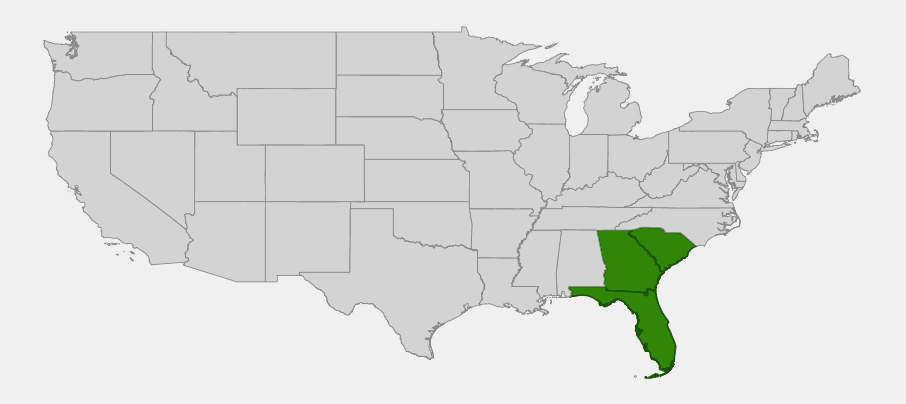
Chapman oak is centered on peninsular Florida, where it is a common and sometimes dominant shrub of scrub and sandhill habitats from the central ridge country south through much of the peninsula. Its range extends north along the Atlantic coastal plain into coastal Georgia, and it reaches its northern limit in a scattering of sandy coastal counties in South Carolina, where it is uncommon and at the edge of its tolerance.
Typical habitat is deep, excessively drained, nutrient-poor sand: Florida scrub, scrubby flatwoods, sandhill and coastal scrub ridges, often on ancient dune systems far from the current coastline. These are fire-dependent communities, and Chapman oak is one of several scrub oaks — alongside myrtle oak and sand live oak — that forms the low, dense oak thicket layer beneath scattered sand pines or longleaf pines.
Florida scrub is itself one of the most imperiled upland habitats in the southeastern U.S., reduced by development on the very sandy ridges it depends on. Chapman oak itself is not rare, but planting or preserving it supports an ecosystem that is.
📋 Regional plant lists featuring Chapman Oak: Georgia, Alabama & Mississippi · North Carolina & South Carolina
Growing & Care Guide
Chapman oak is built for the leanest, driest, sandiest spots in a Southeastern garden — sites where richer soil and regular irrigation are more hindrance than help.
Light
Full sun to light shade suits it best, matching the open canopy of sand pine scrub and sandhill habitat it grows in naturally. In denser shade it thins out and flowers and fruits poorly.
Soil & Water
Deep, sharply drained sand is essential; this species struggles in heavy clay or any soil that holds moisture around the roots. Once established, it needs no supplemental irrigation and is among the most drought tolerant oaks available for Florida landscapes. Avoid fertile garden beds, rich mulch piles against the trunk, or irrigation systems set up for typical ornamentals, all of which work against this plant’s natural preferences.
Planting Tips
Plant from containers in fall through early spring. Choose the sandiest, best-drained spot on the property — a natural dune, berm or sandy ridge is ideal. Water during the first year to establish roots, then taper off; by the second year, established plants should need irrigation only in severe drought.
Pruning & Maintenance
Chapman oak needs very little pruning. If a more tree-like single-trunk form is wanted, select and favor one leader early and remove competing stems while the plant is young; left alone, it will form its natural multi-stemmed thicket. It resprouts readily from the base after fire or hard pruning, so renewal cuts are tolerated well.
Landscape Uses
Chapman oak fills a niche few other plants can handle in Florida and coastal Southeastern landscapes:
- Dry, sandy sites where irrigation is limited or unwanted
- Dune and coastal scrub restoration
- Wildlife hedgerow or thicket screening
- Evergreen backdrop in native scrub-themed gardens
- Erosion control on loose sandy slopes
Wildlife & Ecological Value
Chapman oak is a backbone species of Florida scrub, one of the most biologically distinctive and threatened upland habitats in the eastern United States.
For Birds
The federally threatened Florida scrub-jay depends on the low oak scrub layer — including Chapman oak — for nesting cover, lookout perches and a portion of its acorn-based diet, caching acorns for the lean winter months. Other scrub and sandhill birds use the dense thickets for nesting and predator cover.
For Mammals
Acorns are eaten by white-tailed deer, gray squirrels and a variety of small mammals that live in or move through scrub habitat. The dense, low thickets also provide cover for species like the Florida mouse, a scrub specialist found almost nowhere else.
For Pollinators & Other Wildlife
Though wind-pollinated, the spring catkins provide pollen foraged by native bees early in the season. The gopher tortoise, a keystone species of the scrub whose burrows shelter hundreds of other animals, forages among scrub oaks including Chapman oak for low vegetation.
Ecosystem Role
Chapman oak’s root-sprouting habit after fire is central to how Florida scrub regenerates: rather than being killed outright by the periodic fires this ecosystem depends on, it resprouts from underground root crowns within weeks, maintaining the low, dense oak layer that scrub-jays and other specialists require. Without periodic fire, Chapman oak and its scrub associates can eventually overtop and shade out the open sandy gaps that gopher tortoises and other ground-dwelling scrub species need.
Cultural & Historical Uses
Chapman oak honors Alvan Wentworth Chapman, a physician and botanist who spent much of the 19th century cataloging the flora of the Florida panhandle and authored the first comprehensive flora of the southern United States. The species does not have a significant documented history of use by Indigenous peoples or settlers compared to larger, more productive oaks, likely because of its small size, slow growth and typically shrubby, multi-stemmed form in the wild.
As with other oaks, its acorns contain bitter tannins; Indigenous peoples across the Southeast historically leached acorns from various oak species, including small scrub oaks, through repeated soaking or boiling before grinding them into meal, but this was a demanding, community-level food-processing practice, not something to attempt casually, and raw acorns are not a food source.
Today the species is valued mainly for its ecological role in scrub conservation and, increasingly, in native landscaping for extremely dry, sandy Florida sites where few other woody plants will thrive without irrigation.
Frequently Asked Questions
Is Chapman oak the same as sand live oak?
No, though the two often grow together in Florida scrub and can be confused. Sand live oak (Quercus geminata) has narrower, more strongly rolled-under leaf margins and tends to form a larger single-trunked tree, while Chapman oak has broader, flatter, more variably shaped leaves and more often stays a leaning, multi-stemmed shrub.
Does Chapman oak need fire to survive?
It tolerates fire very well and resprouts vigorously from its roots after burning, but it does not strictly require fire to live — it persists in unburned scrub too. Fire mainly keeps it from overtopping the open sandy patches that other scrub specialists, like the gopher tortoise, depend on.
Can Chapman oak grow in regular garden soil?
It can survive in average well-drained soil, but it performs best, and most true to its wild form, in deep, lean, sandy soil. In rich, moist garden beds it tends to grow lankier and is more prone to root problems.
Are Chapman oak acorns edible?
Not without extensive processing. Like all oak acorns they are high in bitter tannins and must be leached through repeated soaking or boiling before they are safe and palatable to eat; raw acorns and foliage can also be harmful to livestock if consumed in quantity.
How can I tell Chapman oak from myrtle oak?
Myrtle oak (Quercus myrtifolia) has smaller, narrower, more strongly cupped leaves with smooth, unlobed margins, while Chapman oak’s leaves are larger, flatter and often show at least some shallow lobing or wavy edges, especially near the leaf tip.

Looking for a nursery that carries Chapman Oak?
Browse our native plant nursery directory: Florida & Georgia · South Carolina