
Myrtle Oak (Quercus myrtifolia)
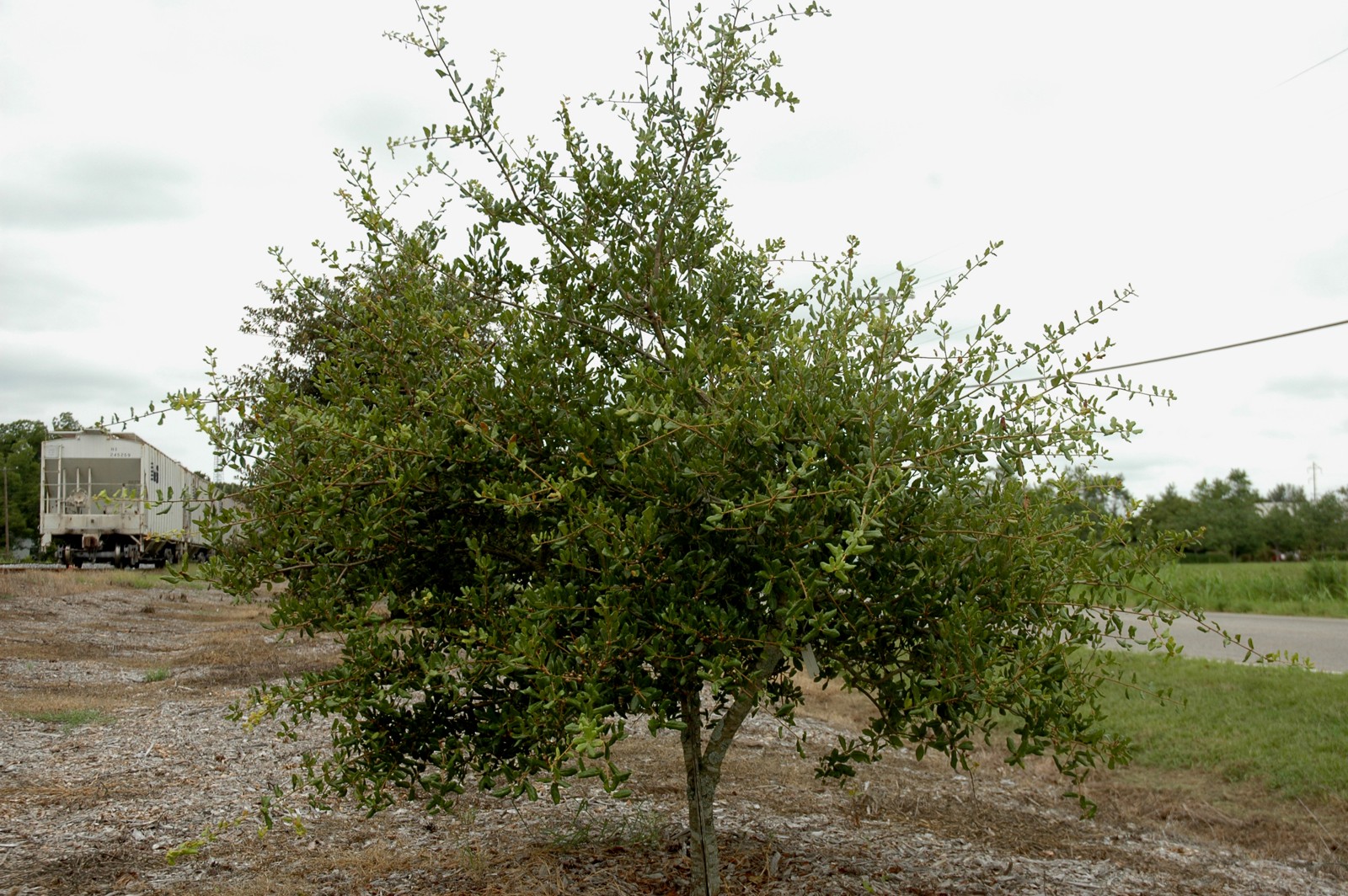
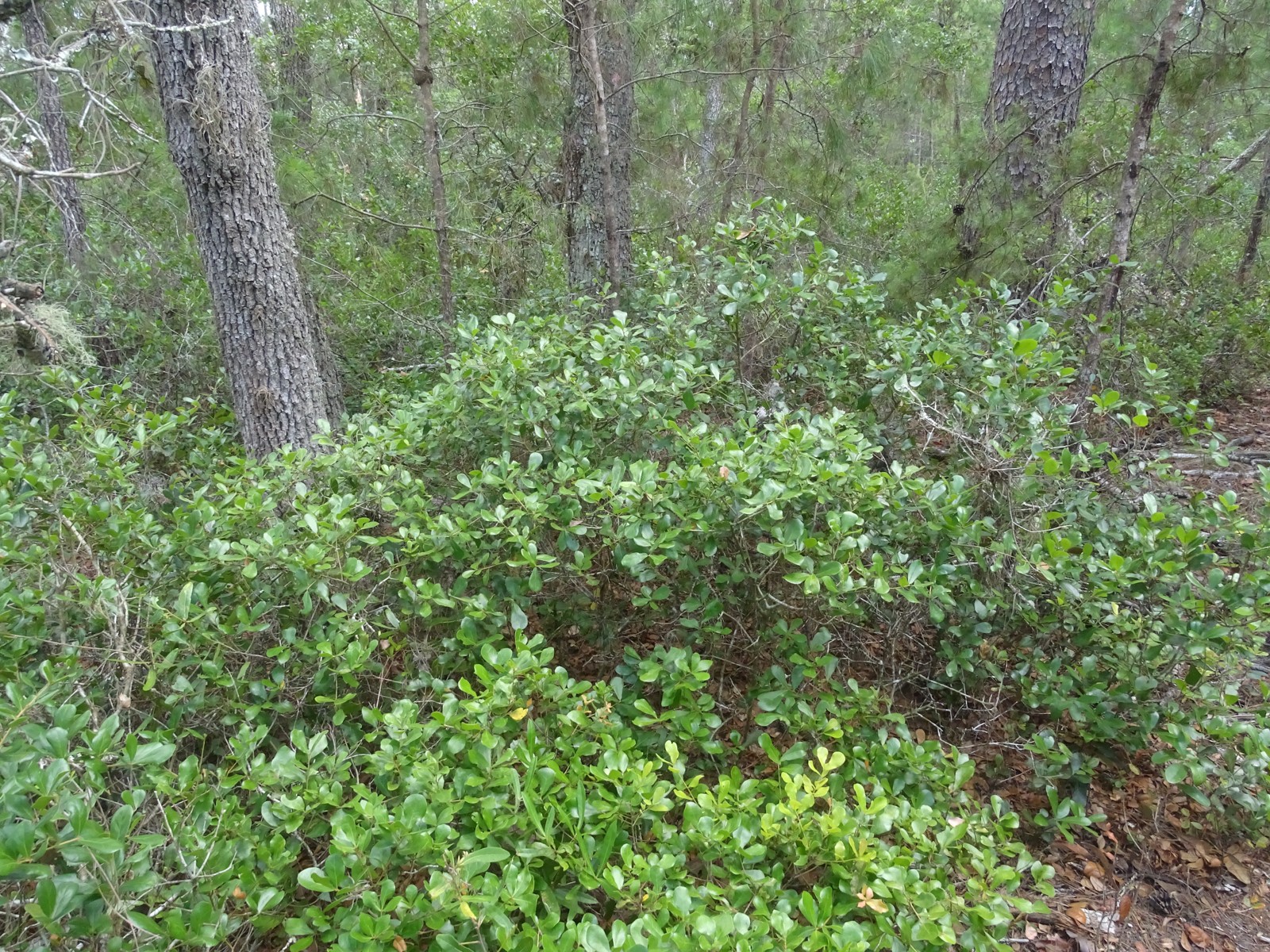
Quercus myrtifolia, the Myrtle Oak, is a small evergreen oak of the Gulf and South Atlantic Coastal Plain, named for its small, leathery, myrtle-like leaves. It is one of the signature shrubs of Florida scrub and sandhill habitat, where it often grows as a dense, rounded thicket alongside sand live oak and Chapman oak, though on better-drained sites it can develop into a small, multi-trunked tree up to 40 feet tall.
Unlike most oaks on this list, myrtle oak is evergreen, holding its small, glossy leaves year-round and giving it real value as a structural, screening plant rather than just a seasonal accent. The leaves are notably variable in shape, from oval to almost diamond-shaped, with margins that curl slightly under, a classic adaptation to the hot, dry, nutrient-poor sand it calls home.
For gardeners weighing screening options, our roundup of shade and screening trees for Florida is a useful companion read. Myrtle oak is an underused native shrub for coastal and sandhill gardens from Mississippi to South Carolina. It asks for almost nothing once established, tolerates salt spray and drought with ease, and provides the kind of low-maintenance, wildlife-friendly screening that is hard to find in an evergreen native shrub of its size.
Identification
Myrtle oak is usually a dense, multi-stemmed evergreen shrub 4 to 10 feet tall in open scrub, though it can grow into a small tree 15 to 40 feet tall on richer or more sheltered sites. The crown is rounded and twiggy, often forming impenetrable thickets in Florida scrub habitat.
Bark & Stems
Young twigs are reddish brown and finely hairy, aging to smooth gray. The bark of older stems is gray and relatively smooth, developing light scaling with age rather than deep furrows, consistent with the plant’s shrubby, multi-trunked growth habit.
Leaves
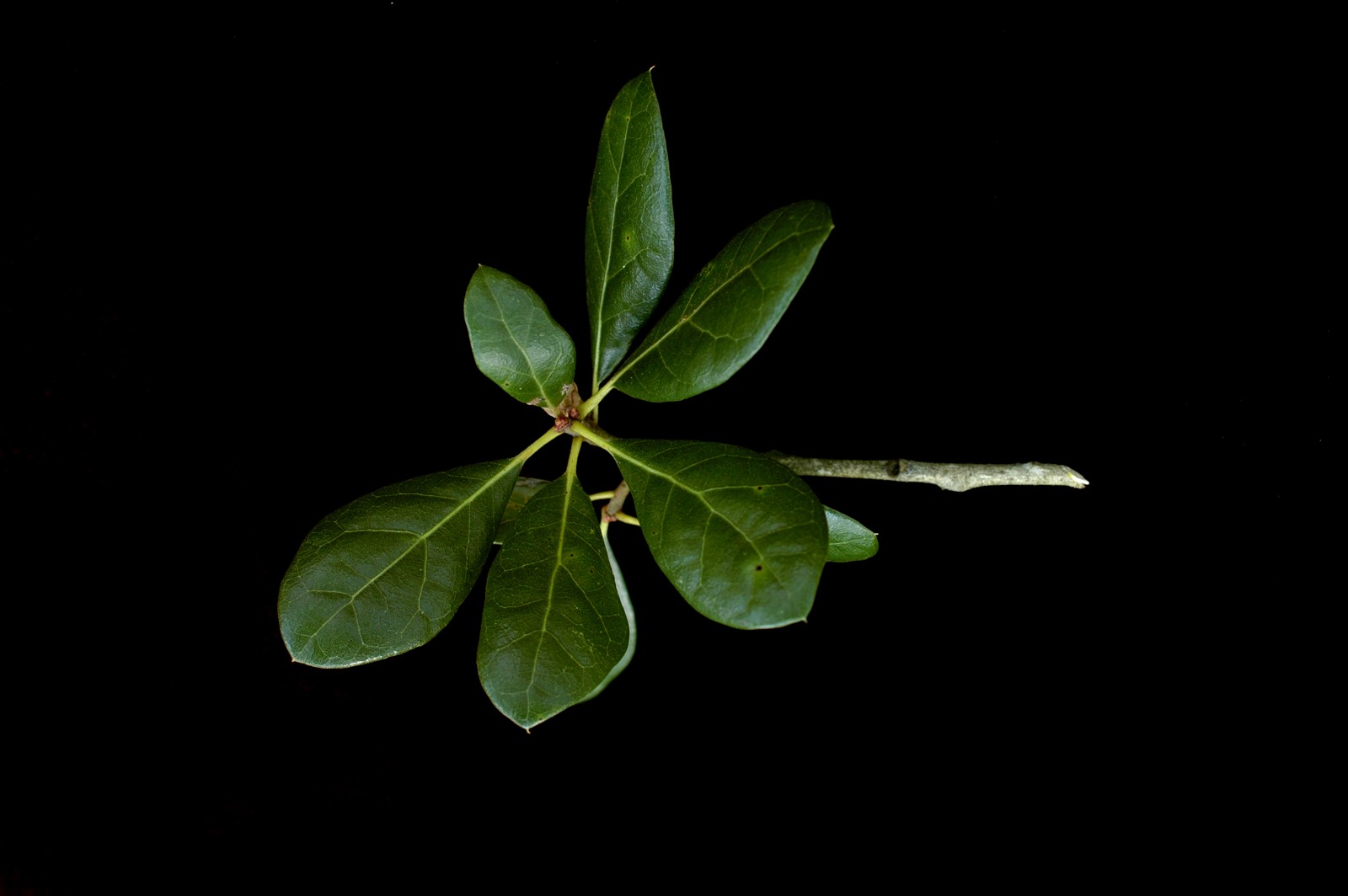
Leaves are small, typically 1 to 2 inches long, leathery, and evergreen, with an obovate to elliptic shape that is often widest near the tip. The margins are usually entire (untoothed) and roll slightly under, an adaptation that reduces water loss in sun-baked scrub habitat. The upper surface is glossy dark green, and the undersides are paler with small hairs, especially when young. Leaf shape is quite variable, and myrtle oak is easily confused with its close relative sand live oak (Quercus geminata), whose leaves are narrower, more elliptic, and more consistently rolled under at the edges.
Flowers & Acorns
Small, inconspicuous green male catkins appear in April and May alongside new growth, pollinated by wind in typical oak fashion. As a member of the red oak group, myrtle oak’s acorns take about 18 months to mature, ripening in the fall of their second year. The acorns are small, about half an inch long, striped, and seated in a thin, shallow cap.
Quick Facts
| Scientific Name | Quercus myrtifolia |
| Family | Fagaceae (Beech/Oak) |
| Plant Type | Evergreen shrub or small tree |
| Mature Height | 4–10 ft as a shrub (to 40 ft as a tree) |
| Mature Spread | 6–12 ft |
| Growth Rate | Slow to moderate |
| Sun Exposure | Full Sun to Part Shade |
| Water Needs | Low; very drought tolerant once established |
| Soil Type | Dry, sandy, well-drained soil |
| Soil pH | Acidic |
| Bloom Time | April – May |
| Flower Color | Green (inconspicuous catkins) |
| Fall Color | None (evergreen) |
| Fruit | Small striped acorns, about 1/2 in, maturing over two seasons |
| Deer Resistant | Moderate |
| USDA Hardiness Zones | 8–10 |
Native Range
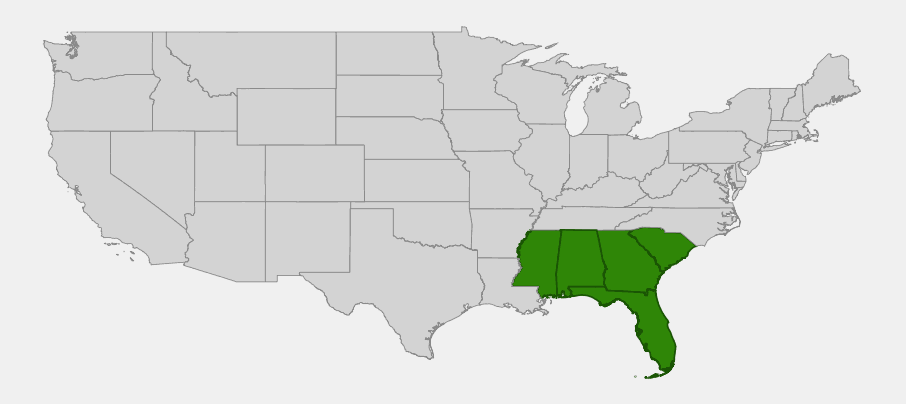
Myrtle oak is native to the Gulf and South Atlantic Coastal Plain from Mississippi through Alabama, Florida, Georgia, and South Carolina. It reaches its greatest abundance in Florida, where it is a defining shrub of scrub and sandhill communities across the peninsula and panhandle, and becomes progressively less common toward the edges of its range in the other states.
Typical habitat is dry, well-drained, deep sand: Florida scrub, sand pine scrub, oak scrub, and coastal sandhills, often alongside sand live oak, Chapman oak, and sand pine. These communities are naturally fire-adapted, and myrtle oak resprouts vigorously from its root crown after fire, which helps it dominate scrub understories that burn periodically.
Because Florida scrub habitat has been heavily converted to development and agriculture, myrtle oak populations have declined in some areas even though the species itself remains common overall and is not considered at risk. Protecting remaining scrub habitat, much of which also supports rare and endemic wildlife like the Florida scrub-jay, benefits myrtle oak along with many other specialized scrub plants and animals.
📋 Regional plant lists featuring Myrtle Oak: Georgia, Alabama & Mississippi · North Carolina & South Carolina
Growing & Care Guide
Myrtle oak is remarkably easy to grow on the right soil and is a workhorse plant for coastal and sandhill gardens that need tough, evergreen structure.
Light
Plant myrtle oak in full sun to light shade. It grows densest and most compact in full sun, matching its native open scrub habitat, while some light shade from pines produces a slightly looser, more open form.
Soil & Water
Give myrtle oak dry, sandy, well-drained, acidic soil; it does not perform well in heavy clay or consistently moist ground. It is exceptionally drought tolerant once established and also handles salt spray well, making it useful in coastal landscapes. Water occasionally during the first year, then expect the plant to need little to no supplemental irrigation.
Planting Tips
Plant container-grown myrtle oak in fall or late winter to let roots establish before summer heat. Space plants 6 to 10 feet apart if growing a hedge or screen, since mature shrubs spread to form dense thickets. Avoid rich, amended planting soil, which can encourage weaker growth than this lean-soil native is adapted to produce.
Pruning & Maintenance
Myrtle oak tolerates pruning well and can be shaped into a hedge or left to grow into its natural rounded form. Prune after the main spring growth flush if a more formal shape is wanted. In fire-adapted landscapes or after storm damage, myrtle oak resprouts readily from its root crown, so hard pruning or even cutting to the ground is generally well tolerated.
Propagation
Propagation is from acorns, collected in fall of their second year and given a period of cold, moist stratification before spring sowing, following the typical pattern for red oak group acorns. Myrtle oak can also sucker and spread somewhat from its root system, and root sprouts can occasionally be used to start new plants in a pinch, though seed propagation is more reliable for establishing a strong new plant.
Landscape Uses
- Evergreen screening and hedges in coastal and sandhill landscapes
- Scrub and sandhill restoration alongside sand live oak and sand pine
- Wildlife thickets providing year-round cover for birds and small mammals
- Coastal and beachside gardens, thanks to good salt and drought tolerance
- Mixed native shrub borders with yaupon holly and American sweet olive
Wildlife & Ecological Value
Myrtle oak is one of the backbone shrubs of Florida scrub ecosystems, which support an unusually high number of specialized and endemic wildlife species.
For Pollinators
Like other oaks, myrtle oak is wind-pollinated rather than insect-pollinated, but it is an important host plant for numerous moth and butterfly caterpillars, including several species specialized on scrub oaks, which in turn support the broader insect community of scrub habitat.
For Birds
Acorns are an important food source for scrub-jays, including the threatened Florida scrub-jay, as well as towhees, quail, and woodpeckers. The dense evergreen thickets provide year-round nesting cover and protection from predators, a scarce resource in open sandhill and scrub habitat.
For Mammals
Acorns are eaten by squirrels, foxes, and other mammals, while the thick evergreen cover shelters rabbits and other small wildlife. Gopher tortoises, a keystone species of sandhill habitat, often share their range with myrtle oak thickets.
Ecosystem Role
As a dominant, fire-resprouting evergreen shrub, myrtle oak helps define the structure of Florida scrub and sandhill plant communities, habitats that are globally rare and support an outsized share of threatened and endemic species, making its conservation ecologically significant well beyond the plant itself.
Cultural & Historical Uses
Myrtle oak has little documented history of direct human use; its small stature and shrubby growth made it unsuitable for timber, unlike larger Coastal Plain oaks. Within Florida scrub habitat, it was and remains an important component of the broader “scrub oak” vegetation that early naturalists and botanists used to characterize and map the unique sand-pine scrub ecosystem.
Its acorns, like those of other red oaks, are higher in bitter tannins than white oak acorns and would have required processing before eating, so they were likely only an occasional food source compared with more easily prepared white oak mast.
Today myrtle oak’s significance is primarily ecological, as a key structural plant in Florida scrub conservation, and increasingly horticultural, as gardeners in the Deep South rediscover it as a tough, attractive, and genuinely useful native evergreen shrub, consistent with the broader benefits of planting native trees and shrubs for regional ecosystems.
Frequently Asked Questions
Is myrtle oak a shrub or a tree?
Both, depending on the site. In open scrub it usually grows as a dense, multi-stemmed shrub 4 to 10 feet tall, but on better soil or with more shelter it can develop into a small tree up to 40 feet tall.
How do you tell myrtle oak apart from sand live oak?
Myrtle oak leaves are generally more oval to obovate and widest near the tip, while sand live oak (Quercus geminata) leaves are narrower, more consistently elliptic, and more strongly rolled under at the edges. Both are evergreen scrub oaks and often grow side by side, so checking several leaves helps.
Does myrtle oak need fire to survive?
It is well adapted to fire and resprouts vigorously from its root crown after burning, which helps it dominate fire-maintained scrub, but it does not require fire to survive as an individual plant in a garden setting.
Is myrtle oak salt tolerant?
Yes, it handles salt spray reasonably well, making it a useful evergreen choice for coastal landscapes within its native range.
Can myrtle oak be used as a hedge?
Yes, its dense, evergreen, twiggy growth responds well to pruning and makes an effective informal or clipped hedge or screening planting.

Looking for a nursery that carries Myrtle Oak?
Browse our native plant nursery directory: Florida & Georgia · Alabama · Mississippi · South Carolina

