Sand Live Oak (Quercus geminata)
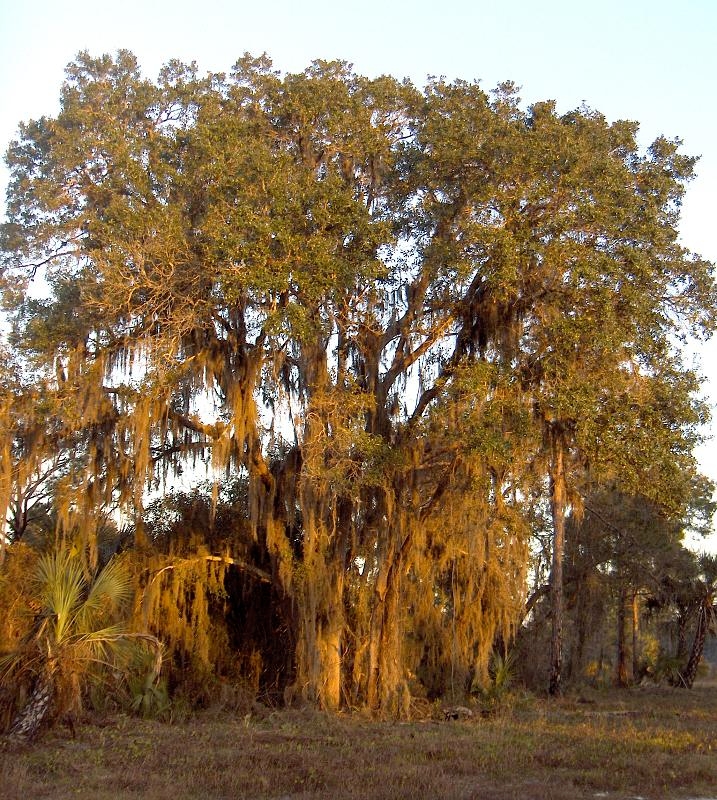
Quercus geminata, the Sand Live Oak, is the tough, scrubby evergreen oak of the Deep South’s sand ridges and coastal dunes — a close relative of southern live oak (Quercus virginiana) built for the driest, poorest ground the Southeast has to offer. Where southern live oak spreads its limbs over moist lawns and riverbanks, Sand Live Oak holds the white sand hills and scrub flatwoods of Florida and the lower coastal plain, often growing as a dense, thicket-forming shrub rather than a single-trunked shade tree.
The two live oaks hybridize where their ranges overlap, and their field marks can blur, but Sand Live Oak is genetically and ecologically distinct. Its smaller, narrower, more tightly rolled leaves and furrier leaf undersides are adaptations to the intense heat, reflected light, and drought of open sand scrub, one of the harshest and most distinctive plant communities in the eastern United States.
Sand Live Oak is also an ecological keystone of Florida scrub, the habitat that shelters the Florida scrub-jay, found nowhere else on Earth. Planting it in appropriate yards and preserves does real conservation work, not just landscaping.
Identification
Sand Live Oak is typically a small to medium evergreen tree, 20 to 40 feet tall, though in dry scrub and after repeated fire it often persists as a dense, multi-stemmed shrub or low thicket only a few feet high. Where it does reach tree form, it has a rounded, often irregular crown and dark, thick, furrowed bark similar to southern live oak but generally rougher.
Bark & Stems
Bark is dark gray-brown to nearly black, thick and deeply furrowed into rough ridges on older trunks. Young twigs are slender and finely hairy. In scrub habitat, plants frequently resprout from the base after fire, producing a shrubby, multi-trunked form rather than a single clean trunk.
Leaves
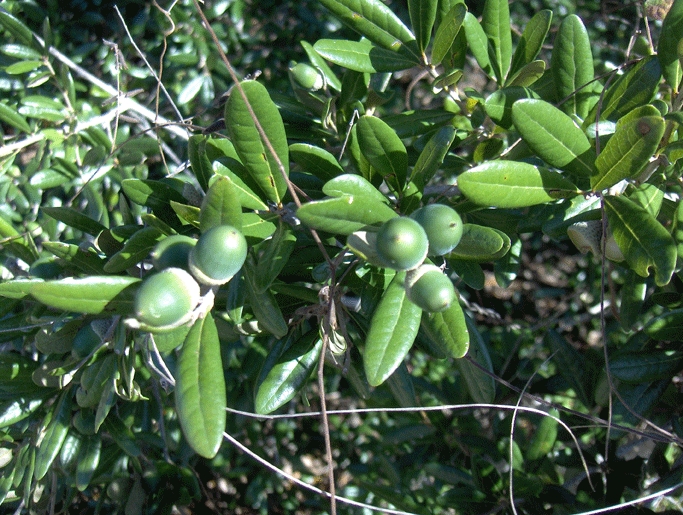
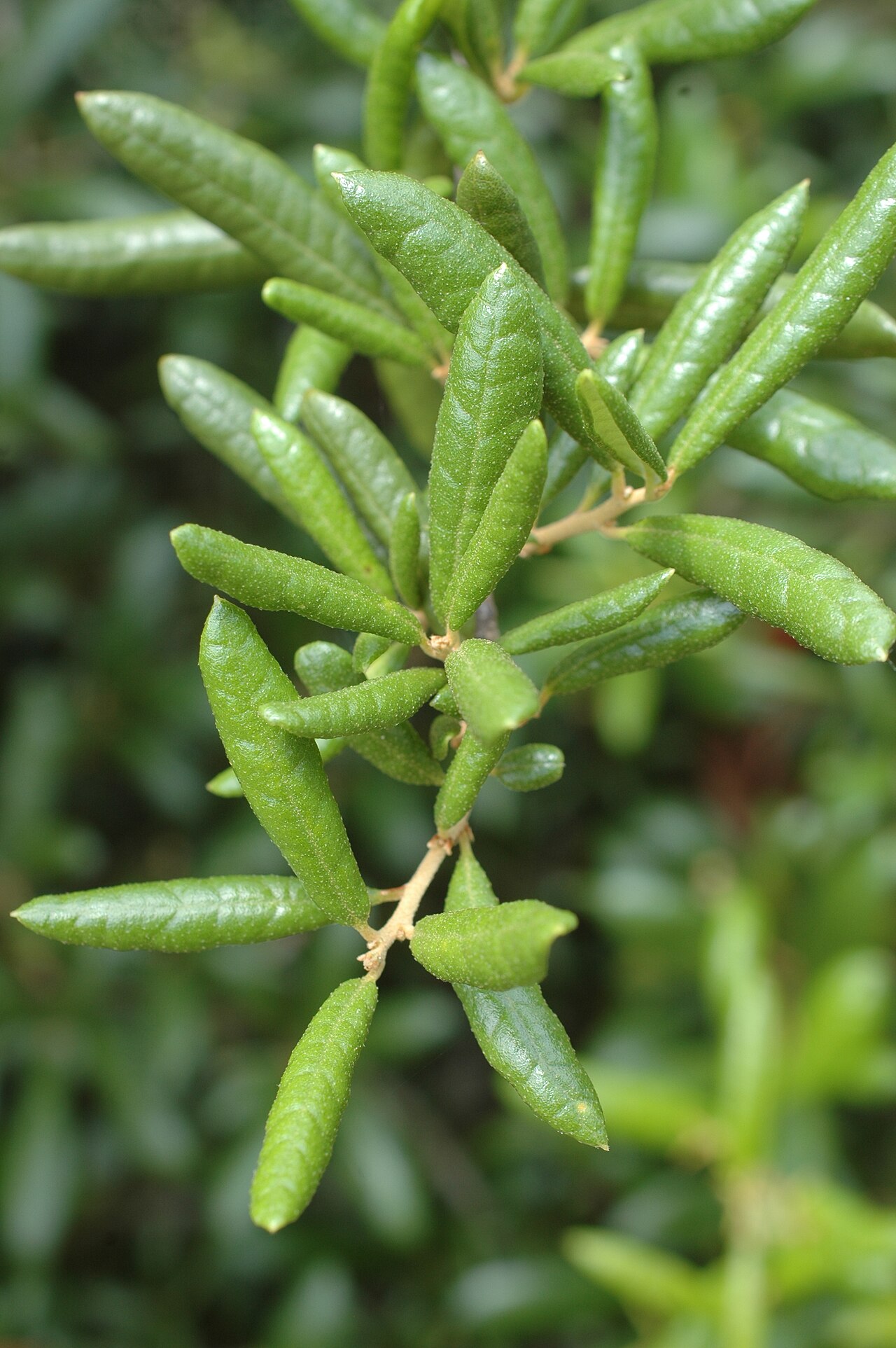
Leaves are evergreen, thick, and leathery, 1 to 4 inches long and noticeably narrow, with strongly revolute (rolled-under) margins that give them an almost needle-like, boat-shaped profile — the single best field mark separating this species from the flatter-leaved southern live oak. The upper surface is glossy dark green; the underside is pale gray-green and densely hairy (tomentose) to the touch. Leaves are coarsely veined and often clustered toward branch tips.
Flowers
Male flowers hang in slim, pale green-yellow catkins in March and April, appearing with new growth. Female flowers are tiny, reddish, and inconspicuous in the leaf axils. Like all oaks, the species is wind-pollinated.
Fruit & Seeds
Acorns are small, ½ to 1 inch, oblong to ovoid, and — true to the species name geminata, “paired” — are commonly borne two at a time on a shared stalk. They mature in a single season, ripening from green to brown in fall, and drop readily to feed the scrub’s wildlife.
Quick Facts
| Scientific Name | Quercus geminata |
| Family | Fagaceae (Beech) |
| Plant Type | Evergreen Tree or Large Shrub |
| Mature Height | 20–40 ft (shrubby in open scrub) |
| Mature Spread | 15–35 ft |
| Growth Rate | Slow |
| Sun Exposure | Full Sun |
| Water Needs | Low; excellent drought tolerance |
| Soil Type | Dry, well-drained sand |
| Soil pH | Acidic |
| Bloom Time | March – April |
| Flower Color | Pale greenish-yellow (catkins) |
| Fall Color | None; evergreen |
| Fruit | Small acorns, usually paired |
| Deer Resistant | No (foliage and acorns browsed) |
| USDA Hardiness Zones | 8a – 10b |
Native Range
Sand Live Oak follows the sandy coastal plain of the Southeast, from southeastern Virginia and coastal North and South Carolina down through Georgia and across all of peninsular and panhandle Florida, then west along the Gulf into Alabama, Mississippi, and Louisiana. It is most abundant and most characteristic in Florida, where it is a defining plant of scrub, sandhill, and coastal dune communities.
It needs excellent drainage and tolerates — even prefers — nutrient-poor, acidic sand that would stress most other trees, growing on ancient dune ridges, barrier islands, and the deep sand scrub of the Florida peninsula. It is markedly more drought- and heat-tolerant than southern live oak, and it is this preference for the driest, sandiest ground that typically separates the two species where their ranges meet, even as they continue to hybridize.
Florida scrub itself is a globally rare, fire-dependent habitat largely restricted to ancient sand dunes, and Sand Live Oak is one of its dominant woody plants alongside scrub oaks, saw palmetto, and sand pine. This habitat also supports the Florida scrub-jay, a species found only in Florida scrub and listed as federally threatened — one more reason Sand Live Oak carries real conservation weight beyond its usefulness as a landscape tree.
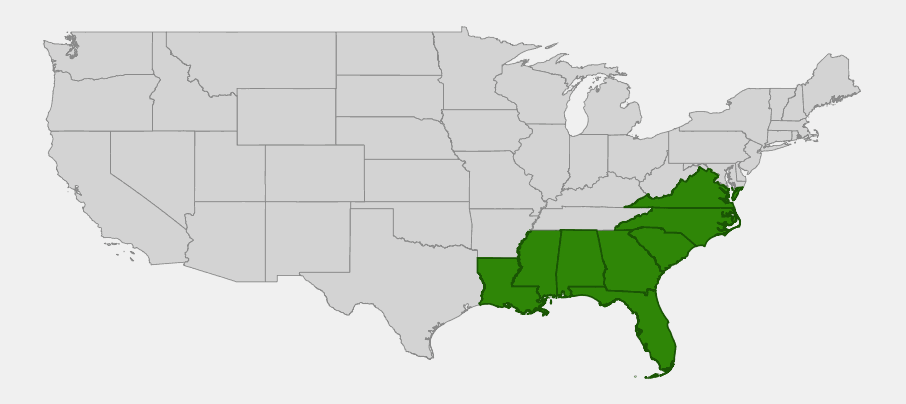
📋 Regional plant lists featuring Sand Live Oak: Maryland, Virginia & West Virginia · North Carolina & South Carolina · Georgia, Alabama & Mississippi · Arkansas, Louisiana, Eastern Oklahoma & Eastern Texas. Florida, where this species is most common, is not yet covered by a regional list on this site.
Growing & Care Guide
Sand Live Oak rewards gardeners with poor, sandy, droughty soil — conditions that frustrate most ornamental trees. It is slower-growing than southern live oak and less tolerant of heavy or wet soils, so the main task is matching it to the right site rather than coddling it.
Light
Full sun is essential. This is an open-scrub species adapted to intense sun and reflected heat off bare sand, and it will not thrive or hold its characteristic form in shade.
Soil & Water
Give it dry, acidic, fast-draining sand — the sandier and leaner, the better. It is markedly more drought tolerant than southern live oak and should never be planted in a regularly irrigated lawn or a spot that holds water after rain; wet feet and heavy clay soils are its main vulnerabilities. Established plants need no supplemental irrigation outside of extreme, prolonged drought.
Planting Tips
Choose the driest, sandiest spot on the property — dune, ridge, or berm — and plant small container stock in fall or winter. Because the species is slow-growing and naturally shrubby, don’t expect the quick shade of a fast-growing tree; it rewards patience with a long-lived, wind- and salt-tolerant specimen well suited to coastal and scrub-adjacent properties.
Pruning & Maintenance
Minimal pruning is needed. Remove dead wood in winter and, as with other live oaks, avoid unnecessary wounding during the warm growing season in areas where oak wilt is a regional concern. Left unpruned, Sand Live Oak will often naturally thicket from the base, especially after fire or dieback — a trait to work with rather than fight if a dense screen or scrub restoration is the goal.
Landscape Uses
Sand Live Oak fills a specific but valuable niche:
- Coastal and dune landscaping where salt spray and sandy soil rule out most trees
- Scrub and sandhill habitat restoration, including Florida scrub-jay habitat projects
- Dense evergreen screening or thicket on dry sites
- Drought-tolerant specimen tree in low-water Florida and Gulf Coast landscapes
- Erosion control on sand ridges and dunes
Wildlife & Ecological Value
Sand Live Oak is a foundation species of Florida scrub and southeastern coastal sandhill communities, supporting wildlife found in few other habitats.
For Birds
Acorns and insects associated with the tree are an important food source for the federally threatened Florida scrub-jay, a species endemic to Florida scrub and found nowhere else in the world. Other birds, including towhees, woodpeckers, and wintering songbirds, also use the canopy for food and cover.
For Mammals
White-tailed deer, gray squirrels, and other small mammals feed heavily on the acorns, which are an important fall and winter food source in nutrient-poor scrub habitat where other mast crops are scarce.
For Pollinators
As with other oaks, pollination is by wind rather than insects, but the species hosts the larvae of numerous moths and butterflies, contributing to the insect base that scrub birds and other wildlife depend on.
Ecosystem Role
Sand Live Oak is one of the defining woody plants of Florida scrub, a fire-adapted, globally imperiled ecosystem. It resprouts vigorously after the periodic fires that maintain open scrub structure, helping the habitat regenerate, and its dense canopy and root systems stabilize loose dune and sandhill soils that would otherwise be highly erodible.
Cultural & Historical Uses
Like other live oaks, Sand Live Oak’s dense, heavy wood was historically used by coastal communities for shipbuilding timbers, tool handles, and fuel, valued for its strength and resistance to rot. Its acorns, like those of other oaks, were gathered and processed by Indigenous peoples of the southeastern coastal plain as a food source after leaching out bitter tannins.
Today the species is increasingly recognized less for utilitarian uses and more for its role in Florida scrub conservation, where it is a focal species in restoration projects aimed at recovering habitat for the Florida scrub-jay and other scrub-dependent wildlife.
Frequently Asked Questions
How is Sand Live Oak different from southern live oak?
Sand Live Oak has narrower, more tightly rolled (revolute) leaves with hairy undersides, grows more slowly, and favors dry, acidic sand rather than moist soils. It is often shrubby, while southern live oak more reliably becomes a large single-trunked shade tree. The two hybridize where their ranges overlap.
Will Sand Live Oak grow in regular garden soil?
It can, but it performs best and is most drought tolerant in sandy, well-drained, acidic soil. Heavy clay or consistently wet soil is the main condition to avoid.
Is Sand Live Oak native to all of Florida?
It is native throughout most of peninsular and panhandle Florida wherever sandy, well-drained sites occur, particularly scrub and sandhill habitats, though it is not evenly distributed across every soil type in the state.
Does Sand Live Oak support any rare wildlife?
Yes. It is a key plant in Florida scrub habitat, home to the federally threatened Florida scrub-jay, which occurs only in that habitat type.
How fast does Sand Live Oak grow?
Slowly. It is a long-lived tree adapted to harsh, low-nutrient sand, and gardeners should expect gradual growth rather than a quick shade canopy.

Looking for a nursery that carries Sand Live Oak?
Browse our native plant nursery directory: Virginia & South Carolina · North Carolina · Georgia & Florida · Alabama · Mississippi & Louisiana