Gopher Apple (Licania michauxii)
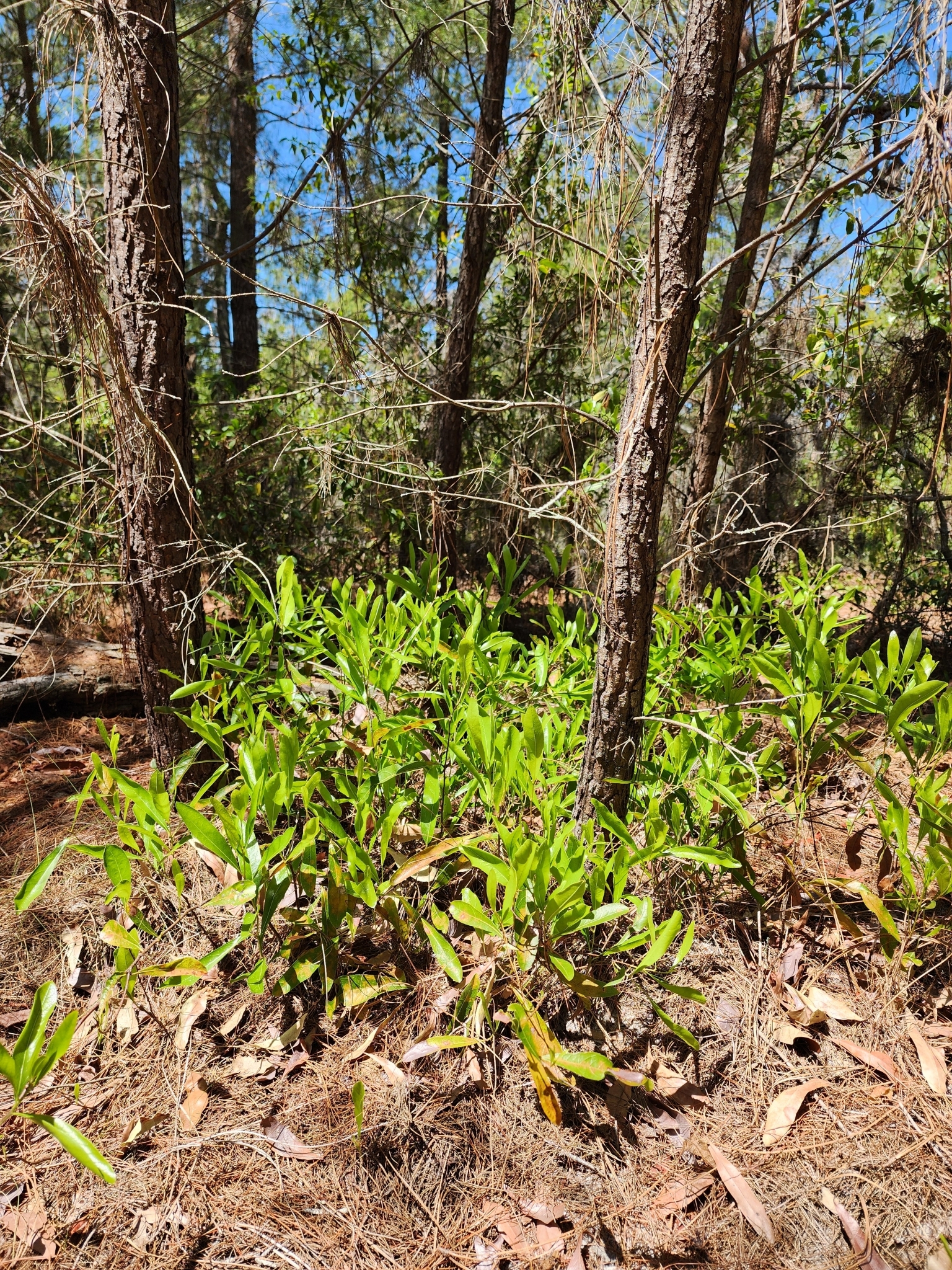
Licania michauxii (also classified as Geobalanus oblongifolius), commonly called Gopher Apple, is a low, mat-forming native groundcover of the dry, sandy pinelands and scrub of the southeastern Coastal Plain. Rarely more than knee-high, it spreads by underground stems to form dense, durable colonies that can cover large areas of open sandy ground, making it one of the toughest and most useful native groundcovers for well-drained, sun-baked sites. Its common name comes from its role as a favorite food of the gopher tortoise, which readily eats both the leaves and the fleshy, apple-scented fruit.
Despite its small stature, gopher apple is actually a woody shrub rather than an herbaceous plant — what appears above ground is only the tips of a much larger system of horizontal underground stems (rhizomes) that can spread for many feet. This growth habit lets it survive the periodic fires that sweep through its native sandhill and scrub habitats, resprouting quickly from protected underground buds after a burn clears away competing vegetation.
For gardeners along the Gulf and South Atlantic coastal plain, gopher apple is an excellent low-maintenance groundcover for hot, dry, sandy spots where turf grass struggles — along driveways, in open sun gardens, or as a soil stabilizer on sandy slopes. It asks for almost nothing once established and quietly supports a wide range of regional wildlife, especially the gopher tortoise, a keystone species whose burrows shelter hundreds of other animals.
Identification
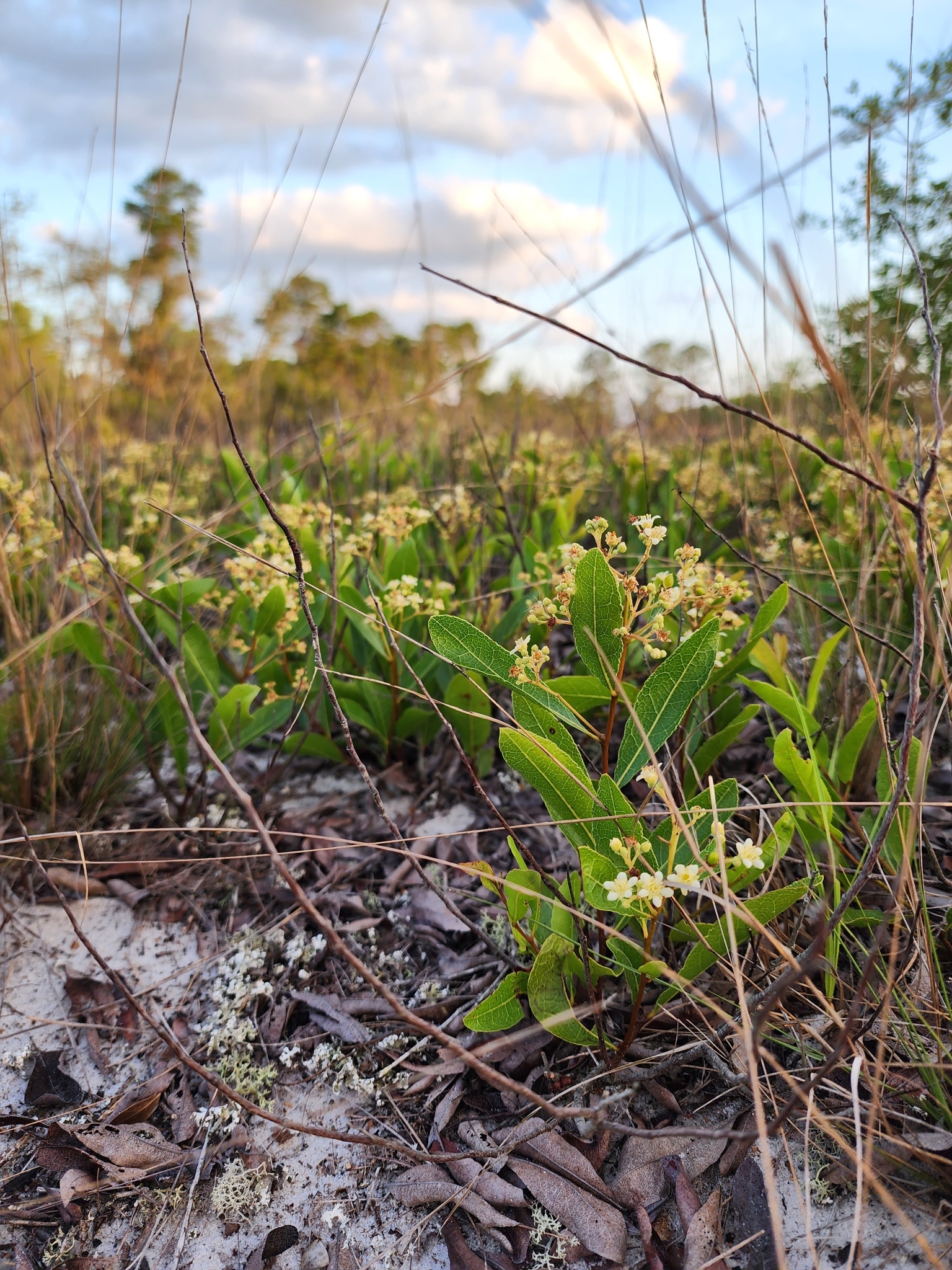
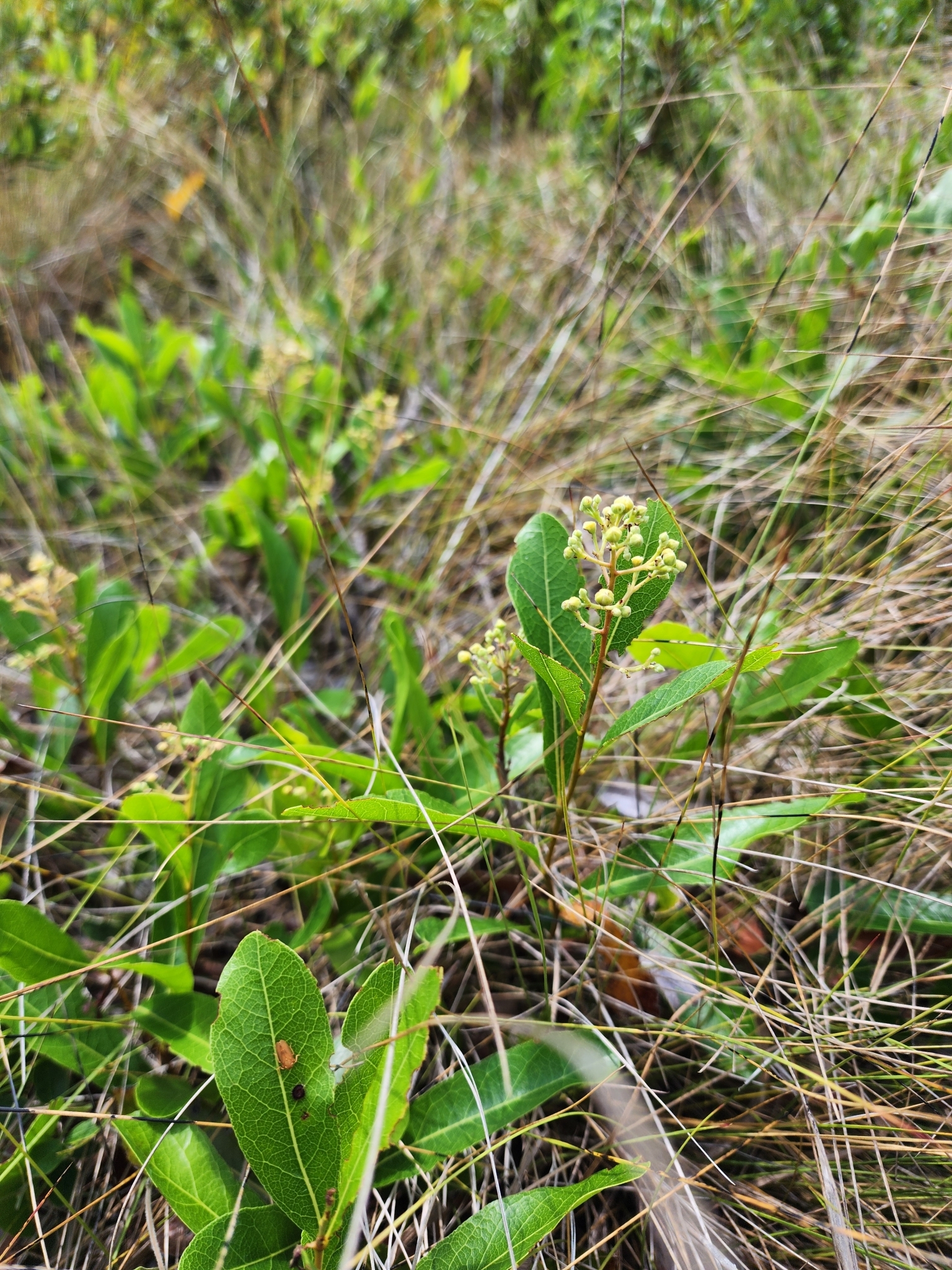
Gopher apple is best recognized by its low, spreading, shrubby growth form, its stiff oblong leaves, and its small clusters of cream to white flowers held just above the foliage.
Stems
Visible stems rarely exceed 6 to 12 inches tall, rising from long, woody, mostly underground rhizomes that can extend many feet in sandy soil. Because of this spreading habit, a single plant can form a colony many yards across, and what looks like many individual plants in a patch is often one connected clone.
Leaves
The leaves are simple, alternate, oblong to elliptic, 2 to 4 inches long, leathery and stiff, with a smooth margin. They are glossy dark green above and often paler and finely hairy beneath, an adaptation that helps the plant conserve moisture in its dry, sun-exposed, sandy habitat.
Flowers
Small, fragrant, cream to white flowers are borne in short, branched clusters at the stem tips, mainly in spring and continuing sporadically into summer. The flowers are not showy from a distance but are a dependable, steady nectar source for small bees and other insects.
Fruit & Seeds
The fruit is an oval, fleshy drupe about 1 to 1.5 inches long, green ripening to tan or pinkish, with a mild apple-like fragrance that gives the plant its common name. Each fruit holds a single large seed. Fruits ripen mainly in summer and are a favorite food of the gopher tortoise, which also disperses the seeds.
Quick Facts
| Scientific Name | Licania michauxii (syn. Geobalanus oblongifolius) |
| Family | Chrysobalanaceae (Coco plum) |
| Plant Type | Low spreading evergreen shrub / groundcover |
| Mature Height | 6–12 in |
| Mature Spread | Spreads indefinitely by rhizomes; a single clone can cover a large patch |
| Growth Rate | Slow to moderate |
| Sun Exposure | Full Sun to Part Sun |
| Water Needs | Low; excellent drought tolerance |
| Soil Type | Dry, sandy, well-drained |
| Soil pH | Acidic to neutral |
| Bloom Time | Spring to Summer |
| Flower Color | Cream to white |
| Fall Color | None (evergreen) |
| Fruit | Tan to pinkish, apple-scented drupe, ~1–1.5 in |
| Deer Resistant | Moderate |
| USDA Hardiness Zones | 8–11 |
Native Range
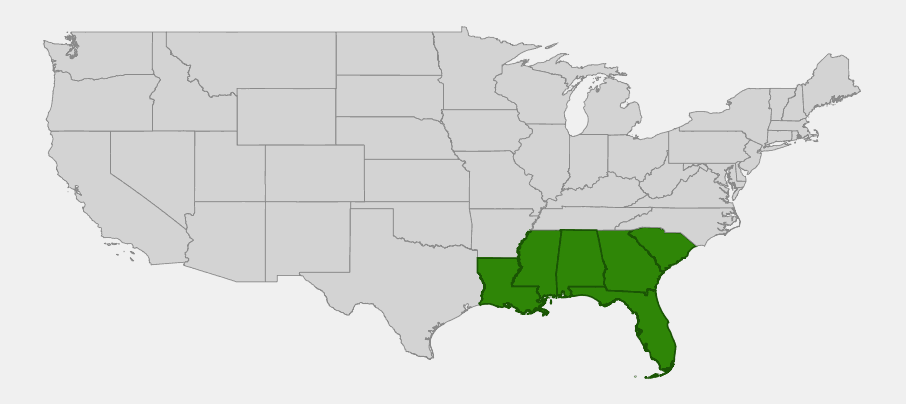
Gopher apple is native to the Coastal Plain of the southeastern United States, centered on Florida — where it grows throughout the peninsula and panhandle — and extending north and west along the coast into southern Georgia, South Carolina, Alabama, Mississippi and the southeastern corner of Louisiana.
Within that range it is a characteristic plant of dry sandhills, scrub, pine flatwoods and the open understory beneath longleaf and other southern pines, usually in deep, well-drained, nutrient-poor sandy soils. It is a plant of naturally open, fire-maintained habitats rather than shaded forest, and it is often one of the more conspicuous groundcovers on recently burned sandhill sites.
Gopher apple is strongly tied to fire ecology: its spreading underground rhizome system lets it survive and quickly resprout after the low-intensity fires that historically burned through sandhill and scrub habitats every few years, clearing out woody competitors and keeping the ground layer open.
📋 Regional plant lists featuring Gopher Apple: Georgia, Alabama & Mississippi · North Carolina & South Carolina · Arkansas, Louisiana, Eastern Oklahoma & Eastern Texas
Growing & Care Guide
Gopher apple thrives on neglect in the right spot: give it sun and sharp drainage and it will fill in steadily with almost no care, making it one of the lowest-maintenance native groundcovers for sandy southeastern gardens.
Light
Full sun produces the densest, most compact growth and the best flowering and fruiting, though plants also tolerate light to part shade, especially under an open pine canopy, where they grow a bit taller and looser.
Soil & Water
Deep, dry, well-drained sandy soil is ideal; gopher apple is poorly suited to heavy clay or any soil that stays wet, which can rot the rhizomes. Once established, it is highly drought tolerant and needs no irrigation beyond natural rainfall in most of its range. Avoid rich, heavily amended garden soil, which encourages weaker, floppier growth than the plant shows in its native sandhills.
Planting Tips
Set out container-grown plants in spring, spacing them 2 to 3 feet apart to allow the spreading rhizomes to knit together into a solid groundcover over a few seasons. Because so much of the plant is underground, transplanting established colonies is difficult; it is far easier to start new plantings from nursery-propagated container stock than to move existing patches.
Pruning & Maintenance
Essentially none is needed. Gopher apple can be mowed high once or twice a year to keep it neat along a path or driveway edge, but this is optional — left alone, it stays low and self-contained. It tolerates occasional controlled burns well, resprouting quickly from its rhizomes.
Propagation
Propagate from fresh seed (germination can be slow and irregular) or, more reliably, by division of rooted rhizome sections taken from an established colony in spring.
Landscape Uses
- Groundcover for hot, dry, sandy sun gardens where turf struggles
- Erosion control on sandy slopes and dunes within its native range
- Wildlife and tortoise-friendly gardens, especially near existing gopher tortoise habitat
- Low-maintenance foundation or border planting in coastal plain landscapes
- Fire-adapted native plant gardens that mimic sandhill or scrub plant communities
Wildlife & Ecological Value
Gopher apple is one of the signature food plants of the sandhill and scrub community, named for its relationship with one particular, ecologically important reptile.
For Pollinators
The small, nectar-rich flowers attract a variety of native bees and other small pollinating insects through spring and summer, providing a steady, low-key nectar source in open sandy habitats that can otherwise be sparse in blooms.
For Wildlife
The gopher tortoise, a keystone species of the southeastern Coastal Plain, is the plant’s best-known consumer, eating both the leaves and the fragrant fruit and helping disperse the seeds. The fruit is also eaten by other wildlife, including various mammals, and the dense low growth offers cover for small animals moving through open sandy habitat.
Ecosystem Role
As a common, fire-tolerant groundcover of sandhill and scrub habitat, gopher apple helps stabilize loose sandy soils and forms part of the structural ground layer that these ecosystems depend on. Its persistence through fire, and its quick resprouting afterward, make it an indicator of healthy, fire-maintained sandhill and flatwoods communities, habitats that also support the federally threatened gopher tortoise and the many other species that rely on its burrows.
Cultural & Historical Uses
Gopher apple’s common name and much of its local lore come directly from its long association with the gopher tortoise in Florida and the broader Gulf Coastal Plain, where early settlers and naturalists noted the tortoise’s fondness for the apple-scented fruit. The plant has long been recognized by Florida naturalists and land managers as a reliable indicator of sandhill and scrub habitat, and it remains a useful marker species for identifying intact, fire-maintained plant communities.
The ripe fruit has historically been reported as edible to people in small quantities, with a mild, slightly mealy flavor, though it has never been a significant food crop and is mostly of historical or incidental interest rather than present-day culinary use. Because fruit production and flavor can vary and foraging always carries a risk of misidentification, the fruit is best left for the gopher tortoises and other wildlife that depend on it.
In modern landscaping, gopher apple’s main value is as a tough, authentic native groundcover for Florida-friendly and coastal plain gardens, prized for needing essentially no irrigation or fertilizer once established.
Frequently Asked Questions
Is gopher apple a tree, shrub or groundcover?
Botanically it is a low, spreading shrub. Because its woody stems stay under a foot tall and spread by underground rhizomes, it is used and sold in the nursery trade as a groundcover.
Why is it called gopher apple?
The name comes from the gopher tortoise, which regularly eats the apple-scented fruit and leaves and helps disperse the seeds across sandhill and scrub habitat.
Does gopher apple need full sun?
It grows best and flowers most in full sun but also tolerates part shade, particularly under an open pine canopy similar to its native habitat.
How fast does gopher apple spread?
It spreads at a slow to moderate pace by underground rhizomes, gradually filling in bare sandy ground over a few growing seasons rather than overnight.
Will gopher apple grow in clay soil or a regularly watered garden bed?
Not well. It is adapted to dry, sharply drained sand and tends to struggle or rot in heavy clay or consistently moist, rich garden soil.

Looking for a nursery that carries Gopher Apple?
Browse our native plant nursery directory: Florida & Georgia · South Carolina · Alabama · Mississippi & Louisiana