Humboldt Lily (Lilium humboldtii)
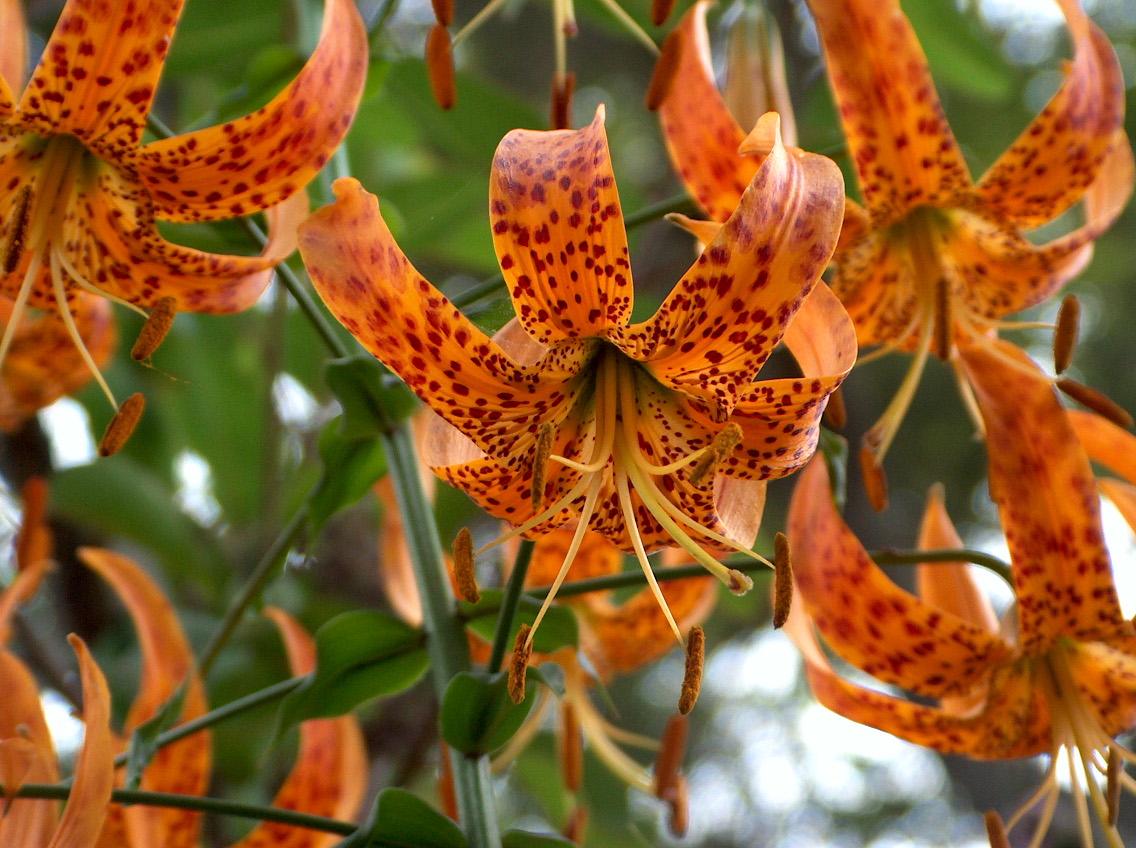
Lilium humboldtii, the Humboldt Lily, is one of California’s showiest native wildflowers: a tall, elegant “tiger lily” relative with nodding, turban-shaped flowers of deep orange marked with dark maroon spots. It is a true California endemic, found nowhere else in the wild, growing in two main strongholds — the oak-and-pine foothills of the Sierra Nevada (the typical subspecies) and the chaparral canyons of the Coast Ranges and southern California mountains, including the Channel Islands (subspecies ocellatum, the ocellated Humboldt lily). It is a foothill and mountain-canyon plant, not a coastal dune or beach species.
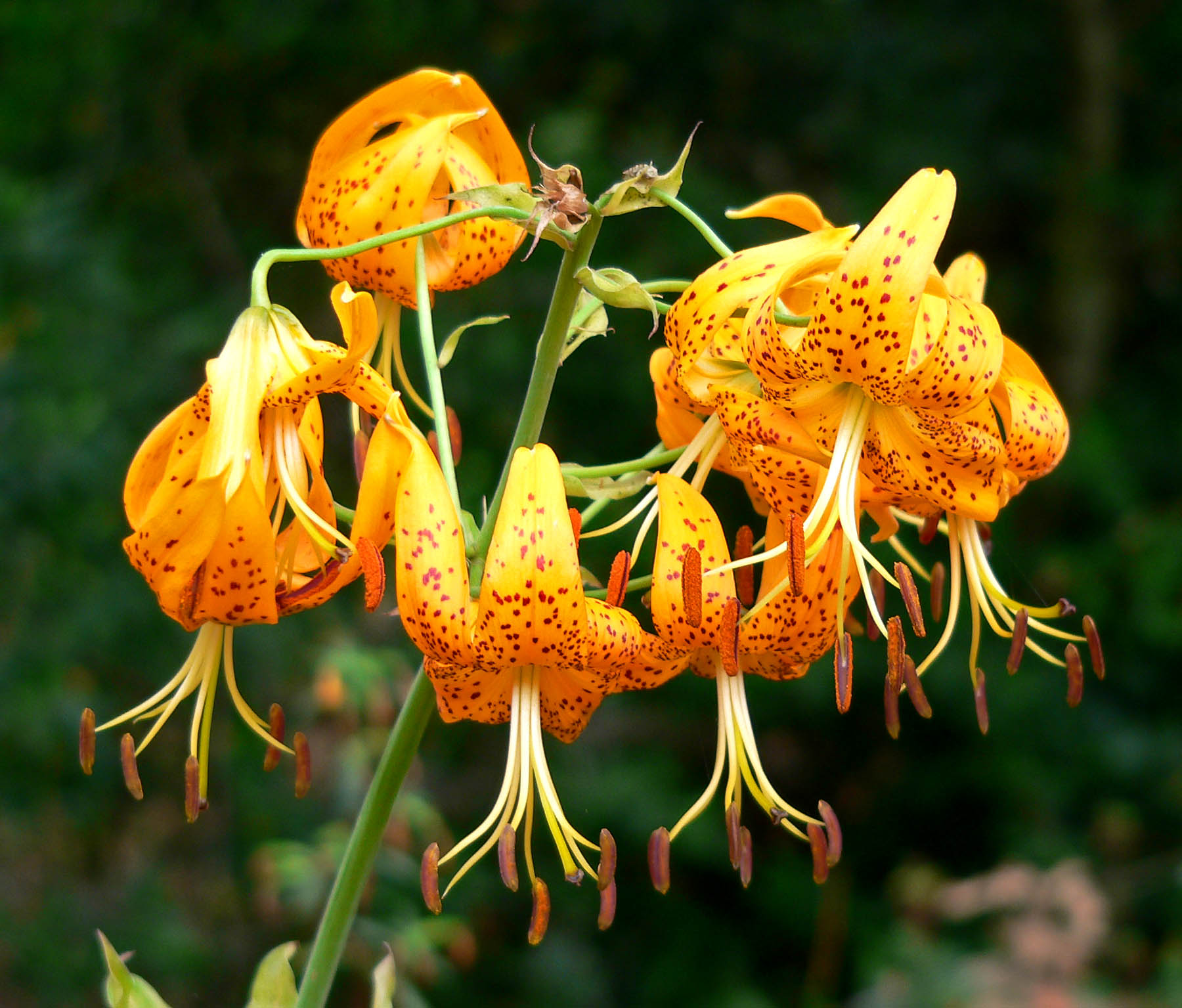
Each stem can tower 3 to 8 feet tall by midsummer, topped with a loose, candelabra-like cluster of flowers that hang face-down on long stalks. The petals curl sharply backward into a “Turk’s-cap” shape typical of this group of lilies, exposing long, arching stamens tipped with rust-colored pollen. A single well-grown plant in bloom is a genuine garden spectacle, and it is not surprising that Humboldt lily bulbs have long been sought after by collectors — a pressure that, combined with habitat loss, makes responsibly sourced, nursery-propagated bulbs essential for anyone wanting to grow this species.
For California gardeners with the right conditions — part shade, excellent drainage, and a dry summer dormancy — Humboldt lily rewards patience with one of the most dramatic native flower displays available. It is best suited to woodland-edge and foothill gardens that can mimic its natural canyon and oak-woodland habitat, rather than open, sunny beds or coastal gardens.
Identification
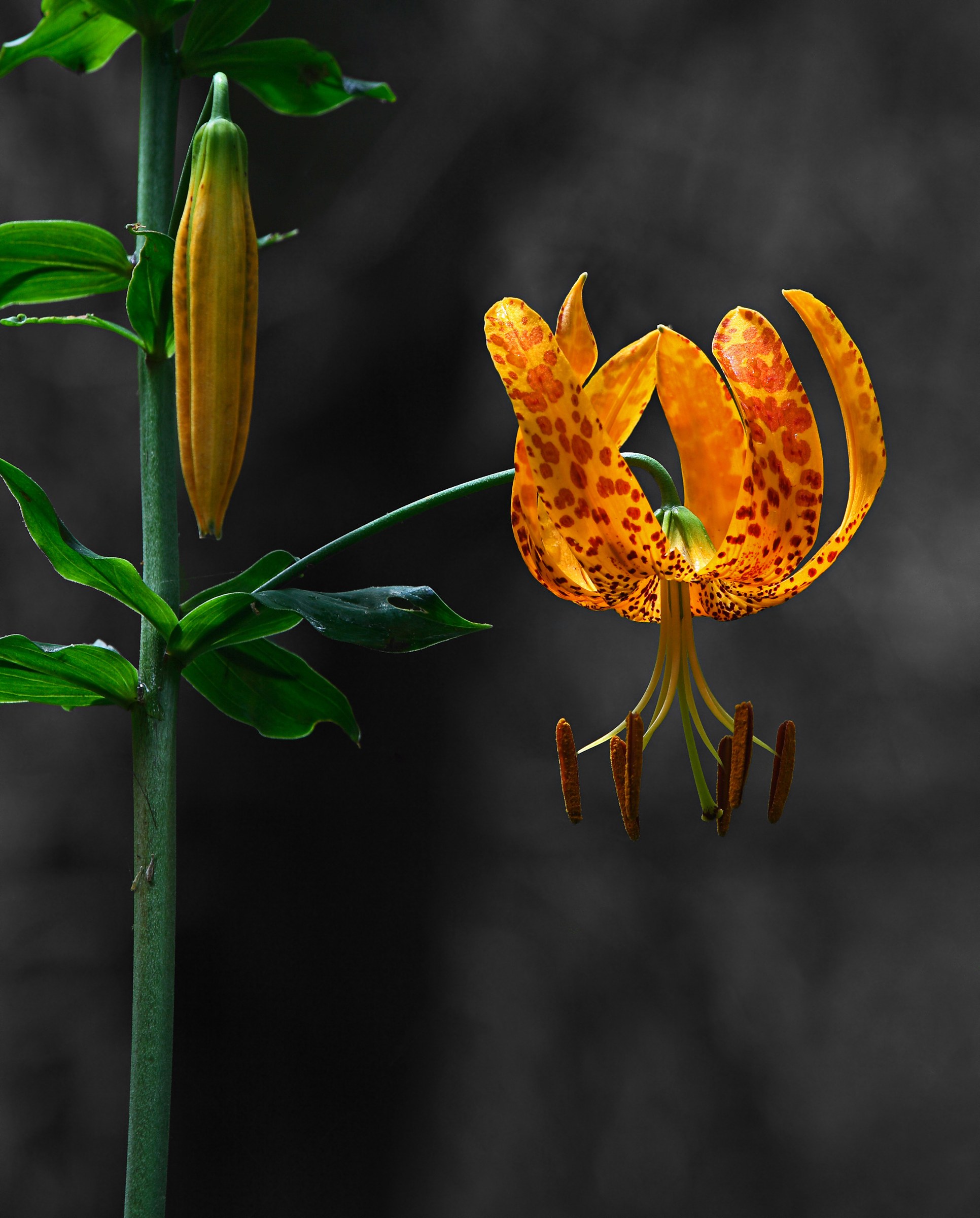
Humboldt lily is identified by its tall, leafy stems, whorled leaves, and large, strongly recurved orange flowers heavily marked with maroon spotting.
Stems
Stems are stout, unbranched, and typically 3 to 8 feet tall, rising each year from a deep, scaly bulb. The plant is summer-deciduous, dying back to the bulb after flowering and setting seed, then disappearing entirely until the following spring.
Leaves
Leaves are lance-shaped, 3 to 6 inches long, and arranged in distinct whorls of 6 to 16 around the stem at regular intervals, a classic lily trait that helps distinguish it from non-whorled look-alikes even before it flowers.
Flowers
From 3 to as many as 30 flowers can be borne in a loose, pyramidal cluster at the stem tip, opening from late spring into July depending on elevation. Each flower nods downward on its stalk, with six petal-like segments (tepals) that curl strongly backward toward the stalk, exposing the reproductive parts in classic “Turk’s-cap” fashion. The color is a rich golden to reddish orange, heavily dotted with dark maroon to purple-brown spots, sometimes with the spots ringed by a lighter halo in subspecies ocellatum (hence “ocellated,” meaning eye-spotted). Long, arching stamens tipped with rust-brown anthers hang well below the petals.
Fruit & Seeds
After flowering, an upright, three-chambered seed capsule develops, splitting open when ripe to release numerous flat, papery seeds that are scattered by wind and gravity.
Quick Facts
| Scientific Name | Lilium humboldtii |
| Family | Liliaceae (Lily) |
| Plant Type | Summer-deciduous bulbous perennial |
| Mature Height | 3–8 ft |
| Mature Spread | 1–2 ft per stem clump |
| Growth Rate | Slow (bulbs take several years to reach flowering size) |
| Sun Exposure | Part Shade (dappled shade of open woodland) |
| Water Needs | Moderate in spring, dry summer dormancy required |
| Soil Type | Well-drained, gravelly or sandy loam |
| Soil pH | Slightly acidic to neutral |
| Bloom Time | Late Spring – July |
| Flower Color | Orange to red-orange with dark maroon spots |
| Fall Color | None (dormant by late summer) |
| Fruit | Upright capsule with flat, wind-dispersed seeds |
| Deer Resistant | No (deer and rodents browse bulbs and shoots) |
| USDA Hardiness Zones | 7–9 |
Native Range
Humboldt lily is endemic to California, meaning it grows wild nowhere else on Earth. The typical subspecies (Lilium humboldtii subsp. humboldtii) is centered on the foothills of the Sierra Nevada, from roughly the northern to the southern Sierra foothill belt, while subspecies ocellatum occupies the Coast Ranges, the mountains of southern California, and several of the Channel Islands.
Across its range the species favors dry, rugged foothill and mid-mountain terrain rather than open valleys or the coast itself. Typical habitat includes partly shaded canyon slopes, chaparral clearings, and open woodland beneath oaks, bigcone Douglas-fir, or Coulter pine, generally on well-drained, rocky or gravelly soils between roughly 500 and 5,500 feet in elevation.
Humboldt lily is not a beach, dune or coastal-bluff plant, despite sometimes being called by informal alternate names; its natural habitat is inland canyons and foothill woodlands. Because showy native lily bulbs have historically been collected from the wild for gardens, and because its canyon habitats face pressure from development and altered fire regimes, the species should only ever be grown from nursery-propagated bulbs, never bulbs dug from wild populations.
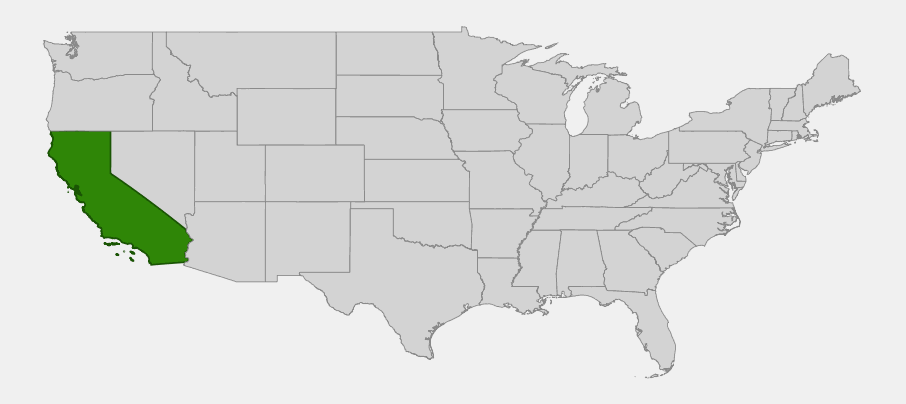
📋 Humboldt lily’s native range is limited to California canyons and foothills outside the footprint of Plant Native’s current regional plant lists, so it is not yet linked to a regional list page.
Growing & Care Guide
Humboldt lily is not a plant for an ordinary sunny flower bed; it wants the conditions of a California foothill canyon — filtered shade, sharp drainage, and a dry rest through summer.
Light
Part shade is ideal, mimicking the dappled light under an open oak or mixed woodland canopy. Too much hot, direct summer sun can scorch the foliage and stress the bulb, while deep, year-round shade will weaken flowering.
Soil & Water
Sharp drainage is essential. A gravelly or sandy loam on a gentle slope suits it far better than flat, heavy clay, where bulbs are prone to rot. Water moderately during the active growing season from late winter through flowering, then withhold water almost entirely once the foliage yellows in summer — this dry dormancy mimics the Mediterranean climate of its native range and is critical to the bulb’s long-term survival.
Planting Tips
Plant dormant, nursery-propagated bulbs in fall, setting them on their sides at a depth of about 6 inches in well-drained soil, ideally on a slope or raised area that sheds water away from the bulb. Bulbs resent disturbance and may take a year or two to resume full vigor after planting or transplanting, and several years to reach flowering size from seed.
Pruning & Maintenance
Let the foliage yellow and die back naturally after flowering rather than cutting it while still green, since the leaves are rebuilding the bulb for next year’s growth. Once fully dormant, the dead stem can be removed. Mark the planting spot, since the bulb disappears completely above ground for much of the year.
Propagation
Propagate from fresh seed sown in fall, which can take two or more years to reach flowering size, or by carefully separating bulb scales or offsets from an established, nursery-grown clump while dormant. Never propagate by collecting bulbs or seed from wild populations.
Landscape Uses
- Oak woodland and foothill gardens that replicate its natural dappled-shade habitat
- Dry shade borders beneath established native trees
- Specimen plantings where its tall flower spikes can be appreciated up close
- California native plant and wildlife gardens focused on regional authenticity
- Naturalized canyon-style plantings on well-drained slopes
Wildlife & Ecological Value
Humboldt lily’s large, nectar-rich flowers make it a magnet for some of California’s most spectacular pollinators during its brief but showy bloom period.
For Pollinators
The flowers are especially attractive to large butterflies and, in parts of its range, hummingbirds, which are drawn to the bright orange color and can access nectar despite the recurved petal shape. Native bees and other insects visit as well.
For Mammals
The bulbs and emerging shoots are a food source for deer and small rodents such as gophers, which is one reason established plants can benefit from some protection when young.
Ecosystem Role
As a conspicuous, showy understory species of California’s chaparral-canyon and foothill woodland communities, Humboldt lily is part of the seasonal wildflower display that follows the wetter months, contributing to the structural and seasonal diversity of these fire-adapted plant communities. Like many California geophytes, it survives wildfire underground as a dormant bulb and can resprout and even flower more vigorously in the open conditions following a burn.
Cultural & Historical Uses
Humboldt lily was named for the German naturalist Alexander von Humboldt, honoring his broad contributions to natural history rather than any direct connection to California. Like other showy native lilies, it has long attracted the attention of horticulturists and plant collectors, and historical demand for its striking flowers contributed to wild bulb collecting in the 19th and 20th centuries — a practice that, combined with habitat loss, is part of why the species deserves care in how it is sourced for gardens today.
There is no established history of food or medicinal use of this species, and none should be assumed; its cultural significance today is primarily horticultural and as a flagship wildflower for California native plant conservation and gardening.
Modern interest in Humboldt lily centers on native plant horticulture, where nursery-propagated bulbs allow gardeners to enjoy its dramatic flowers without impacting wild populations.
Frequently Asked Questions
Is Humboldt lily the same as a “beach lily”?
No. Humboldt lily is a foothill and mountain-canyon species of California’s oak woodlands and chaparral, not a coastal dune or beach plant, and that informal name does not reflect its actual habitat.
Is it legal or responsible to dig Humboldt lily bulbs from the wild?
No. Wild bulb collecting has historically harmed populations of this showy native lily. Only plant bulbs purchased from nurseries that propagate their own stock, never bulbs taken from wild habitat.
Why did my Humboldt lily disappear in summer?
This is normal. The plant is summer-deciduous: after flowering, the foliage yellows and dies back and the bulb goes dormant underground until the following spring. Avoid watering heavily during this dormant period.
How long does it take for a Humboldt lily to bloom from seed?
Several years. Lily bulbs grown from seed typically need two or more growing seasons to build up enough reserves to flower, so most gardeners start with nursery-grown bulbs instead.
What is the difference between the two subspecies?
Subspecies humboldtii grows mainly in the Sierra Nevada foothills, while subspecies ocellatum (the “ocellated” or eye-spotted form) grows in the Coast Ranges, southern California mountains and Channel Islands, often with lighter halos around its maroon spots.

Looking for a nursery that carries Humboldt Lily?
Browse our native plant nursery directory: California