Pūkiawe (Leptecophylla tameiameiae)
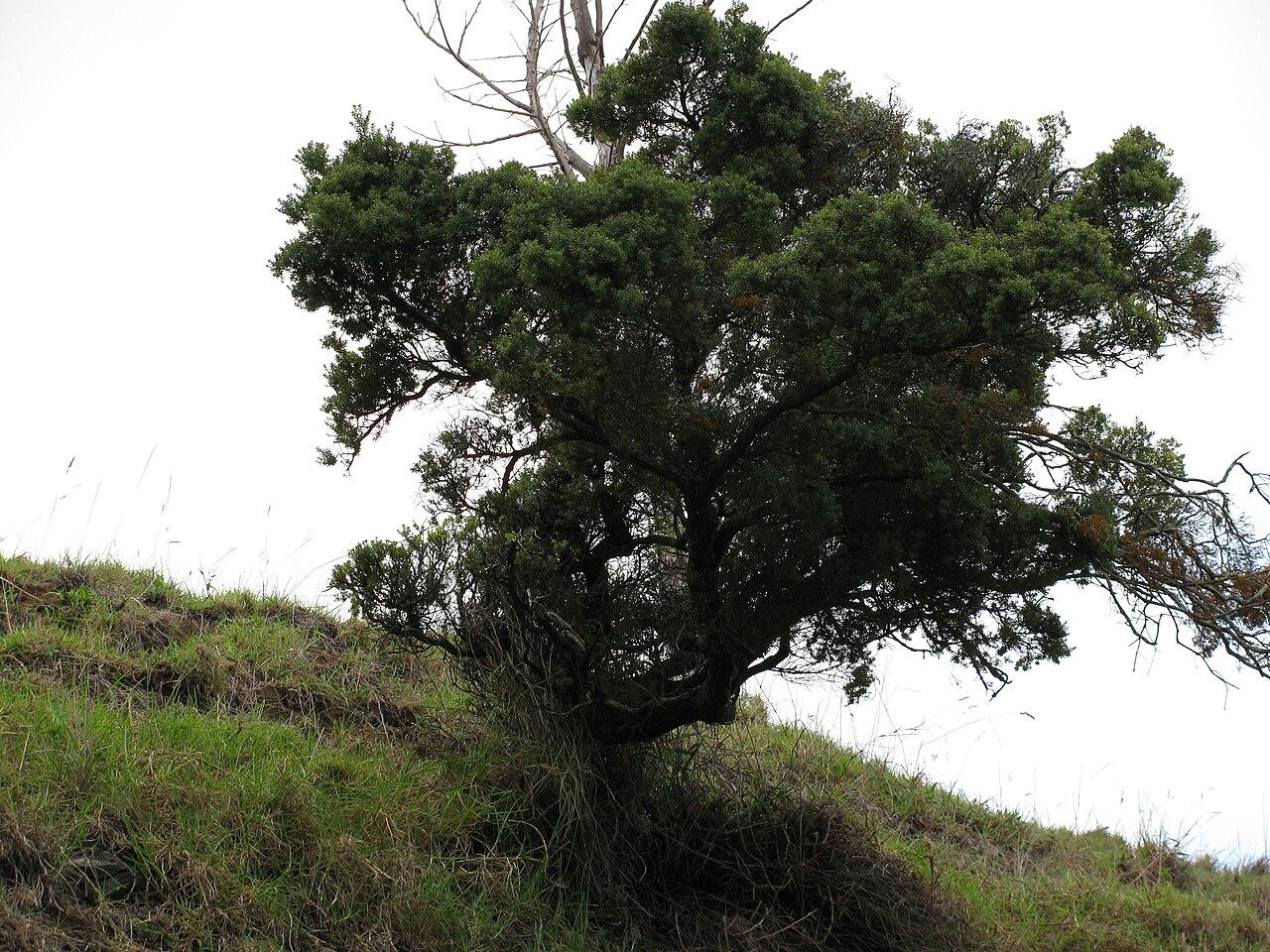
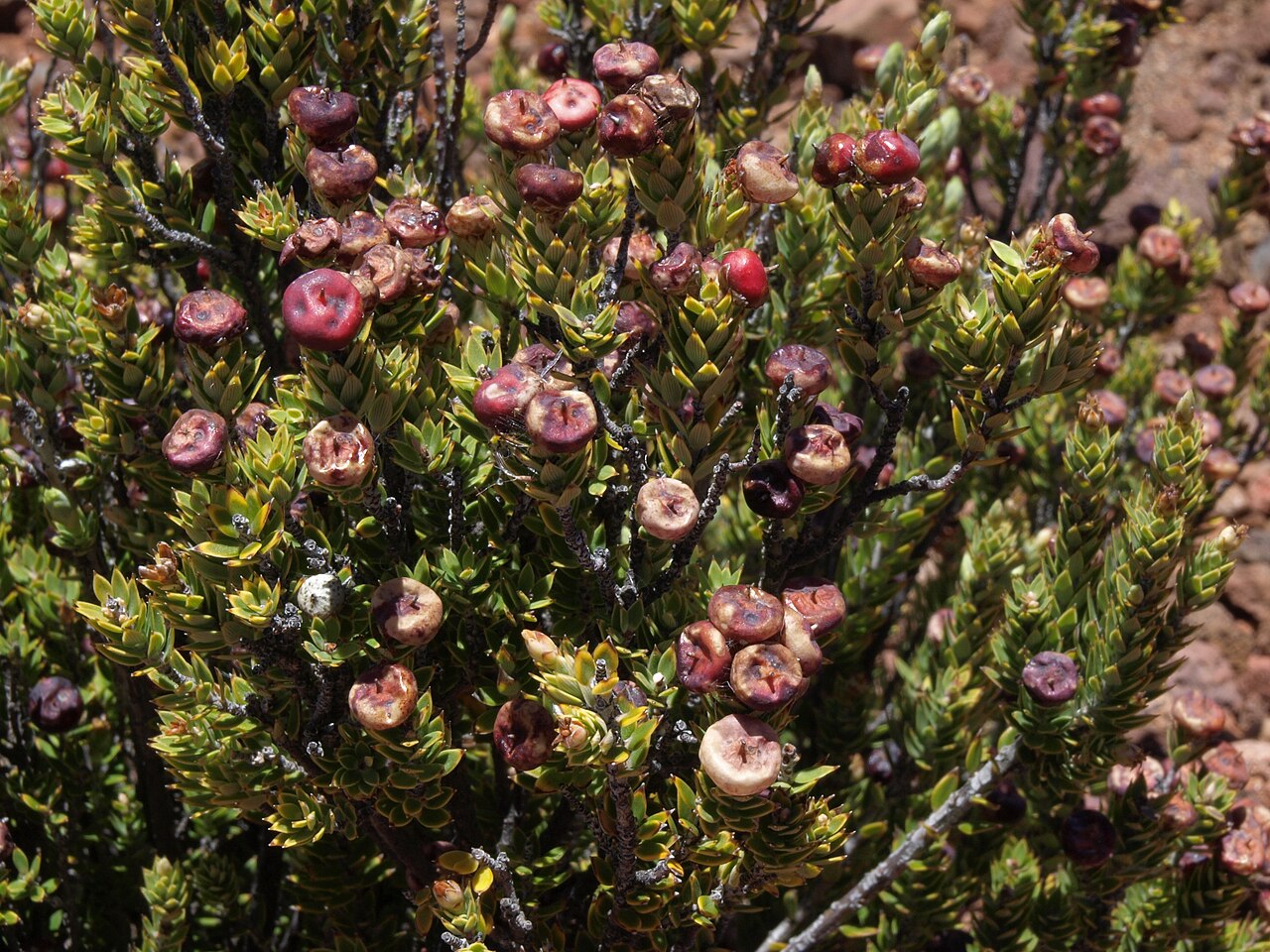
Leptecophylla tameiameiae (syn. Styphelia tameiameiae), known in Hawaiian as pūkiawe or sometimes maiele, is one of the most widespread and adaptable native shrubs in the Hawaiian Islands. A member of the heath family (Ericaceae), it is instantly recognizable by its short, stiff, needle-like leaves and its small round berries that ripen in shades of white, pink, and red. Few other Hawaiian plants grow across such an enormous range of conditions — pūkiawe thrives from near sea level to well above 10,000 feet, in everything from dry lava fields to windswept alpine shrubland and boggy rainforest clearings.
The species epithet honors King Kamehameha I, who unified the Hawaiian Islands into a single kingdom, and the plant carries deep cultural weight in Hawaiian tradition. Its smoke was used ceremonially, and its wood and foliage appear repeatedly in accounts of Hawaiian religious and social practice. Botanically, pūkiawe is remarkably variable: in sheltered forest it can become a small tree over 10 feet tall, while on exposed ridges and cinder cones it hugs the ground as a low, tangled mat only a few inches high.
For native Hawaiian landscaping, pūkiawe is valued for its toughness, its fine-textured silvery-green foliage, and its long season of colorful berries, which provide food for native birds including the nēnē. It asks for almost nothing once established — no irrigation, no fertilizer, no pampering — making it one of the most dependable true natives for dry, rocky, wind-exposed sites in the islands.
Identification
Pūkiawe is an evergreen shrub, and occasionally a small tree in sheltered forest, with a growth form that shifts dramatically with elevation and exposure. In windswept, high-elevation or coastal sites it stays low and dense, often under 3 feet tall; in moist forest understory it can reach 10 to 15 feet with a more open, branching habit. The stems are slender, wiry, and reddish-brown, often numerous from the base.
Leaves
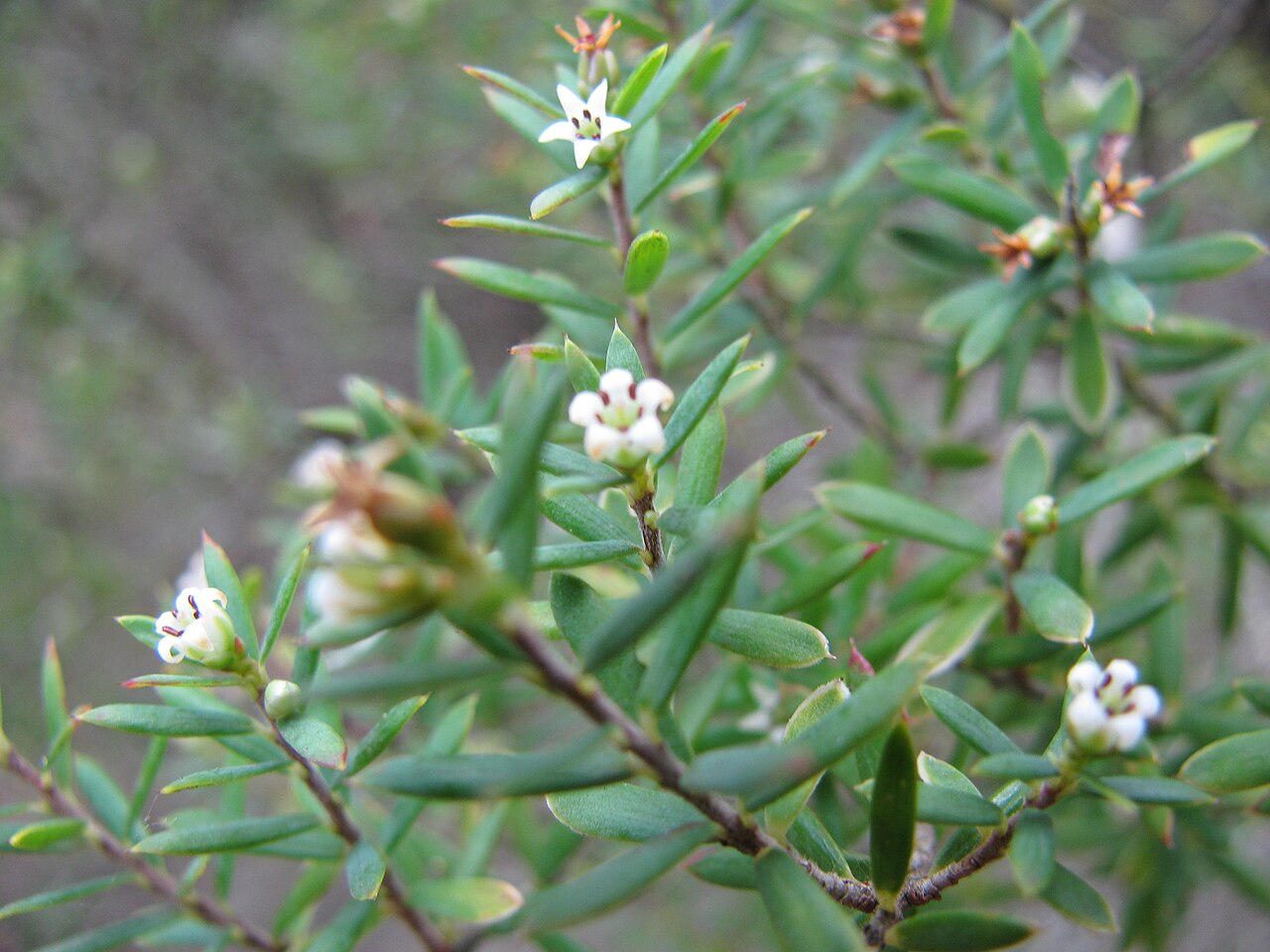
The leaves are small, narrow, and needle-like, roughly ¼ to ½ inch long, arranged densely and spirally along the twigs. They are dark green and glossy above, with a distinctly whitish or pale underside that gives the whole plant a soft, silvery cast when the wind turns the foliage. The leaf margins are smooth, and the texture is stiff rather than soft, an adaptation to the intense sun and wind of pūkiawe’s open habitats.
Flowers
Flowers are small, bell- or urn-shaped, and borne singly or in small clusters in the leaf axils. They are white to pale pink, only a few millimeters across, and easy to overlook against the foliage. Pūkiawe flowers more or less year-round in Hawaii’s mild climate, with a noticeable flush in spring.
Fruit
The fruit is a small, round, berry-like drupe about ¼ inch across, ripening through a striking range of colors from white through pink to deep red, sometimes on the same plant at once. The berries are mild and nearly flavorless to people, and they are not gathered as food; their real value is ecological; native birds, including the endangered nēnē, eat and disperse them. Older plants in bloom and fruit at the same time often show flowers, green berries, and ripe berries together.
Quick Facts
| Scientific Name | Leptecophylla tameiameiae (syn. Styphelia tameiameiae) |
| Family | Ericaceae (Heath) |
| Plant Type | Evergreen Shrub (occasionally small tree) |
| Mature Height | 1–15 ft, depending on site (commonly 3–8 ft) |
| Mature Spread | 3–8 ft |
| Growth Rate | Slow |
| Sun Exposure | Full Sun to Part Shade |
| Water Needs | Low once established |
| Soil Type | Rocky, volcanic cinder or lava; well-drained |
| Soil pH | Acidic to neutral |
| Bloom Time | Year-round, heaviest in spring |
| Flower Color | White to pale pink |
| Fall Color | None (evergreen) |
| Fruit | Small round berries, white to pink to red |
| Deer Resistant | N/A (no native deer in Hawaii); browsed by feral goats and sheep |
| USDA Hardiness Zones | 10–11 |
Native Range
Pūkiawe is native to the main Hawaiian Islands and also occurs on the Marquesas Islands in French Polynesia; within the United States it is found only in Hawaii. It is one of the most widely distributed native shrubs in the islands, occurring on Kauai, Oahu, Molokai, Lanai, Maui, and Hawaii Island.
Its elevational range is exceptional, from near sea level up past 10,000 feet on Mauna Kea and Haleakala. Pūkiawe grows in dry lowland shrubland and lava fields, mesic and wet forest understories, montane bogs, and alpine and subalpine shrubland near the treeline, making it one of the few native Hawaiian plants equally at home in a coastal cinder field and a windswept summit bog.
Because it tolerates poor volcanic soils, drought, wind, and cold so well, pūkiawe is often among the first native shrubs to recolonize recent lava flows and disturbed cinder slopes, and it remains common in areas where many other native plants have been crowded out by introduced grasses and shrubs.
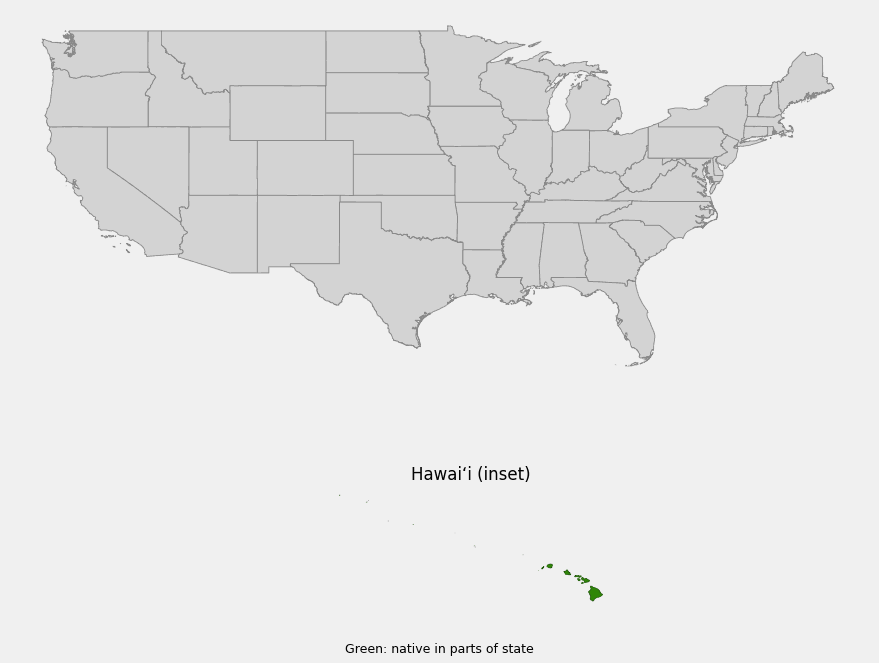
📋 Regional plant lists featuring Pūkiawe: Hawaii
Growing & Care Guide
Pūkiawe is prized in Hawaiian native landscaping precisely because it needs so little. Once its roots are established it shrugs off drought, wind, and poor soil, and it is one of the better choices for restoring dry, rocky sites where many other natives struggle.
Light
Full sun is best and matches its natural habitat on open lava fields and ridgelines, though pūkiawe also tolerates part shade in forest-edge plantings, where it tends to grow taller and more open in search of light.
Soil & Water
Pūkiawe is adapted to thin, rocky, fast-draining volcanic soils and does not want rich garden beds or heavy irrigation. Good drainage matters more than fertility. Water occasionally to establish a young plant, then taper off; established pūkiawe is genuinely drought tolerant and can struggle or rot in soils that stay wet.
Planting Tips
Plant in well-drained, rocky or cindery soil and avoid amending with rich organic compost, which encourages root problems in this lava-adapted species. Give plants room to spread, 3 to 6 feet apart for a loose hedge or massed planting. Pūkiawe is notoriously slow and difficult to propagate from seed, which can take months to germinate, so nursery-grown plants are typically started from cuttings; be patient with young plants, as early growth is slow.
Pruning & Maintenance
Very little maintenance is needed. Light shaping after flowering can keep plants tidy in a garden setting, but pūkiawe generally looks best left to its naturally wind-sculpted form. Avoid overwatering and avoid planting where runoff collects, since good drainage is essential to its long-term health.
Landscape Uses
Pūkiawe fits a wide range of dry, native Hawaiian garden styles:
- Dry and xeriscape gardens on rocky or cindery sites
- Native Hawaiian restoration plantings on lava flows and disturbed cinder slopes
- Coastal and wind-exposed sites where few other shrubs establish
- Mixed native hedgerows with ohia, naio, and aalii
- High-elevation gardens near Haleakala or Mauna Kea, matched to its alpine-tolerant form
Wildlife & Ecological Value
Pūkiawe is a quietly important part of Hawaiian ecosystems across a huge elevational range, from coastal lava flats to alpine shrubland.
For Birds
The berries are eaten by native and endemic birds, including the nēnē (Hawaiian goose), which forage on pūkiawe fruit in upland habitat. Birds disperse the seeds widely across lava flows and open ground, helping the species colonize newly exposed volcanic terrain.
For Pollinators
The small, abundant flowers, blooming almost continuously, provide a steady nectar source for native insects in habitats where few other plants flower year-round, particularly in dry lowland and high-elevation sites with sparse vegetation.
Ecosystem Role
As one of the first native shrubs to establish on fresh lava and disturbed cinder, pūkiawe plays an important pioneering role, stabilizing loose volcanic substrate and creating shelter that allows other native plants to take hold. Its tolerance of extreme conditions, from coastal drought to subalpine cold and wind, lets it persist in places many other native Hawaiian plants cannot.
Cultural & Historical Uses
Pūkiawe holds a significant place in Hawaiian cultural history, tied closely to the kapu system and traditions surrounding mana, or spiritual power. The smoke of burning pūkiawe wood and foliage was used ceremonially to help neutralize or modify the mana of chiefs and nobility (aliʻi) before they interacted with commoners, since the mana of high-ranking individuals was believed powerful enough to be dangerous to those of lower rank. Accounts also describe the bodies of executed lawbreakers being cremated on pyres of pūkiawe wood, intended to drive away any lingering mana and render their spirits harmless.
Native Hawaiians also put pūkiawe to practical and medicinal use. Ground or crushed leaves were inhaled to help relieve nasal congestion, a traditional remedy documented in Hawaiian ethnobotanical records; this is described here as history rather than a recommendation for use. The colorful berries, though not eaten, were strung into lei, prized for their range of white, pink, and red hues.
Today pūkiawe remains a recognizable and well-loved native plant across the islands, often pointed out to hikers on trails from coastal lava fields to the summit regions of Haleakala and Mauna Kea, where it is frequently one of the last shrubs seen before the vegetation gives way to bare rock.
Frequently Asked Questions
Can you eat pūkiawe berries?
No. The berries are not used as food; they are nearly flavorless and are valued mainly for wildlife, especially native birds like the nēnē, and historically for stringing into lei rather than eating.
Why do pūkiawe berries come in different colors on the same plant?
The berries ripen gradually from white or pale pink to deeper pink and red, so a single branch often shows several colors at once as fruit matures at different rates.
Is pūkiawe hard to grow from seed?
Yes. Pūkiawe seed is notoriously slow to germinate, sometimes taking many months to over a year, and seedlings grow slowly. Most nursery plants are propagated from cuttings instead.
Does pūkiawe need watering once established?
Generally no. Established plants are drought tolerant and adapted to thin, fast-draining volcanic soils; regular irrigation and rich soil can actually cause problems rather than help.
Where does pūkiawe grow in Hawaii?
Almost everywhere botanically interesting: from near-sea-level lava fields and dry shrubland to wet forest, montane bogs, and alpine shrubland above 10,000 feet on Mauna Kea and Haleakala.

Looking for a nursery that carries Pūkiawe?
Browse our native plant nursery directory: Hawaii