Giant Wildrye (Leymus condensatus)
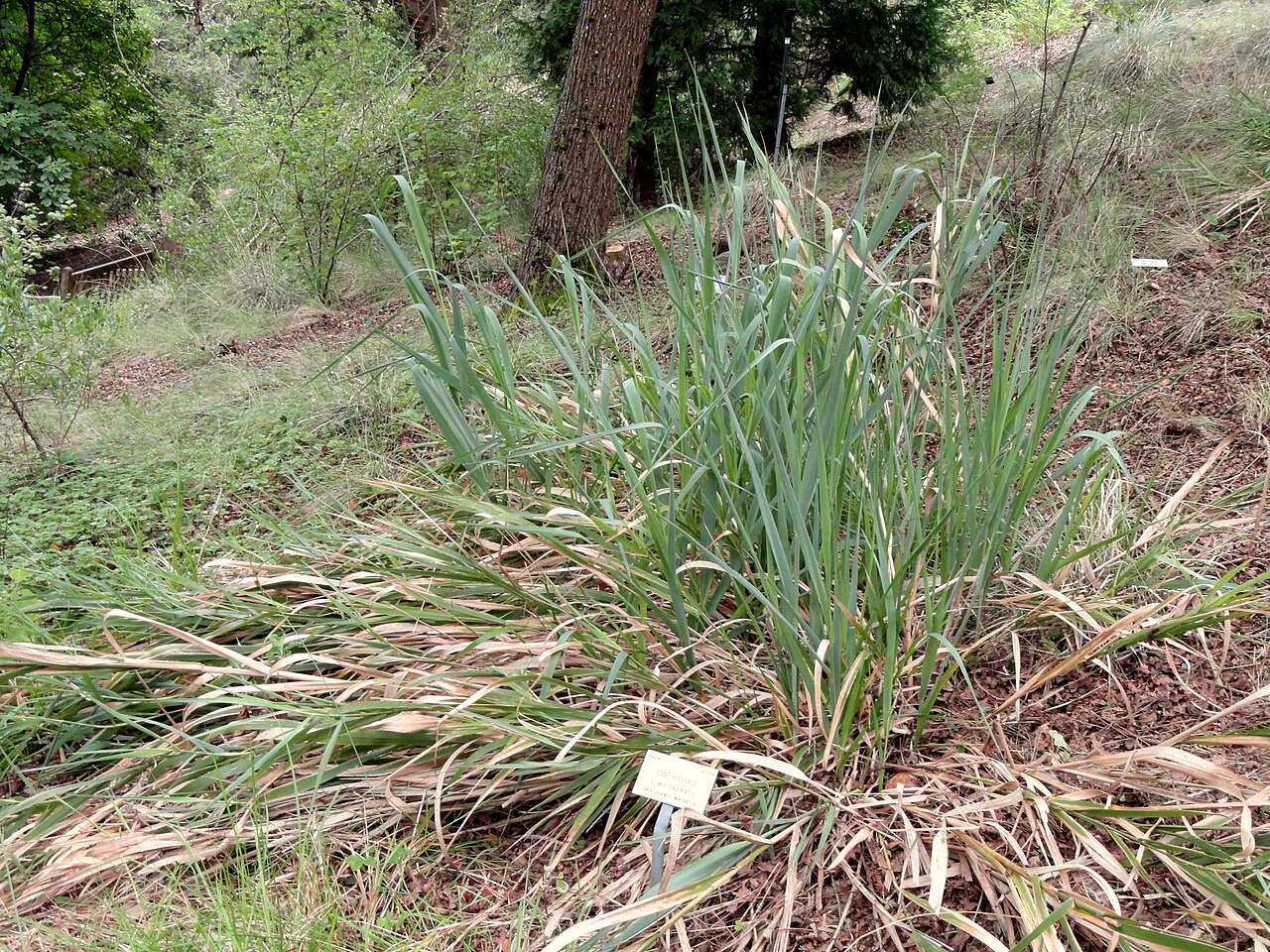
Leymus condensatus, commonly called giant wildrye, is a large, long-lived bunchgrass endemic to California, prized by native plant gardeners for its bold, silvery blue-green foliage and tough, no-fuss nature. It is one of the biggest native grasses in the state, forming substantial clumps of arching leaf blades topped, in season, by tall, dense seed spikes that can tower well above the foliage. The species is sometimes still sold and discussed under its older name, Elymus condensatus.
Giant wildrye grows naturally on sandy and rocky slopes in coastal sage scrub, chaparral, oak woodland, and foothill woodland, mostly within reach of coastal fog and marine influence, though it also turns up inland in drier woodland settings including Joshua tree woodland. It stays green and structurally interesting through the year, growing slowly outward from a clumping base by short rhizomes rather than spreading aggressively, which makes it manageable in a garden border as well as useful for erosion control on slopes.
In California native landscaping, giant wildrye is valued as a bold accent and backbone grass: it anchors dry garden beds, screens unwanted views, stabilizes slopes, and asks for almost no irrigation once it is established. NatureServe ranks the species Vulnerable (G3) range-wide, a reminder that, despite being a familiar sight in cultivated native gardens, wild stands deserve protection where they occur.
Identification
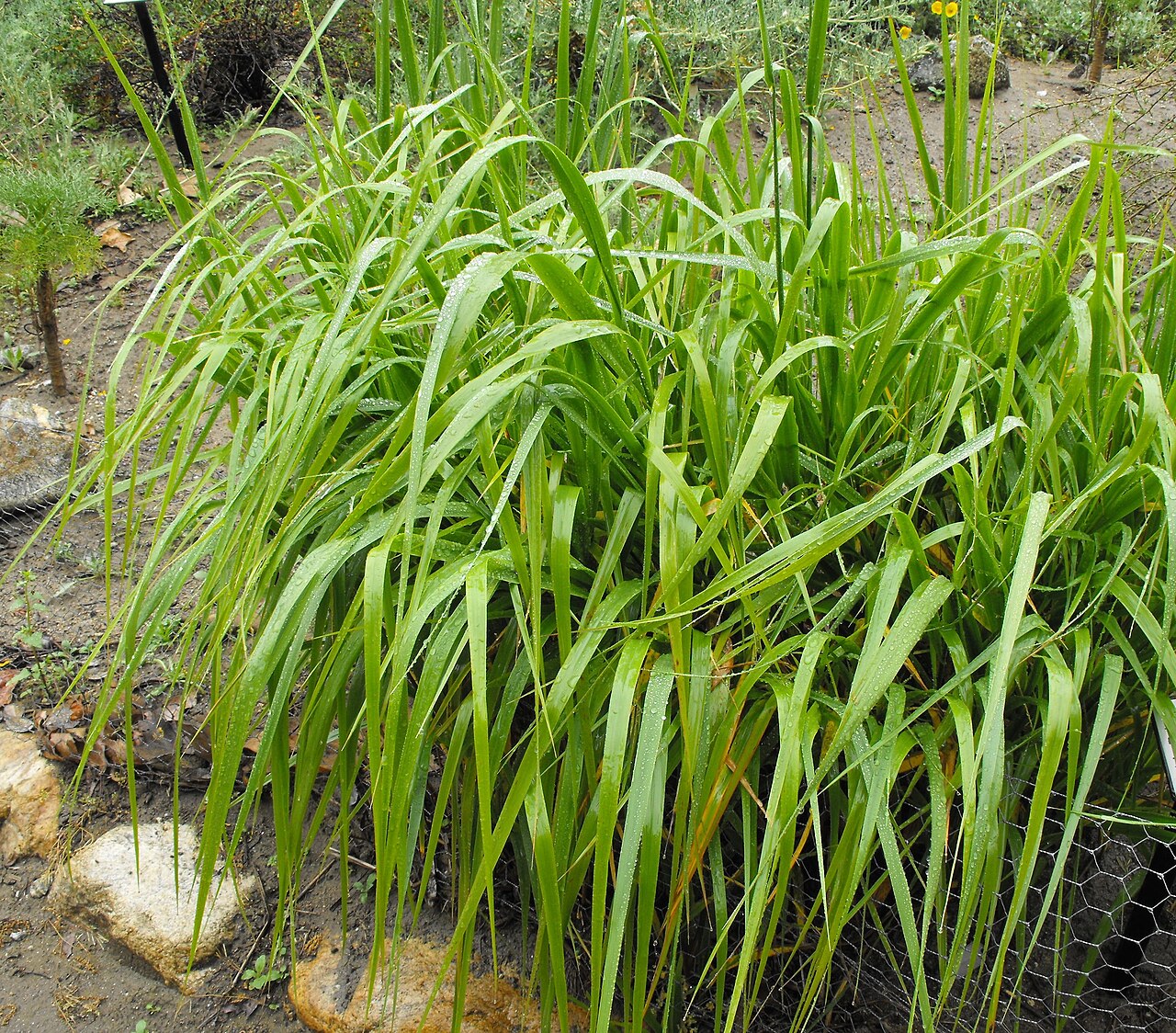
Giant wildrye is a robust, cool-season perennial bunchgrass, forming dense clumps 3 to 5 feet wide with flowering culms (stems) that reach 3 to 8 feet tall, occasionally more under good conditions. The clump spreads gradually by short rhizomes, thickening over years rather than running widely like a turf grass.
Leaves
The leaf blades are long, flat to slightly inrolled, and ½ to ¾ inch wide, with a distinctive silvery, blue-gray to gray-green color that sets the species apart from most other California native grasses. Leaves arch gracefully from the clump and stay evergreen or ever-gray through the year in mild coastal climates, though they may brown back somewhat in drought or hard frost.
Flowers & Seed Heads
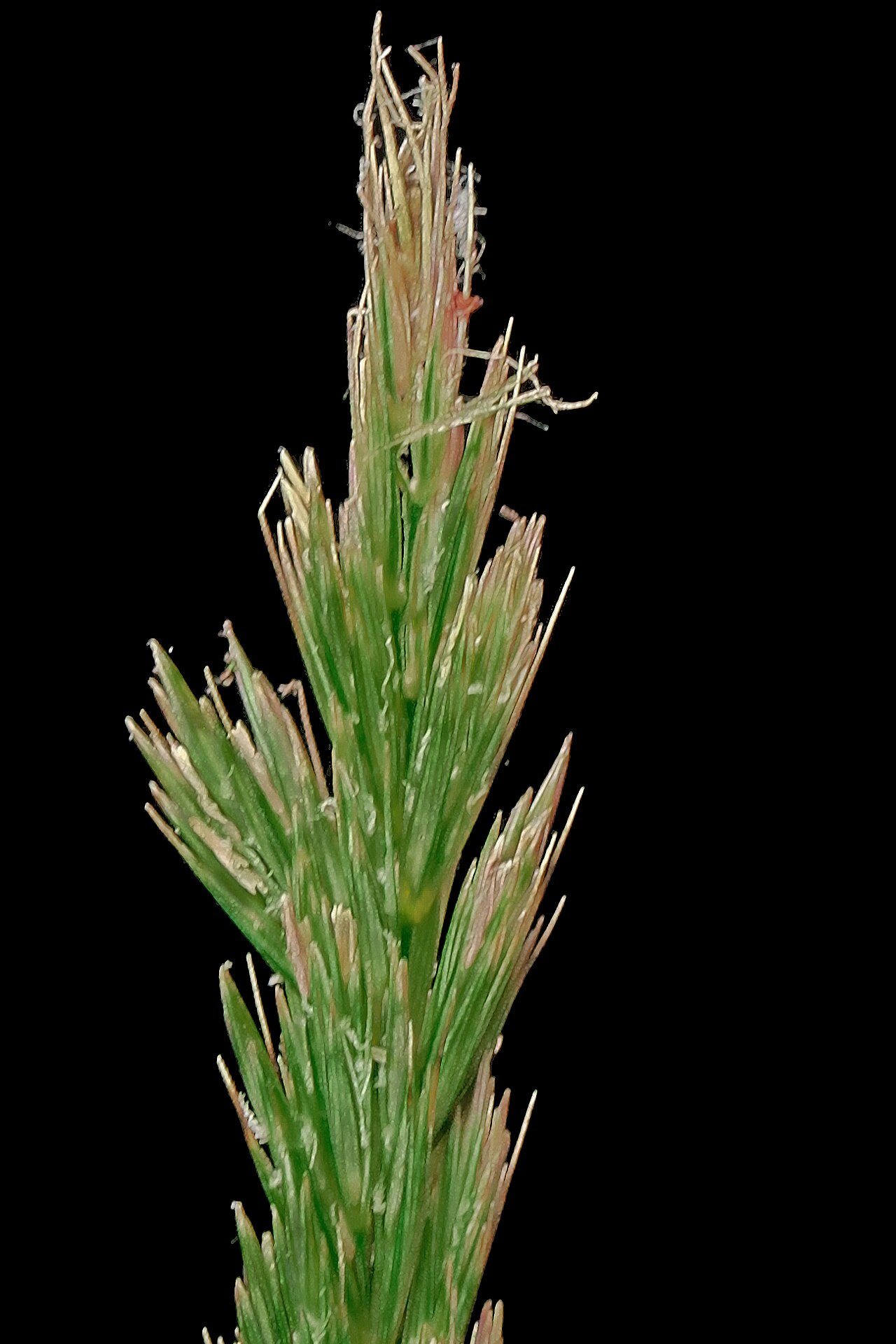
Flowering stems rise well above the foliage, bearing a dense, cylindrical, spike-like seed head 4 to 10 inches long, bristling with awns. The seed heads start green to blue-green and mature to a tawny straw color, remaining attractive and structural well into the dry season. Giant wildrye occasionally hybridizes with the related creeping wildrye (Leymus triticoides) where the two grow together, producing the hybrid known as Leymus × multiflorus, which can complicate identification in mixed stands.
Quick Facts
| Scientific Name | Leymus condensatus (syn. Elymus condensatus) |
| Family | Poaceae (Grass) |
| Plant Type | Perennial Bunchgrass |
| Mature Height | 3–8 ft (flowering culms) |
| Mature Spread | 3–5 ft |
| Growth Rate | Moderate |
| Sun Exposure | Full Sun to Part Shade |
| Water Needs | Low once established |
| Soil Type | Sandy to rocky; well-drained |
| Soil pH | Neutral to slightly alkaline |
| Bloom Time | Late spring – summer |
| Flower Color | Blue-green, maturing to tawny straw |
| Fall Color | Foliage stays blue-gray; may brown in drought |
| Fruit | Grain (caryopsis) in dense bristled spikes |
| Deer Resistant | Yes, generally avoided by deer |
| USDA Hardiness Zones | 8–11 |
Native Range
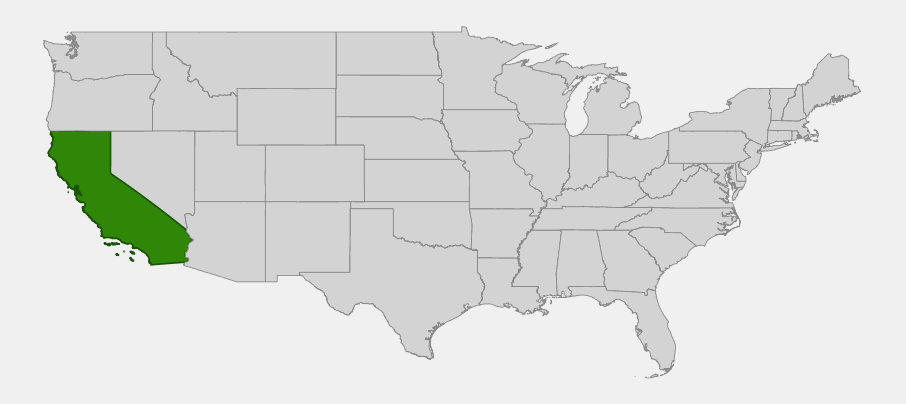
Giant wildrye is native to California, where it grows mainly in the Coast Ranges and coastal-influenced foothills from the San Francisco Bay Area south through southern California, and on several of the Channel Islands, with its range extending south into northern Baja California, Mexico. BONAP county-level mapping confirms the species as native within California and shows no verified native populations in neighboring states.
Typical habitats are sandy or rocky, well-drained slopes in coastal sage scrub, chaparral, and southern oak or foothill woodland, generally within the zone of coastal fog influence, though scattered inland populations also occur in drier woodland and even Joshua tree woodland settings. It is only rarely found in wetland or riparian situations, preferring open, sunny to lightly shaded slopes over consistently moist ground.
NatureServe ranks giant wildrye Vulnerable (G3) range-wide. While it remains a popular and widely available native grass in California horticulture, including the selected cultivar ‘Canyon Prince,’ wild stands on undisturbed slopes and island habitat are a conservation priority and should not be collected from.
This species is not currently native to the states covered by PlantNative’s regional native plant lists, so no 📋 regional list link is shown here.
Growing & Care Guide
Giant wildrye is one of the easiest large native grasses to grow in California gardens, rewarding minimal care with years of bold, silvery structure.
Light
Full sun brings out the most compact, upright clumps and the best blue-gray foliage color. In part shade, plants grow a bit looser and greener, which still works well as an understory accent beneath oaks.
Soil & Water
This grass wants fast-draining sandy or rocky soil and very little summer water once established; it is well adapted to the dry-summer rhythm of the California climate. Occasional deep watering during the first one to two summers helps roots establish, after which most gardens need no supplemental irrigation at all. Soggy, poorly drained soil is the main thing to avoid.
Planting Tips
Plant from container stock in fall, giving roots the winter rainy season to establish before summer drought. Space clumps 3 to 5 feet apart to allow for their eventual spread. Giant wildrye is an excellent choice for slopes, where its root system and gradually spreading rhizomes help stabilize loose or erodible soil.
Pruning & Maintenance
Cut the clump back hard, to within a few inches of the ground, in late winter before new growth begins; this keeps the grass looking fresh and removes old, tattered foliage and spent seed stalks. Beyond this annual cutback, giant wildrye needs little attention and is not notably prone to pests or disease.
Landscape Uses
Giant wildrye’s bold form and silvery color make it a workhorse in California native design:
- Slope stabilization and erosion control on dry, sunny banks
- Screening as a large, structural accent or informal hedge
- Dry and Mediterranean-style gardens paired with sages and buckwheats
- Habitat restoration on coastal bluffs and island sites
- Oak woodland understory plantings in part shade
- Accent or specimen grass for color and texture contrast
Wildlife & Ecological Value
Beyond its garden appeal, giant wildrye plays a genuine ecological role in California’s coastal and island habitats.
For Birds
The seeds are eaten by a variety of seed-eating birds, and the tall, dense clumps provide cover and nesting structure. On several of the California Channel Islands, giant wildrye is used in habitat restoration projects aimed at recovering nesting cover for native seabirds, since dense native bunchgrass stands offer shelter that invasive annual grasses do not.
For Mammals
Small mammals browse the foliage and feed on the seeds, and the dense clump structure offers cover from predators in open, sparsely vegetated habitat such as coastal bluffs and island grassland.
Ecosystem Role
As a long-lived, deep-rooted perennial bunchgrass, giant wildrye helps stabilize erodible slopes and competes with invasive annual grasses that have displaced much of California’s native grassland. Its persistence through the dry season, when most annual grasses have died back and turned to fuel, also gives it value in fire-adapted landscapes as a greener, less flammable component of the plant community.
Cultural & Historical Uses
Giant wildrye’s large, grain-bearing seed heads were among the native grass seeds gathered by California Indigenous peoples as a food source in some regions, ground into meal along with other native grass and wildflower seeds historically used for pinole-style preparations. This traditional use is recorded in ethnobotanical sources as history, not as a current recommendation; foraging native grass seed today should only be done with proper identification and respect for protected habitat.
The long, tough leaves and stems of large native wildryes were also put to practical use by California tribes for basketry and cordage material in some regions, prized for their length and fiber strength, though detailed documentation specific to this species is sparser than for related wildrye species.
In modern horticulture, giant wildrye’s striking blue-gray foliage has made it a mainstay of California native plant gardens since the mid-20th century, popularized in part through selections such as ‘Canyon Prince,’ and it remains one of the most recognizable native grasses in low-water landscaping across the state.
Frequently Asked Questions
Does giant wildrye spread aggressively?
No. It spreads slowly by short rhizomes, gradually thickening its clump rather than running widely like a turf or pasture grass, so it is manageable in garden borders.
How much water does giant wildrye need?
Very little once established. A couple of summers of occasional deep watering helps new plants root in; after that, most California gardens need no supplemental irrigation.
Is giant wildrye the same as ‘Canyon Prince’?
‘Canyon Prince’ is a popular cultivated selection of giant wildrye chosen for extra-blue foliage and a more compact habit; the species itself is more variable and includes plants with greener or less uniform color.
Can giant wildrye grow in shade?
It tolerates part shade, such as beneath open oak canopy, growing a bit looser and greener than in full sun, but it performs best and holds its bluest color with good sun exposure.
Is giant wildrye native outside California?
Within the United States it is native only to California; populations also occur in northern Baja California, Mexico. It is not native to Oregon, Nevada, or other neighboring states, though it is sometimes grown there in gardens.

Looking for a nursery that carries Giant Wildrye?
Browse our native plant nursery directory: California