Beardless Wildrye (Leymus triticoides)
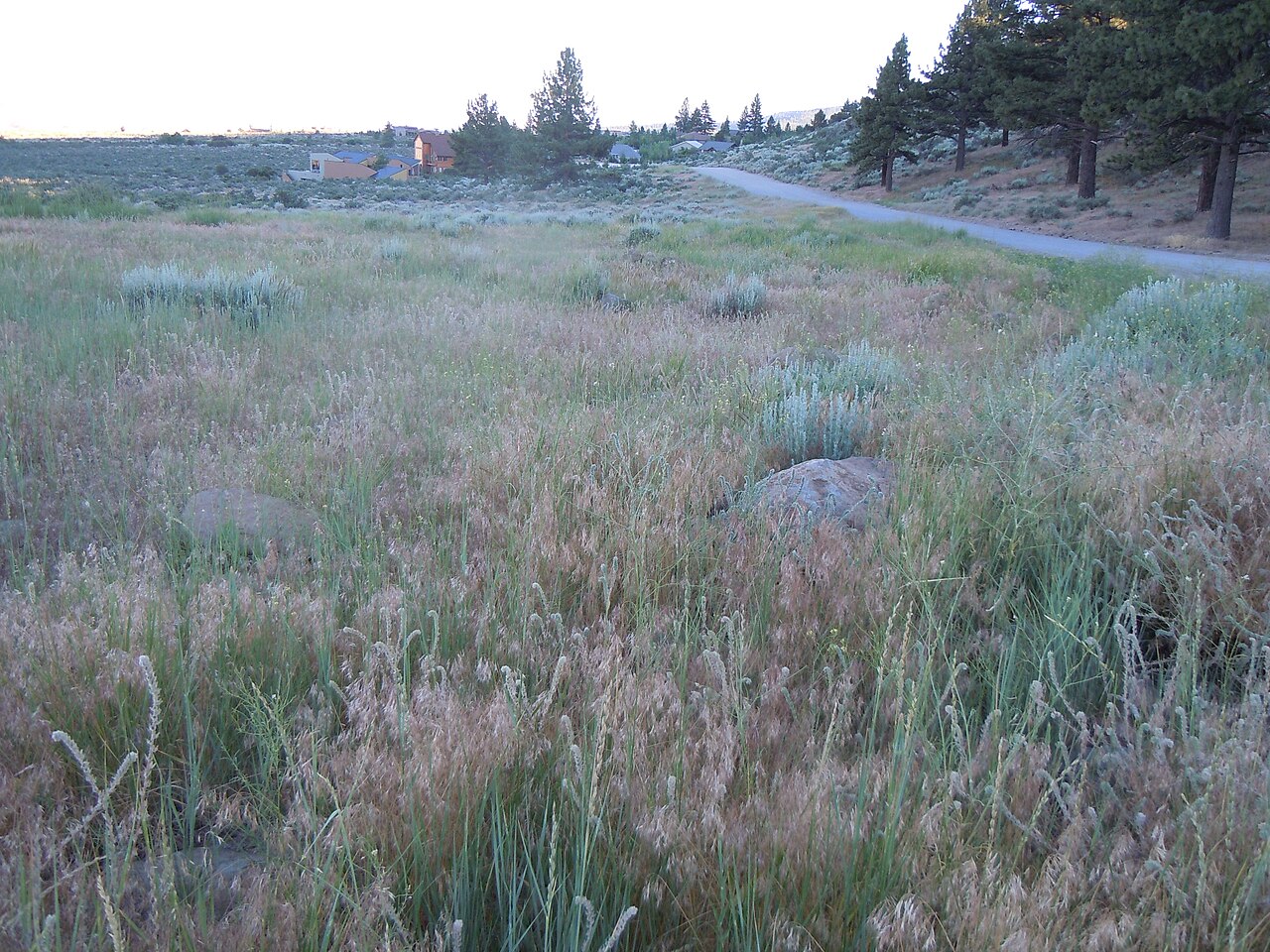
Leymus triticoides, known as Beardless Wildrye or Creeping Wildrye, is a cool-season, rhizomatous perennial grass native to much of the western United States. Unlike many bunchgrasses, it spreads steadily by vigorous underground rhizomes to form dense, sod-forming stands, making it one of the most effective native grasses for stabilizing soil along waterways, in saline meadows, and on disturbed ground.
Beardless Wildrye produces stiff, slender, blue-green to gray-green leaves and narrow, upright seed spikes that lack the long bristly awns of many related wild ryes, giving the plant a cleaner, more refined look and its common name. It tolerates both consistently moist and heavy, saline soils, a combination few other native grasses handle as well, which has made it a mainstay of wetland and riparian restoration throughout the West.
For gardeners and land managers in California and the broader western states, Beardless Wildrye offers an exceptionally tough, spreading groundcover grass for difficult wet or saline sites, along with real value for erosion control and rangeland forage.
Identification
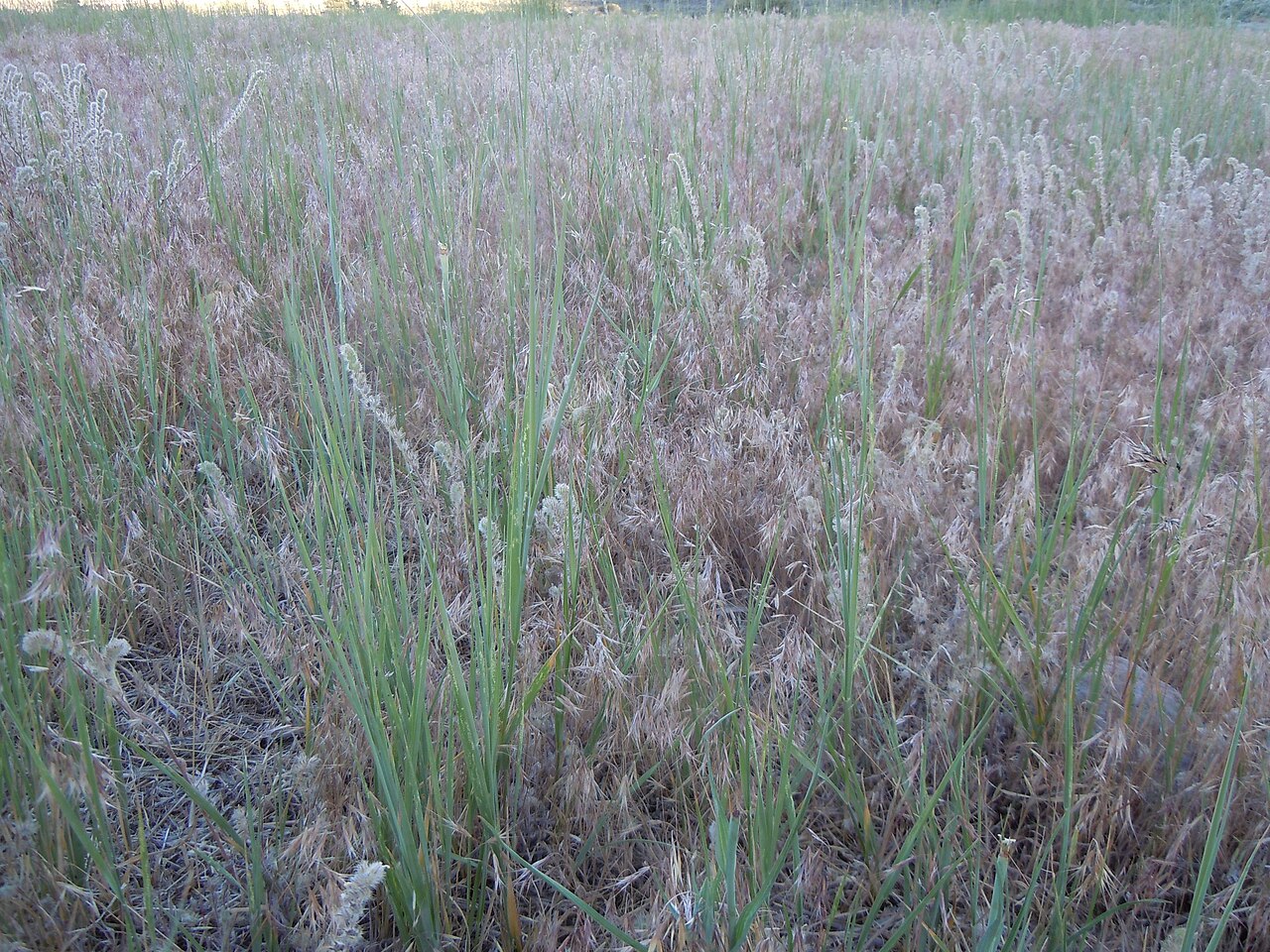
Beardless Wildrye is a rhizomatous, turf-forming perennial grass reaching up to about 4 feet in height, though garden and rangeland stands are often shorter and denser. Its spreading, sod-like growth habit, driven by an extensive network of underground rhizomes, distinguishes it from the bunch-forming habit of most other native wild ryes.
Stems & Leaves
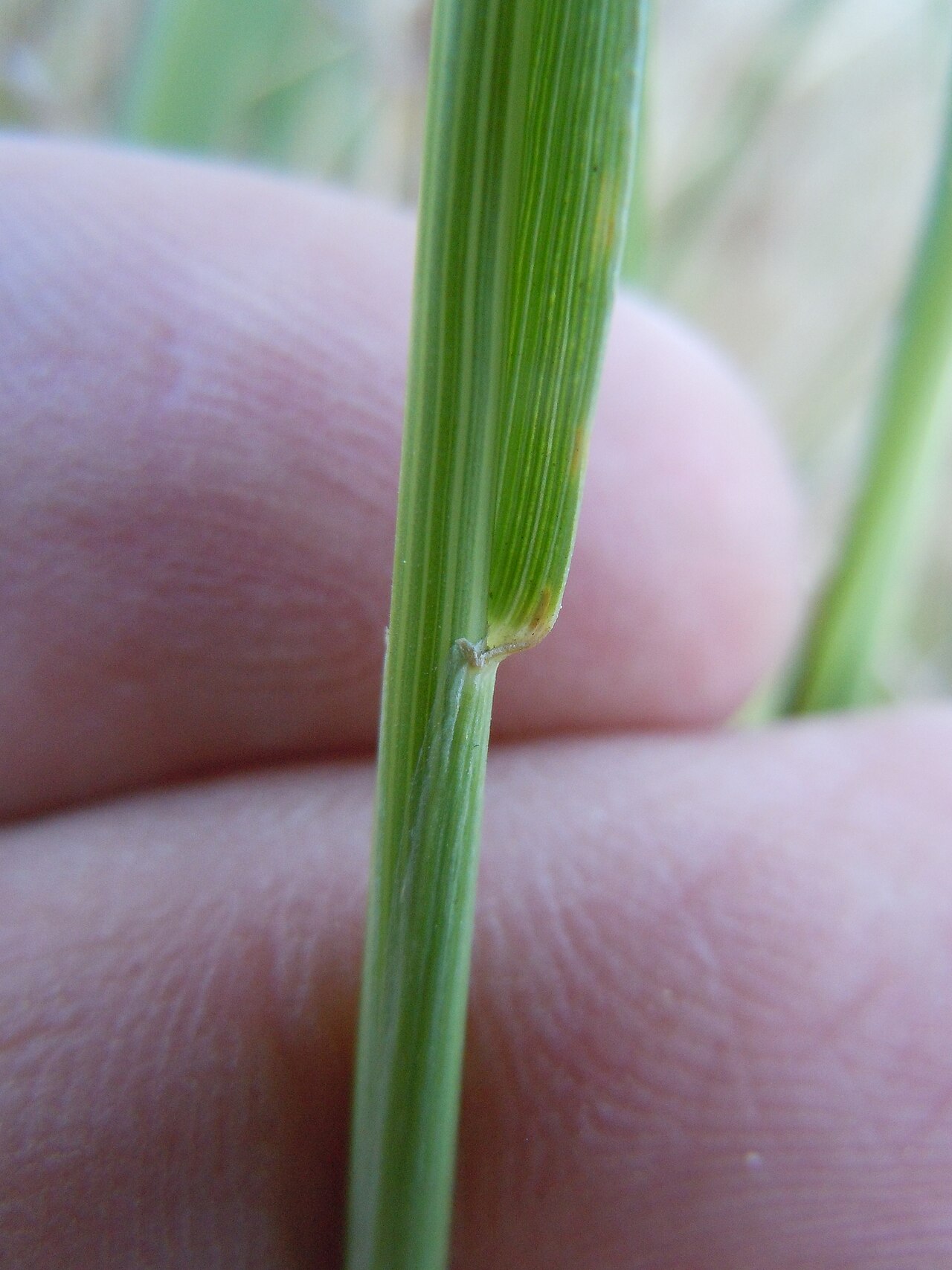
The leaves are stiff, slender, and blue-green to gray-green, standing away from the stem at a distinctive angle rather than lying close against it. Leaf sheaths are generally hairless to lightly hairy, and the overall foliage has a fine, almost wiry texture compared to coarser native grasses.
Flowers & Seed Heads
The inflorescence is a narrow, upright spike up to about 8 inches long, bearing closely spaced spikelets along the stem. As the common name suggests, the lemmas are awnless or only very short-awned, giving the seed head a tidy, “beardless” look compared to the long, bristly awns of relatives like Giant Wildrye.
Roots & Rhizomes
The plant’s defining feature below ground is its dense, fibrous root system joined by vigorous creeping rhizomes, which allow it to form solid, continuous stands. This root network is exceptionally effective at holding soil in place along stream edges and other erosion-prone sites.
Quick Facts
| Scientific Name | Leymus triticoides (syn. Elymus triticoides) |
| Family | Poaceae (Grass) |
| Plant Type | Cool-Season Rhizomatous Perennial Grass |
| Mature Height | 1.5–4 ft |
| Mature Spread | Spreading, forms continuous sod |
| Growth Rate | Fast (rhizomatous) |
| Sun Exposure | Full Sun to Part Shade |
| Water Needs | Moderate; tolerates both moist and dry, saline soils |
| Soil Type | Clay, loam, or sand; tolerates alkaline and saline soils |
| Soil pH | 6.0–8.5 |
| Bloom Time | May – July |
| Flower Color | Green to straw-colored |
| Fall Color | Tan to golden-brown |
| Fruit | Small awnless to short-awned grains |
| Deer Resistant | No (grazed as forage) |
| USDA Hardiness Zones | 4–9 |
Native Range
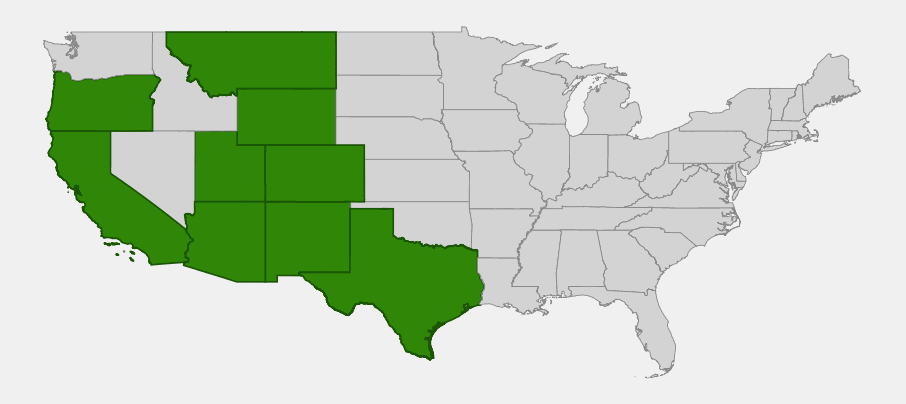
Beardless Wildrye is native across much of the western United States, with confirmed populations in California, Oregon, Montana, Wyoming, Utah, Colorado, Arizona, New Mexico, and Texas, and its range extends north into British Columbia, Canada. Populations are widely scattered rather than continuous across this range, reflecting its preference for specific moist or saline habitat types rather than uniform distribution.
Within its range, Beardless Wildrye typically grows in dry to moist meadows, often where soils are heavy and somewhat saline or alkaline, as well as along stream edges and in seasonally wet swales. It is especially characteristic of California’s Central Valley grasslands and chaparral-adjacent meadows, where it is an important component of habitat restoration efforts.
Because of its broad usefulness for erosion control and its wide natural distribution, Beardless Wildrye is also planted somewhat outside its precisely documented range as part of restoration seed mixes; gardeners should still confirm its appropriateness for a specific site relative to locally native plant communities.
📋 Regional plant lists featuring Beardless Wildrye: California & Nevada · Montana & Wyoming · Utah & Western Colorado · Arizona & New Mexico · South & West Texas · Western Oregon & Western Washington
Growing & Care Guide
Beardless Wildrye is an exceptionally tough, adaptable grass that excels in conditions that defeat many other native plants, particularly heavy, saline, or seasonally wet soils. Its spreading habit makes it ideal where a dense, erosion-resistant cover is the goal.
Light
This grass grows best in full sun, developing the densest sod and the most robust seed heads. It tolerates light shade, especially along streambanks with partial tree cover, but becomes more open and less vigorous in deeper shade.
Soil & Water
Beardless Wildrye is remarkably tolerant of heavy clay and saline or alkaline soils that few other grasses handle well, a trait rooted in its adaptation to western valley meadows and seasonal wetlands. It prefers moderate, consistent moisture but tolerates both periods of standing water and considerable summer dryness once its root system is established.
Planting Tips
Plant from container stock, rhizome divisions, or seed in fall to take advantage of winter and spring moisture. Because it spreads vigorously by rhizome, give it room to run or use it deliberately as a spreading groundcover; it is not well suited to tight, formal garden beds where its colonizing habit would be unwelcome.
Pruning & Maintenance
Mow or cut back old growth in late winter to refresh stands before spring regrowth. Because of its rhizomatous spread, established plantings may need edging or containment if a defined border is desired, but otherwise require very little upkeep.
Landscape Uses
Beardless Wildrye is valued above all for its ability to stabilize difficult ground:
- Streambank and waterway stabilization thanks to its dense rhizome network
- Saline and alkaline meadow restoration where few other grasses thrive
- Erosion control on disturbed slopes and construction sites
- Rangeland forage in appropriate grazing systems
- Native lawn alternatives in low-mow, naturalistic settings
Wildlife & Ecological Value
Beardless Wildrye is a foundational grass species across much of its western range, valued both for direct wildlife use and for the habitat structure it provides.
For Pollinators
As a wind-pollinated grass, Beardless Wildrye offers little direct floral resource to pollinators, but its dense stands provide important shelter and nesting habitat for ground-nesting native bees in open grassland and meadow settings.
For Birds
Grassland and meadow birds use dense Beardless Wildrye stands for nesting cover and forage on the seed produced by its narrow spikes. Its sod-forming growth is particularly valuable in riparian corridors, where structurally complex grass cover supports a range of streamside bird species.
For Mammals
This is a genuinely important rangeland grass, grazed by cattle and native ungulates alike, and its dense rhizome mat provides cover for small mammals along stream edges and in meadow habitat.
Ecosystem Role
Few native western grasses match Beardless Wildrye’s ability to stabilize streambanks and waterways, where its extensive rhizome network binds soil against the erosive force of seasonal flooding. It is considered an important species in California chaparral and woodland habitat restoration projects specifically because of this soil-holding capacity.
Cultural & Historical Uses
Beardless Wildrye has long been recognized across the western United States as a valuable rangeland grass, grazed readily by livestock and used historically as part of mixed native pasture across much of its range. Its tolerance of difficult, saline soils made it a dependable forage source on land where few other grasses could be relied upon.
In more recent decades, land managers and restoration ecologists have turned to Beardless Wildrye specifically for its unmatched ability to stabilize waterways and reclaim disturbed or saline ground, a role documented extensively by USDA NRCS plant materials programs, including California’s Lockeford Plant Materials Center, which has worked with the species for soil conservation applications.
Today Beardless Wildrye continues this dual legacy, serving both as working rangeland forage and as one of the most dependable native grasses for restoration practitioners tackling difficult, erosion-prone western sites.
Frequently Asked Questions
Does Beardless Wildrye spread aggressively?
Yes, by design. It spreads steadily through underground rhizomes to form dense sod, which is exactly why it excels at erosion control but also why it needs room to run or containment in a smaller, formal garden bed.
Can Beardless Wildrye handle salty or alkaline soil?
Yes, this is one of its signature strengths. It tolerates saline and alkaline soils that defeat most other native grasses, making it especially valuable in western valley and desert meadow restoration.
Is Beardless Wildrye the same as Giant Wildrye?
No. Beardless Wildrye (Leymus triticoides) is shorter, spreads by rhizomes to form sod, and has awnless or short-awned spikes, while Giant Wildrye (Leymus condensatus) is a much taller bunchgrass with long, bristly awns.
Is Beardless Wildrye good for livestock grazing?
Yes, it is considered a good rangeland grass for grazing and has a long history of agricultural use across the western states where it occurs naturally.
How much water does Beardless Wildrye need once established?
Moderate water is ideal, but established plants tolerate both periods of soil saturation and considerable summer dryness, reflecting the variable moisture conditions of its native meadow and streamside habitats.

Looking for a nursery that carries Beardless Wildrye?
Browse our native plant nursery directory: California · Oregon · Wyoming · Utah & Texas · Arizona & New Mexico