Brown-headed Rush (Juncus phaeocephalus)
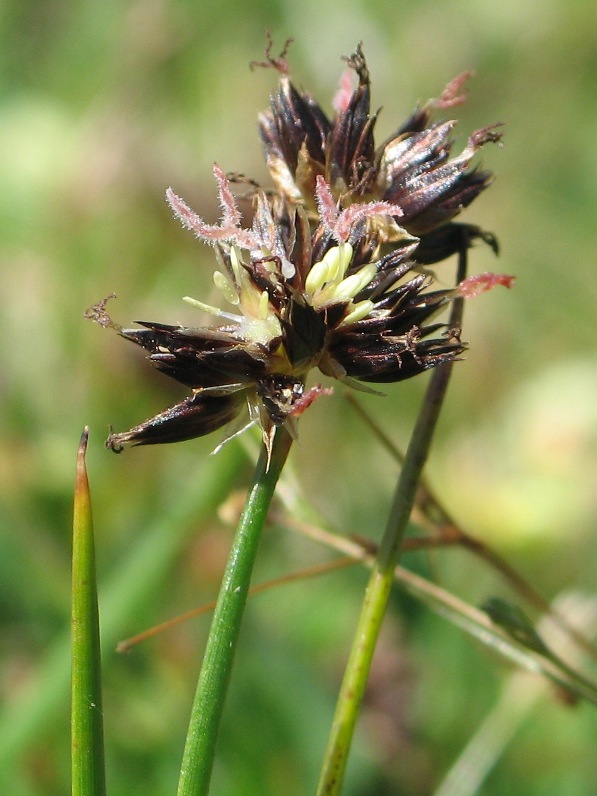
Juncus phaeocephalus, known as Brown-headed Rush or Brownhead Rush, is a tufted, grasslike perennial found almost entirely along the California coast, from the redwood belt of the North Coast south through the Central Coast and into the Channel Islands, with a few populations continuing into Baja California. Its defining feature is its flower cluster: a dense, dark chocolate-brown head of tiny flowers that stands out against the plant’s slender green stems, giving the species its common name.
Brown-headed Rush grows in coastal dunes, seeps, moist meadows, and the margins of swamps and marshes, usually within reach of fog and salt air. It forms loose to dense tufts of narrow, wiry stems that rise 1 to 2 feet tall, spreading gradually by short rhizomes rather than running aggressively, which makes it well suited to naturalistic coastal gardens and restoration plantings.
Because it tolerates poor, sandy soils, salt spray, and both sun and part shade, Brown-headed Rush is a dependable choice for coastal California gardens looking to recreate dune or seep habitat, or simply to add a tough, low-maintenance native grasslike texture near the coast. It is far less common in cultivation than some of its rush relatives, but it deserves wider use wherever its native range allows.
Identification
Brown-headed Rush is a clumping, rhizomatous perennial with slender, round, leafy stems reaching 1 to 2 feet tall. It is most easily told apart from other California rushes by its compact, dark brown flower heads, which are noticeably darker and more clustered than those of relatives like Common Rush.
Stems & Leaves
Stems are round, slender, and bright to medium green, often tinged reddish at the base. Unlike some rushes, Juncus phaeocephalus has true, grasslike leaf blades along the lower part of the stem, narrow and channeled, which gives the plant a slightly softer, grassier look than leafless species such as Common Rush.
Flowers
The flower clusters are dense, rounded to oblong heads of small, dark brown to blackish flowers, each with pointed tepals, clustered tightly at the stem tip or just below it. The deep brown color of the mature heads, visible from late spring through summer, is the easiest field mark for identifying this species.
Fruit & Seeds
Small, three-chambered brown capsules follow the flowers, each containing numerous tiny seeds. The capsules are typically shorter than the surrounding tepals, giving the dried flower heads a bristly, textured look that persists into fall.
Quick Facts
| Scientific Name | Juncus phaeocephalus |
| Family | Juncaceae (Rush) |
| Plant Type | Perennial Grasslike Rush |
| Mature Height | 1–2 ft |
| Mature Spread | 1–1.5 ft |
| Growth Rate | Moderate |
| Sun Exposure | Full Sun to Part Shade |
| Water Needs | Moderate; tolerates seasonal seep and dune conditions |
| Soil Type | Sandy, loamy, or heavier soils; tolerates poor drainage |
| Soil pH | 5.5–7.5 |
| Bloom Time | April – July |
| Flower Color | Dark brown |
| Fall Color | Evergreen to semi-evergreen green |
| Fruit | Small brown three-chambered capsules |
| Deer Resistant | Yes |
| USDA Hardiness Zones | 8–10 |
Native Range
Brown-headed Rush is native almost exclusively to California, occurring along the North Coast, Outer North Coast Ranges, Central Coast, and South Coast, including the northern Channel Islands, with scattered populations continuing south into Baja California, Mexico. It is essentially a California coastal endemic within the United States, not documented as a reliably native wild population in any other U.S. state.
Within this range it favors damp, often sandy or peaty ground: coastal dune swales, seeps on coastal bluffs, the margins of freshwater marshes and swamps, and moist meadows near the immediate coast. These sites are typically influenced by coastal fog, which keeps soil moisture more consistent than it would be further inland.
Brown-headed Rush is not documented as native outside California and should not be assumed hardy or appropriate as a “native” planting choice in other states; it is best reserved for coastal California restoration and garden projects within or near its known range.
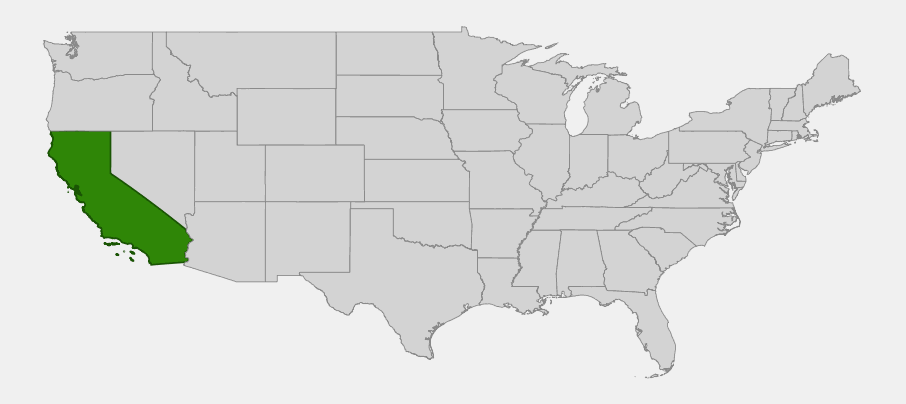
📋 Regional plant lists featuring Brown-headed Rush: California & Nevada
Growing & Care Guide
Brown-headed Rush is a low-fuss, coastal-adapted rush that thrives where many other plants struggle: salty air, sandy soil, and fog-driven moisture. Once established, it needs very little attention.
Light
This rush grows well in full sun along the immediate coast, where cool temperatures and fog keep it from drying out, and tolerates part shade further inland or under light tree cover. In hotter, drier inland gardens outside its natural fog belt, afternoon shade helps it perform its best.
Soil & Water
Brown-headed Rush tolerates almost any soil type, from loose dune sand to heavier loam, as long as it receives reasonably consistent moisture, particularly during its spring growing season. It is more drought-tolerant than many wetland rushes once established, reflecting its adaptation to seasonally damp dune and seep habitats that dry somewhat in summer.
Planting Tips
Plant from containers in fall to take advantage of winter and spring rains for establishment. Space plants 12 to 18 inches apart for a naturalistic coastal groundcover effect. It is an excellent choice for dune stabilization and coastal bluff restoration projects within its native range.
Pruning & Maintenance
Minimal care is needed. Remove old, browned foliage in late winter to tidy the clump before new spring growth begins. Established plants rarely need dividing, though congested clumps can be split in fall if desired.
Landscape Uses
Brown-headed Rush fits naturally into coastal and restoration-style plantings:
- Coastal dune gardens and bluff restoration
- Seep and bog gardens near the coast
- Salt-tolerant plantings in exposed coastal sites
- Naturalistic meadow edges in fog-belt gardens
- Erosion control on sandy or seasonally wet slopes
Wildlife & Ecological Value
As a coastal wetland and dune species, Brown-headed Rush supports the specialized community of plants and animals adapted to California’s fog-belt habitats.
For Pollinators
Like most rushes, the flowers are wind-pollinated rather than insect-pollinated, so their direct nectar value is minor, but the clumps shelter small native bees and other insects from wind and sun in exposed coastal settings.
For Birds
Coastal sparrows and other small birds forage through the clumps for insects and glean seed from the dried flower heads in late summer and fall. Dense tufts also provide low nesting and roosting cover near open dune and marsh habitat.
For Mammals
Small mammals use the cover of dense rush clumps along dune swales and seeps for protection from predators and weather, particularly in otherwise sparsely vegetated dune systems.
Ecosystem Role
Brown-headed Rush helps stabilize loose, sandy soils in dune swales and coastal seeps with its fibrous, rhizomatous root system, reducing wind and water erosion in a landscape that is otherwise prone to shifting. Its presence is often an indicator of a functioning coastal dune or seep wetland system.
Cultural & Historical Uses
Documented ethnobotanical records specific to Juncus phaeocephalus are limited, but rushes in general held significant importance to Indigenous peoples of coastal California, including groups such as the Coast Miwok and Ohlone whose traditional territories overlap much of this species’ range. Various native rushes were gathered for basketry and cordage, prized for their long, flexible, fibrous stems.
Because Brown-headed Rush is a relatively low-profile species compared to larger, more widely harvested rushes, it has not historically been a major commercial or craft plant in the way some of its relatives have. Its main modern significance is ecological, as a component of increasingly rare and threatened California coastal dune and wetland habitats.
Conservation of coastal dune and wetland habitat along the California coast, much of which has been lost to development, makes species like Brown-headed Rush important both as restoration material and as an indicator of intact coastal ecosystems.
Frequently Asked Questions
Is Brown-headed Rush the same as Common Rush?
No. Although both are California native rushes in the genus Juncus, Brown-headed Rush has true grasslike leaves and dark brown, clustered flower heads, while Common Rush (Juncus patens) is leafless with blue-gray stems and less conspicuous flowers.
Can Brown-headed Rush tolerate salt spray?
Yes. Its natural habitat along coastal dunes and bluffs means it handles salt-laden coastal air and sandy, mineral-poor soils better than most garden plants, making it a good choice for exposed coastal sites.
Does Brown-headed Rush need a lot of water?
It prefers consistent moisture, especially during its spring growth period, but established plants tolerate the natural summer dry-down typical of California’s fog-belt dune and seep habitats.
Where can I plant Brown-headed Rush?
It is best suited to coastal California gardens within or near its native range, particularly in sandy soils and fog-influenced microclimates. It is not a reliable choice for inland or non-coastal gardens far outside its natural distribution.
Is Brown-headed Rush easy to find in nurseries?
It is less commonly sold than some other native rushes, so gardeners may need to seek out specialty California native plant nurseries, particularly those focused on coastal or dune restoration species.

Looking for a nursery that carries Brown-headed Rush?
Browse our native plant nursery directory: California