
Florida Hobblebush (Agarista populifolia)
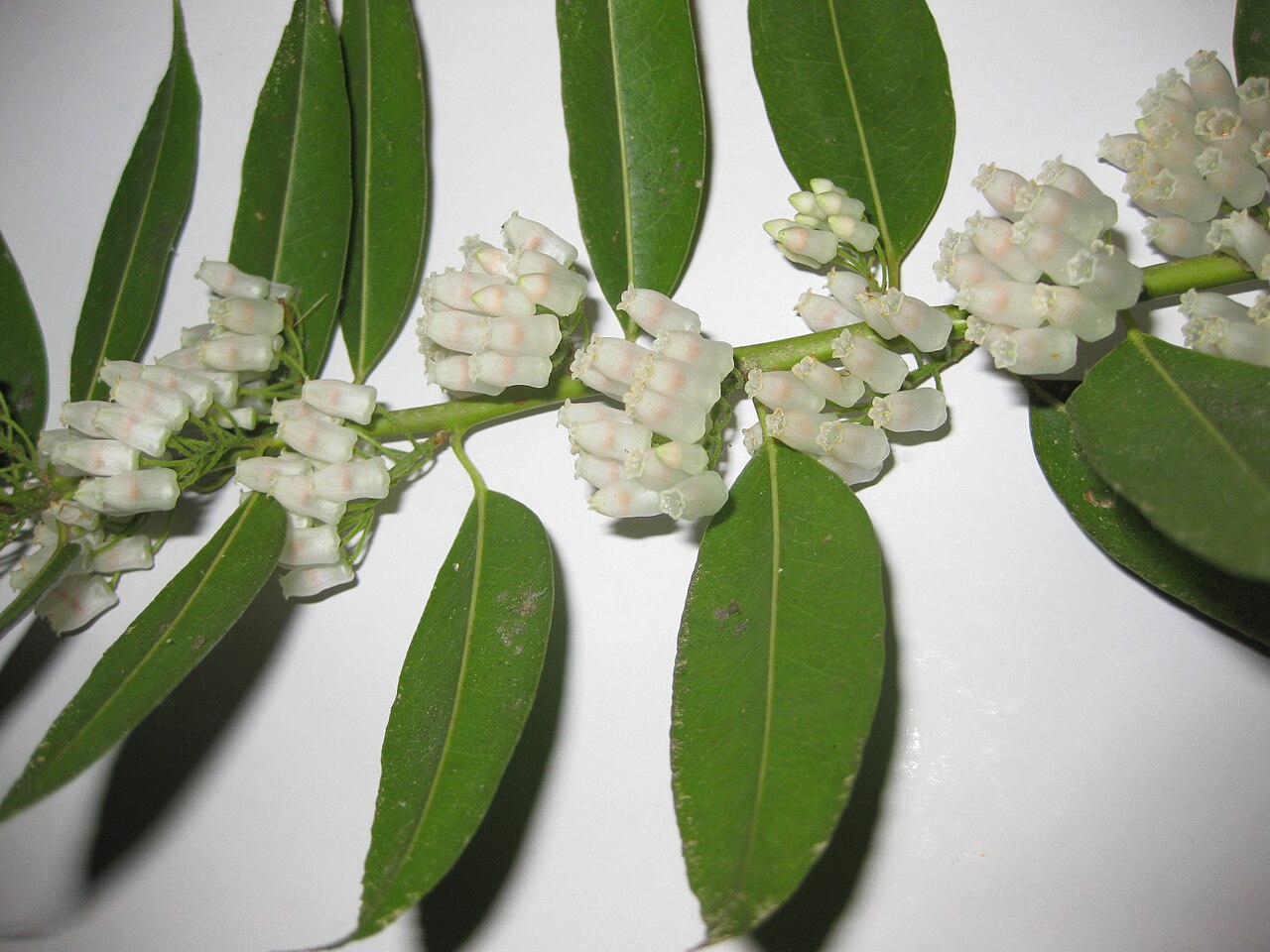
Agarista populifolia, known as Florida Hobblebush, pipestem or Florida leucothoe, is a tall evergreen shrub of shady, wet woods on the southeastern Coastal Plain. It grows as a loose fountain of arching, cane-like stems, usually 8 to 12 feet tall, clothed in glossy, pointed leaves that emerge tinged with red. In spring, rows of small, fragrant, white, urn-shaped flowers hang beneath the branches. It belongs to the heath family (Ericaceae), alongside blueberries, fetterbushes and the doghobbles.
Older books and many nurseries still sell it as Leucothoe populifolia, and the 18th-century name Andromeda populifolia also appears in early literature. Botanist Walter Judd moved it to the genus Agarista in 1979. That genus is otherwise centered in Central and South America and Africa, so Florida hobblebush is the only member native to the United States. It should not be confused with the northern hobblebush, Viburnum lantanoides, a deciduous viburnum of Appalachian and New England forests that shares the common name but not the family.
In the wild, Florida hobblebush lines spring runs, creek banks, seepage slopes and wet hammocks in north and central Florida and in southeastern Georgia and coastal South Carolina. In gardens it has become one of the most dependable large evergreen shrubs for shade in the Deep South, valued as a fast screen, a stream-bank stabilizer, and a southern replacement for the doghobbles that often struggle in hot, humid summers. This guide covers how to recognize it, where it grows, and how to use it well in a shady native garden.
Identification
Florida hobblebush is easiest to recognize by its size and habit: a big, arching, evergreen shrub with glossy leaves and hanging white bells, growing in shade near water. Its smaller relatives in Leucothoe and Lyonia rarely exceed 6 feet.
Stems & Habit
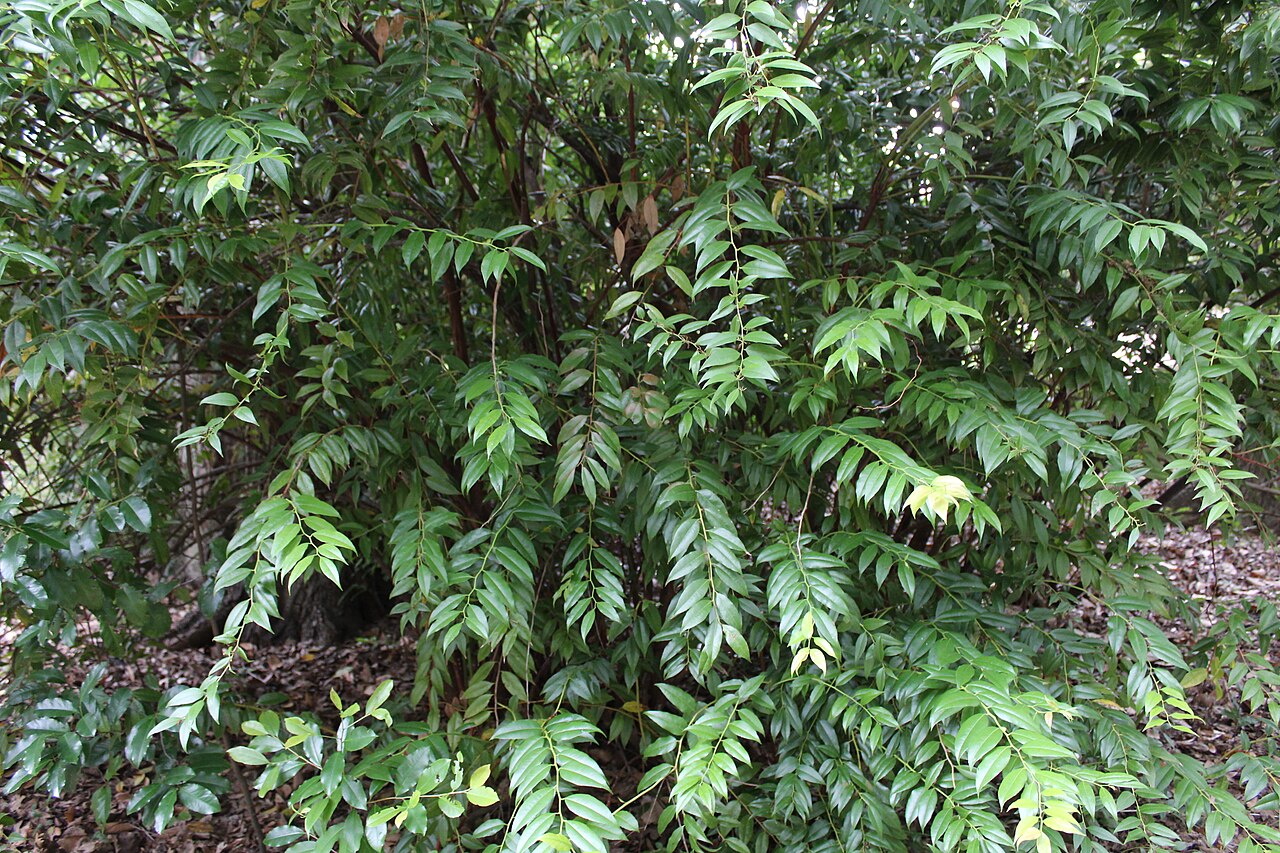
Plants grow as clumps of many slender, arching stems that rise from the base and spread by root suckers. Older stems are gray-brown and fairly straight, which probably explains the old name pipestem, and the common name hobblebush refers to the tangled thickets the plant forms along streams, which are hard to walk through. Typical height is 8 to 12 feet, but in rich, wet, shady sites stems can reach 15 feet or more and lean out over the water. New shoots are greenish to reddish.
Leaves
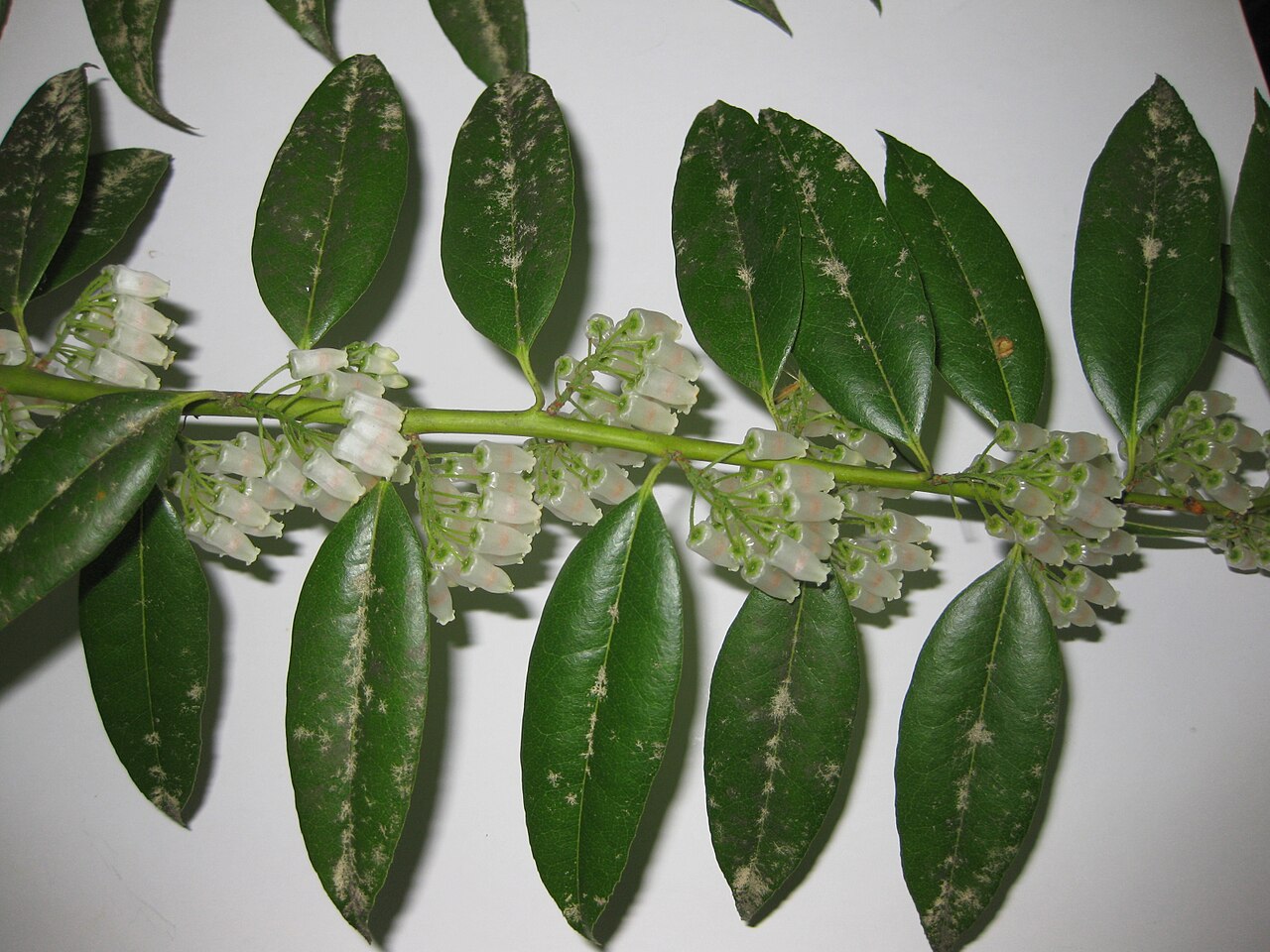
The leaves are alternate, simple, leathery and evergreen, roughly 2 to 4 inches long, ovate to lance-shaped with a long tapering tip and a finely toothed to nearly smooth margin. They are glossy dark green on top and paler below, and they are held in two neat rows along the stems, giving each branch a flat, fern-like look. New leaves in spring are bronze-red, and in cold winters the foliage can pick up purplish tints. The species name populifolia means “poplar-leaved”.
Flowers
Flowers appear in spring, generally from March to May in Florida and into early summer farther north. They hang in short, crowded clusters (racemes) from the leaf axils along the underside of the previous year’s stems. Each flower is a creamy white, narrow, urn-shaped bell about a quarter inch long with five tiny lobes at the mouth, typical of the heath family. The clusters are sweetly fragrant, and a plant in full flower can scent a shady corner of the garden.
Fruit
The flowers are followed by small, dry, rounded, five-parted capsules that turn brown and split to release very fine seeds. They have no ornamental or food value and often persist on the stems into winter. Unlike blueberries, Florida hobblebush has no fleshy fruit.
Quick Facts
| Scientific Name | Agarista populifolia (syn. Leucothoe populifolia, Andromeda populifolia) |
| Family | Ericaceae (heath family) |
| Plant Type | Evergreen shrub, multi-stemmed and arching; spreads by suckers |
| Mature Height | 8–12 ft (occasionally 15 ft or more in rich, wet shade) |
| Mature Spread | 6–10 ft; slowly widens into a thicket |
| Growth Rate | Moderate to fast |
| Sun Exposure | Part shade to full shade |
| Water Needs | Moderate to high; prefers consistently moist soil |
| Soil Type | Moist, acidic, organic loam or sandy loam; tolerates occasional flooding |
| Soil pH | About 4.5–6.5 (acidic) |
| Bloom Time | March–May in Florida; into June farther north |
| Flower Color | White to creamy white |
| Fall Color | None; evergreen, with bronze-red new growth and some purplish winter tints |
| Fruit | Small dry brown capsule |
| Deer Resistant | Moderately; deer usually browse it lightly |
| USDA Hardiness Zones | 7–10 |
Native Range
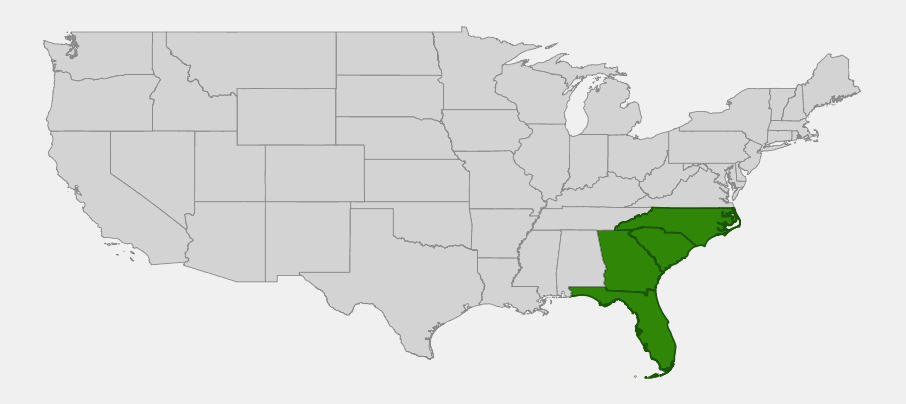
Florida hobblebush has a small native range on the southeastern Coastal Plain. USDA PLANTS lists it from Florida, Georgia, South Carolina and North Carolina. The core of the range is north and central peninsular Florida and the Florida Panhandle, southeastern Georgia, and the lower Coastal Plain of South Carolina. North Carolina records are few, and the plant is far more familiar there as a landscape shrub than as a wild one. The Atlas of Florida Plants maps it across much of northern Florida and south into the central peninsula.
Within this range it is a plant of shade and moisture. It grows along clear, sandy-bottomed streams and spring runs, at the base of bluffs and ravine slopes where groundwater seeps out, in wet hammocks and bay swamps, and on the edges of floodplain forests. It often grows with coastal doghobble, Florida anise, Virginia sweetspire and needle palm under a canopy of bays, magnolias and swamp hardwoods.
Because it suckers and roots readily along creek banks, Florida hobblebush helps hold soil on steep, wet slopes and along stream edges. Its main threats in the wild are the same as for other seepage and spring-run plants: groundwater withdrawal, ditching and drainage, and clearing of stream-side forest.
📋 Regional plant lists featuring Florida Hobblebush: North & South Florida · Alabama, Georgia & Mississippi · North & South Carolina
Growing & Care Guide
Florida hobblebush is an easy, forgiving shrub in the right spot: moist, acidic soil and some shade. It is widely available from native plant nurseries, including compact selections, so there is no reason to dig plants from the wild.
Light
It grows best in part shade to full shade. Morning sun and afternoon shade is ideal. In deep shade it stays more open and flowers less, and in full sun it needs steady moisture or the leaves yellow and scorch, especially in central and south Florida.
Soil & Water
Give it moist, acidic, organic soil. It handles wet soil and short periods of flooding, which makes it useful along ponds, swales and stream banks, and it tolerates sandy soil if mulched and watered through dry spells. Once established it survives moderate drought in shade, but it looks best when the soil never dries out completely. Avoid alkaline, limestone-based soils.
Planting Tips
Plant container-grown shrubs from fall through early spring so roots establish before summer heat. Space them 5 to 6 feet apart for a screen. Work leaf compost into poor sand and mulch with pine straw or shredded leaves. Water regularly for the first growing season.
Pruning & Maintenance
Florida hobblebush needs little routine care. It can be kept at almost any height: cut the oldest, tallest canes to the ground every few years to keep the clump dense and to encourage fresh, red-tinged shoots. Prune right after flowering so you do not remove next year’s flower buds. Suckers can be pulled or dug where the clump spreads too far. The plant has few serious pests and is less prone to the leaf-spot diseases that disfigure doghobbles in the humid South.
Propagation
The easiest method is dividing rooted suckers from the edge of a clump in late winter. Semi-hardwood cuttings taken in summer root fairly readily with rooting hormone under mist. Seed is dust-fine and can be sown on the surface of moist, acidic, peaty mix, but seedlings are slow.
Landscape Uses
- Shade screens and hedges: a fast evergreen screen under pines or hardwoods where hollies and viburnums struggle
- Stream banks and rain gardens: suckering roots help stabilize moist, shaded slopes and swale edges
- Woodland gardens: an arching backdrop for ferns, native azaleas and Florida anise
- Foundation plantings on the north side of buildings: tolerates the deep shade and moist soil found there
- Replacement for exotic shrubs: a native alternative to ligustrum, cherry laurel and other non-native screens in shade
Wildlife & Ecological Value
Florida hobblebush is not a showy wildlife plant, but it adds dense evergreen structure to shady, wet places where few other large shrubs grow.
For Pollinators
The fragrant spring flowers attract bees. Bumblebees are frequent visitors, because they can reach into the narrow bells. Smaller native bees and occasional butterflies also visit. The bloom period is early and fairly long, which helps queen bumblebees building new colonies in spring.
For Birds
The plant has no fleshy fruit for birds, but its thickets of arching evergreen stems give year-round cover and nesting sites for small songbirds such as Carolina wrens, cardinals and white-eyed vireos, especially along streams.
For Mammals
Thickets give shelter to small mammals. Like many plants in this branch of the heath family, the foliage is generally thought to contain toxic compounds (grayanotoxins), and it is browsed only lightly by deer. Keep livestock and pets from eating it.
Ecosystem Role
Florida hobblebush is a characteristic shrub of spring runs, seepage slopes and wet hammocks. By rooting along stream banks and forming dense clumps, it helps hold soil and shade the water. It also contributes to the evergreen understory that keeps these habitats cool and humid.
Cultural & Historical Uses
French naturalist Jean-Baptiste Lamarck described this shrub in 1783 as Andromeda populifolia, from the heath genus that was then a catch-all for many American shrubs. It was later moved to Leucothoe, and in 1979 Walter Judd placed it in Agarista as part of a botanical revision of that genus. Many gardeners and nurseries still use Leucothoe populifolia.
The name pipestem probably refers to the straight, slender stems, which look like old-fashioned pipe stems. Hobblebush describes the tangled thickets along creeks, which “hobble” anyone trying to walk through them. The same name is used for an unrelated northern viburnum, so the scientific name is the clearest way to ask for this plant at a nursery.
Florida hobblebush became popular in southern landscaping in the late 20th century, promoted by native plant nurseries and university horticulturists as a shade-tolerant evergreen that was more heat- and disease-tolerant than the doghobbles. Compact selections such as ‘Taylor’s Treasure’ are now sold, but the straight species remains the best choice for naturalistic plantings and stream-side restoration within its native range.
Frequently Asked Questions
Is Florida hobblebush the same as hobblebush viburnum?
No. Florida hobblebush (Agarista populifolia) is an evergreen shrub in the heath family native to the Southeast Coastal Plain. Hobblebush (Viburnum lantanoides) is a deciduous viburnum with large round leaves that grows in northern and Appalachian forests. They share a common name only.
How fast does Florida hobblebush grow?
In moist, shady soil it grows fairly quickly, often 1 to 2 feet a year once established, and can make a 6- to 8-foot screen within a few seasons. In dry sand or full sun it grows more slowly.
Can I grow Florida hobblebush in full sun?
It survives in sun only with constantly moist soil, and the leaves often yellow or scorch. It does much better in part shade or full shade, which is where it grows naturally.
Is Florida hobblebush poisonous?
It is in a group of heath family shrubs whose leaves contain grayanotoxins, and it should be treated as poisonous if eaten by people, pets or livestock. Handling the plant is not a problem.
How do I keep Florida hobblebush from getting too tall?
Cut a few of the oldest, tallest canes back to the ground right after spring flowering. New shoots will fill in from the base. This keeps the shrub dense and at almost any height you choose without shearing.

Looking for a nursery that carries Florida Hobblebush?
Browse our native plant nursery directory: Florida & Georgia · North Carolina · South Carolina