Fetterbush (Lyonia lucida)
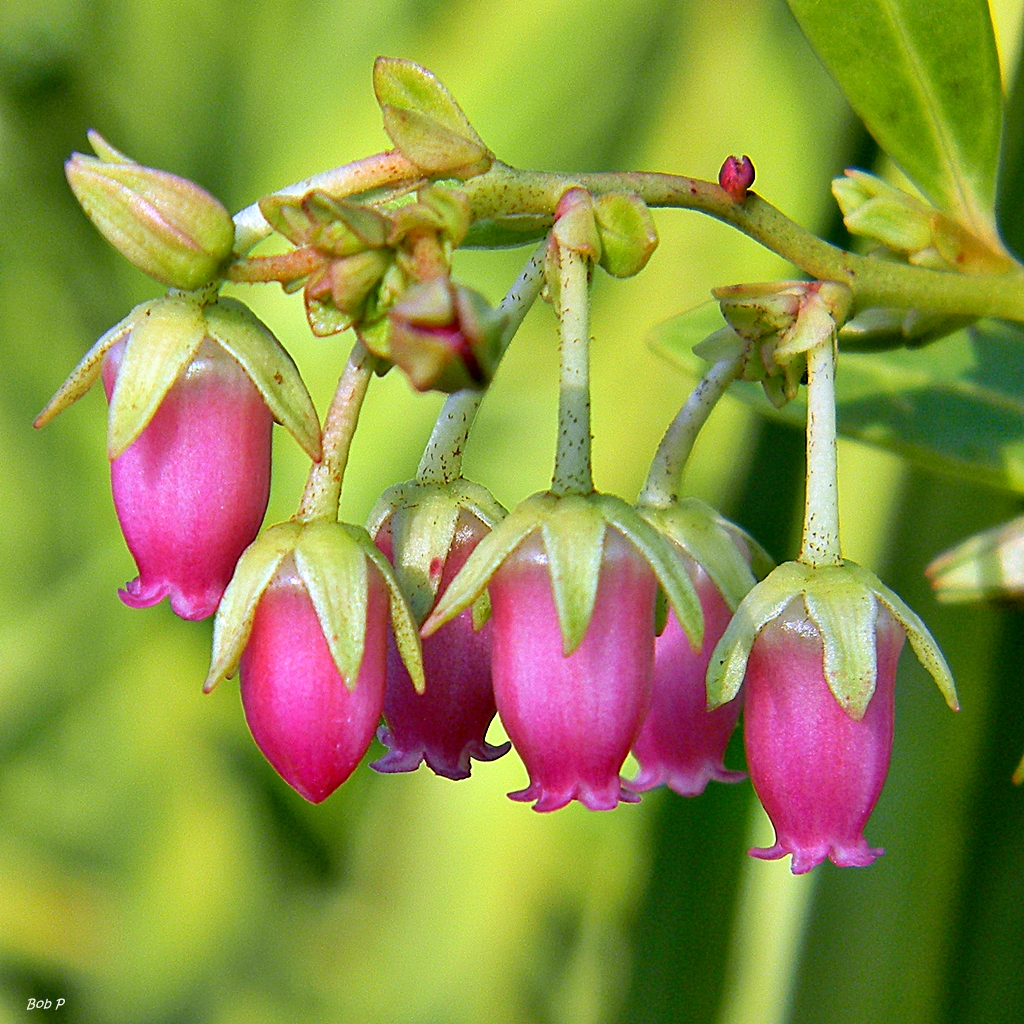
Fetterbush (Lyonia lucida) brings glossy evergreen leaves and hanging clusters of small, urn-shaped flowers to the southeastern shade garden. Also called shinyleaf, it is a member of the heath family, Ericaceae, and belongs in the same broad horticultural conversation as other shrubs of acidic woodland soils. Its pink to whitish bells reward a close look, while an established thicket supplies green structure throughout winter.
This is a Coastal Plain plant, native from southeastern Virginia to Florida and west to Louisiana. It occurs in low woods, boggy shrublands, and related wetland-edge habitats. Those origins make it interesting for an acidic rain-garden margin, but they do not mean that a fetterbush thrives in a permanently waterlogged planting hole. Moisture, drainage, and soil chemistry must work together.
The regional list’s former three-foot height and dry-to-average moisture code understate the usual plant and its preferred conditions. Most garden descriptions give a height and spread of 3–6 feet, with taller specimens possible. This guide uses that typical size and moist, well-drained soil as the baseline. Fetterbush is poisonous if eaten; its evergreen leaves and flowers should not be available to livestock or pets that chew plants.
Identification
Bark & Stems
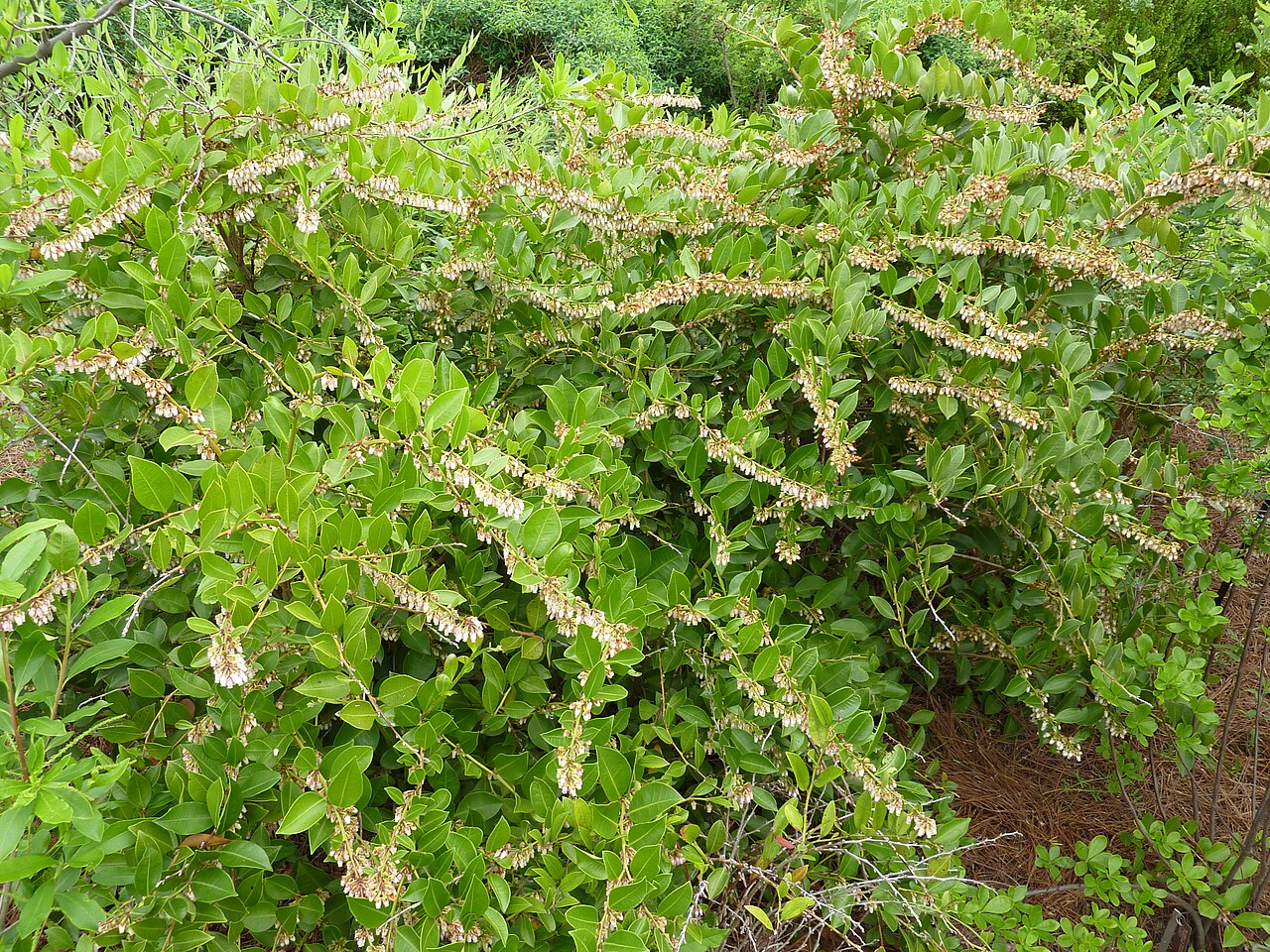
Fetterbush develops arching stems and can spread through underground growth and root suckers. Dense branches help explain the common name: a colony can impede movement through the understory. Brown twigs are somewhat angular, while older bark can split into fine shreds. A young plant may be open, but that is not a reason to crowd several together to create an instant screen.
The growth form is useful for identification only in combination with leaves and flowers. Several unrelated shrubs carry the name fetterbush, including other members of the heath family. Use Lyonia lucida when ordering plants or comparing records. A common-name match alone is not sufficient to establish that a nursery photograph or planting recommendation refers to this species.
Leaves
The leaves are simple, alternate, thick, and smooth, with a glossy green surface. Their margins are not toothed. A vein runs near the edge, and the underside has a noticeable marginal ridge. These details are more diagnostic than the general impression of an evergreen shrub with oval leaves. The pale midrib also stands out against the darker blade.
Leaves can be several inches long, giving the shrub a substantial texture without the enormous blades of some broadleaf evergreens. Evergreen does not mean that no leaves ever fall: older foliage is replaced as the plant grows. A few aging leaves are a different matter from widespread spotting or a steadily thinning canopy, which should prompt a look at site conditions.
Flowers
Small flowers hang from clusters near the leaf axils. The corolla is shaped like an urn with a narrow opening, rather than a flat five-petaled star. Pink shades are common, but flowers may be pale or whitish, and some photographs show deeper rose tones. Color alone is therefore a poor way to reject an otherwise sound identification.
The normal regional display is in spring, with published accounts spanning roughly March through June depending on location and conditions. Flowers appear before the new season’s shoot growth. A photograph from warm southern Florida may show a different calendar from a planting near the northern edge of the range; use local observation when planning a sequence of flowering shrubs.
Fruit & Seeds
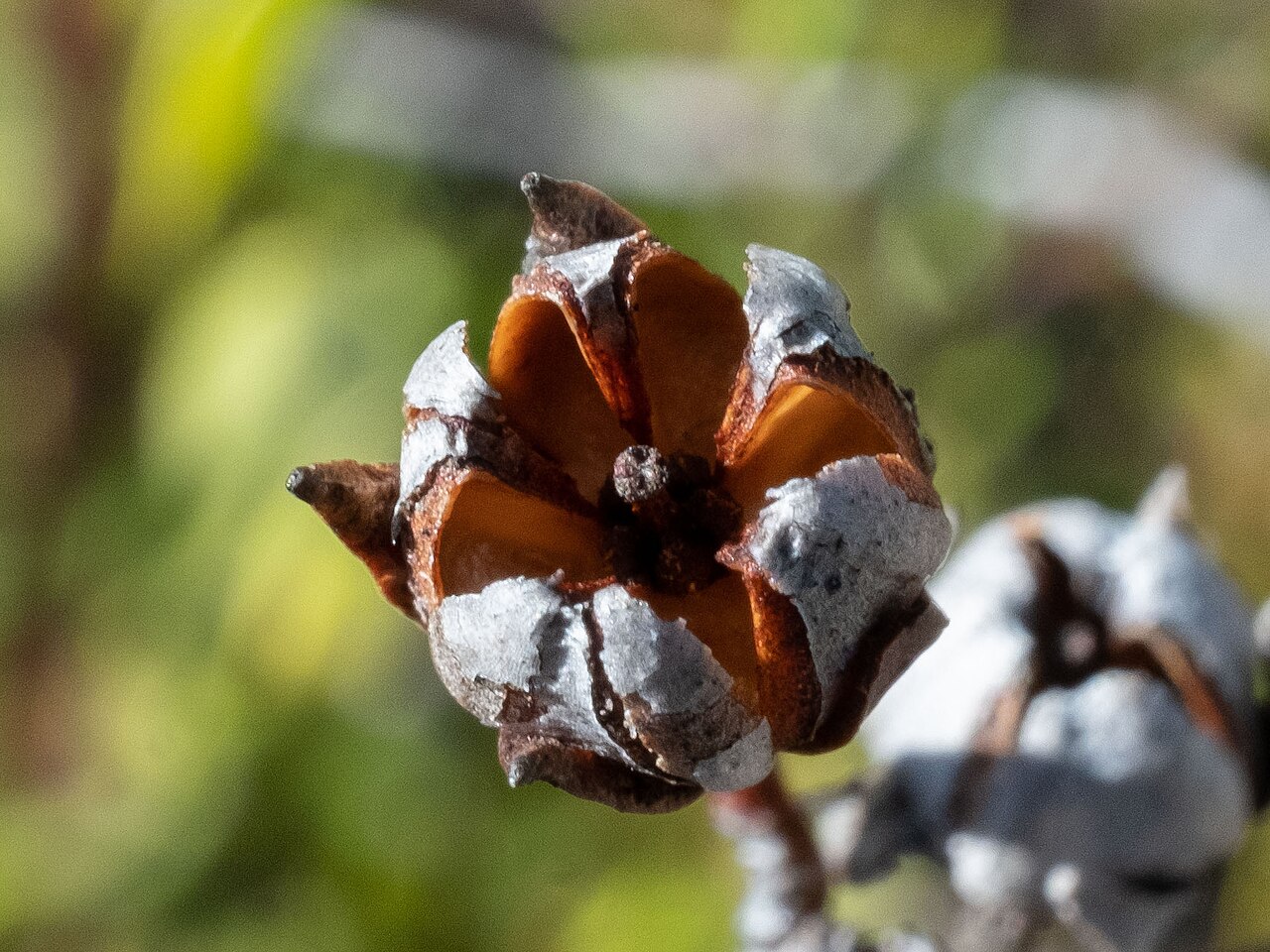
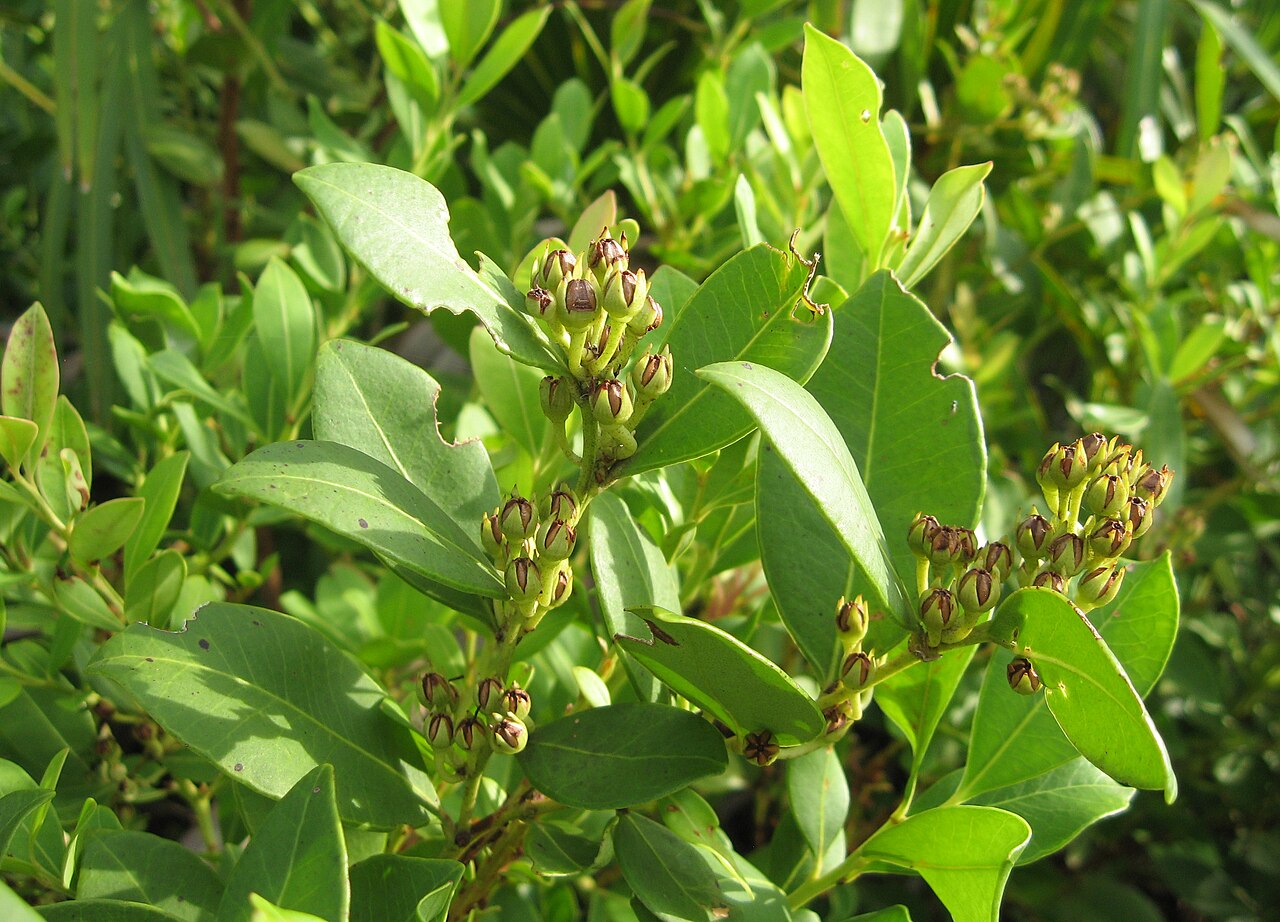
The fruit is a dry, woody capsule, not a fleshy berry. It divides into five parts as it matures. Brown capsules can remain visible after the floral display has passed, giving another useful identification feature. In the photographs below, the open capsule reveals its segmented construction, while a leafy shoot shows younger developing fruits.
Do not identify this shrub as a blueberry simply because it has glossy leaves and small bell-shaped flowers. Many heath-family plants share that flower form. The dry fruit separates fetterbush from the familiar edible blueberries, and neither flowers nor leaves should be tasted as an identification test.
Quick Facts
| Scientific Name | Lyonia lucida |
| Family | Ericaceae (heath family) |
| Plant Type | Broadleaf evergreen shrub |
| Mature Height | Usually 3–6 ft; occasionally considerably taller |
| Mature Spread | 3–6 ft, expanding through suckers and rhizomes |
| Growth Rate | Moderate |
| Sun Exposure | Partial shade to shade |
| Water Needs | Moist, well drained; tolerates brief seasonal flooding |
| Soil Type | Acidic loam, sand, or compatible clay with organic matter |
| Soil pH | Acidic; low tolerance of calcareous conditions |
| Bloom Time | Spring, approximately March–June depending on location |
| Flower Color | Pink, whitish, or deeper rose |
| Fall Color | Evergreen green foliage |
| Fruit | Brown, woody, five-parted capsules |
| Deer Resistant | Listed as resistant by NC State; browsing can vary |
| USDA Hardiness Zones | 7–9 |
Native Range
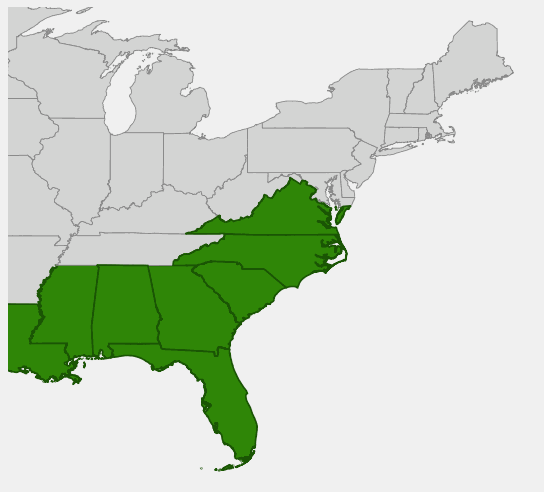
The state-level range used here is Alabama, Florida, Georgia, Louisiana, Mississippi, North Carolina, South Carolina, and Virginia. The Lady Bird Johnson Wildflower Center explicitly describes a Coastal Plain distribution from southeastern Virginia south to Florida and west to Louisiana. NC State lists the same U.S. states and also identifies Cuba in its account of geographic origin.
Within a colored state on the map, the plant is not necessarily native to every county or suited to every yard. A northern Georgia mountain garden, for example, should not be treated as equivalent to a coastal lowland merely because both are in Georgia. Local hydrology, soil acidity, and the surrounding plant community are more informative than a state boundary alone.
Typical habitats include pocosins, low woods, bay communities, and shrub-dominated boggy ground. These are not interchangeable with a continuously flooded pond. Seasonal wetness can be followed by periods when the upper soil drains. For restoration work, preserve the natural water regime and obtain plants appropriate to the local community rather than trying to manufacture a generic wet bed.
Native Range at a Glance
| U.S. States | AL, FL, GA, LA, MS, NC, SC, VA |
| Mexico or Canadian Provinces | Not included in the range used here; Cuba is also listed by NC State |
| Ecoregion | Southeastern Atlantic and Gulf Coastal Plain |
| Elevation Range | Primarily lowland habitats; sources used do not establish a precise numerical range |
| Habitat | Pocosins, low woods, shrub-tree bogs and bays |
| Common Associates | Locally appropriate acidic wetland and woodland shrubs; exact associates vary by community |
| Range Source | Lady Bird Johnson Wildflower Center; USDA (County-Level Data) |
📋 Explore the Alabama, Georgia & Mississippi native plant list.
Growing & Care Guide
Light
Partial shade or filtered light is a good starting point. Fetterbush also tolerates shade, which makes it useful where a sun-demanding flowering shrub would struggle. Observe the site after deciduous trees have leafed out: a bright winter bed may become considerably darker in the growing season.
Where branches are arching into neighboring plants, examine spacing and available light before pruning the whole shrub into a compact outline. A plant growing toward an opening may need a more suitable position, while an established naturalistic colony can simply be allowed its characteristic loose form.
Soil & Water
Acidic soil is central to success. This is not a shrub for a lime-rich bed or a location repeatedly treated to raise lawn pH. Test the soil rather than applying acidifying products by habit. Runoff from surrounding paving and adjoining landscape practices can matter as much as the material placed in the original planting hole.
Aim for consistently moist soil with drainage, allowing brief seasonal flooding where the site naturally supports it. The Wildflower Center warns that plants under cultivation may weaken and develop leaf spot under stress. It specifically distinguishes suitable moist conditions from heavy routine lawn watering. A sprinkler schedule designed for turf is not a reliable irrigation plan for fetterbush.
The species can tolerate better-drained sandy ground once established, but that does not turn it into a general-purpose dry-site shrub. During establishment, check the original root ball as well as the surrounding soil. On sand, a recently watered surface may conceal dry roots; in clay, the same visual surface can conceal excess water. Use the actual condition below the mulch to decide whether irrigation is needed.
Planting Tips
Choose a site with enough width for a 3–6-foot shrub and eventual spreading growth. For an informal screen, allow plants to develop their own branches instead of setting them so close that each must compete for a narrow pocket of soil. A rain-garden shoulder or moist woodland edge may be more appropriate than the deepest collection point.
Plant at the original root depth, water to settle the soil, and keep mulch away from the stems. Avoid creating a deep, isolated basin in compacted clay. Where drainage is uncertain, observe the site after substantial rain before planting. Moving the shrub a few feet to a better microsite is usually more sensible than trying to correct a fundamentally unsuitable location indefinitely.
Keep installation disturbance low around existing trees and wetland vegetation. Buy propagated nursery stock rather than digging plants from a natural thicket. An apparently abundant colony can occupy a sensitive wetland edge, and removing roots may damage both the plant and its neighbors.
Pruning & Maintenance
Minimal pruning best preserves the arching habit. Remove dead or damaged stems and selectively reduce growth that blocks access. If spread must be controlled, work at the colony edge rather than shearing every shoot. A loose naturalized hedge is a better use than a sharply clipped foundation form.
Watch for leaf spot, especially when the shrub is stressed. Before considering a treatment, assess waterlogging, drought, poor air movement, and unsuitable soil chemistry. A photograph of a spotted leaf is not enough to identify a particular pathogen. Persistent decline deserves a local extension diagnosis rather than repeated undirected sprays.
Keep the root zone out of routine lawn fertilization and liming. The goal is not rapid soft growth but a stable shrub in compatible conditions. Fallen leaves can remain as part of a naturalistic bed where they do not smother small neighboring plants or obstruct drainage.
Propagation
The Wildflower Center lists seed, root cuttings, and root division as propagation routes. It reports spring sowing without a special seed treatment. Small nursery trials are sensible because seed handling, medium, and moisture control still affect success even where dormancy treatment is unnecessary.
Division or rooted offsets should come from cultivated plants with the owner’s permission. Keep enough roots attached to support the separated shoot and protect it from drying while it is replanted. A nursery can often supply a better-established plant than a hurriedly separated garden sucker.
For ecological projects, document the source population or nursery provenance. The broad southeastern range includes different local environments, so a species label alone does not answer every question about suitability. Do not substitute a different plant sold as fetterbush without checking its scientific name.
Landscape Uses
- A loose evergreen hedge or screen on an acidic, moist site.
- A woodland-edge shrub whose spring flowers can be seen at close range.
- A rain-garden margin that drains between temporary wet periods.
- A naturalistic mass in a sufficiently large bed where suckering is acceptable.
- Winter cover within a varied native shrub planting, outside livestock access.
Wildlife & Ecological Value
For Pollinators
The flowers are visited by bees, and NC State also identifies butterflies and other pollinators among its visitors. Its account notes specialized bees associated with the genus Lyonia; that genus-level relationship should not be exaggerated into a promise that a particular rare bee will appear in every garden. Protecting flowering shrubs from unnecessary pesticide exposure is a practical contribution regardless of the visitor list.
For Birds
Dense evergreen growth provides shelter, including during winter when deciduous shrubs are bare. That structural role is more clearly supported than a claim that the woody capsules are a major fruit crop for songbirds. Combine fetterbush with other locally native shrubs that offer different food resources and branching forms, rather than asking one plant to supply every habitat function.
For Mammals
NC State lists deer resistance among its landscape attributes, but resistant is not the same as impossible to browse. Young plants may still need protection where animal pressure is heavy. More importantly, foliage and flowers contain toxic compounds. Keep branches and pruning waste out of livestock enclosures, and do not use a native-range label as reassurance that a plant is safe to eat.
Ecosystem Role
In suitable southeastern habitats, fetterbush contributes an evergreen shrub layer and forms thickets through spreading growth. In gardens, that habit can create continuity between taller trees and lower ground vegetation. It is valuable when intentionally accommodated, but inconvenient where the design depends on a permanently isolated three-foot plant. Matching the plant’s behavior to the available space is part of responsible native landscaping.
Cultural & Historical Uses
The name fetterbush refers to the way dense arching growth can hinder passage. Shinyleaf points instead to the glossy evergreen foliage. Both names are descriptive, but neither is unique enough to replace a scientific label when selecting planting stock. The species epithet lucida likewise draws attention to the shining leaves.
Its main documented garden value in the sources used here is ornamental and ecological: evergreen cover, spring flowers, and suitability for naturalistic masses within its range. These are strong reasons to grow it where conditions fit. They are not a reason to force it into a dry alkaline landscape simply because evergreen native shrubs are desired.
No medicinal or culinary use is recommended here. NC State classifies the plant as highly poisonous when ingested and identifies grayanotoxins among the toxic principles. Historical practices involving other heath-family shrubs should not be transferred to this species. Keep plant labels available and seek appropriate professional help if a person or animal eats it.
Frequently Asked Questions
Is fetterbush a good replacement for a small foundation shrub?
Only if the site and space suit it. Typical plants reach 3–6 feet and can spread into a thicket; some grow taller. Acidic, moist soil and an informal outline are a better match than a narrow, dry bed requiring constant shearing.
Does it need standing water?
No. It tolerates brief seasonal flooding, but the garden guidance emphasizes moist soil with drainage. A wetland association is not an instruction to keep the root system permanently submerged or to run lawn sprinklers every day.
Can I grow it in dry shade?
Dry shade is not the preferred condition. Established plants may tolerate better-drained sandy sites, but newly planted shrubs need dependable moisture. Consider a different locally native shrub if the area is chronically dry and cannot support that need.
Are the little fruits edible?
They are dry woody capsules, not edible blueberries. Do not taste any part of the shrub. The flowers and foliage are poisonous, and the similar bell-shaped flowers of various heath-family plants do not establish edibility.
Why was the regional table changed?
The previous three-foot height and dry-to-average moisture code did not communicate the usual 3–6-foot size or the moist conditions recommended by NC State and the Wildflower Center. The corrected row uses average-to-wet soil moisture, with drainage and seasonal rather than permanent flooding explained here.
Sources & Further Reading
Find Native Plants Near You
Ask about nursery-propagated plants and suitable local sources. Browse native plant nurseries for Alabama, Georgia, and Mississippi.