Blackfoot Daisy (Melampodium leucanthum)
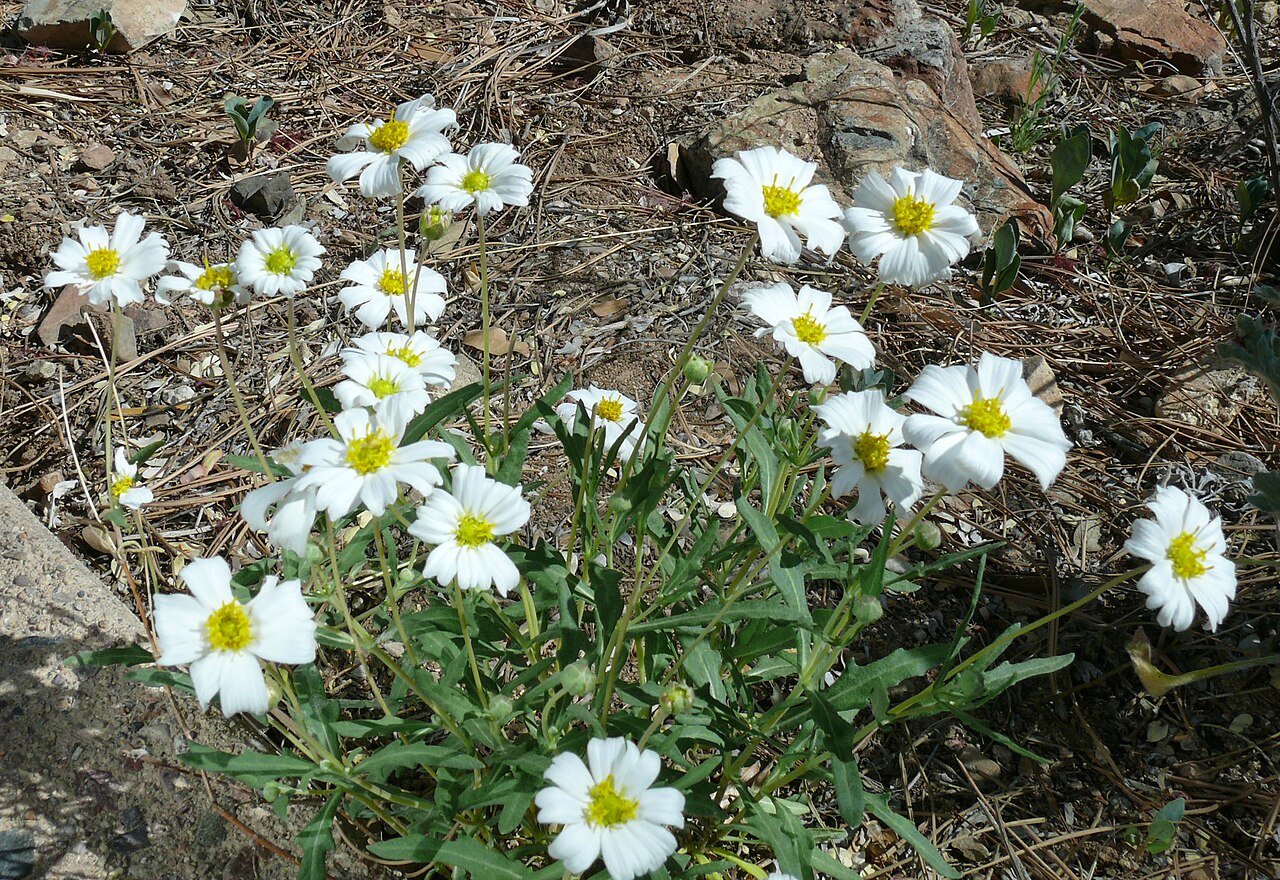
Blackfoot daisy brings a bright white flower display to dry, sunny ground without asking for the deep, fertile bed that many conventional border perennials receive. Melampodium leucanthum forms a low mound of narrow foliage, with yellow-centered daisies held where they are easy to see. In an Arizona planting, it is especially useful along the front of a rock garden, beside a gravel path, or between more architectural native plants that otherwise leave a visually hard edge.
The Arizona regional list describes an 8-inch plant in dry soil, a useful shorthand for its compact landscape role. Plants commonly vary within a roughly 6–12-inch height range and can spread considerably wider than they grow tall. That proportion matters: several crowded nursery pots may look like an instant carpet, but they eventually need room for separate, airy mounds. Give this perennial horizontal space instead of burying its crown among spreading neighbors.
Its attraction is a combination of long-season flowers and modest water demand. Those benefits depend on matching the site, especially drainage. A blackfoot daisy planted in a constantly damp, richly amended pocket can perform worse than one given leaner ground with less irrigation. It is a dry-garden perennial, not a miniature bedding annual to push with continual fertilizer and water.
Identification
Stems & Growth Form
The plant branches into a compact, rounded mound rather than rising as a single tall flower stalk. Older basal growth provides the framework for newer leafy stems. Judge its form from the side as well as above: a healthy established plant can be broader than the small footprint suggested by the root ball. Leave the perimeter open when planting so neighboring plants do not force all growth toward a narrow strip of available light.
Leaves
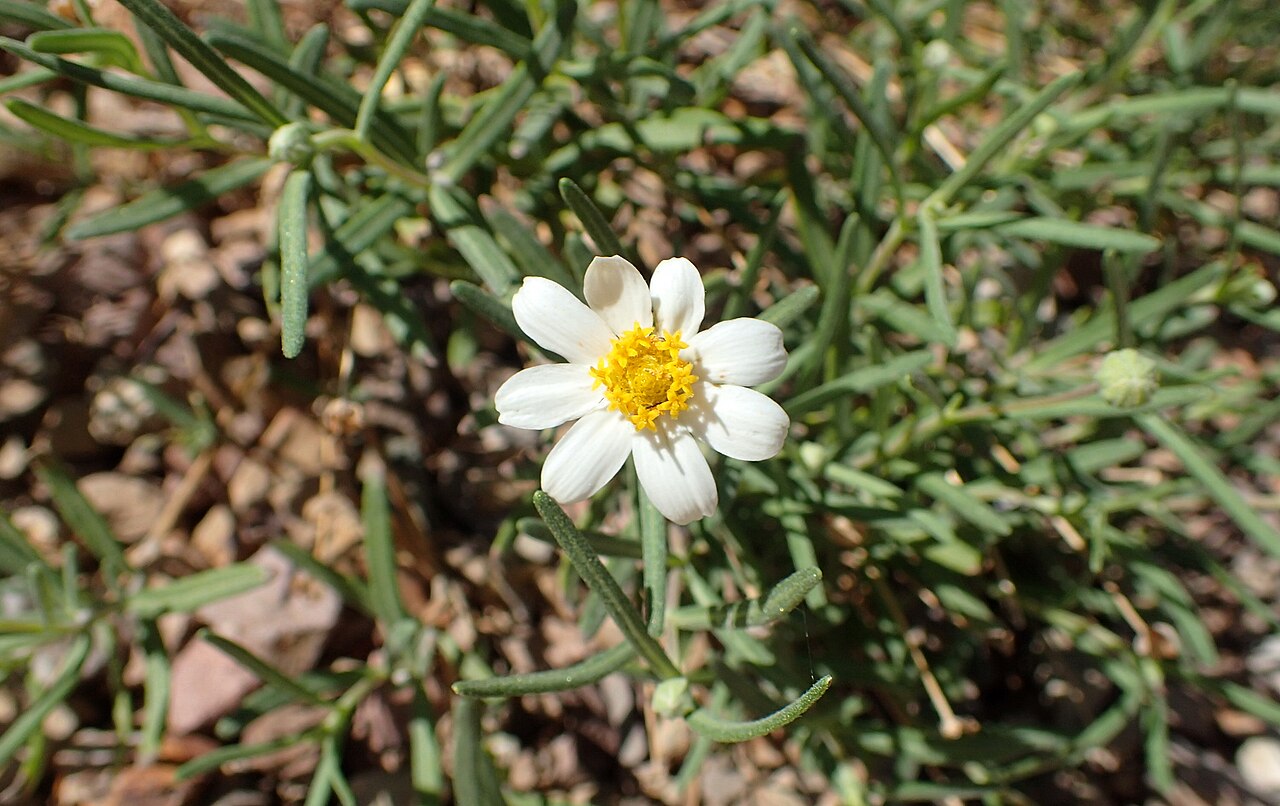
Look for narrow, opposite leaves with a gray-green impression and a somewhat rough, hairy surface. Individual leaves can vary in outline, so leaf shape alone is insufficient for identification. The fine foliage is part of the plant’s appeal in a dry landscape: it provides a softer texture than a cactus or agave without producing a large, water-demanding leaf canopy. Keep that contrast visible by spacing plants rather than weaving them through a dense groundcover.
Flowers
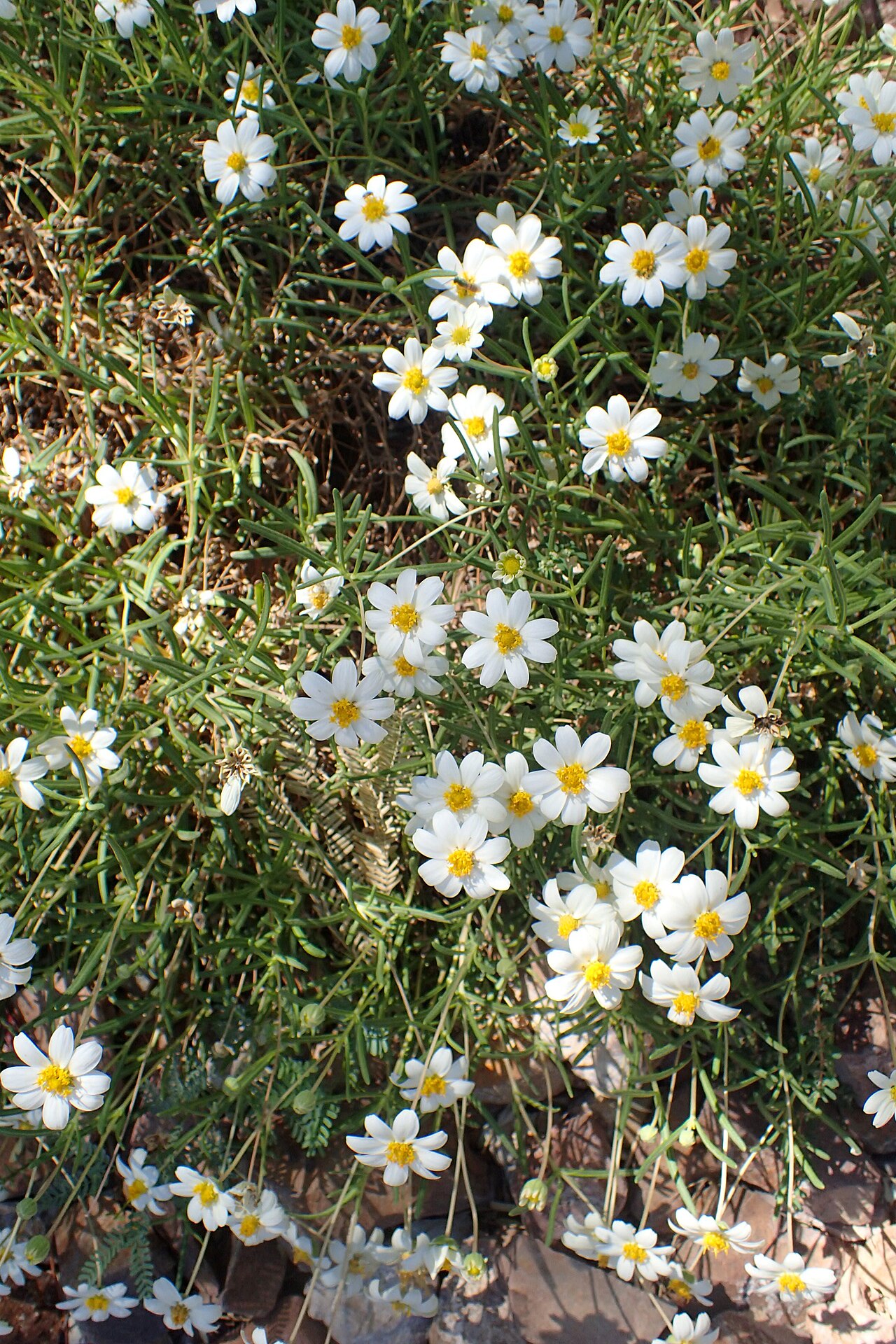
White ray florets surround the yellow center of each composite head. Several heads can be open at different ages on one plant, so a mixed display of fresh, fading, and developing flowers is normal. Blackfoot daisy can be confused at a glance with white-flowered desert zinnias. Do not substitute one for the other solely on flower color; the leaves, involucre beneath the head, whole plant, and nursery label all contribute to correct identification.
Fruit & Seeds
After flowering, the heads develop small dry fruits rather than fleshy berries. Seed production is one reason a few spent heads are useful even in an ornamental planting. If seedlings appear, allow them to develop enough features for a confident identification before deciding which to retain. A seedling in a suitable open patch can be welcome; one growing directly against a path edge may need to be moved while still small.
Quick Facts
| Scientific Name | Melampodium leucanthum |
| Family | Asteraceae (daisy family) |
| Plant Type | Low, mounding herbaceous perennial |
| Mature Height | Usually 6–12 inches; the Arizona list describes an 8-inch plant |
| Mature Spread | About 1–2 feet |
| Growth Rate | Moderate |
| Sun Exposure | Full sun preferred; light partial shade tolerated |
| Water Needs | Low once established; dry, well-drained soil |
| Soil Type | Sandy, gravelly, rocky, or lean well-drained soil |
| Soil pH | Tolerates calcareous and alkaline soils |
| Bloom Time | Spring through fall, depending on climate and moisture |
| Flower Color | White rays around yellow centers |
| Fall Color | No dependable showy fall color |
| Fruit | Small dry one-seeded fruits |
| Deer Resistant | Generally resistant, not guaranteed |
| USDA Hardiness Zones | Confirm locally tested provenance with the nursery; drainage affects survival |
Native Range
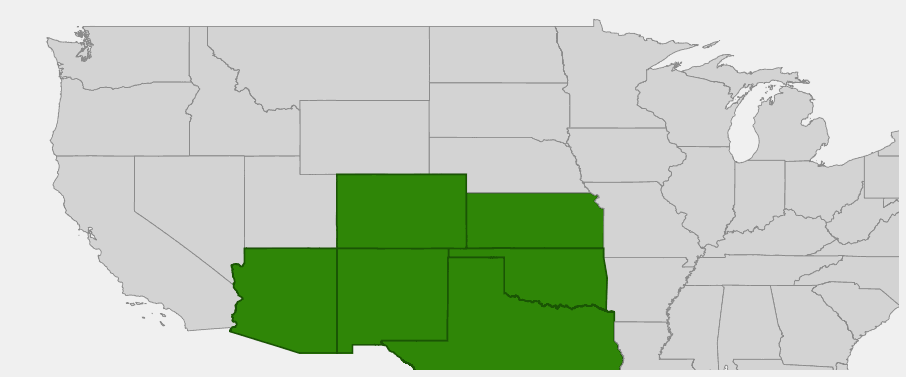
Kew’s Plants of the World Online identifies blackfoot daisy as native in Arizona, Colorado, Kansas, New Mexico, Oklahoma, and Texas, extending into Mexico. Its distribution is therefore Southwestern and southern Great Plains, not a general claim of nativity throughout the United States. The accompanying map shows the U.S. states listed by that source and deliberately does not turn a state record into a county-level boundary.
Within Arizona, choose a site that resembles the species’ open, dry, freely drained settings. Rocky slopes and lean ground are more informative guides than the broad word desert: a low spot receiving roof runoff and a gravelly bank can be very different growing environments only a few feet apart. Before buying several plants, observe where storm water accumulates and how long the ground remains wet.
Plant provenance also matters across a range with substantial changes in winter temperature and seasonal rainfall. Ask whether the nursery’s material has been grown locally, and distinguish a cultivated botanical-garden photograph from evidence that the species is native at that photograph’s location. The images illustrate the plant; the range information comes from botanical distribution sources.
📋 Regional plant list: Arizona
Growing & Care Guide
Light
A sunny position is the best default for compact growth and a visible flower display. The regional row allows full to partial sun, but partial sun should still mean meaningful direct light, not deep shade beneath a dense evergreen. In a very hot courtyard, compare actual exposure and reflected heat before assuming a west wall and an open garden bed are equivalent. If the mound leans toward one small bright opening, move the planting plan toward better light rather than trying to force symmetry by frequent clipping.
Soil & Water
Use a freely draining bed and keep the crown at its original level. Do not bury the base in a basin of fine mulch or against soil piled up by repeated edging. Blackfoot daisy has low water needs after establishment, but a newly planted root ball still needs attention while roots move outward. Water thoroughly enough to wet the root zone, then allow a suitable drying interval. Investigate persistent wetness before adding more irrigation to a plant that is declining; wilt is not always evidence of dry soil.
Planting Tips
Set plants where their mature width will fit. A low mound at the front of a bed should not have to be cut back every week to keep a path clear. Remove weeds before planting, water the pot if its root ball is dry, and handle the roots gently. Where heavy soil stays wet after storms, a broader raised or sloping planting area is more sensible than a tiny gravel-filled hole surrounded by impermeable ground. Start with a few plants if the site is uncertain, then expand after a full growing season.
Pruning & Maintenance
Light seasonal cleanup is preferable to continual shearing during bloom. NC State describes cutting back an established plant in late winter to help maintain compact growth. Let local weather and plant condition guide timing rather than treating a calendar date as universal across Arizona elevations. Keep living structure and a healthy crown; an old plant should not be cut blindly into dead material in expectation of an instant response. Remove broken or clearly dead stems, and reassess light, drainage, and crowding if the whole mound repeatedly becomes sparse.
Propagation
Seed is the straightforward propagation route described by NC State. Because the plant has a taproot, splitting an established mound is not equivalent to dividing a fibrous-rooted clumping perennial. Preserve good parent plants instead of digging them apart simply to obtain more. Label seed with species and source, use a well-drained sowing medium, and protect young plants from abrupt drying. Seedlings also need gradual exposure to outdoor conditions before being set into a hot open bed.
Managing a Mixed Dry Garden
Group blackfoot daisy with plants that share its drainage and watering regime. A drip emitter installed for a nearby thirsty shrub can keep the daisy’s crown wet even if its own emitter is turned off. Check the actual wetting pattern after irrigation, particularly on a slope. During bloom, a few aging heads need not be removed to keep the plant useful. If reducing self-sowing is important along paving, selectively remove spent heads there and leave others in the interior of the planting.
Seasonal Troubleshooting
Keep a short record during the first year: planting date, water frequency, rainfall, and changes in growth. A plant that performs well until a wet period points to a different problem from one that dries immediately after transplanting. Inspect stems and leaves before assuming insects are responsible for every decline. Humid, crowded conditions are a reason to improve spacing and site fit, not an invitation to maintain the plant with routine chemical treatments.
Landscape Uses
- Front edges of sunny Arizona native perennial beds, leaving room for a broad low mound.
- Rock gardens and gravelly slopes where water drains away from the crown.
- Repeating white-flowered accents among native grasses and dry-site architectural plants.
- Pollinator beds designed around lean soil and restrained irrigation.
- Small sunny planting pockets with enough root space and a clear outlet for excess water.
Wildlife & Ecological Value
For Pollinators
Open daisy heads give visiting insects an accessible flower resource. A long bloom period is useful, but it should complement rather than replace other native flowering plants. Include species that bloom before and after the main blackfoot daisy display, and avoid spraying open blossoms. Watch which insects actually visit the garden; repeated observations at different times of day reveal more than a single busy afternoon.
For Birds
NC State notes seed use by birds. Leaving some mature heads allows that part of the plant’s life cycle to remain available. Blackfoot daisy is too low to substitute for the protective structure of shrubs or trees, so pair a flower-rich ground layer with appropriately spaced woody native plants elsewhere in the landscape. The result offers several kinds of resources without shading this sun-loving perennial.
For Mammals
Deer resistance can make blackfoot daisy useful where browsing limits plant choices, but no such rating is a guarantee under all conditions. Protect newly planted material where local browsing pressure is severe. Do not build a habitat plan around an assumption that every wildlife species benefits equally from every native plant; this species’ clearest garden strengths are its flowers, seeds, low cover, and fit with dry conditions.
Ecosystem Role
A low native perennial adds living cover and flower resources between larger plants without demanding the water regime of a conventional lawn. Leave the site biologically varied: some seed heads, locally appropriate companion species, and unsealed soil are valuable parts of the planting. Avoid letting a visually tidy gravel surface become the reason to remove every volunteer plant or routinely apply broad herbicide around the mound.
Cultural & Historical Uses
Blackfoot daisy is also called plains blackfoot, and the scientific name keeps it distinct from unrelated plants sold simply as white daisy. Common names are useful introductions, but a nursery order should include Melampodium leucanthum. Photograph labels and plant records should preserve that identity as plants move from one garden to another.
Its contemporary landscape role follows naturally from its low form and dry-site adaptation. In water-conscious gardens, it offers a familiar daisy appearance without depending on a lush irrigated border. That does not justify taking plants from wild populations. Nursery propagation allows gardeners to enjoy the species while leaving the original plant communities intact.
Historical or medicinal uses should not be invented from the fact that a plant is native. This guide focuses on verified botanical identity, distribution, and horticultural use. Its practical contribution is to help gardeners place a regional plant where it can succeed with a sensible maintenance routine, rather than to turn a native wildflower into a source of unsupported health claims.
Frequently Asked Questions
Is blackfoot daisy native to Arizona?
Yes. Kew lists Arizona within its native range, along with Colorado, Kansas, New Mexico, Oklahoma, Texas, and parts of Mexico. Local habitat and provenance still matter when selecting stock.
How big should I allow it to become?
Plan for a low mound roughly 6–12 inches tall and about 1–2 feet wide. The Arizona table’s 8-inch height is a representative garden size, not a guarantee that every plant will stop at exactly that measurement.
Why is my plant struggling despite regular watering?
Check drainage, planting depth, and whether an adjacent emitter keeps the crown wet. More water is not automatically the answer for a dry-site perennial. Also check whether a new root ball has dried while the surrounding soil remained damp.
Does it need deadheading?
Deadheading is not essential for continued flowering. Selective removal can limit unwanted seedlings near paving, while leaving some heads supports seed production and bird use.
Can I divide an older plant?
Division is not the preferred method because of its taproot. Use seed or nursery-propagated replacements rather than assuming a rounded mound can be split like a fibrous-rooted perennial.
Sources & Further Reading
- NC State Extension Gardener Plant Toolbox: blackfoot daisy
- Kew Plants of the World Online: Melampodium leucanthum
- USDA PLANTS: Melampodium leucanthum
Find Native Plants
Ask growers about nursery propagation and regional provenance. Browse our Arizona native plant nurseries directory for suppliers.