Koa (Acacia koa)
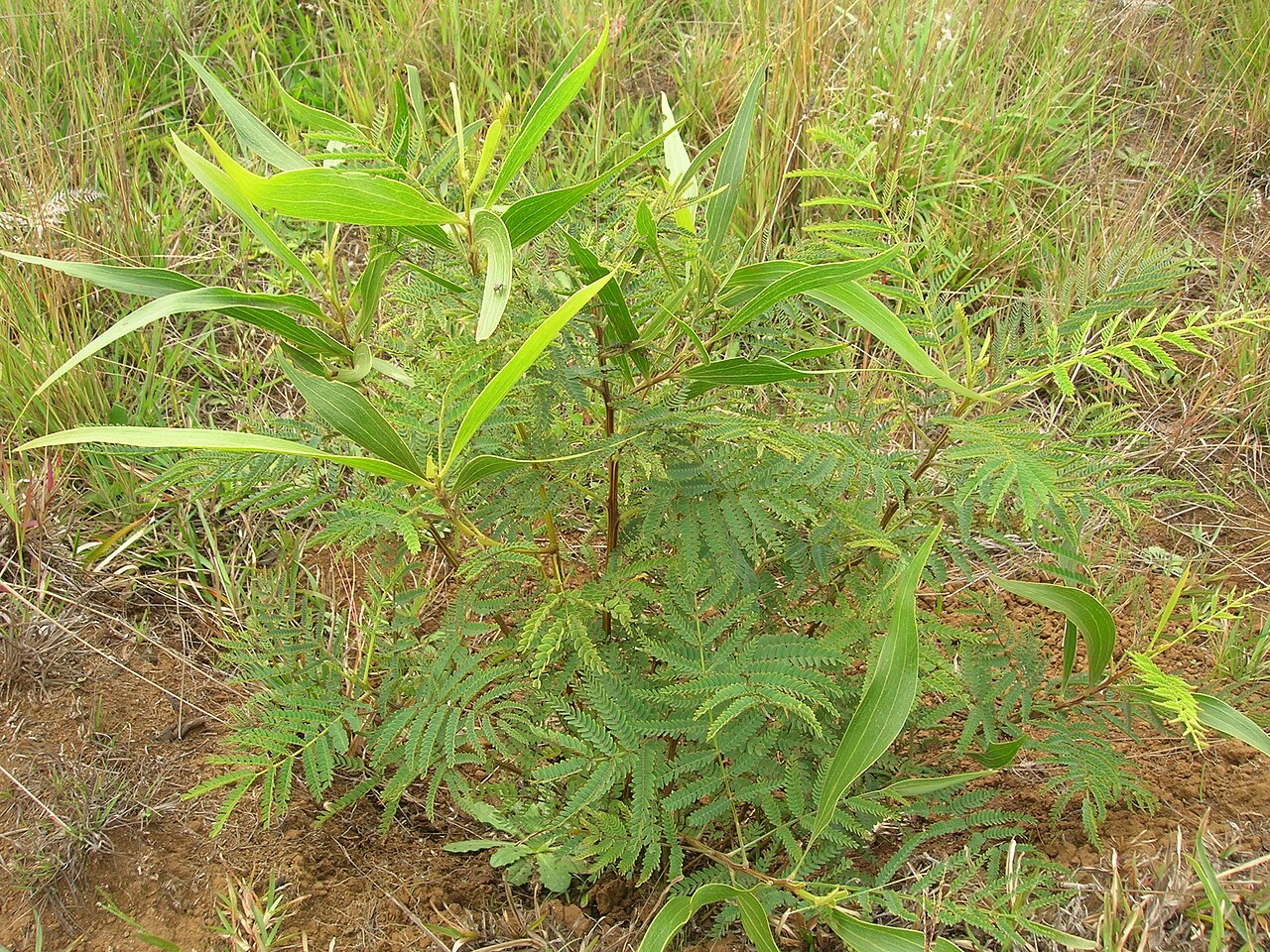
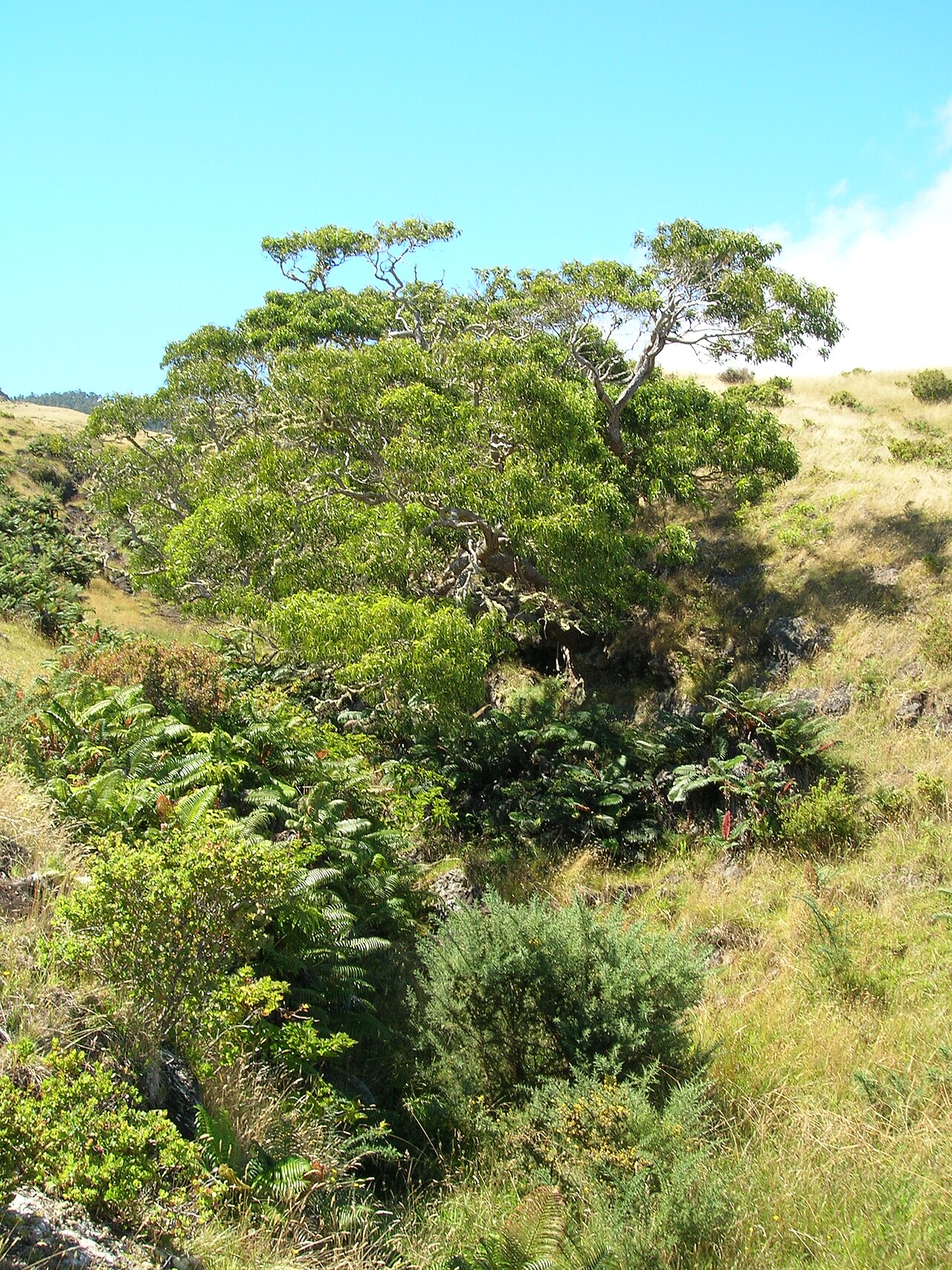
Acacia koa, or koa, is a Hawaiian native tree whose identity is inseparable from the islands’ upland forests. A mature koa can develop a broad, high canopy and an impressive trunk, but its most useful identification feature is much smaller: the curved, flattened green structures that look like leaves are actually phyllodes. Young plants first make finely divided true leaves, and a growing seedling may carry both foliage types at the same time.
Koa belongs to the pea family, Fabaceae. In suitable forest conditions it can reach 50–100 feet or more, making it a tree for generous spaces rather than a narrow planting strip. Low-elevation garden trees often remain considerably smaller and can be relatively short lived. A nursery label that simply says “koa” does not tell the whole story: island, elevation, seed source, and local disease pressure all affect whether a particular plant is a good match for a site.
For a Hawaiian gardener, the strongest reasons to plant koa are its forest character, ecological relationships, and cultural importance. Its roots associate with nitrogen-fixing bacteria, while its canopy, branches, and leaf litter contribute structure to a developing native planting. Success depends less on intensive feeding or shaping than on choosing a suitable provenance, leaving room for roots and canopy, and protecting the tree from injury from the day it is planted.
Identification
Bark & Stems
Older koa trunks have gray to brown bark that becomes more textured with age. Open-grown trees usually branch broadly, while trees growing in a forest stand may develop a taller trunk before branching. These differences reflect growing space as well as the considerable natural variation within koa. A spreading specimen in pasture and a taller forest tree can therefore belong to the same species without looking alike at first glance.
Inspect bark and branch attachments without cutting into the tree. Koa can be vulnerable to decay after wounding, so removing bark to reveal the wood is not an appropriate identification method. Around a planted specimen, mower damage, string-trimmer scars, rubbing ties, and repeated foot traffic are management problems worth addressing before they become reasons for remedial pruning.
Leaves
The mature phyllodes are flattened leaf stalks that carry out photosynthesis. Their curved, sicklelike outline is one of koa’s signature features. They differ from the many tiny leaflets of the feathery juvenile foliage. Seeing the two forms together is normal development, not evidence that two species have been grafted together or that the tree needs its “wrong” leaves removed.
Koaiʻa, Acacia koaia, also produces phyllodes and must not be separated from koa solely by the presence of curved foliage. Koaiʻa is usually a smaller dryland tree with narrower, straighter phyllodes, but variable and intermediate plants can complicate field identification. For nursery purchases, a documented scientific name and seed provenance are more dependable than a common-name guess based on one photograph.
Flowers
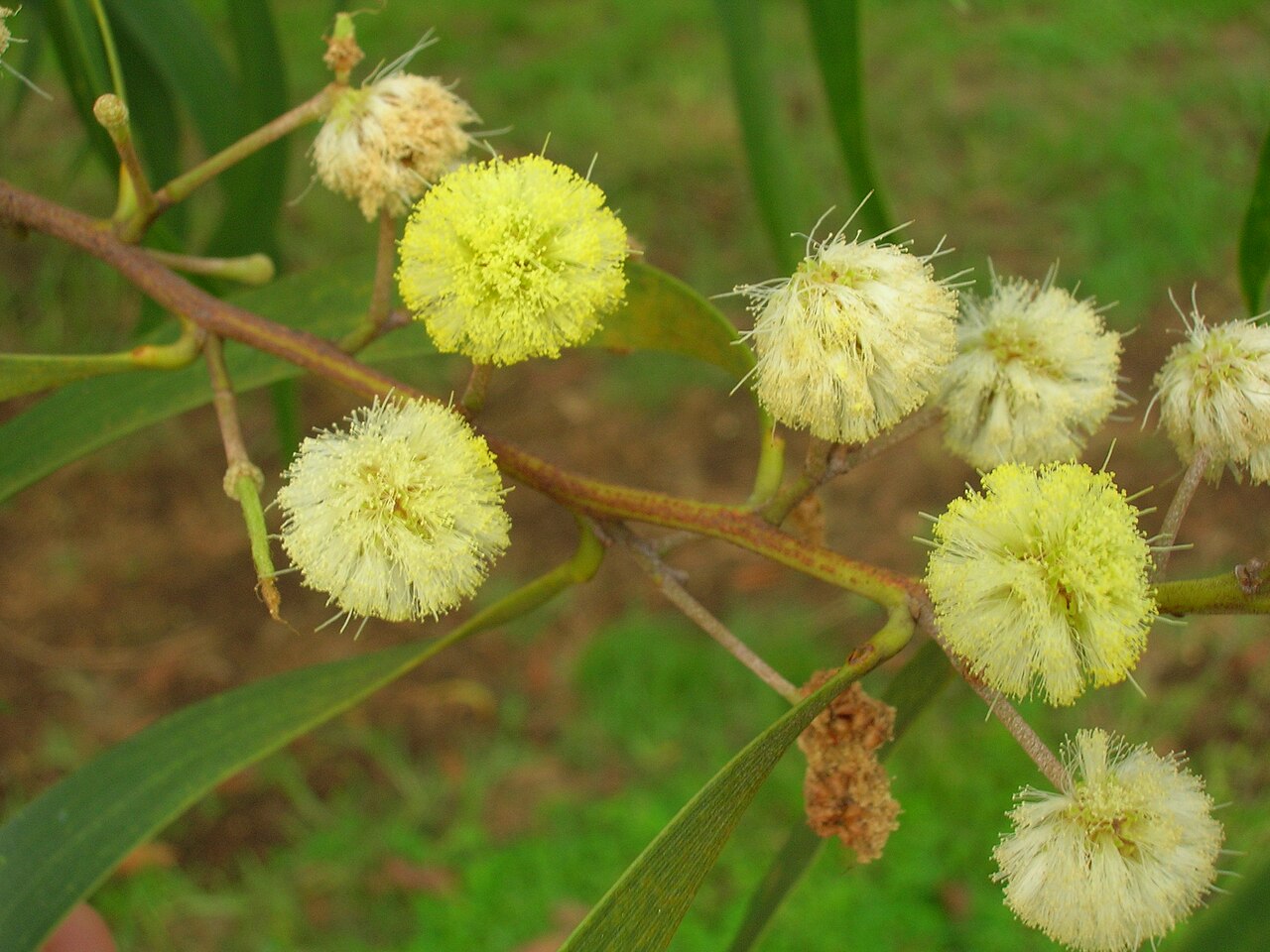
Koa bears rounded heads of small cream to pale-yellow flowers. The many projecting stamens give each head its soft, powder-puff appearance. A flowering branch is attractive at close range, although a large tree’s display may be high overhead. Flower production varies by place and season; the University of Hawaiʻi profile describes the heaviest flowering generally in the first part of the year rather than a brief, identical bloom window throughout the islands.
Fruit & Seeds
The fruit is a flattened legume pod containing hard seeds. Mature pods and seeds are more useful than flower color alone when distinguishing closely related acacias. Seed collection for a garden should come from a lawful, documented cultivated source. A tree planted beside another koa taxon may not provide the same certainty of parentage as managed nursery stock, and collecting from a forest is not a substitute for obtaining permission and an appropriate restoration collection plan.
Quick Facts
| Scientific Name | Acacia koa |
| Family | Fabaceae |
| Plant Type | Evergreen native tree |
| Mature Height | 50–100 ft in suitable forest conditions; often smaller in lowland gardens |
| Mature Spread | About 20–40 ft; old forest trees can be wider |
| Growth Rate | Fast under favorable conditions |
| Sun Exposure | Full sun; some partial sun tolerated |
| Water Needs | Average to dry once established; excellent drainage required |
| Soil Type | Well-drained volcanic and other suitable soils; avoid compaction |
| Soil pH | No single target prescribed here; assess the actual planting soil |
| Bloom Time | Often heaviest in late winter and early spring; varies by site |
| Flower Color | Cream to pale yellow |
| Fall Color | Evergreen; no conventional temperate autumn display |
| Fruit | Flattened seed pods |
| Deer Resistant | Not browse-proof; protect from introduced browsing animals |
| USDA Hardiness Zones | Use Hawaiian elevation and local climate guidance; a precise zone rating is not assigned |
Native Range
Koa is endemic to Hawaiʻi: its natural range is Hawaiian, not a consequence of Polynesian introduction. Hawaiian botanical sources record it on Kauaʻi, Oʻahu, Molokaʻi, Lānaʻi, Maui, and Hawaiʻi Island. Its broad distribution across the archipelago does not mean that every island population is interchangeable. Differences in rainfall, temperature, soils, and elevation are central to understanding the diversity visible in wild and cultivated koa.
The species occurs in dry-to-moist forest environments and is especially associated with upland landscapes. Koa may grow with ʻōhiʻa and a range of native understory plants, but the composition of a real planting should follow its site rather than a single statewide companion list. A cool, moist upland garden and a hot urban yard can both be located on the same island while presenting very different conditions to a young tree.
The map below is deliberately a state-level overview. It indicates Hawaiʻi as the native U.S. state; it is not a record of occurrence on every island, an elevation map, or a guide for moving planting material. For conservation work, use locality-specific botanical and nursery advice. For a garden, ask the grower where the seed originated and whether that source has performed well at a comparable elevation and rainfall.
Native Range
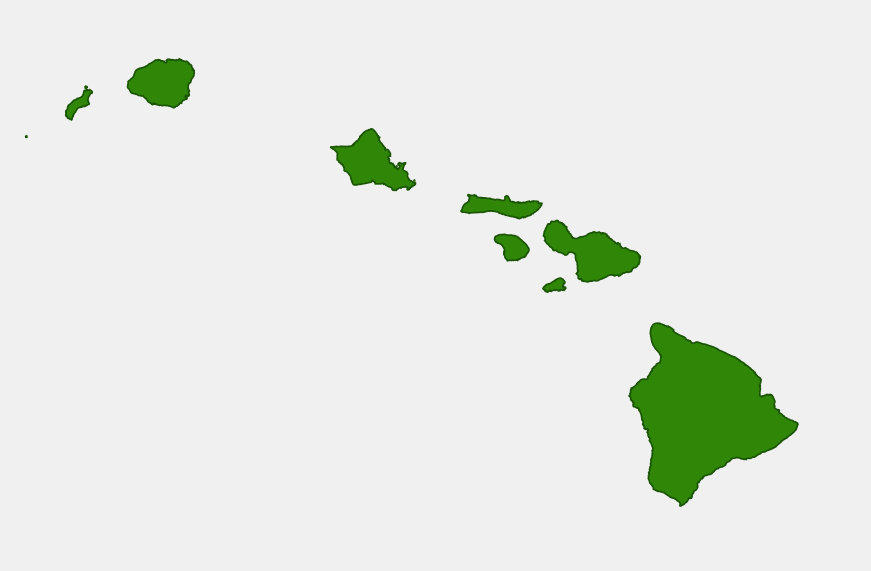
| U.S. States | Hawaii |
| Hawaiian Islands | Kauaʻi, Oʻahu, Molokaʻi, Lānaʻi, Maui, Hawaiʻi |
| Mexico / Canadian Provinces | None in the natural range |
| Ecoregion | Hawaiian tropical dry-to-moist forests |
| Elevation Range | Broadly lowland to upland; many forests at roughly 600–7,000 ft |
| Habitat | Open woodland and forest; site and provenance vary |
| Common Associates | ʻŌhiʻa and locally appropriate native forest understory |
USDA PLANTS profile (ACKO). Species identity verified; this link is not a guarantee of county-level distribution data.
📋 Explore more trees, shrubs, and ground-layer plants in our Hawaii native plant list.
Growing & Care Guide
Light
Choose full sun for the strongest landscape performance. Koa can grow with some partial sun, but it is not an understory tree for deep shade. When evaluating a site, look beyond the light available to a small nursery plant: nearby trees, buildings, and future canopy growth will change the conditions around it. A sunny lawn opening that is only a few feet wide is still not enough room for a potentially large tree.
Nursery plants should be acclimated to the conditions in which they will be planted. If a young tree has been maintained under protection, ask the nursery how it was hardened before purchase. Moving a tender plant immediately into a hot, windy position adds a separate stress to the normal adjustment after transplanting. Do not compensate for a poor site by keeping its root zone constantly wet.
Soil & Water
Koa needs a rooting environment that supplies moisture without remaining waterlogged. Its ability to occur in dry settings should not be read as a promise that a newly planted root ball can be left dry. Conversely, a landscape with ample rainfall is unsuitable if runoff concentrates around the trunk and roots cannot breathe. Check drainage after real rain, not only on the dry day when the planting hole is dug.
In the regional table, moisture is expressed as average-to-dry conditions. That is a garden-planning shorthand, not an irrigation calendar. During establishment, check the original root ball as well as adjacent soil: one can be dry while the other is damp. Water enough to moisten the actively rooting volume, allow excess water to leave, and adjust the next irrigation to weather and soil rather than repeating a fixed daily dose.
As roots establish beyond the nursery container, irrigation can be distributed over a wider area instead of remaining concentrated next to the trunk. Keep lawn sprinklers from repeatedly wetting the stem base. Where clay, compacted fill, or a shallow impermeable layer prevents drainage, reconsider the location instead of assuming that adding gravel to the bottom of a small hole will solve the problem.
Do not treat nitrogen fixation as a reason to apply extra nitrogen. The relationship is between koa roots and compatible bacteria, and adding fertilizer does not create a healthy root system in compacted or saturated soil. Ask a native-plant nursery about its propagation practices and whether stock has been appropriately inoculated. Diagnose poor growth before feeding: shade, root damage, drought, or disease will not necessarily improve with fertilizer.
Planting Tips
Reserve enough space for a tree whose ultimate size may exceed its early garden appearance. Avoid overhead lines, confined courtyards, foundations, and routes likely to require repeated canopy reduction. In an open planting, consider how the future shade will affect vegetables, solar access, and smaller native plants. In a restoration-style planting, decide how future thinning and access will be managed before spacing trees closely.
Select a healthy plant with an intact root ball, a sound stem, and no obvious constriction from its container. A larger container is not automatically a better purchase. A smaller plant with a well-developed, undamaged root system may establish more predictably than an oversized plant that has been held too long. Ask about persistent wilt or recent pest problems rather than judging stock entirely by its height.
Prepare a broad planting space and set the tree at its nursery depth, with the root collar visible rather than buried beneath additional soil. Handle the root ball gently; do not routinely slash, tease apart, or prune koa roots as though this were an interchangeable ornamental shrub. If roots are severely deformed or circling, seek a different nursery specimen rather than performing aggressive corrective surgery at planting.
After planting, create a clearly defined mulched area that keeps mowing equipment away from the tree. Leave the mulch off the bark and root collar. Keep weeds from taking over the establishment zone, but avoid repeated cultivation that slices emerging roots. A low border or visible marker outside the root ball can help maintenance crews recognize that this is a protected planting area, not a patch to trim tightly against the trunk.
Pruning & Maintenance
Koa is best planted where it will not need routine heavy pruning. Wounds can open a route for decay, and trying to force a large tree into a small space creates an avoidable cycle of cutting and regrowth. Allow its natural crown to develop. If a branch becomes hazardous or a structural problem is apparent, seek a qualified arborist familiar with Hawaiian trees rather than topping the crown or removing major limbs indiscriminately.
Inspect ties, guards, and stakes as part of ordinary maintenance. Materials intended to help a young tree can constrict or rub the stem if forgotten. Monitor the soil surface as well: parking, storage, compacted paths, and construction can harm roots even when the trunk is not visibly struck. Establishing a permanent no-traffic root zone is often more useful than adding another product to the watering routine.
Koa can be affected by wilt diseases and by insects, including the black twig borer. Persistent wilting, localized branch dieback, or sudden crown decline needs diagnosis, because symptoms can overlap with water stress and root damage. Photograph the whole tree and affected shoots, record recent irrigation and construction history, and consult local extension staff. Avoid spreading soil or pruning debris between plantings while the cause is uncertain.
Propagation
Koa is commonly grown from seed. Its hard seed coat can limit water uptake, so nurseries use controlled pretreatments rather than assuming all untreated seed will germinate promptly. Obtain species-specific instructions from the supplying nursery or an extension propagation guide. Treating an entire valuable seed lot with an improvised heat treatment is risky; a small trial with records is a better way to evaluate a method.
Use clean containers and a draining propagation medium, label the island and locality of the seed source, and retain the date and treatment used. Seedlings with healthy roots need timely transfer to appropriate containers or planting sites. A tray that produces tall tops but repeatedly dries or overheats is not producing high-quality trees. Keep unrelated seed collections separate so that provenance information survives beyond the germination stage.
For restoration, provenance involves more than finding any koa seed nearby. Collection design, family representation, disease hygiene, and the destination habitat all matter. Partner with a restoration program or qualified nursery before collecting or planting into natural areas. A garden-grown tree can be a valuable teaching plant without becoming a source for unplanned planting into a wild population.
Landscape Uses
- Large native gardens: use koa as a canopy tree where there is room for natural growth and a protected root zone.
- Educational landscapes: the contrast between juvenile leaves and mature phyllodes makes a useful living lesson in plant development.
- Site-matched forest planting: combine locally appropriate koa with compatible native canopy and understory plants under an informed management plan.
- Open-space shade: select a position where seasonal litter and eventual canopy dimensions can be accommodated without repeated major pruning.
- Cultural demonstration gardens: interpret the tree’s relationship to canoe building and woodworking without presenting a young garden tree as a short-term timber crop.
Wildlife & Ecological Value
For Pollinators
The many small flowers in each head offer resources to visiting insects. A garden observer may see several kinds of visitors, but a photograph of one insect does not establish that it is native or that it is the tree’s most important pollinator. Observe flowers at different times and avoid applying broad-spectrum insecticides to blooms. Koa belongs within a diverse native planting, not a one-species promise of habitat for every pollinator.
For Birds
Koa forest contributes feeding, shelter, and nesting structure for Hawaiian birds. Its importance lies partly in the larger forest community that develops around it: a single isolated garden specimen cannot reproduce the food web and protected habitat of a functioning upland forest. The extinct koa-finches also illustrate the historical relationship between this tree and Hawaiian birds; they should not be listed as wildlife that a present-day planting will attract.
For Mammals
Do not assume that a tree’s Hawaiian nativity makes it resistant to browsing by introduced ungulates. Where goats, cattle, deer, or other browsing animals can enter a site, evaluate protection before planting. A decorative trunk guard may not protect foliage, roots, or an entire young tree. The practical objective is successful establishment and habitat recovery, not providing a feeding station for animals that damage native vegetation.
Ecosystem Role
Koa can contribute a canopy, leaf litter, and nitrogen inputs to native vegetation. Its roots, associated microorganisms, fallen branches, and changing shade create conditions in which other organisms live. These processes take time and depend on site management. Replacing aggressive weeds, protecting soil, and allowing a suitable understory to develop are complementary actions; planting koa by itself does not reverse compaction or prevent reinvasion.
Cultural & Historical Uses
Koa’s wood has an especially important place in Hawaiian canoe building. The size and form of forest-grown trees made them valuable for large hulls, while the selection and working of a tree involved knowledge and cultural practice extending well beyond timber dimensions. A garden interpretation should recognize that relationship rather than reducing the tree to a market price or an ornamental feature.
The wood has also been used for tools, implements, furnishings, and other crafted objects. Today koa is associated with fine woodworking and musical instruments, including ʻukulele and guitars. Those modern uses should be distinguished from historical ones: an object familiar in contemporary Hawaiian life is not automatically evidence of a pre-contact use.
Growing koa can connect an educational or home landscape with these histories while supporting knowledge of living native plants. Use Hawaiian names carefully, work with local cultural practitioners for interpretive projects, and do not strip bark or harvest branches from a stressed tree for a demonstration. Responsible sourcing of wood and nursery plants is part of respecting the species, not separate from it.
Frequently Asked Questions
Is koa native to Hawaiʻi or a canoe plant?
Koa is native and endemic to Hawaiʻi. It was not introduced to the islands by Polynesian voyagers. Its cultural importance does not change that botanical distinction.
Why does my young koa have two kinds of leaves?
The finely divided foliage is the juvenile true-leaf form; the curved green phyllodes are the mature photosynthetic form. Both can occur on a developing plant, and the change does not call for pruning.
Can I grow koa in a small lowland yard?
Consider the provenance, eventual space, and local disease problems first. Lowland koa may remain smaller but can be short lived; koaiʻa is a separate native species often worth discussing with a local nursery for a drier, smaller landscape.
Does nitrogen fixation mean koa never needs care?
No. It still needs suitable light, drainage, establishment water, and undamaged roots. Nitrogen fixation is one ecological relationship, not protection against wilt, compaction, trunk injury, or a poorly chosen site.
Should I prune koa heavily to keep it short?
No. Choose a suitable location or a more appropriately sized species. Routine heavy cutting creates wounds and undermines the natural structure of a tree that is generally better managed with minimal pruning.
Sources & Further Reading
- University of Hawaiʻi, Native Plants Hawaiʻi species profile
- USDA Forest Service, Common Forest Trees of Hawaii: Koa
- USDA NRCS, Koa plant fact sheet
Botanical range, identification, and cultural information are based on these sources. Garden-management advice should be adapted to local soil, exposure, and nursery provenance.
Find Native Plants Near You
Look for correctly identified, nursery-propagated plants with documented Hawaiian provenance. Visit our Hawaii native plant nursery directory and ask about stock suited to your island, elevation, and rainfall.