Antelope Horns (Asclepias asperula)
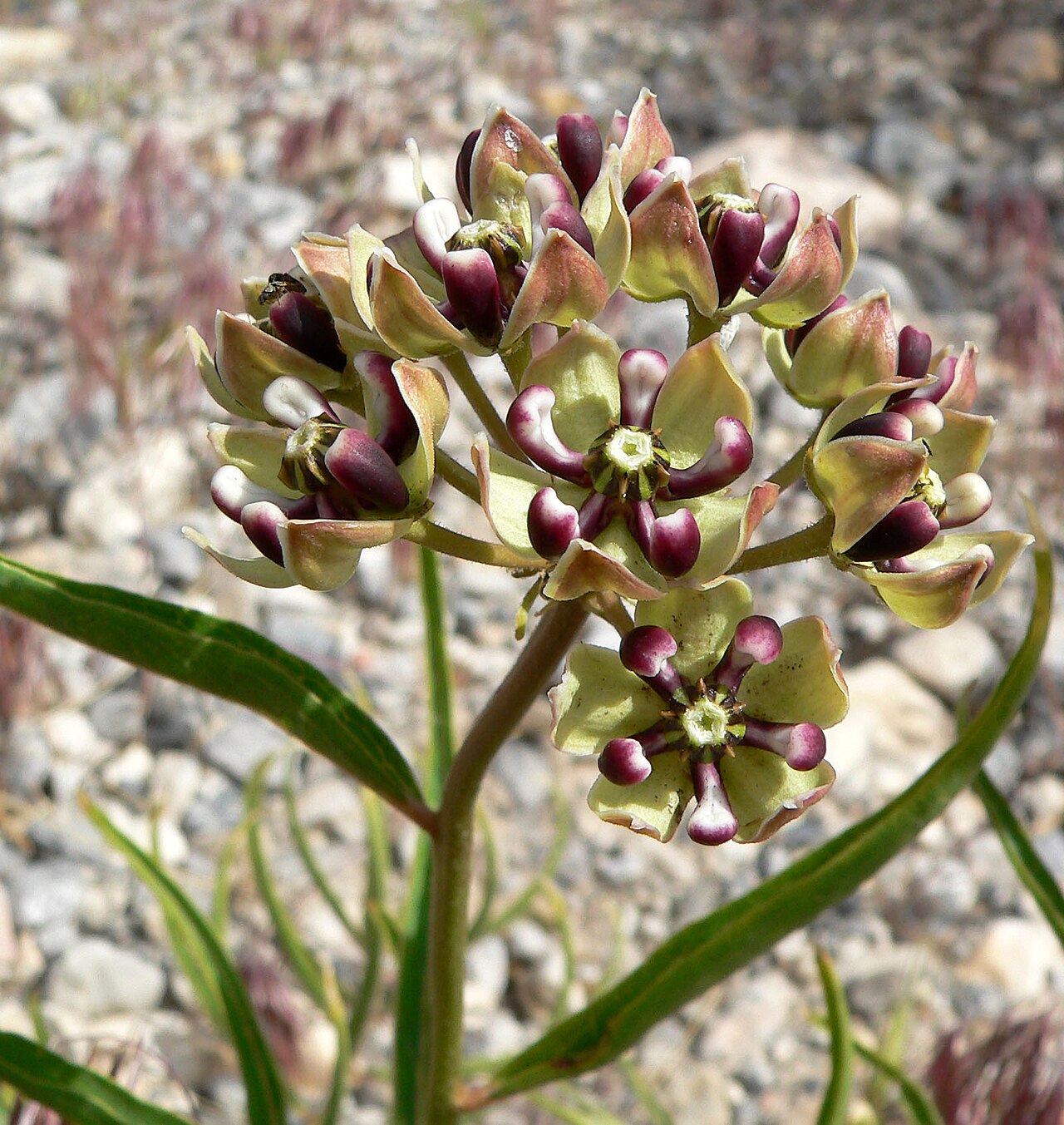
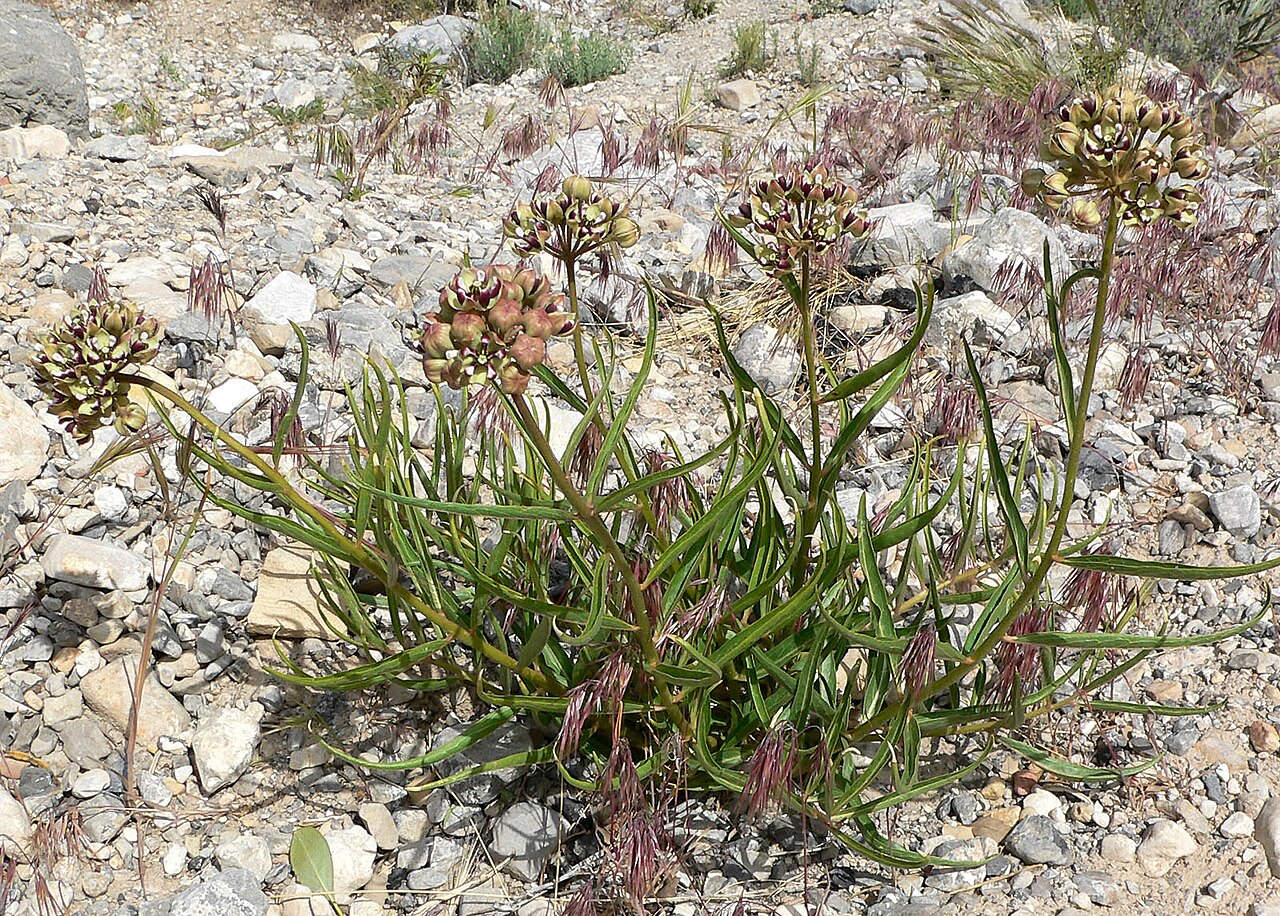
Antelope horns is a milkweed for gardeners who like to look closely. Its rounded flower heads are greenish cream and purple rather than the bright orange or pink familiar from other milkweeds. Each cluster sits above narrow leaves on a relatively low plant, so it belongs near a path, a rock-garden edge, or the front of a sunny native planting where the flowers can actually be seen. The scientific name is Asclepias asperula; spider milkweed and antelope-horn milkweed are other names used for the same species.
In Arizona, this is a useful option for a well-drained pollinator planting within its local native range. The regional list gives a height of 8–24 inches, full sun to partial sun, and dry-to-average moisture. Those dimensions make it a different design tool from tall, colony-forming milkweeds. Give its crown a visible place among low grasses and wildflowers instead of burying it behind a dense wall of summer perennials. A plant that is hidden from the gardener may still feed insects, but it is harder to monitor during establishment.
Its most important distinction is ecological: the leaves can feed monarch and queen butterfly caterpillars, while the flowers serve visiting insects. That does not mean every planting will attract caterpillars immediately, or that a single species supplies everything butterflies need. Treat antelope horns as one component of a pesticide-free habitat with flowering plants across the growing season, nearby shelter, and enough open ground for the local plant community to function.
Identification
Stems & Growth Form
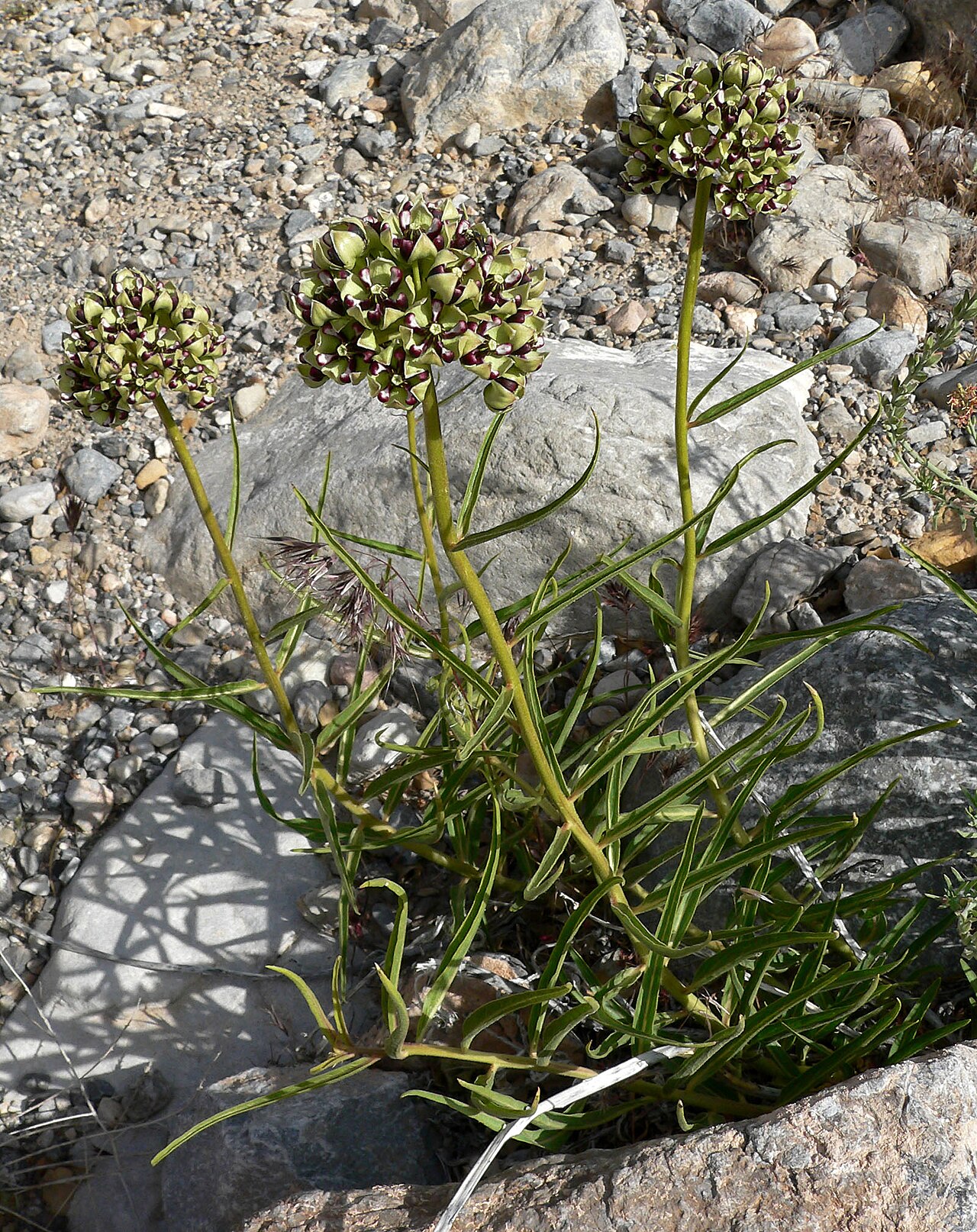
Look for a perennial crown producing upright to spreading stems rather than a woody shrub. Fine hairs can give the stems a slightly rough appearance. Established plants may lean outward, making the clump seem wider and lower than a nursery pot suggests. That sprawling outline is not automatically a sign of weakness. Judge it alongside the plant’s naturally low habit before staking or cutting it back. The underground root system is an important part of the plant’s persistence even when the aboveground growth is unimpressive.
Leaves
The leaves are narrow, elongated, and often folded along their length. Their arrangement can appear irregular, and a plant should not be rejected as this species simply because every leaf is not in a perfect opposite pair. The relatively slender foliage is especially useful when comparing the plant with broad-leaved milkweeds. Identification still requires the whole plant: leaves, flower structure, fruit, habitat, and locality are more dependable together than a single isolated photograph.
Flowers
The blossoms are crowded into rounded heads, with pale green to cream surfaces and darker purple details. These are intricate milkweed flowers, not ordinary five-petaled cups. Approach from the side as well as above to see the individual structures. Flower color can shift with age, lighting, and population, so the photographs here illustrate appearance rather than a single mandatory color pattern. Spring is the strongest flowering period over much of the range, but the timing of local rain can influence later display.
Fruit & Seeds
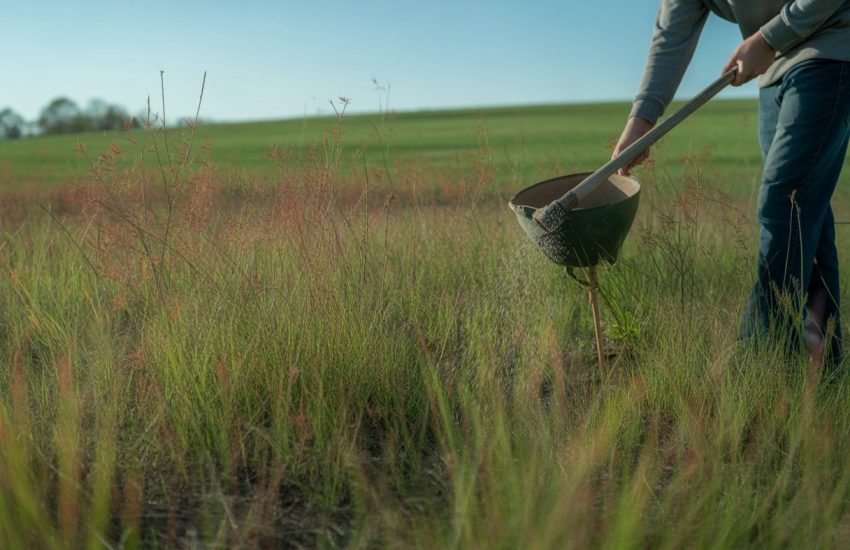
Following successful pollination, elongated follicles develop and may curve outward in a way that recalls antelope horns. Mature fruits eventually split to release seeds with silky tufts. Not every flower head produces a matching cluster of pods, so a modest fruit crop is not by itself evidence that the plant is failing. If seed collection is a goal, watch the pods as they mature and use a breathable bag to catch seed before wind carries it away. Leave some seed on well-established plants when natural recruitment is desirable.
Quick Facts
| Scientific Name | Asclepias asperula |
| Family | Apocynaceae (dogbane and milkweed family) |
| Plant Type | Herbaceous perennial; clump-forming milkweed |
| Mature Height | 8–24 inches |
| Mature Spread | Variable; spreading stems may extend beyond the crown |
| Growth Rate | Seasonal; establishment depends on root development |
| Sun Exposure | Full sun; tolerates light partial shade |
| Water Needs | Dry to average soil; supplemental establishment water |
| Soil Type | Well-drained rocky, sandy, loamy, or calcareous soil |
| Soil pH | Adapted to a range of soils, including calcareous sites |
| Bloom Time | Mostly spring; additional bloom possible into fall |
| Flower Color | Greenish cream with contrasting purple structures |
| Fall Color | No dependable ornamental fall display; seasonally dormant |
| Fruit | Curved follicles containing wind-dispersed seeds |
| Deer Resistant | Usually high resistance; not browse-proof |
| USDA Hardiness Zones | Select locally adapted stock; confirm the supplier’s rating for its provenance |
Native Range
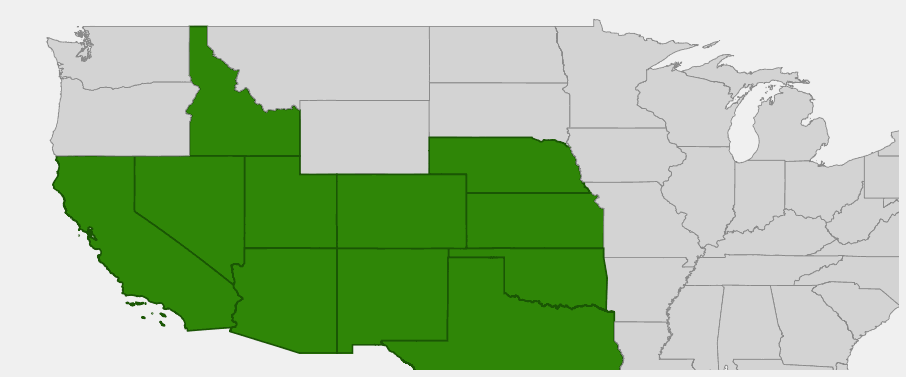
The Lady Bird Johnson Wildflower Center records antelope horns from Arizona, California, Colorado, Idaho, Kansas, Nebraska, Nevada, New Mexico, Oklahoma, Texas, and Utah. World Flora Online independently lists the same U.S. states and also places the species in Mexico. The state-level map below summarizes that broad native distribution; it does not imply that the plant grows in every county or habitat within a shaded state.
Across that range, the species occupies varied open settings rather than a single narrowly defined garden soil. Rocky and sandy sites, plains, slopes, brushland, and woodland openings all matter in its ecology. The common thread for garden placement is an open position with drainage and room for seasonal growth. A shaded, heavily irrigated bed chosen merely because it contains other milkweeds is not an equivalent habitat.
Arizona contains pronounced changes in elevation, summer heat, and rainfall over short distances. When buying this species, ask where the parent material originated and whether the nursery has grown it under conditions comparable to yours. Native somewhere in Arizona is not the same as equally adapted to a hot urban courtyard, an upland grassland, and a colder mountain site. Local botanical records and a knowledgeable regional grower can make that distinction more precisely than a nationwide map.
📋 Regional plant list: Arizona
Growing & Care Guide
Light
Use a bright, open site as the default. Full sun gives this low milkweed a fair chance against taller neighbors, while light partial shade can be workable where plants still receive substantial direct light. Before planting, watch the chosen spot at several times of day; a bed described as sunny in winter may be shaded by leafed-out trees in spring. Avoid trying to compensate for deep shade with fertilizer or extra irrigation. If a plant stretches toward a gap in the canopy, the light pattern is more useful to investigate than a presumed nutrient shortage.
Soil & Water
Good drainage is more important than making a rich planting pocket. Work with the surrounding soil rather than filling a small hole with sharply different material, and keep the crown at its original level. The Arizona table’s dry-to-average moisture category describes the plant’s eventual setting, not a requirement to keep a newly planted root ball dry. Water a new transplant thoroughly, then check the root zone before watering again. Reduce the frequency as roots move into surrounding soil; rainfall, soil texture, container size, and exposure determine the actual schedule.
Planting Tips
Choose nursery-propagated stock with a healthy crown and an intact root system. A smaller plant that can be settled into its final place without tearing roots is often a more practical purchase than an oversized, pot-bound specimen. Plant in a season that allows establishment before your site’s most stressful weather, following local nursery advice for elevation and climate. Mark the crown with a small label or nearby stone so winter or drought dormancy is not mistaken for an empty space ready to be dug over. Keep aggressive spreading groundcovers away from the young plant.
Pruning & Maintenance
Do not shear this milkweed to make a uniformly rounded mound. Its spreading stems, flowers, and seed pods are part of its natural form and habitat value. Remove genuinely dead material when needed, but first inspect stems and foliage for eggs, caterpillars, and beneficial insects. Where appearance matters along a path, adjust the neighboring plants and path edge before repeatedly cutting live milkweed growth. A small amount of leaf chewing is consistent with the reason many gardeners planted the species in the first place.
Propagation
Seed is a practical starting point when reliable local nursery stock is unavailable. The Wildflower Center describes autumn outdoor sowing and spring sowing after cool, moist treatment; its propagation notes report useful germination after about a month of cold-moist stratification. Use the supplier’s instructions for the specific seed lot instead of assuming every milkweed has identical dormancy. Label sowings with species, provenance, and date, and keep early seedlings from drying abruptly. If starting in containers, choose a form that allows careful transplanting without folding or breaking developing roots.
Aphids & Other Visitors
Check yellow or orange aphid colonies in context. The presence of aphids alone does not establish that a milkweed is dying, and the surrounding plant can also support insects that feed on them. Begin with observation: is new growth continuing, are leaves collapsing, and are predators present? Avoid routine insecticide spraying on a plant intended to support caterpillars and pollinators. Any hands-on intervention should start with a close inspection for butterfly eggs and larvae, which are easily missed among curled leaves or flower stems.
Seasonal Care in Arizona
Keep a simple first-year record of emergence, flowering, water applications, and summer response. This turns a vague impression that the plant needs more water into a usable record tied to actual weather. In a mixed bed, do not set irrigation solely by the thirstiest neighboring perennial. Separate plants with substantially different moisture requirements, or use targeted establishment watering until the milkweed can follow the drier regime. During dormancy, preserve the planting marker and avoid unnecessary digging around the crown.
Landscape Uses
- Place near the front of an Arizona pollinator garden where flower structure and visiting insects are easy to observe.
- Use in an open, well-drained native wildflower planting with enough space to keep taller species from shading the crown.
- Add to a locally appropriate milkweed collection so butterflies have host foliage without relying on a single species.
- Combine with regionally native, seasonally complementary flowers to extend nectar resources beyond its main spring display.
- Use beside, rather than directly in, a busy walkway so spreading stems and seed pods are not repeatedly trampled.
Wildlife & Ecological Value
For Pollinators
Antelope horns supplies flowers to visiting bees and other insects, but nectar use and caterpillar hosting are different functions. An adult butterfly seen feeding at a blossom is not proof that its young can eat the leaves. For this milkweed, the Wildflower Center specifically records monarch and queen butterflies as larval hosts. Plan for both functions by keeping the foliage available after the main flower show has passed, and resist removing every imperfect leaf simply to preserve a nursery-catalog appearance.
For Birds
Think of bird value here primarily as participation in a living insect-supporting landscape rather than a promise of a heavy berry or seed crop for birds. This is not a fruiting shrub. A diverse planting that includes appropriate native grasses, shrubs, and trees will provide a broader menu and more protective structure than a bed composed entirely of milkweed. Keep those larger elements far enough away that they do not eventually shade out this low, sun-loving perennial.
For Mammals
Milkweed is not a forage planting for pets or livestock. The species contains the defensive chemistry characteristic of its group, and the Wildflower Center identifies toxicity concerns and high deer resistance. Resistance does not mean no animal will ever investigate a plant. Place it where browsing livestock cannot reach it, and avoid putting trimmings into feed or accessible piles. In a home landscape, the straightforward approach is to grow it as a habitat plant rather than treat its leaves, sap, or roots as food.
Ecosystem Role
A good planting allows the species to pass through its full seasonal cycle: foliage, blossoms, pods, seed release, and dormancy. That cycle is more ecologically useful than judging the plant only by the number of weeks it looks pristine. Preserve some open ground, avoid blanket pesticide use, and maintain a mixture of locally appropriate species. If volunteer seedlings appear, identify them carefully before moving or removing them; recruitment can be valuable, but seedlings still need a site where mature plants will fit.
Cultural & Historical Uses
The common names emphasize two of the plant’s most visible traits. Antelope horns refers to the curving fruits, while spider milkweed is another established name for this species. Neither name means that the plant is related to an antelope-horn-shaped cactus or to a culinary herb. Including the scientific name on a nursery order is the simplest way to keep a common-name conversation tied to the correct plant.
Milkweeds as a group have a long history of human use, but the uses of one species or one community should not be casually assigned to every other milkweed. This profile does not turn broad historical claims into instructions for harvesting Asclepias asperula. For a contemporary Arizona garden, its well-supported role is as a native flowering perennial and butterfly host. Those functions are sufficient reasons to preserve wild populations and purchase propagated material.
The shift toward gardening for complete insect life cycles has given native milkweeds a practical place in small residential landscapes. Antelope horns demonstrates why that work should be regional: its size, dry-site setting, and seasonal behavior differ from those of milkweeds from wetlands or cooler, moister regions. Choosing it because it fits the site is more useful than choosing any plant carrying the word milkweed on its label.
Frequently Asked Questions
Is antelope horns native to Arizona?
Yes. Both the Wildflower Center’s distribution and World Flora Online include Arizona in the native range of Asclepias asperula. Check local occurrence and seed provenance before using it in restoration or treating it as suitable for every Arizona microclimate.
How tall does it grow?
The Arizona regional table gives 8–24 inches, consistent with its low, often spreading form. Individual stems may lean outward, so leave lateral room instead of considering height alone when placing it at a border edge.
Will it support monarch caterpillars?
It is a recorded monarch and queen butterfly host. Actual use depends on the butterflies present, season, plant condition, and the surrounding landscape. Avoid pesticides and keep living foliage available rather than cutting the plant down immediately after flowering.
Does a drought-adapted milkweed need watering?
Newly planted stock does. Establishment water should reach the root ball and adjacent soil, followed by a drying interval appropriate to the site. Once established, manage it as a well-drained dry-to-average planting instead of placing it on a permanently wet irrigation regime.
Should I remove every aphid or damaged leaf?
No. Inspect the whole plant and look for beneficial insects and caterpillars before acting. A habitat plant does not need immaculate foliage. Investigate substantial decline, but avoid automatic spraying or pruning that removes the insects the planting was designed to support.
Sources & Further Reading
- Lady Bird Johnson Wildflower Center: Asclepias asperula
- World Flora Online: Asclepias asperula
- USA National Phenology Network: spider milkweed
- Utah Department of Agriculture: antelope-horn milkweed
Find Native Plants
Ask growers about nursery propagation and regional provenance. Browse our Arizona native plant nurseries directory for suppliers.