Virginia Sweetspire (Itea virginica)
Itea virginica, commonly known as Virginia Sweetspire, Virginia Willow, or Tassel-white, is a graceful native deciduous shrub that brings exceptional beauty and ecological value to gardens throughout the southeastern United States. This member of the Iteaceae (sweetspire) family is renowned for its spectacular display of fragrant white flower clusters that appear in early summer, followed by outstanding fall foliage in shades of orange, red, and deep maroon. Growing 3 to 6 feet tall with an equal or greater spread, Virginia Sweetspire forms attractive colonies through underground runners, making it excellent for naturalizing and erosion control.
Native to wetlands, stream banks, and low-lying areas from New York to Florida and west to Texas, Virginia Sweetspire is remarkably adaptable to garden conditions despite its wetland origins. The species tolerates everything from consistently moist to periodically dry soils, thriving in full sun to partial shade. Its dense, upright to arching branches create an attractive vase-shaped form that works beautifully in both formal and naturalistic landscapes. The alternate, simple leaves are finely serrated and turn brilliant colors in fall, while the cylindrical flower clusters — called racemes — can reach 4 to 6 inches long and are densely packed with tiny, sweetly fragrant white flowers.
Beyond its ornamental qualities, Virginia Sweetspire serves important ecological functions as a native pollinator plant and wildlife habitat provider. The abundant nectar-rich flowers attract butterflies, bees, and other beneficial insects during the early summer bloom period, while the dense growth habit provides excellent nesting sites and cover for birds. Its ability to spread and stabilize soil makes it valuable for restoration projects, rain gardens, and bioswales, where its tolerance for both wet and dry conditions proves invaluable. This combination of beauty, adaptability, and ecological value has made Virginia Sweetspire increasingly popular among gardeners seeking sustainable, low-maintenance native plants.
Identification
Virginia Sweetspire is a relatively easy shrub to identify throughout most of the growing season, thanks to its distinctive flowers, foliage, and growth habit.
Growth Form & Habit
Virginia Sweetspire typically grows 3 to 6 feet tall, though exceptional specimens in ideal conditions can reach 8 feet. The shrub develops a vase-shaped to rounded form with multiple stems arising from the base. The stems are initially upright but often arch gracefully outward with age and the weight of foliage and flowers. The species spreads by underground rhizomes, gradually forming colonies that can extend well beyond the original planting site — a characteristic that makes it excellent for naturalizing but requires consideration in smaller gardens.
Leaves
The leaves are simple, alternate, and deciduous, measuring 2 to 4 inches long and 1 to 2 inches wide. They are elliptical to oblong-elliptical with pointed tips and finely serrated margins. The upper surface is medium to dark green with a slightly glossy finish, while the underside is paler and may have fine hairs along the veins. During the growing season, the foliage provides an attractive backdrop to other plants, but it’s in fall that the leaves truly shine, turning brilliant shades of yellow, orange, scarlet, and deep maroon — often with multiple colors present on a single plant.
Flowers
The flowers are Virginia Sweetspire’s most distinctive feature during the blooming season. They appear in late spring to early summer (typically May through July, depending on location) in dense, cylindrical clusters called racemes. These flower spikes are 4 to 6 inches long and positioned at the tips of branches, creating a spectacular display when the entire shrub is in bloom. Each individual flower is small (about ¼ inch across) with five white petals, numerous prominent stamens, and a sweet, honey-like fragrance that can be detected from several feet away. The flowers are highly attractive to pollinators and remain showy for several weeks.
Fruit & Seeds
Following successful pollination, the flowers develop into small capsules that split open when mature to release tiny seeds. The fruit is not particularly ornamental but provides food for some small wildlife. The seeds are equipped with fine hairs that aid in wind dispersal, contributing to the plant’s ability to colonize new areas naturally.
Quick Facts
| Scientific Name | Itea virginica |
| Family | Iteaceae (Sweetspire) |
| Plant Type | Deciduous Shrub |
| Mature Height | 3–6 ft |
| Sun Exposure | Full Sun to Part Shade |
| Water Needs | Moderate to High |
| Bloom Time | May – July |
| Flower Color | White |
| USDA Hardiness Zones | 5–9 |
Native Range
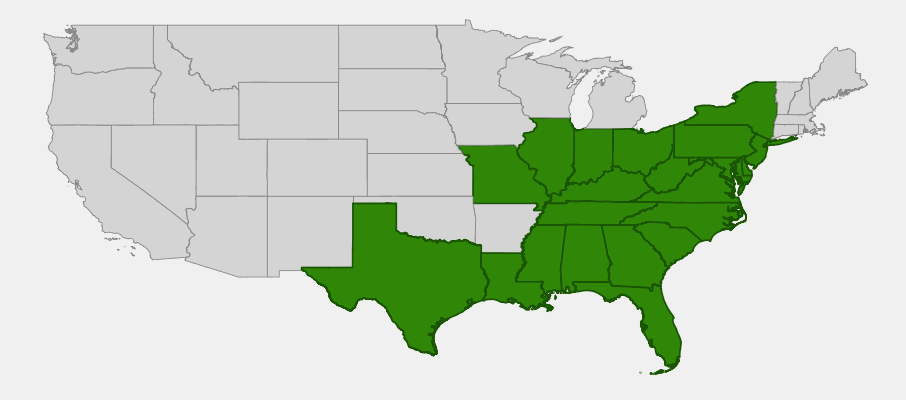
Virginia Sweetspire has a broad native range across the eastern United States, extending from southeastern Pennsylvania and southern New Jersey south to northern Florida, and west through the southeastern states to eastern Texas and southeastern Oklahoma. The species is also found in scattered locations in southern Illinois, southern Indiana, and southeastern Missouri, representing disjunct populations from the main range. Throughout this range, Virginia Sweetspire is typically associated with wetland habitats, stream corridors, and seasonally flooded areas.
In its natural habitat, Virginia Sweetspire is most commonly found along stream banks, in wet meadows, around pond edges, and in other low-lying areas that experience periodic flooding or consistently high soil moisture. The species often grows in the transition zones between aquatic and terrestrial habitats, where it helps stabilize soil and provides important ecological services. It frequently occurs in association with other wetland plants such as Cardinal Flower, Swamp Milkweed, Blue Flag Iris, and various sedges and rushes.
Despite its preference for moist soils in nature, Virginia Sweetspire demonstrates remarkable adaptability to drier conditions once established, making it more versatile than many other wetland plants for garden use. This adaptability, combined with its attractive flowers and exceptional fall color, has made it increasingly popular in horticulture both within and beyond its native range.
📋 Regional plant lists featuring Virginia Sweetspire: North Carolina & South Carolina
Growing & Care Guide
Virginia Sweetspire is among the most adaptable and low-maintenance native shrubs, capable of thriving in a wide range of garden conditions while providing exceptional ornamental value throughout multiple seasons.
Light
While Virginia Sweetspire tolerates partial shade and will bloom reasonably well with as little as 4-5 hours of direct sun, it performs best and produces the most abundant flowers in full sun to light partial shade. In deeper shade, the plant tends to become leggy with reduced flowering and less intense fall color. The species is particularly well-suited to sites that receive morning sun and light afternoon shade, which helps protect the foliage from intense heat while ensuring adequate light for good bloom production.
Soil & Water
One of Virginia Sweetspire’s greatest assets is its remarkable soil adaptability. While it naturally occurs in consistently moist to wet soils, established plants tolerate periods of drought and can even thrive in well-drained garden soils. The species performs well in clay, loam, or sandy soils with a pH range of 4.5 to 7.5. For optimal growth, provide consistent moisture during the first growing season to promote establishment, after which the plant becomes quite drought-tolerant. Virginia Sweetspire is an excellent choice for rain gardens, bioswales, and other areas that experience periodic flooding, as it can tolerate standing water for extended periods.
Planting Tips
Plant Virginia Sweetspire in spring or fall when temperatures are moderate. Space plants 4 to 6 feet apart if you want them to eventually merge into a naturalistic colony, or farther apart if you prefer individual specimens. The plant establishes quickly and may begin spreading through underground runners within the first few years. When planting near water features or in rain gardens, position the crown at the same level it was growing in the container — the plant can tolerate periodic flooding of the root zone but prefers the crown to remain above standing water.
Pruning & Maintenance
Virginia Sweetspire requires minimal pruning under most circumstances. If pruning is needed, do it immediately after flowering to avoid removing next year’s flower buds, which form on the current year’s growth. The plant can be cut back by up to one-third if it becomes too large for its space, and it typically responds with vigorous new growth. To maintain a more compact form and prevent spreading, remove underground runners as they appear. Every 3-4 years, you can rejuvenate older specimens by cutting them back to 6-12 inches above ground in late winter — they will regrow vigorously and often produce better flowers and foliage.
Landscape Uses
Virginia Sweetspire’s versatility makes it suitable for numerous landscape applications:
- Rain gardens and bioswales — excellent for stormwater management
- Pollinator gardens — fragrant flowers attract butterflies and native bees
- Naturalistic borders and woodland edge plantings
- Erosion control on slopes and stream banks
- Seasonal interest plantings — spectacular fall color
- Foundation plantings (with runner control)
- Mixed shrub borders and native plant gardens
- Wildlife habitat gardens — provides nesting sites and food sources
Wildlife & Ecological Value
Virginia Sweetspire provides substantial wildlife value and ecological services, supporting a diverse array of species while contributing to overall ecosystem health.
For Pollinators
The abundant, fragrant flowers of Virginia Sweetspire are magnets for a wide variety of pollinators during the early summer blooming period. Native bees, including sweat bees, mining bees, and leafcutter bees, are frequent visitors, along with honeybees when present. The flowers are particularly attractive to butterflies, including Eastern Tiger Swallowtail, Spicebush Swallowtail, Red-spotted Purple, and various skippers and smaller butterflies. The long blooming period — often extending for 4-6 weeks — provides a reliable nectar source during a time when many spring flowers have finished and summer blooms have not yet begun.
For Birds
The dense, multi-stemmed growth habit of Virginia Sweetspire provides excellent nesting habitat and cover for small to medium-sized birds. Species that commonly nest in or near sweetspire colonies include Gray Catbird, Northern Cardinal, American Robin, and various warbler species. The seeds, while small, are consumed by finches and other seed-eating birds, though they are not a major food source. More importantly, the shrub’s tendency to harbor insects makes it valuable for insect-eating birds during both the breeding season and migration periods.
For Other Wildlife
The flowers attract various beneficial insects including hoverflies, native wasps, and beetles that contribute to pollination and pest control. Small mammals may use dense colonies for cover and nesting sites, while the roots and shoots can provide minor browse for wildlife, though the plant is generally not heavily browsed by deer or rabbits.
Ecosystem Services
Virginia Sweetspire provides important ecosystem services, particularly in riparian and wetland areas. Its extensive root system helps stabilize soil and prevent erosion, while its ability to tolerate periodic flooding makes it valuable for natural stormwater management. The plant helps filter runoff and improve water quality through uptake of excess nutrients and sediments. In garden settings, established colonies require minimal inputs while providing habitat, supporting pollinators, and contributing to biodiversity.
Cultural & Historical Uses
While Virginia Sweetspire doesn’t have the extensive recorded history of human use that characterizes some other native plants, it has played important roles in both traditional and modern horticulture. Indigenous peoples of the southeastern United States likely utilized the plant in various ways, though specific documented uses are limited in historical records. The common name “sweetspire” refers to the plant’s sweet-scented flowers, which were sometimes gathered for their fragrance.
In early American gardens, Virginia Sweetspire was occasionally transplanted from the wild to cultivated settings, particularly around water features or in low-lying areas where few other ornamental plants would thrive. However, it remained relatively obscure in horticulture until the mid-20th century, when increasing interest in native plants and naturalistic gardening brought it to wider attention.
The modern horticultural story of Virginia Sweetspire began in earnest in the 1960s and 1970s when plant breeders began selecting superior forms for garden use. The most famous of these is the cultivar ‘Henry’s Garnet,’ selected from wild plants in Georgia and named after plantsman Henry Wright. This cultivar, introduced in the 1990s, features more compact growth, improved fall color, and enhanced flower production compared to typical wild plants. ‘Henry’s Garnet’ won the prestigious Gold Medal Award from the Pennsylvania Horticultural Society and has become one of the most widely planted native shrubs in American gardens.
Other cultivars have followed, including ‘Merlot’ (selected for deep burgundy fall color), ‘Little Henry’ (a compact form), and ‘Sprich’ (marketed as Sweetspire™). These selections have helped establish Virginia Sweetspire as a mainstream landscaping plant, moving it from a specialty native plant into general horticultural use. The success of these cultivars has also highlighted the value of selecting and improving native plants for garden use rather than simply relying on non-native alternatives.
Today, Virginia Sweetspire serves as an excellent example of how native plants can meet the demands of modern landscapes while providing environmental benefits. Its use in rain gardens, bioswales, and green infrastructure projects reflects growing recognition of the practical environmental services that native plants can provide in addition to their aesthetic and ecological value.
Frequently Asked Questions
How fast does Virginia Sweetspire spread?
Virginia Sweetspire spreads at a moderate pace through underground runners, typically expanding its colony by 1-2 feet per year under favorable conditions. In rich, moist soils, it may spread more quickly, while in drier or less fertile conditions, the spreading will be slower. The rate can also vary significantly between cultivars and individual plants.
Can I prevent Virginia Sweetspire from spreading?
Yes, spreading can be controlled by installing root barriers, regularly removing runners, or choosing more compact cultivars like ‘Little Henry.’ You can also plant it in areas where spreading is welcome, such as naturalized areas or erosion-prone slopes where the colonizing habit is actually beneficial.
Why isn’t my Virginia Sweetspire flowering well?
Poor flowering is usually due to insufficient sunlight — the plant needs at least 4-6 hours of direct sun for good bloom production. Over-fertilization, particularly with high-nitrogen fertilizers, can also reduce flowering by promoting excessive vegetative growth. Additionally, pruning at the wrong time (fall through early spring) removes flower buds for the following year.
Is Virginia Sweetspire deer resistant?
Virginia Sweetspire has moderate deer resistance — it’s not their preferred food, but hungry deer may browse it, especially young plants. The plant typically recovers well from deer damage and becomes less palatable as it matures. In areas with heavy deer pressure, protect young plants until they become established.
When is the best time to transplant or divide Virginia Sweetspire?
The best time to transplant or divide Virginia Sweetspire is in early spring before new growth begins, or in fall after the leaves drop. The plant’s spreading habit makes it easy to divide — simply dig up sections with roots and runners attached. Divisions typically establish quickly when planted in appropriately moist soil.

Looking for a nursery that carries Virginia Sweetspire?
Browse our native plant nursery directory: North Carolina · South Carolina