
Tarflower (Bejaria racemosa)
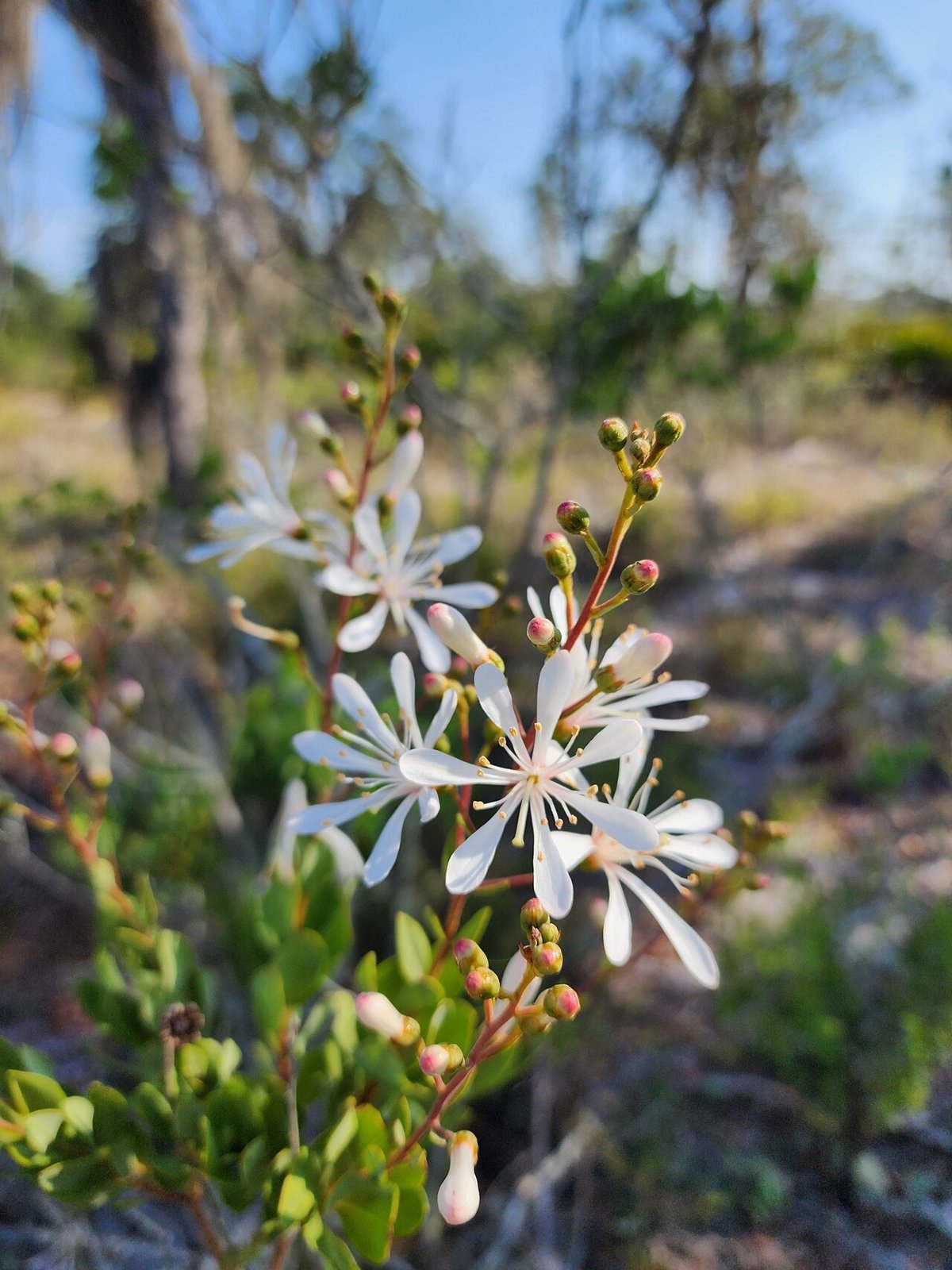
Bejaria racemosa, known as Tarflower or flyweed, is an evergreen shrub of the pine flatwoods and scrub of Florida and the neighboring Coastal Plain. In late spring and summer its upright branches end in long clusters of fragrant, starry flowers with seven narrow, white petals blushed with pink. It belongs to the heath family (Ericaceae), alongside blueberries, rhododendrons and staggerbushes, and it is the only member of its mostly tropical genus that grows in the United States.
The common name comes from the flowers and young fruits, which are coated with a sticky, tar-like resin. Small flies, bees and other insects are often found stuck to the blossoms, which gives the plant its other names, flyweed and fly-catcher. USDA PLANTS lists the common name “flyweed”, while Florida gardeners and botanists nearly always call it tarflower. The name is also spelled Befaria racemosa in older works, a spelling now treated as an early error.
Tarflower is one of the showiest native shrubs of Florida’s dry flatwoods, and its blooming thickets are a highlight of early summer walks. This guide covers how to identify it, where it grows and how it fits into fire-maintained pinelands, along with practical advice for gardeners who want to grow it.
Identification
Tarflower is easy to recognize in bloom. Its seven-petaled flowers are unlike those of any other shrub in its habitat, and the sticky flower stalks and fruits are distinctive even after the petals have fallen.
Growth Habit
Tarflower is a slender, upright, evergreen shrub, usually 3 to 8 feet tall, with few, stiff, mostly erect branches. Young stems are reddish and finely hairy, and older stems have gray bark. It often grows in loose colonies, and after a fire it resprouts from the base, producing a cluster of new stems.
Leaves
The leaves are alternate, simple and stalkless, elliptic to oval, about 1 to 2½ inches long, with smooth edges. The upper surface is dull green and finely hairy, and the underside is paler, often whitish, with longer hairs along the midrib. Leaves crowd toward the tips of the branches, and the foliage remains on the plant through winter.
Flowers
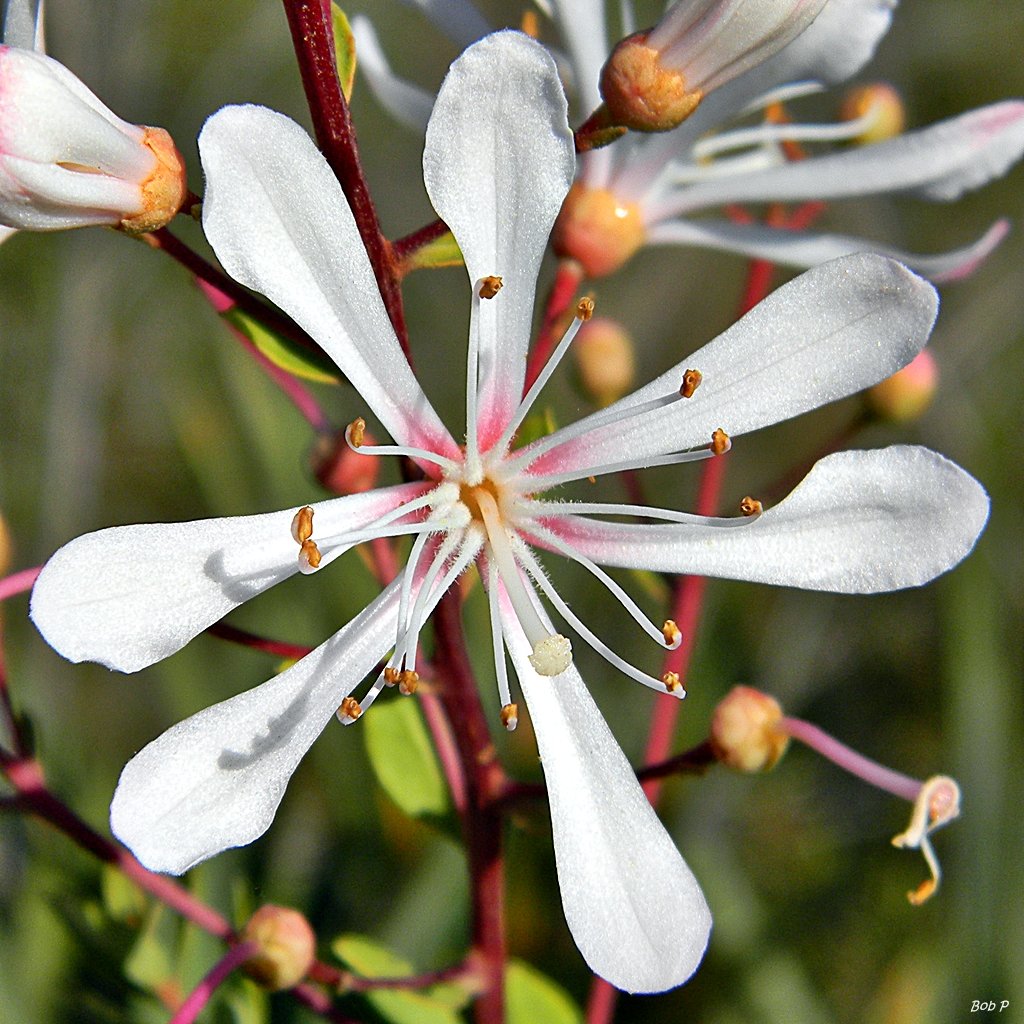
The flowers are borne in elongated clusters (racemes or panicles) at the branch tips, mainly from May into July, with scattered blooms later in summer. Each flower is about 1 to 1½ inches across, with seven narrow, spoon-shaped petals that are white and usually flushed pink toward the base, and about fourteen long stamens with rust-colored anthers. The flower stalks, calyx and outer petals are sticky with a glandular resin, and the flowers have a sweet fragrance.
Fruit & Seeds
The fruit is a small, rounded, sticky capsule about ¼ inch across that turns dark brown as it ripens in late summer and fall. It splits open to release many tiny seeds. Old capsules often remain on the branches into winter.
Quick Facts
| Scientific Name | Bejaria racemosa (also spelled Befaria racemosa) |
| Family | Ericaceae (heath family) |
| Plant Type | Evergreen shrub |
| Mature Height | 3–8 ft |
| Mature Spread | 3–6 ft |
| Growth Rate | Slow to moderate |
| Sun Exposure | Full sun to partial shade |
| Water Needs | Low to moderate; tolerates long dry periods but not flooding |
| Soil Type | Acidic, nutrient-poor sand |
| Soil pH | Acidic (about 4.0–5.5) |
| Bloom Time | May–July, with scattered later flowers |
| Flower Color | White, flushed pink |
| Fall Color | None; evergreen |
| Fruit | Small sticky capsule, dark brown when ripe |
| Deer Resistant | Moderately; browsing is light |
| USDA Hardiness Zones | 8A–10B |
Native Range
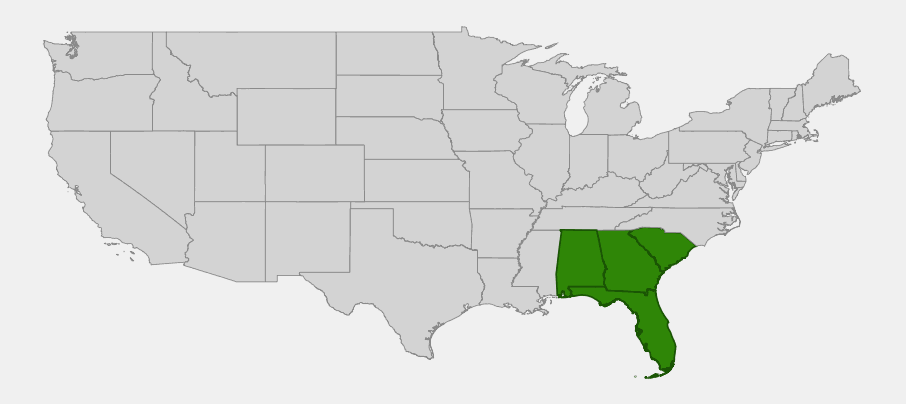
Tarflower is native to the southeastern Coastal Plain. USDA PLANTS lists it from Florida, Georgia, Alabama and South Carolina, and the Lady Bird Johnson Wildflower Center describes its range as Georgia and Alabama south to peninsular Florida and southeastern South Carolina. It is most abundant in peninsular Florida, where it grows in flatwoods and scrub from the north-central part of the state to the southern mainland.
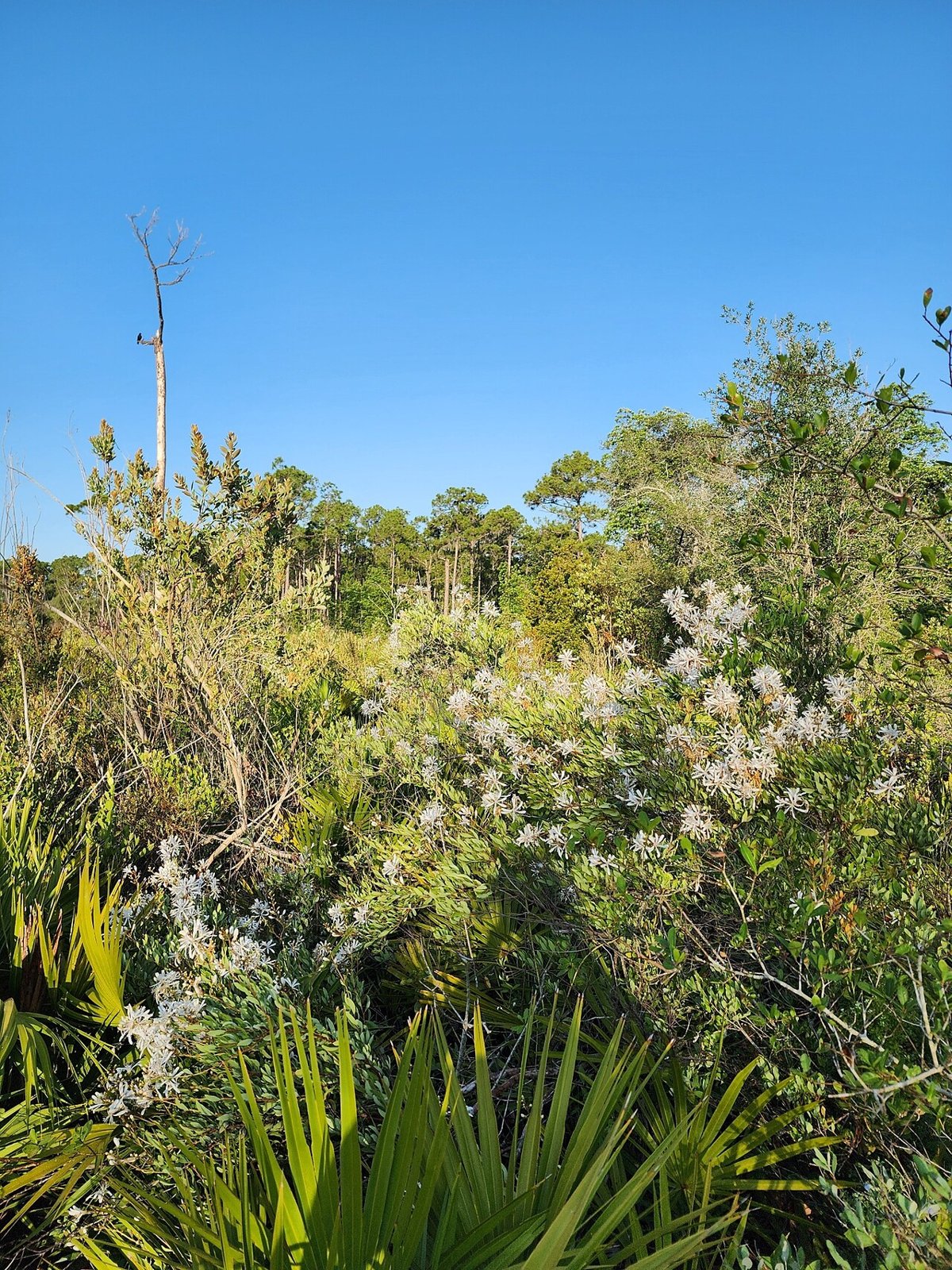
Its typical habitats are pine flatwoods, especially the drier scrubby flatwoods, and the edges of sand pine and oak scrub. It also grows in coastal pinelands and on sandy ridges. These are fire-maintained ecosystems with acidic, nutrient-poor sand, and tarflower is well adapted to them. It resprouts quickly after fire and flowers heavily in the following years.
In the northern parts of its range in Georgia, Alabama and South Carolina, tarflower is much less common and is limited to the outer Coastal Plain. Like many flatwoods plants, it has declined where pinelands have been converted to development or pine plantations, or where fire has been excluded for long periods.
📋 Regional plant lists featuring Tarflower: North & South Florida · Alabama, Georgia & Mississippi · North & South Carolina
Growing & Care Guide
Tarflower is not a typical nursery shrub. Like many heath family plants of nutrient-poor sands, it relies on root fungi and dislikes rich soil, fertilizer and root disturbance. The Florida Native Plant Society recommends conserving it wherever it already grows on a property, and that is by far the easiest way to enjoy it. Plants are occasionally offered by native nurseries and at Florida Native Plant Society plant sales; never dig them from the wild, where they rarely survive transplanting.
Light
Full sun to light shade. It blooms best in full sun, as in open flatwoods after a fire. In heavy shade under a closed canopy, plants become leggy and flower poorly.
Soil & Water
Grow it in acidic, well-drained sand low in organic matter and nutrients. Do not amend the soil, add lime or fertilize. Water young plants regularly during their first year, but avoid keeping them soggy. Established plants tolerate long dry periods, and they also handle the seasonally damp soils of mesic flatwoods, though not standing water. They have little tolerance for salt spray.
Planting Tips
Plant small container-grown plants, disturbing the roots as little as possible. Group several together in a naturalistic planting with saw palmetto, wiregrass and other flatwoods species rather than using it as a formal foundation shrub. If you have an existing pine flatwoods remnant, protect any tarflower already growing there; it is much easier to keep than to establish.
Pruning & Maintenance
Little pruning is needed. To rejuvenate old, leggy shrubs, cut them back hard in late winter, imitating the effect of fire; they resprout from the base. Expect a few insects stuck to the sticky flowers. That is natural, and the plant does not need pest control.
Propagation
Tarflower can be grown from seed and cuttings, but both are slow. Surface-sow the fine seed on moist, acidic, sandy peat mix and keep it humid and lightly shaded until seedlings appear. Semi-hardwood cuttings can be rooted under mist, though success rates are low. Seedlings grow slowly and are best transplanted while small.
Landscape Uses
- Naturalistic flatwoods plantings: a showy shrub layer with saw palmetto, wiregrass and blueberries
- Pollinator gardens: its fragrant flowers attract many native bees
- Conservation landscaping: protect existing plants on lots with pine flatwoods or scrub
- Habitat restoration: in flatwoods and scrub restorations within its native range
- Dry, sandy sites: for acidic, low-nutrient sand where few ornamentals thrive
Wildlife & Ecological Value
Tarflower plays a surprisingly active role in the life of flatwoods insects, both as a food source for pollinators and as a trap for unlucky small insects.
For Pollinators
The fragrant flowers attract a wide variety of native bees. The Florida Native Plant Society notes visits from sweat bees (including Agapostemon), resin bees, leafcutter bees and bumblebees. Large, strong bees can handle the sticky surfaces without trouble and are probably its main pollinators.
For Insects
Small flies, gnats, ants and tiny bees often get stuck in the resin on the flower stalks, calyx and fruits. The resin probably protects the flowers and developing seeds from small insects that would steal nectar or eat the ovaries without pollinating them. Some researchers have suggested that tarflower may gain nutrients from the trapped insects as they decay, but this has not been firmly demonstrated.
For Birds
Tarflower provides cover and nesting sites for flatwoods songbirds. Its small dry capsules are of little food value, but spiders and other predators that hunt insects on the sticky flowers in turn attract insect-eating birds.
For Mammals
Deer browse tarflower only lightly. Small mammals use the dense flatwoods shrub layer, of which tarflower is a part, for cover.
Ecosystem Role
Tarflower is a characteristic shrub of the flatwoods and scrub ecosystems of Florida and the adjacent Coastal Plain. It depends on fire to keep its habitat open and to stimulate vigorous new growth and flowering. Like other members of the heath family, it forms partnerships with root fungi that help it obtain nutrients from poor sandy soils.
Cultural & Historical Uses
The genus Bejaria was named by the Spanish botanist José Celestino Mutis in honor of José Béjar, a Spanish professor of botany. Mutis, who worked in what is now Colombia, sent specimens of a South American species to Linnaeus in the eighteenth century. The spelling Befaria, which Linnaeus used, is now considered an error, though it remained in use for many years.
Tarflower was described from North America by the French botanist Étienne Pierre Ventenat around 1800 from plants cultivated in the Paris garden of Jacques-Martin Cels. Botanical explorers had noticed it much earlier in Florida, and early naturalists commented on the sticky flowers and the insects trapped in them.
Today tarflower is valued by Florida native plant enthusiasts and photographers as one of the signature flowering shrubs of pine flatwoods. Its blooming season is a popular time for wildflower walks in state parks and forests across the peninsula.
Frequently Asked Questions
Why is it called tarflower?
The flower stalks, calyx and young fruits are covered in a sticky, tar-like resin. Small insects often get stuck to it, so it is also called flyweed or fly-catcher.
Is tarflower a carnivorous plant?
Not in the usual sense. It traps small insects in its sticky resin, but it has no digestive glands. The resin probably protects the flowers from nectar thieves, and whether the plant gains nutrients from trapped insects remains uncertain.
Can I grow tarflower in my garden?
It can be grown in acidic, well-drained sand in sun, but it is slow and fussy, and it dislikes fertilizer and root disturbance. Start with small nursery-grown plants. The easiest way to enjoy it is to protect plants already growing on your property.
When does tarflower bloom?
Mainly from May into July, with occasional flowers later in summer. Plants bloom most heavily in the first few years after a fire.
Is tarflower the same as flyweed?
Yes. USDA PLANTS uses the common name flyweed for Bejaria racemosa, while most Florida references call it tarflower. Both names refer to the sticky flowers that trap small insects.

Looking for a nursery that carries Tarflower?
Browse our native plant nursery directory: Alabama · Florida & Georgia · South Carolina