
Lindenleaf Rosemallow (Hibiscus furcellatus)
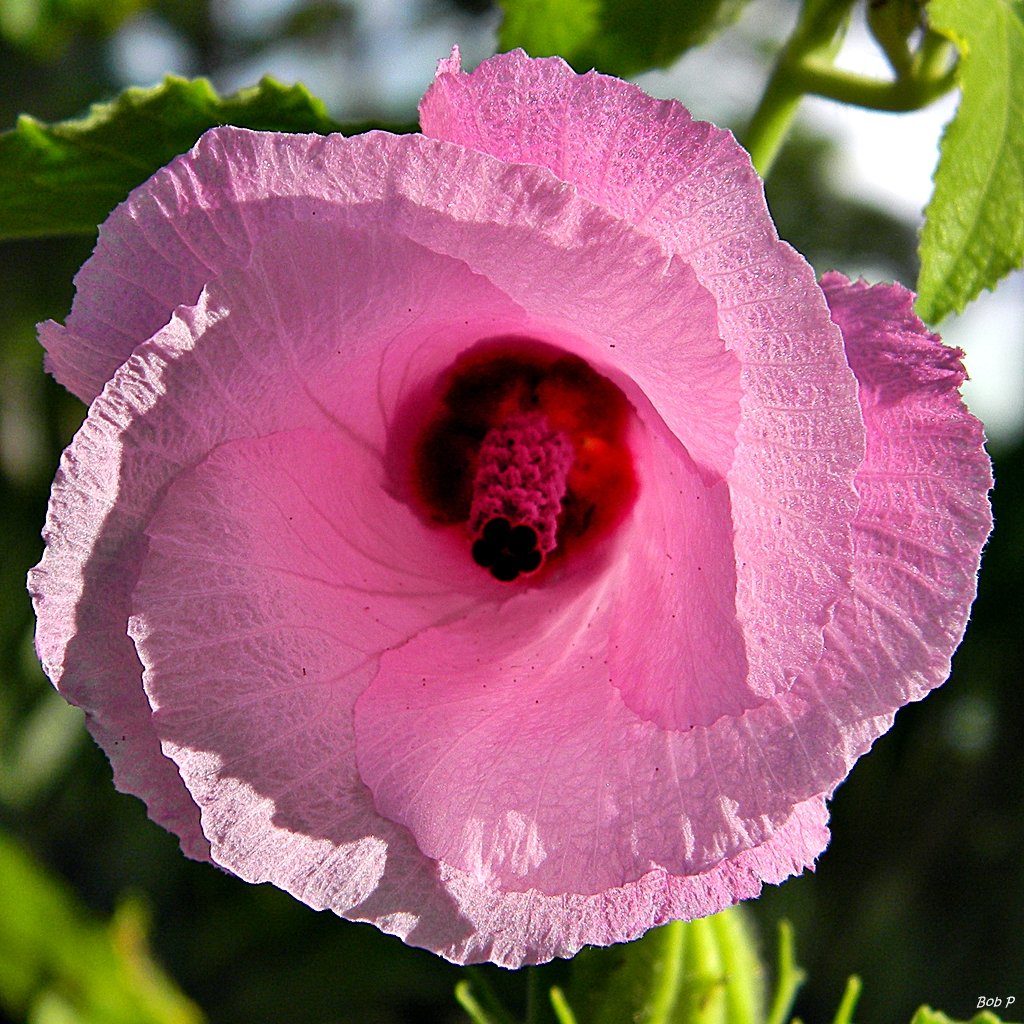
Hibiscus furcellatus, the Lindenleaf Rosemallow or sleepy hibiscus, is a tall, soft-leaved native mallow of freshwater marshes and damp thickets. It makes a loose, upright shrub of six to eight feet, occasionally much taller, hung with broad, rounded, heart-shaped leaves and clear pink flowers with a dark red eye. The flowers last a single day and typically stay cupped instead of opening flat, which is where the name “sleepy hibiscus” comes from.
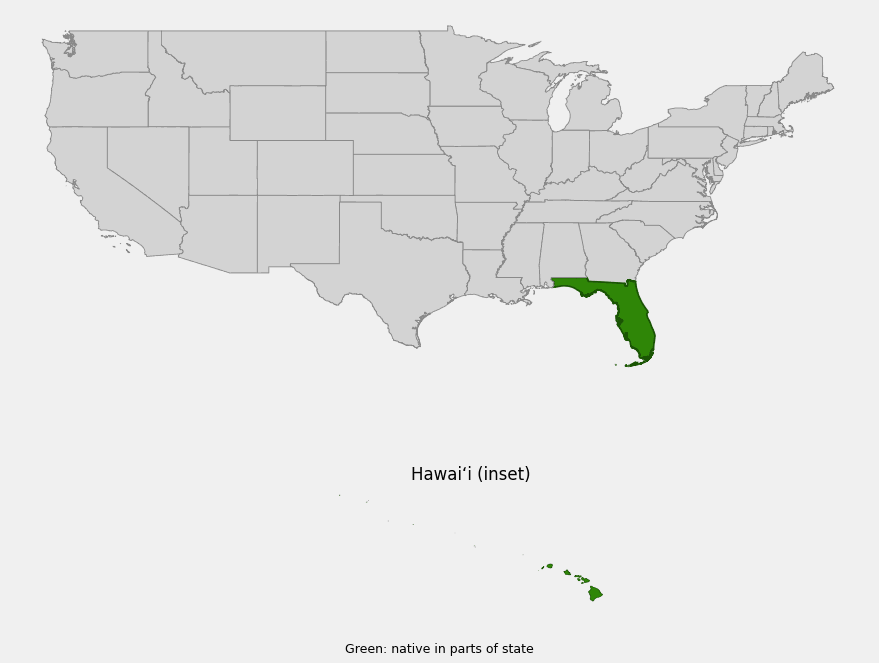
This is one of the native hibiscus species that most Florida gardeners have never met. USDA PLANTS lists it as native to the lower 48, Hawaii and Puerto Rico, and in Florida it occurs mainly along the Atlantic coast counties from Brevard south to Broward, with scattered inland populations. In Hawai‘i it is indigenous and carries the Hawaiian names ʻakiohala, ʻakiahala and hau hele wai; it also grows natively through the West Indies, Mexico and tropical America, including Puerto Rico.
The Atlas of Florida Plants and the Florida Native Plant Society now list this plant as Sabdariffa furcellata, following a recent split of the genus Hibiscus. Nurseries, gardeners and USDA PLANTS still use Hibiscus furcellatus, so that is the name used here; both refer to the same plant. This guide covers how to recognize it, where it grows, and how to use it in a wet planting.
Identification
Lindenleaf rosemallow is a large, hairy, pink-flowered mallow. Two features separate it from the other native rosemallows: the broad linden-like leaves and the ring of forked bracts beneath each flower.
Leaves
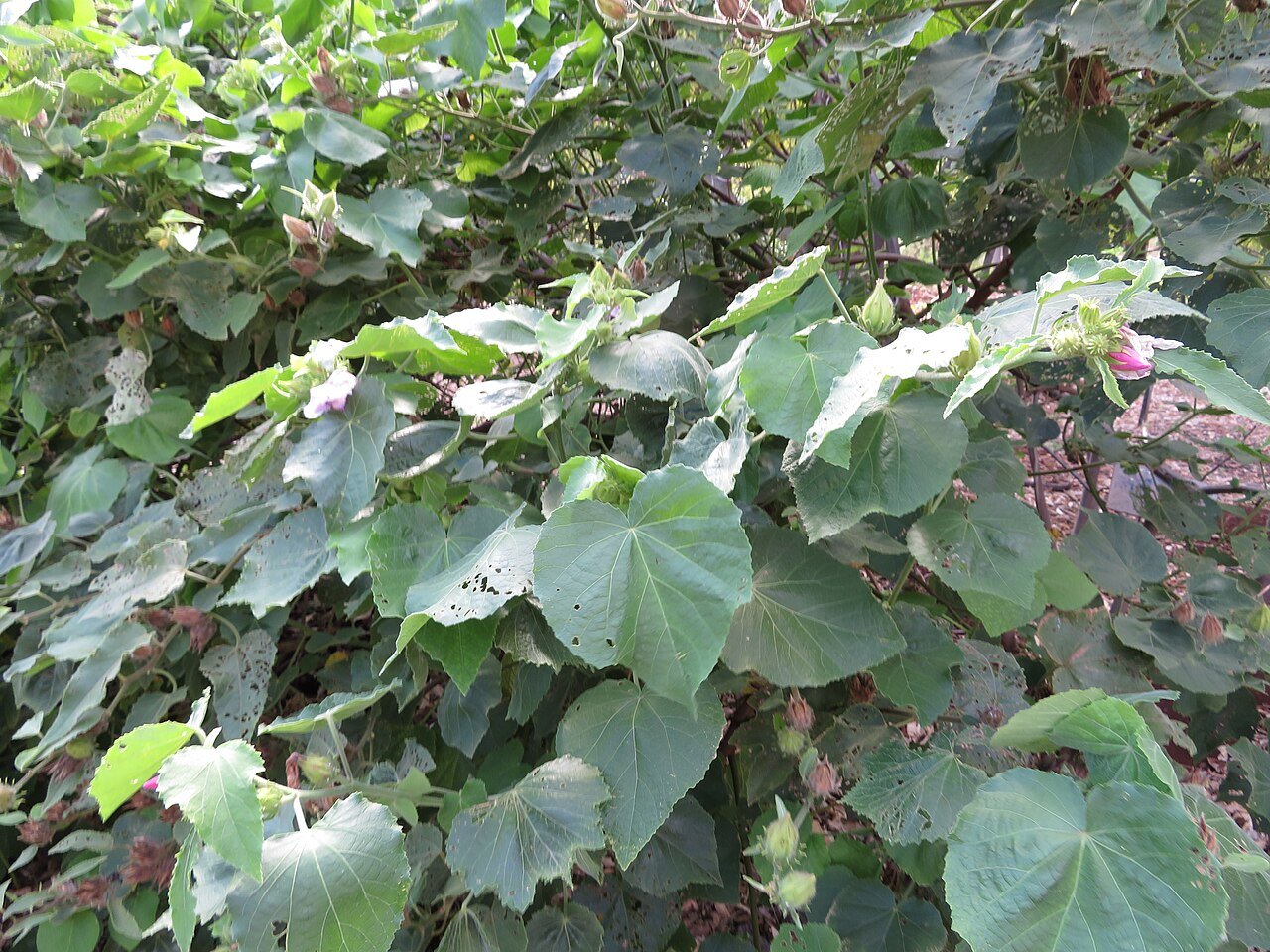
The leaves are broad and rounded with a heart-shaped base, sometimes shallowly three-lobed, with toothed margins and a soft, velvety surface from a dense coat of star-shaped hairs. The resemblance to a linden or basswood leaf is what gives the plant its English name. On the underside, near the point where the blade meets the leaf stalk, there is a small nectary gland, a detail worth looking for when confirming an identification.
Stems & Habit
Plants grow as a loose, upright, multi-stemmed shrub, usually 6 to 8 feet tall in Florida and reported up to about 10 to 12 feet in good conditions. Young stems and leaf stalks are covered with short star-shaped hairs mixed with longer, stiff, prickly hairs. Those bristles are sharp enough to notice when handling the plant, so wear gloves when pruning or collecting seed. In Florida the plant is winter dormant, dying back and regrowing with warm weather.
Flowers
The flowers are about 3 to 4 inches across, clear pink to rose-purple with a deep red or maroon throat and the central column of fused stamens typical of the mallow family. Each one opens for a single day, and the petals usually stay in a cup or funnel rather than flattening out. Beneath each flower sits a ring of narrow bracts, the epicalyx, whose tips are distinctly forked. That forking is the species characteristic recorded in the name furcellatus. The Lady Bird Johnson Wildflower Center lists bloom months across the whole year in Florida, with the heaviest flowering in the warm season.
Fruit & Seeds
Pollinated flowers form a dry, five-parted capsule that ripens brown and splits to release small, dark seeds. The dried capsules and the surrounding calyx stay bristly and sharp, so handle them carefully when collecting seed. Old capsules often remain on the plant well into the dormant season and are a useful winter identification clue.
Quick Facts
| Scientific Name | Hibiscus furcellatus (listed by the Atlas of Florida Plants as Sabdariffa furcellata) |
| Family | Malvaceae (mallow family) |
| Plant Type | Deciduous shrub or woody-based perennial; long-lived |
| Mature Height | 6–8 ft; occasionally to about 12 ft |
| Mature Spread | 4–6 ft |
| Growth Rate | Fast |
| Sun Exposure | Full sun |
| Water Needs | High; wet to consistently moist soil |
| Soil Type | Sand or loam in freshwater marshes, swales and canal margins |
| Soil pH | Adaptable; neutral to slightly acidic |
| Bloom Time | Much of the year in frost-free areas; heaviest in the warm season |
| Flower Color | Pink to rose-purple with a dark red throat |
| Fall Color | None; winter dormant in Florida |
| Fruit | Dry brown five-parted capsule with small dark seeds |
| Deer Resistant | Not reliably; the bristly stems deter some browsing |
| USDA Hardiness Zones | 10A–10B in Florida |
Native Range
USDA PLANTS lists lindenleaf rosemallow as native in the lower 48 states, Hawaii and Puerto Rico. The Lady Bird Johnson Wildflower Center gives its U.S. distribution as Florida and Hawaii. Beyond the United States the species is native through the West Indies, Mexico, Central America and South America, which makes it one of Florida’s tropical American natives rather than a temperate southeastern species.
In Florida it is concentrated along the Atlantic coast counties, roughly from Brevard County south to Broward County, with additional inland and Gulf-side populations recorded in counties such as Highlands and Pinellas. Its habitats are freshwater marshes and marsh edges, wet depressions in pine flatwoods, damp thickets, canal and ditch margins and disturbed wet ground. The 2022 National Wetland Plant List rates it FAC to FACW depending on region, meaning it usually occurs in wetlands but can turn up on merely damp sites.
In Hawai‘i the species is indigenous on Kaua‘i, O‘ahu, Maui and Hawai‘i Island, growing in wet and disturbed ground roughly between 300 and 800 feet elevation. Nineteenth-century accounts describe it as far more abundant there than it is today. Puerto Rico also lies within its native range, although no separate range map is drawn for the island here.
📋 Regional plant lists featuring Lindenleaf Rosemallow: North & South Florida · Hawaii
Growing & Care Guide
Given sun and wet soil, lindenleaf rosemallow is fast, vigorous and generous with flowers. The Florida Native Plant Society rates it as a plant for full sun with moisture tolerance ranging from “stays wet” to “somewhat moist, no flooding”, suitable for USDA zones 10A and 10B, and lists it as available from native nurseries and from seed. Its main limitation is cold: it is a tropical species, and hard frost cuts it back or kills it.
Light
Full sun. In shade the plant stretches, flowers sparsely and loses its shape. In the wild it grows in open marshes and along sunny canal banks, and a garden plant needs the same exposure to stay dense and bloom heavily.
Soil & Water
Plant it in sand or loam that stays wet or at least consistently moist. It is happy at the margin of a pond, in a wet swale or in a rain garden that holds water after storms, and it tolerates saturated soil. The Florida Native Plant Society rates it as not tolerant of flooding by salt or brackish water, and as having only some tolerance to salty wind and none to direct salt spray, so keep it back from the open shore. It is not a drought plant; in dry spells it needs irrigation.
Planting Tips
Use it where its height and loose habit are an asset: as a screen, a tall hedge, or the back layer of a wet planting. The Florida Native Plant Society specifically recommends it for hedges and screening. Space plants 4 to 6 feet apart for a screen. Keep the bristly stems away from paths and seating areas, and site it in a sheltered spot in zone 10A, where frost is possible in a hard winter.
Pruning & Maintenance
Cut stems back hard in late winter, before new growth starts, to keep plants dense and within bounds; the species flowers on new wood and responds well to hard pruning. Wear gloves and long sleeves because of the stiff hairs. Remove frost-damaged wood once the danger of cold has passed. Chinese rose beetles chew ragged holes in the leaves in Hawai‘i, and various leaf-feeding insects do the same in Florida; the damage is cosmetic and no treatment is needed, especially since many of those feeders are the butterfly and moth caterpillars the plant supports.
Propagation
Seed is the usual method, and the Florida Native Plant Society lists both nurseries and seed as sources. Collect capsules when they are brown and dry, handling them with gloves because of the sharp bristles, then clean out the small dark seeds. Scarifying the hard seed coat lightly and soaking overnight improves germination. Softwood cuttings taken in the warm season also root.
Landscape Uses
- Screens and tall hedges: the Florida Native Plant Society recommends it specifically for hedging and screening on wet ground
- Pond and canal margins: thrives where soil stays saturated and most shrubs will not
- Rain gardens and swales: a tall back-of-border shrub for the wettest zone
- Butterfly gardens: a larval host for several butterflies and moths and a nectar source for specialist bees
- Freshwater wetland restoration: a fast-growing native shrub for marsh edges in South Florida
Wildlife & Ecological Value
For a plant that is rarely grown, lindenleaf rosemallow carries an unusually long list of insect associates. The Florida Native Plant Society notes that it supports pollinators, butterflies and caterpillars alike.
For Pollinators
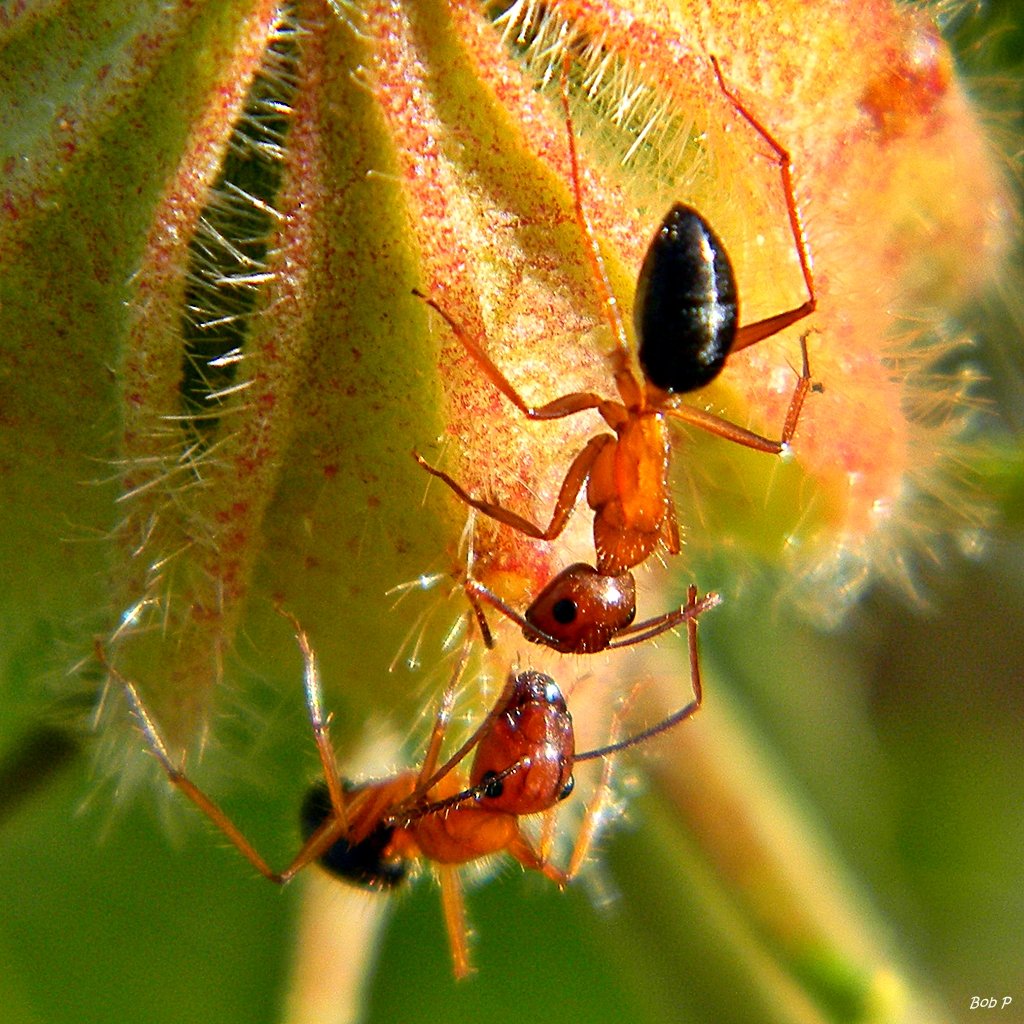
The large, open flowers attract butterflies and native bees, including the rose-mallow bee, a specialist that collects pollen almost exclusively from Hibiscus and its relatives. Beetles and other insects also work the flowers. Because each bloom lasts only a day but plants flower over a very long season, a mature shrub offers nectar and pollen more or less continuously through the warm months.
For Birds
Small birds forage for insects among the dense, hairy foliage, and the loose, multi-stemmed structure gives cover in open marsh habitats where tall shelter is scarce. The dry seed capsules are not a notable bird food.
For Mammals
Mammals browse it little; the stiff, prickly hairs on the stems and the bristly fruits discourage grazing. In Hawai‘i the stems were historically straight and strong enough to be cut for house-building material, which says something about how substantial a thicket it can form.
Ecosystem Role
The Florida Native Plant Society lists this plant as a larval host for the gray hairstreak, painted lady, common checkered skipper and tropical checkered skipper butterflies, along with four moths: the pearly wood nymph, yellow scallop moth, io moth and delightful bird-dropping moth. That makes it a genuine caterpillar plant rather than a nectar-only ornamental. In freshwater marsh and canal-edge habitats it adds structure and shade at the water margin and helps hold loose, saturated soil in place.
Cultural & Historical Uses
The species was described by the French botanist Jean-Baptiste Lamarck. The epithet furcellatus means “small forked” and refers to the forked tips of the bracts that ring the base of each flower, the single most reliable feature for confirming the species. Recent work splitting the large genus Hibiscus moved it to Sabdariffa, the genus that also contains roselle, and the Atlas of Florida Plants and the Florida Native Plant Society now list it as Sabdariffa furcellata.
In Hawai‘i, where the plant is indigenous, it is known as ʻakiohala, ʻakiahala, hau hele and hau hele wai. A nineteenth-century account by Isabella Sinclair describes it as once common in nearly every valley and sheltered place on both the windward and leeward sides of the islands, and records that its stems were cut and used as aho, the thatching sticks that formed the framework of traditional Hawaiian houses. Each house took a large quantity of them, which indicates how abundant the plant once was.
In Florida the plant has no comparable record of use and remains uncommon in cultivation. The Florida Native Plant Society notes that it is rarely grown but has real potential on appropriate sites, and it does appear at native plant nurseries and chapter plant sales in South Florida. Gardeners who want a big, fast, pink-flowered native shrub for wet ground have good reason to ask for it.
Frequently Asked Questions
Is it called Hibiscus furcellatus or Sabdariffa furcellata?
Both names refer to the same plant. USDA PLANTS, nurseries and most gardeners use Hibiscus furcellatus, while the Atlas of Florida Plants and the Florida Native Plant Society now list it as Sabdariffa furcellata after a recent reorganization of the genus Hibiscus.
Why is it called sleepy hibiscus?
Because the flowers usually never open fully. They stay cupped or funnel-shaped for the single day they last, so a plant in full bloom can look as though all its flowers are still half asleep.
How do I tell it from other native rosemallows?
Look at the leaves and the bracts. Lindenleaf rosemallow has broad, rounded, heart-shaped, velvety leaves like a linden tree, and the narrow bracts that ring the base of each flower have forked tips. Swamp Hibiscus, by contrast, has deeply divided, almost hemp-like leaves and bright red flowers.
Will it grow outside South Florida?
It is a tropical species rated for about USDA zones 10A and 10B. Farther north in Florida it may be cut to the ground or killed by frost. In Hawai‘i it grows in the wet lowlands up to roughly 800 feet.
Is it invasive or aggressive?
No. It is native to Florida, Hawaii and Puerto Rico and is actually uncommon in both Florida and Hawai‘i today. It grows fast on wet ground and self-sows a little, but it does not take over native plant communities.

Looking for a nursery that carries Lindenleaf Rosemallow?
Browse our native plant nursery directory: Florida & Hawaii