
Pigeon Plum (Coccoloba diversifolia)
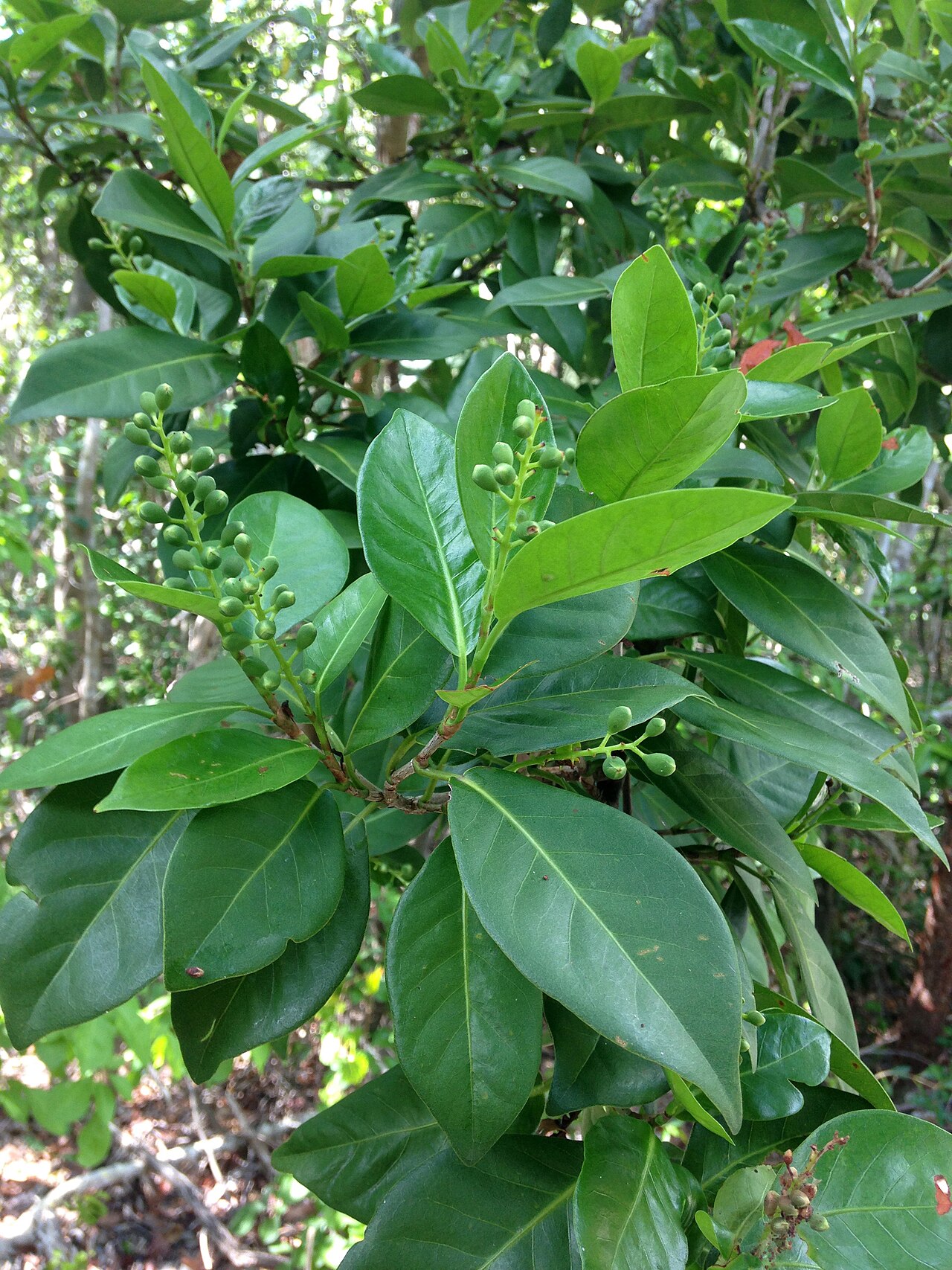
Coccoloba diversifolia, the Pigeon Plum (also called tietongue), is a handsome, salt- and wind-tough tree of South Florida’s coastal hammocks, closely related to the better-known sea grape but with a more upright, tree-like habit and smaller, glossier leaves. In the United States it is native from roughly Cape Canaveral down through the Florida Keys, almost always within reach of salt air.
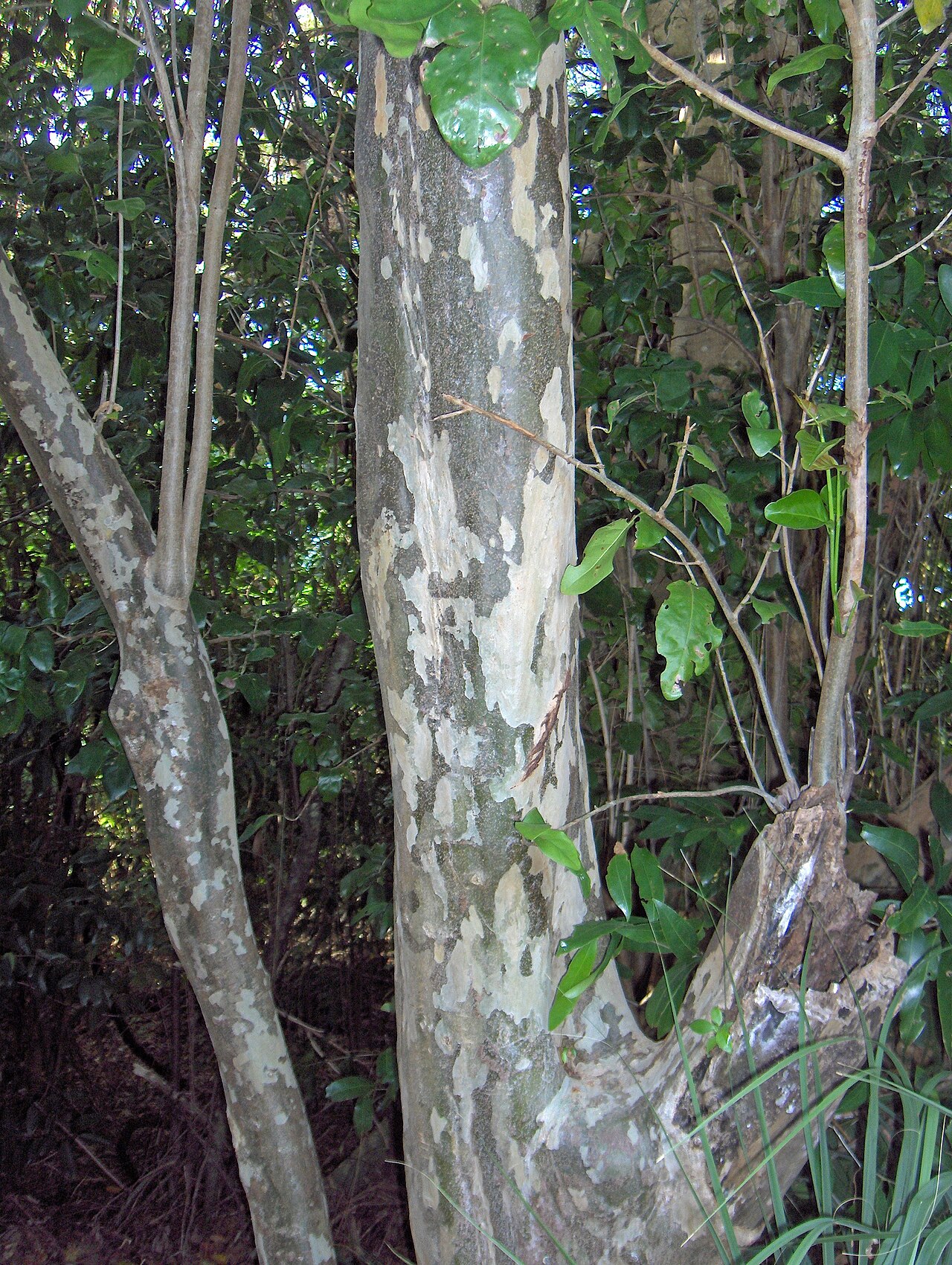
Pigeon plum earns its name from the purple-black fruit that drops in fall, historically a favored food of the now-extinct passenger pigeon and still a magnet for today’s fruit-eating birds, including the threatened white-crowned pigeon that nests and feeds in South Florida’s hammocks. Its smooth, mottled gray-and-cream bark peels in thin patches, giving mature trunks an attractive, almost sycamore-like camouflage pattern.
For South Florida and Keys gardeners wanting a tough, attractive native shade tree that shrugs off salt spray, wind and drought, pigeon plum is one of the most reliable choices available, equally at home as a specimen tree, a clipped hedge, or a component of hammock restoration plantings.
Identification
Pigeon plum is a small to medium tree, typically 20 to 35 feet tall in cultivation (wild specimens in sheltered hammocks can reach 50 feet or more), usually single-trunked with an upright, rounded crown. It is evergreen, holding its glossy foliage year-round.
Bark
The bark is one of the tree’s most attractive features: light gray and smooth on young wood, becoming thin, flaking and mottled with patches of tan, olive and cream on older trunks, a striking camouflage pattern that makes mature trees easy to identify even without leaves.
Leaves
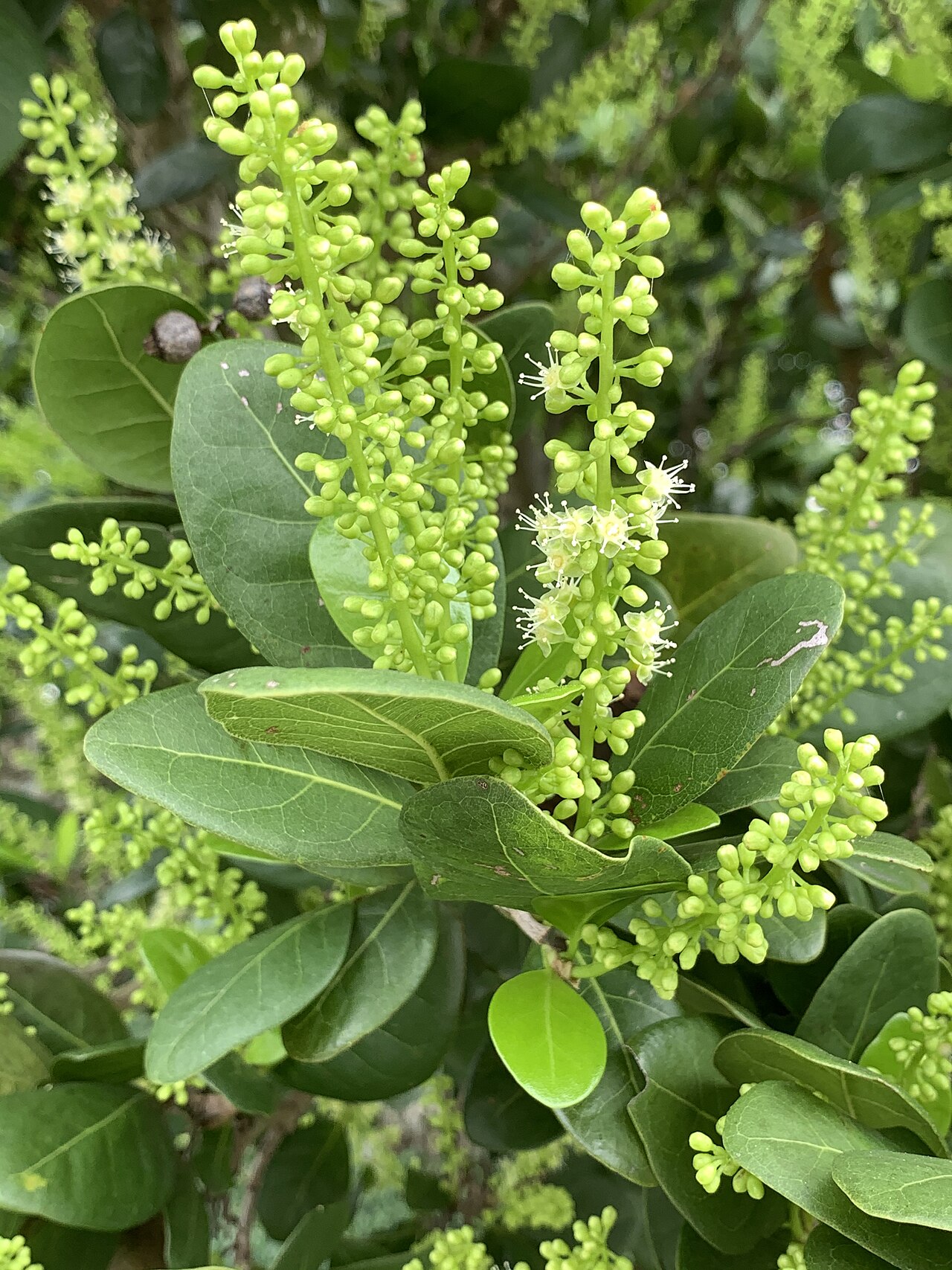
Leaves are simple, alternate, leathery and glossy dark green above with a paler underside, oval to oblong with smooth or slightly wavy margins, typically 1.5 to 5 inches long. A useful identification trick: young leaves and sprouts from the base are noticeably larger than the smaller, more oval leaves of mature canopy growth, which is the origin of the species name diversifolia (“diverse leaves”). Compared with its relative sea grape, pigeon plum leaves are smaller, less rounded and lack the prominent reddish veins.
Flowers & Fruit
Small, inconspicuous greenish-white flowers are borne in slender, upright spikes, blooming mainly in spring but sometimes appearing through much of the year. They give way to small, round fruits (technically achenes wrapped in a fleshy perianth) that ripen from green to deep purple-black in fall, each about a third of an inch across and borne in loose, grape-like clusters.
Quick Facts
| Scientific Name | Coccoloba diversifolia |
| Family | Polygonaceae (Buckwheat) |
| Plant Type | Evergreen Tree |
| Mature Height | 20–35 ft (to 50+ ft in sheltered hammocks) |
| Mature Spread | 15–25 ft |
| Growth Rate | Moderate |
| Sun Exposure | Full Sun to Part Shade |
| Water Needs | Low once established; drought tolerant |
| Soil Type | Well-drained limestone, sandy or loamy soil |
| Soil pH | Neutral to alkaline |
| Bloom Time | Spring, sporadically year-round |
| Flower Color | Greenish-white |
| Fall Color | None (evergreen) |
| Fruit | Small purple-black drupe-like fruit, fall |
| Salt & Wind Tolerance | Excellent |
| USDA Hardiness Zones | 10b–11 |
Native Range
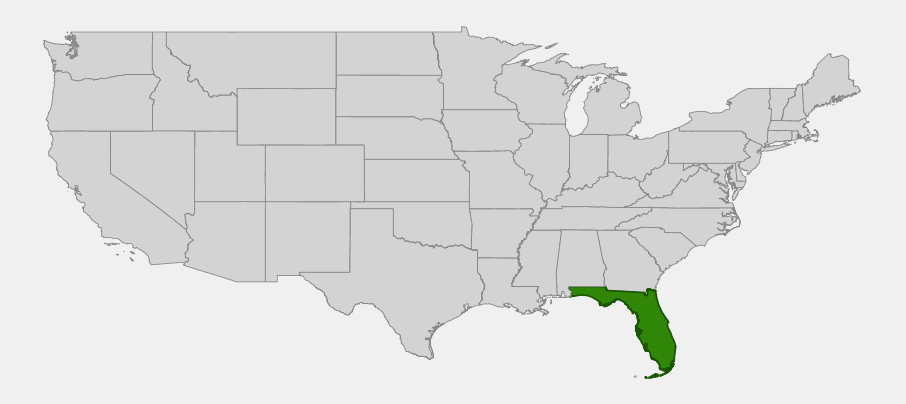
In the United States, pigeon plum is native to coastal and near-coastal Florida from about Cape Canaveral and the Tampa Bay area south through the entire Florida peninsula and the Florida Keys. It is most common and reaches its largest size in Miami-Dade and Monroe Counties, becoming scarcer and more frost-limited toward its northern edge.
Outside the United States, pigeon plum ranges through the Bahamas, Cuba, Hispaniola, Puerto Rico and other Caribbean islands, into southern Mexico and parts of Central America, always in frost-free, coastal or near-coastal settings.
Natural habitat is tropical hardwood hammock, coastal strand and the shell middens and berms along the shoreline, where it often grows as a canopy or sub-canopy tree alongside gumbo limbo, live oak and other hammock natives. Its deep root system and tolerance of thin, rocky or sandy soil let it persist on sites too harsh for most other canopy trees.
📋 Regional plant lists featuring Pigeon Plum: No Florida regional plant list currently covers this species; browse all Native Plant Profiles. See also its hammock associate Lignum Vitae.
Growing & Care Guide
Pigeon plum is an easygoing, resilient tree for South Florida and Keys landscapes, needing little beyond sun, drainage and patience while it establishes.
Light
Grow in full sun to part shade. Young trees establish well under the light shade of a hammock edge, while full sun produces the densest, most compact crown for a specimen or hedge planting.
Soil & Water
Pigeon plum adapts to a wide range of well-drained soils, from deep sand to thin limestone rock, and tolerates both acidic and alkaline conditions. Water regularly for the first year or two after planting; established trees are notably drought tolerant and need supplemental irrigation only in extended dry spells.
Planting Tips
Give pigeon plum room for its mature spread, 15 to 25 feet, away from pavement that could be disturbed by roots. It is highly resistant to wind and salt spray, making it an excellent choice for oceanfront and Keys properties where many ornamental trees struggle. It tolerates clipping well and is frequently grown as a dense, formal hedge or screen in addition to its use as a specimen or shade tree.
Pruning & Maintenance
Pigeon plum tolerates pruning well, whether light shaping of a specimen tree or regular shearing as a hedge. Remove dead or crossing branches as needed. The species has few serious pest or disease problems in South Florida and needs no routine fertilization once established.
Propagation
Propagate from seed. Collect ripe, purple-black fruit in fall, clean away the fleshy pulp, and sow fresh seed, since viability declines with storage. Germination typically takes several weeks to a couple of months. Because pigeon plum is dioecious or functionally so in its flowering (individual trees lean male or female in fruit production), a planting of several seed-grown trees improves the odds of good fruit set for wildlife.
Landscape Uses
- Coastal and hurricane-zone shade tree, standing up to salt spray and high wind
- Clipped hedge or screen in formal and informal South Florida landscapes
- Hammock restoration plantings alongside lignum vitae and other hardwood hammock natives
- Wildlife and bird gardens, for its fall fruit crop
- Street and parking lot tree where a tough, low-litter native canopy tree is wanted
- Companion planting in broader coastal designs; see our guide to privacy trees for Florida
Wildlife & Ecological Value
Pigeon plum is a cornerstone food source in South Florida’s tropical hardwood hammocks, with a wildlife legacy stretching back to a now-extinct species.
For Pollinators
The small, nectar-rich flowers attract bees and other pollinating insects, blooming heavily enough in spring to be a useful, if understated, nectar source in hammock and coastal landscapes.
For Birds
Pigeon plum is named for the extinct passenger pigeon, which once fed heavily on its fruit, and it remains an important food tree for Florida’s fruit-eating birds today. The threatened white-crowned pigeon relies on pigeon plum and related hammock fruit trees for food, and mockingbirds, migratory songbirds and other species feed on the ripe purple-black fruit each fall.
For Mammals
Raccoons and other small mammals eat fallen fruit, and the dense, evergreen crown provides year-round cover and nesting structure in hammock habitat.
Ecosystem Role
As a canopy and sub-canopy tree of tropical hardwood hammock, pigeon plum contributes to one of Florida’s most biodiverse and threatened natural communities. Its tolerance of salt, wind and thin soils lets it anchor shoreline hammock edges where few other trees can establish, helping stabilize these increasingly rare habitats.
Cultural & Historical Uses
The common name “pigeon plum” directly reflects its historical role as food for the passenger pigeon, once one of the most abundant birds in North America before its extinction in the early twentieth century; early Florida accounts describe pigeons gathering heavily in hammocks to feed on the ripe fruit each fall. The alternate name “tietongue” is thought to reference the tough, leathery texture of the leaf.
Florida’s Indigenous and early settler communities made some use of the dense, heavy wood for small items and fuel, though it was never a major timber species. Its larger historical significance is ecological rather than utilitarian: as a keystone fruiting tree of the hammock, pigeon plum shaped the seasonal movements of wildlife, and that role continues for today’s native bird and wildlife populations.
Frequently Asked Questions
How is pigeon plum different from sea grape?
Pigeon plum grows as a more upright, single-trunked tree with smaller, glossier, less rounded leaves, while sea grape typically has larger, rounder, more prominently veined leaves and a lower, more sprawling habit. Both are in the same genus and share similar coastal habitat.
Is pigeon plum fruit edible?
The fruit is eaten by wildlife, especially birds, but it has little pulp and is not cultivated or commonly eaten by people the way sea grape fruit sometimes is. It is best left for the birds it was named for.
How salt tolerant is pigeon plum?
Very salt tolerant. It handles direct salt spray and coastal exposure well, which is part of why it is such a reliable shade and hedge tree for oceanfront and Keys landscapes.
Can pigeon plum be grown as a hedge?
Yes. It tolerates regular shearing and is commonly grown as a dense, formal or informal clipped hedge or screen in South Florida landscaping, in addition to its use as a single specimen or shade tree.
How fast does pigeon plum grow?
Growth is moderate, faster than many hammock hardwoods but not fast. Expect steady size gains with regular watering during establishment, slowing to a tougher, more drought-tolerant pace once the tree is mature.

Looking for a nursery that carries Pigeon Plum?
Browse our native plant nursery directory: Florida & Georgia

