
Wild Tamarind (Lysiloma latisiliquum)
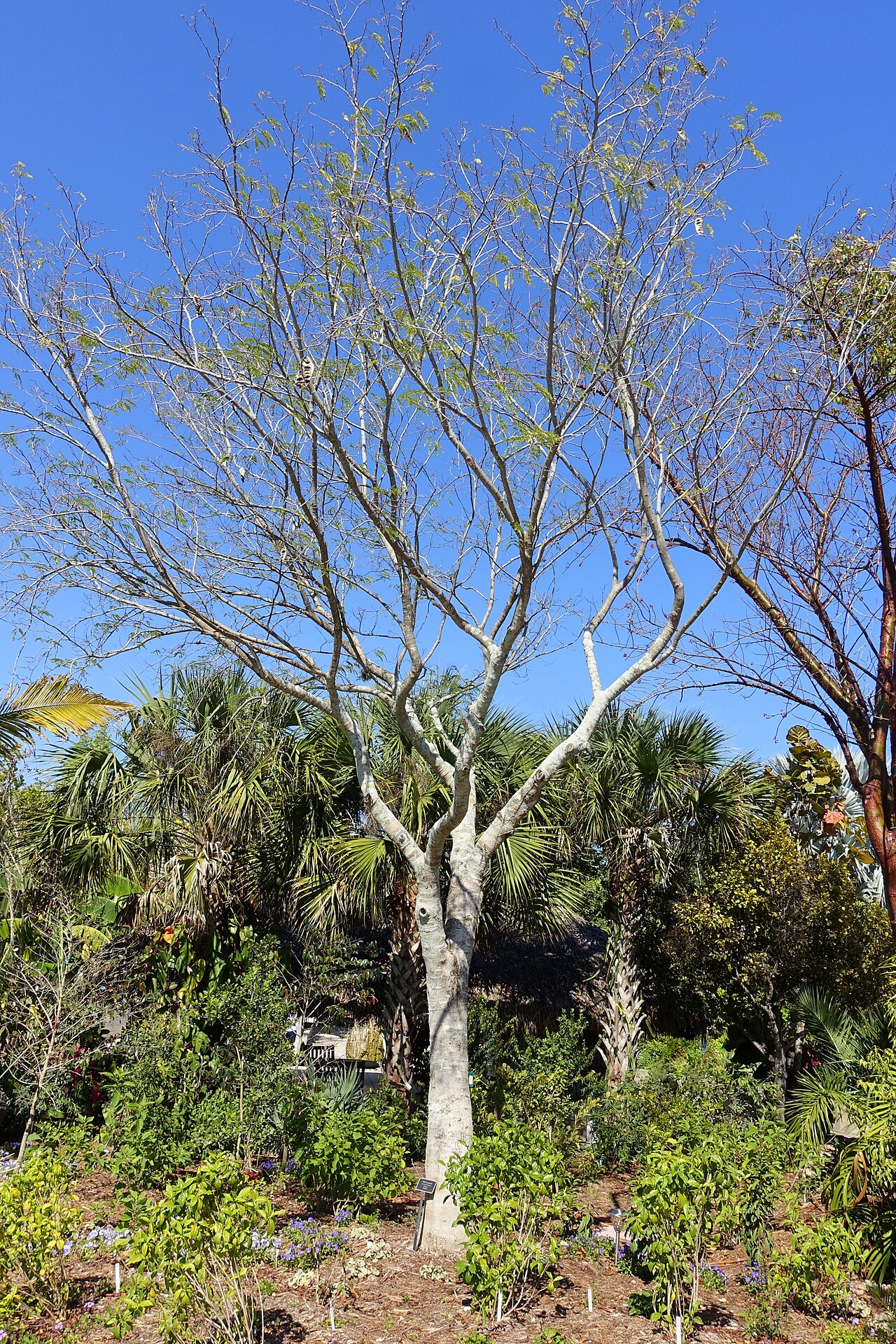
Lysiloma latisiliquum, the Wild Tamarind (also called false tamarind), is a fast-growing, lacy-leaved canopy tree of South Florida’s tropical hardwood hammocks and pine rocklands. Despite the common name, it is not a true tamarind (Tamarindus indica) and is not related to it beyond both belonging to the broader legume family; the resemblance is purely in the fine, feathery, fern-like foliage both share.
Wild tamarind is one of the fastest-growing native shade trees available to South Florida gardeners, developing an open, airy, umbrella-like crown that casts light, dappled shade rather than dense cover. It is also an important host plant for several butterfly species and provides critical habitat for Florida’s famous native tree snails, making it a favorite of wildlife gardeners as well as those simply wanting quick shade.
For South Florida landscapes with room for a wide-spreading canopy tree, wild tamarind offers an unusually fast-growing, low-litter, wildlife-friendly option, though its limited salt tolerance means it performs best away from direct coastal exposure.
Identification
Wild tamarind is a medium to large tree, typically 40 to 60 feet tall (occasionally to 80 feet) with a broad spread of 30 to 50 feet, often wider than it is tall at maturity. It develops a distinctive umbrella-shaped, open crown with a somewhat irregular, spreading branch structure.
Bark
Bark is smooth and pale gray to nearly white on both young and mature trunks, giving the tree a clean, elegant look even in winter when it may drop some or all of its leaves in response to dry conditions.
Leaves
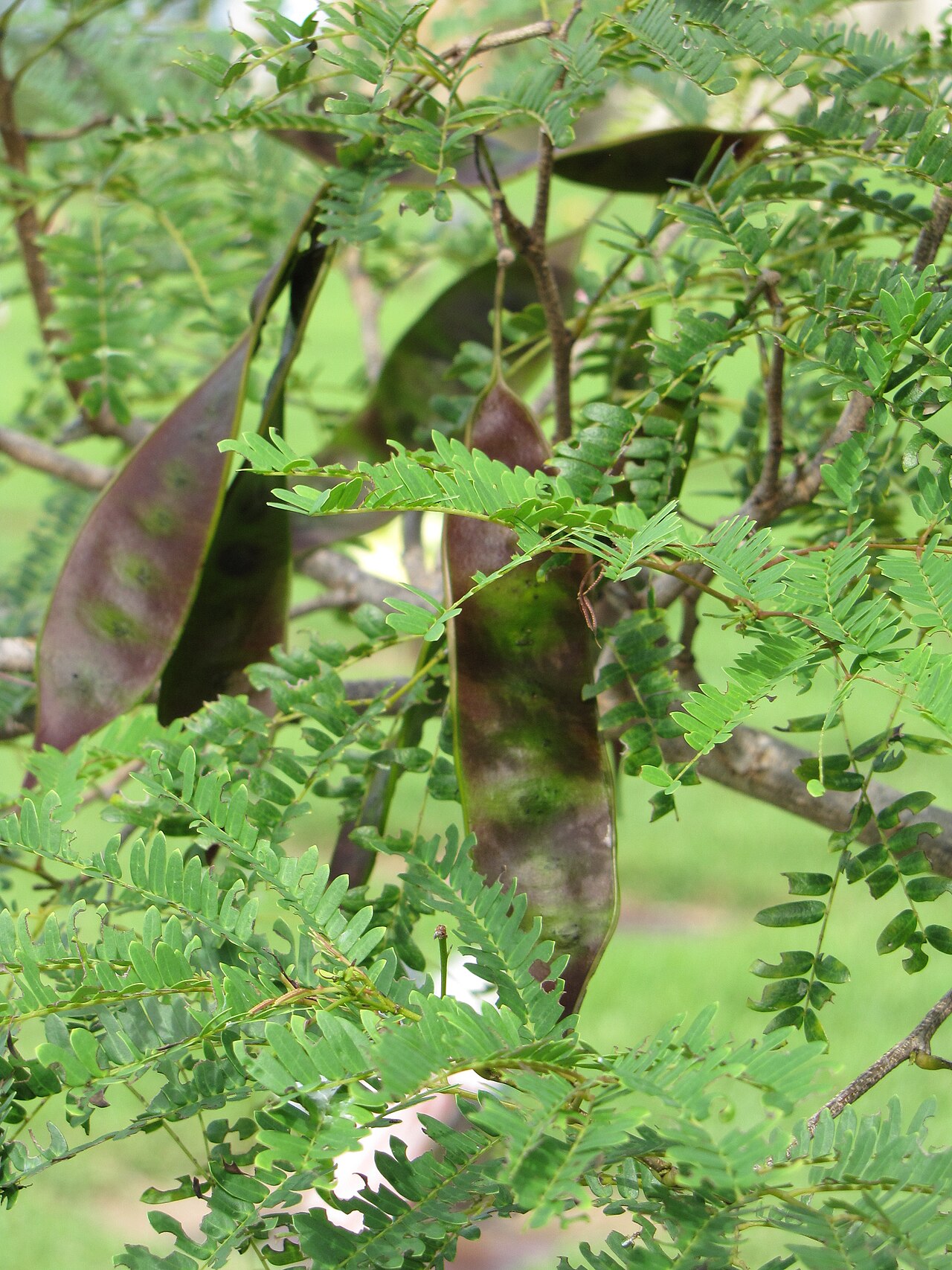
Leaves are bipinnately compound (twice-divided, fern-like), with numerous small, narrow leaflets arranged in a lacy, feathery pattern typical of many legume-family trees. This fine foliage casts light, filtered shade and is semi-deciduous, with the tree often losing some leaves during Florida’s dry winter season.
Flowers & Fruit
Small, white, powder-puff-like flower clusters appear mainly in spring, typical of the mimosa subfamily of legumes. They give way to flat, elongated seed pods, several inches long, that mature from green to dark reddish-brown or black and persist on the tree, often rattling in the wind before eventually splitting to release their seeds.
Quick Facts
| Scientific Name | Lysiloma latisiliquum |
| Family | Fabaceae (Legume), Mimosoid clade |
| Plant Type | Semi-deciduous Tree |
| Mature Height | 40–60 ft (to 80 ft) |
| Mature Spread | 30–50 ft |
| Growth Rate | Fast |
| Sun Exposure | Full Sun to Part Shade |
| Water Needs | Average; tolerates very dry periods once established |
| Soil Type | Sandy, loamy or limestone soil |
| Soil pH | Neutral to alkaline |
| Bloom Time | Spring |
| Flower Color | White |
| Fall Color | None; semi-deciduous in dry season |
| Fruit | Flat, dark reddish-brown to black seed pods |
| Salt Tolerance | Low; not suited to direct coastal exposure |
| USDA Hardiness Zones | 10b–11 |
Native Range
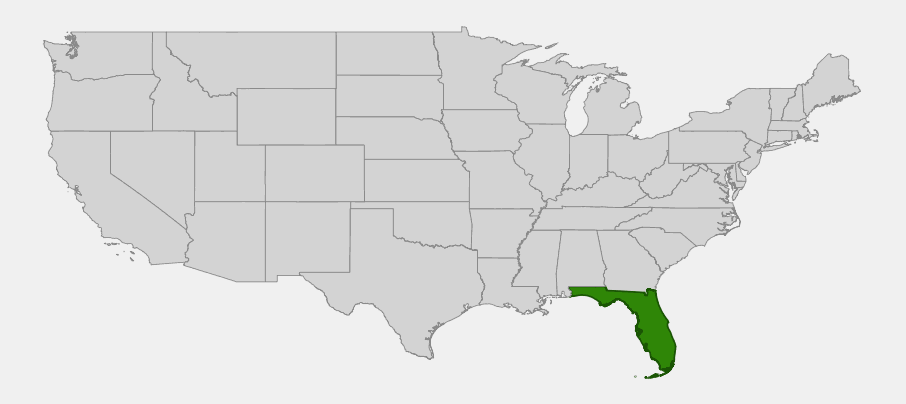
In the United States, wild tamarind is native to South Florida, found in tropical rockland hammock and pine rockland habitat across Miami-Dade and Monroe Counties, including the Florida Keys, typically in and around disturbed edges of these natural communities.
Outside Florida, it ranges through the Bahamas, Cuba and other Caribbean islands, and into southern Mexico and Belize, always within frost-free tropical and subtropical zones.
Typical habitat is sandy, loamy or lime-rock soil with a high (calcareous) pH, in and around tropical rockland hammock and pine rockland, often colonizing disturbed or open sites quickly thanks to its fast growth, before taller, slower hammock hardwoods eventually fill in around it.
📋 Regional plant lists featuring Wild Tamarind: No Florida regional plant list currently covers this species; browse all Native Plant Profiles. See also the hammock associate Lignum Vitae.
Growing & Care Guide
Wild tamarind is among the quickest native trees to establish a shade canopy in South Florida, with care needs that are modest once it is in the ground.
Light
Grow in full sun to light part shade. Full sun produces the fullest, most vigorous crown; young trees also establish well with some overhead protection as they would along a hammock edge.
Soil & Water
Wild tamarind thrives in sandy, loamy or limestone-based soils with a neutral to alkaline pH, consistent with its rockland hammock origins. Water regularly through the first year or two to support its naturally fast growth. Established trees tolerate very dry periods well, though they are not salt tolerant, so avoid direct coastal exposure or sites prone to brackish water intrusion.
Planting Tips
Give wild tamarind plenty of room for its broad, spreading crown, ideally 30 to 50 feet of clearance at maturity. Because it is deciduous or semi-deciduous and its lacy leaflets are small, it produces notably little litter compared with broad-leaved shade trees, making it a good choice for planting near patios, pools and parking areas where leaf cleanup matters. Mulch well and keep the root zone open rather than paving over it closely.
Pruning & Maintenance
Young trees benefit from structural pruning to establish strong, well-spaced scaffold branches, since the species’ fast growth can produce weak crotches if left unmanaged. Mature trees need only routine removal of dead or damaged wood. Wild tamarind has few serious pest or disease issues in Florida landscapes.
Propagation
Propagate from seed collected from mature, dark brown to black pods. Nick or soak the hard seed coat to improve germination, a common technique for legume-family seeds, then sow in well-drained potting mix. Germination and subsequent seedling growth are relatively quick, matching the species’ overall fast growth rate.
Landscape Uses
- Fast-growing, low-litter shade tree for patios, parking areas and new landscapes
- Butterfly gardens, as a larval host plant for several native butterfly species
- Tree-snail and wildlife habitat plantings, replicating its role in natural hammock
- Hammock restoration plantings alongside lignum vitae and other hardwood hammock natives
- Street and specimen tree where its open, airy canopy and filtered shade are an asset
- Companion planting in broader South Florida tree designs; see our guide to shade trees for South Florida
Wildlife & Ecological Value
Wild tamarind is one of the more ecologically important trees of South Florida’s hammocks, supporting both insect and mollusk wildlife in distinctive ways.
For Pollinators & Butterflies
The powder-puff white flowers attract bees and other pollinating insects in spring. Just as importantly, wild tamarind serves as a larval host plant for several butterfly species, including the large orange sulphur and the mimosa yellow, meaning caterpillars feed directly on its foliage as part of their life cycle.
For Birds
The open, lacy canopy and associated insect life attract gnatcatchers, vireos, flycatchers and a variety of migratory warblers that forage through the fine foliage for insects.
For Tree Snails
Wild tamarind’s smooth bark is important habitat for Florida’s native Liguus tree snails, brightly colored and much-admired mollusks found almost exclusively in South Florida’s tropical hardwood hammocks. Smooth-barked hammock trees like wild tamarind provide the surface these snails need to move, feed on bark-dwelling fungi and algae, and reproduce.
Ecosystem Role
As a fast colonizer of disturbed hammock and pine rockland edges, wild tamarind helps re-establish canopy cover quickly after storms or disturbance, creating conditions that allow slower-growing hammock hardwoods to eventually establish beneath it, making it an important early-successional species in hammock recovery.
Cultural & Historical Uses
Wild tamarind’s dense, durable wood has historically been traded under the name sabicu wood and used in shipbuilding and furniture in parts of its Caribbean range, prized for strength and resistance to decay. Despite sharing a common name and lacy-leaved resemblance with true tamarind (Tamarindus indica, an Old World species widely planted for its edible pods), the two are unrelated, and wild tamarind’s own pods are not used as food.
Research elsewhere in its range has also found that the tannin-rich leaves have anti-parasitic properties, with grazing animals such as sheep sometimes browsing them as a natural response to intestinal parasites — an interesting ecological note, though not a basis for any human medicinal use.
Frequently Asked Questions
Is wild tamarind related to true tamarind?
No. Despite the shared common name and similarly lacy, fern-like compound leaves, wild tamarind (Lysiloma latisiliquum) is a different genus from true tamarind (Tamarindus indica), an Old World tree grown for its edible pods. Wild tamarind pods are not a food crop.
How fast does wild tamarind grow?
Very fast for a native hardwood, which is a major reason it is popular as a quick shade tree in South Florida. Regular watering during establishment supports this rapid growth.
Does wild tamarind lose its leaves?
It is semi-deciduous and often drops some or all of its small leaflets during Florida’s dry winter season, especially in drought years, then leafs back out with the return of rain, consistent with its tropical dry-forest origins.
Is wild tamarind salt tolerant?
No, not significantly. Unlike many of its hammock associates, wild tamarind has low tolerance for salt spray or salty soil, so it is best sited away from direct oceanfront exposure.
Why are wild tamarind trees important for tree snails?
Florida’s native Liguus tree snails rely on smooth-barked hammock trees like wild tamarind as habitat, using the bark surface to move, feed and reproduce, which makes mature stands of this tree ecologically significant well beyond their value as shade.

Looking for a nursery that carries Wild Tamarind?
Browse our native plant nursery directory: Florida & Georgia

