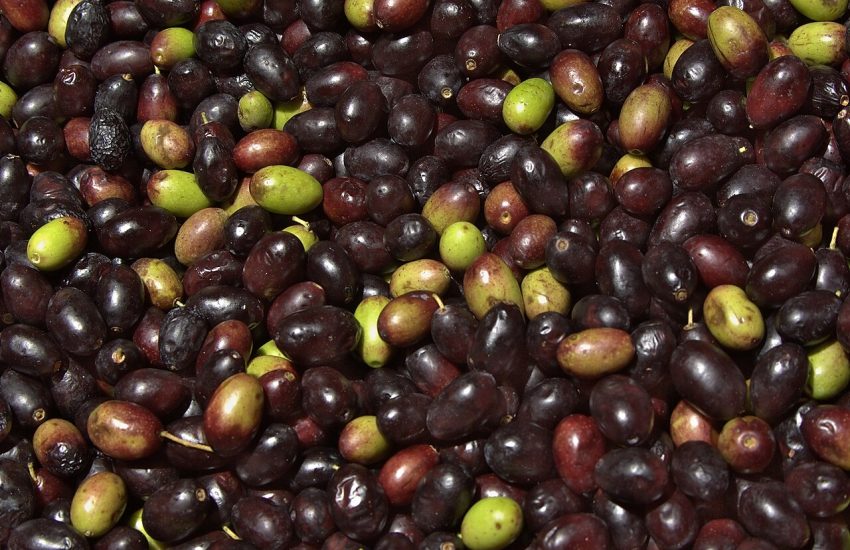
Lignum Vitae (Guaiacum sanctum)
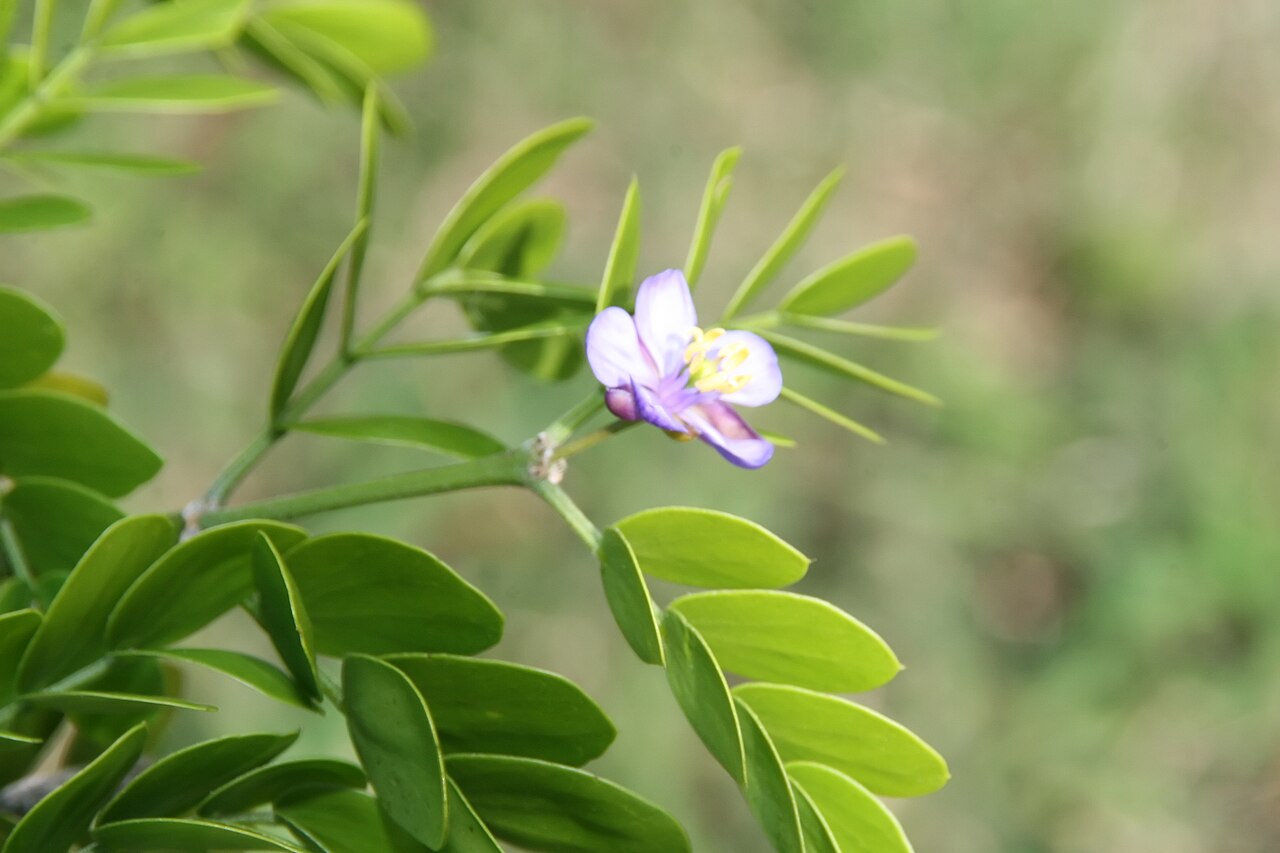
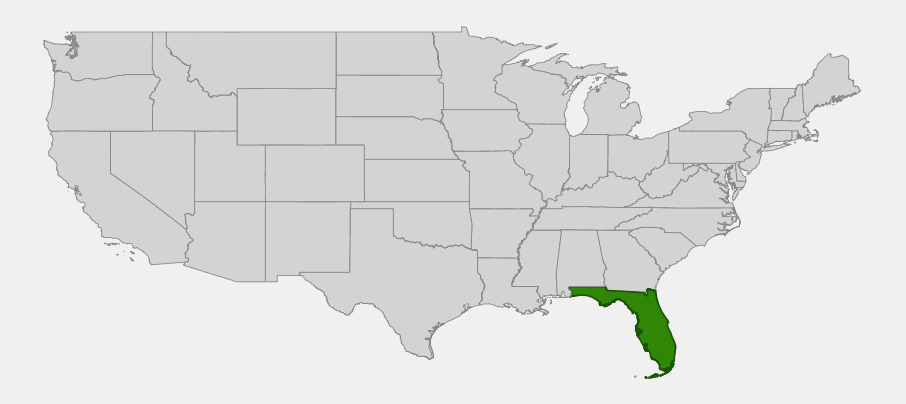
Guaiacum sanctum — known as Lignum Vitae, Holywood, or Holywood Lignum Vitae — is a small, extraordinarily slow-growing tree with a name that means “wood of life” in Latin, earned for centuries of reputed medicinal use and for producing what may be the hardest, densest wood of any tree in the world. In the United States it is found naturally only in the Florida Keys and a few hammocks of Miami-Dade County, the absolute northern edge of a range that otherwise spans Mexico, Central America, the Caribbean, and northern South America.
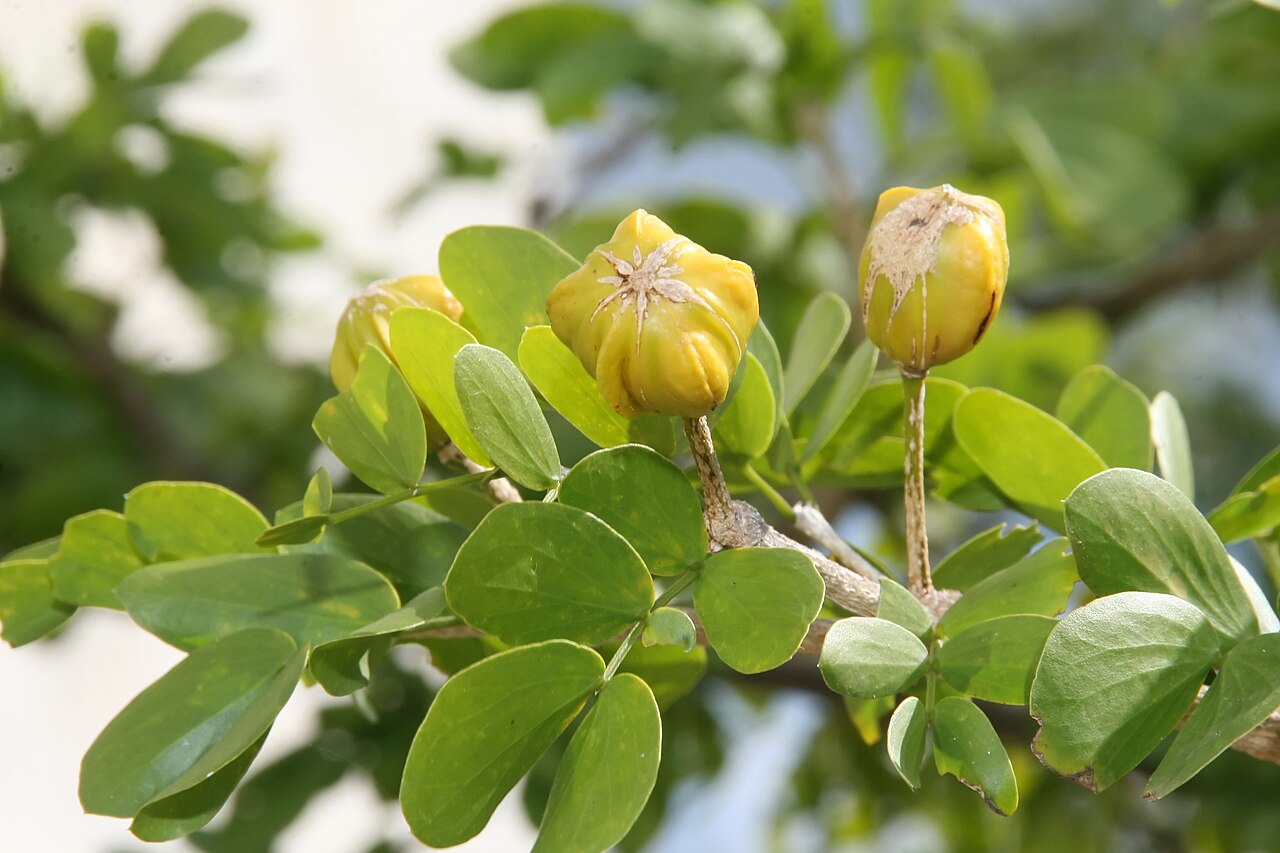
Lignum Vitae is unmistakable in bloom: clusters of five-petaled, purplish-blue flowers appear repeatedly through the warm months, followed by bright yellow-orange, angular seed capsules that split open to reveal jet-black seeds wrapped in a fleshy red aril — a striking two-tone display that gives the tree a second season of ornamental interest. Its small, leathery, evergreen compound leaves fold together during the hottest part of the day, a water-conserving adaptation typical of dry tropical hardwood species.
Because of centuries of overharvesting for its legendary wood and the ongoing loss of South Florida’s tropical hardwood hammocks, Lignum Vitae is now state-endangered in Florida, restricted to a handful of protected sites including its namesake Lignumvitae Key. For Keys and Miami-Dade gardeners, it is a slow but rewarding native tree — one of the most beautiful flowering natives in South Florida, and a direct contribution to the recovery of an endangered species.
Identification
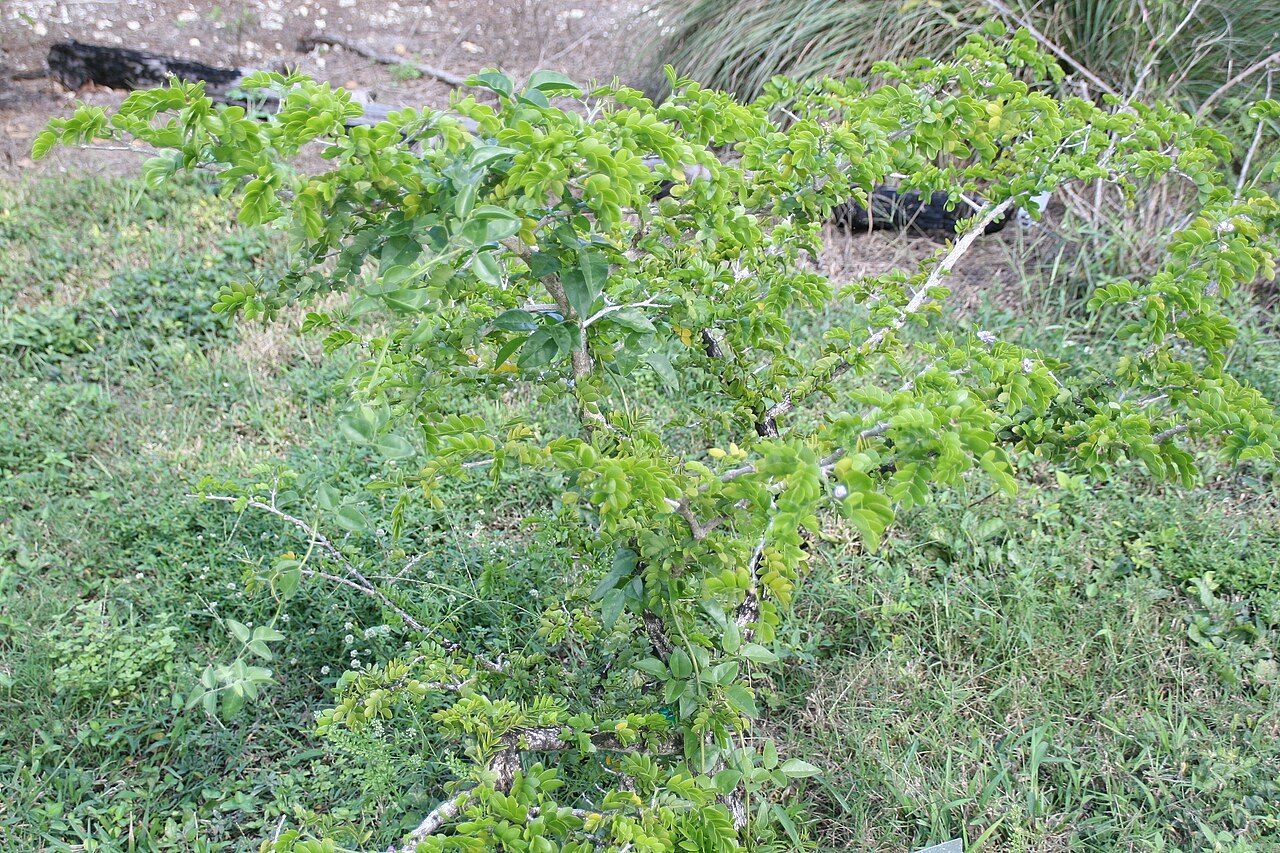
Lignum Vitae is a small, slow-growing tree or large shrub, typically reaching 10 to 25 feet tall with an equal or greater spread, often broader than tall, with a dense, rounded, irregular crown. It is evergreen, and because it fruits only after reaching 30 to 70 years of age, a mature, fruiting specimen represents a significant investment of time.
Bark & Stems
Bark is light gray, smooth on young growth and becoming finely scaly and mottled with age. Branches are stout and somewhat stiff, forming a dense, twiggy crown that provides good wind resistance in hurricane-prone South Florida.
Leaves
Leaves are evenly pinnately compound, only about an inch long, with three to five pairs of small, rounded, dark green leaflets. A distinctive behavior of the species is nyctinasty — the leaflets fold upward and together during the hottest hours of the day and at night, reopening in cooler conditions, a visible adaptation to its naturally dry, sun-exposed habitat.
Flowers
Flowers are the tree’s signature feature: clusters of five-petaled blossoms in a rich purplish-blue, appearing at branch tips repeatedly through spring, summer, and into fall, especially after rain. The flowers are perfect (containing both male and female parts) and give way quickly to developing fruit.
Fruit & Seeds
The fruit is a small, angular, bright yellow-orange capsule that splits into sections to reveal shiny black seeds, each wrapped in a fleshy, bright red aril. The combination of yellow capsule and red-and-black seed is highly ornamental and quickly draws birds once the capsules open.
Quick Facts
| Scientific Name | Guaiacum sanctum |
| Family | Zygophyllaceae (Caltrop) |
| Plant Type | Evergreen Tree / Large Shrub |
| Mature Height | 10–25 ft |
| Mature Spread | 10–25 ft |
| Growth Rate | Very slow |
| Sun Exposure | Full Sun |
| Water Needs | Low once established |
| Soil Type | Well-drained limestone or sandy soil |
| Soil pH | Neutral to alkaline |
| Bloom Time | Spring – Fall, repeating after rain |
| Flower Color | Purplish-blue |
| Fall Color | None (evergreen) |
| Fruit | Yellow-orange capsule, black seeds with red aril |
| Deer Resistant | Yes |
| USDA Hardiness Zones | 10b–11 |
Native Range
In Florida, Lignum Vitae is restricted to the northern Florida Keys and a very small number of hammock sites in Miami-Dade County — a tiny, isolated population that represents the northern edge of a much larger range spanning Mexico, Central America, the Caribbean, and the northern coast of South America. Outside Florida, it is also the national tree of the Bahamas.
Its native habitat is dry, rocky coastal hardwood hammock and tropical thorn-scrub, typically on thin, well-drained limestone soils exposed to full sun and salt spray near the shoreline. These habitats are naturally limited in extent and have been further reduced by coastal development, leaving only scattered, protected populations across the Keys.
The largest and most significant remaining U.S. population grows on Lignumvitae Key Botanical State Park in the Florida Keys, which was set aside specifically to protect one of the last substantial stands of this tree in the country. Tree-ring studies there have found individual trees estimated at well over a century old, a testament to the species’ extraordinarily slow but long-lived growth.
📋 Regional plant lists featuring Lignum Vitae: No Florida regional plant list currently covers this species; browse all Native Plant Profiles. For a related species native farther west, see Texas Guayacan (Guaiacum angustifolium).
Growing & Care Guide
Lignum Vitae is a rewarding but patient-testing choice for Keys and Miami-Dade gardeners — an extremely slow grower that eventually becomes a dense, long-lived, nearly indestructible small tree, ideal for a prominent spot where its repeat-blooming blue flowers can be enjoyed up close.
Light
Give Lignum Vitae full sun. It is naturally adapted to open, sun-exposed coastal hammock and thorn-scrub and flowers most heavily with maximum light exposure; shaded plants grow even more slowly and bloom sparsely.
Soil & Water
This species thrives in thin, well-drained, alkaline limestone or sandy soil typical of the Florida Keys, and tolerates drought, wind, and salt exposure extremely well once established. It needs regular watering only during the first year or two after planting; established trees need little supplemental irrigation beyond natural rainfall.
Planting Tips
Choose a sunny, well-drained site with room for the tree’s eventual broad, dense crown. Because of its state-endangered status and painfully slow growth, always buy nursery-propagated stock — many specialty native-plant nurseries in South Florida now propagate and sell it specifically to support the species’ recovery, and some are featured in our guide to evergreen trees for Florida landscapes.
Pruning & Maintenance
Little to no pruning is needed; the tree naturally forms a dense, rounded crown. Its tough wood and compact branching make it highly wind-resistant, an asset during hurricane season, and it has essentially no major pest problems.
Propagation
Propagate from fresh seed, removing the fleshy red aril before sowing; germination can be slow. Because the species does not flower or fruit until it is decades old, seed propagation of Lignum Vitae is a long-term undertaking best left to specialty native-plant growers.
Landscape Uses
- Specimen flowering tree for a sunny focal point
- Coastal and salt-tolerant landscaping in the Keys and Miami-Dade
- Hardwood hammock restoration supporting an endangered species
- Hurricane-resilient small shade tree for exposed sites
Wildlife & Ecological Value
For Pollinators
The repeat-blooming blue flowers are an important nectar source for bees and butterflies through much of the year in the Florida Keys. Lignum Vitae is also a larval host plant for the Lyside Sulphur butterfly, which depends on the foliage to complete its life cycle.
For Birds
Once the yellow-orange capsules split open to reveal the bright red-and-black seeds, a range of hammock birds are drawn to the display, helping disperse the seeds across the surrounding hammock.
Ecosystem Role
As a slow-growing, long-lived component of the Florida Keys’ dry tropical hardwood hammock and thorn-scrub — much like the hammock canopy trees covered in our South Florida shade tree guide — Lignum Vitae helps anchor one of the rarest and most fragmented habitat types in the continental United States. Protecting remaining populations, such as those at Lignumvitae Key, preserves not just the species itself but the broader community of rare coastal hammock plants and animals that share its habitat.
Cultural & Historical Uses
Lignum Vitae’s name — Latin for “wood of life” — reflects centuries of reputed medicinal use dating to the earliest years of Spanish contact with the Caribbean. The native Taíno people knew the tree as “guayacán,” and early Spanish chroniclers recorded its bark being used as a treatment for syphilis during the colonial era, a use that spread the tree’s fame throughout Europe by the 1500s.
The wood itself became even more valuable than its reputed medicine: among the densest and hardest woods in the world, self-lubricating due to its natural resin content, and able to sink in water. These properties made it the material of choice for ship propeller-shaft bearings, mallet heads, and other mechanical parts requiring extreme durability and natural lubrication, a use that continued in maritime and industrial applications well into the 20th century.
This combination of medicinal reputation and industrial value led to severe overharvesting of Lignum Vitae throughout its range for centuries, a major factor in its current rarity. Today the species is protected, and its historical uses are understood as history rather than guidance — the tree’s modern value lies in conservation horticulture and its striking ornamental flowers, not in harvesting its wood or bark.
Frequently Asked Questions
Is Lignum Vitae endangered?
Yes. It is listed as endangered in Florida, where it survives only in a small area of the Keys and Miami-Dade County, and it is assessed as Near Threatened globally by the IUCN due to historic overharvesting and ongoing habitat loss.
How fast does Lignum Vitae grow?
Very slowly — it is one of the slowest-growing trees commonly available in South Florida horticulture, and wild trees typically do not flower or fruit until they are 30 to 70 years old. Plan on this as a long-term investment rather than a quick-maturing landscape tree.
Is Lignum Vitae the same as Texas Guayacan?
No, though they are related. Texas Guayacan (Guaiacum angustifolium) is a separate, smaller-leaved species native to South Texas and northern Mexico, not Florida. The two are sometimes confused because of their similar common names and shared genus.
Can I harvest Lignum Vitae wood?
No. The species is state-endangered in Florida, and wild trees should never be cut. Commercial lignum vitae lumber historically came from extensive harvesting across the wider Caribbean range, not from Florida’s small, protected native population.
Why do the leaves fold up during the day?
This is a natural adaptation called nyctinasty, in which the small leaflets fold together during the hottest, sunniest hours to reduce water loss and leaf temperature — a useful trait for a tree adapted to dry, sun-exposed coastal habitat.

Looking for a nursery that carries Lignum Vitae?
Browse our native plant nursery directory: Florida