Goldenball Leadtree (Leucaena retusa)
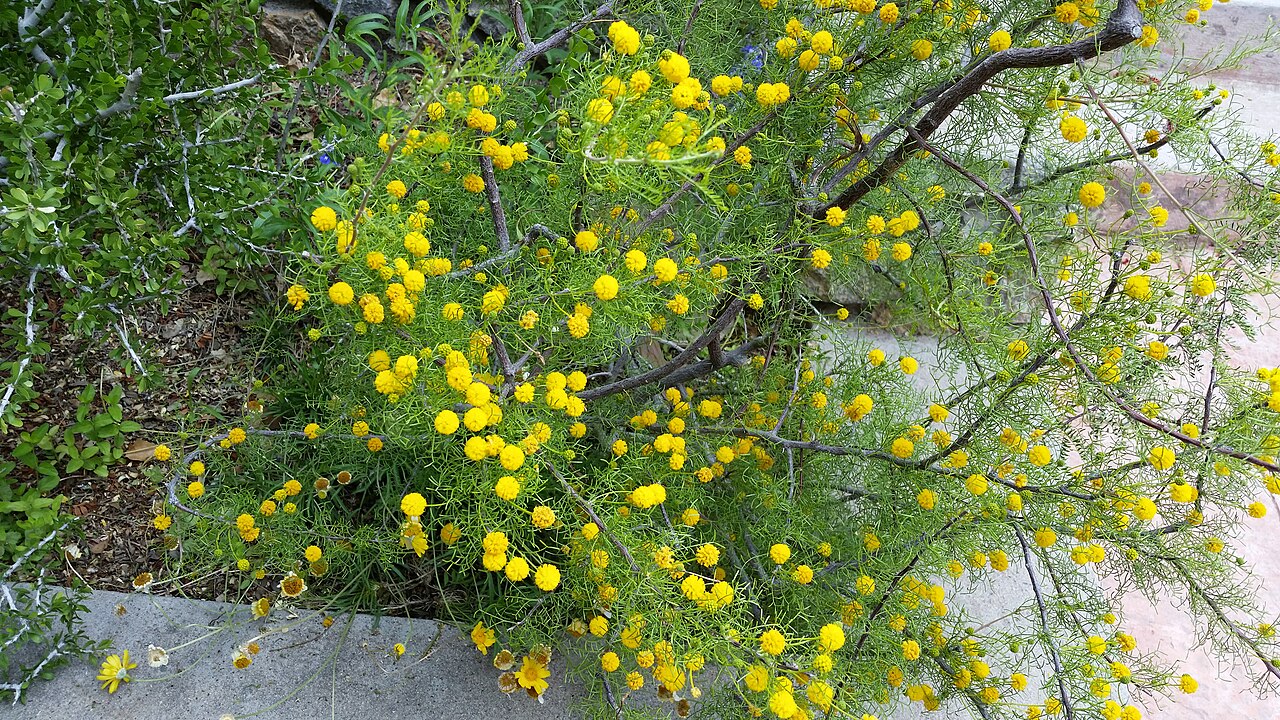
Leucaena retusa, the Goldenball Leadtree, is one of the most strikingly beautiful small native trees of the Texas Hill Country and Trans-Pecos — a fine-textured, fern-leaved tree that erupts repeatedly through the warm months in clusters of bright golden-yellow, powderpuff-shaped flowers. Also known as Littleleaf Leadtree, Wahoo Tree, or Lemonball, it is native to a relatively narrow range centered on the limestone canyons and rocky slopes of west-central Texas and far western Texas and New Mexico, extending south into the Mexican states of Chihuahua and Coahuila.
Despite its delicate, almost tropical appearance, Goldenball Leadtree is a tough, drought-adapted legume well suited to the alkaline, rocky soils of its native range. Its bipinnately compound leaves give it a soft, lacy texture reminiscent of mimosa, and its golden flower clusters — resembling small yellow pompoms — bloom intermittently from spring through fall, especially after summer rains, making it a magnet for hummingbirds, bees, and butterflies throughout the growing season.
For gardeners in its native Hill Country and Trans-Pecos range, Goldenball Leadtree is an outstanding small specimen or patio tree: drought-tolerant once established, generally thornless, and reliably showy for months at a stretch — a native alternative to non-native flowering trees that demand far more water.
Identification
Goldenball Leadtree typically grows 10 to 25 feet tall as a multi-trunked small tree or large shrub, with an open, airy, rounded crown. It is deciduous, dropping its fine, fern-like foliage in winter, and generally thornless — a useful distinction from some other thorny legumes of the same region.
Bark & Stems
Bark is smooth and gray on young stems, becoming slightly rougher and furrowed with age. The tree often develops several trunks from the base, giving it a naturally multi-stemmed, clumping form unless trained to a single leader when young.
Leaves
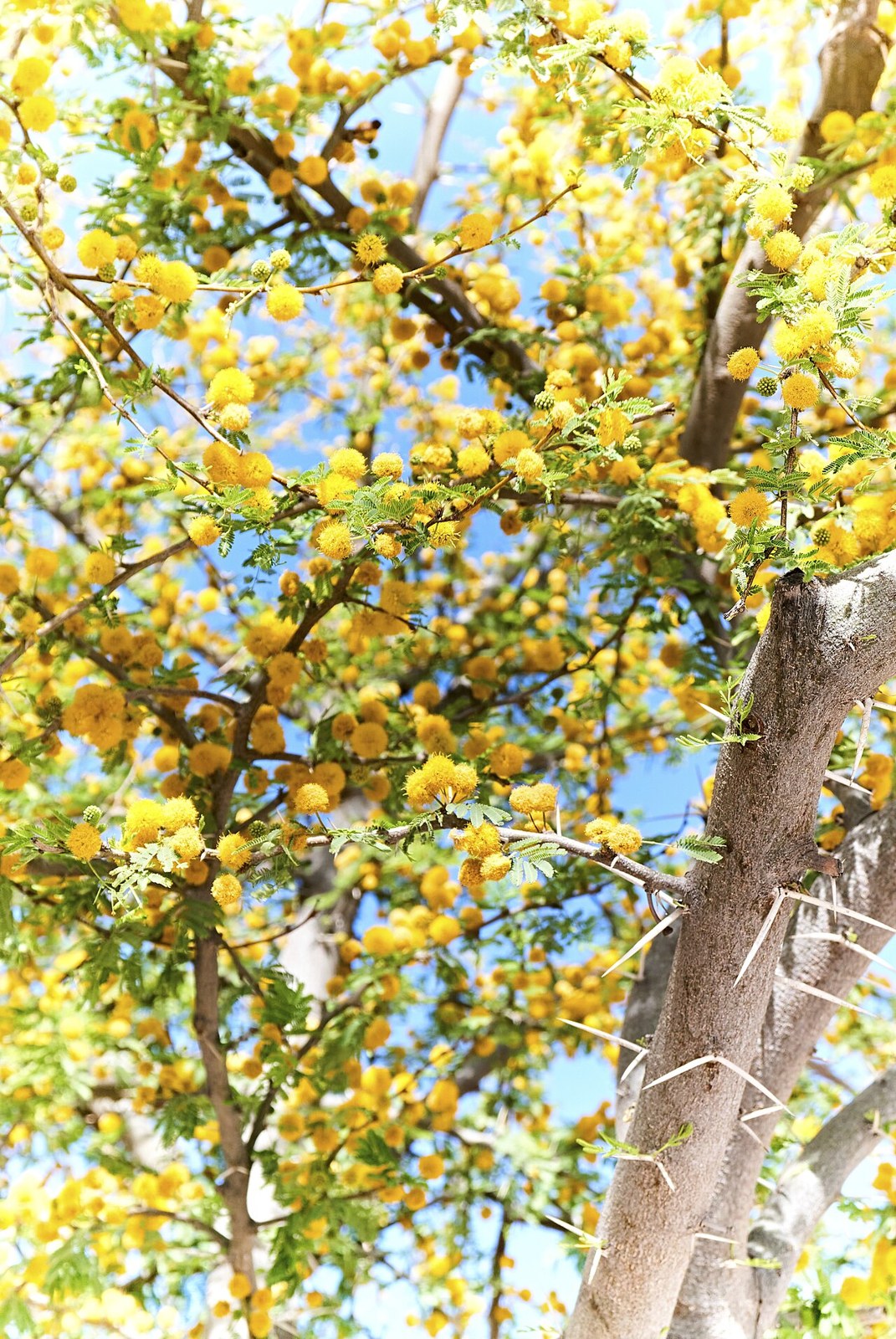
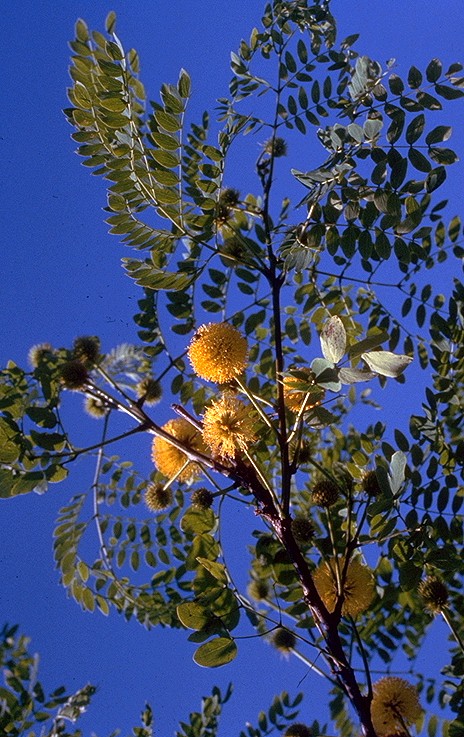
Leaves are bipinnately compound — fern-like, with numerous small, narrow leaflets arranged along paired secondary stems — giving the tree a fine, lacy texture that casts dappled rather than dense shade. The foliage is a fresh light to medium green through the growing season.
Flowers
Flowers are the tree’s defining feature: dense, spherical clusters of tiny golden-yellow blossoms, each about an inch across, resembling small powderpuffs or pompoms. They appear in flushes from spring through fall, with the heaviest bloom typically following rainfall, and are lightly fragrant.
Fruit & Seeds
The fruit is a flat, reddish-brown seed pod, 4 to 8 inches long, that persists on the tree well after ripening, often hanging through winter. Pods contain multiple hard, flattened seeds.
Quick Facts
| Scientific Name | Leucaena retusa |
| Family | Fabaceae (Legume) |
| Plant Type | Deciduous Tree / Large Shrub |
| Mature Height | 10–25 ft |
| Mature Spread | 10–20 ft |
| Growth Rate | Moderate |
| Sun Exposure | Full Sun to Part Shade |
| Water Needs | Low once established |
| Soil Type | Rocky, limestone, caliche, or well-drained loam |
| Soil pH | Alkaline |
| Bloom Time | Spring – Fall, repeating after rain |
| Flower Color | Golden yellow |
| Fall Color | None notable |
| Fruit | Flat, reddish-brown seed pod |
| Deer Resistant | Moderately |
| USDA Hardiness Zones | 7b–11 |
Native Range
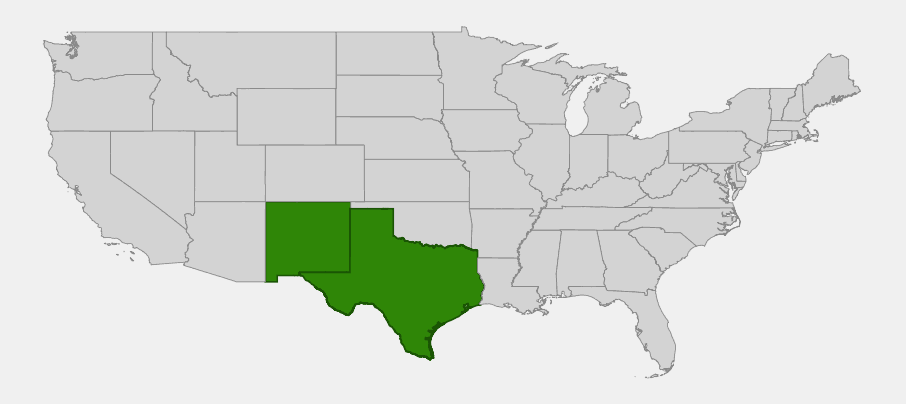
Goldenball Leadtree is native to a fairly narrow band of west-central and far-western Texas, including the Edwards Plateau (Hill Country) and the Trans-Pecos region, and extends into southern New Mexico. South of the border, its range continues into the Mexican states of Chihuahua and Coahuila, where it grows in similar rocky, arid terrain.
Within this range, Goldenball Leadtree is typically found on dry, rocky slopes, in limestone canyons, and along the margins of arroyos and dry washes — terrain with excellent drainage and alkaline, often shallow soils derived from limestone or caliche. It is well adapted to the hot summers, cold snaps, and sporadic rainfall patterns typical of the Texas Hill Country and Trans-Pecos climate.
Because its native range is relatively limited, Goldenball Leadtree remains less widely known outside Texas and New Mexico than some other regional natives, though its ornamental value has made it an increasingly popular choice in xeriscape and native plant gardens throughout its hardiness range.
📋 Regional plant lists featuring Goldenball Leadtree: South & West Texas · Arizona & New Mexico.
Growing & Care Guide
Goldenball Leadtree is an excellent low-water, high-reward flowering tree for Texas and New Mexico gardens within its hardiness range — a native alternative to thirstier flowering trees that still delivers months of color with a fraction of the water.
Light
Plant in full sun for the heaviest, most reliable bloom. It tolerates light afternoon shade in the hottest parts of its range, but flowering decreases noticeably in significant shade.
Soil & Water
Goldenball Leadtree thrives in rocky, alkaline, well-drained soils, including thin caliche and limestone-derived ground where many other flowering trees struggle. It is highly drought-tolerant once established, needing supplemental water mainly during the first one to two years, and resents heavy, poorly drained, or consistently wet soil.
Planting Tips
Choose a sunny, well-drained site; raised beds or rocky slopes mimic its natural habitat well. It establishes readily from container stock planted in fall or spring, and because it is naturally multi-trunked, decide early whether you want to train it to a single leader or let it develop its natural clumping form.
Pruning & Maintenance
Minimal pruning is needed; remove dead or crossing branches as they appear, and prune lightly after a bloom flush if a tidier form is desired. The tree is generally low-maintenance and resilient once established in appropriate soil and light.
Propagation
Propagate from seed, which benefits from scarification (nicking the hard seed coat) to improve germination. Seedlings grow at a moderate pace and can flower within a few years under good conditions.
Landscape Uses
- Specimen or patio tree for a sunny, well-drained spot
- Xeriscape and low-water gardens in Texas and New Mexico
- Hummingbird and pollinator gardens seeking long bloom seasons
- Rock garden or slope plantings on limestone or caliche soil
Wildlife & Ecological Value
For Pollinators
The repeat-blooming golden flower clusters are highly attractive to native bees, honeybees, and butterflies throughout the warm season, making Goldenball Leadtree one of the more valuable nectar sources among small native trees in its range. Gardeners looking to round out a xeric pollinator planting can pair it with other heat-tolerant natives from our shade tree guide for El Paso or the Lubbock shade tree guide, both covering West Texas growing conditions similar to this tree’s native habitat.
For Birds & Mammals
Hummingbirds are frequent visitors to the flowers, and the seed pods provide a food source for some birds and small mammals once they mature and split open.
Ecosystem Role
As a nitrogen-fixing legume, Goldenball Leadtree helps enrich the thin, rocky soils of its native canyon and slope habitat, supporting the broader plant community of the Edwards Plateau and Trans-Pecos regions. Its long bloom season also provides a consistent nectar resource through much of the growing season in an otherwise harsh, arid landscape.
Cultural & Historical Uses
Goldenball Leadtree has a modest but steady history of regional use in Texas and the border region of Mexico, where its wood — like that of other leadtree species in the genus Leucaena — has occasionally been used for fence posts and small tool handles, taking advantage of its naturally durable, close-grained timber. It has never been a significant commercial timber species, however, given the tree’s relatively small stature and limited natural range.
Its greater and more lasting significance has been ornamental. As native plant landscaping gained popularity across Texas in recent decades, horticulturists and native plant societies recognized Goldenball Leadtree as one of the standout flowering trees of the Hill Country and Trans-Pecos, and it has become an increasingly common feature in xeriscape designs, botanical gardens, and desert legume collections, including at specialty arboreta that focus on drought-adapted Southwestern natives.
Today, Goldenball Leadtree is valued chiefly as a low-water, high-impact ornamental tree — a way for gardeners across its hardiness range to add months of golden bloom and pollinator activity to a landscape without the water demands of many non-native flowering trees.
Frequently Asked Questions
Does Goldenball Leadtree have thorns?
No — unlike some related and visually similar legumes, Goldenball Leadtree is generally thornless, making it a comfortable choice near walkways and patios.
How long does Goldenball Leadtree bloom?
It blooms intermittently from spring through fall, with flower flushes typically triggered by rainfall, so the exact bloom pattern varies year to year depending on precipitation.
Is Goldenball Leadtree drought-tolerant?
Yes, very much so once established. It is adapted to the rocky, low-rainfall canyons and slopes of the Texas Hill Country and Trans-Pecos and needs minimal supplemental water after its first one to two years in the ground.
Can Goldenball Leadtree handle cold winters?
It is cold-hardy to roughly USDA zone 7b, tolerating occasional hard freezes typical of its native West Texas range, though extended severe cold can cause dieback that the tree usually recovers from by resprouting.
Is Goldenball Leadtree good for attracting hummingbirds?
Yes — its long, repeating bloom season makes it a reliable and valuable nectar source for hummingbirds throughout much of the growing season, in addition to its appeal to bees and butterflies.

Looking for a nursery that carries Goldenball Leadtree?
Browse our native plant nursery directory: Texas · New Mexico