
Southwestern White Pine (Pinus strobiformis)
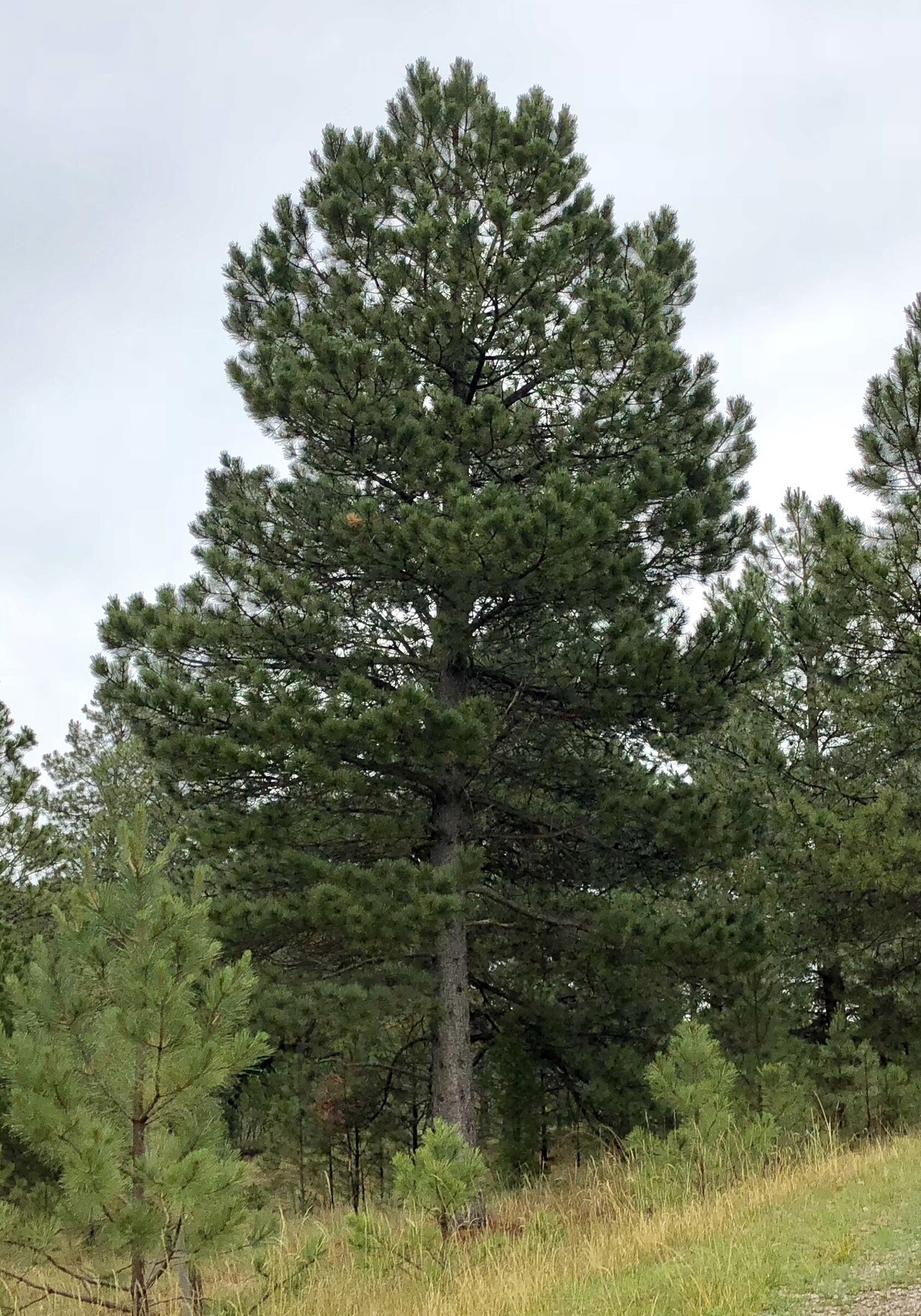
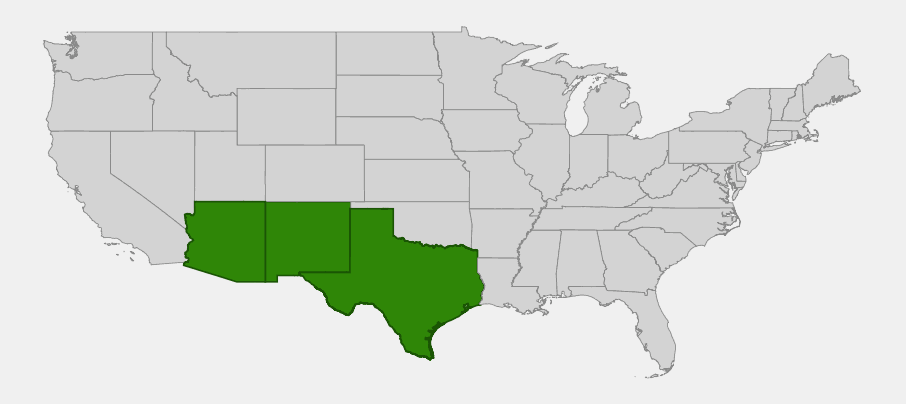
Pinus strobiformis (syn. Pinus reflexa), commonly called Southwestern White Pine or Chihuahua White Pine, is a five-needle pine of the high mountains of the American Southwest. It belongs to the white pine group (subgenus Strobus), the same lineage as eastern white pine and limber pine, and shares their soft, flexible needles bundled five to a cluster and long, resin-dripping cones. In the United States it is a tree of the sky islands and high ranges of Arizona, New Mexico, and the Trans-Pecos of far west Texas, where it grows at elevations most other conifers cannot tolerate. The great bulk of its range actually lies south of the border, in the Sierra Madre Occidental and Oriental of Mexico, which makes the U.S. populations the northern, outlying edge of a much larger Mexican species.
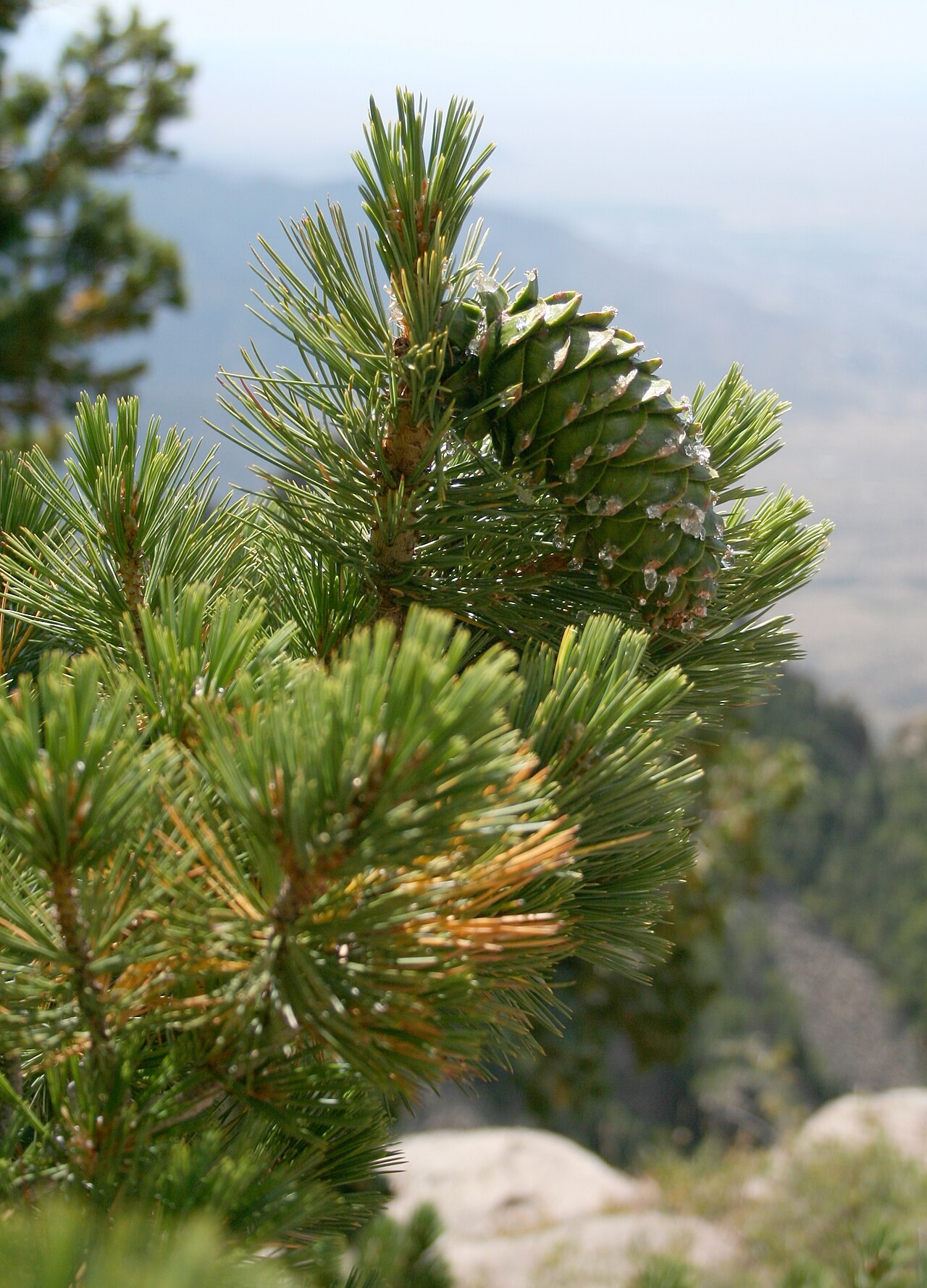
Southwestern white pine is a stately, pyramidal tree, typically reaching 50 to 90 feet with a straight trunk and an open, rounded crown in old age. Young trees carry smooth, pale gray bark that breaks into thick, irregular plates with age. Its soft, gray-green to blue-green needles, usually 2 to 3 inches long and five to a bundle, give the crown a feathery, almost soft-focus texture compared to the stiffer yellow pines it often grows beside, such as ponderosa and Apache pine. Long, slender cones up to 10 inches dangle from the branch tips and are heavily coated in sticky white resin when fresh.
In the garden and in restoration plantings, Southwestern white pine is valued as a slow but long-lived specimen conifer for cold, dry mountain climates, and as a genetic reservoir for research into resistance to white pine blister rust, a disease introduced from Europe that has devastated many five-needle pines across North America. Where it overlaps with limber pine (Pinus flexilis) at the northern edge of its range in New Mexico, the two species hybridize naturally, producing populations with intermediate cone and needle traits that botanists still study to understand where one species ends and the other begins.
Identification
Southwestern white pine is most easily told apart from the area’s other common conifers by its five-needle bundles, soft blue-green foliage, and long, resinous, downward-curving cones. It is often confused with limber pine, which shares the five-needle habit and overlaps in range in central and northern New Mexico, but the two can usually be separated by cone shape and seed-wing characters described below.
Bark & Stems
Young trunks and branches are smooth and silvery-gray. As the tree matures, the bark thickens into irregular, flat-topped plates separated by shallow fissures, taking on a checkered gray-brown appearance similar to other mature white pines. Twigs are slender, often with a fine rusty or orange pubescence when young, aging to smooth gray-brown.
Leaves
Needles are borne in bundles (fascicles) of five, each needle 2 to 3½ inches long, slender, flexible, and gray-green to blue-green with fine white stomatal lines visible on the inner surfaces. The needles are soft to the touch, a useful field character next to the stiffer, sharper needles of ponderosa or Apache pine. Needle clusters persist 3 to 4 years, giving the crown a dense, plume-like appearance at branch tips.
Flowers
Like all pines, Southwestern white pine is wind-pollinated and produces no showy flowers. Pollen cones are small, yellow to reddish, and clustered near the base of new shoots in spring. Seed cones begin as small, upright purplish structures near branch tips and are pollinated the first spring, then mature over the following year.
Fruit & Seeds
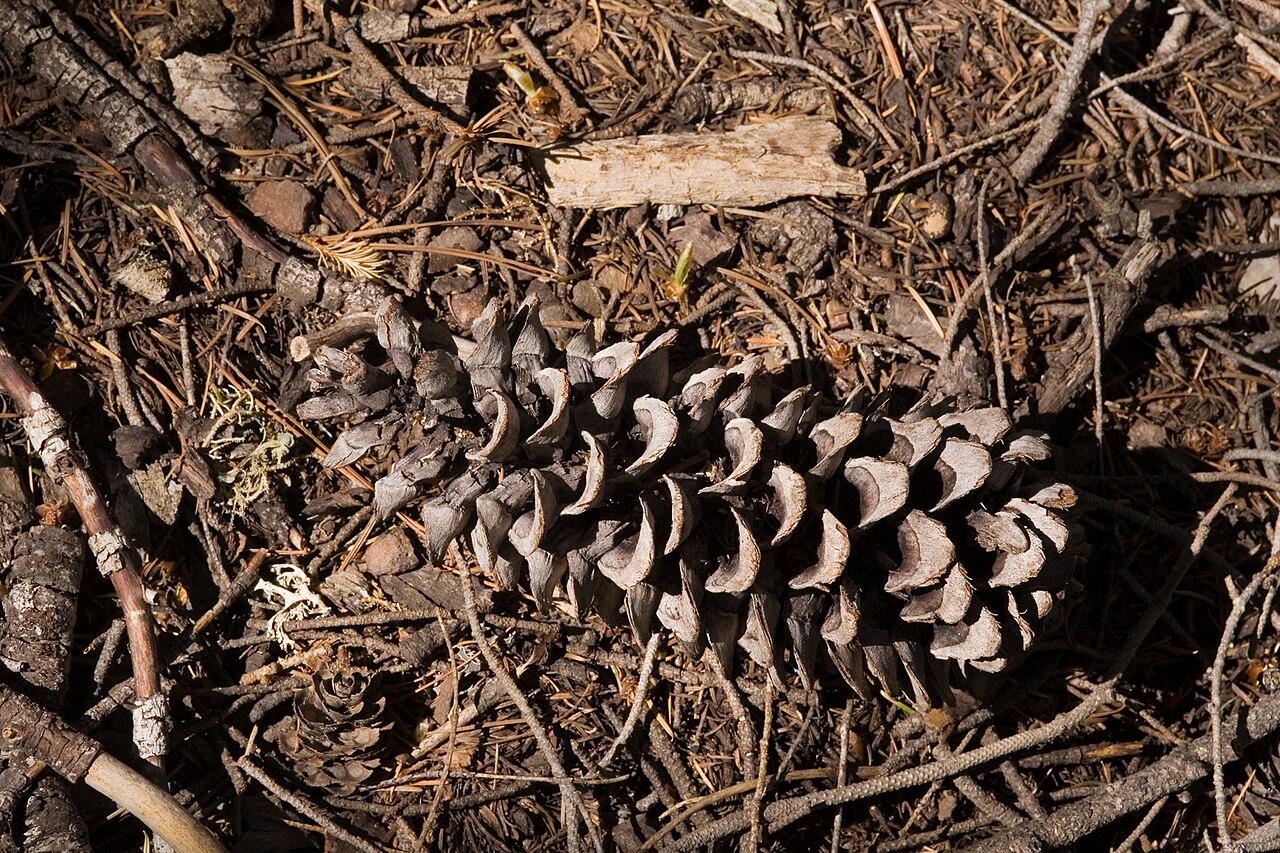
Mature seed cones are narrow and cylindrical, 5 to 10 inches long, often slightly curved, and hang downward on a short stalk. The cone scales are thin and only weakly armed, lacking the stout prickles of yellow pines, and are typically coated in white, sticky resin before opening. Cones ripen and open in late summer to fall of their second year, releasing large seeds, each about ½ inch long with a short, easily detached wing. The seeds are substantial enough to be an important wildlife food, more akin to piñon pine seeds than to the small winged seeds of most other white pines.
Quick Facts
| Scientific Name | Pinus strobiformis |
| Family | Pinaceae (Pine) |
| Plant Type | Evergreen coniferous tree |
| Mature Height | 50–90 ft |
| Mature Spread | 20–35 ft |
| Growth Rate | Slow to moderate |
| Sun Exposure | Full sun |
| Water Needs | Low to moderate once established |
| Soil Type | Rocky, well-drained mountain soils |
| Soil pH | Slightly acidic to neutral |
| Bloom Time | Spring (pollen cones, not showy) |
| Flower Color | N/A (conifer) |
| Fall Color | Evergreen |
| Fruit | Long resinous cones, 5–10 in., large edible-sized seeds |
| Deer Resistant | Yes, generally |
| USDA Hardiness Zones | 4–7 |
Native Range
Southwestern white pine occupies the high mountain ranges of the American Southwest, almost always above 6,500 feet and often well above 8,000 feet, where it grows in mixed conifer forest alongside Douglas-fir, white fir, ponderosa pine, and, at its northern edge, limber pine. In Arizona it is found scattered through the sky islands of the southeast — the Chiricahua, Pinaleño, Santa Catalina, and Huachuca mountains — and north into the Mogollon Rim country. In New Mexico it is more widespread, occurring through the Sacramento, Sandia, Manzano, Mogollon, and Black Range mountains. In Texas it survives only in two isolated, high-elevation refuges in the Trans-Pecos: the Guadalupe Mountains and the Chisos Mountains of Big Bend, where relict populations persist as a legacy of cooler, wetter climates during the last ice age.
These U.S. populations represent the northern tip of a species whose heartland lies in Mexico, through the Sierra Madre Occidental and Sierra Madre Oriental south into Nuevo León, Durango, Chihuahua, and beyond. Because the species depends on high elevation for the cool, moist conditions it needs, its U.S. range is naturally fragmented into separate mountain “islands” rather than one continuous forest, and isolated Texas populations in particular are considered vulnerable to drought and a warming climate.
Where Southwestern white pine’s range meets that of limber pine in north-central New Mexico, particularly around the Sandia and Manzano mountains, the two species form a natural hybrid zone. Trees here can show cone and seed characteristics intermediate between the two species, which has made this contact zone a point of ongoing interest for conifer taxonomists.
Native Range
| U.S. States | Arizona, New Mexico, Texas |
| Mexico | Chihuahua, Coahuila, Durango, Nuevo León, Sinaloa, Sonora, and southward through the Sierra Madre |
| Ecoregion | Madrean sky islands and southern Rocky Mountain mixed conifer forest |
| Elevation Range | 6,500–10,000 ft |
| Habitat | High-elevation mixed conifer forest, canyon slopes, ridgelines |
| Common Associates | Douglas-fir, white fir, limber pine, ponderosa pine, quaking aspen |
📋 Southwestern white pine is native to parts of the area covered by Native Plant List – Arizona & New Mexico and Native Plant List – South and West Texas.
Growing & Care Guide
Light
Give Southwestern white pine full sun. In its native mountain setting it grows in open to lightly shaded mixed conifer stands, but young trees planted in cultivation perform best with at least six hours of direct sun a day; too much shade produces a thin, leggy crown.
Soil & Water
This pine wants rocky, well-drained soil and does not tolerate wet feet or heavy clay. It is adapted to a cool, dry mountain climate with cold winters and monsoon-influenced summer moisture, so irrigation should mimic that pattern: deep, infrequent watering during establishment, tapering off as the root system matures. Established trees are drought-tolerant but perform poorly in low-elevation heat or humid, wet-summer climates.
Planting Tips
Plant small, container-grown trees in fall or early spring to let roots establish before summer heat. Choose a site with excellent drainage and some elevation if possible — this is not a tree for low desert floors or heavy irrigation zones. Space trees generously; a mature specimen will eventually need 25 to 35 feet of room to develop its full pyramidal form.
Pruning & Maintenance
Little pruning is needed beyond removing dead or damaged branches. Avoid heavy pruning or shearing, which disfigures the natural form and can stress the tree. Watch for signs of white pine blister rust (orange-yellow bark cankers, dying branch tips) and for bark beetle activity during drought stress, both of which are the species’ main long-term threats.
Propagation
Propagated from seed, which benefits from cold stratification over winter to mimic natural conditions before spring germination. Seeds are large and can be collected from open, dried cones in late summer. Grafting onto rootstock is used in conservation and blister-rust-resistance breeding programs but is not typical for home propagation.
Landscape Uses
- Specimen conifer for high-elevation and mountain gardens
- Windbreak or screen planting in cold, dry climates
- Restoration plantings in southwestern mixed conifer forest
- Wildlife garden centerpiece for seed-eating birds and mammals
- Xeric mountain landscaping once established
Wildlife & Ecological Value
For Pollinators
As a wind-pollinated conifer, Southwestern white pine offers little direct value to bees or butterflies, though its dense crown provides shelter for many insects that in turn support insect-eating birds.
Birds
The large, soft seeds are an important food source for Steller’s jays, Clark’s nutcrackers, pine siskins, red crossbills, and other seed-eating birds of the high mountains. Woodpeckers and nuthatches forage its bark for insects, and raptors use its tall crown for nesting and perching.
Mammals
Douglas squirrels, Abert’s squirrels, and various chipmunks cache and feed on the seeds, and black bears are known to raid stashed caches. Mule deer and elk browse young seedlings, which can limit natural regeneration in heavily grazed areas.
Ecosystem Role
Southwestern white pine is a long-lived structural component of southwestern mixed conifer forest, providing shade, soil stabilization on steep mountain slopes, and snow retention that helps regulate watershed hydrology in the arid Southwest. Its relict, fragmented populations in the sky islands and Trans-Pecos mountains also make it a useful indicator species for tracking how a warming, drying climate is affecting high-elevation forest refuges.
Cultural & Historical Uses
Indigenous peoples of the Southwest, including Apache and Pueblo communities, historically gathered the large seeds of Southwestern white pine as a food source, much as piñon pine seeds were collected farther north, though in smaller quantities given the tree’s more limited and remote distribution. The soft, straight-grained wood was used locally for construction timber and fuelwood in mountain communities where the tree was accessible.
In more recent history, the species has become a focus of forestry and conservation research because of its genetic relationship to other white pines devastated by blister rust. Breeding programs in Arizona and New Mexico have studied naturally rust-resistant individuals of Southwestern white pine as part of broader efforts to preserve five-needle pine diversity across the continent.
Today the tree is mostly valued for its ecological role in high-elevation forest and, increasingly, as an uncommon specimen tree for native and xeric landscaping in cold, dry mountain climates where few other pines combine its soft texture with such drought tolerance once established.
Frequently Asked Questions
Is Southwestern white pine the same as limber pine?
No, though they are close relatives that overlap and hybridize in parts of New Mexico. Southwestern white pine generally has longer, more slender cones and a more southern, lower-latitude mountain distribution, while limber pine ranges farther north and to higher, more exposed sites.
Will Southwestern white pine grow outside the mountain Southwest?
It can be grown in other cold, dry, well-drained climates within USDA zones 4–7, but it struggles in humid, low-elevation, or heavy-clay conditions far removed from its native high-mountain habitat.
How fast does it grow?
Growth is slow to moderate, typical of high-elevation white pines. Expect a modest specimen in the first decade, with the tree gaining stature and its characteristic open, pyramidal crown over several decades.
Is it endangered?
It is not federally listed, but its small, high-elevation, and often fragmented populations — especially the relict stands in the Guadalupe and Chisos mountains of Texas — are considered vulnerable to drought, bark beetles, and blister rust, and are a conservation priority in parts of its range.
Are the seeds edible?
Yes, the large seeds are edible and were historically gathered as a food source, similar to piñon pine nuts, though they are not commercially harvested today.
Looking for a nursery that carries native plants for your area? Visit our regional nursery directories: Alabama to Arkansas (includes Arizona), Nebraska to Oklahoma (includes New Mexico), and Pennsylvania to Virginia (includes Texas) for growers near the Southwestern white pine’s native range.

