
Apache Pine (Pinus engelmannii)
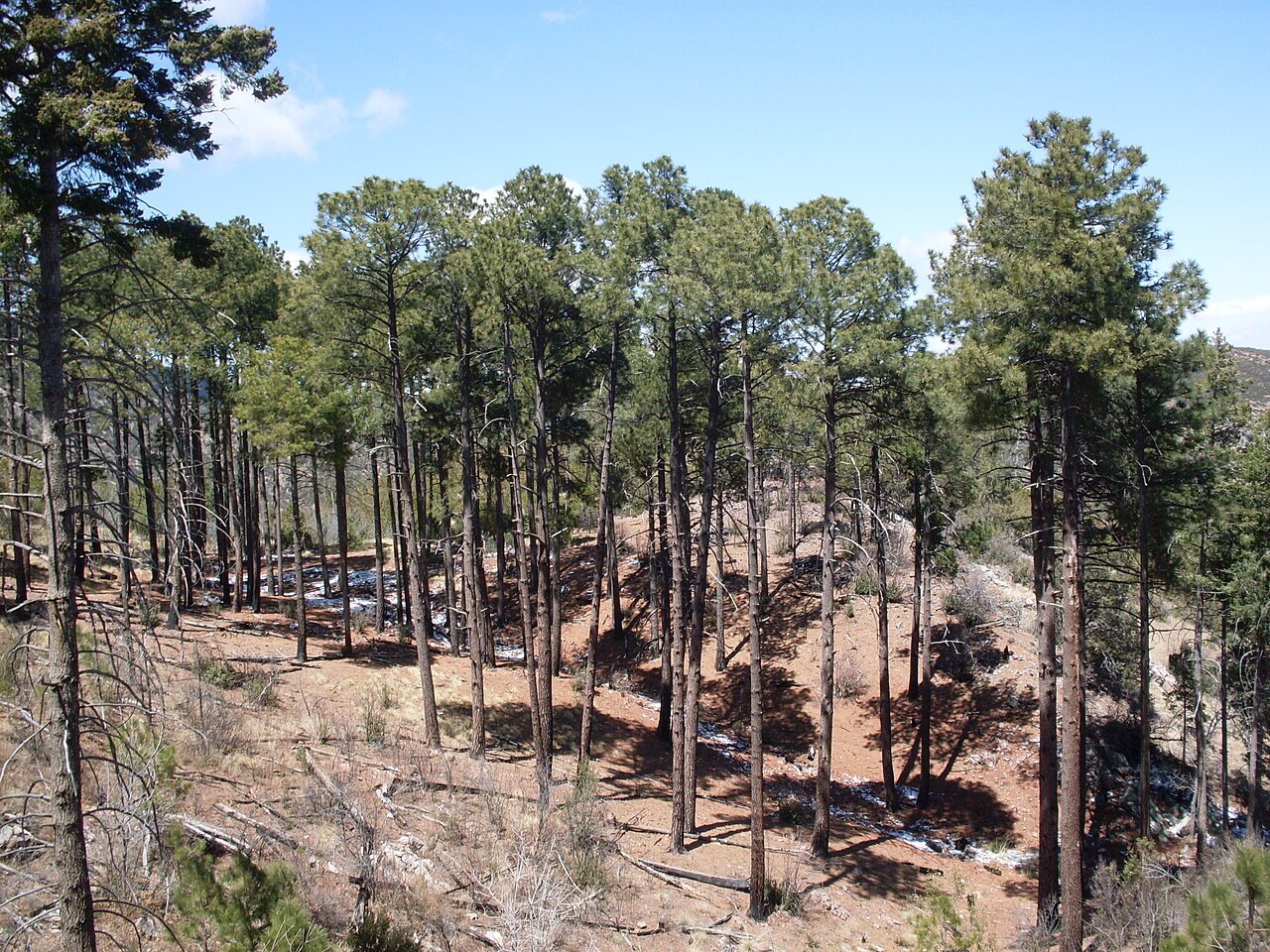
Pinus engelmannii, commonly called Apache Pine, is a striking, long-needled pine of the Madrean sky-island mountain ranges along the U.S.-Mexico border. It is primarily a Mexican species, forming extensive forests through the Sierra Madre Occidental, but its range reaches just across the border into the United States in the isolated, forested “sky island” mountain ranges of southeastern Arizona and southwestern New Mexico — the Chiricahuas, Huachucas, Peloncillos, and a handful of neighboring ranges where Madrean pine-oak woodland persists at elevation above the surrounding desert.
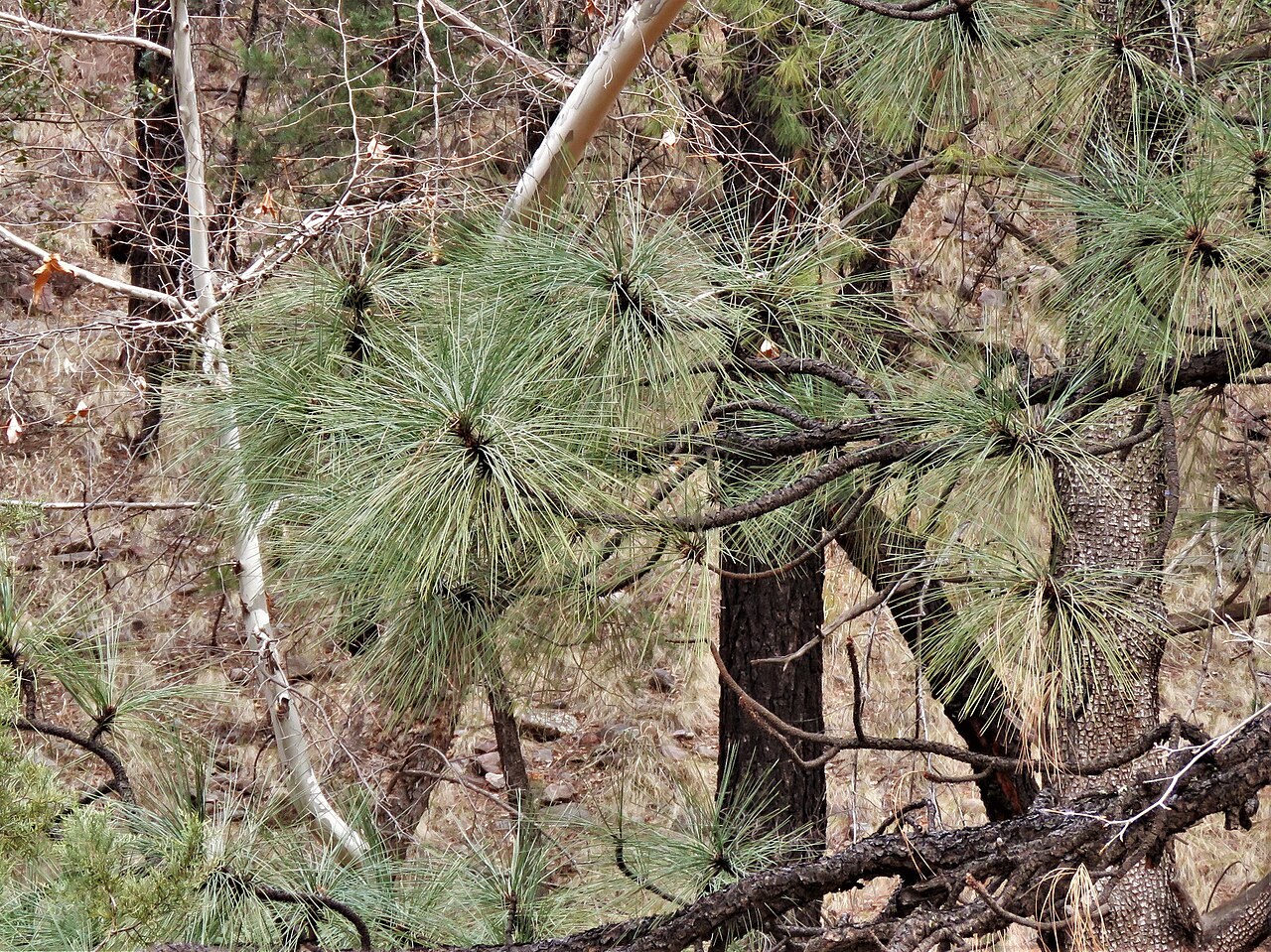
Apache Pine is immediately distinctive among Southwest pines for its exceptionally long, drooping needles — often 10 to 15 inches long, the longest of any pine native to the United States — bundled in stout clusters of three at the branch tips. Combined with sparse, heavy branching and large, chunky cones, mature trees have a bold, almost tropical silhouette that sets them apart from the more familiar Ponderosa Pine they often grow alongside.
Like Longleaf Pine of the Southeast, young Apache Pine spends its first years in a “grass stage,” hugging the ground as a dense tuft of long needles with almost no visible trunk while it builds a deep taproot — a strategy that helps it survive fire and drought in its exposed mountain habitat before it begins rapid height growth. For gardeners and land managers in its narrow U.S. range, it is a dramatic, drought-tolerant pine well worth the patience its slow early establishment requires.
Identification
Apache Pine is best identified by its unusually long, drooping needles in bundles of three, its sparse and stout branching habit, and its large, chunky cones — a combination that, within its limited U.S. range, makes it hard to mistake for anything else.
Bark & Stems
Mature trees develop thick, deeply furrowed bark broken into large, flat, orange-brown to blackish plates, offering good insulation against the frequent low-intensity fires of its Madrean woodland habitat. Branches are notably sparse and very stout, giving older trees an open, somewhat gaunt silhouette quite different from the dense crowns of many other pines. Young trees spend an extended period in a stemless “grass stage,” resembling a tuft of long needles at ground level while the taproot develops below.
Leaves (Needles)
Needles are bundled in fascicles of three (occasionally four or five), and are remarkably long — typically 8 to 15 inches — making them the longest needles of any pine native to the continental United States. They are a rich, somewhat glossy dark green and have a graceful, drooping habit that is one of the tree’s most recognizable features, especially on young, grass-stage and sapling trees where the long needle tufts are especially prominent.
Flowers (Cones)
Like all pines, Apache Pine bears separate male and female cones on the same tree. Pollen (male) cones are cylindrical, roughly an inch long, and yellow to yellow-brown, appearing in spring and releasing clouds of wind-borne pollen typical of the genus.
Fruit & Seeds (Seed Cones)
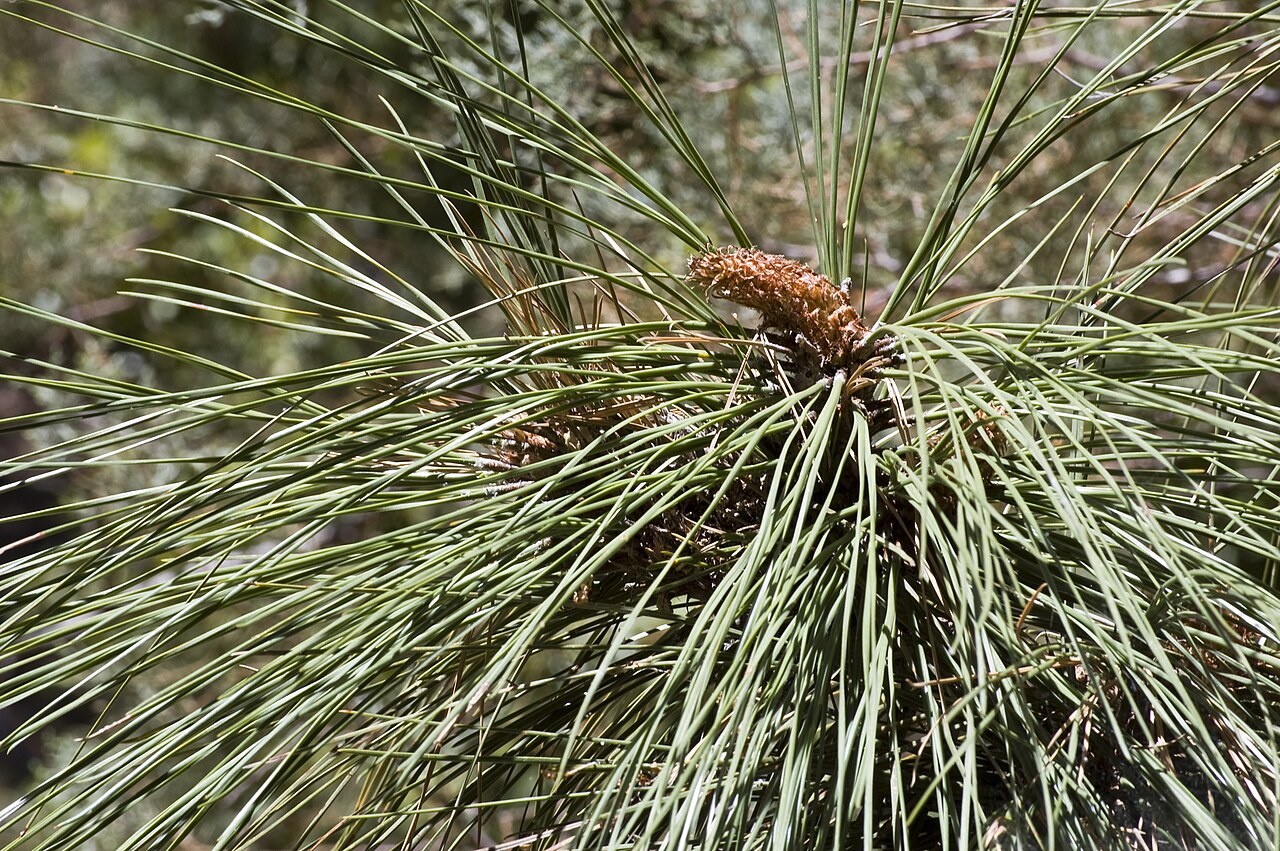
Seed cones are large and chunky, typically 4 to 7 inches long, borne singly or in pairs (sometimes up to four), with thick woody scales armed with a small prickle. Cones mature over two growing seasons, a trait shared with many pines in this part of the pine family, and open at maturity to release seeds just over a quarter inch long, each with a relatively large wing for wind dispersal.
Quick Facts
| Scientific Name | Pinus engelmannii |
| Family | Pinaceae (Pine) |
| Plant Type | Evergreen Coniferous Tree |
| Mature Height | 50–80 ft (rarely to 100+ ft) |
| Trunk Diameter | 14–31 in |
| Growth Rate | Slow (grass stage), then Moderate |
| Sun Exposure | Full Sun |
| Water Needs | Low to Moderate |
| Soil Type | Rocky, well-drained mountain soils |
| Bloom Time | Spring (pollen cones) |
| Fall Color | None (evergreen) |
| Fruit | Large woody cones, 4–7 in, maturing over 2 years |
| Deer Resistant | Yes |
| USDA Hardiness Zones | 7–9 |
Native Range
Apache Pine is primarily a tree of northern Mexico, forming extensive forests through the Sierra Madre Occidental across Sonora, Chihuahua, Durango, Zacatecas, and neighboring states. Its range reaches the United States only at the very northern edge of that distribution, in the sky-island mountain ranges of extreme southeastern Arizona and southwestern New Mexico — most notably the Chiricahua Mountains, Huachuca Mountains, and Peloncillo Mountains — where “Madrean” pine-oak woodland, more typical of Mexico’s high mountains, persists as isolated forested peaks surrounded by desert and grassland.
Within these ranges, Apache Pine typically grows at middle elevations, generally between about 5,000 and 8,000 feet, often alongside or just below Ponderosa Pine, intermixed with evergreen oaks such as Arizona Oak and Silverleaf Oak, Alligator Juniper, and Arizona Madrone — a distinctively Mexican-influenced plant community found nowhere else in the United States outside these same sky-island ranges.
Apache Pine is well adapted to the periodic low-intensity fires characteristic of this habitat. Its thick, plated bark protects the trunk, and its grass-stage seedling habit — in which young trees remain low to the ground while investing in a deep taproot — helps it survive both fire and the area’s pronounced dry seasons before committing to rapid height growth.
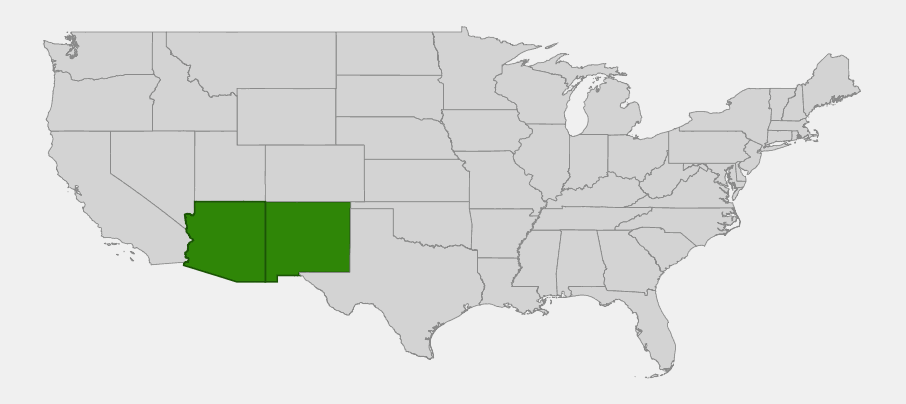
📋 Regional plant lists featuring Apache Pine: Arizona & New Mexico
Growing & Care Guide
Apache Pine rewards patience: expect a slow start as the young tree builds its root system in the grass stage, followed by a dramatic, long-needled specimen once it begins active height growth.
Light
Plant in full sun. Apache Pine grows in open, sunny mountain woodland in the wild and does not tolerate heavy shade, particularly while young.
Soil & Water
This species is adapted to the rocky, well-drained mountain soils of its native sky-island ranges and does not perform well in heavy, poorly drained, or consistently wet soils. Once established, it is reasonably drought tolerant, reflecting its adaptation to the pronounced dry seasons of the Madrean woodland zone, though regular watering during the first several years — especially through the slow grass-stage period — improves establishment.
Planting Tips
Give young trees room and patience: the grass-stage habit, in which the seedling remains a low tuft of long needles for an extended period while its taproot develops, is normal and not a sign of poor health. Avoid transplanting established trees, since the deep taproot characteristic of this pine (shared with Longleaf Pine and Ponderosa Pine) makes larger specimens difficult to move successfully.
Pruning & Maintenance
Little pruning is needed beyond removing dead or storm-damaged branches. The species’ naturally sparse, stout branching habit is characteristic and should not be corrected toward a denser form. Established trees are low-maintenance and well adapted to periodic low-intensity fire, which in restoration or naturalistic landscape settings can be mimicked with occasional prescribed burning where appropriate and permitted.
Landscape Uses
Within its narrow southeastern Arizona and southwestern New Mexico range, Apache Pine offers a distinctive look for larger properties:
- Specimen tree for its dramatic long-needled silhouette, especially as it matures
- Madrean woodland restoration plantings alongside Arizona Oak, Silverleaf Oak, and Alligator Juniper
- Wildlife gardens — seed cones provide forage for birds and small mammals
- Large native landscapes where its eventual size and open form can be appreciated without crowding
Wildlife & Ecological Value
As a characteristic tree of the Madrean sky-island woodlands, Apache Pine supports the distinctive wildlife community of these isolated mountain forests, which blend Rocky Mountain and Mexican Sierra Madre species in a way found nowhere else in the United States.
For Birds
Seeds from the large cones provide forage for a range of birds typical of Madrean pine-oak woodland, including jays, nuthatches, and various finches, while the open, mature crown offers nesting sites for raptors and cavity-nesting species in older trees.
For Mammals
Squirrels and other seed-caching rodents feed on Apache Pine seed, contributing to the tree’s dispersal, while the sky-island forests it helps form provide habitat connectivity for a range of mammals moving between isolated mountain “islands” across the surrounding desert and grassland sea.
Ecosystem Role
Apache Pine is a foundational species of Madrean pine-oak woodland, one of the most biologically distinctive habitat types in the United States, supporting species assemblages — including several birds and plants — found nowhere else in the country outside these same sky-island ranges. Its fire-adapted bark and grass-stage seedling strategy make it a resilient anchor species for a habitat shaped by periodic fire.
Cultural & Historical Uses
Apache Pine takes its common name from its association with the mountain ranges of southeastern Arizona and southwestern New Mexico long inhabited by Apache peoples, including the Chiricahua Apache, for whom the Chiricahua Mountains — one of the tree’s principal U.S. strongholds — are named. As with other large pines of the region, the wood has had local use for construction and fuel in both the United States and Mexico, where the species is far more abundant and has greater commercial significance as a component of Sierra Madre timber forests.
In its limited U.S. range, Apache Pine has not been a significant commercial timber species given the small area it occupies, and its primary present-day value here is ecological and aesthetic — a dramatic, long-needled pine that marks some of the northernmost reach of Mexico’s remarkable pine diversity into United States territory.
Frequently Asked Questions
Why does Apache Pine stay so low to the ground when young?
This is the “grass stage,” a seedling strategy also seen in Longleaf Pine, in which the young tree puts its energy into developing a deep taproot while remaining a low, ground-hugging tuft of long needles for several years. It is normal, not a sign of a struggling plant, and the tree will begin rapid height growth once the root system is established.
How is Apache Pine different from Ponderosa Pine, which it often grows near?
Apache Pine has much longer needles — often 10 to 15 inches versus Ponderosa Pine’s 5 to 10 inches — and a more sparse, stout branching habit with larger, chunkier cones. The two species frequently grow together in Arizona and New Mexico’s sky-island mountains, with Apache Pine generally favoring slightly lower, drier sites within the shared elevation band.
Is Apache Pine really a U.S. native, or mostly a Mexican tree?
Both are true. Apache Pine is overwhelmingly a Mexican species, forming extensive forests through the Sierra Madre Occidental, but its range does genuinely extend into the United States, reaching a handful of sky-island mountain ranges in southeastern Arizona and southwestern New Mexico, where it is a true native component of the local flora.
How drought tolerant is Apache Pine?
Quite tolerant once established, reflecting its adaptation to the pronounced wet-dry seasonal pattern of Madrean woodland in the U.S.-Mexico borderlands. Young trees in the grass stage are especially resilient to dry conditions, since most of their early growth goes into the root system rather than above-ground foliage.
Can Apache Pine be grown outside its native Arizona-New Mexico range?
It’s best suited to its native elevation and climate band. Gardeners well outside southeastern Arizona and southwestern New Mexico, especially in more humid or significantly colder climates, are likely to have better success with a pine species native to their own region.

Looking for a nursery that carries Apache Pine?
Browse our native plant nursery directory: Arizona · New Mexico
For more on growing pines in Apache Pine’s home range, see our guides to pine trees for Arizona, or browse profiles of its sky-island woodland companions: Ponderosa Pine, Arizona Pine, Arizona Oak, Silverleaf Oak, and Alligator Juniper.

