
Blolly (Guapira discolor)
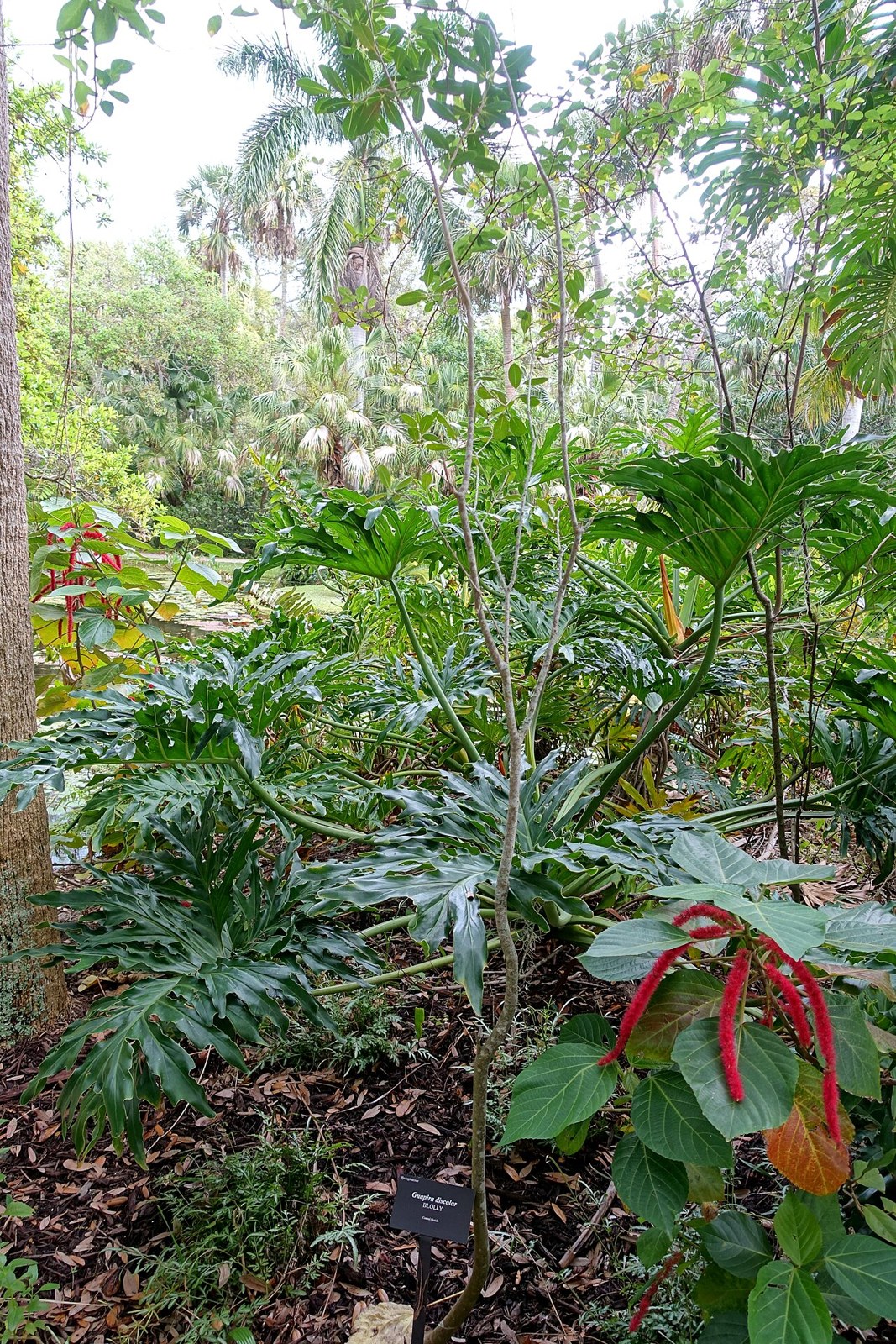
Guapira discolor, commonly called Blolly (also known as Beeftree, Beefwood, Pigeonberry, or Narrowleaf Blolly), is a slow-growing evergreen tree found almost nowhere in the United States outside the tropical hammocks and coastal scrub of peninsular Florida. A member of the Nyctaginaceae, or four-o’clock family — a mostly tropical group better known for bougainvillea and the garden four-o’clock — Blolly is one of the characteristic hardwoods of South Florida’s rockland hammocks, growing alongside gumbo limbo, pigeon plum, and paradise tree in some of the rarest plant communities left in North America.
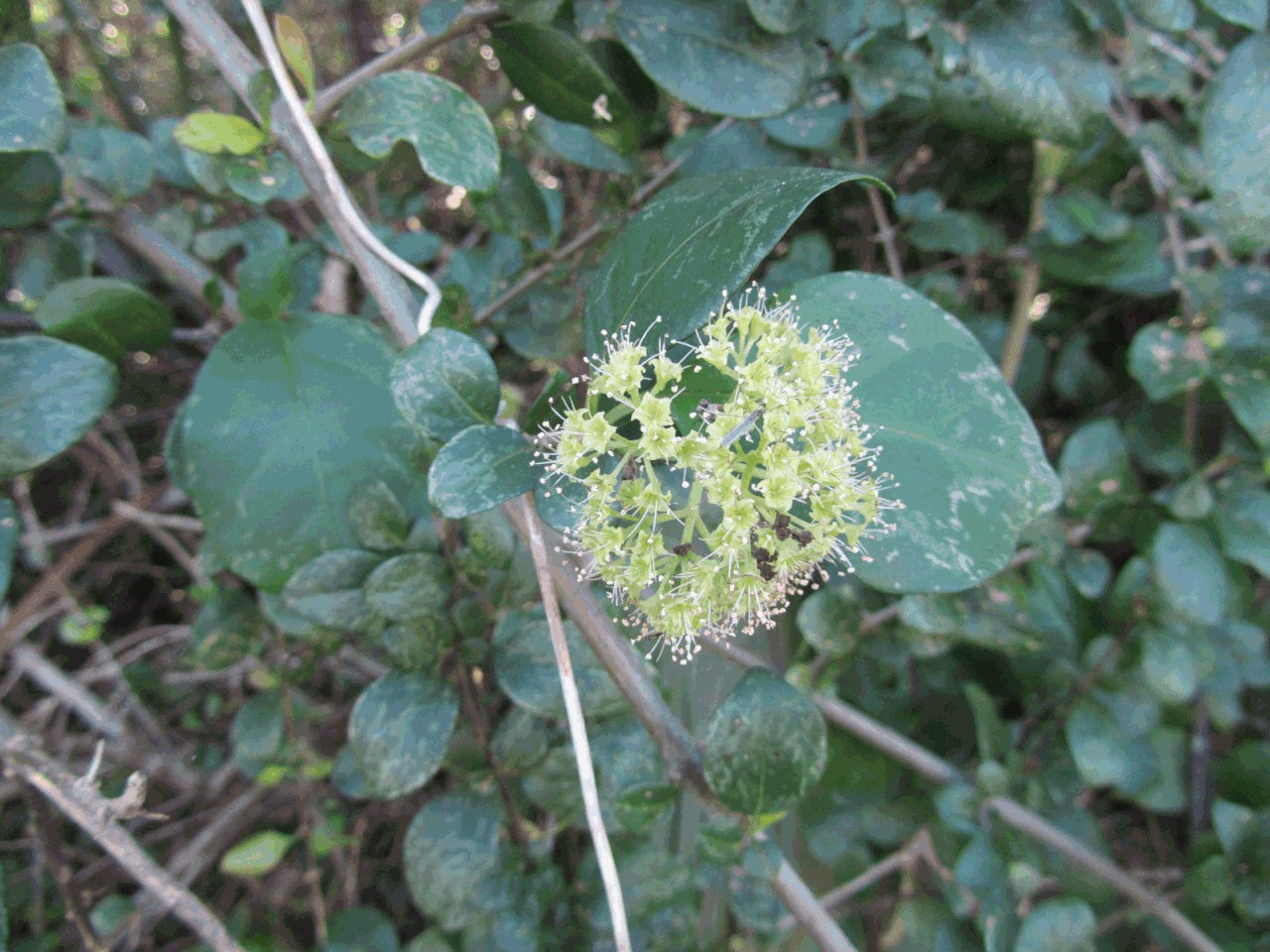
In the wild, Blolly is usually a small to medium tree 10 to 30 feet tall, occasionally reaching 45 feet on old, undisturbed hammock sites, with smooth pale gray bark and glossy, leathery, two-toned leaves — the species name discolor refers to the way the upper and lower leaf surfaces differ in shade. Tiny greenish-yellow flowers appear in tight clusters in late spring, followed by oval fruits that ripen from green to bright red to purple-black, a favorite of Florida’s resident and migratory songbirds.
Because its native range is confined to a handful of counties in central and south Florida, Blolly rarely shows up in general native-plant references outside the region, yet it is an excellent low-maintenance choice for coastal and hammock-style gardens there: salt-tolerant, drought-tolerant once rooted in, and nearly pest-free. Gardeners outside peninsular Florida should look to regionally appropriate natives instead, since Blolly is not cold-hardy and is not native beyond its narrow Florida range.
Identification
Blolly is most easily recognized by the combination of smooth pale bark, thick two-toned oval leaves, and clusters of small red-to-black fruit held close to the branch tips. It typically grows as a single- or multi-trunked small tree with an upright, somewhat open crown, though in exposed coastal sites it can take on a wind-sculpted, shrubbier form.
Bark & Stems
Young stems are slender and pale gray-brown, often slightly swollen at the leaf nodes. As the tree matures, the bark stays relatively smooth but develops a pale, faintly mottled texture with light lenticel speckling. The wood is dense and close-grained; older specimens in protected hammocks can develop a modestly thickened, gnarled trunk, but Blolly rarely becomes a large canopy tree the way its hammock neighbors gumbo limbo or live oak do.
Leaves
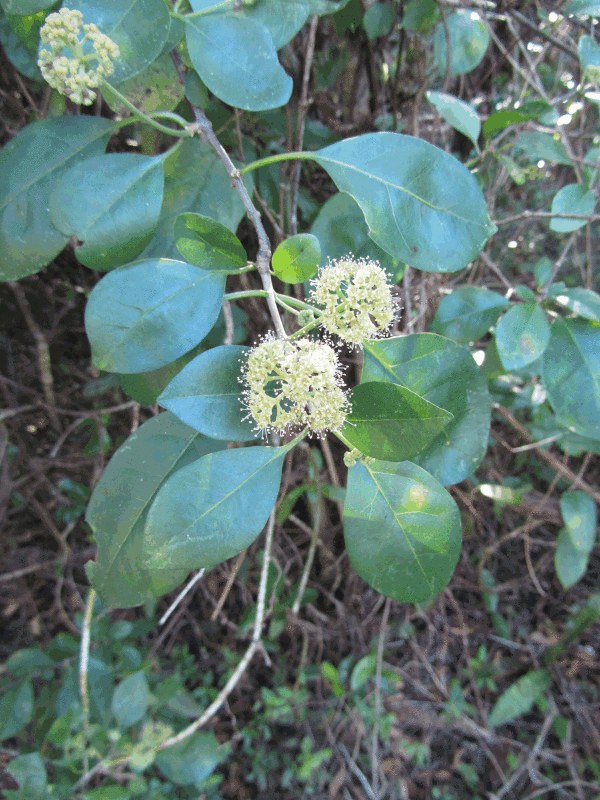
Leaves are evergreen, opposite (or occasionally sub-opposite), simple, and oblong to elliptic, typically 2 to 4 inches long, with a blunt or notched (retuse) tip and a short petiole. They are thick and somewhat leathery, glossy dark green above and noticeably paler — sometimes almost silvery-green — below, which gives the tree its “discolor” epithet and its two-toned look when breezes turn the leaves. New growth often emerges with a faint bronze or reddish cast before hardening off to green.
Flowers
Blolly is dioecious, meaning individual trees are either male or female, so a single specimen will never set the full load of fruit a paired planting can. Flowers are small, greenish-yellow, and clustered in compact, rounded cymes at the branch tips; they are not showy and are easy to overlook, blooming mainly in late spring with sporadic flowering through summer and fall in South Florida’s long growing season.
Fruit & Seeds
Only female trees produce fruit: oblong, fleshy drupes about ⅓ to ½ inch long that ripen from pale green through bright red to a deep purple-black. The fruit ripens over an extended season, so a single tree can carry green, red, and nearly black fruit all at once, which is part of its ornamental appeal. Birds strip ripe fruit quickly and disperse the seed widely through hammocks and coastal scrub.
Quick Facts
| Scientific Name | Guapira discolor (syn. Torrubia discolor) |
| Family | Nyctaginaceae (Four-o’clock) |
| Plant Type | Evergreen Tree / Large Shrub |
| Mature Height | 10–30 ft (occasionally to 45 ft) |
| Mature Spread | 8–15 ft |
| Growth Rate | Slow |
| Sun Exposure | Full Sun to Part Shade |
| Water Needs | Low to Moderate |
| Soil Type | Sandy, limestone or shell-based; well-drained |
| Soil pH | Neutral to alkaline |
| Bloom Time | Late spring, sporadic through fall |
| Flower Color | Greenish-yellow |
| Fall Color | None (evergreen) |
| Fruit | Red to purple-black drupes (female trees only) |
| Deer Resistant | Yes |
| USDA Hardiness Zones | 10b–11 |
Native Range
Blolly’s U.S. range is unusually narrow: it occurs natively only in central and southern peninsular Florida, roughly from the Tampa Bay and Cape Canaveral area south through the Everglades region and into the Florida Keys. Outside the continental United States it also grows throughout the West Indies and parts of the Caribbean basin, but within the Lower 48 it is a true South Florida specialty and is not native to any other U.S. state.
It favors the limestone-and-shell-derived soils of tropical hardwood hammocks, pine rocklands, old shell middens, and coastal berms and strands, where it grows as a mid-story associate beneath taller hammock canopy trees. These are among the most reduced and fragmented plant communities in Florida — pine rockland habitat, in particular, has been cut to a small fraction of its historic extent by development in Miami-Dade County — so a mature stand of Blolly is usually a sign of a relatively intact, high-quality natural area.
Because its range sits entirely within a narrow subtropical zone, Blolly has essentially no frost tolerance and should not be attempted as a garden plant outside roughly USDA zones 10b–11. Within that zone, though, it is thoroughly adapted to the salt spray, thin alkaline soils, and periodic drought of coastal and inland hammock sites alike.
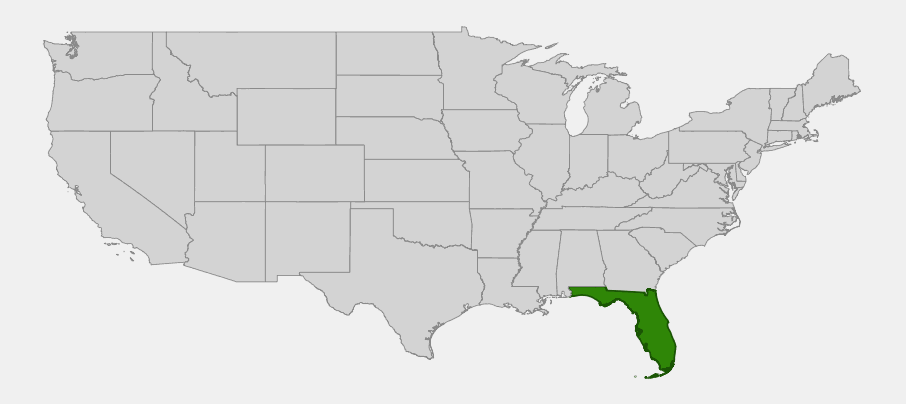
📋 Blolly’s native range is limited to central and south peninsular Florida, which falls outside the regions covered by our current regional native plant lists.
Growing & Care Guide
Within its narrow climate zone, Blolly is an easygoing, low-water landscape tree once it is established, prized by South Florida gardeners for its toughness in coastal conditions where many other trees struggle.
Light
Blolly grows well in full sun or in the dappled light of an open hammock edge. Young trees planted in part shade tend to grow a bit taller and more open as they stretch toward light; full-sun specimens develop a denser, more compact habit.
Soil & Water
True to its hammock and shell-mound origins, Blolly thrives in sandy or limestone-derived soils that drain quickly, and it tolerates the alkaline, often thin soils typical of South Florida’s coastal ridge and rockland areas. Water regularly for the first year or two after planting to establish a deep root system; after that, established trees handle Florida’s dry season with little supplemental irrigation and tolerate salt spray and brief saltwater flooding better than most hammock species.
Planting Tips
Plant container-grown Blolly in spring or early summer so roots have a full rainy season to establish before the next dry stretch. Because the species is dioecious, gardeners wanting fruit for wildlife should plant more than one tree where space allows, since a single tree has only a coin-flip chance of being female. Give young trees a sheltered spot out of strong wind for the first year, though mature Blolly handles coastal exposure well.
Pruning & Maintenance
Blolly needs very little pruning. Remove dead, crossing, or storm-damaged branches as needed, and prune lightly after flowering if a more formal shape is wanted. Its slow growth rate means it rarely outgrows its space, which makes it useful near patios, walkways, or foundation plantings where a small to medium evergreen tree is needed.
Propagation
Blolly is most commonly propagated from fresh seed collected from ripe (red to black) fruit, cleaned of pulp and sown promptly, since viability drops quickly in storage. Germination can be slow and uneven. Semi-hardwood cuttings are sometimes used by nurseries to guarantee the sex of the resulting plant when female, fruit-bearing specimens are wanted.
Landscape Uses
Blolly’s compact size and tolerance for tough coastal conditions make it useful in several settings:
- Specimen tree for small residential lots where a full-size canopy tree won’t fit
- Coastal and hammock-style gardens that mimic South Florida’s natural plant communities
- Wildlife gardens — female trees provide a long season of bird-attracting fruit
- Salt-tolerant screening near the coast where wind and salt spray limit plant choices
- Restoration plantings in degraded hammock or pine rockland remnants
Wildlife & Ecological Value
As one of the steady fruit producers of the South Florida hammock mid-story, Blolly punches above its size in ecological value, supporting birds and insects across a long fruiting season.
For Birds
The extended ripening season — green, red, and black fruit often present on the same female tree at once — means Blolly can feed birds for months rather than a single short pulse. Northern Mockingbirds, Gray Catbirds, Northern Cardinals, and a range of migratory songbirds passing through South Florida feed on the fruit and help disperse the seed into nearby hammocks and scrub.
For Mammals
Raccoons and other small mammals opportunistically feed on fallen fruit, and the dense evergreen foliage offers cover for small wildlife moving through hammock understory.
For Pollinators
Although inconspicuous, the small greenish-yellow flower clusters attract native bees and other small pollinating insects, providing a nectar source in the hammock understory where flowering plants can be scarce for stretches of the year.
Ecosystem Role
Blolly is a characteristic mid-story species of two of Florida’s rarest natural communities — tropical hardwood hammock and pine rockland — both of which have been drastically reduced by coastal development, especially in Miami-Dade County. Maintaining Blolly in home landscapes near remnant natural areas helps support genetic connectivity for a species whose wild habitat is increasingly fragmented.
Cultural & Historical Uses
Blolly has no significant documented history of medicinal or ceremonial use among Indigenous or early Florida settler communities, unlike many of its hammock neighbors. Its common names reflect practical, everyday observation rather than any notable traditional use: “Beeftree” and “Beefwood” likely reference the reddish color of the fresh-cut wood, while “Pigeonberry” points simply to the fruit’s popularity with birds.
The dense, close-grained wood has occasionally been used locally for small turned or carved items, though it has never been a commercial timber species given the tree’s modest size and slow growth. Its primary value to people, both historically and today, has been as a durable, low-care landscape and hammock-restoration tree rather than a resource to be harvested.
Modern interest in Blolly comes mainly from Florida native-plant gardeners and habitat-restoration groups working to rebuild degraded hammock and pine rockland remnants, where reintroducing original mid-story species like Blolly helps restore a more complete, resilient plant community.
Frequently Asked Questions
Is Blolly native outside Florida?
No. Within the United States, Blolly is native only to central and southern peninsular Florida and the Florida Keys. It also occurs naturally in the West Indies and parts of the Caribbean, but it is not native to any other U.S. state and is not cold-hardy enough to be grown outdoors much beyond South Florida.
Does every Blolly tree produce fruit?
No. Blolly is dioecious, meaning individual trees are either male or female. Only female trees bear the red-to-black fruit that birds rely on, so if you want fruit for wildlife, plant more than one tree to improve the odds of including a female.
Can you eat Blolly fruit?
The fruit has occasionally been reported as edible in some regional references, but it is not a documented food plant and has no established culinary tradition. It’s best left for the birds that depend on it rather than treated as a foraging crop.
How salt-tolerant is Blolly?
Quite tolerant. Because it naturally grows on coastal berms, strands, and shell mounds, established Blolly handles salt spray and occasional storm-surge flooding better than many other South Florida hammock trees, making it a good choice for coastal landscaping.
Is Blolly endangered?
Blolly itself is not formally listed as threatened or endangered, but the pine rockland and tropical hammock habitats it depends on are among the most reduced plant communities in Florida, particularly in Miami-Dade County. Planting Blolly in home and restoration landscapes supports a species whose wild habitat is shrinking.

Looking for a nursery that carries Blolly?
Browse our native plant nursery directory: Florida
For more on the trees that share Blolly’s South Florida hammock habitat, see our guides to shade trees for South Florida and South Florida pine trees, or browse profiles of hammock associates like Live Oak, Pigeon Plum, Paradise Tree, and Simpson’s Stopper.

