
Paradise Tree (Simarouba glauca)
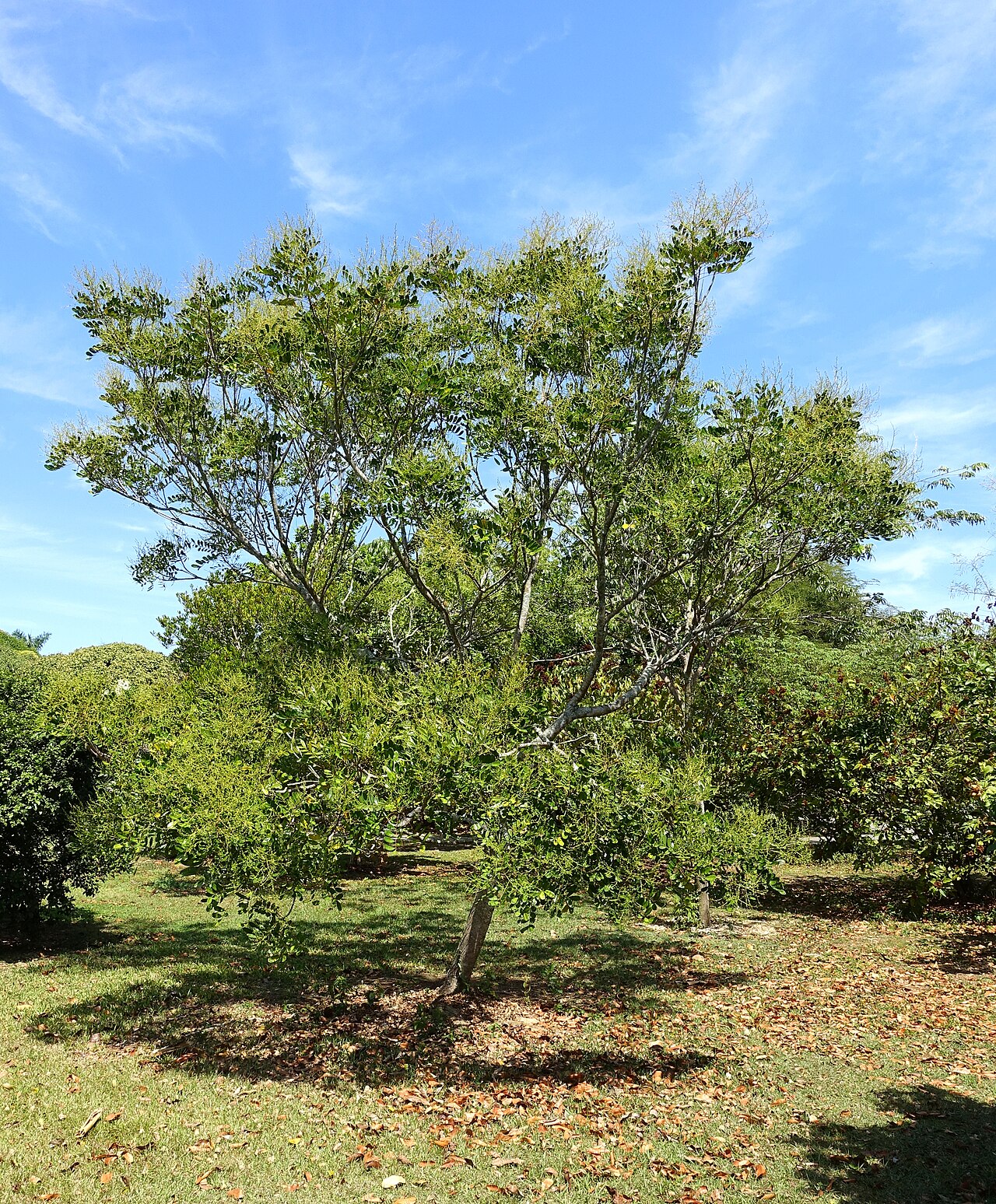
Simarouba glauca, the Paradise Tree (also called bitterwood or dysentery-bark), is a fast-growing, salt- and wind-tolerant evergreen native to the coastal hammocks of central and South Florida. Its fine, feathery, pinnately compound leaves give it a light, airy texture quite different from the broad-leaved look of most hammock trees, and its tiny flowers and olive-sized fruit ripen through a striking sequence of green, yellow, red and finally near-black, often with several colors showing on the same cluster at once.
As a dioecious species, individual paradise trees are either male or female, so fruit (and the wildlife activity it brings) only appears on female trees growing within pollinating distance of males. The bitter bark and wood, source of several of the plant’s common names, has a long history of traditional use across its range, though modern sources note that reputed medicinal effects remain scientifically unverified.
For Florida gardeners wanting a quick-growing, hurricane-resilient native shade tree with an unusual, fine-textured look, paradise tree is a strong choice, particularly in coastal and near-coastal landscapes where salt tolerance matters.
Identification
Paradise tree is a medium to large evergreen tree, typically 40 to 50 feet tall with a spread of 25 to 30 feet, growing with a fairly rounded, dense crown when given open space. It is notably fast-growing for a native hardwood, often used in reforestation and even biodiesel plantations elsewhere in its range because of that quick growth.
Bark
Bark is grayish and relatively smooth on younger trees, becoming slightly furrowed with age. The inner bark and wood carry a pronounced bitter taste, the source of the common names bitterwood and dysentery-bark.
Leaves
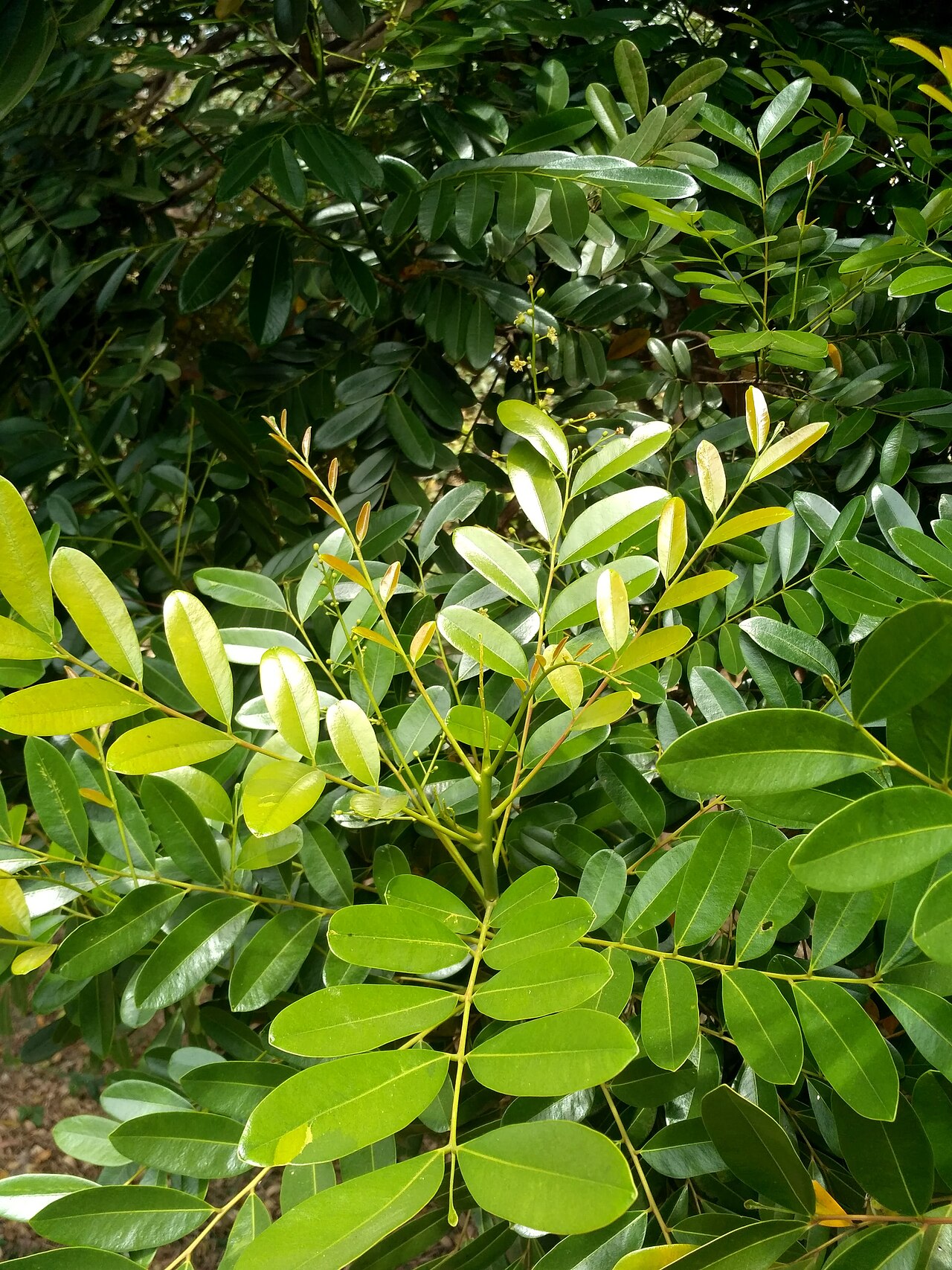
Leaves are pinnately compound, typically 8 to 12 inches long, made up of 10 to 20 alternate, oblong leaflets with rounded or notched tips. Leaflets are glossy dark green above and paler, slightly waxy (“glaucous,” the source of the species name) beneath, giving the whole crown a fine, feathery texture that stands out from the broader-leaved hammock trees it often grows among.
Flowers & Fruit
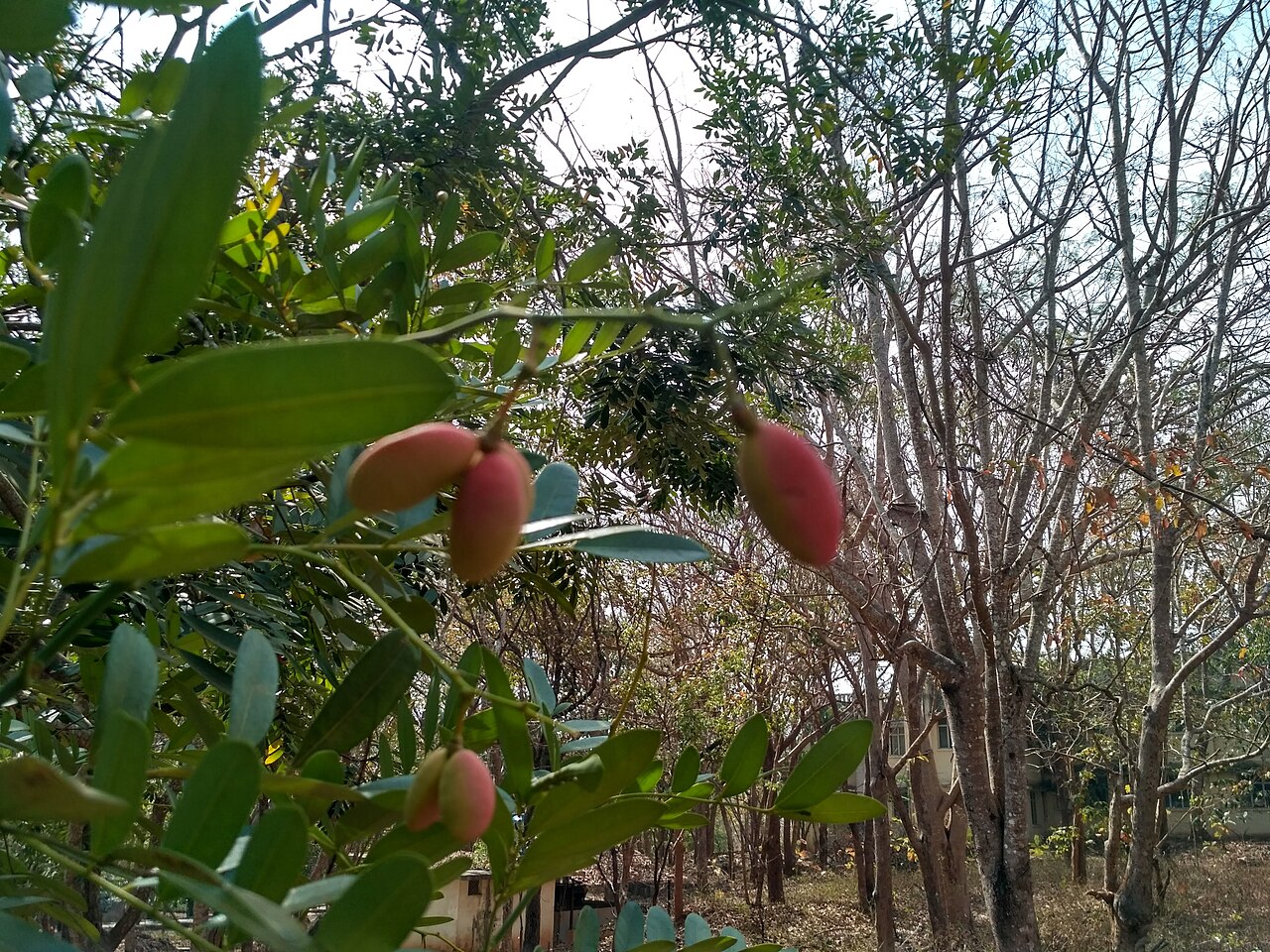
Small, five-petaled yellow flowers are borne in loose branched clusters. Paradise tree is dioecious, meaning individual trees bear only male or only female flowers, so fruiting requires both sexes growing nearby. Female trees produce oval, olive-sized fruits that ripen through a distinctive color sequence — green, then yellow, then red, and finally dark purple to black when fully ripe — frequently showing several of these colors together on the same cluster, a useful and attractive identification feature.
Quick Facts
| Scientific Name | Simarouba glauca |
| Family | Simaroubaceae (Quassia) |
| Plant Type | Evergreen Tree (dioecious) |
| Mature Height | 40–50 ft |
| Mature Spread | 25–30 ft |
| Growth Rate | Fast |
| Sun Exposure | Full Sun to Part Shade |
| Water Needs | Average; tolerates short dry periods once established |
| Soil Type | Well-drained limestone, sandy or loamy soil |
| Soil pH | Neutral to alkaline |
| Bloom Time | Winter–spring |
| Flower Color | Yellow |
| Fall Color | None (evergreen) |
| Fruit | Oval, ripening green–yellow–red–purple-black (female trees only) |
| Salt Tolerance | Moderate (spray); not tolerant of saltwater flooding |
| USDA Hardiness Zones | 10–11 |
Native Range
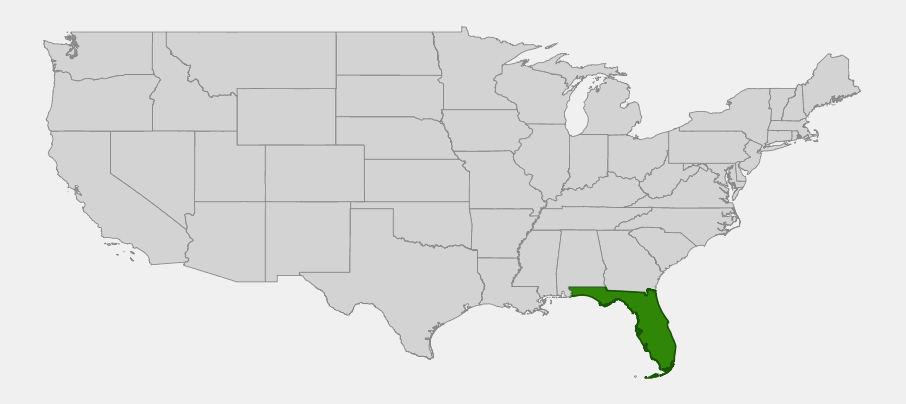
In the United States, paradise tree is native to Florida, occurring in coastal hammocks from roughly the central peninsula (both coasts) south through Miami-Dade County and the Florida Keys. It is most abundant and reaches its largest size in South Florida’s remaining tropical hardwood hammocks.
Beyond Florida, the species ranges through the Bahamas, Cuba, Jamaica, Hispaniola, Puerto Rico and other Caribbean islands, with closely related populations extending into Central America and South America under the broader Simarouba species complex.
Natural habitat is coastal and near-coastal tropical hardwood hammock, where paradise tree grows alongside gumbo limbo, live oak, mastic and other hammock hardwoods, generally on well-drained, limestone-influenced soils within reach of salt-laden coastal winds.
📋 Regional plant lists featuring Paradise Tree: No Florida regional plant list currently covers this species; browse all Native Plant Profiles. See also the hammock associate Lignum Vitae.
Growing & Care Guide
Paradise tree is one of the faster-growing native trees for Florida landscapes, rewarding gardeners with quick shade and a distinctive, fine-textured crown.
Light
Grow in full sun to light part shade. Full sun produces the densest, fullest crown, though young trees tolerate light shade as they establish beneath taller canopy, as they often do in the wild.
Soil & Water
Paradise tree adapts to a range of well-drained soils, including thin limestone rock and sandy soil, and prefers neutral to alkaline pH. Water regularly during the first year or two after planting to support its naturally fast growth; established trees tolerate short dry spells well, though they are not as drought-hardy as some of their slower-growing hammock neighbors.
Planting Tips
Give paradise tree room for its mature spread, and be aware that its roots can run close to the surface and may eventually affect nearby pavement, so keep it away from sidewalks and driveways. The tree is known to shed small branches in high winds, a natural survival strategy that helps it withstand hurricanes with less structural damage overall, though it does mean some litter after storms. If fruit and the wildlife it attracts are a priority, plant both male and female trees, since the species is dioecious.
Pruning & Maintenance
Because of its fast growth, young paradise trees benefit from early structural pruning to establish a strong central leader and well-spaced branches. Mature trees need little routine care beyond removing dead or storm-damaged wood. The species has few serious pest or disease problems in Florida landscapes.
Propagation
Propagate from seed collected from ripe, dark purple-black fruit on female trees; clean away the pulp before sowing. Germination is relatively quick compared with many native hammock trees, consistent with the species’ fast overall growth rate. Because sex cannot be determined until a seedling flowers, growers wanting guaranteed fruit production often plant several seedlings to ensure both sexes are represented.
Landscape Uses
- Fast-growing shade tree for new landscapes needing quicker canopy than slower hammock natives provide
- Coastal and near-coastal plantings, given its moderate salt tolerance
- Hammock restoration plantings alongside lignum vitae and other hardwood hammock natives
- Wildlife gardens, where female trees provide a colorful, extended fruit display
- Hurricane-resilient landscaping, thanks to its branch-shedding wind response
- Companion planting in broader South Florida tree designs; see our guide to shade trees for South Florida
Wildlife & Ecological Value
Paradise tree’s extended, multi-colored fruiting display makes it a valuable and attractive food source in Florida’s coastal hammocks.
For Pollinators
The small yellow flowers attract bees and other insect pollinators, which are essential for fruit set given the tree’s dioecious habit requiring pollen transfer between separate male and female trees.
For Birds
Ripening fruit on female trees draws a variety of fruit-eating birds, which feed on the colorful green-to-black fruit as it ripens over an extended period, providing a longer window of food availability than trees that ripen all their fruit at once.
For Mammals
Small mammals also feed on fallen fruit, helping disperse seeds away from the parent tree, and the dense evergreen crown offers year-round cover in hammock habitat.
Ecosystem Role
As a relatively fast-growing component of coastal hammock, paradise tree can help re-establish canopy cover more quickly than slower hardwood species following storm damage or in restoration plantings, while still supporting the wildlife relationships typical of mature hammock habitat.
Cultural & Historical Uses
The bitter bark that gives paradise tree its alternate names, bitterwood and dysentery-bark, has a long history of traditional use across its Caribbean and Central American range, where bark preparations were used for digestive complaints and other ailments. Modern sources are clear that these traditional medicinal effects have not been scientifically verified, so any historical use should be understood as folk history rather than guidance for self-treatment.
Elsewhere in its broader range, paradise tree’s seeds have been cultivated for vegetable oil used in soaps and industrial products, and its insect-resistant wood has been used for furniture, toys and matches. In Florida the species is valued primarily as a landscape and hammock-restoration tree rather than for any commercial product.
Frequently Asked Questions
Why does paradise tree fruit show several colors at once?
Fruit ripens gradually through a sequence from green to yellow to red to purple-black, and because fruit clusters contain individuals at different stages, several colors are often visible on the same branch at the same time — a distinctive and attractive feature of female trees.
Do all paradise trees produce fruit?
No. The species is dioecious, meaning individual trees are either male or female. Only female trees produce fruit, and they need a male tree flowering nearby for pollination, so a single isolated tree may never fruit.
How fast does paradise tree grow?
Quite fast for a native Florida hardwood, which is part of its appeal for gardeners wanting quicker shade than many hammock species provide. Regular watering while young supports this rapid establishment.
Is paradise tree fruit edible?
It is eaten by wildlife rather than cultivated as a human food crop, and the bark is notably bitter; there is no reliable, scientifically supported medicinal or food use to recommend for people.
Is paradise tree salt tolerant?
It has moderate tolerance of salty wind and coastal exposure, making it suitable for near-coastal Florida landscapes, though it does not tolerate having its roots sit in saltwater or brackish flooding.

Looking for a nursery that carries Paradise Tree?
Browse our native plant nursery directory: Florida & Georgia

