Arizona Pine (Pinus arizonica)
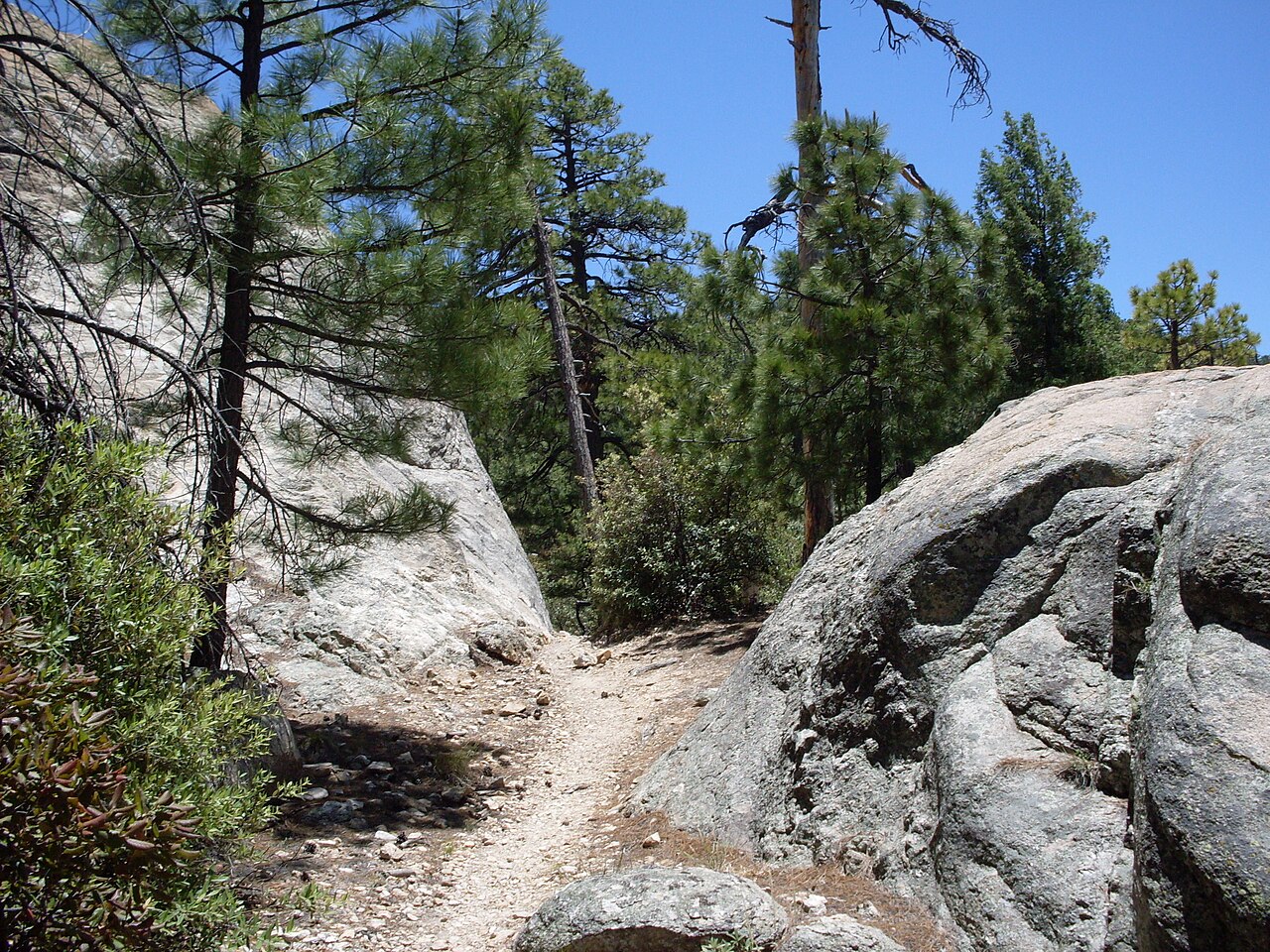
Pinus arizonica, the Arizona Pine, is a tall, long-needled pine of the “Sky Island” mountain ranges of the Southwest, where isolated, forested peaks rise out of the surrounding desert and grassland like islands from a sea. In the United States it grows only in a handful of ranges in extreme southeastern Arizona and the adjoining corner of southwestern New Mexico, where it forms open, park-like forests on cool, moist, north-facing slopes well above the desert floor. South of the border it becomes much more common, ranging widely through the Sierra Madre Occidental of Mexico, but here at the northern edge of its range it is a genuine specialty tree, found nowhere else in the country.
Arizona Pine is closely related to Ponderosa Pine (Pinus ponderosa) and the two often grow side by side, hybridize, and are not always easy to separate in the field — in fact some botanists have treated Arizona Pine as a variety of Ponderosa Pine (P. ponderosa var. arizonica) rather than a full species. The USDA PLANTS database currently lists Pinus arizonica as its own accepted species, and that is the treatment followed here, but gardeners and foresters in the region will still encounter both names in older references and nursery catalogs.
Where it grows, Arizona Pine is a handsome, long-lived forest tree that reaches 70 to 100 feet or more, with the long, drooping needles, furrowed orange-brown bark, and open crown typical of the yellow pine group. It is not a tree for the home garden in most of the country — it needs a cool-summer, high-elevation climate — but within its narrow native range it is an important component of Madrean pine-oak woodland and a valuable tree for habitat restoration on forested properties in the sky islands.
Identification
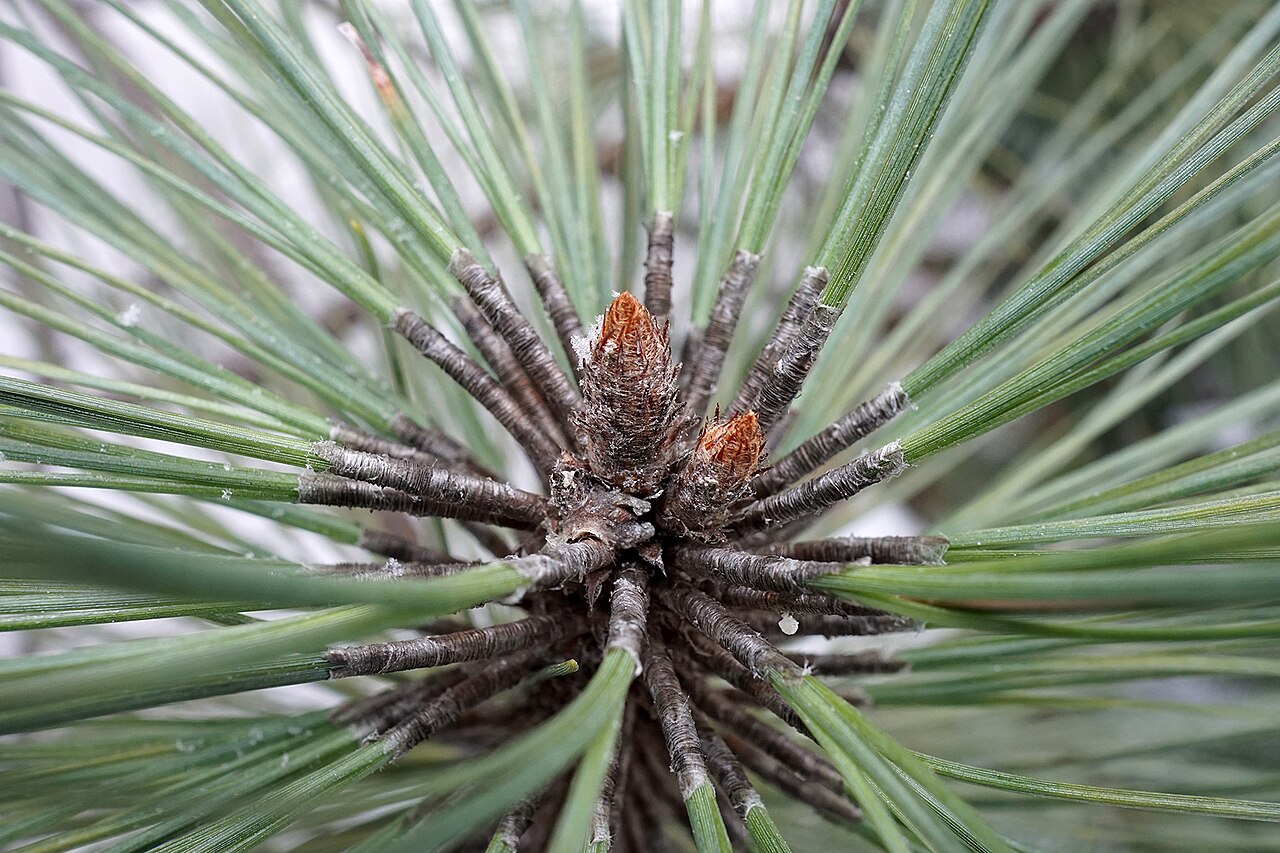
Arizona Pine is a medium to large evergreen conifer, typically growing 70–100 feet (21–30 m) tall with a straight trunk and an open, somewhat irregular crown in older trees. It closely resembles Ponderosa Pine but tends to have slightly longer, more slender needles in bundles of five (occasionally three or four), rather than the bundles of three typical of most Ponderosa Pine in the Southwest.
Bark & Stems
Young trees have dark, nearly black, furrowed bark. As the tree matures, the bark breaks into large, flat, cinnamon- to orange-brown plates separated by black fissures — the same handsome “jigsaw puzzle” bark pattern familiar from Ponderosa Pine, and like that species, the bark plates of a mature Arizona Pine can smell faintly of vanilla or butterscotch on a warm day. Twigs are stout, orange-brown, and roughened by persistent leaf-base scars.
Leaves
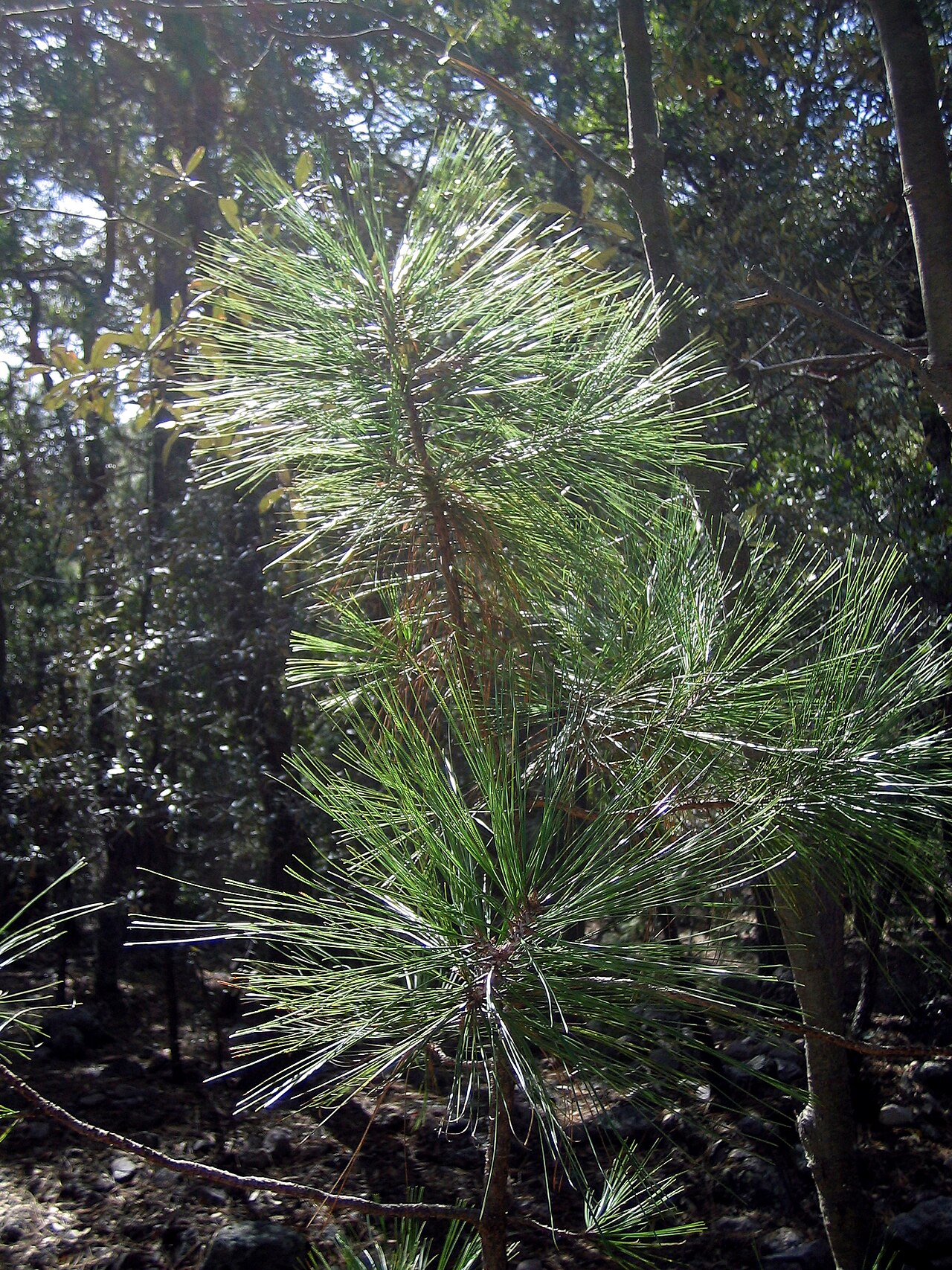
Needles are slender, 5 to 8 inches (12–20 cm) long, and borne mostly in bundles (fascicles) of five, though bundles of three or four also occur on the same tree — a useful field mark that separates it from typical three-needled Ponderosa Pine, though some overlap and hybridization make the distinction imperfect. The needles are a deep blue-green and tend to droop gracefully from the branch tips, giving the crown a soft, feathery look compared with the stiffer needles of many other Southwestern pines.
Flowers & Fruit
Like other pines, Arizona Pine is wind-pollinated, with small yellow male cones releasing pollen in late spring and inconspicuous female cones developing on the same tree. Seed cones are egg-shaped, 2.5 to 4 inches (6–10 cm) long, reddish-brown when mature, with each scale bearing a small outward-pointing prickle. Cones mature over two growing seasons and open to release small winged seeds that are an important food source for Abert’s squirrels and seed-caching birds.
Quick Facts
| Scientific Name | Pinus arizonica |
| Family | Pinaceae (Pine) |
| Plant Type | Evergreen Coniferous Tree |
| Mature Height | 70–100 ft (21–30 m) |
| Mature Spread | 25–35 ft (7.5–10.5 m) |
| Growth Rate | Slow to moderate |
| Sun Exposure | Full Sun |
| Water Needs | Low to Moderate once established |
| Soil Type | Well-drained, rocky or gravelly loam |
| Soil pH | 5.5–7.0 (acidic to neutral) |
| Bloom Time | April – May (pollen cones) |
| Flower Color | Yellow (male cones) |
| Fall Color | None (evergreen) |
| Fruit | Reddish-brown woody seed cones, 2.5–4 in |
| Deer Resistant | Yes (mature bark and foliage) |
| USDA Hardiness Zones | 6–9 |
Native Range
In the United States, Arizona Pine is restricted to a small number of “sky island” mountain ranges in the far southeastern corner of Arizona — the Chiricahua, Huachuca, Dragoon, and Santa Rita Mountains among them — plus one disjunct area in the Peloncillo and Animas Mountains of extreme southwestern New Mexico. It occupies cool, moist upper-elevation slopes, typically between about 6,000 and 8,500 feet, well above the surrounding desert and grassland. South of the international border it is a major forest tree throughout the Sierra Madre Occidental of Chihuahua, Sonora, and neighboring Mexican states, where it is far more widespread than in the U.S.
Because its true native range is so limited and often confused with the much more broadly distributed Ponderosa Pine, some maps and older references overstate its U.S. range. Trees labeled “Arizona Pine” in cultivation or in general plantings farther north or east of the sky islands are not growing within the species’ native range and should be understood as planted rather than wild populations.
Within its sky-island range, Arizona Pine typically grows in mixed-conifer and pine-oak forest, often alongside Ponderosa Pine, Apache Pine, and several evergreen oaks, forming a transition zone between lower-elevation Madrean woodland and higher-elevation mixed-conifer forest. These forests support a distinctive assemblage of wildlife, including species found in the U.S. only in these isolated mountain ranges.
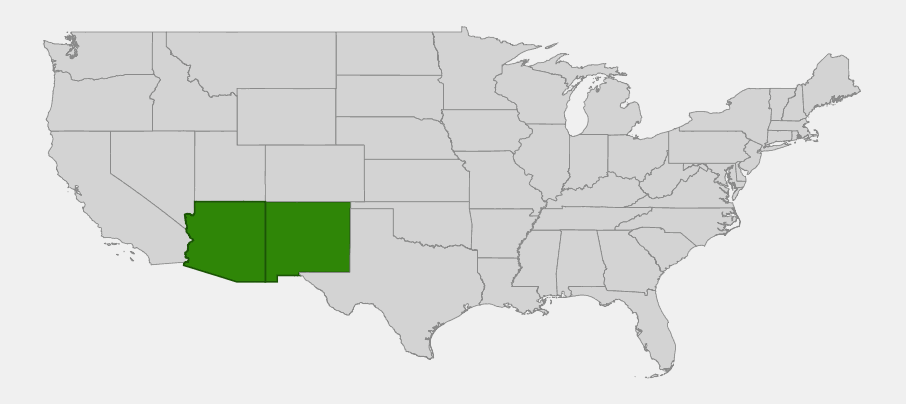
📋 Regional plant lists featuring Arizona Pine: Arizona & New Mexico
Growing & Care Guide
Arizona Pine is not a mainstream nursery tree, but it is occasionally available from native-plant growers serving southeastern Arizona and southwestern New Mexico, and it is a worthwhile choice for large properties within or near its sky-island range that can offer the cool, higher-elevation conditions it needs.
Light
Give Arizona Pine full sun. In its native mountains it grows as a canopy-forming forest tree and needs open exposure to develop properly; young trees tolerate light shade from nurse vegetation but will not thrive long-term in heavy shade.
Soil & Water
This pine is adapted to well-drained, often rocky or gravelly mountain soils with a slightly acidic to neutral pH. It is reasonably drought-tolerant once established, reflecting its origin in a climate with a pronounced dry season, but it benefits from supplemental water during its first several years and during extended summer drought, particularly if planted below its natural elevation range. Good drainage is essential — like most yellow pines, it does poorly in heavy, waterlogged soils.
Planting Tips
Plant container-grown stock in fall or early spring to allow roots to establish before summer heat. Because Arizona Pine’s natural range is restricted to higher elevations, it is best suited to mountain and foothill properties in and near the sky islands rather than low desert gardens, where summer heat and winter warmth outside its adapted range will stress the tree. Give young trees room — allow at least 25 to 30 feet of lateral space for the mature crown.
Pruning & Maintenance
Established trees need very little maintenance. Remove dead, damaged, or crossing branches in late winter. Avoid topping or heavy crown pruning, which can disfigure the tree permanently and invite disease. Watch for the same bark beetles and dwarf mistletoe that affect Ponderosa Pine in the region, especially in drought-stressed trees.
Propagation
Arizona Pine is propagated from seed collected from mature, opened cones. Seeds generally benefit from a period of cold, moist stratification before sowing in spring. Seedlings are slow to establish and should be grown in deep containers that accommodate the long taproot typical of yellow pines before transplanting to the field.
Landscape Uses
Within its adapted range, Arizona Pine works well in:
- Large-scale forest restoration plantings in sky-island pine-oak woodland
- Windbreaks and screens on large rural properties at higher elevation
- Specimen plantings where a tall native conifer is wanted
- Wildlife habitat plantings supporting squirrels and seed-eating birds
- Erosion control on forested mountain slopes
Wildlife & Ecological Value
Arizona Pine is an important structural and food-producing tree in the small patch of sky-island forest it occupies, supporting wildlife that depends on cool, high-elevation habitat otherwise scarce in the surrounding desert landscape.
For Birds
Seed-eating birds such as pine siskins, red crossbills, and Steller’s jays forage on the cones, while the open, mature crown provides nesting and roosting sites for raptors and cavity-nesting species. Mixed-conifer sky-island forest in general is prized habitat for specialty birds such as the elegant trogon and Mexican spotted owl, which rely on exactly this kind of cool, structurally complex forest.
For Mammals
Abert’s squirrels and other tree squirrels feed heavily on the seeds and use the canopy for cover, while black bears and white-tailed deer use sky-island pine-oak forest for food and shelter. The persistent bark plates and furrows provide habitat for insects that in turn feed woodpeckers and other insectivorous wildlife.
For Pollinators
As a wind-pollinated conifer, Arizona Pine does not rely on insect pollinators and offers little direct floral resource, but the pine-oak forest it is part of supports many flowering understory plants that are important to native bees and other pollinators in these isolated mountain ecosystems.
Ecosystem Role
Because its U.S. range is confined to a handful of isolated ranges, Arizona Pine is a defining species of a rare and biologically rich habitat type. Sky-island forests like these function as cool, moist refuges — sometimes called “mountain islands in a desert sea” — that harbor species disjunct from their main ranges in Mexico’s Sierra Madre, making conservation of these forests disproportionately important relative to their small total area.
Cultural & Historical Uses
Arizona Pine has long been part of the forested landscape used by Apache and other Indigenous peoples of the borderlands region, who harvested timber, pitch, and other resources from yellow pines of the sky-island ranges much as they did from Ponderosa Pine, with which Arizona Pine is closely related and was likely not always distinguished.
In the twentieth century, selective logging removed many of the largest trees from accessible stands in the Chiricahua and other ranges, though the rugged, isolated terrain limited large-scale commercial exploitation compared with more accessible Ponderosa Pine forests elsewhere in the Southwest. Today these forests are valued primarily for watershed protection, wildlife habitat, and recreation rather than timber production.
Because Arizona Pine and Ponderosa Pine are so closely related and historically confused, much of what has been written about “Ponderosa Pine” resource use and ecology in the borderlands sky islands applies equally to Arizona Pine, and the species is sometimes still marketed under the Ponderosa Pine name in the timber trade.
Frequently Asked Questions
Is Arizona Pine the same as Ponderosa Pine?
No, though the two are extremely close relatives and some botanists classify Arizona Pine as a variety of Ponderosa Pine (Pinus ponderosa var. arizonica) rather than a separate species. The USDA PLANTS database currently recognizes Pinus arizonica as its own species, distinguished mainly by its typically five-needled fascicles versus the three-needled fascicles of most Southwestern Ponderosa Pine, though the two overlap, hybridize, and can be hard to tell apart in the field.
Where does Arizona Pine grow in the wild?
In the United States, only in a few isolated “sky island” mountain ranges of extreme southeastern Arizona — including the Chiricahua, Huachuca, Dragoon, and Santa Rita Mountains — plus one area in the Peloncillo and Animas Mountains of extreme southwestern New Mexico. It is far more widespread in Mexico’s Sierra Madre Occidental.
Can I grow Arizona Pine outside of southeastern Arizona?
It can be grown in similar cool, higher-elevation climates nearby, but it is not well suited to low desert gardens or to regions with hot, humid summers. Check with a native-plant nursery serving the sky-island region before planting it outside its natural elevation range.
How tall does Arizona Pine get?
Mature trees typically reach 70 to 100 feet, occasionally taller in favorable sites, with a trunk that can exceed 3 feet in diameter in old, undisturbed stands.
Is Arizona Pine endangered?
It is not listed as federally endangered, but because its U.S. range is limited to a small number of isolated mountain ranges, local populations are vulnerable to severe wildfire, drought, and bark beetle outbreaks, all of which have affected sky-island forests in recent decades.

Looking for a nursery that carries Arizona Pine?
Browse our native plant nursery directory: Arizona · New Mexico