Rocky Mountain Bristlecone Pine (Pinus aristata)
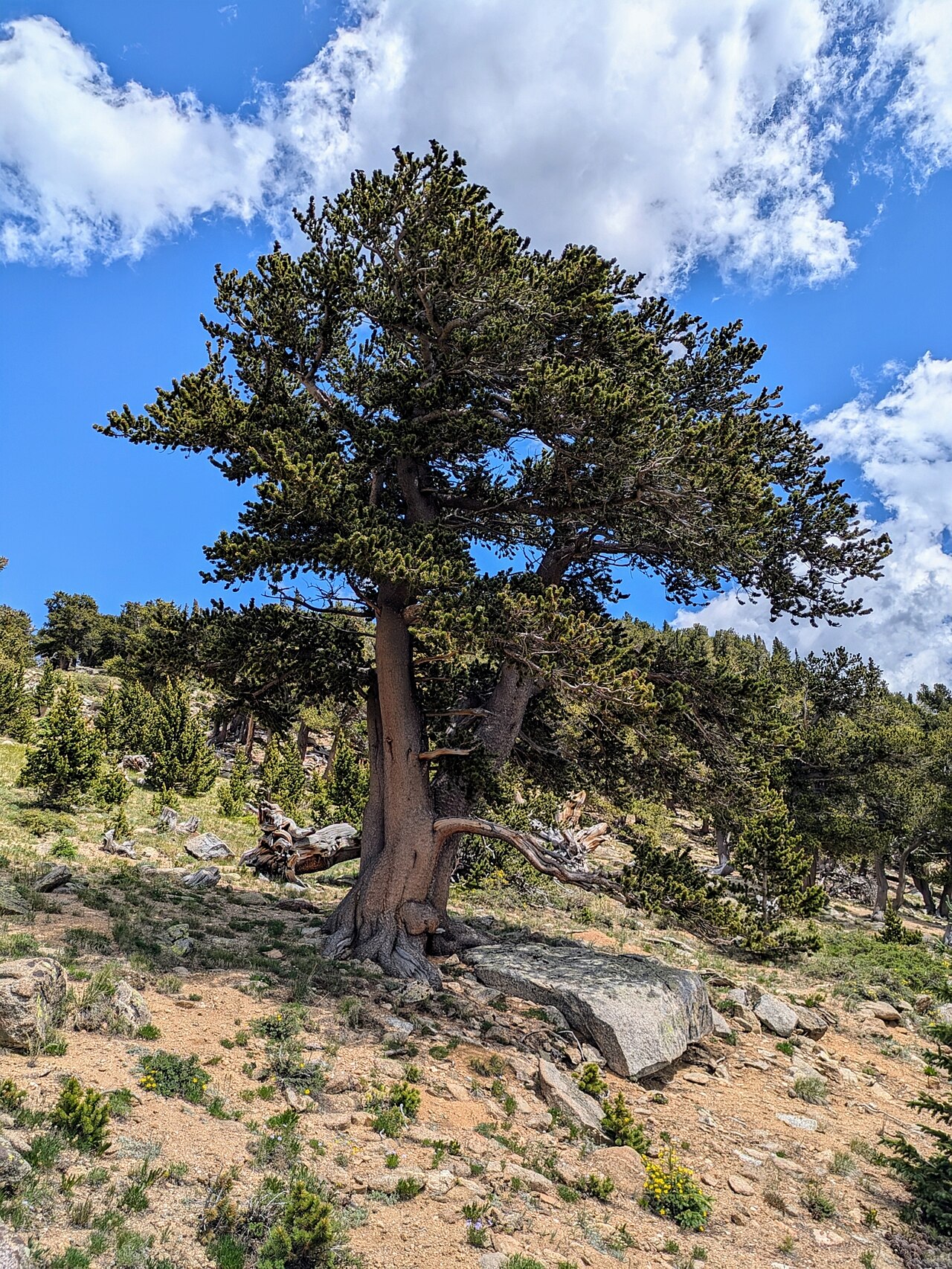
Pinus aristata, known as the Rocky Mountain Bristlecone Pine or Colorado Bristlecone Pine, is one of the longest-lived tree species on Earth, with individuals in its native Rocky Mountain range documented at well over a thousand years old. It is a slow-growing, high-elevation conifer that spends its life at the edge of what trees can tolerate — cold, wind-scoured subalpine slopes and rocky ridgelines near the tree line.
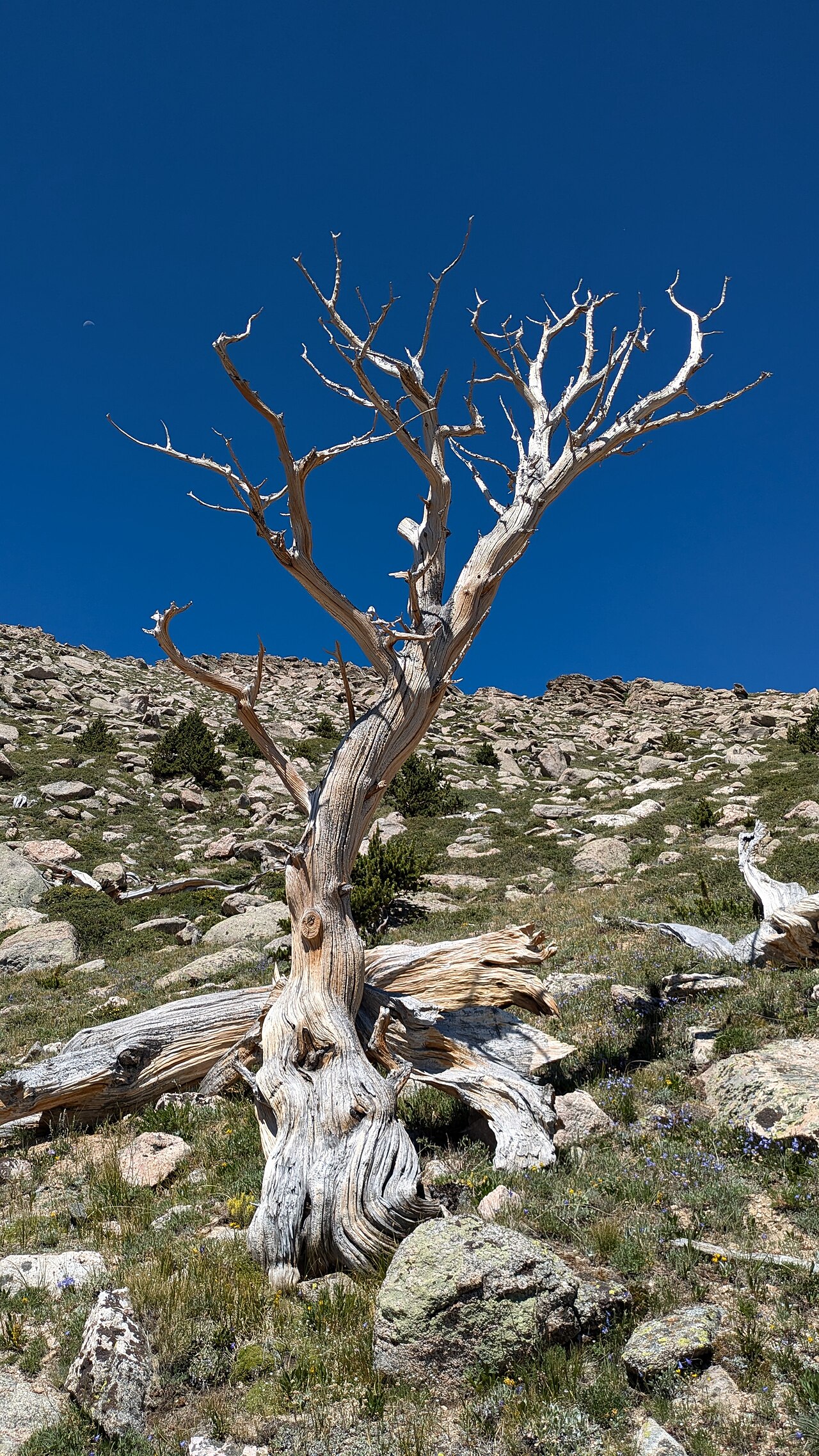
In favorable sites the tree grows as a straight, upright specimen reaching 30 to 50 feet, but closer to timberline it becomes increasingly stunted, twisted, and sculptural, taking on the gnarled, wind-sculpted forms that make bristlecone pines famous. Its short, densely packed needles are flecked with small white resin dots, and its cones bear the distinctive long, curved bristle on each scale that gives the species its common name.
This is not a landscape tree for most gardens — it is extremely slow-growing and adapted to harsh, high-elevation, nutrient-poor conditions — but it is a remarkable and ecologically important native conifer within its narrow Rocky Mountain range, and specimen plantings in appropriate high, dry, sunny sites can be rewarding for patient gardeners.
Identification
Rocky Mountain Bristlecone Pine is identified by its short resin-flecked needles in bundles of five, its distinctively bristled cones, and its characteristically gnarled form at high elevation.
Bark & Stems
Bark on young trees is smooth and whitish-gray, becoming dark red-brown to gray and developing a cracked, scaly texture with age. The trunk tapers noticeably toward the top and, on older trees, is often partially “strip-barked” — alive along only a narrow strip of living tissue while the rest of the trunk is bare, weathered deadwood, a survival strategy that lets ancient individuals persist for centuries.
Leaves
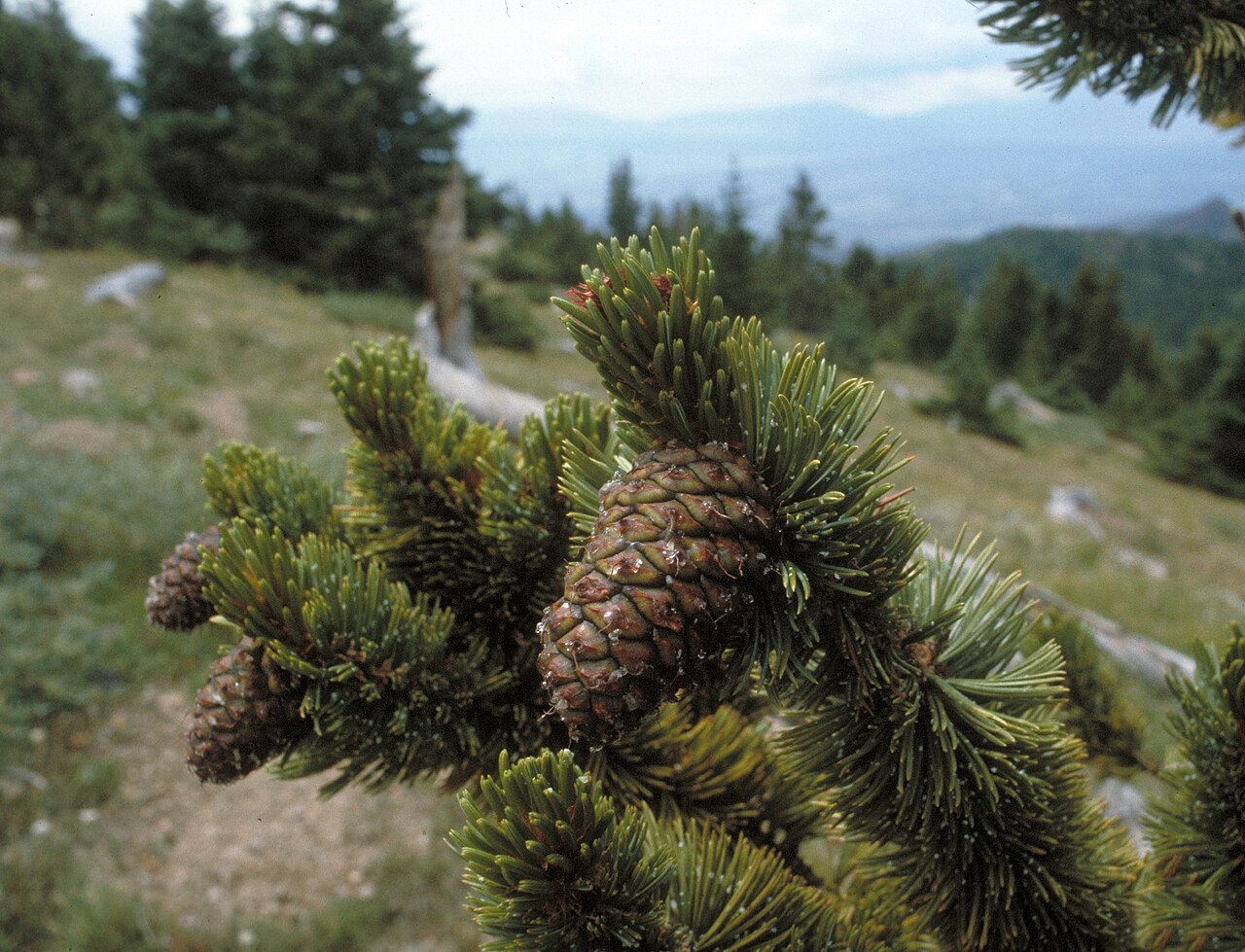
Needles are stiff, dark green, and borne in bundles (fascicles) of five, each needle 1 to 1.5 inches long. They are densely packed along the branches, giving a bottlebrush appearance, and persist on the tree for many years — sometimes 20 to 40 years — far longer than most conifers. A key field mark is the scattering of small white resin flecks (dried sap droplets) across the needle surfaces.
Flowers & Cones
Like all pines, Rocky Mountain Bristlecone Pine produces small, inconspicuous pollen cones in spring and separate seed cones that take two years to mature. The mature seed cones are egg-shaped, 2.5 to 4 inches long, dark purple-brown, and armed with a thin, incurved bristle up to ¼ inch long projecting from each scale — the namesake feature that distinguishes it at a glance from other high-elevation pines.
Form
Young, vigorous trees in sheltered sites grow with evenly spaced whorls of branches and a fairly symmetrical crown. Closer to timberline, constant wind and brutal winters sculpt the same species into low, twisted, multi-stemmed krummholz forms only a few feet tall, illustrating the tree’s remarkable plasticity in the harshest parts of its range.
Quick Facts
| Scientific Name | Pinus aristata |
| Family | Pinaceae (Pine) |
| Plant Type | Evergreen Conifer |
| Mature Height | 15–50 ft (stunted to a few feet near timberline) |
| Mature Spread | 15–25 ft |
| Growth Rate | Very Slow |
| Sun Exposure | Full Sun |
| Water Needs | Low |
| Soil Type | Rocky, lean, well-drained; tolerates poor soil |
| Soil pH | 6.0–7.5 (neutral to slightly alkaline) |
| Bloom Time | June (pollen cones) |
| Flower Color | Not applicable (conifer; purple-red pollen cones) |
| Fall Color | Evergreen |
| Fruit | Bristled seed cones, 2.5–4 in, maturing over two years |
| Deer Resistant | Yes |
| USDA Hardiness Zones | 3–7 |
Native Range
Rocky Mountain Bristlecone Pine is native to the southern and central Rocky Mountains, found in Colorado and northern New Mexico, with an isolated population in the San Francisco Peaks of northern Arizona. It is a true high-mountain species, occurring from about 7,000 to over 13,000 feet in elevation, most often near or above timberline.
This species should not be confused with the related Great Basin Bristlecone Pine (Pinus longaeva) of California, Nevada, and Utah, which holds the record for the oldest known trees on Earth. Rocky Mountain Bristlecone Pine is a distinct species found only in its Colorado–New Mexico–Arizona range.
Within its native range, it grows in cold, dry subalpine conditions on exposed ridges, rocky slopes, and windswept high-elevation sites, often forming the uppermost fringe of forest before the alpine tundra begins. It also occurs in more extensive closed-canopy stands at somewhat lower elevations within its subalpine zone.
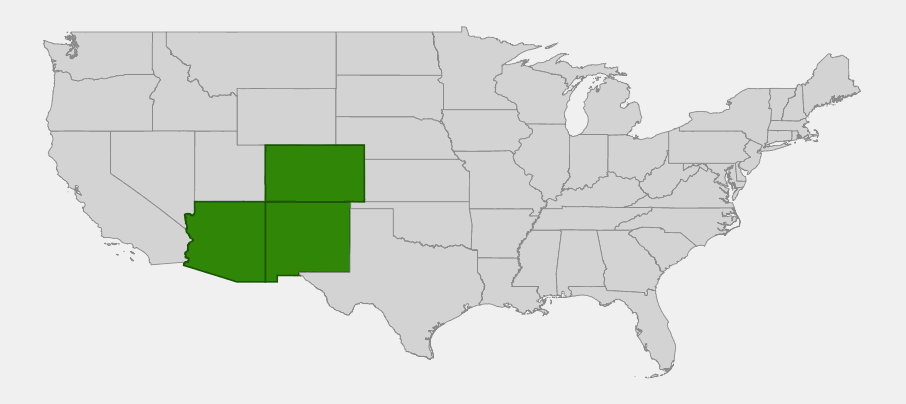
📋 Regional plant lists featuring Rocky Mountain Bristlecone Pine: Utah & Western Colorado · Nebraska, Kansas & Eastern Colorado · Arizona & New Mexico
Growing & Care Guide
Rocky Mountain Bristlecone Pine is a specialty tree for high, dry, sunny gardens that can mimic its harsh native habitat. It is not suited to humid, low-elevation, or heavily irrigated landscapes.
Light
It requires full sun. In its native habitat it grows in some of the most exposed, sun-drenched, wind-battered sites in the Rockies, and it will not thrive or hold its characteristic dense form in shade.
Soil & Water
Plant it in lean, rocky, extremely well-drained soil. This species is adapted to nutrient-poor, often alkaline mountain soils and performs poorly in rich, heavily amended, or poorly drained garden beds. Water needs are low once established; overwatering or humid, poorly drained sites are far more likely to kill this tree than drought.
Planting Tips
Choose a site with excellent drainage, full sun, and — if possible — some elevation or air movement similar to its native mountain habitat. Gardeners at low elevation or in humid climates generally have poor success; this tree does best at higher elevations and in dry western climates similar to its native range. Expect extremely slow growth, often just a few inches a year.
Pruning & Maintenance
Little to no pruning is needed. Remove only dead or damaged branches as necessary. The tree’s naturally irregular, windswept character is part of its appeal and should not be pruned into a formal shape.
Propagation
Propagation is by seed, which benefits from a period of cold stratification over winter to break dormancy. Germination and early growth are slow, and seedlings require several years of careful cultivation before they resemble a young, nursery-ready tree.
Landscape Uses
Because of its slow growth and specific needs, Rocky Mountain Bristlecone Pine works best as a specimen or focal planting rather than a mass planting:
- Rock gardens and xeric high-elevation landscapes
- Specimen plantings where its sculptural, long-lived form can be appreciated over decades
- High-elevation native restoration within its natural range
- Alpine-themed gardens paired with other subalpine conifers
Wildlife & Ecological Value
Rocky Mountain Bristlecone Pine plays an outsized ecological role for a tree of such harsh, sparse habitat, anchoring some of the highest forest communities in the Rockies.
For Birds
High-elevation birds such as Clark’s Nutcracker and various nuthatches use bristlecone stands for foraging and shelter, and the dense, long-persisting needle cover offers rare wind protection at exposed treeline sites.
For Mammals
Squirrels and other small mammals feed on the seeds within the cones, and the sheltered microhabitats created by gnarled, low-growing trees near timberline provide windbreak and cover for various high-elevation wildlife.
For Pollinators
As a wind-pollinated conifer, bristlecone pine does not rely on insect pollinators, though its bark and foliage support specialized high-elevation insect communities adapted to subalpine conifers.
Ecosystem Role
As one of the hardiest trees able to survive at extreme elevation and age, Rocky Mountain Bristlecone Pine helps define the upper limit of forest in its range, stabilizing thin rocky soils on exposed slopes and providing some of the only tree cover available at the harshest, highest sites where few other species can persist.
Cultural & Historical Uses
Rocky Mountain Bristlecone Pine has limited documented use by Indigenous peoples compared to lower-elevation pines, likely reflecting its remote, high-elevation habitat far from most settlement and travel routes. Some regional accounts describe limited use of pine pitch and wood by peoples traveling through the high country, though detailed ethnobotanical records specific to this species are scarce.
The tree’s modern cultural significance comes largely from its extraordinary longevity. Since the mid-20th century, dendrochronologists (tree-ring scientists) have used bristlecone pines, including this species and its relative the Great Basin Bristlecone Pine, to build some of the longest continuous tree-ring records on Earth, contributing significantly to climate science and to the calibration of radiocarbon dating.
Today the species draws hikers and photographers to high-elevation sites such as Mount Goliath and the Mount Blue Sky area in Colorado, where ancient, wind-sculpted individuals are popular subjects for their dramatic, weathered forms.
Frequently Asked Questions
How old can Rocky Mountain Bristlecone Pine get?
Individuals in its native Colorado and New Mexico range have been documented at well over 1,000 years old, and some specimens are thought to approach 2,000 years. It is not quite as long-lived as its close relative, the Great Basin Bristlecone Pine of the Great Basin region, which holds the record for the oldest known non-clonal trees on Earth.
Is Rocky Mountain Bristlecone Pine the same as the famous “oldest tree” bristlecone pine?
No. The record-holding ancient bristlecone pines (including the tree nicknamed “Methuselah”) are Pinus longaeva, the Great Basin Bristlecone Pine, found in California, Nevada, and Utah. Pinus aristata is a separate, equally long-lived species native only to Colorado, New Mexico, and a small part of Arizona.
Can I grow Rocky Mountain Bristlecone Pine outside the mountains?
It is difficult. This species is adapted to cold, dry, high-elevation conditions with excellent drainage and intense sun. It generally performs poorly in humid, low-elevation, or heavily irrigated gardens, and does best in dry, high-altitude western climates similar to its native range.
Why do bristlecone pines look so twisted and gnarled?
Near timberline, extreme wind, cold, and ice abrasion kill portions of the tree’s bark and cambium over time, leaving only narrow strips of living tissue connecting roots to foliage — a survival adaptation called strip-barking. This process, repeated over centuries, produces the dramatic twisted, partly bare trunks the species is known for.
What do the bristles on the cones look like?
Each cone scale bears a thin, slightly incurved bristle up to about ¼ inch long, giving the cone a bristly, prickly appearance when fresh. This feature is the origin of the common name “bristlecone pine” and is a reliable way to distinguish it from other high-elevation pines in its range.

Looking for a nursery that carries Rocky Mountain Bristlecone Pine?
Browse our native plant nursery directory: Colorado · Arizona · New Mexico