Arizona Oak (Quercus arizonica)
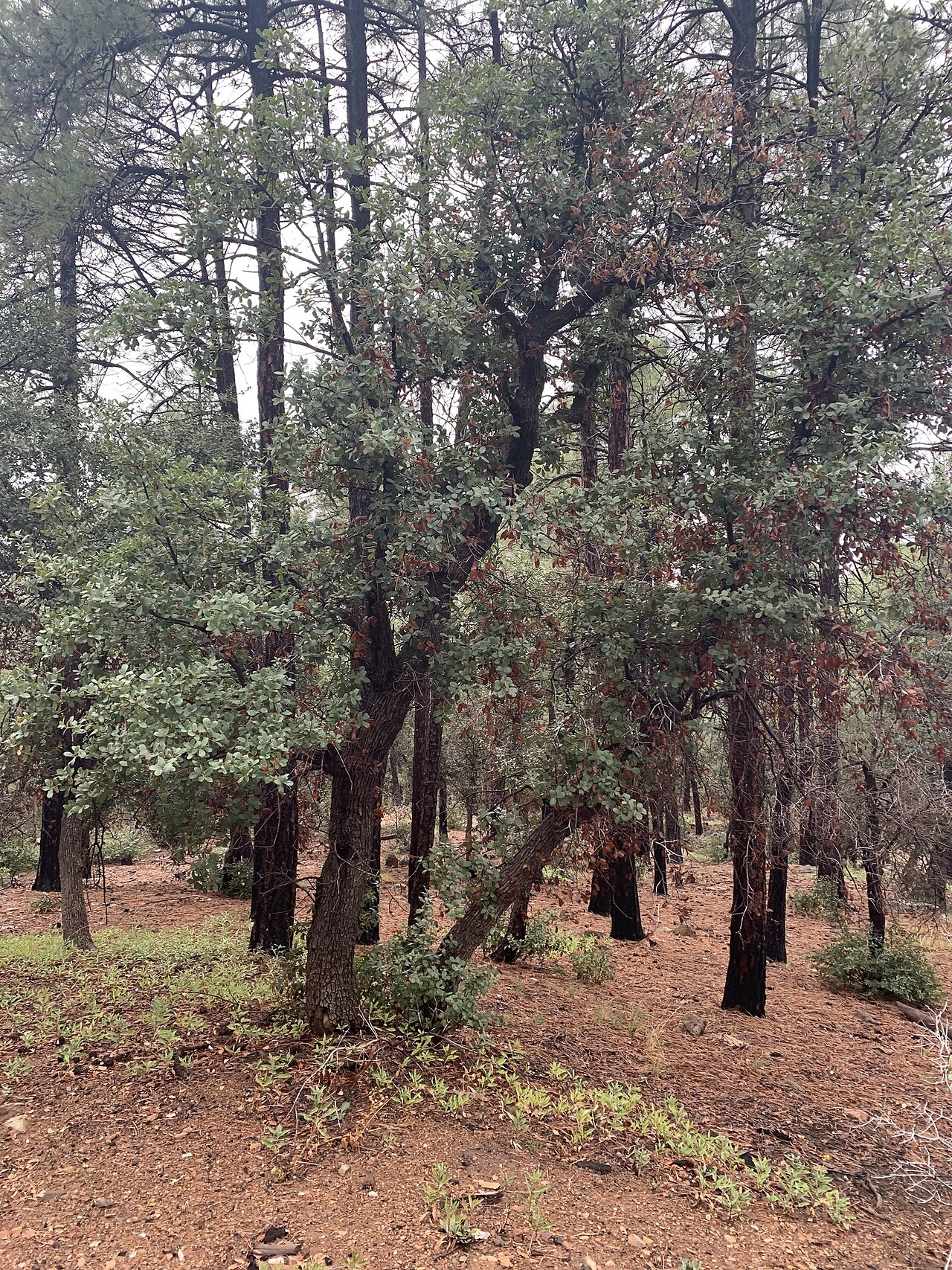
Quercus arizonica, the Arizona Oak (also called Arizona White Oak), is a tough, evergreen oak of the mountain foothills and canyons of the Southwest borderlands. Belonging to the white oak group within Fagaceae, it is one of the dominant trees of the “sky island” woodlands that rise out of the Sonoran and Chihuahuan desert basins of southeastern Arizona, southwestern New Mexico, and the Trans-Pecos region of Texas, as well as northern Mexico.
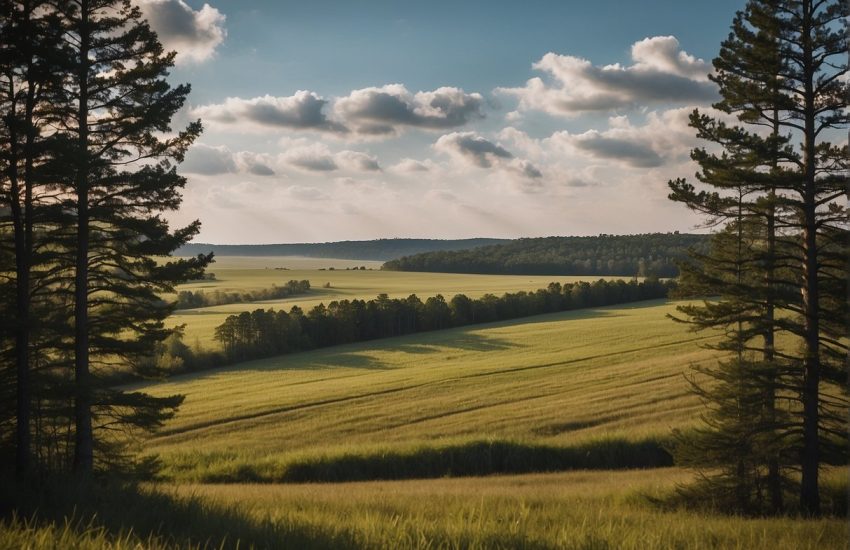
Arizona Oak typically grows 20 to 60 feet tall, with a broad, rounded crown of leathery, pale blue-green to gray-green evergreen leaves and thick, deeply furrowed, pale gray bark reminiscent of its eastern relative, White Oak. In the oak-grassland and oak-pine woodlands it dominates, it forms an open, park-like canopy that shades a rich understory of native grasses — classic high-elevation desert grassland scenery found nowhere else in the United States outside the borderlands region.
Well adapted to rocky soils, seasonal drought, and the dramatic summer monsoon pulses characteristic of its range, Arizona Oak is an excellent, low-water choice for naturalistic landscaping in Arizona and New Mexico gardens that can accommodate its eventual size. It asks for patience — like most oaks it grows slowly — but rewards with a long-lived, drought-tough shade tree perfectly suited to the look and ecology of the region.
Identification
Arizona Oak is best identified by its leathery, pale gray-green evergreen leaves with mostly smooth or lightly wavy margins, its thick pale gray bark, and its preference for rocky canyon and foothill woodlands between about 4,000 and 7,000 feet elevation. It is often confused with the related Gray Oak (Quercus grisea), but Arizona Oak’s leaves are generally larger, flatter, and less consistently gray-felted beneath.
Bark
The bark is thick, pale gray to light gray-brown, and deeply furrowed into rough, checkered plates — closely resembling the bark of the eastern White Oak (Quercus alba), to which it is related. This thick, fire-resistant bark helps mature trees survive the low-intensity fires characteristic of its oak-grassland habitat.
Leaves
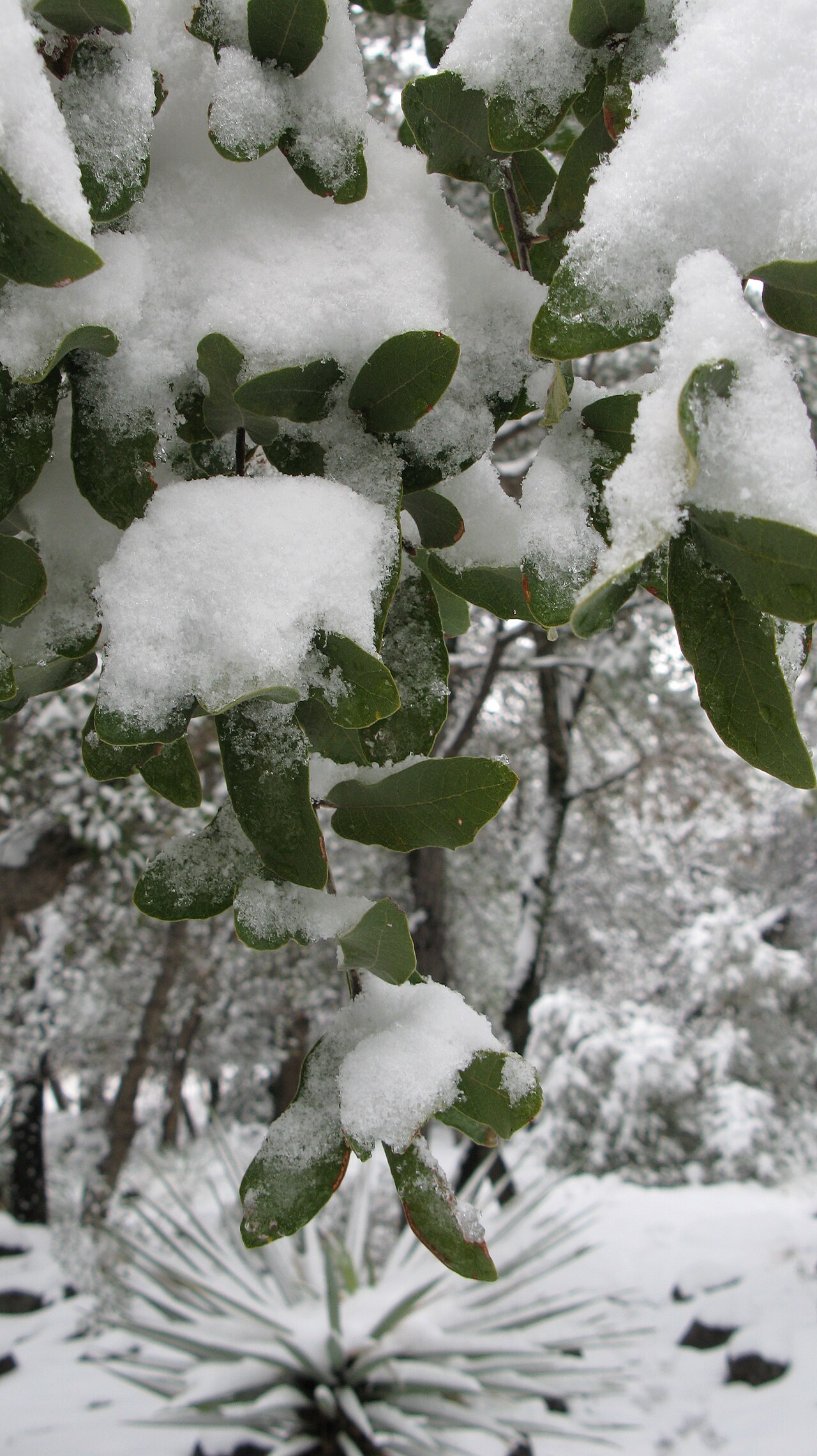
Leaves are evergreen (persisting one to two years before shedding), leathery, and oblong to elliptic, typically 1½ to 4 inches long. The margins are mostly smooth to slightly wavy-toothed, a key difference from the spiny-leaved live oaks of California and the Gulf Coast. The upper surface is a dull blue-green to gray-green, while the underside is paler and often finely hairy. Mature trees usually drop their old leaves in spring just as new growth emerges, so the canopy is never fully bare.
Flowers
Arizona Oak is wind-pollinated, flowering in spring (April to May) as new leaves emerge. Male flowers hang in slender yellow-green catkins 2 to 4 inches long; female flowers are small and inconspicuous, borne singly or in short spikes in the axils of new leaves.
Fruit & Seeds
Acorns are oval to oblong, ¾ to 1¼ inches long, maturing in a single season and seated in a shallow, scaly cup covering about a quarter to a third of the nut. Like other white oaks, the acorns are lower in bitter tannins than red oak acorns and are an important, relatively palatable food source for the wildlife of the borderlands sky islands.
Quick Facts
| Scientific Name | Quercus arizonica |
| Family | Fagaceae (Beech/Oak) |
| Plant Type | Evergreen Tree |
| Mature Height | 20–60 ft |
| Mature Spread | 25–50 ft |
| Growth Rate | Slow |
| Sun Exposure | Full Sun |
| Water Needs | Low (drought tolerant once established) |
| Soil Type | Rocky, well-drained; tolerates poor, shallow soils |
| Soil pH | 6.5–8.0 (neutral to alkaline) |
| Bloom Time | April – May (inconspicuous) |
| Flower Color | Yellow-green catkins |
| Fall Color | Evergreen (no fall color change) |
| Fruit | Oval acorns, ¾–1¼ in, maturing in one season |
| Deer Resistant | Moderate (mature trees tolerate browsing) |
| USDA Hardiness Zones | 7–9 |
Native Range
Arizona Oak is native to the mountain foothills and canyons of the Southwest borderlands: southeastern Arizona, southwestern New Mexico, and the far western Trans-Pecos region of Texas, extending south into the Sierra Madre Occidental of northern Mexico. Within the United States, this means populations concentrated in Arizona’s sky-island ranges — the Chiricahua, Santa Rita, Huachuca, and Pinaleño mountains among them — the adjacent borderlands of southwestern New Mexico, and isolated mountain ranges of far West Texas such as the Davis and Chisos Mountains.
Arizona Oak occupies a characteristic middle-elevation band, typically from about 4,000 to 7,000 feet, where it forms open oak woodlands and oak-grasslands, often transitioning upslope into oak-pine and pine-oak forest and downslope into desert grassland or Sonoran desert scrub. It is frequently the dominant or co-dominant tree of these woodlands, forming the backbone of the distinctive “encinal” (oak woodland) vegetation type of the borderlands sky islands.
Because its range in the U.S. is limited to a relatively small, specific belt of mountain ranges along the Arizona-New Mexico-Texas borderlands, Arizona Oak is not found as a native tree anywhere else in the country — it does not occur, for example, in California, the Rocky Mountains proper, or the Great Plains. Its range within Texas is confined to isolated Trans-Pecos mountain ranges rather than the state as a whole.
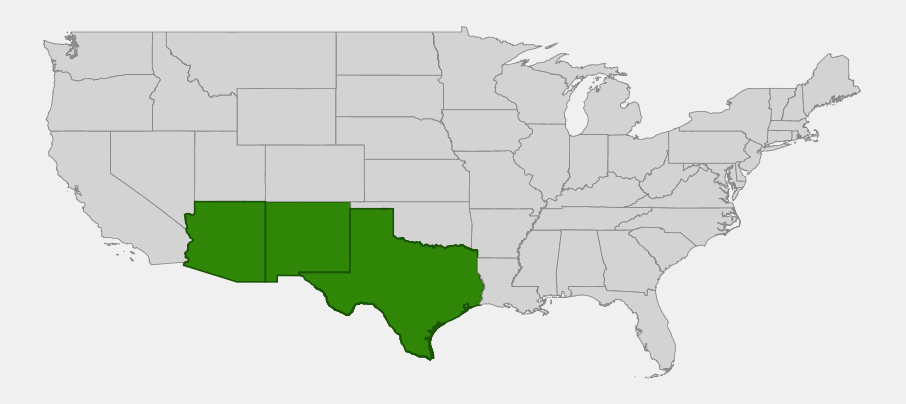
📋 Regional plant lists featuring Arizona Oak: Arizona & New Mexico
Growing & Care Guide
Arizona Oak is a slow but trouble-free grower that thrives on neglect once its roots are established, making it a long-term, low-water investment for gardens in its native range.
Light
Plant in full sun, which matches the open, park-like woodlands where it grows naturally. Young trees tolerate light shade but develop a denser, sturdier form in full sun.
Soil & Water
Arizona Oak is adapted to rocky, shallow, well-drained, neutral-to-alkaline soils and is notably drought tolerant once established, relying on the region’s biseasonal rainfall pattern of winter rain and summer monsoon storms. It does not tolerate heavy, poorly drained clay or regular summer irrigation near the trunk, which can promote root disease. Deep, infrequent watering during the establishment period (the first two to three years) encourages a resilient root system; mature trees need little to no supplemental water in most years.
Planting Tips
Plant young container-grown trees in fall or early spring. Choose smaller nursery stock over large specimens — young oaks with intact taproots establish and ultimately outperform larger, more root-bound trees. Site the tree with its eventual 25- to 50-foot spread in mind, and keep summer irrigation and heavy mulch away from the immediate root crown.
Pruning & Maintenance
Prune only to remove dead or damaged wood; mature Arizona Oaks need very little structural correction and recover slowly from heavy cuts. Because the species is adapted to periodic low-intensity fire in its native oak-grassland habitat, mature trees are relatively fire-tolerant, but young trees should be protected from fire and mechanical damage while establishing their thick bark.
Landscape Uses
Arizona Oak fits naturally into a range of Southwest landscape styles:
- Low-water shade tree for xeriscape and native gardens
- Oak woodland and grassland restoration plantings
- Wildlife habitat supporting birds and mammals of the borderlands
- Naturalistic foothill and canyon landscaping
- Erosion control on rocky slopes
Wildlife & Ecological Value
As the dominant tree of the borderlands sky-island oak woodlands, Arizona Oak anchors one of the most biologically rich habitat types in the American Southwest.
For Pollinators
Though wind-pollinated rather than insect-pollinated, Arizona Oak supports a wide range of native insects whose larvae feed on its foliage, forming a critical link in the food web that supports the insect-eating birds of the oak woodlands.
For Birds
Acorn Woodpeckers depend heavily on Arizona Oak and its relatives for both nest cavities and stored acorns, while Mexican Jays, Wild Turkeys, and numerous migratory songbirds — including many species found nowhere else in the U.S. outside these sky-island ranges — forage in its canopy and feed on its acorns.
For Mammals
White-tailed deer (notably the Coues’ subspecies of the Southwest) browse foliage and feed on acorns, as do javelina, black bears, and numerous rodent species, which in turn support the region’s diverse predator community, including Coatimundi in some areas.
Ecosystem Role
Arizona Oak woodlands form the structural backbone of the sky-island ecosystem, moderating temperature and moisture for an understory of native grasses and supporting one of the highest levels of biodiversity found anywhere in the continental United States — a product of these isolated mountain ranges acting as cool, moist “islands” surrounded by a “sea” of desert.
Cultural & Historical Uses
Indigenous peoples of the borderlands region, including Apache and other Southwestern groups, historically gathered acorns from Arizona Oak and related oak species as a food source, grinding them into meal after leaching out bitter tannins — a practice less labor-intensive than for red oak acorns, since white oak acorns like those of Arizona Oak are naturally lower in tannin content.
The dense, hard wood has been used locally for fuelwood and fence posts by ranching communities throughout its range, and mature oak groves have long provided essential shade and grazing shelter for livestock in the open oak-grassland country of southeastern Arizona and southwestern New Mexico.
Today, Arizona Oak woodlands are valued both for their ranching heritage and for their outsized ecological and recreational importance, drawing birders and naturalists from around the world to sky-island destinations such as the Chiricahua and Huachuca Mountains to see the unique mix of wildlife these oak woodlands support.
Frequently Asked Questions
Is Arizona Oak the same as Arizona White Oak?
Yes — “Arizona Oak” and “Arizona White Oak” are both common names for Quercus arizonica, a member of the white oak group.
How fast does Arizona Oak grow?
It is a slow-growing tree, like most oaks, often taking many years to reach significant size. Patience is part of growing this species, but it rewards with a long-lived, resilient tree well suited to its native climate.
Can Arizona Oak be grown outside of Arizona and New Mexico?
It can be grown in similar hot, dry, alkaline-soil climates within its USDA hardiness range (zones 7–9), but it is best suited to landscapes that can replicate its native rocky, well-drained, low-summer-water conditions. It is not a good fit for humid or consistently wet-summer climates.
Are Arizona Oak acorns edible?
Yes, after processing. Like other white oak acorns, they are relatively low in bitter tannins and were traditionally ground into meal after leaching with water. Raw, unprocessed acorns are not palatable and should not be eaten directly.
Does Arizona Oak need regular watering once established?
No. Mature, established trees are drought tolerant and typically rely on natural winter rain and summer monsoon moisture. Regular supplemental summer irrigation, especially near the trunk, can promote root disease rather than help the tree.

Looking for a nursery that carries Arizona Oak?
Browse our native plant nursery directory: Arizona · New Mexico · Texas