Texas Paintbrush (Castilleja indivisa)
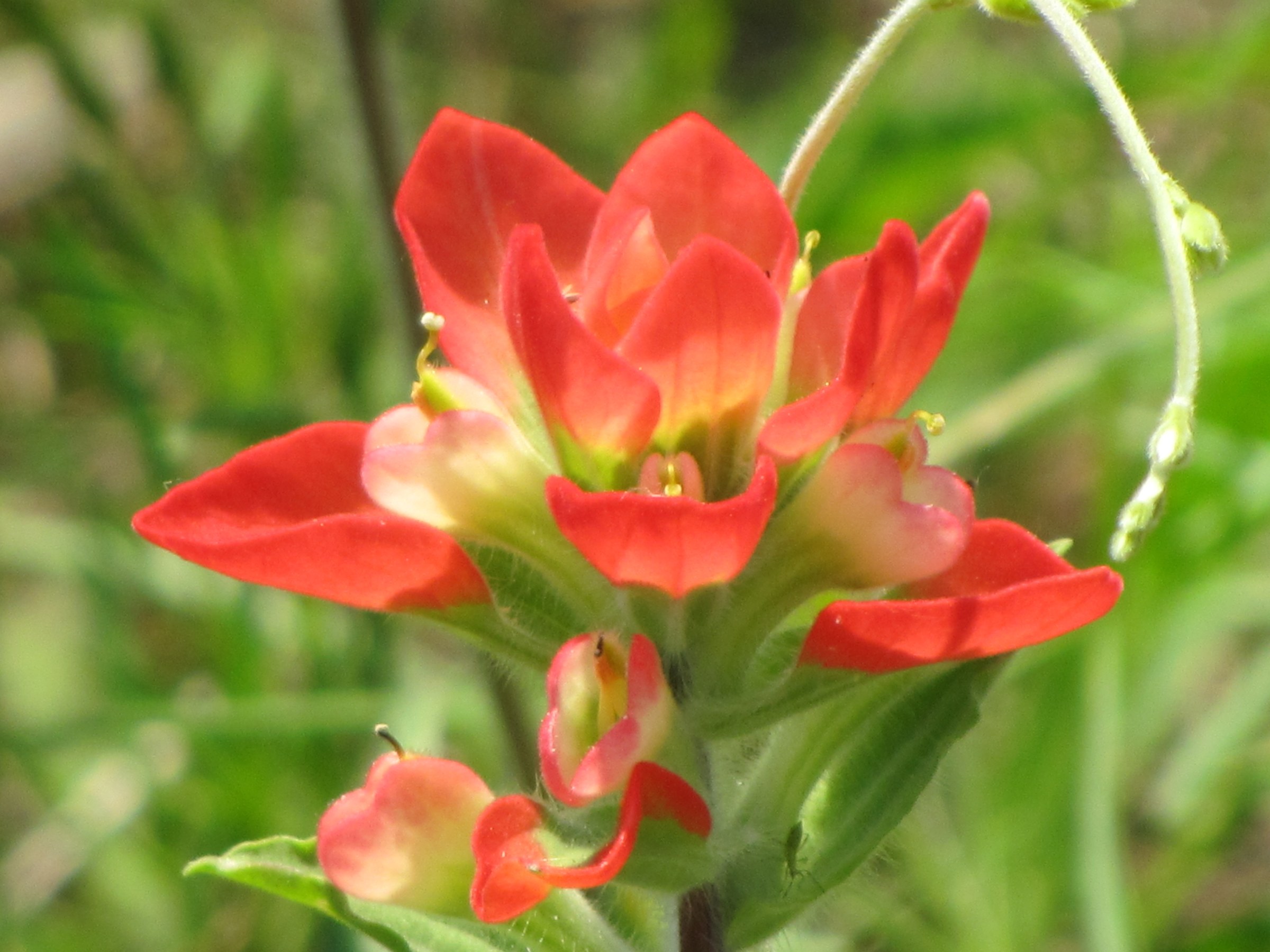
Castilleja indivisa, commonly known as Texas paintbrush or entireleaf Indian paintbrush, is the wildflower most responsible for the streaks of brilliant orange-red that light up Texas roadsides and pastures each spring alongside the state’s famous bluebonnets. It belongs to the broomrape family (Orobanchaceae) as a hemiparasite — a plant that photosynthesizes on its own but also taps into the roots of neighboring grasses and forbs for extra water and nutrients, which helps explain why it is notoriously difficult to establish away from a suitable host community.
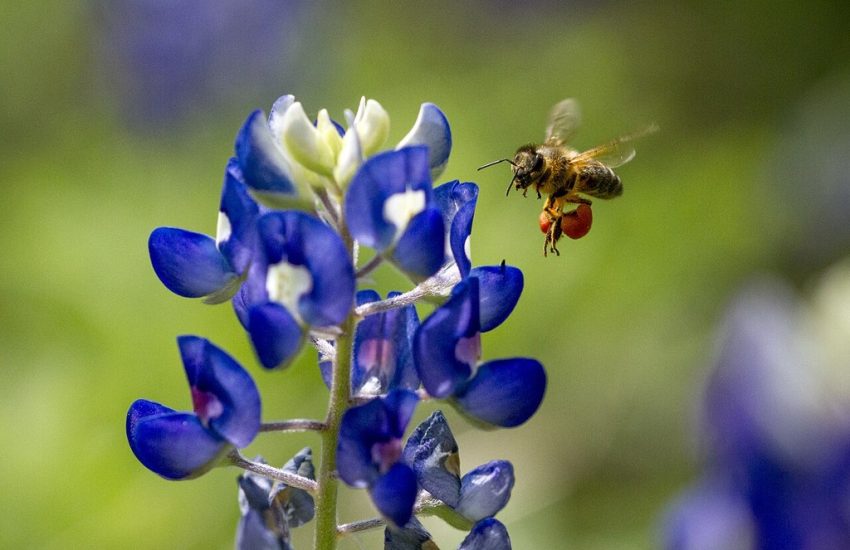
Texas paintbrush is a low-growing annual wildflower, typically 6 to 16 inches tall, with the true flowers hidden inside showy, brightly colored bracts rather than true petals providing the display. The color show usually runs from March into May, often overlapping almost perfectly with the peak bloom of Texas bluebonnet (Lupinus texensis), and the orange-and-blue combination along Hill Country roadsides each spring is one of the most photographed wildflower pairings in the state.
Because it depends on living host plant roots to complete its life cycle, Texas paintbrush is best enjoyed and encouraged within an existing native grassland or wildflower meadow rather than planted as an isolated specimen. It reseeds readily where conditions are right, making it a classic component of Texas roadside and prairie wildflower plantings rather than a conventional garden perennial.
Identification
Texas paintbrush is a low, upright annual, usually unbranched or sparingly branched, growing 6 to 16 inches tall from a slender taproot that connects, via specialized root structures called haustoria, to the roots of neighboring plants.
Stems
Stems are slender, upright, and typically covered in fine, soft hairs, usually unbranched below the flowering portion though older or more vigorous plants may branch somewhat near the base. The overall growth habit is an erect, slightly clumping rosette of stems rather than a sprawling or mat-forming plant.
Leaves
Leaves are simple, alternate, narrow, and mostly untoothed (entire), 1 to 3 inches long, linear to lance-shaped, and covered in fine hairs that give the foliage a slightly grayish-green, soft texture. The species name indivisa and one of its common names, “entireleaf” paintbrush, both refer to these undivided, unlobed leaves, which distinguish it from several related paintbrush species with deeply cut or toothed foliage.
Flowers
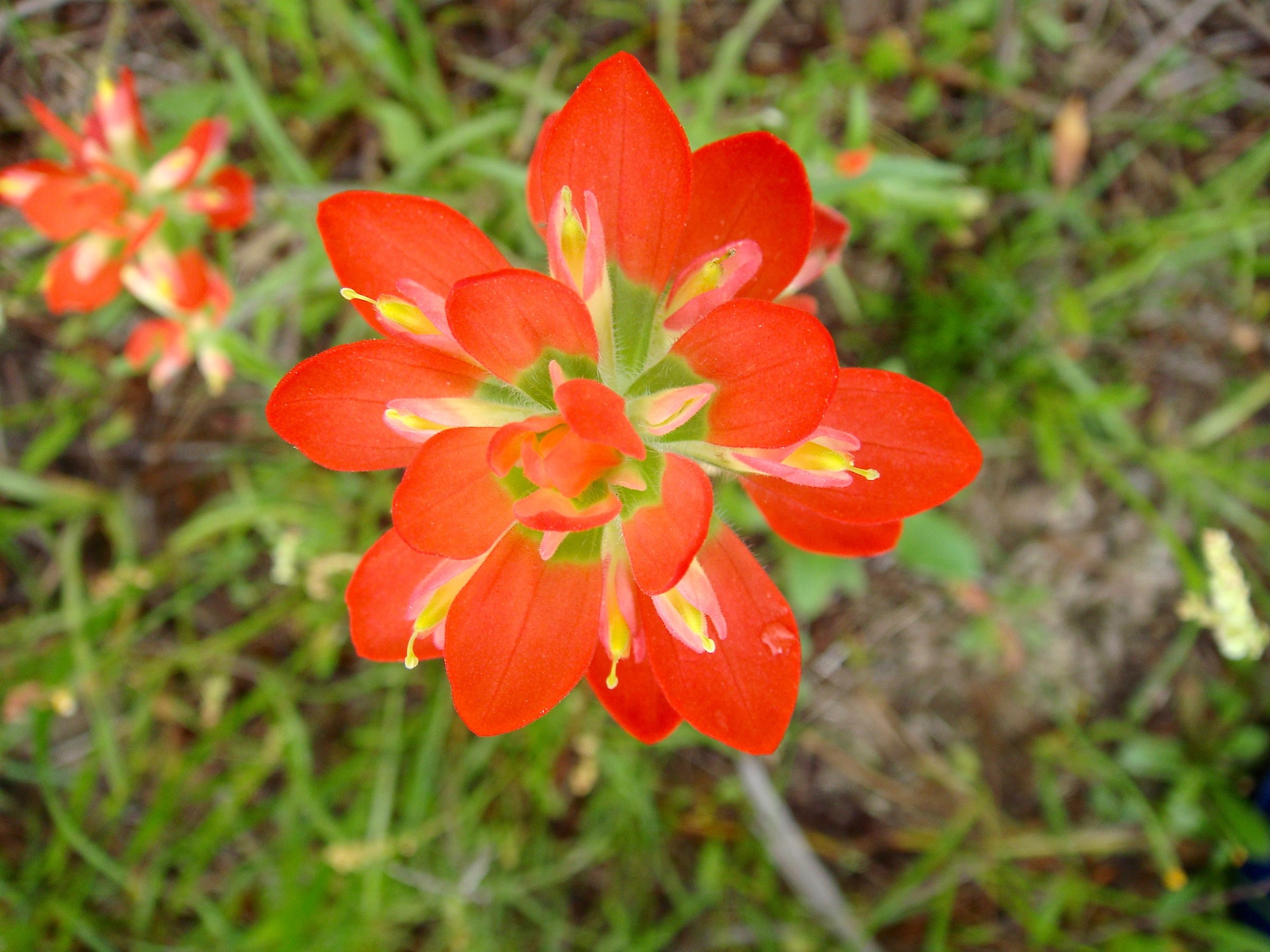
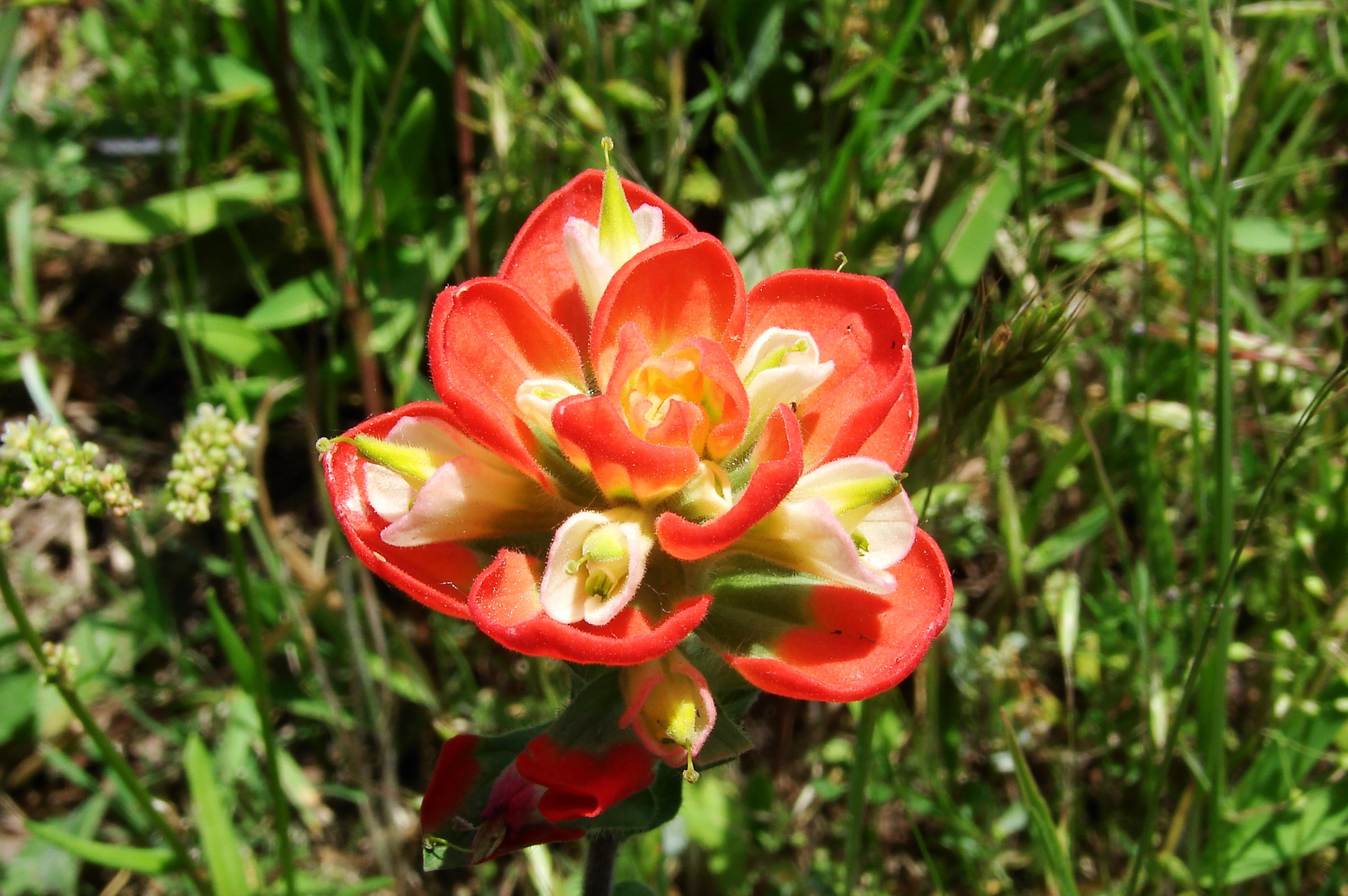
What appears to be the “flower” of Texas paintbrush is mostly a cluster of showy, brilliant orange-red (occasionally yellow) bracts surrounding the true flowers, which are small, tubular, greenish-yellow structures largely hidden within the colorful bracts. This bract-dominated display, shared by all paintbrush species, is a classic identification feature of the genus Castilleja. Blooming runs from March through May across most of its range.
Fruit & Seeds
Fruit is a small, dry capsule that splits open to release numerous tiny seeds. As an annual, Texas paintbrush completes its entire life cycle — germination, growth, flowering, and seed set — within a single growing season, typically germinating with fall or winter rains and flowering the following spring before setting seed and dying back as summer heat arrives.
Quick Facts
| Scientific Name | Castilleja indivisa |
| Family | Orobanchaceae (Broomrape) |
| Plant Type | Annual hemiparasitic wildflower |
| Mature Height | 6–16 in |
| Mature Spread | 6–12 in |
| Growth Rate | Fast (annual life cycle) |
| Sun Exposure | Full Sun |
| Water Needs | Low to moderate; relies on winter/spring rainfall |
| Soil Type | Sandy to silty soils in prairies and open woodlands |
| Soil pH | 6.0–7.5 |
| Bloom Time | March – May |
| Flower Color | Orange-red (occasionally yellow); bracts, not true petals |
| Fall Color | Not applicable (annual, dies back by summer) |
| Fruit | Small dry capsule with numerous tiny seeds |
| Deer Resistant | Fair (occasionally browsed) |
| USDA Hardiness Zones | 7–9 (grown as a self-seeding annual) |
Native Range
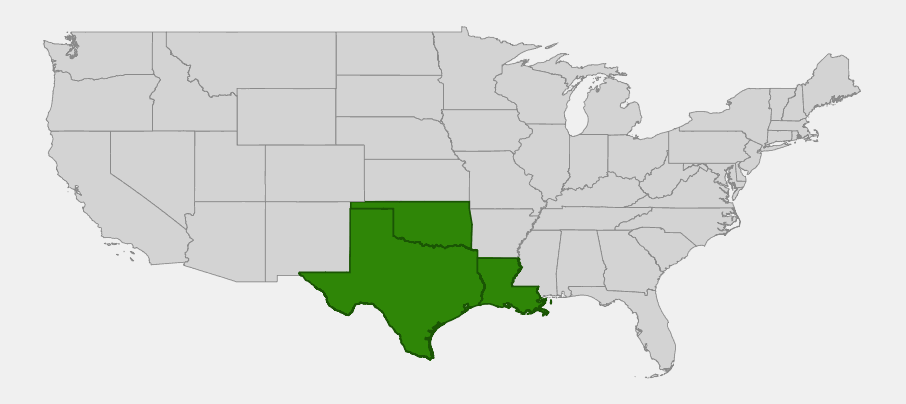
Texas paintbrush is native to Texas, western Louisiana, and Oklahoma, with the bulk of its range and abundance centered on central, southern, and eastern Texas. Within Oklahoma and Louisiana, it occurs mainly in the southern and western portions of those states, closer to the Texas border, and there are old historical records of the species in Arkansas, though it is not considered currently established there.
Typical habitat includes native prairies, open grasslands, sandy or silty woodland openings, and — notably — disturbed, sunny sites such as roadsides and pasture edges, where it has become a familiar and much-loved part of the spring wildflower display along Texas highways. It depends on nearby host plants, often grasses or other prairie forbs, whose roots it taps for water and minerals, which is part of why it thrives in diverse, intact grassland plant communities.
Texas paintbrush is abundant and not considered rare across its core Texas range, and its conspicuous roadside displays have made it something of an unofficial spring icon alongside the state’s official flower, the Texas bluebonnet. Away from Texas, at the edges of its range in Oklahoma and Louisiana, populations are more localized and tied to specific prairie remnants.
📋 Regional plant lists featuring Texas paintbrush: South and West Texas · Arkansas, Louisiana, Eastern Oklahoma & Eastern Texas
Growing & Care Guide
Texas paintbrush is one of the more challenging native wildflowers to deliberately cultivate, precisely because of its hemiparasitic lifestyle — but it is also one of the easiest to encourage simply by managing an existing wildflower meadow or prairie planting well.
Light
Full sun is essential. Texas paintbrush is a plant of open prairies, pastures, and roadsides, and it will not perform in shaded or heavily overgrown sites.
Soil & Water
It grows in a range of well-drained soils from sandy to silty, tolerating lean, infertile ground better than rich garden soil. Because it is an annual that germinates with cool-season rainfall, consistent fall and winter moisture is important for germination and early growth, while established plants need relatively little supplemental water through the spring bloom period.
Planting Tips
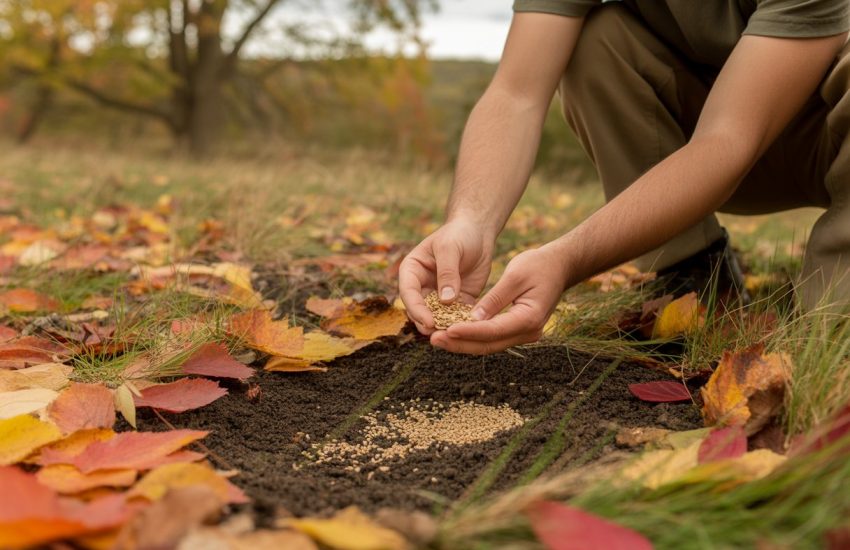
Texas paintbrush is almost always grown from seed sown directly into an established stand of native grasses or wildflowers, since the seedlings need a host plant’s roots nearby to thrive — attempting to grow it alone in bare garden soil or in a container typically fails. Sow seed in fall, lightly pressing it into the soil surface rather than burying it deeply, ideally into ground that already supports little bluestem, sideoats grama, or similar native bunchgrasses, or alongside Texas bluebonnet seedlings.
Pruning & Maintenance
No pruning is needed for this annual wildflower. The main maintenance task is timing any mowing of a wildflower meadow to occur after seed has matured and dropped in late spring or early summer, which allows the population to reseed itself for the following year.
Propagation
Propagation is by seed only. Collect seed from dried capsules in late spring once they have begun to split, and sow that fall into a site with suitable host plants already established. Because germination and establishment depend heavily on finding a compatible host, results from hand-sowing can be inconsistent even under good conditions.
Landscape Uses
- Native wildflower meadows and prairie restorations, paired with bluebonnets and native grasses
- Roadside and right-of-way plantings, where it thrives with minimal care
- Pollinator gardens, adding bright early-spring color alongside other native wildflowers
- Naturalized pasture edges, where light grazing management favors its germination and spread
Wildlife & Ecological Value
Texas paintbrush plays a modest but real role in the ecology of Texas prairies and grasslands, particularly for early-season pollinators.
For Pollinators
The tubular true flowers, tucked within the colorful bracts, are visited by native bees, butterflies, and especially hummingbirds, which are drawn to the bright orange-red color and are well suited to reach nectar in the elongated flower tubes. Texas paintbrush is also a documented larval host plant for the checkerspot butterfly group, whose caterpillars feed on paintbrush foliage.
For Birds
Hummingbirds migrating through or breeding in Texas make regular use of Texas paintbrush nectar during the spring bloom window, and the dense wildflower stands the species helps create provide incidental cover and foraging habitat for ground-nesting prairie birds.
For Mammals
Foliage is occasionally browsed by deer and rabbits, though it is not a preferred forage species, and grazing animals generally leave it largely alone in favor of more palatable grasses and forbs growing alongside it.
Ecosystem Role
As a hemiparasite, Texas paintbrush interacts directly with the root systems of neighboring prairie plants, a relationship thought to help moderate the vigor of some dominant grasses and contribute to the overall diversity of native grassland plant communities. Its reliance on intact, diverse host communities also makes it something of an indicator of healthy, unplowed prairie remnants.
Cultural & Historical Uses
Texas paintbrush has been a celebrated part of Texas’s spring wildflower identity for generations, appearing alongside the Texas bluebonnet in countless roadside photographs, postcards, and tourism campaigns that showcase the Hill Country and Blackland Prairie each spring. Texas Department of Transportation wildflower seeding programs along highway rights-of-way have long included paintbrush species as a companion to bluebonnets, helping maintain the dramatic blue-and-orange roadside displays the state is known for.
Several Castilleja species across North America have documented histories of Indigenous use, including as a minor food or dye source in some regions, though specific ethnobotanical records for Castilleja indivisa itself are limited compared with some western paintbrush species; readers should treat such uses as historical context rather than a recommendation, since paintbrush species are known to accumulate selenium and other compounds from host plants and are not considered safe to eat.
In modern horticulture, Texas paintbrush is widely included in native wildflower seed mixes sold throughout the state, reflecting its enduring popularity as a signature component of Texas prairie restoration and roadside beautification efforts.
Frequently Asked Questions
Why is Texas paintbrush hard to grow in a regular garden bed?
Texas paintbrush is a hemiparasite that taps into the root systems of neighboring grasses and wildflowers for part of its water and nutrients. Without a suitable host plant growing nearby, seedlings usually fail to thrive, which is why it does best sown directly into an established native grassland or wildflower meadow rather than grown alone.
Can you eat Texas paintbrush?
No. As a hemiparasite, Castilleja species can accumulate selenium and other compounds from their host plants, so Texas paintbrush is not considered safe to eat and should not be used as a food source.
Does Texas paintbrush come back every year?
It is an annual, completing its life cycle in a single year, but established populations reseed themselves reliably where growing conditions and host plants remain suitable, so a well-managed wildflower meadow can have paintbrush return year after year from self-sown seed.
What is the difference between the “flower” color and the true flower?
The bright orange-red color people notice comes from modified leaves called bracts, not true petals. The actual flowers are small, tubular, and greenish-yellow, mostly hidden within the colorful bracts.
What plants does Texas paintbrush grow with?
It is most often seen growing among native prairie bunchgrasses and alongside Texas bluebonnet, and seeding it into soil that already supports grasses such as little bluestem or sideoats grama gives it the host roots it needs to establish.