
Common Starlily (Leucocrinum montanum)
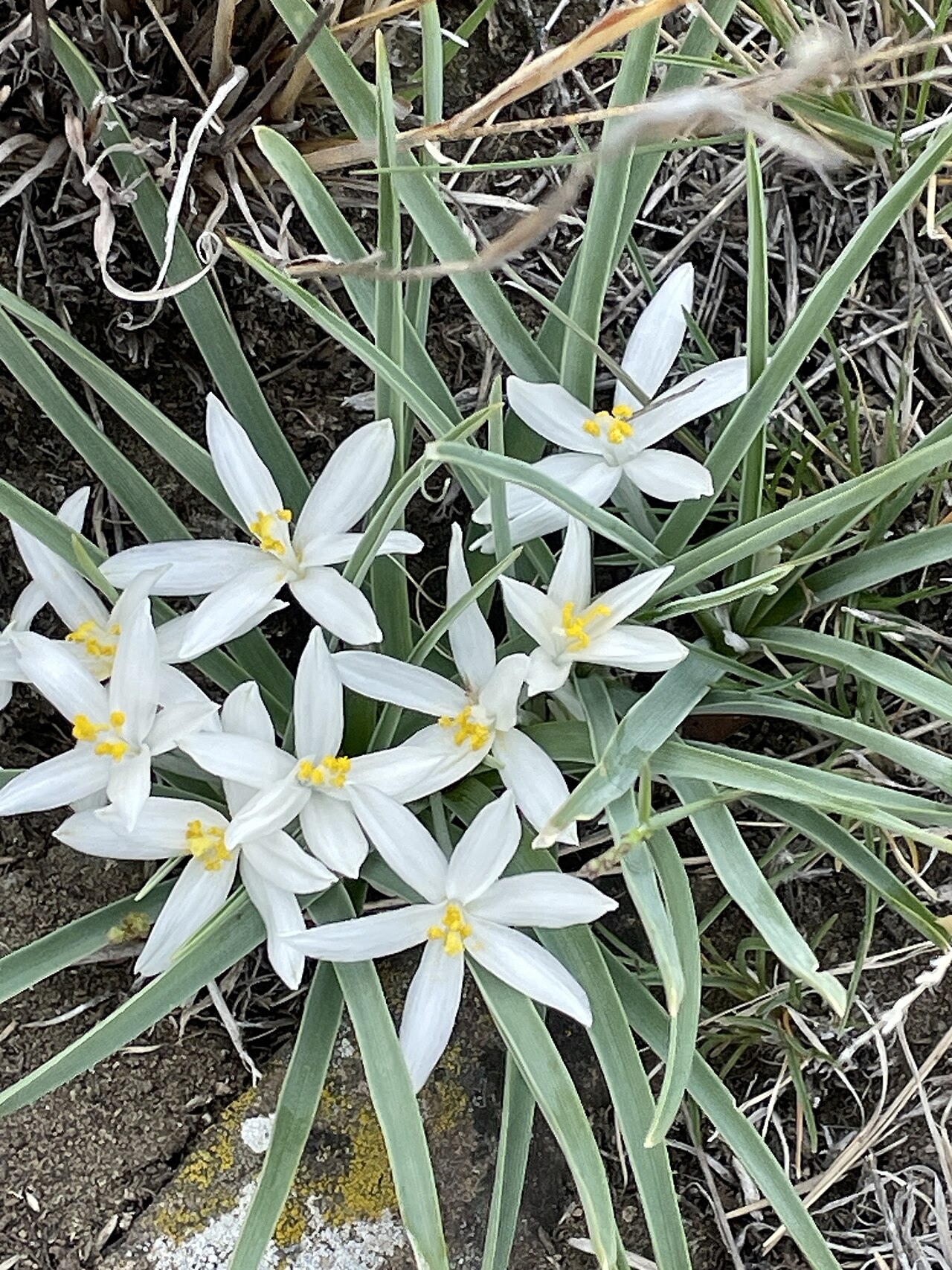
Leucocrinum montanum, known as Common Starlily (also sand lily or mountain lily), is one of the first wildflowers of spring on the western Great Plains, in the Rocky Mountain foothills and across the sagebrush country of the Intermountain West. It is the only species in its genus. Once placed in the lily family, it is now classified in the asparagus family (Asparagaceae), where its closest relatives are the craglilies (Echeandia).
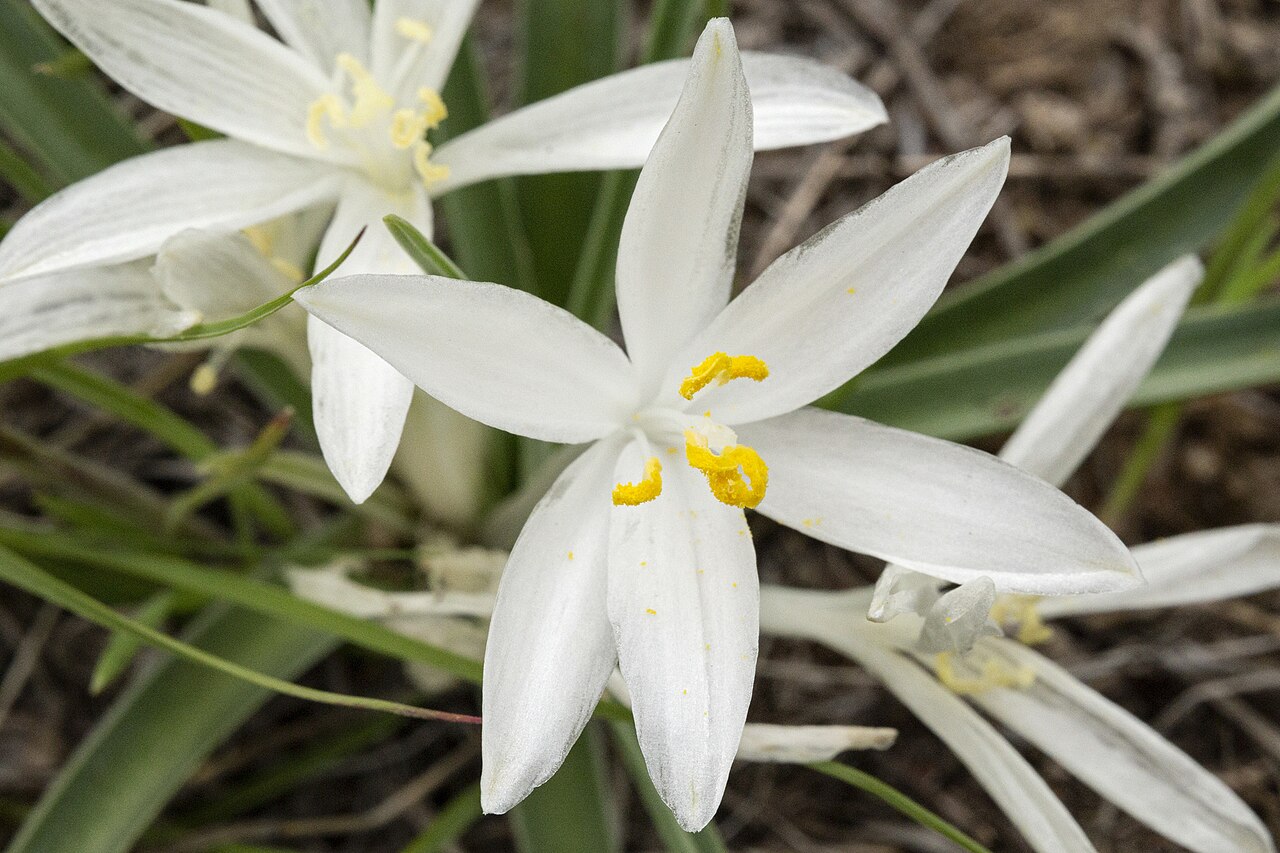
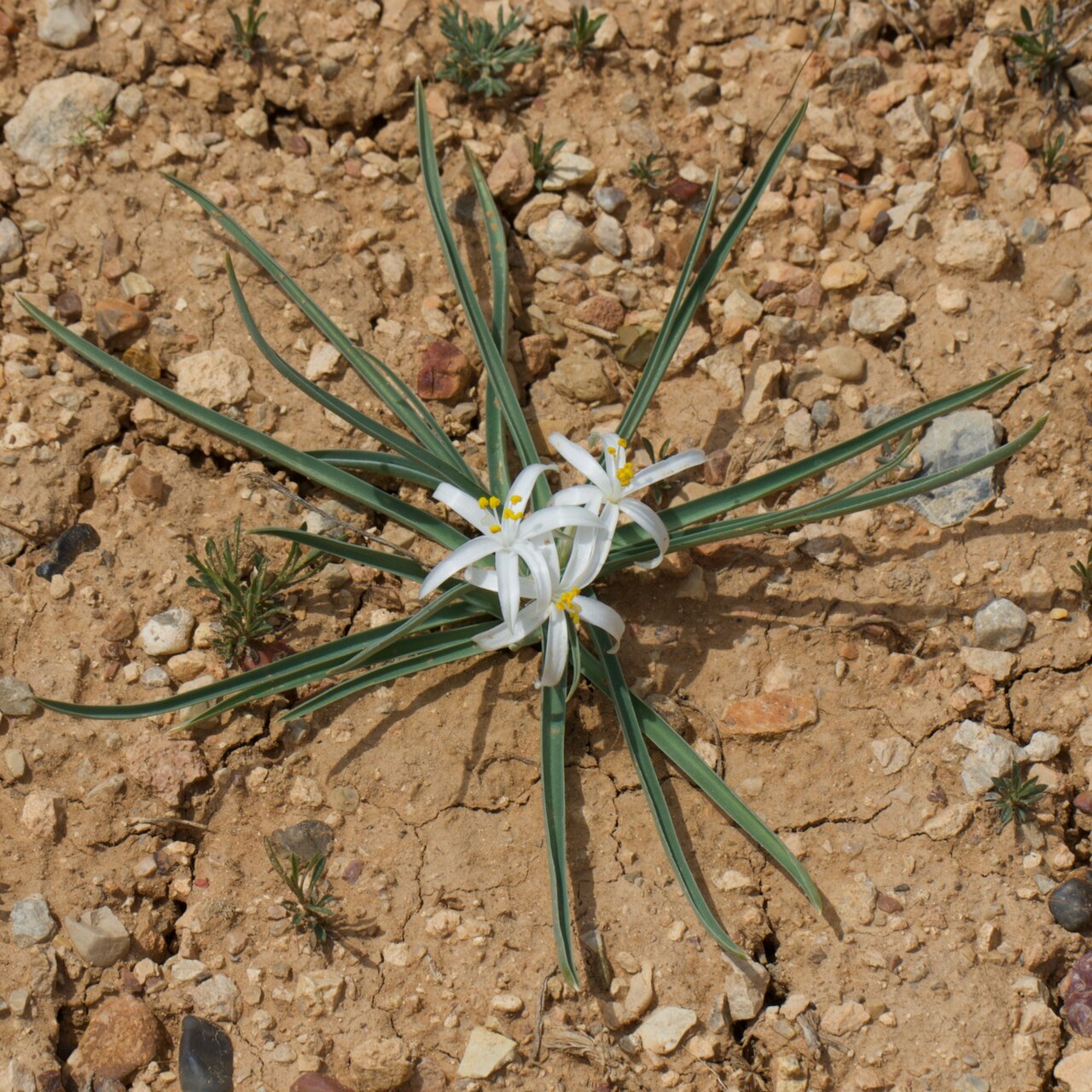
The plant is tiny and stemless: a tuft of narrow, grass-like leaves only 2 to 4 inches high, with clusters of glistening, sweetly fragrant, white six-pointed flowers sitting right among the leaves. The flowers appear from March to June, depending on elevation and weather. What looks like a flower stalk is actually a long, narrow floral tube that runs down into the soil, where the seed capsule develops underground. By early summer the leaves wither, and the plant survives the rest of the year as a crown and fleshy roots below the surface.
Common starlily grows in shortgrass prairie, sagebrush steppe, pinyon-juniper and open ponderosa pine woodland, often on sandy or gravelly soils. It is not the same plant as the toxic Star Lily (Toxicoscordion fremontii), a death camas of California. Common starlily is hard to grow in gardens, and it should never be dug from the wild; the deep, fleshy roots rarely survive.
Identification
In early spring, look for a low tuft of narrow leaves with clusters of pure white, star-shaped flowers right at ground level, often on open, sandy or gravelly ground among grasses or sagebrush. No other western wildflower looks quite like it.
Roots & Crown
Underground, the plant has a short crown (caudex) about 2 inches below the surface, with a cluster of fleshy, string-like roots that are gray to tan. These store the energy that lets the plant bloom so early. Above ground, the base of the leaf tuft is wrapped in a papery, membranous sheath.
Leaves
The leaves are narrow and grass-like, 4 to 8 inches long and only about 1/16 to 5/16 inch (2 to 8 mm) wide, hairless, with slightly whitish edges and a U-shaped cross section. They often arch outward from the center or lie partly on the ground. They wither and disappear by early summer.
Flowers
Usually 4 to 8 flowers grow in a cluster from the center of the tuft. Each has six narrow, pointed, white tepals about 3/4 to 1 inch (2 to 2.5 cm) long that spread into a star. The tepals are thin and translucent, and they glisten in the sun. The six stamens have bright yellow anthers. The base of the flower is a slender tube 2 to 3 inches long that extends down into the soil. The flowers have a strong, sweet fragrance. They bloom from March to June, earliest after warm spells in March.
Fruit & Seeds
The fruit is a small, three-sided capsule about 1/4 inch long that forms underground, so it is seldom seen. It holds a few black, angular seeds. How the seeds get out is still debated. Some botanists report that the capsule stalk lengthens so that the next year’s growth pushes the seeds up. Others suggested that drying leaf bases blow away with the capsules, or that ants and other insects dig them up.
Look-alikes
Sand-lily is also a common name for other plants, including tufted evening primrose (Oenothera cespitosa), which has much larger, four-petaled white flowers. Death camases (Toxicoscordion), including the plant called star lily on this site, have their flowers on a tall stalk and small greenish glands on each tepal; they are poisonous. Wild onions have a strong onion smell and flowers on a stalk. Common starlily’s stemless white stars set among a tuft of leaves are distinctive.
Safety & Conservation
Common starlily is not known to be toxic, but do not eat or harvest it; it can be confused with poisonous death camas when not in flower. Overall the species is secure (NatureServe G5), but NatureServe ranks it as vulnerable in Nevada, imperiled in Utah and North Dakota, and critically imperiled in Arizona, where it is known only from Mohave County. Leave wild plants alone; their deep, fleshy roots rarely survive being dug.
Quick Facts
| Scientific Name | Leucocrinum montanum |
| Family | Asparagaceae (asparagus family); formerly Liliaceae |
| Plant Type | Stemless herbaceous perennial; dormant from early summer |
| Mature Height | 2–4 in |
| Mature Spread | 4–8 in |
| Growth Rate | Slow |
| Sun Exposure | Full sun |
| Water Needs | Low; moist in spring, dry in summer |
| Soil Type | Well-drained sandy, gravelly or rocky soils |
| Soil pH | About 6.0–8.0 |
| Bloom Time | March–June |
| Flower Color | White, with yellow anthers; fragrant |
| Fall Color | None; dormant by early summer |
| Fruit | Small three-sided capsule that forms underground |
| Deer Resistant | Unknown; too low and short-lived above ground to be a favored browse |
| USDA Hardiness Zones | 4–8 |
Native Range
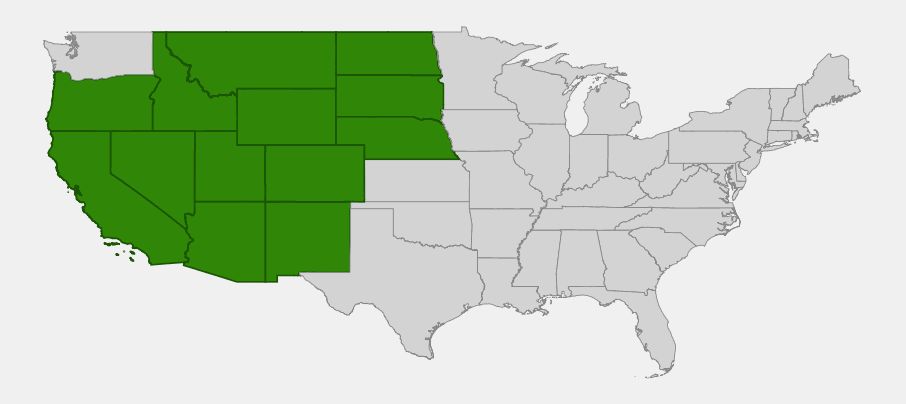
Common starlily is native only to the western United States. USDA PLANTS lists it as native in Arizona, California, Colorado, Idaho, Montana, Nebraska, Nevada, New Mexico, North Dakota, Oregon, South Dakota, Utah and Wyoming. It is not recorded from Canada. The Lady Bird Johnson Wildflower Center summarizes its range as central Oregon to northern California, east to northern New Mexico, Colorado and the western Dakotas.
In the east it grows on the shortgrass prairie of eastern Colorado, eastern Wyoming, the western edges of Nebraska and South Dakota, and southwestern North Dakota, where it is known from only a couple of counties. It is widespread in southern and central Montana, and in the West it ranges across much of Nevada, eastern Oregon, southwestern Idaho and northeastern California (Klamath Basin and Modoc Plateau). It is scarce at the southern edge of its range: a few areas of northern New Mexico, a few counties of southern Utah and only Mohave County in Arizona. Josephine County in southwestern Oregon, west of the Cascades, is an outlying record.
It grows in shortgrass and mixed-grass prairie, sagebrush steppe, pinyon-juniper and ponderosa pine woodland openings and dry mountain meadows, usually on sandy, gravelly or rocky soils, at elevations of about 2,600 to 7,900 feet (800 to 2,400 m).
📋 Regional plant lists featuring Common Starlily: Idaho, Eastern Oregon & Eastern Washington · Montana & Wyoming · Nebraska, Kansas & Eastern Colorado · Utah & Western Colorado · Arizona & New Mexico · North Dakota, South Dakota & Western Minnesota · Western Oregon & Western Washington · California & Nevada
Growing & Care Guide
Common starlily is rarely grown in gardens. It is slow, its fleshy roots resent disturbance, and it needs a dry summer dormancy. Rock gardeners in the Rocky Mountain region sometimes raise it from seed. If you have it on your land, the best care is to protect the native grassland where it grows. Never dig wild plants.
Light
Full sun. It grows on open prairie and in sunny openings, and it blooms before most neighboring plants leaf out.
Soil & Water
It needs well-drained, sandy, gravelly or rocky soil that is moist in early spring from snowmelt and dry through summer. Avoid irrigated beds and heavy, wet clay; summer water and poor drainage rot the roots.
Planting Tips
Grow it from seed in a rock garden, crevice garden or dry prairie planting, or in deep pots of gritty mix that can be kept dry after the leaves wither. Mark the spot, since the plant is invisible for most of the year. Do not transplant established plants.
Pruning & Maintenance
No pruning is needed. Let the leaves wither naturally. Avoid digging, tilling or heavy mulch over the crowns, and keep taller, aggressive plants from crowding it. In native grassland, light grazing and natural disturbance are tolerated, but plowing destroys populations.
Propagation
Seed is the only practical method, but it is hard to collect because the capsules ripen underground. Sow fresh seed in fall outdoors so it gets a cold, moist winter. Seedlings grow slowly and may take several years to bloom. Collect seed only with permission and in small amounts, and never dig plants.
Landscape Uses
- Prairie and steppe restoration: an early-blooming native forb of shortgrass prairie and sagebrush grassland
- Rock and crevice gardens: for specialist growers with sharp drainage and dry summers
- Wildflower viewing: one of the first signs of spring on the plains and foothills
- Habitat indicator: a sign of native, unplowed grassland
- Early pollinator forage: fragrant flowers when little else is in bloom
Wildlife & Ecological Value
Common starlily blooms when very little else is in flower, so its early, fragrant blossoms are useful to insects coming out of winter.
For Pollinators
The sweet-scented flowers attract small bees, flies and moths. The long floral tube holds nectar deep inside. Botanists have found two different pollen forms in separate populations, an unusual trait whose role in pollination is still being studied.
For Birds
It provides little direct food for birds. It grows in prairie and sagebrush habitats that support birds such as horned larks, western meadowlarks, sage thrashers and sage-grouse.
For Mammals
Grazing animals, from pronghorn to livestock, may nip the leaves and flowers, and rodents may dig the fleshy roots. Because it is so low and goes dormant early, it often escapes heavy browsing.
Ecosystem Role
As a spring geophyte, it uses early-season moisture before grasses green up, then retreats underground. Its underground fruit and possible seed dispersal by ants make it an interesting part of prairie ecology. Large blooming populations are a sign of intact native grassland, which has been widely lost to plowing and development.
Cultural & Historical Uses
The genus name Leucocrinum means “white lily” in Greek, and montanum means “of the mountains.” Asa Gray published the name in 1837, crediting the description to the naturalist Thomas Nuttall. Over the years it has had many local names, including sand lily, mountain lily, star lily, white prairie lily and even white crocus in 1890s Colorado.
It has names in several Indigenous languages, including see-goo-ah-gump in Northern Paiute and a Lakota name meaning “it is like feathery false lily of the valley.” Across the plains and foothills, its sudden appearance on bare, brown ground is a welcome signal that spring has arrived.
Because many unrelated plants share the names star lily and sand lily, the scientific name is the safest way to identify it. On this site, the Star Lily page is a different, poisonous plant, Fremont’s death camas.
Frequently Asked Questions
Where is the stem of common starlily?
It has none above ground. The flowers grow from a crown below the surface, and what looks like a stalk is the flower’s long floral tube, which reaches down into the soil.
Where are the seeds?
The seed capsule develops underground, below the leaves. That is why the fruit is rarely seen and why seed is hard to collect.
Is common starlily poisonous?
It is not known to be poisonous. However, it can be confused with toxic death camas, which has flowers on a stalk. Never eat wild lilies or bulbs unless you are certain of their identity.
Can I transplant starlily from the prairie?
No. The fleshy roots are deep and rarely survive digging, and the plant is rare in several states. Enjoy it where it grows, or raise it from legally collected seed.
Why does it disappear in summer?
It is a spring ephemeral. It blooms and sets seed early, then dies back to its crown and roots by early summer and stays dormant until the next spring.

Looking for a nursery that carries Common Starlily?
Browse our native plant nursery directory: Arizona · California · Colorado · Idaho · Montana · Nebraska, Nevada, New Mexico & North Dakota · Oregon · South Dakota & Utah · Wyoming